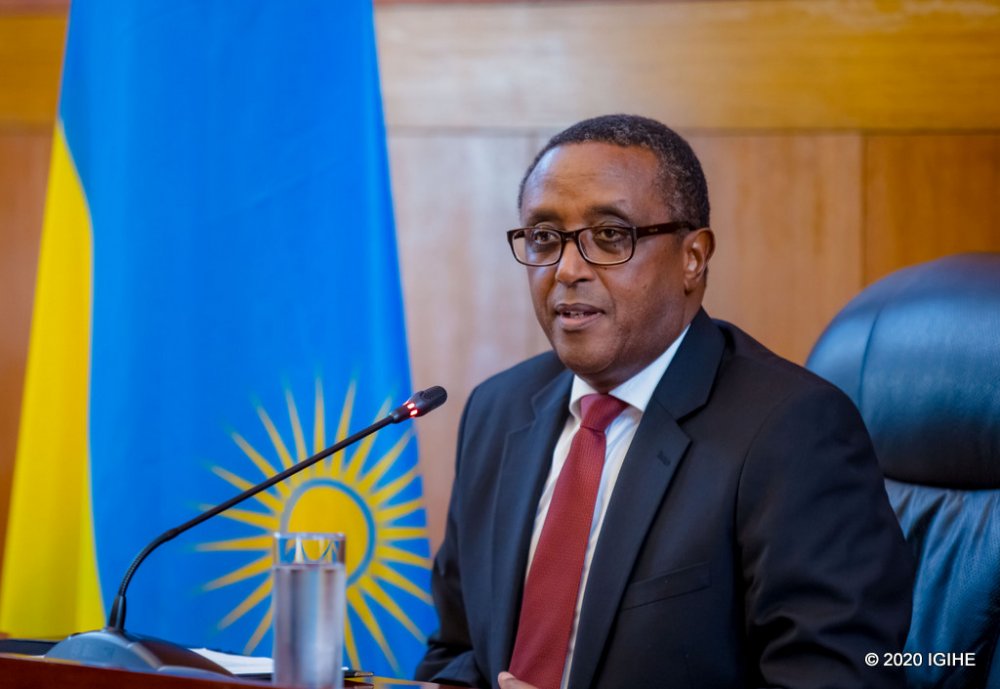
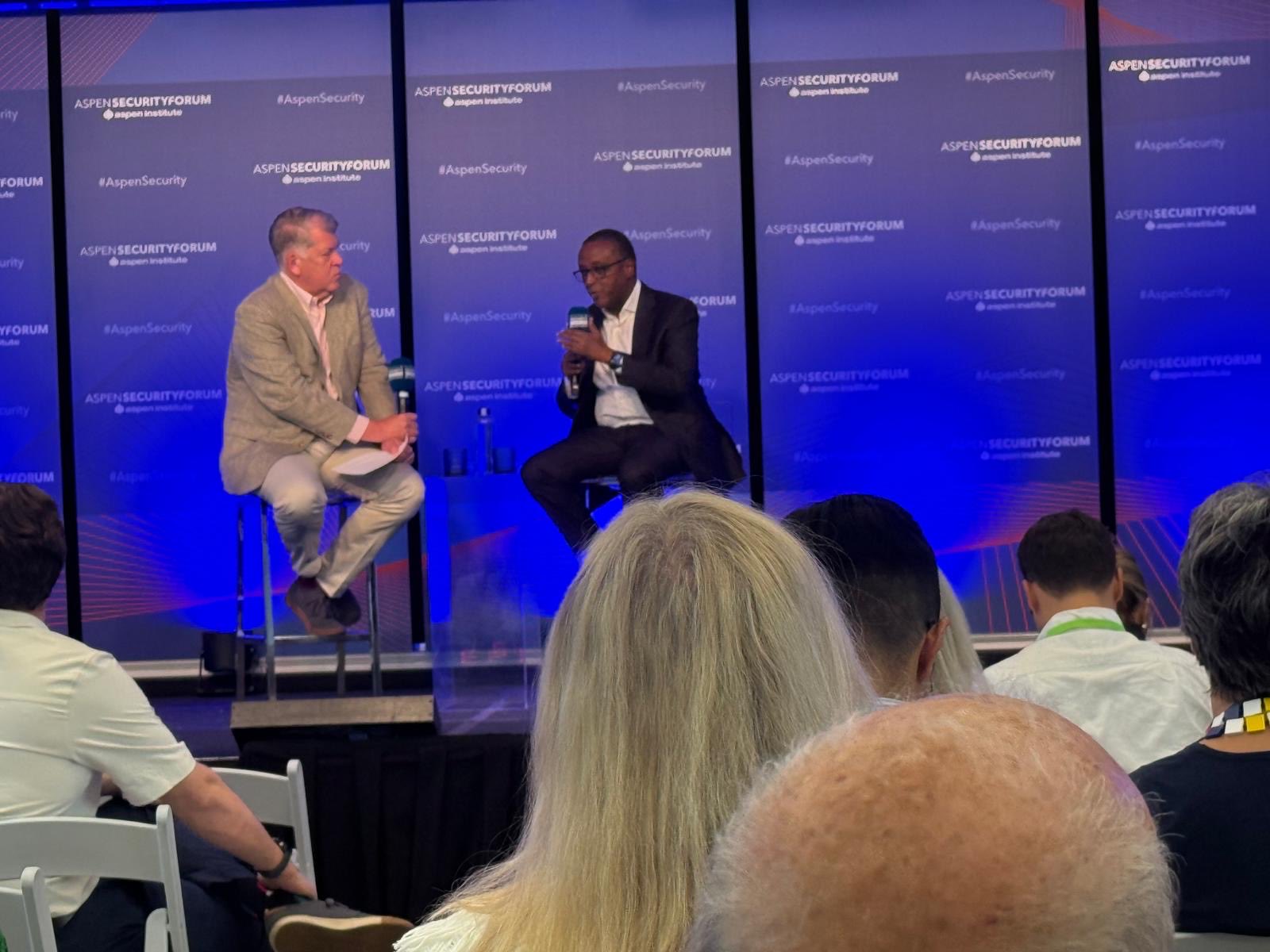
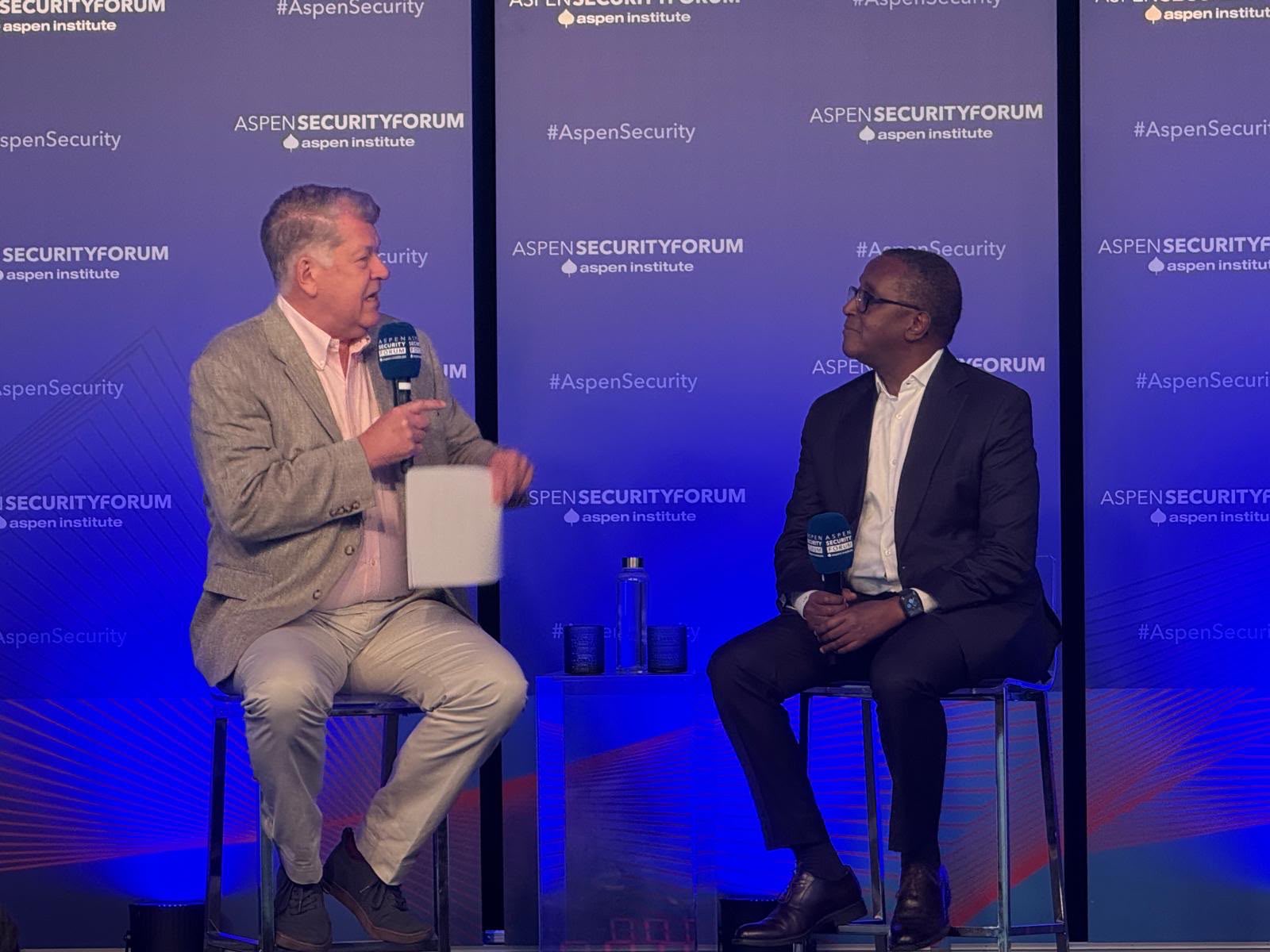
Dr. Biruta made the remarks during a fireside chat at the Aspen Security Forum, held from July 14 to 17, 2026, where he discussed regional security, migration, and Rwanda’s international partnerships.
Speaking during the session moderated by Steve Clemons, Editor at Large at The National Interest; Dr. Biruta said Rwanda considers the Washington peace agreement, brokered with the involvement of US President Donald Trump, a significant opportunity to address security challenges and promote economic cooperation in the Great Lakes region.
“The Washington Accords for Peace and Prosperity is a very good agreement and we appreciate the leadership of President Trump in achieving that,” Dr. Biruta said.
However, he said Rwanda remains concerned about what he termed an imbalance in the implementation process, arguing that Kigali has fulfilled its commitments while expecting similar action from Kinshasa. The peace deal was signed in December 2025.
“Seven months after the agreement was signed, we see a lack of balanced approach from the mediation, the US mediation,” Biruta said.
“Rwanda has done its part. We are implementing our obligations under the agreement. We have even offered a de-escalation plan to lift the defensive measures without even waiting for the government of DRC to do its part, which is related to the FDLR genocidal armed group.”
Dr. Biruta said Rwanda had taken steps to support the peace process but questioned the decision to impose sanctions on Rwanda while, according to him, obligations expected from the DRC government had not been implemented.
“Even though the government of Congo is not implementing its obligation, we are seeing the government of the US imposing sanctions on Rwanda,” he said.
“We are concerned about that lack of balance in the approach. But we are committed to the agreement and we expect the US government, the mediation, to have a more balanced posture for us to be able to have that agreement fully implemented.”
Security concerns and the FDLR issue
During the discussion, Dr. Biruta also highlighted Rwanda’s long-standing security concerns linked to the Democratic Forces for the Liberation of Rwanda (FDLR), an armed group created by individuals responsible for the 1994 Genocide against the Tutsi.
He said members of the group fled into eastern DRC after the genocide and continued organizing with the objective of destabilizing Rwanda.
“The FDLR crossed the border with weapons, but also with the ideology, which is even more dangerous than the weapons,” Dr. Biruta said.
He argued that addressing the presence of the FDLR remains central to achieving lasting peace in eastern DRC.
According to Dr. Biruta, the emergence of groups such as M23 should also be understood within the context of governance challenges and insecurity affecting communities in eastern DRC.
“There could be stability. We just need to neutralize the FDLR armed group, and we need to have conditions in eastern DRC just to give the rights to all the communities in that country,” he said.
He also rejected claims that Rwanda has territorial ambitions in eastern DRC, saying there is no border dispute between the two countries.
“There is no border issue between DRC and Rwanda. There is no claim over the territory of DRC by Rwanda. That is clear,” Dr. Biruta said.
He added that members of M23 are Congolese citizens who share cultural and historical links with communities in Rwanda but are fighting over issues within their own country.
“They are Congolese, and they are fighting for their rights in their own country,” he said.
Call for a different approach to peacekeeping
The Minister also questioned the effectiveness of international peacekeeping efforts in eastern DRC, particularly the United Nations mission that has operated in the region for decades.
Responding to a question about the role of peacekeepers, Dr. Biruta said the continued instability in eastern DRC raised questions about the impact of the mission.
“Peacekeepers have been there for, I think, the last 20 years or so, but to say that they have done something, it is difficult, because if they had achieved anything there, we would not be in the situation we are in today,” he said.
“That mission has cost billions of dollars, but the situation has not changed. It has even deteriorated.”
Beyond regional security, Biruta also discussed Rwanda’s relationship with the United States, saying Kigali continues to view Washington as an important partner despite ongoing disagreements.
He cited cooperation in areas including health, energy, mining, and technology, while noting Rwanda’s efforts to expand partnerships with different countries as it pursues development goals.
“We need all of them,” Dr. Biruta said when asked about Rwanda’s partnerships with the United States and Russia, adding that different partners contribute to different aspects of Rwanda’s development agenda.
The Aspen Security Forum brought together policymakers, security experts, and leaders from around the world to discuss pressing global security challenges.
Leave a Reply