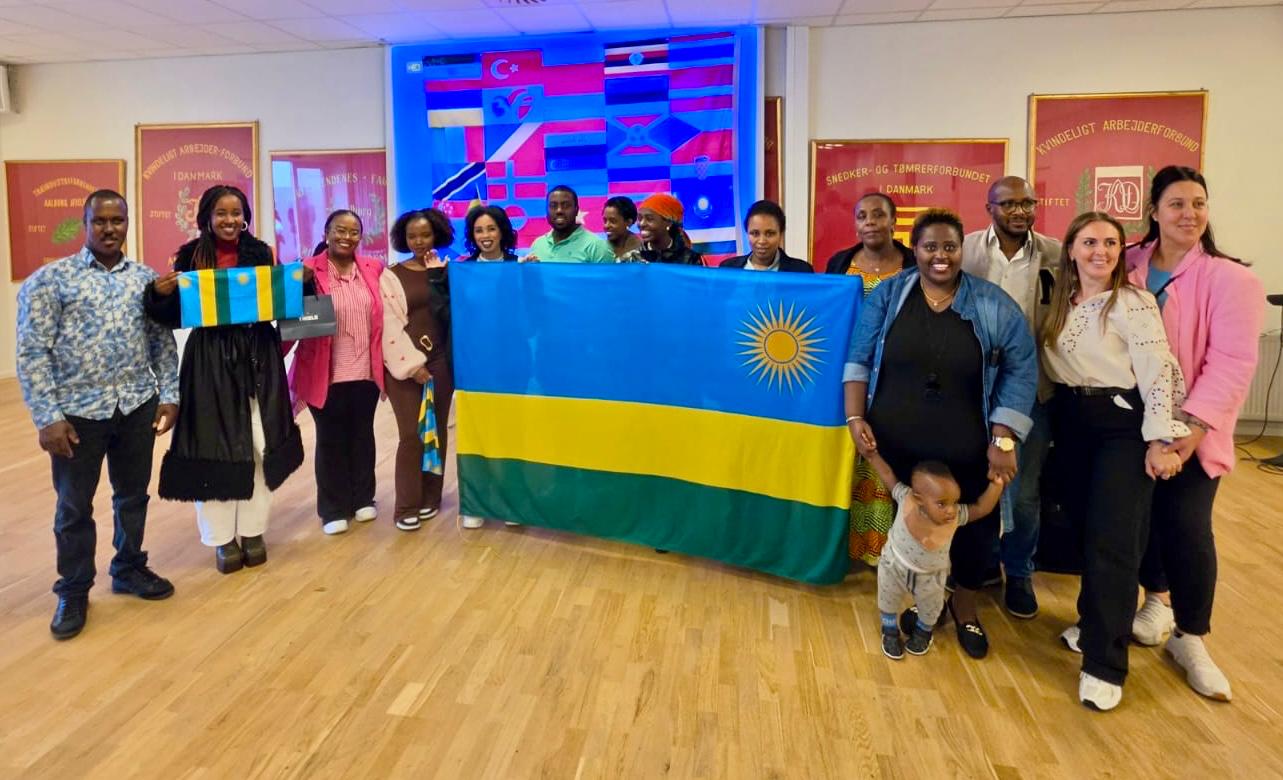
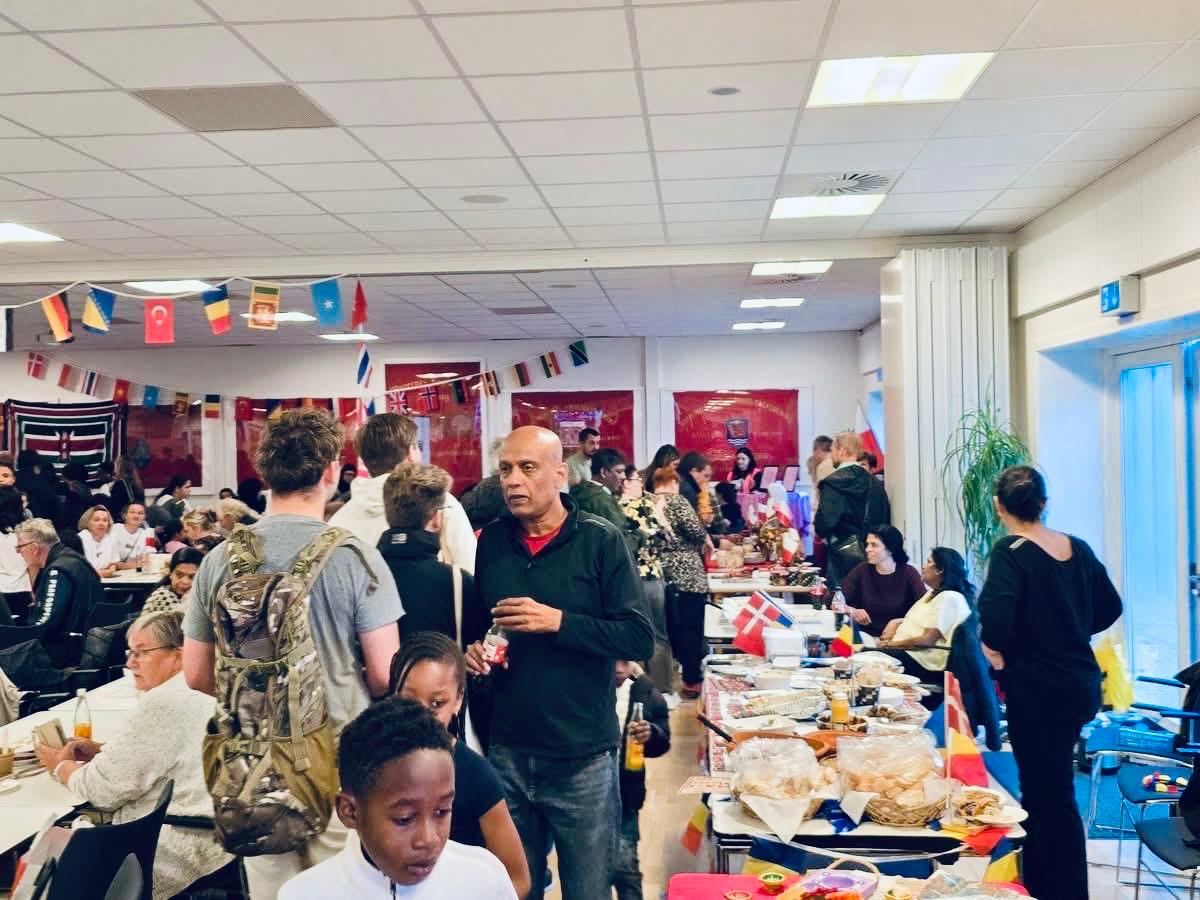
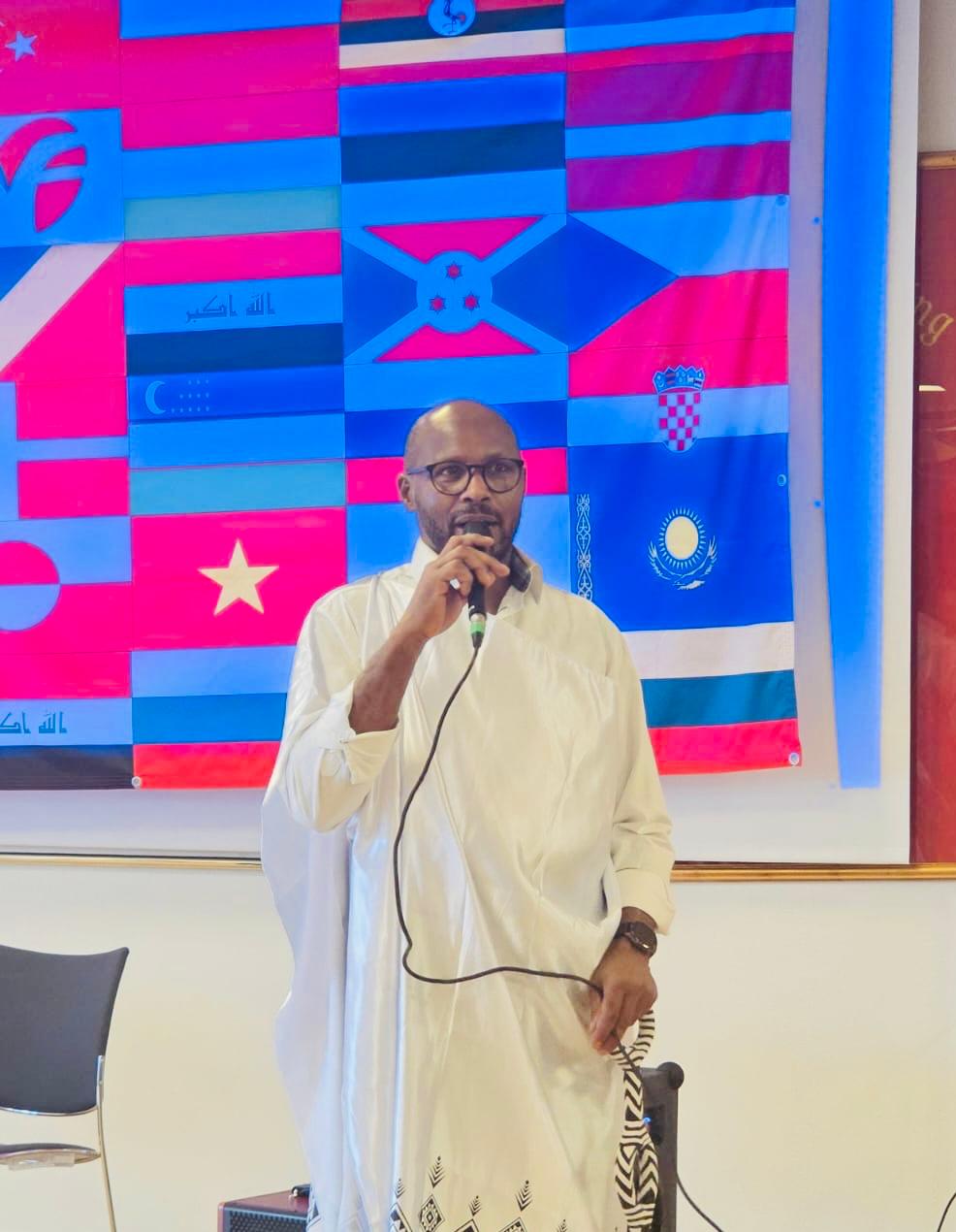
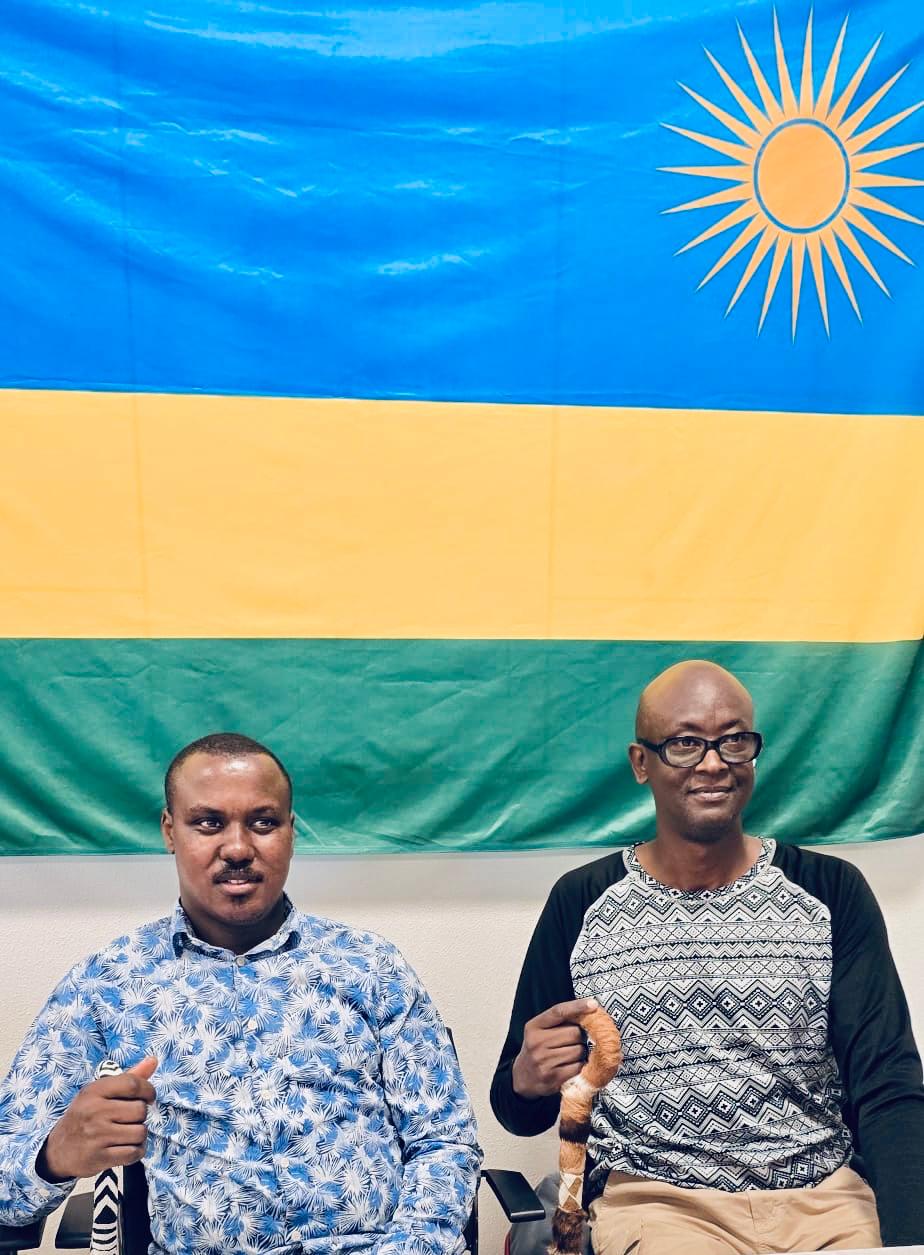
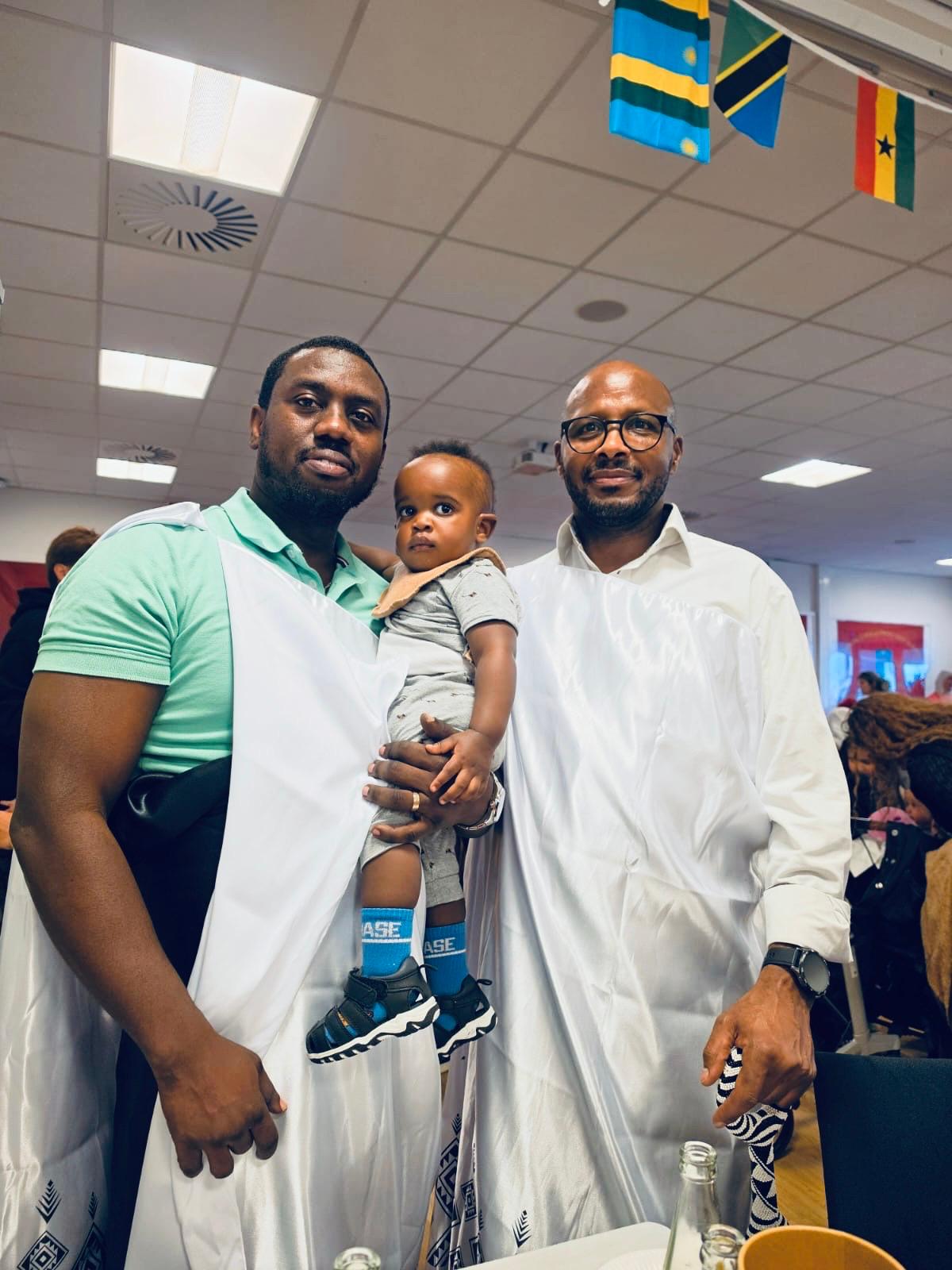
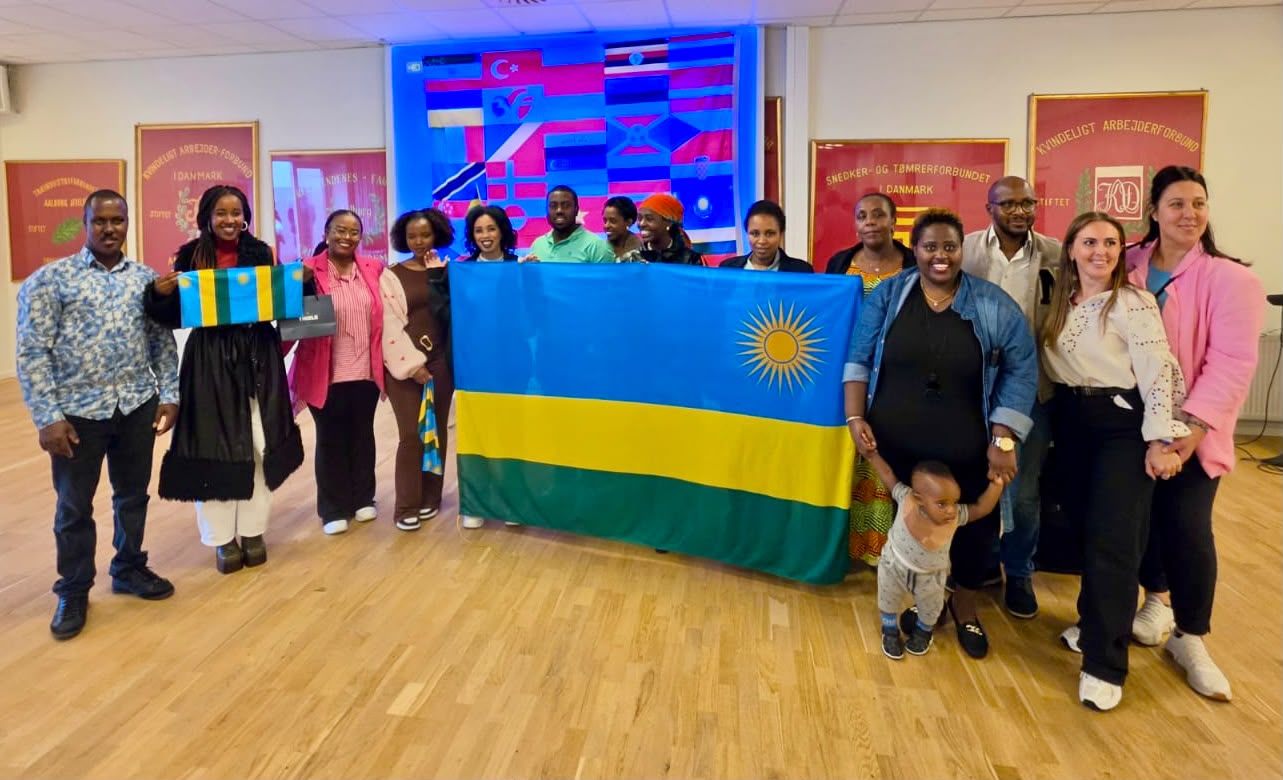
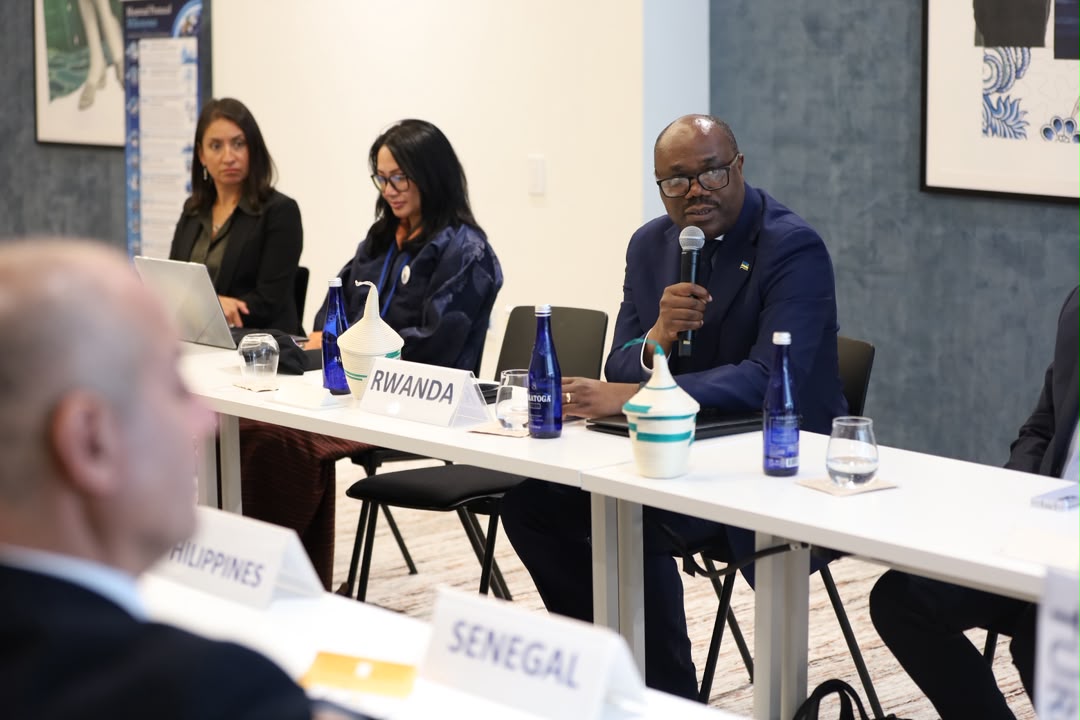
The celebration of the harvest festival by Rwandans living in Northern Europe was held as part of a major regional event organised by the 3F trade union. The event brought together union members living in Denmark, including people from different countries around the world.
Nkubana Paul, the representative of the Rwandan Diaspora in Jutland and Funen, told IGIHE that the gathering provided a valuable opportunity for the different communities to showcase their cultures.
“It was a great opportunity to come together, with each community presenting its culture through traditional cuisine, songs, dances, traditional clothing and other cultural expressions.”
Nkubana said Rwandans showcased their culture through traditional dances as well as agricultural products prepared as local dishes.
“We had the opportunity to talk about today’s Rwanda. We realised that quite a number of people already knew Rwanda and asked us many questions because they were interested in what we were presenting,” he explained.
He also said that participants from other African countries had asked Rwandans to represent them, believing that greater cooperation among African communities would help showcase the continent in a stronger and more united way.
According to him, the African communities present agreed to strengthen their cooperation through various activities, with the aim of promoting greater awareness and understanding of their respective countries and cultures.
During the event, the Rwandans also presented the Visit Rwanda programme, explaining to participants the ease of travelling to Rwanda, including the possibility of obtaining a visa upon arrival at the airport.
They also highlighted some of Rwanda’s main tourist attractions, including its national parks and the diverse wildlife found there.
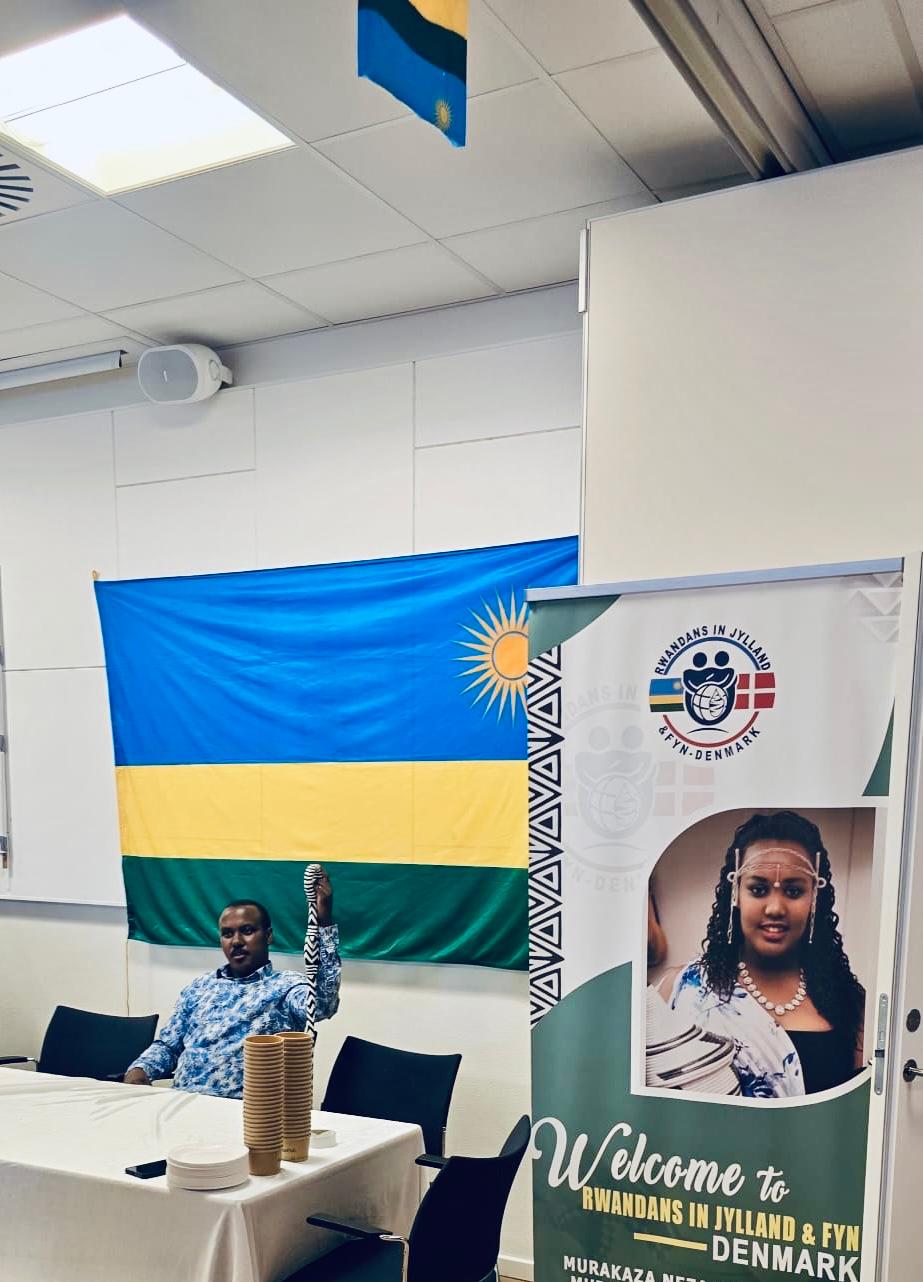
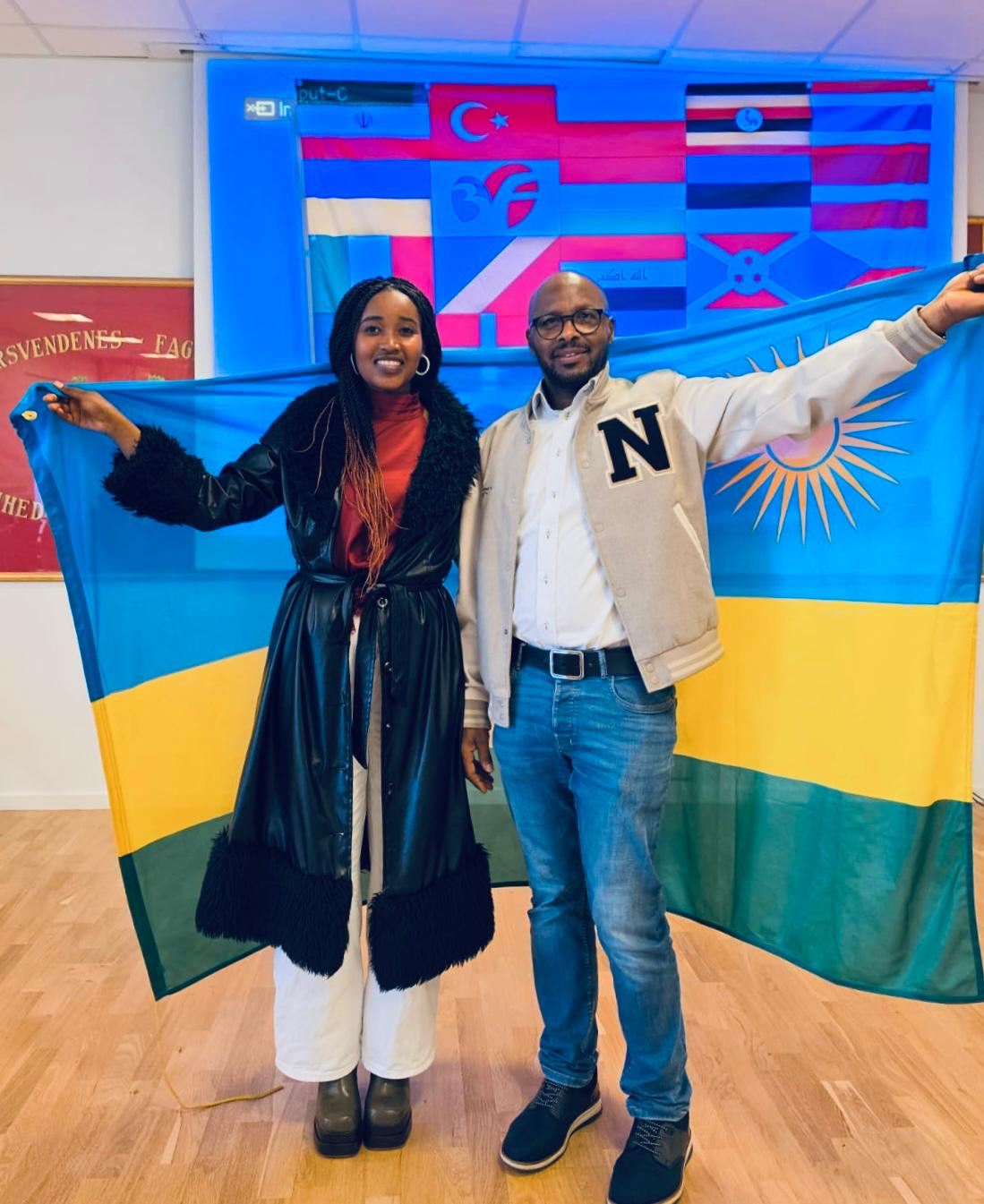
People from different countries came together to celebrate their diverse cultures at the cultural festival.Nkubana Paul, the representative of the Rwandan Diaspora in Jutland and Funen, told IGIHE that the gathering provided a valuable opportunity for the different communities to showcase their cultures.The Rwanda stand displayed the national flag and welcomed visitors interested in learning more about the country.The day brought together both young and old, dressed in traditional cultural attire.Members of the Abarerwa ba Danmark cultural troupe perform during the event.
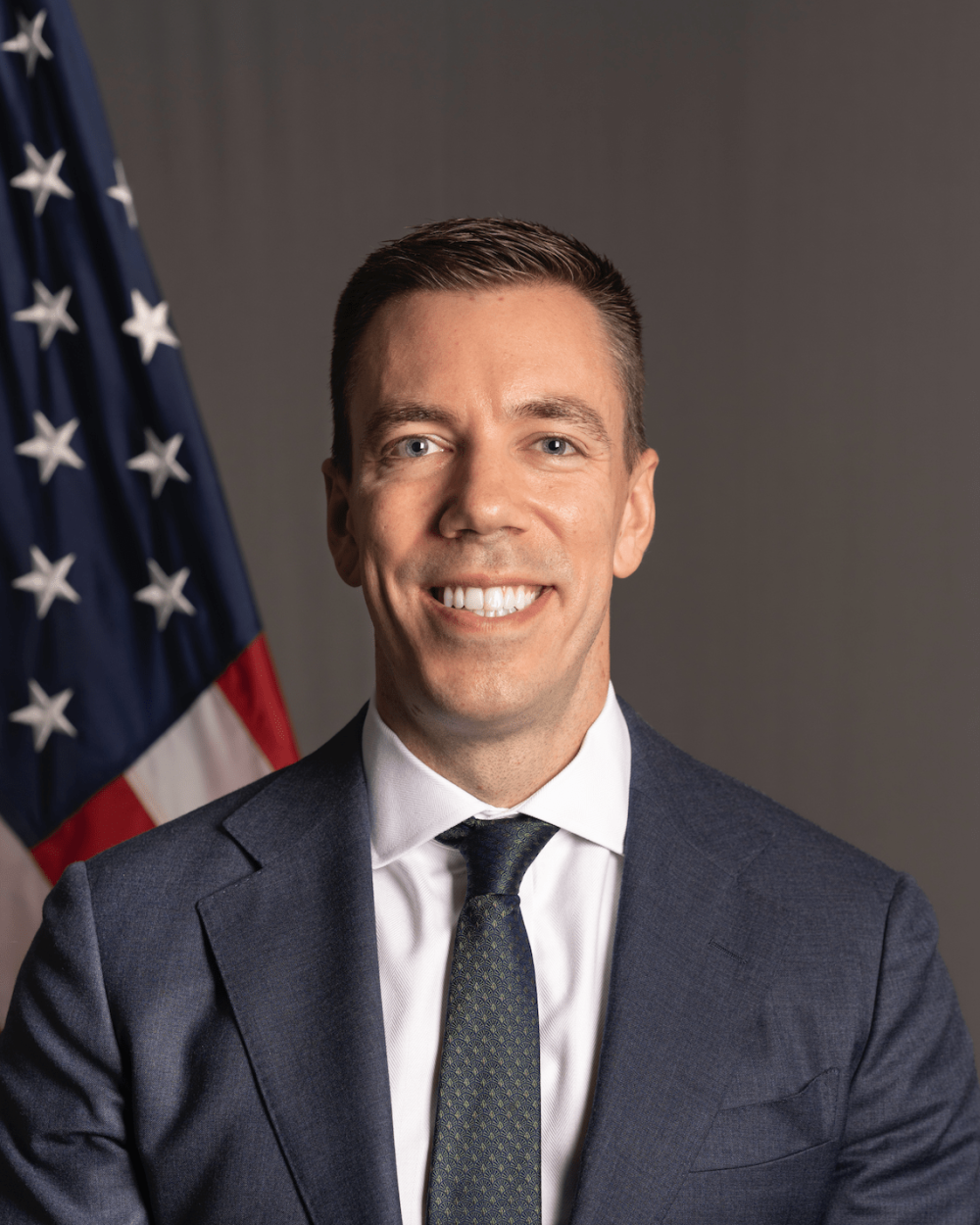
Checker made the remarks on Thursday, September 24, during his confirmation hearing before the US Senate Foreign Relations Committee.
If confirmed, Checker said his approach would be guided by what he described as “America First diplomacy”, built around respect for sovereignty, pragmatic cooperation and the protection of US interests.
“I would engage in an America First diplomacy grounded in strategic humility, respect for sovereignty, quiet leverage on values-based issues, and pragmatic collaboration on mutual interests,” he told senators.
Checker said the safety of US citizens in Rwanda and US Embassy staff would be his highest priority, alongside efforts to expand trade and investment between the two countries.
“I would also lead the team of outstanding diplomats there to expand our trade and investment relationship and advance regional stability in the Great Lakes,” he said.
Washington Accords
Much of Checker’s testimony focused on the Washington Accords between Rwanda and the DRC, which he described as an important step towards lasting peace in the region.
He told senators that the agreement’s success would depend on “full and verifiable compliance by all parties”.
“The United States seeks a strong, positive relationship with Rwanda, but its government first must live up to its commitments to President Trump,” he said.
Responding to a question from Foreign Relations Committee Chairman Bill Hagerty, Checker said the Washington Accords represented a significant opportunity to link peace efforts in eastern DRC with economic integration.
He described the agreement as “the most meaningful advance towards resolving this decades-long conflict in its history”, crediting Trump, Secretary of State Marco Rubio and Senior Adviser Massad Boulos for their diplomatic efforts.
Checker said the economic component of the agreement was aimed at transforming the region’s mineral sector and creating opportunities for US companies.
He pointed to the Regional Economic and Investment Framework, which he said contains commitments by Rwanda and the DRC on transparency and traceability of minerals including tin, tantalum and tungsten.
Checker said the framework could help US companies secure supplies of minerals with applications in defence and consumer electronics while creating a more transparent investment environment in the region.
“So this is really economic integration for peace,” he stressed.
He nevertheless identified implementation as the main challenge facing the Washington Accords, saying both Rwanda and the DRC must respect each other’s territorial integrity.
Rwanda has repeatedly maintained that implementation of the Washington Accords must be assessed against the commitments made by both Kigali and Kinshasa.
Rwanda maintains that it remains committed to the agreement but has argued that its obligations cannot be implemented selectively. Kigali points to the DRC’s support for the FDLR militia group as a security issue that must be addressed through its complete neutralisation, as outlined in the accords signed last year.
The Washington framework includes provisions addressing the neutralisation of the FDLR and the lifting of Rwanda’s defensive measures, with implementation overseen through joint mechanisms.
Wider US-Rwanda engagement
Beyond the eastern DRC conflict, Checker said he would seek to expand political and economic engagement between Washington and Kigali, including creating new opportunities for US businesses.
He also cited regional cooperation on broader challenges, including the current Ebola crisis.
Checker also hailed Rwanda’s resilience in rebuilding the country after the Genocide against the Tutsi, highlighting its efforts to restore security, rebuild institutions and foster a sense of national identity. He described the country’s post-genocide recovery as extraordinary, saying Rwanda had developed an enduring sense of self-reliance in the years since the 1994 Genocide against the Tutsi.
At the same time, he stressed that US foreign policy would ultimately be guided by American national interests.
Checker was nominated by Trump in July. He previously served as Deputy Assistant Secretary for Southern Africa and Foreign Assistance at the US Department of State and as Senior Bureau Official leading the Bureau of African Affairs.
He also served at the National Security Council and spent more than a decade at the CIA working on conflict and security issues.
If confirmed by the US Senate, Checker will succeed Eric Kneedler, who concluded his tour of duty as US Ambassador to Rwanda early 2026.
Nicholas Checker was nominated by Trump to serve as US ambassador to Rwanda in July. He previously served as Deputy Assistant Secretary for Southern Africa and Foreign Assistance at the US Department of State and as Senior Bureau Official leading the Bureau of African Affairs.
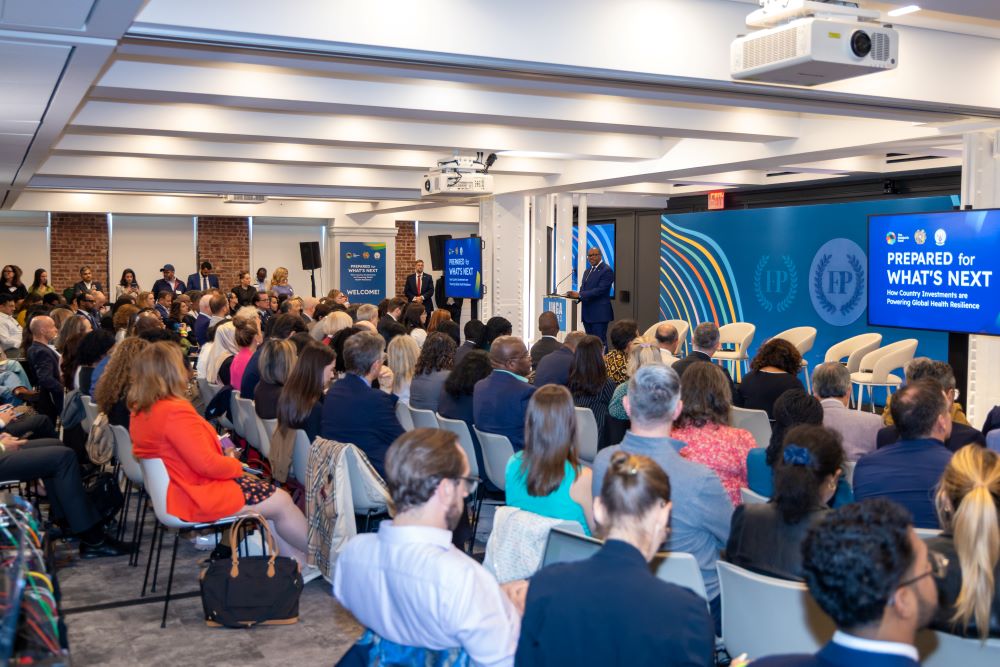
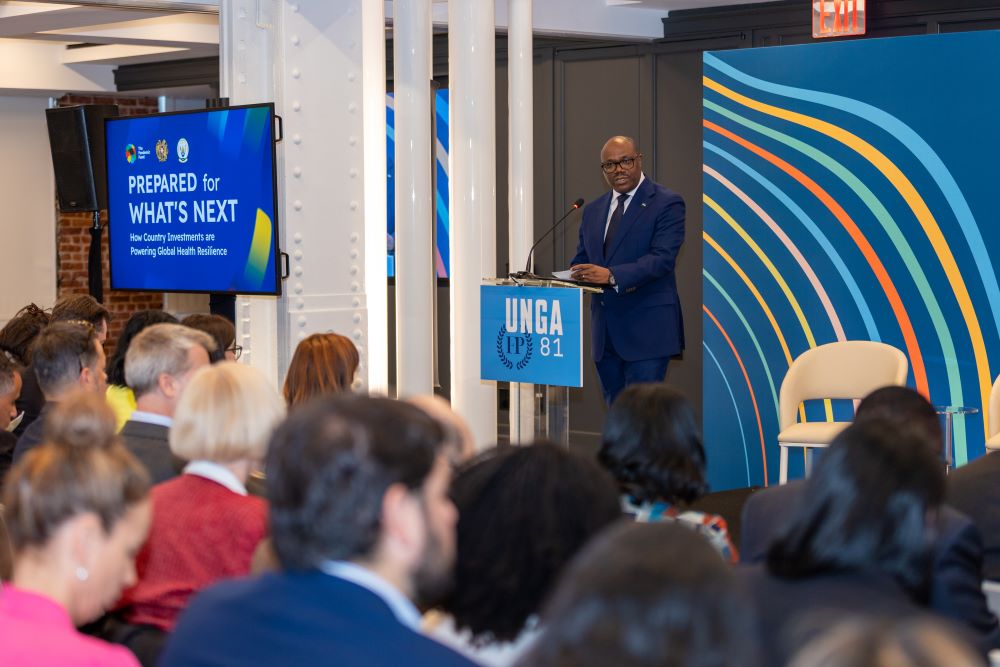
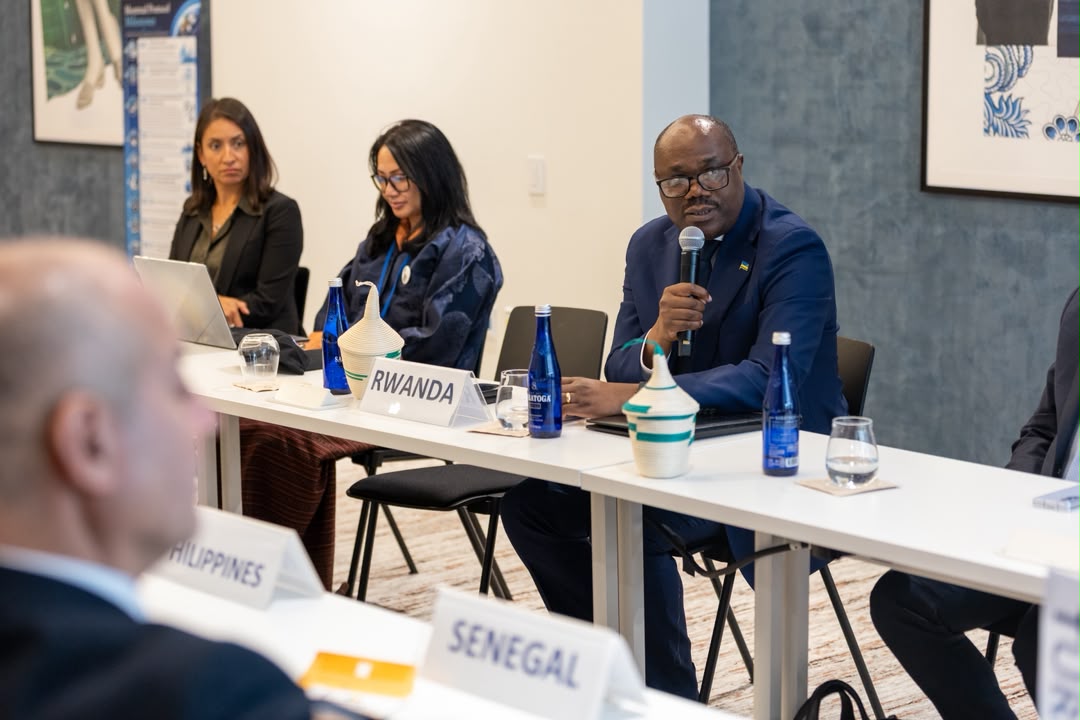
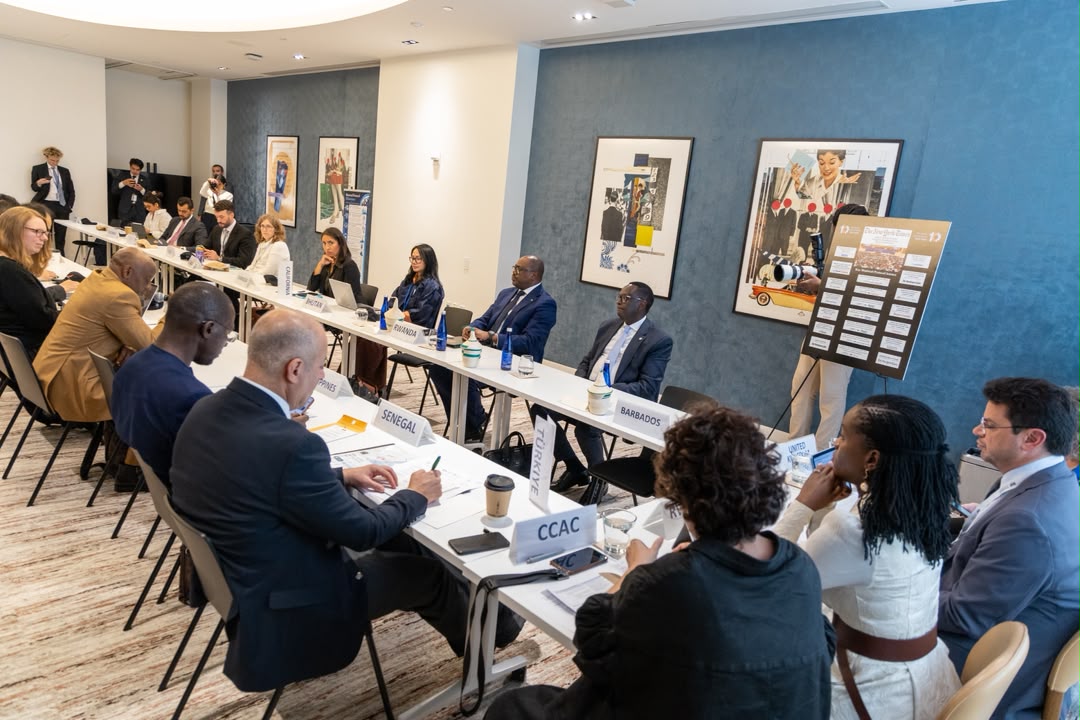
Dr. Nsengiyumva made the remarks in New York on September 23, 2026, during a high-level side event titled “What’s Next: How Country Investments are Powering Global Health Resilience,” held ahead of the United Nations High-Level Meeting on Pandemic Prevention, Preparedness and Response.
He said the world faces increasing health risks as climate change, pressure on land and growing movement of people and animals increase opportunities for pathogens to cross the species barrier.
At the same time, development assistance for health is declining, while the global attention that followed the COVID-19 pandemic has eased.
“Put simply, we are being asked to build more preparedness with less financing,” Dr. Nsengiyumva said, describing this as a challenge that requires a collective response.
For Rwanda, he said, pandemic preparedness has been shaped by experience with COVID-19, mpox, the country’s first Marburg outbreak and the continuing regional threat of Ebola.
Dr. Nsengiyumva pointed to Rwanda’s response to the Marburg outbreak in 2024 as an example of how investments in routine health systems can support emergency response.
During the outbreak, community health workers screened more than 9.5 million people in a country of about 14 million, helping bring the outbreak under control within three months. The outbreak was the third-largest Marburg outbreak recorded, with a case fatality rate of 22.7%, among the lowest ever recorded for this disease.
He said the response was possible because Rwanda already had community health workers, surveillance networks, laboratories and hospitals that could be mobilised when the new threat emerged. “Preparedness, in our experience, is not a specialised capability held in reserve for emergencies. It is the everyday strength of a health system,” Dr. Nsengiyumva said.
Rwanda is also using its partnership with the Pandemic Fund to strengthen its One Health systems and establish a National Veterinary Reference Laboratory, which is expected to improve the country’s ability to detect zoonotic diseases and reduce reliance on testing abroad.
Dr. Nsengiyumva said countries need predictable domestic resources to sustain preparedness between outbreaks, while international partners should provide financing that allows governments to plan and maintain these systems.
He urged countries to translate international commitments into concrete investments, including dedicated preparedness funding in national budgets.
“The next threat may emerge anywhere,” he said. “What we can determine in advance is whether the systems it encounters are ready.”
He added that Rwanda will continue investing in preparedness domestically while working with neighbouring countries, regional institutions and global partners to strengthen health security across the region.
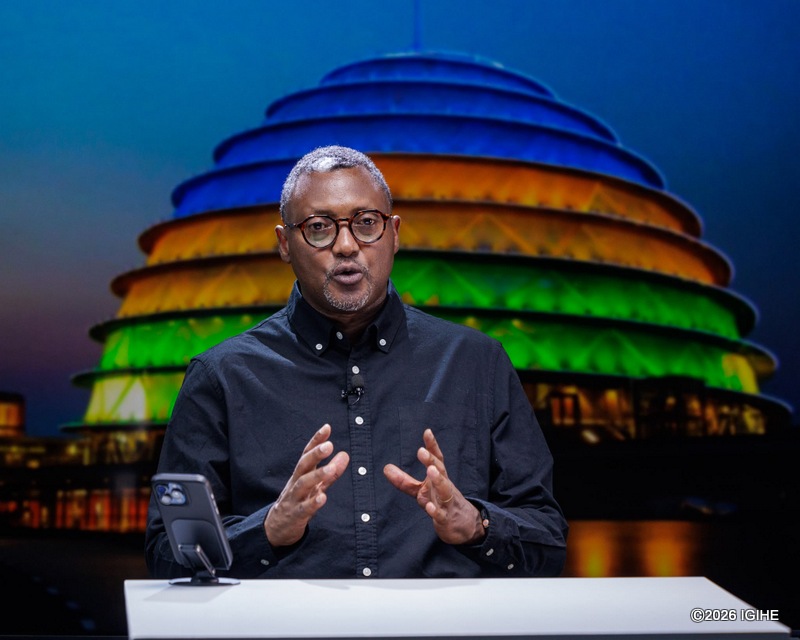
1. Prime Minister Dr. Justin Nsengiyumva speaks at a high-level side event on global health resilience in New York on September 23, 2026.The high-level side event titled “What’s Next: How Country Investments are Powering Global Health Resilience,” was held in New York on September 23, 2026 ahead of the United Nations High-Level Meeting on Pandemic Prevention, Preparedness and Response.
Dr. Frank Habineza, spokesperson for the National Consultative Forum of Political Organizations, told IGIHE that Gasamagera was nominated by the Rwandese Patriotic Front (RPF-Inkotanyi) and was the only candidate.
“Hon. Gasamagera Wellars was nominated by the RPF-Inkotanyi. No other person competed against him. We had agreed that if there was only one candidate, he would be elected unopposed. We all therefore voted for him,” Habineza said.
Habineza explained that after the Forum designated Gasamagera, his file was submitted to the Supreme Court for final approval, as provided for by law.
He described Gasamagera as an experienced public official who has held various senior positions in Rwanda at different times.
Gasamagera recently left his position as Secretary General of the RPF-Inkotanyi, a role he had taken up in early 2023 before stepping down in December 2025.
He has previously served as Rwanda’s Ambassador to Angola and São Tomé and Príncipe, as a senator from 2003 to 2011, and as Director General of the Rwanda Management Institute (RMI).
Gasamagera holds a PhD from Monarch Business School in Switzerland and a Master’s degree in Public Administration from the University of Quebec in Canada.
Between 1997 and 2001, he served as Prefect of the former Kigali Ngari Prefecture.
Amb. Gasamagera Wellars has been nominated as senator to represent political parties’ forum.
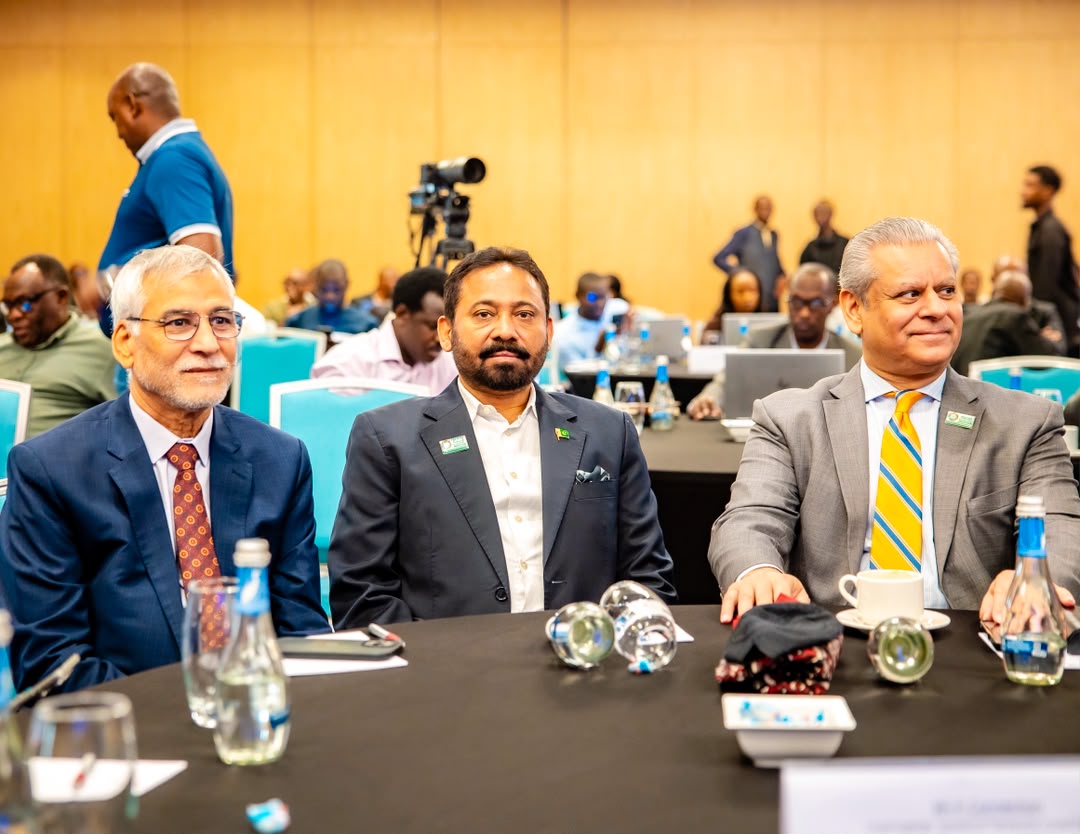
Pakistan’s High Commissioner to Rwanda, Naeem Khan, revealed that the two countries are working on an aviation memorandum of understanding that could pave the way for direct air connectivity.
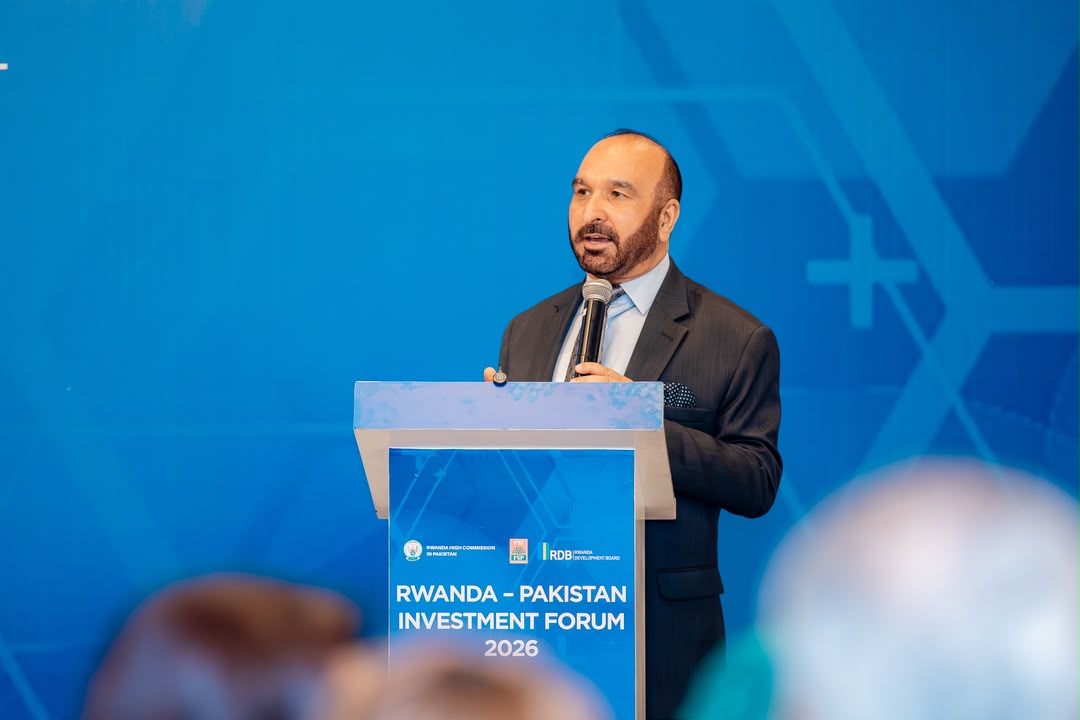
“We are working on an MoU in the aviation sector,” Naeem told journalists on the sidelines of the Rwanda-Pakistan Investment Forum held in Kigali on Thursday, September 24, 2026.
He highlighted that the proposed air link could benefit not only Rwanda and Pakistan but also facilitate connections between wider markets in Africa and South Asia.
“RwandAir already flies to Qatar. From Qatar, Pakistan is just two or three hours away. Why not extend that connection to Pakistan?” Naeem remarked, referring to the possibility of extending existing connections through the Middle East.
He cited the model used by airlines such as Ethiopian Airlines, which connect Pakistan to Addis Ababa and then serve other African destinations, saying a similar model could be developed through Rwanda.
Naeem noted that the aviation agreement is still under discussion and could be concluded within the next few months to a year.
The proposed direct flights come as Rwanda and Pakistan seek to increase trade and investment following the signing of a bilateral trade agreement at the forum.
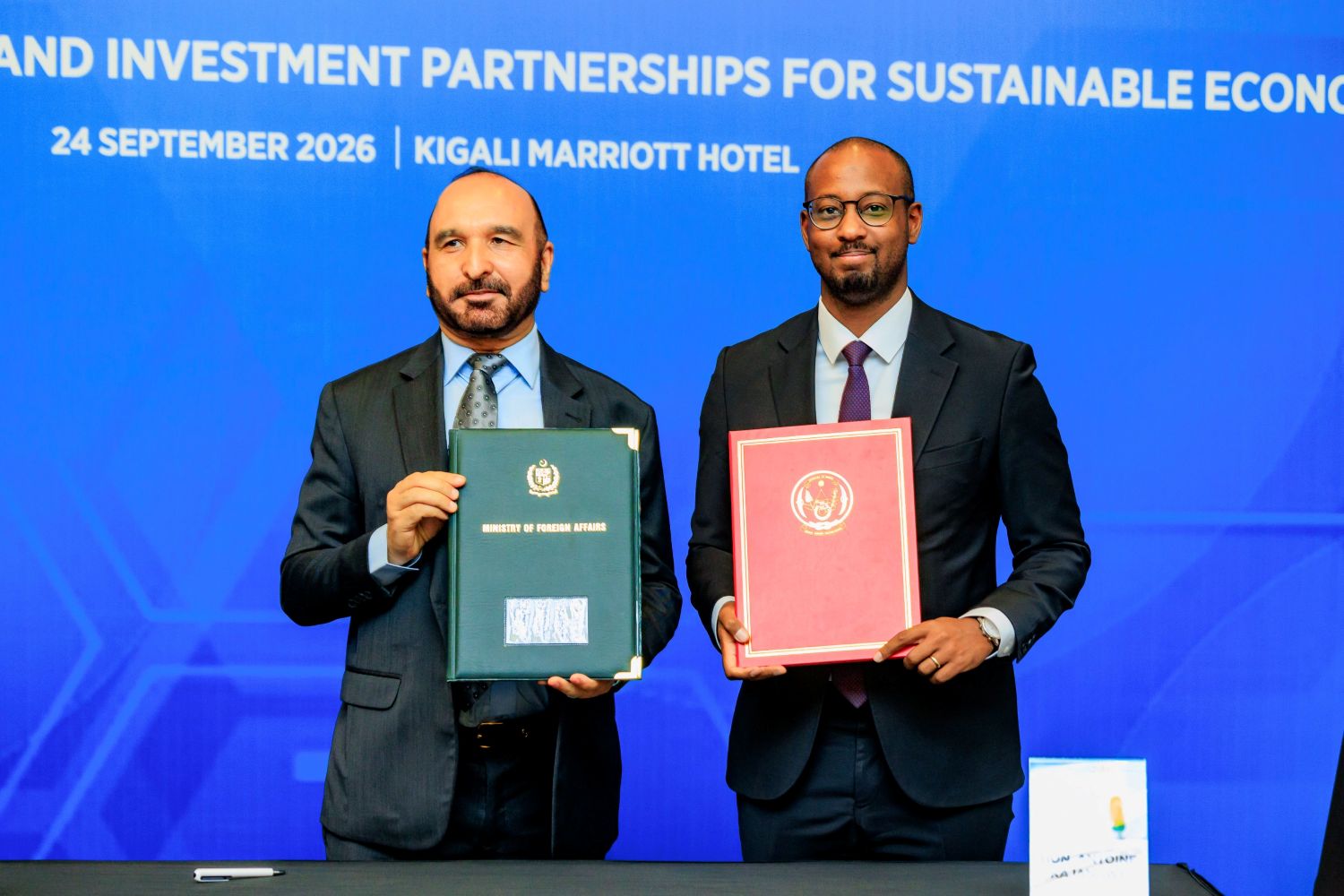
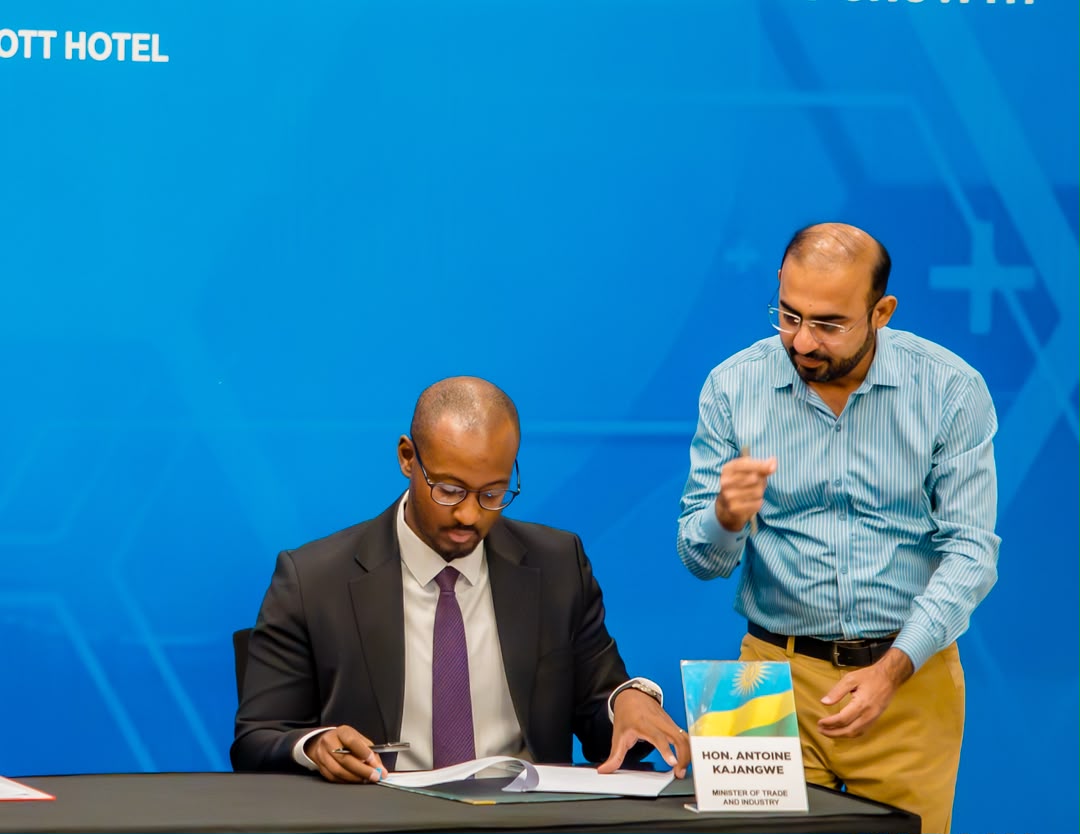
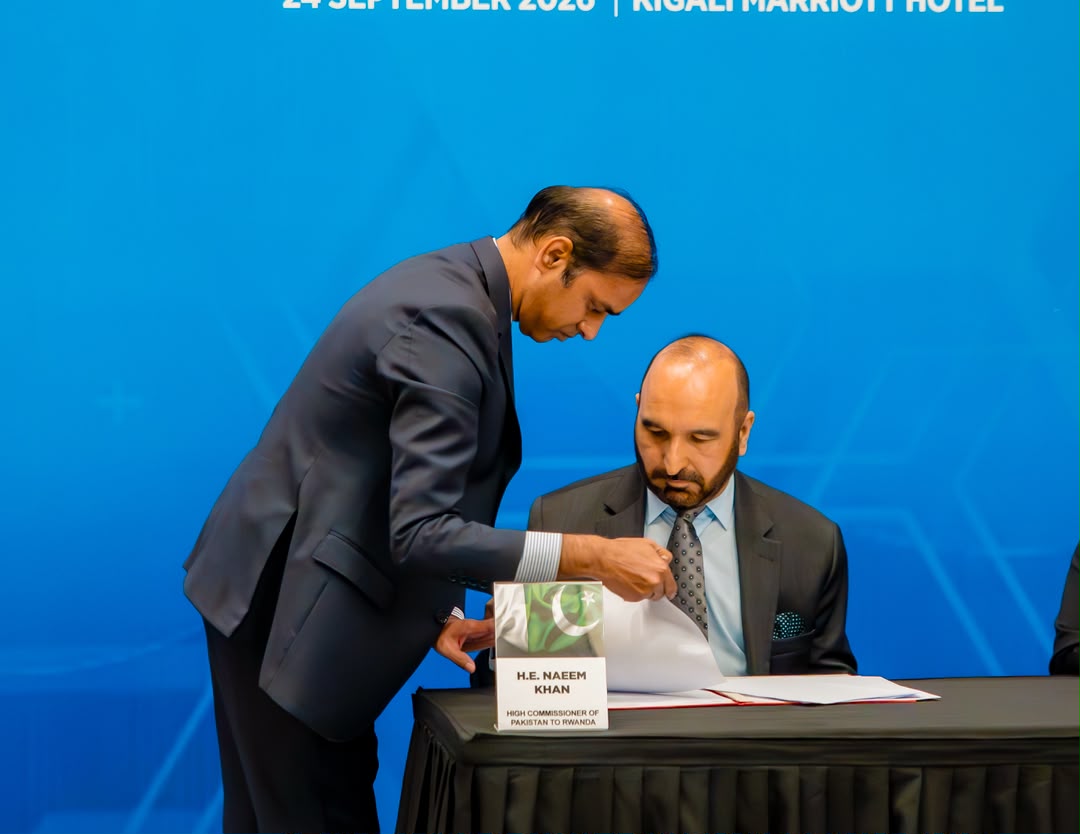
The agreement, signed by Rwanda’s Minister of Trade and Industry, Antoine Kajangwe, and Naeem, is intended to strengthen trade facilitation, business-to-business partnerships, joint ventures and cooperation in sectors including manufacturing, agriculture, tourism and transport.
Naeem emphasised that stronger air connectivity would support growing commercial links between the two countries by making it easier for businesspeople, investors and tourists to travel between Rwanda and Pakistan.
He also pointed to opportunities for Pakistani airlines and aviation-related companies to participate in Rwanda’s growing aviation market.
Rwanda is developing the new Kigali International Airport, which is expected to have a long-term capacity of up to 14 million passengers and serve as an anchor for a wider airport city focused on trade, logistics, tourism and investment.
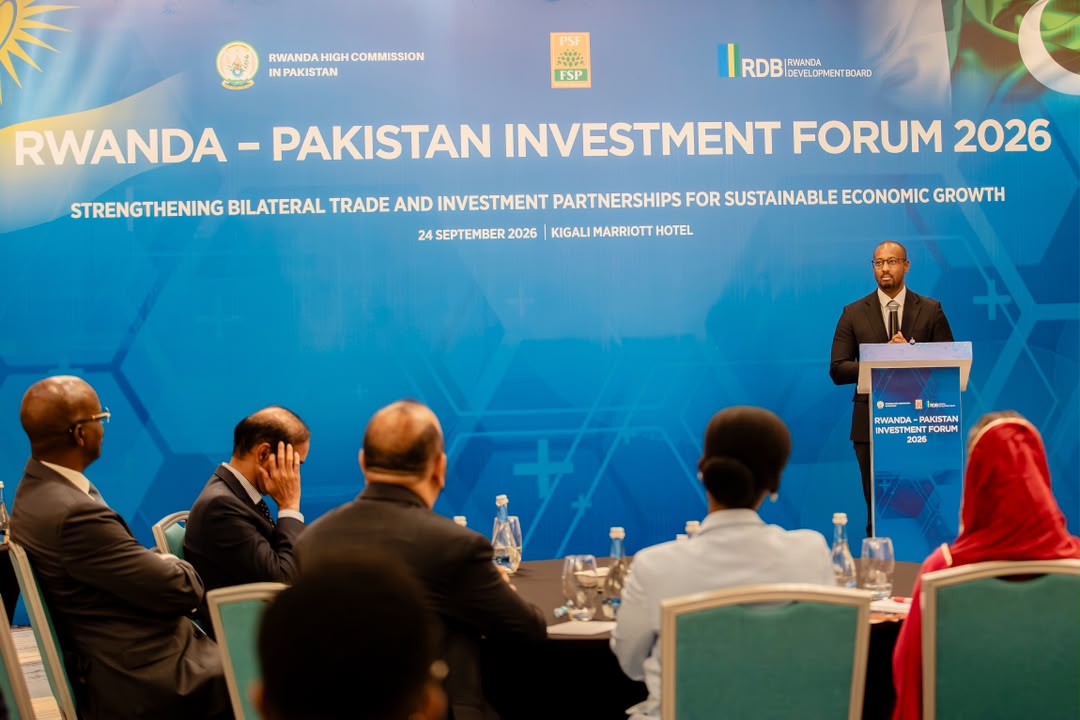
Rwanda Development Board Deputy CEO Juliana Muganza told the forum that the airport development forms part of Rwanda’s broader ambition to strengthen its position as a regional hub.
Trade between Rwanda and Pakistan reached $236 million between 2023 and 2025, according to the RDB Deputy CEO, as the two countries seek to deepen commercial ties and expand investment.
Naeem said the proposed connectivity could also position Rwanda as a link between South Asia and the wider African market.
“It will not be only Rwanda and Pakistan. They can cater to the whole of Africa and South Asia from Pakistan,” he added.
Rwanda and Pakistan have also identified several areas for stronger commercial cooperation, including manufacturing, agriculture, healthcare, ICT, tourism, construction and logistics.
Naeem said Pakistani companies are interested in investing in Rwanda while also using the country as a base to serve other African markets.
He cited construction, real estate, tourism and hospitality among the sectors where Pakistani investors could participate.
The two countries are also seeking to increase trade in agricultural products. Naeem highlighted Pakistani interest in importing Rwandan tea, coffee, avocados, beans, lentils and other pulses directly from Rwanda.
He emphasised that direct air connectivity could complement these efforts by improving links between businesses and markets in the two countries.
The proposed aviation cooperation is therefore part of a broader push by Rwanda and Pakistan to move beyond diplomatic relations and expand practical economic ties through trade, investment, transport and private-sector partnerships.
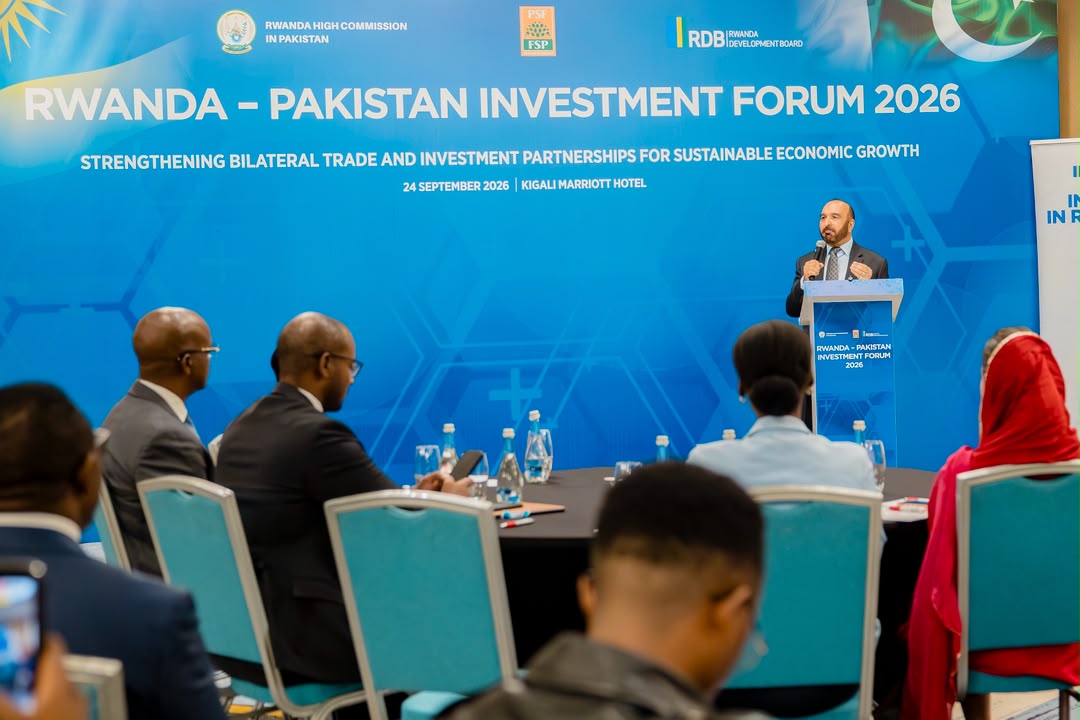
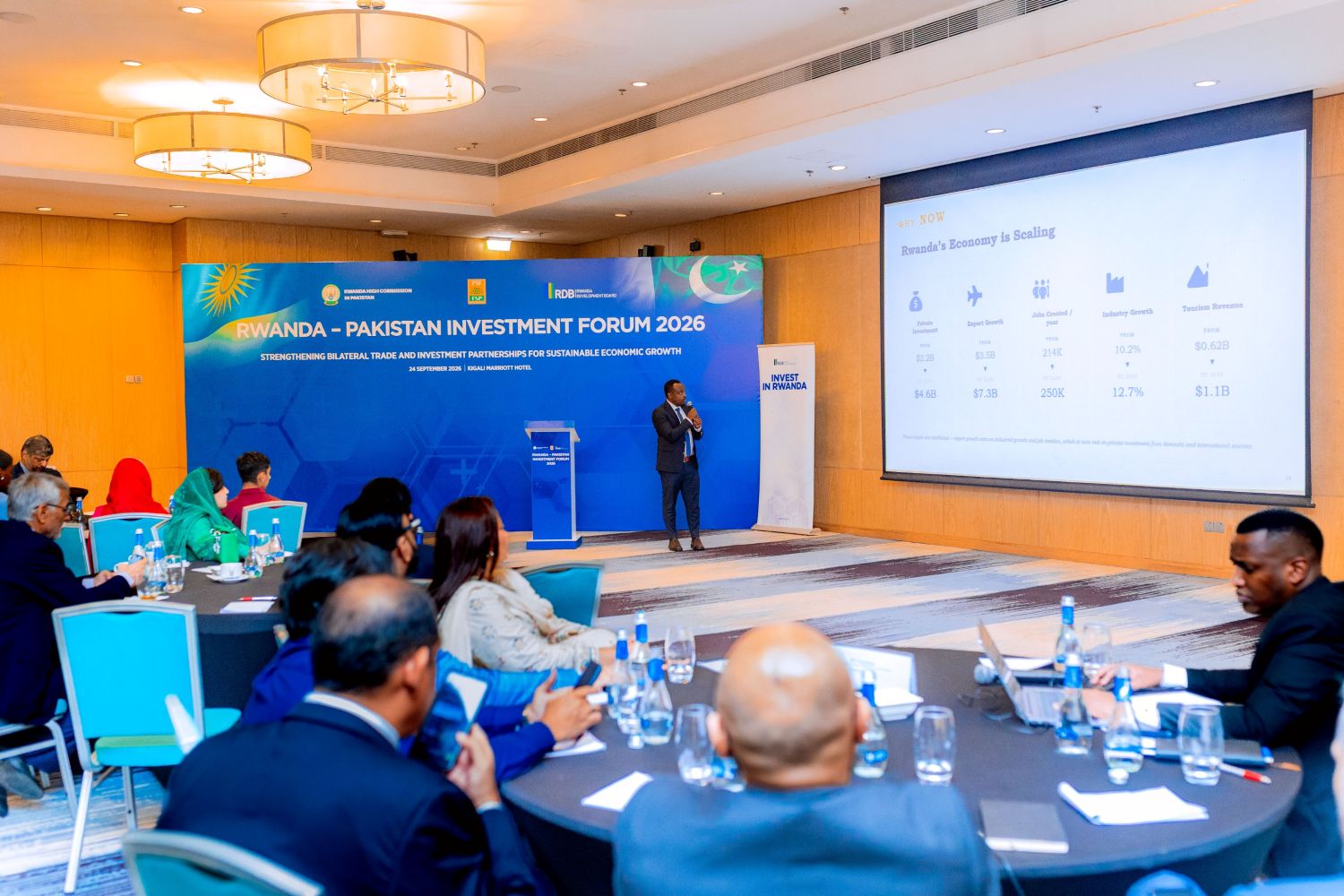
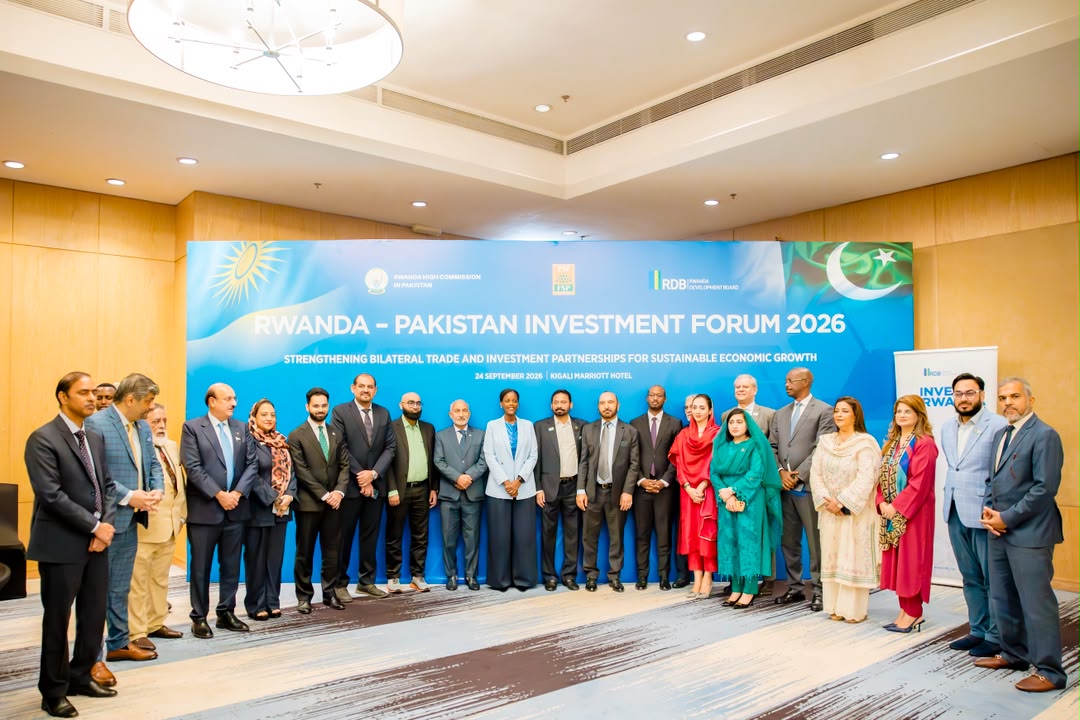
The proposed direct flights come as Rwanda and Pakistan seek to increase trade and investment following the signing of a bilateral trade agreement at the forum.Pakistan’s High Commissioner to Rwanda, Naeem Khan, revealed that the two countries are working on an aviation memorandum of understanding that could pave the way for direct air connectivity.Minister Kajangwe said the new trade agreement would help deepen cooperation in priority sectors. The forum brought together about 30 Pakistani business leaders and more than 40 Rwandan business representatives.
Ishimwe, who was born in Gikondo, Kicukiro, studied International Business with a specialization in Modern Logistics at WSG University in Poland. He now works for Thales Alenia Space, a Franco-European company specializing in satellite and space technologies.
Together with fellow students Shema Aime Cesar and Ishimwe Byiringiro Etienne, he developed Gerayo App, a mobile application designed to help passengers plan journeys and track Kigali’s bus services.
The idea emerged while the students were observing how technology was being used in Poland’s transport system.
“We are a group of three students who developed the application after observing how the transport system works here. We thought, ‘Couldn’t it be good if we applied technology to improve transportation in Rwanda?’” Ishimwe told IGIHE.
The team used knowledge acquired at university to develop the application and financed its initial online hosting and other costs through their personal savings.
Gerayo allows users to enter their current location and destination and receive information on available buses, routes and expected travel times.
According to Ishimwe, the application uses bus timetables provided by Ecofleet to determine departure intervals, distances and estimated travel times. It also uses Google Maps to estimate how long a passenger may take to walk to a bus stop.
The app can be particularly useful for people unfamiliar with Kigali’s public transport network, allowing them to plan their trips before leaving home.
“If you are walking on foot, the application uses Google Maps to show you how long it may take to reach the bus station,” he said.
The application has been in use for four months and has already attracted about 1,500 users in a week, equivalent to roughly 228 users per day.
Ishimwe said the users are mainly young people, students and other commuters, with a survey showing that people aged between 16 and 32 form the largest user group.
He believes the service can help passengers reduce waiting time and transport costs while making it easier to arrive at their destinations on time.
“I hope many people can take advantage of the app, spend less on transport and reach their destinations on time. It can also help people who may not be able to afford private transport,” he said.
The team is now looking beyond journey planning, with plans to introduce payment and e-ticketing features.
“We first want to integrate a payment system into the application based on feedback from users,” Ishimwe said.
The developers are also considering partnerships with existing payment providers and transport companies to eventually enable passengers to book seats and pay for tickets through the platform.
Ishimwe said collaboration with public institutions and private companies will be important as the project develops. He cited Ecofleet as one of the companies whose publicly accessible transport information can help improve the application.
The team also hopes to eventually expand Gerayo beyond Kigali to other cities across Rwanda.
For Ishimwe, the project was partly inspired by a personal experience. After a relative was involved in a motorcycle accident in 2023, he encouraged the person to use public transport. The experience later contributed to discussions that led to the development of the application in 2024.
Gerayo is currently available on Google Play and the Apple Store.
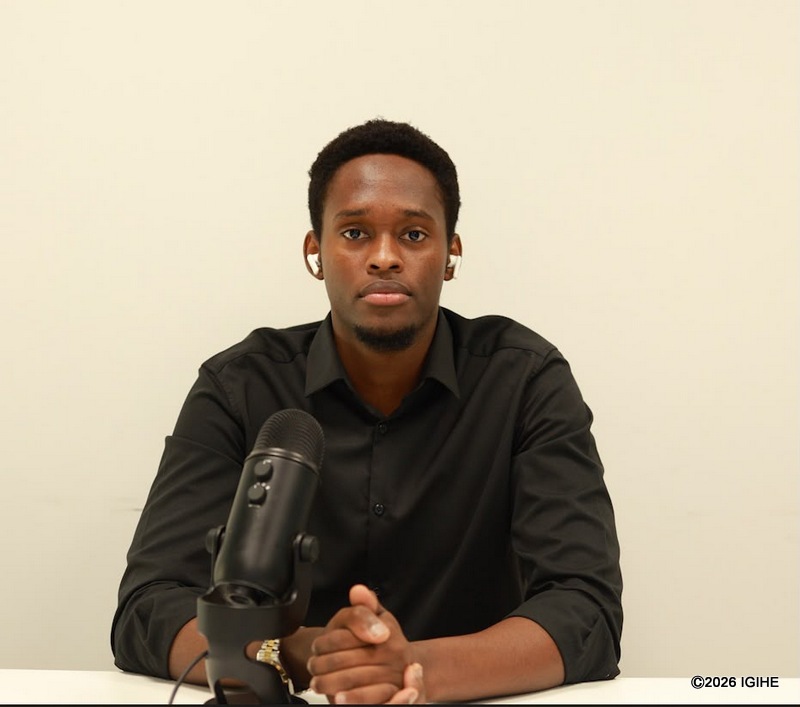
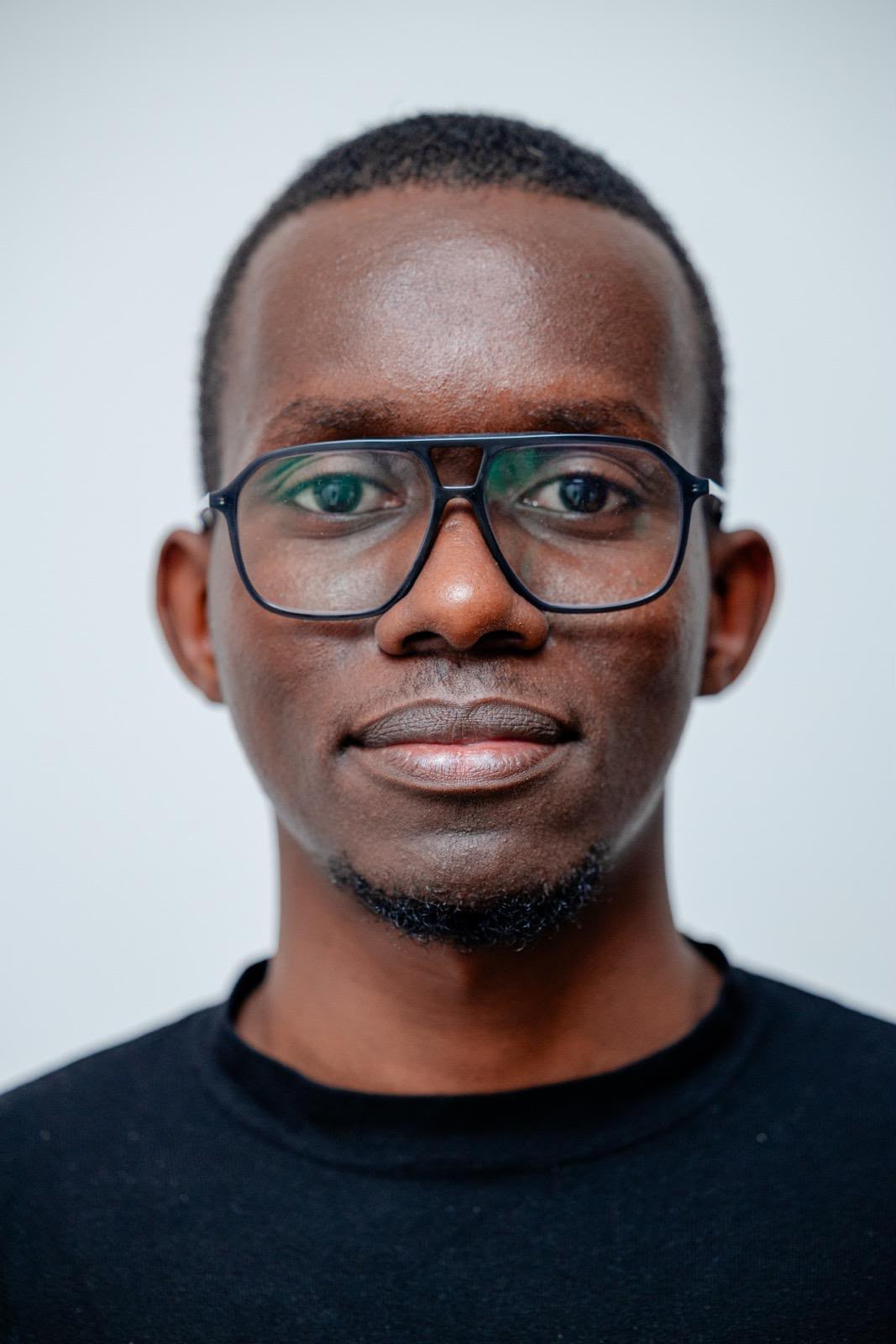
Shema Aime Cesar, one of the three students behind Gerayo App, contributed to developing the technology aimed at making Kigali’s public transport network easier for passengers to navigate.Ishimwe Byiringiro Etienne, a member of the Gerayo development team, is part of the group working to use technology to improve how passengers access information about public transport in Kigali.Kevin Ishimwe, Managing Director of Gerayo App, leads the team behind the public transport application and its development.IGIHE journalist during an interview with Kevin Ishimwe, one of the developers of Gerayo App, about how lessons from Poland inspired the team to develop a digital solution for Kigali’s public transport system.
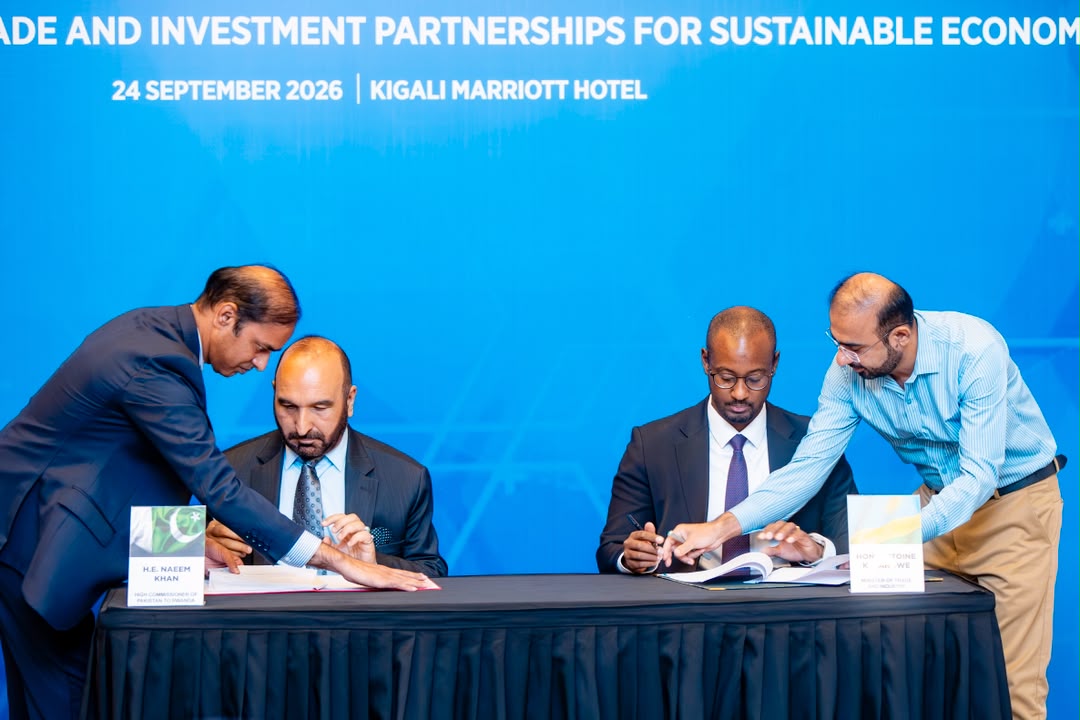
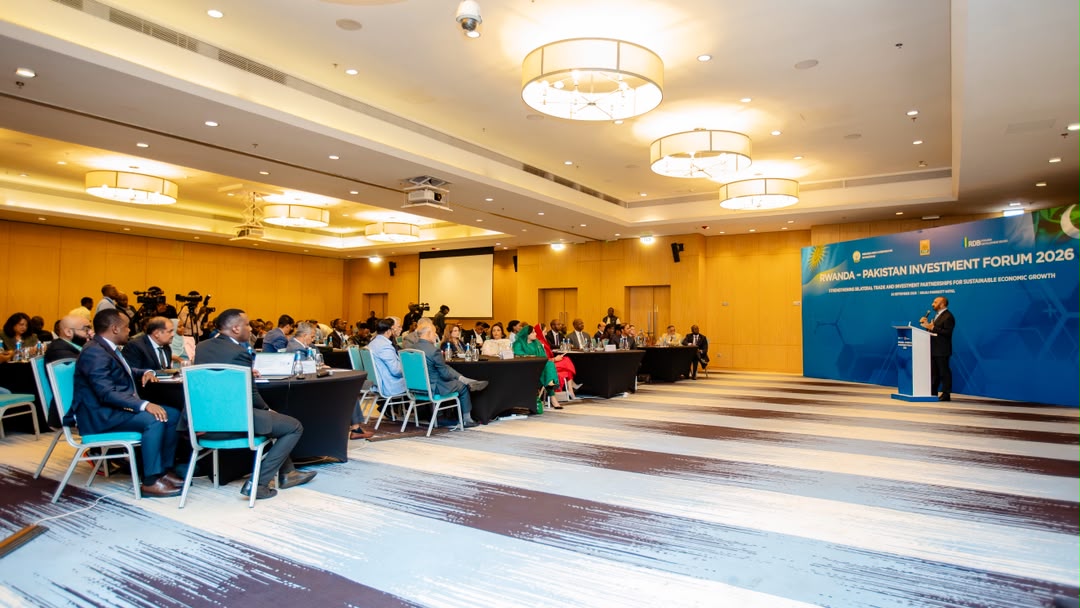
The agreement was signed by Rwanda’s Minister of Trade and Industry, Antoine Kajangwe, and Pakistan’s High Commissioner to Rwanda, Naeem Khan, during the inaugural Rwanda-Pakistan Investment Forum held at the Kigali Marriott Hotel on Thursday, September 24, 2026.
The forum was organised by the Rwanda High Commission in Pakistan in collaboration with the Rwanda Development Board.
The new agreement is expected to support greater trade facilitation, stronger business-to-business partnerships, joint ventures and cooperation across sectors including manufacturing, textiles and apparel, agriculture, tourism and transport.
It also provides for greater cooperation between private-sector organisations, including Rwanda’s Private Sector Federation (PSF) and Pakistan’s chambers of commerce, as well as the sharing of information on trade and investment opportunities in both countries.
Kajangwe said the agreement would help deepen cooperation in priority sectors, including agro-processing, manufacturing, textiles, electronics, infrastructure and healthcare equipment.
“Pakistan is home to more than 250 million people. But more importantly, it has an established manufacturing base in emerging markets,” he said, highlighting Pakistan’s manufacturing capabilities in areas such as textiles, surgical instruments, sports equipment, pharmaceuticals and IT services.
Minister Kajangwe said the agreement would help deepen cooperation in priority sectors.
Rwanda, meanwhile, is seeking to attract more Pakistani investment and position the country as a base from which companies can serve wider African markets.
Rwanda Development Board (RDB) Deputy CEO Juliana Muganza said bilateral trade between Rwanda and Pakistan reached $236 million between 2023 and 2025, while Rwanda registered seven Pakistani investment projects worth more than $2 million.
She said Rwanda’s economic growth and investment environment offer opportunities for Pakistani companies looking to manufacture, process and export to regional markets.
“Rwanda is not only a place to sell products, it is also a place to manufacture, innovate, process, export, and scale across Africa,” Muganza said.
She pointed to opportunities in agriculture and agro-processing, pharmaceuticals and medical manufacturing, textiles and apparel, ICT and digital services, artificial intelligence, mining and mineral value addition, infrastructure, tourism and hospitality.
Muganza said Rwanda should be viewed as a gateway to a much larger regional market rather than solely as a market of about 14 million people.
She noted that businesses operating from Rwanda can access more than 80 million consumers within a 500-kilometre radius, while the African Continental Free Trade Area offers access to a market of about 1.4 billion people.
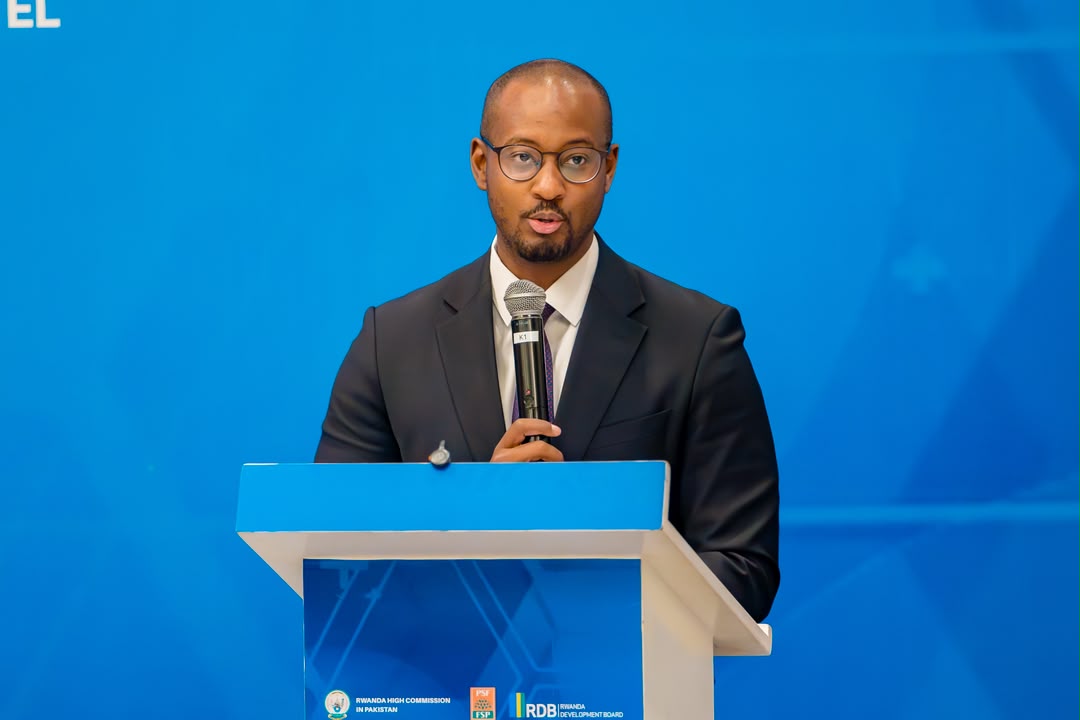
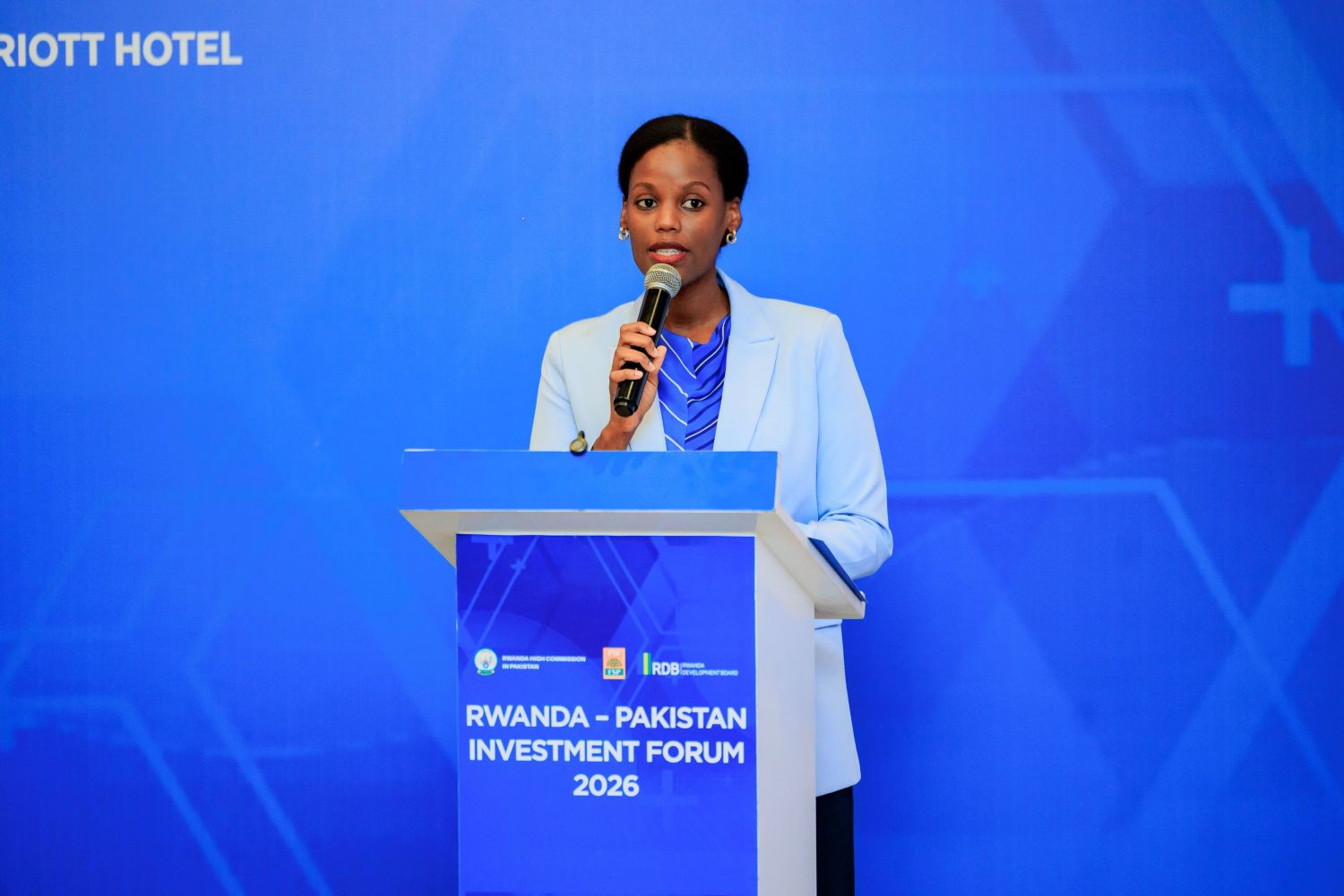
Juliana Muganza, RDB Deputy CEO, highlighted Rwanda as a gateway to a much larger regional market, beyond its 14 million people.
The RDB deputy CEO also highlighted the new Kigali International Airport and surrounding airport city development in Bugesera as part of Rwanda’s plans to strengthen its position as a regional hub for trade, logistics, tourism and investment.
The airport’s long-term capacity is expected to reach 14 million passengers, while the surrounding development is expected to create opportunities in logistics, manufacturing, hospitality, commercial services and innovation.
For Pakistani businesses, Muganza identified opportunities to supply agricultural machinery and inputs, food processing, packaging and other products while establishing production and processing operations in Rwanda.
Pakistan is also seeking greater access to Rwandan agricultural products.
High Commissioner Naeem said Pakistani companies are particularly interested in importing Rwandan tea, coffee, avocados, beans, lentils and other pulses directly from Rwanda.
“We want to import Rwandan tea directly to Pakistan,” he said during an interview with journalists.
He said Pakistan currently imports Rwandan tea through intermediaries and that direct trade could create opportunities for Rwandan producers to strengthen their presence in the Pakistani market.
He also highlighted interest in Rwandan coffee and other agricultural and mineral products.
At the same time, Pakistan is seeking to expand exports to Rwanda in areas including rice, surgical instruments, sports goods, agricultural machinery and technology.
High Commissioner Naeem highlighted Pakistani interest in importing Rwandan tea, coffee, avocados, beans and pulses.
Naeem said Pakistani companies could also invest in Rwanda’s construction, real estate, tourism, hospitality and agriculture sectors.
He cited Pakistan’s manufacturing capabilities in surgical instruments and sports equipment, arguing that some of these products could eventually be manufactured in Rwanda and re-exported to other African markets.
The two sides are also exploring closer cooperation in aviation.
Naeem said Rwanda and Pakistan are working on an aviation memorandum of understanding that could pave the way for stronger air connectivity and direct flights between the two countries.
He also said the newly signed trade agreement could serve as a step towards a preferential trade agreement, with the two countries expected to identify products that could receive preferential treatment.
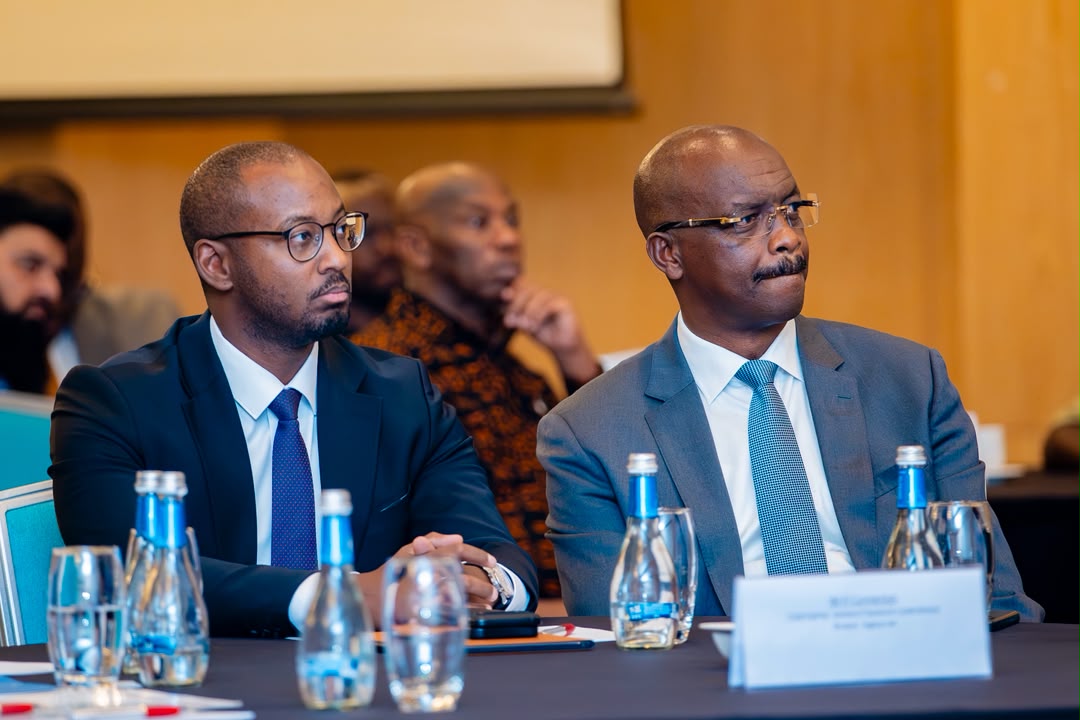
François Twagirumukiza, chairperson of the Private Sector Federation, noted that the agreement would give greater institutional backing to trade that has previously been driven largely by individual traders.
“This trade agreement signed today will boost our trade cooperation with Pakistan considerably,” he stressed.
He added that bringing business communities from both countries together alongside the agreement would help identify concrete commercial opportunities.
The forum brought together about 30 Pakistani business leaders and more than 40 Rwandan business representatives.
Rwanda registered $2.62 billion in investments across 799 projects in 2025, according to RDB, with the projects expected to create nearly 40,000 jobs.
Kajangwe said the government would continue working with Pakistani investors and other private-sector partners to translate the growing bilateral relationship into concrete business activity.
The new agreement comes as Rwanda and Pakistan seek to build on renewed diplomatic engagement following the establishment of resident diplomatic missions in Kigali and Islamabad.
The agreement was signed by Rwanda’s Minister of Trade and Industry, Antoine Kajangwe, and Pakistan’s High Commissioner to Rwanda, Naeem Khan.The new agreement is expected to support greater trade facilitation, stronger business-to-business partnerships, joint ventures and cooperation across sectors including manufacturing, textiles and apparel, agriculture, tourism and transport.The agreement also provides for greater cooperation between private-sector organisations, including Rwanda’s Private Sector Federation (PSF) and Pakistan’s chambers of commerce, as well as the sharing of information on trade and investment opportunities in both countries.Minister Kajangwe said the agreement would help deepen cooperation in priority sectors, including agro-processing, manufacturing, textiles, electronics, infrastructure and healthcare equipment.Amb. Naeem said Pakistani companies are particularly interested in importing Rwandan tea, coffee, avocados, beans, lentils and other pulses directly from Rwanda.François Twagirumukiza (right), chairperson of the Private Sector Federation, said the agreement would give greater institutional backing to trade that has previously been driven largely by individual traders.
The forum was organised by the Rwanda High Commission in Pakistan in collaboration with the Rwanda Development Board.
However, some former FDLR members who have recently broken away from the group have said that many of its fighters are integrated into the FARDC, both on the battlefield and in Kinshasa.
In an interview with France 24’s Marc Perelman in New York, at the United Nations headquarters, Ndayishimiye said he had yet to see tangible changes since Rwanda and the DRC signed peace agreements in Washington last year.
Ndayishimiye said that before asking the warring parties to cease hostilities, Rwanda’s forces should first withdraw, arguing that they had not yet done so and that this could further escalate the conflict.
He also said that because AFC/M23 fighters are Congolese, they should first be taken to a designated facility where their security would be guaranteed, before reaching an agreement with the Congolese government.
Burundi’s Foreign Affairs Minister, Dr Édouard Bizimana, recently wrote on X that the FDLR was an excuse created by Rwanda to conceal what he described as the real reasons behind the war in eastern DRC.
Rwanda’s Foreign Affairs Minister, Ambassador Olivier Nduhungirehe, responded that it was unfortunate that a country leading the African Union was suggesting that the FDLR genocidal group does not exist.
Nduhungirehe has also pointed to African Union resolutions calling for the FDLR’s disarmament and repatriation.
Asked by the journalist to comment on Bizimana’s statement and Nduhungirehe’s response, Ndayishimiye said: “I think the issue of FDLR is becoming increasingly clear.”
Ndayishimiye said the Congolese government had committed itself to dismantling the FDLR and had begun by identifying the locations of its fighters.
“The Government of Congo had committed in the agreement that the FDLR must be dismantled, and it first started by finding out where the FDLR was located,” he said.
According to Ndayishimiye, the Congolese government has identified the locations of FDLR fighters, with some allegedly in areas controlled by the government and others in areas controlled by AFC/M23.
He added that Kinshasa had presented its plan to dismantle the FDLR to various countries, including those in the region, which he said demonstrated the Congolese government’s willingness to eliminate the group.
The plan Ndayishimiye referred to is an agreement between the FDLR and the Congolese government aimed at the “reintegration” of the group’s fighters into civilian life. Rwanda rejected the arrangement, arguing that it could divert attention from and delay implementation of the Washington agreements.
Rwanda maintains that the FDLR remains a security threat and that it operates alongside Congolese forces and Wazalendo fighters during the fighting. Kigali has also accused Kinshasa of continuing to provide the group with support, including weapons, money and supplies.
Ndayishimiye said Rwanda and AFC/M23 should first have dismantled the FDLR in areas he said they control, but that this had not happened. He said this made him believe that there could be undisclosed interests behind the conflict.
“If I see that Rwanda is doing nothing about the FDLR in areas it controls, because it is the one that should have dismantled it first, I think there is another hidden agenda,” he said.
The Burundian president did not address the fact that the Congolese government itself had not launched operations against FDLR fighters as provided for under the agreement signed on June 27, 2025, focusing instead on the reintegration arrangement rejected by Rwanda.
Ndayishimiye’s comments come as Rwanda continues to call for the FDLR issue to be addressed as one of the initial steps towards restoring peace in eastern DRC and the wider Great Lakes region.
Rwanda argues that lasting peace in the region cannot be achieved while the group, which it says has a history of destabilising the region, continues to operate in eastern DRC. Burundi, which has deployed forces alongside the Congolese army in fighting against AFC/M23 in parts of North and South Kivu, has itself been accused of cooperating with the FDLR.
Seeking to distance Burundi from the group, Ndayishimiye said there were no FDLR fighters in areas where Burundian troops operate because, he said, they would not find them there.
“Everyone knows that whenever Burundi has captured an FDLR fighter, they have been returned to Rwanda,” he said.
However, there is no publicly known instance during Ndayishimiye’s presidency in which Burundi captured FDLR fighters and handed them over to Rwanda, although the Burundian president said he had evidence to support his claim.
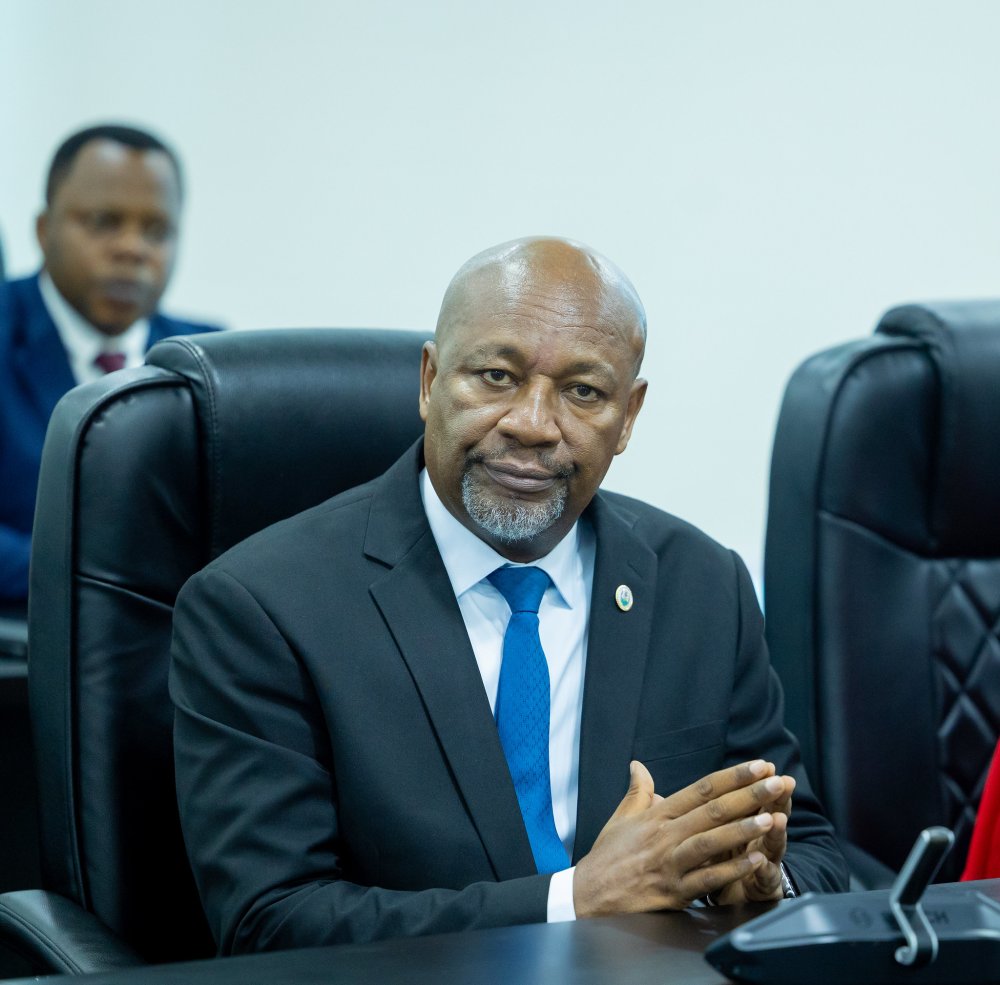
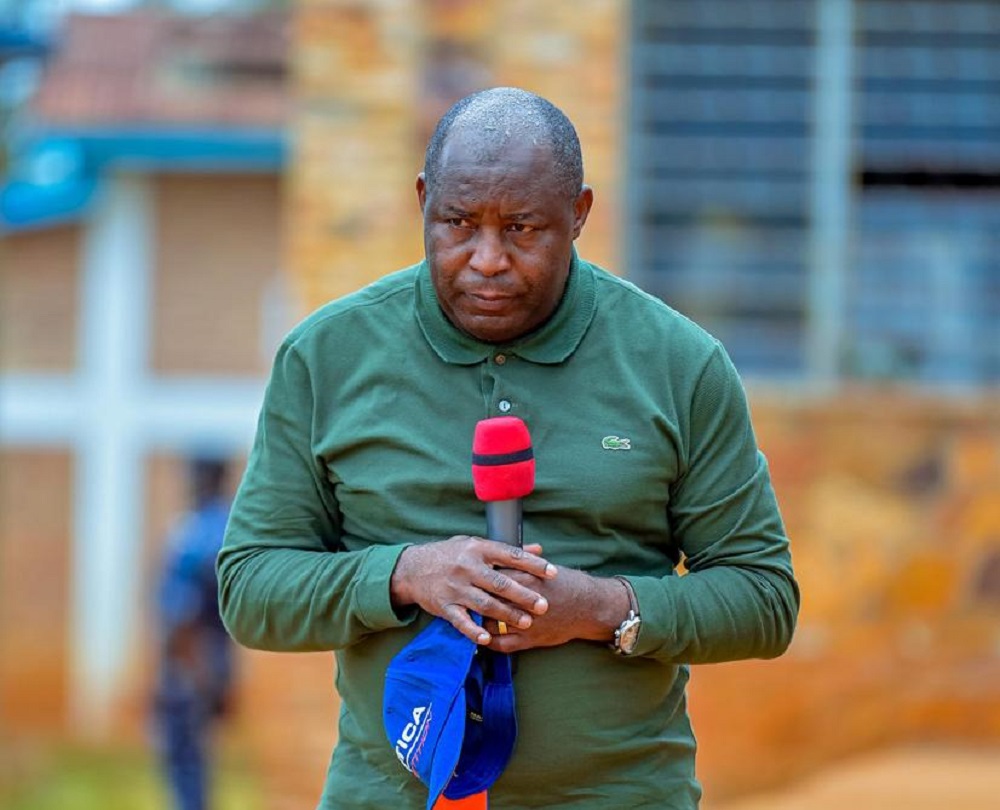
Burundian President Évariste Ndayishimiye has echoed DRC’s pretext for its failure to dismantle the FDLR.
Dr. Nsengiyumva made the remarks on September 23, 2026, in New York, where he delivered closing remarks at an event marking the 10th anniversary of the Kigali Amendment and the renewal of the Friends of the Kigali Amendment.
“The Kigali Amendment has shown us what is possible when countries come together around a shared environmental challenge and turn ambition into collective action,” he said, while stressing that “adoption was only the beginning.”
He said the real test now is how quickly countries can translate their commitments into improvements in people’s daily lives.
The Prime Minister linked sustainable cooling to practical development needs, citing healthcare, agriculture and energy costs as areas where progress can have a direct impact.
He said reliable and sustainable cooling can determine whether hospitals are able to safely refrigerate vaccines and medicines, while cold-chain infrastructure can help farmers preserve their produce, reach markets on time and reduce losses.
“This is why sustainable cooling cannot be treated only as a climate priority. It is a development priority,” Dr. Nsengiyumva said.
The Kigali Amendment, adopted in Kigali in 2016, expanded the Montreal Protocol’s scope by requiring countries to gradually reduce the production and consumption of hydrofluorocarbons (HFCs), potent greenhouse gases widely used in refrigeration and air conditioning.
Ten years after its adoption, the Amendment has gained broad international participation. As of August 10, 2026, 174 countries had ratified it, according to the Ozone Secretariat.
The Ozone Secretariat says the Amendment has helped drive the transition towards more energy-efficient and sustainable cooling technologies. Its 2026 anniversary campaign describes the past decade as a period in which the agreement has linked climate action with development, industrial capacity and innovation.
Officially reported data also show that global HFC production and consumption peaked in 2023 before beginning to decline. By 2024, consumption was reported to be 30 percent below the collective baseline established under the Kigali Amendment.
Dr. Nsengiyumva said Rwanda is seeking to contribute to this transition through the African Centre of Excellence for Sustainable Cooling and Cold-chain, which brings together technology, skills, research and investment to address challenges in food systems and healthcare.
He said Rwanda’s experience should serve as a “proof of concept” that can eventually be scaled beyond the country.
The Prime Minister identified four priorities for the renewed Friends of the Kigali Amendment: bringing every country into the agreement, accelerating implementation, mobilising partnerships and resources, and ensuring industry contributes to making efficient, climate-friendly cooling technologies available at scale.
He also called for greater involvement from philanthropy, civil society, the private sector, financial institutions and organisations such as the Climate and Clean Air Coalition.
His remarks come ahead of the 38th Meeting of the Parties to the Montreal Protocol, which Rwanda will host in Kigali from November 2 to 6, 2026.
The meeting will take place in the same city where the Kigali Amendment was adopted a decade ago, giving Rwanda an opportunity to host countries as they assess progress and consider the next phase of implementation.
Dr. Nsengiyumva said Rwanda looks forward to welcoming participants back to Kigali, urging countries and partners to move “from commitment to implementation, from implementation to impact, and from ambition to results.”
The event was held in New York on September 23, 2026, bringing together government representatives and partners to mark the 10th anniversary of the Kigali Amendment and renew the Friends of the Kigali Amendment.Prime Minister Dr. Justin Nsengiyumva has urged countries to accelerate the implementation of the Kigali Amendment and ensure efficient, climate-friendly cooling technologies are available at scale.
Trump and first lady Melania Trump personally greeted Xi and his wife, Peng Liyuan, after their plane landed at the military base outside Washington.
The arrival ceremony included a 21 member honor guard, military platoons, the flags and national anthems of both countries, and a flyover by two B-1 bombers.
Xi’s visit comes as the United States and China continue discussions over trade, technology, artificial intelligence, rare earth minerals and other areas of disagreement.
On Wednesday, US Treasury Secretary Scott Bessent said the two countries had agreed to extend their existing trade truce until January 10.
The arrangement had been due to expire in November and involves both sides scaling back tariffs and refraining from introducing certain new trade restrictions.
The extension gives Washington and Beijing additional time to negotiate broader economic issues.
Bessent said the additional period could allow Trump and Xi to continue discussions at international meetings planned for later this year.
Trade is not the only issue expected to feature in the talks. Artificial intelligence, access to rare earth minerals, Taiwan and US China relations with Iran are also among the issues facing the two governments.
Xi’s visit is the first state visit by a Chinese president to Washington in more than a decade.
His previous US state visit took place in 2015 during the administration of President Barack Obama.
The formal programme continues Thursday, when Trump and Xi are expected to hold talks at the White House.
Trump and Melania Trump are also scheduled to host Xi and Peng at a state dinner.
The visit includes several ceremonial events, reflecting the importance both governments place on their relationship despite continuing disagreements.
Xi is also scheduled to return to the White House on Friday for a private meeting with Trump and Melania Trump before visiting the National Archives with the first couple.
The leaders’ discussions come at a time when Washington and Beijing are seeking to manage tensions while addressing economic and security issues that affect their relationship and the wider global economy.
US President Donald Trump and Chinese President Xi Jinping participate in an arrival ceremony at Joint Base Andrews, Maryland, on September 23, 2026, as Xi begins his state visit to the United States.