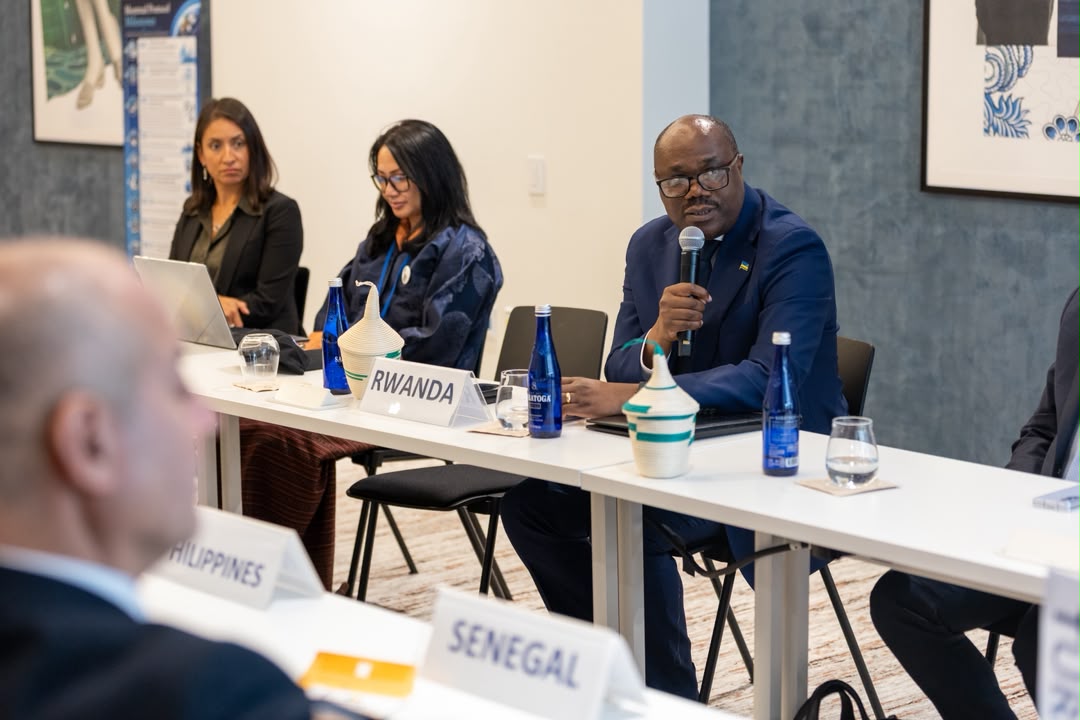
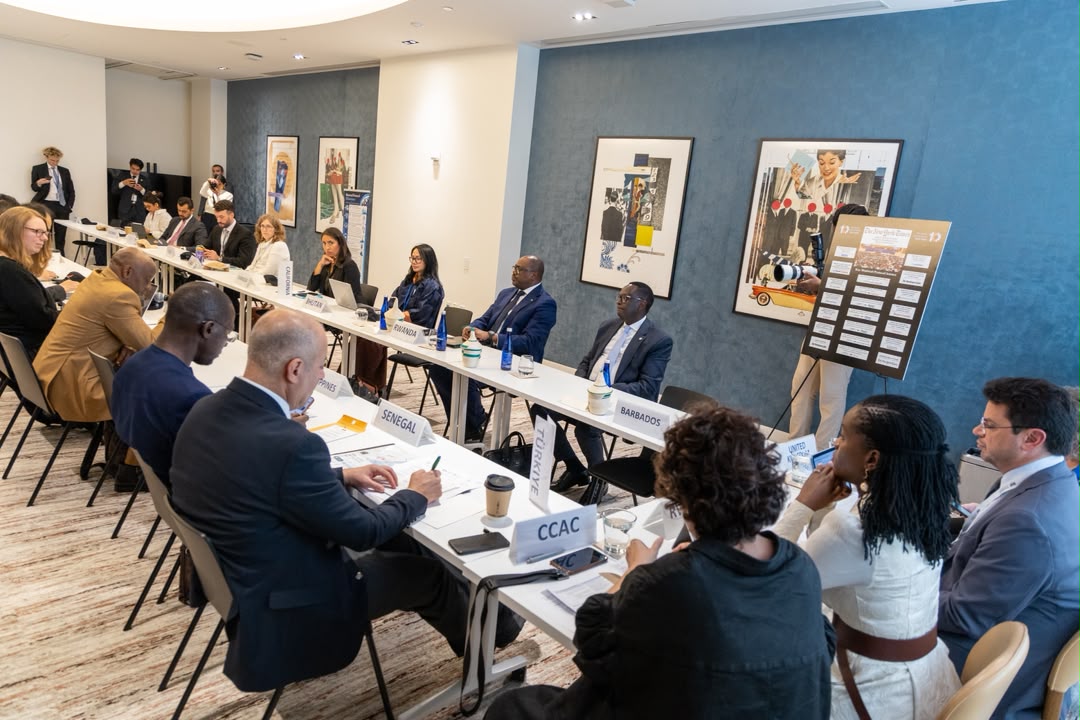
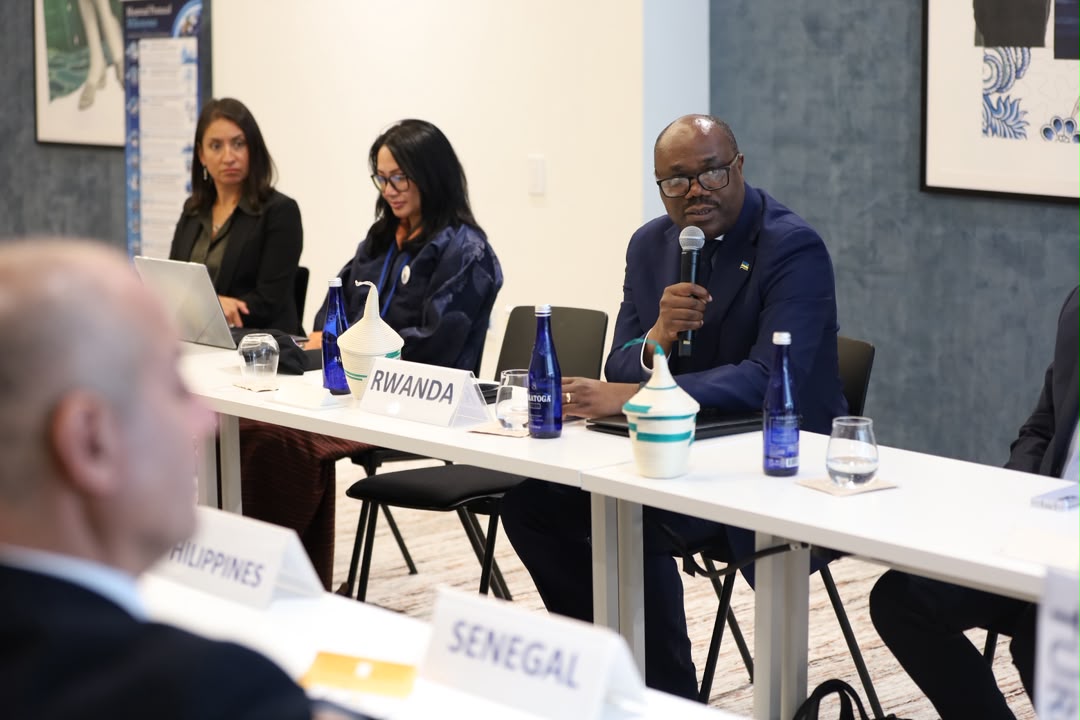
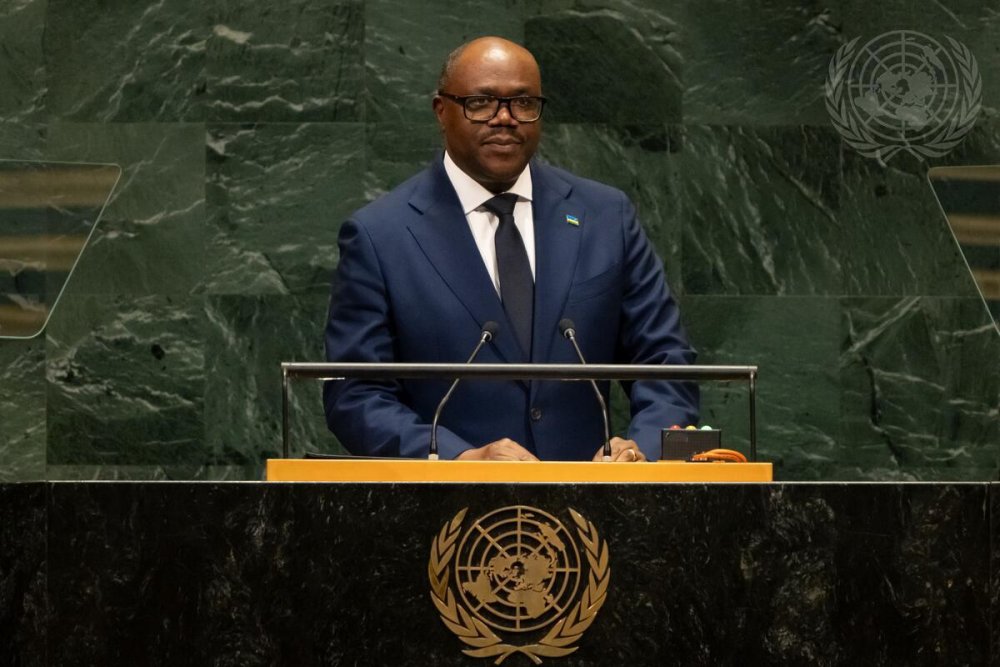
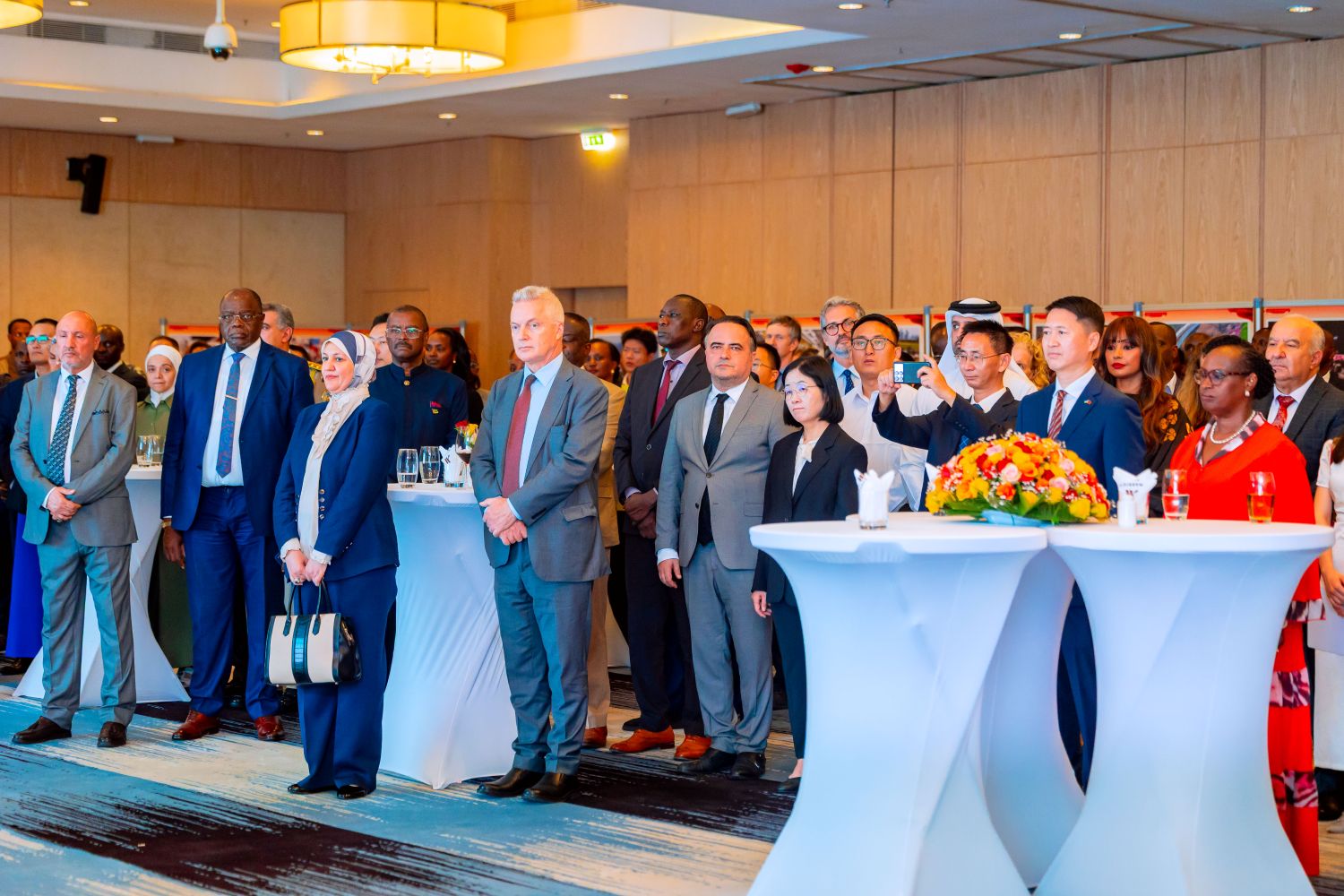
The meeting marked the second session of the Joint Permanent Commission on Cooperation (JPCC), co-chaired by Rwanda’s Minister of Foreign Affairs, Olivier Nduhungirehe, and Botswana’s Minister of International Relations, Phenyo Butale.
In his remarks, Nduhungirehe highlighted the strong ties between Rwanda and Botswana and underscored the need to further deepen bilateral economic cooperation.
Rwanda’s delegation also included the Deputy CEO of the Rwanda Development Board, Juliana K. Muganza, along with other government officials and private sector representatives.
The discussions focused on finalizing new cooperation agreements aimed at strengthening and expanding relations between the two countries.
Both sides reviewed legal and regulatory frameworks that will guide the partnership, covering areas such as trade, agriculture, and the avoidance of double taxation.
Both ministers welcomed the finalisation of six key instruments, which are expected to be signed during President Kagame’s state visit to Botswana on May 6, 2026.
The Joint Permanent Commission on Cooperation was established in 2019 during President Kagame’s previous visit to Botswana.
During the visit, Kagame is expected to meet his counterpart, Gideon Boko, with discussions set to focus on cooperation in areas including trade and technology, tourism, animal vaccine production, transport, and the diamond sector.
The visit is also expected to result in the signing of multiple agreements covering trade and investment, institutional collaboration, and partnerships between the Rwanda Development Board and its counterpart institution in Botswana.
The meeting marked the second session of the Joint Permanent Commission on Cooperation (JPCC), co-chaired by Rwanda’s Minister of Foreign Affairs, Olivier Nduhungirehe, and Botswana’s Minister of International Relations, Phenyo Butale.
He described the match between Visit Rwanda partners Arsenal FC and Atlético Madrid as an exciting encounter, commending Arsenal for their performance and qualification.
“Great match between Visit Rwanda partner teams Atlético Madrid and Arsenal. Congratulations to Arsenal FC on the win and qualification for the UEFA Champions League Final. May the best VisitRwanda partner team win!” Kagame wrote on X.
The two teams faced off in the second leg of the semi-final on May 5, 2026. Playing at Emirates Stadium, Arsenal took control early in the match and dominated much of the game. In the 44th minute, Bukayo Saka scored the only goal, giving Arsenal a 2-1 aggregate win over the two legs.
Another semi-final clash is scheduled for May 6, 2026, between Bayern Munich and Paris Saint-Germain, both also partners of Visit Rwanda. In the first leg, PSG secured a 5-4 victory at home against Bayern Munich.
The winner of that tie will face Arsenal FC in the final, set to take place in Budapest on May 30, 2026.
This marks Arsenal’s second appearance in a UEFA Champions League final, their first being in 2006 when they lost to FC Barcelona.
Playing at Emirates Stadium, Arsenal took control early in the match and dominated much of the game. In the 44th minute, Bukayo Saka scored the only goal, giving Arsenal a 2-1 aggregate win over the two legs. The two teams faced off in the second leg of the semi-final on May 5, 2026.The two teams faced off in the second leg of the semi-final on May 5, 2026.
“The operation is over, Epic Fury, as the president notified Congress. We’re done with that stage of it,” Rubio said at a White House briefing.
“We’re now on to this Project Freedom,” a military operation the Pentagon launched Monday to guide stranded commercial vessels out of the Strait of Hormuz, Rubio went ahead, noting Washington’s priority now was reopening the crucial global energy waterway.
The announcement is seen as the Trump administration’s attempt to sidestep the War Powers Resolution, which requires the president to seek congressional authorization to continue military hostilities after 60 days.
Rubio repeated U.S. President Donald Trump’s claim that the 1973 law that limits the president’s war power “is 100 percent unconstitutional.”
The Trump administration notified Congress last week that hostilities against Iran had been “terminated” as it reached a 60-day legal threshold.
However, Trump has not ruled out resuming military strikes amid stalled talks. Rubio said that Iran now has the opportunity to “make it clear” that they do not want a nuclear weapon, which he said is key to a peace deal with Washington.
Iran would “hold the world hostage” with a nuclear weapon, Rubio warned, accusing Tehran of trying to develop “long-range delivery missiles” and build underground facilities for uranium enrichment activity.
“Someone has to do something about it,” he stressed.
Earlier on Tuesday, Trump refused to spell out what would constitute a violation of the fragile ceasefire with Iran, reiterating that Tehran wants a peace deal with Washington.
On Feb. 28, the United States and Israel launched joint strikes against Tehran and other Iranian cities, killing Iran’s then Supreme Leader Ali Khamenei, senior commanders, and civilians. Iran responded with waves of missile and drone attacks on Israeli and U.S. targets across the Mideast region, and tightened control over the Strait of Hormuz.
A ceasefire took effect on April 8, followed by talks between Iranian and U.S. delegations in Islamabad that ended without a deal.
U.S. Secretary of State Marco Rubio speaks during a press briefing at the White House in Washington, D.C., the United States, on May 5, 2026. U.S. Secretary of State Marco Rubio said Tuesday the U.S. military campaign against Iran, which was jointly launched with Israel on Feb. 28, is “over.”
The agency received reports of a hantavirus outbreak on the Hundius on May 2. Seven individuals of the 147 passengers and crew have been reported ill and three have died. The situation remains fluid, WHO’s chief of Epidemic and Pandemic Preparedness and Prevention Maria Van Kerkhove told reporters in Geneva.
“One patient is in intensive care in South Africa, although we understand that this patient is improving,” she said, adding that two other patients, still on board the ship, are being prepared for medical evacuation to the Netherlands for treatment.
Van Kerkhove stressed that the situation is being closely monitored. As a precaution, passengers have been asked to remain in their cabins while disinfection and other public health measures are carried out.
“The plan is, and our highest priority is, to medically evacuate these two individuals” to make sure that they receive the required care, and there are no other symptomatic patients on board, she said.
The ship is set to continue on to the Canary Islands, Spain, and the WHO is working with the Spanish authorities “to do a full epidemiologic investigation, full disinfection of the ship,” she added.
Hantaviruses are carried by rodents and can cause severe disease in humans. Thousands of infections are estimated to occur each year. People usually get infected through contact with infected rodents or their urine, their droppings, or their saliva.
As to the suspected origins of the virus, Van Kerkhove said that the initial patients — a husband and wife — boarded the ship in Argentina.
“With the timing of the incubation period of hantavirus, which can be anywhere from one to six weeks, our assumption is that they were infected off the ship,” she said.
“We do believe that there may be some human-to-human transmission that’s happening among the really close contacts,” such as the husband and wife and others who have shared cabins, she noted.
According to the WHO, human-to-human transmission of infection hantavirus between people is uncommon, but limited spread has been reported among close contacts in previous outbreaks of the Andes virus, which is part of the hantavirus group.
There are no specific treatments for hantavirus other than supportive care. “Typically, people will develop respiratory symptoms, so respiratory support is really important,” Van Kerkhove said.
This file photo shows Maria van Kerkhove (R), who was technical lead for the WHO’s Health Emergencies Program, speaking during a daily briefing in Geneva, Switzerland, on March 5, 2020.
The joint sitting of Romania’s bicameral parliament started at 11 a.m., with 431 of its 464 members present for the vote. Romania’s 464-seat parliament requires at least 233 votes to pass a no-confidence motion. A total of 288 lawmakers cast their votes, with three invalid ballots, leaving 285 valid votes.
Under the constitution, the Bolojan government will become an interim administration from the moment the vote passes, limited to handling routine administrative affairs. It will not be allowed to issue emergency ordinances or propose new legislation. The interim government’s term may not exceed 45 days.
The parties now enter negotiations to form a new government. Failure to do so could trigger a snap election.
The Social Democratic Party (PSD), the primary initiator of the motion, is willing to quickly find a solution “to have a government quickly,” and “all options are open,” said PSD President Sorin Grindeanu after the government was dismissed.
Catalin Predoiu, first vice president of the National Liberal Party (PNL), told local media Digi24 that this situation should not have happened, and negotiations between parties should continue.
Dominic Fritz, president of the ruling coalition member Save Romania Union (USR), said on social media that USR will “neither let the PSD and the Alliance for the Union of Romanians (AUR) drag Romania back to the past, nor enter into negotiations with the PSD to form a new government.”
Bolojan of the PNL took office in June 2025. However, its austerity policies and proposed sale of strategic state assets drew strong opposition from the PSD, the largest party in the original governing coalition.
In April, the PSD withdrew its political support and pulled all its ministers from the government, seeking Bolojan’s resignation but was rebuffed. The party then, together with major opposition parties and independents, submitted a no-confidence motion in late April.
Romania’s Prime Minister Ilie Bolojan speaks during a no-confidence vote against his government at Parliament Palace in Bucharest, Romania, May 5, 2026. Romania’s bicameral parliament passed a no-confidence motion against Prime Minister Ilie Bolojan’s government on Tuesday, with 281 votes in favor and 4 against, bringing down the government, according to the parliament’s live broadcast of the vote.
The awards were announced on May 4, 2026, in California, United States.
The IndieFest Film Awards is an international competition dedicated to promoting emerging talent in the global film industry, with awards presented across seven categories.
The winning films were produced by Rwandan documentary filmmaker Zion Sulaiman Mukasa Matovu.
Umuganda explores how community work has evolved into a symbol of self-reliance, cultural identity, and national unity in Rwanda.
Beyond the Genocide reflects on the 1994 Genocide against the Tutsi and its aftermath, highlighting Rwanda’s journey of recovery, resilience, and national rebuilding.
Speaking about the recognition, Matovu said the international award underscores the importance of documenting and sharing Rwanda’s history.
“These films were made in remembrance and to encourage reflection on our history. Receiving international recognition shows the importance of telling our story as it is, and that remains our goal,” he said.
Two Rwandan documentary films, Umuganda and Beyond the Genocide, have been awarded the Merit Award at the IndieFest Film Awards, a recognition given to productions with strong storytelling. Film-maker Matovu said the international award underscores the importance of documenting and sharing Rwanda’s history.
She made the remarks on May 4, 2026, in Geneva during an official reception held on the sidelines of the ITU Council session, attended by high-level delegates including the ITU Secretary-General, Doreen Bogdan-Martin.
Bakuramutsa expressed appreciation to Swiss authorities for hosting the session, before highlighting Rwanda’s longstanding role on the ITU Council since 2010, where it represents the African region. She said Rwanda’s engagement has been guided by its commitment to promoting universal and inclusive connectivity in line with global digital development goals.
She noted that Rwanda has actively contributed to international discussions on key issues such as meaningful connectivity, spectrum management, digital policy, and artificial intelligence, while consistently advocating for the interests of developing countries, including affordable access and bridging the digital divide.
The Ambassador also pointed to Rwanda’s broader efforts to position itself as a regional technology hub, citing initiatives such as the Smart Africa Alliance, headquartered in Kigali, and the hosting of Mobile World Congress Kigali since 2022.
She further highlighted national projects aimed at strengthening digital infrastructure and innovation, including a data-sharing platform, a cybersecurity hub, e-government services, and an artificial intelligence scaling hub targeting sectors such as healthcare, agriculture, and education.
Bakuramutsa emphasized that despite global progress, about 2.2 billion people remain without internet access, underlining the need for continued international cooperation. She recalled Rwanda’s role in hosting major ICT events, including the World Telecommunication Development Conference in 2022, which contributed to advancing global commitments through the Kigali Declaration and Action Plan.
On the diplomatic front, she formally announced Rwanda’s bid for re-election to the ITU Council, seeking support from Member States to continue contributing to the global ICT agenda, particularly in areas such as digital public infrastructure, innovation, and entrepreneurship.
Taking the floor, ITU Secretary-General Doreen Bogdan-Martin commended Rwanda’s leadership in digital development, both in Africa and globally. She highlighted Kigali’s transformation into a growing innovation hub and referenced key initiatives including the Partner2Connect Digital Coalition and Mobile World Congress Kigali.
Bogdan also praised Rwanda’s progress in artificial intelligence, digital education, and e-waste management, as well as its continued engagement in ITU initiatives. She further acknowledged the role of President Paul Kagame in advancing the country’s digital agenda on the global stage.
Delegates listen as Amb. Urujeni Bakuramutsa presents Rwanda’s vision for inclusive connectivity during the ITU Council session in Geneva.Rwanda’s Ambassador Urujeni Bakuramutsa addresses delegates in Geneva as the country announces its bid for re-election to the International Telecommunication Union Council.ITU Secretary-General Doreen Bogdan-Martin commended Rwanda’s leadership in digital development. Doreen Bogdan-Martin joins international delegates in Geneva as Rwanda highlights its digital leadership and re-election bid to the ITU Council.
The new law, passed on Tuesday, is expected to help prevent and reduce risks associated with digital assets, including money laundering and financing of terrorism. It also aims to strengthen consumer protection by curbing fraud and misleading promises of excessive returns.
Background and need for regulation
During the review of the bill by the Parliamentary Committee on Trade and Economy, it was revealed that the National Public Prosecution Authority (RIB) had recorded 35 cases linked to cryptocurrency-related fraud, many of which affected large numbers of victims.
In recent years, several individuals were reportedly lured into investing in online currency schemes with promises of high profits, only to lose both their capital and expected returns.
A notable case occurred in December 2025, when the Gasabo High Court convicted Manzi Sezisoni Davis of illegal foreign exchange trading, unauthorised cryptocurrency operations, fraud, and money laundering. He was sentenced to seven years in prison and fined $7.81 million (approximately Rwf 11.3 billion).
During the trial, Manzi argued that he had begun operating in the sector before any regulations existed. He also stated that he had contributed to discussions that helped shape the current legal framework.
Government position
The Government of Rwanda stated that the law is principle-based, providing flexibility for implementation. Detailed operational requirements will be defined through subsidiary regulations.
The law seeks to prevent money laundering and terrorism financing through digital assets, protect consumers and investors from fraud and misinformation, and address risks arising from high price volatility and the lack of intrinsic value in many crypto assets.
It also aims to promote transparency, integrity, and orderly market conduct, safeguard financial stability by reducing systemic risks linked to the financial sector, enhance cybersecurity, data protection, and operational resilience of crypto platforms, and support innovation in the digital asset ecosystem.
Regulation and oversight framework
The Chairperson of the Parliamentary Committee on Trade and Economy, MP Munyangeyo Theogene, stated that the law is necessary given the rapid growth of cryptocurrency use.
He warned that without proper regulation, fraudulent investment schemes could continue to exploit investors through false promises of high returns.
Globally, cryptocurrency has grown into a widely used financial asset, with more than one billion people estimated to have engaged in digital asset transactions. Over 70 million users reportedly trade regularly. The global market is valued at over $2.35 trillion, with more than 9,000 cryptocurrencies traded across over 900 exchanges worldwide.
In East Africa, adoption is also increasing. Kenya has over 4 million users, Uganda approximately 2 million, Tanzania around 1.5 million, and Rwanda more than 350,000 users.
According to the Chainalysis Crypto Adoption Index, Rwanda ranked 69th globally in 2021. However, it dropped to 142nd in 2023 following cautionary guidance issued by the National Bank of Rwanda (BNR), which urged the public to exercise caution when engaging in cryptocurrency trading.
Regulatory authority and licensing
The Capital Market Authority (CMA) has been designated as the primary regulator of the sector. Its responsibilities include overseeing crypto service providers, coordinating with other regulatory institutions, and ensuring compliance with the law.
CMA will also issue licenses to both local and foreign entities seeking to operate in the cryptocurrency sector.
Under the new law, entry into the crypto business will require a minimum capital threshold, to be determined by regulations. This marks a shift from the previous environment where individuals could freely enter the market without safeguards, often resulting in investor losses.
Classification of digital assets
The law classifies digital assets into three main categories, namely stable digital assets (stablecoins), tokenised real-world assets, and unbacked digital assets.
Stable digital assets, also known as stablecoins, are cryptocurrencies whose value is linked to underlying reserves such as fiat currency, commodities, or other digital assets, and are designed to maintain a stable value.
Tokenised real-world assets refer to the digitisation of physical or financial assets using blockchain technology, where ownership is represented through digital tokens. These assets are required to be fully backed at 100 percent and securely held, with strict separation from other holdings, while public assets, infrastructure, artworks, and other non-assignable assets are excluded from tokenisation.
Unbacked digital assets are cryptocurrencies that are not backed by any underlying asset and derive their value primarily from market demand and speculation.
The Chamber of Deputies of the Rwandan Parliament has adopted legislation regulating the trading of digital asset–based currencies, commonly known as cryptocurrencies such as Bitcoin.The Government of Rwanda stated that the law is principle-based, providing flexibility for implementation. Detailed operational requirements will be defined through subsidiary regulations.The law seeks to prevent money laundering and terrorism financing through digital assets, protect consumers and investors from fraud and misinformation, and address risks arising from high price volatility and the lack of intrinsic value in many crypto assets.
Founded by self-taught Rwandan artist Olivier Kwitonda, Inkingi goes beyond the idea of a traditional gallery. As its Kinyarwanda name suggests, it is a “pillar”, a space built to support, connect, and elevate artists across disciplines.
“I wasn’t thinking of a gallery or a center,” Kwitonda told IGIHE during a visit to the space. “I was thinking of an arts space, somewhere every art form could meet.”
Today, that vision is alive. Inkingi hosts more than 25 artists, primarily from Rwanda but also from across Africa, including Uganda, Zambia, Nigeria, Ghana, Burundi, and Sudan. The diversity is intentional. Collaboration is at the heart of what makes the space unique.
The art space features artworks from dozens of creatives.
Kwitonda’s path to founding Inkingi was anything but conventional. Born in 1987, he discovered art early, sketching in school notebooks and on blackboards, even when it got him into trouble.
“I was expelled once for drawing the headmaster,” he recalls with a laugh.
Without access to formal art education after high school, he carved his own path, visiting local studios, learning materials, and slowly building his craft. He worked through established spaces like Yego Arts and later Niyo Arts Centre, gaining experience not only as an artist but also as a manager and collaborator.
But the idea of something more personal never left him.
“After COVID-19, I couldn’t sleep with my ideas anymore,” he says. “I needed a space where I could create freely and also bring different artists together.”
That idea became Inkingi Arts Space, officially launched in 2023.
Olivier Kwitonda says Inkingi Arts Space, as its Kinyarwanda name suggests, is a “pillar”, a space built to support, connect, and elevate artists across disciplines.
A space where art forms converge
What sets Inkingi apart is its openness, not just in layout, but in philosophy. Unlike traditional galleries focused solely on visual art, Inkingi welcomes multiple forms of expression under one roof.
While the space is primarily active with painters and visual artists on a daily basis, it expands into a multidisciplinary platform through its Inkingi Open Mic sessions, held once a month. During these gatherings, poetry, storytelling, live music, and traditional Rwandan cultural expressions, such as proverbs and riddles, come together in a shared creative experience.
“You wouldn’t find many places that bring all these talents together,” Kwitonda says. “That’s our uniqueness.”
The space also serves as a bridge beyond Rwanda’s borders. Visiting artists regularly collaborate on exhibitions and workshops, strengthening ties across the continent. One such collaboration involves a Zambian artist, David Daut Makala, who runs Studio 225, highlighting Inkingi’s growing international reach.
Makala, considered a renowned artist in Zambia and beyond, is set to hold his second solo exhibition, opening on May 8, 2026. The IGIHE team met him hands-on as he prepared for the show, which focuses on what he describes as the “Geography of Knowledge.” He has gained recognition for his versatility across various mediums, including sculpture, painting, printmaking, digital art, and performance.
“By hosting different workshops, trainings, and exhibitions, it has helped Inkingi grow, not only as a space, but also in supporting artists to grow and receive mentorship,” Kwitonda says.
Inkingi hosts more than 25 artists, primarily from Rwanda but also from across Africa, including Uganda, Zambia, Nigeria, Ghana, Burundi, and Sudan.
Art as memory, healing, and responsibility
For Kwitonda, art is deeply tied to Rwanda’s history, particularly the Genocide against the Tutsi. His earlier works, such as In the Deep Sorrow, reflect on loss, memory, and human responsibility.
“It’s a call for people to think before harming others,” he explains. “To imagine: what if it were you?”
This philosophy extends into Inkingi’s programming. During this year’s annual commemoration period, the space organised a visit for young artists to the Kigali Genocide Memorial, encouraging reflection and dialogue through art.
“It’s about learning from the past,” Kwitonda says, “so we can create work that builds peace and protects the future.”
Gorilla artworks at Inkingi Arts Space highlight one of Rwanda’s premium tourism offerings.
Nurturing the next generation
Beyond exhibitions, Inkingi plays a critical role in mentorship and education. The space regularly hosts workshops, trainings, and internships, particularly for students from Nyundo Art School, Rwanda’s primary institution for formal art education.
Some interns stay on as resident artists, gradually becoming part of the collective.
“My proudest moment,” Kwitonda says, “is seeing young artists grow here, seeing this space become a home for them.”
That sense of belonging is key. In a country where art is still often seen as inaccessible or expensive, Inkingi is helping shift perceptions. More locals are attending exhibitions, engaging with artists, and beginning to see art as part of everyday life.
“People say art is expensive,” Kwitonda reflects. “But they forget, it’s priceless. You’re buying someone’s soul, their time, their sleepless nights.”
Though still young, Inkingi Arts Space is already making its mark on Kigali’s cultural landscape. And Kwitonda’s ambitions stretch far beyond its current walls.
In the next five years, he envisions it as a training center. In the long term, he imagines something even bigger, a museum-scale institution contributing to Rwanda’s cultural heritage.
“It should be huge,” he says with quiet confidence. “A place that stands alongside the country’s museums and tells our stories through art.”
For now, Inkingi remains grounded in its original purpose: a space of freedom, collaboration, and growth. A place where Kigali’s creative talent doesn’t just pass through, but finds a home.
Watch the full video below for an inside look at Inkingi Arts Space in Kacyiru.
Inkingi Arts Space in Kigali’s Kacyiru neighbourhood.While the space is primarily active with painters and visual artists on a daily basis, it expands into a multidisciplinary platform through its Inkingi Open Mic sessions, held once a month.Inkingi Arts Space founder Olivier Kwitonda with the IGIHE team. He says his mission goes beyond himself, focusing on mentoring the next generation of creatives.Some of the creative pieces at Inkingi Arts Space.
Speaking before members of the parliamentary Defence and Security Committee, Muadiamvita explained that AFC/M23 possesses more advanced communication capabilities compared to those of the Congolese armed forces.
He noted that weaknesses in FARDC’s communication infrastructure have created serious operational challenges on the battlefield.
According to him, enemy forces have been able to intercept military messages, disrupting planned operations.
“The lack of strong communication systems in this modern technological era has caused frontline troops to face difficulties, as the enemy has been able to access their communications, making military operations difficult to execute. The adversary has built an advanced communication system that allows it to intercept exchanges between command structures and troops on the ground,” he said.
A report from the parliamentary committee also highlights that the minister stressed the importance of secure communication in military operations, warning that failures in this area have contributed to repeated setbacks for FARDC.
Muadiamvita further informed lawmakers that the government of the DRC is engaging friendly countries to secure modern communication equipment for the army, designed to prevent further infiltration by AFC/M23.