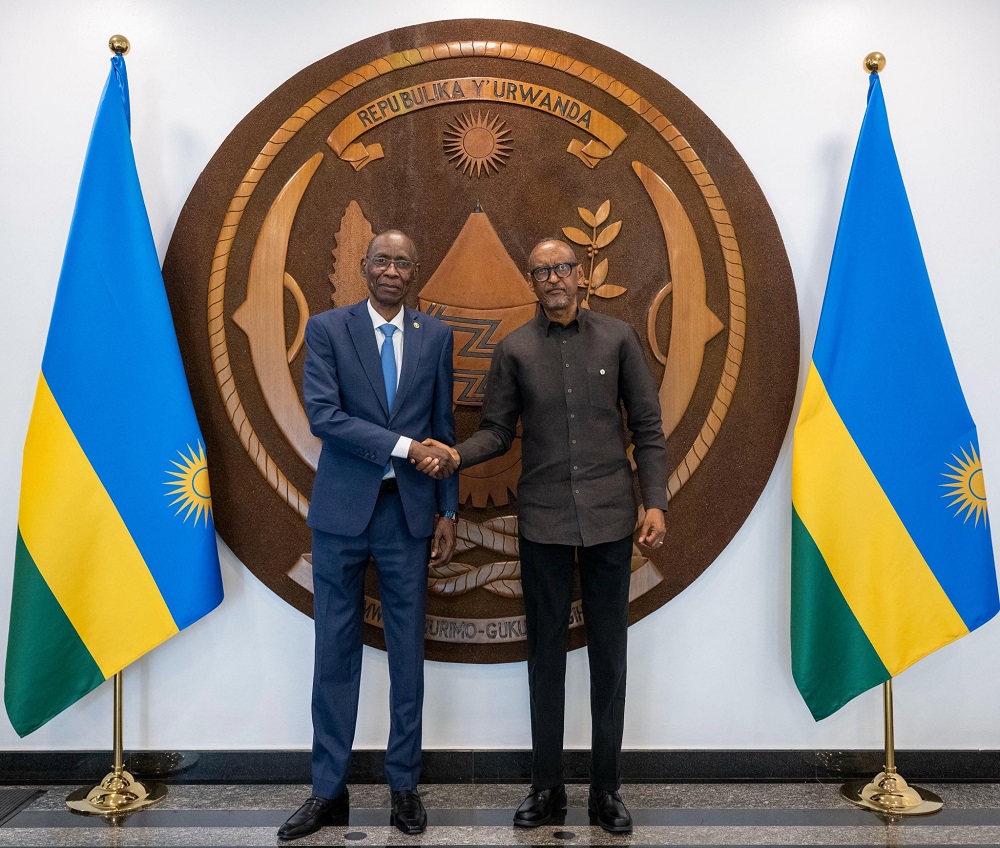
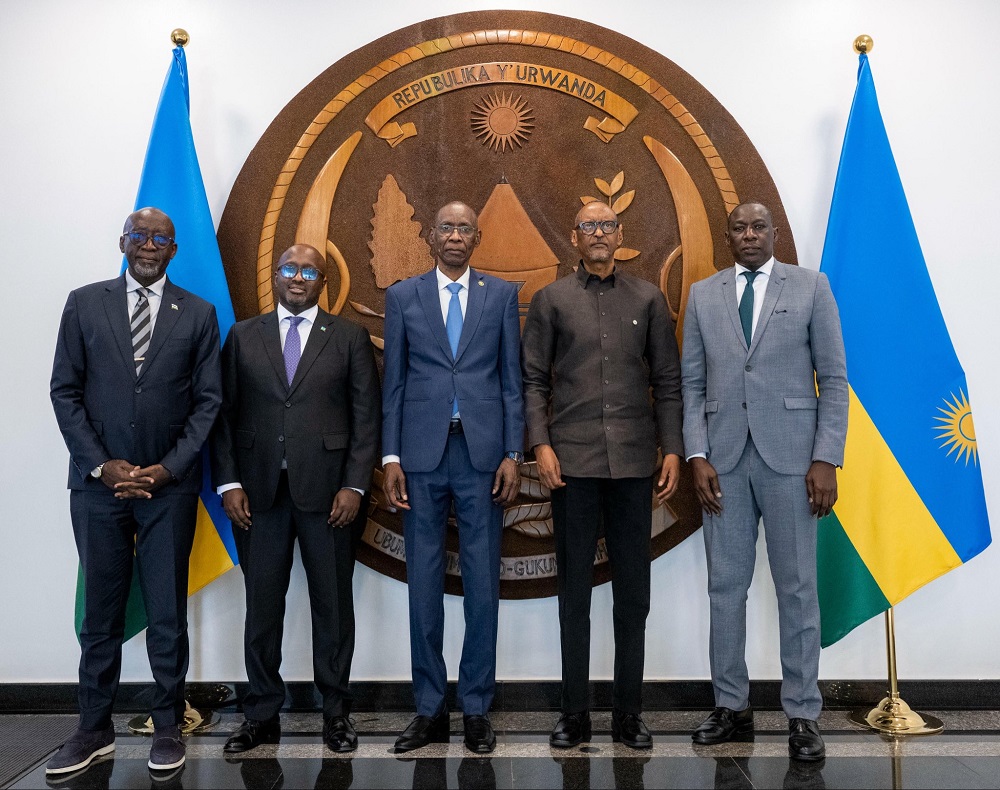
The meeting took place at Urugwiro Village in Kigali, a day after Rwanda and Senegal held the inaugural session of their Joint Permanent Commission for Cooperation, which saw the signing of bilateral agreements and memoranda of understanding across key sectors.
The two countries also held a business forum aimed at expanding trade and investment ties by connecting businesses and identifying opportunities for partnerships.
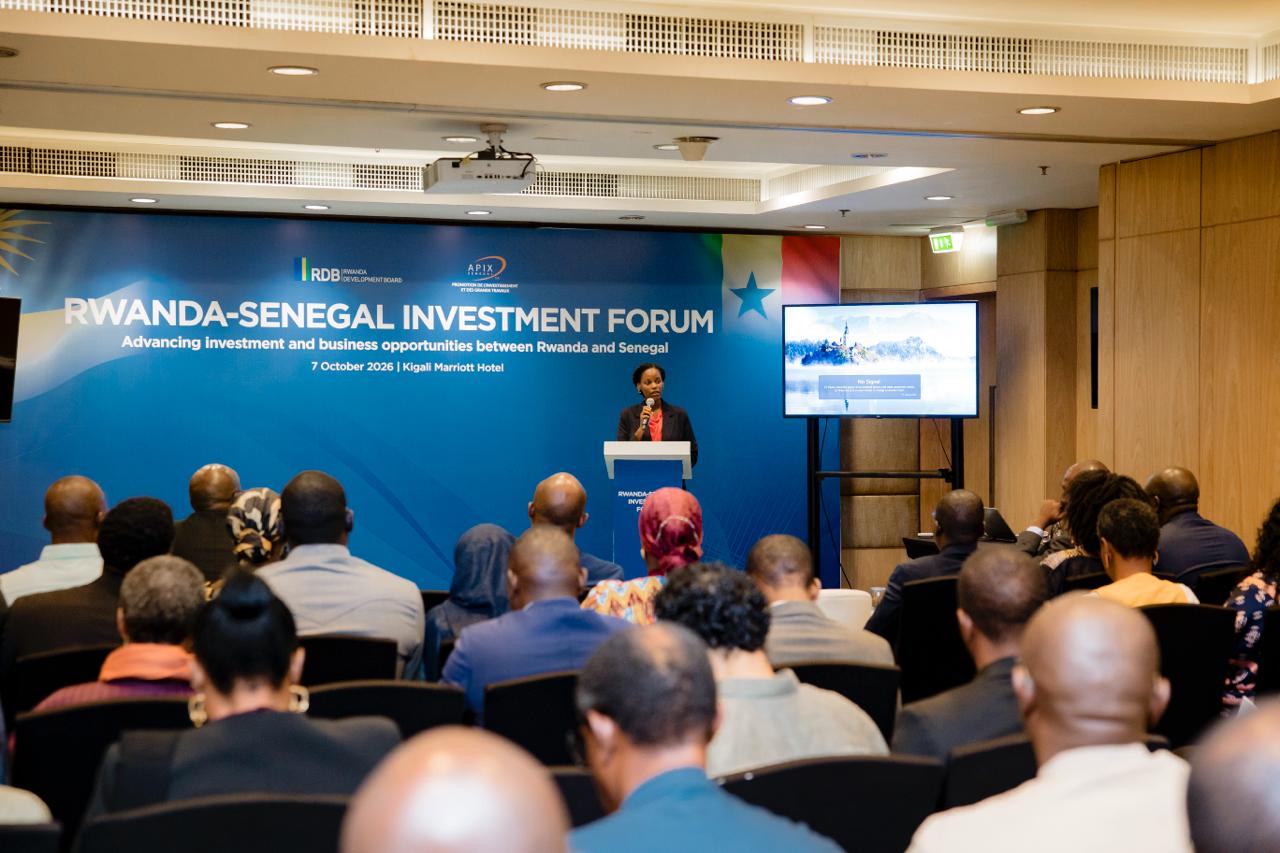
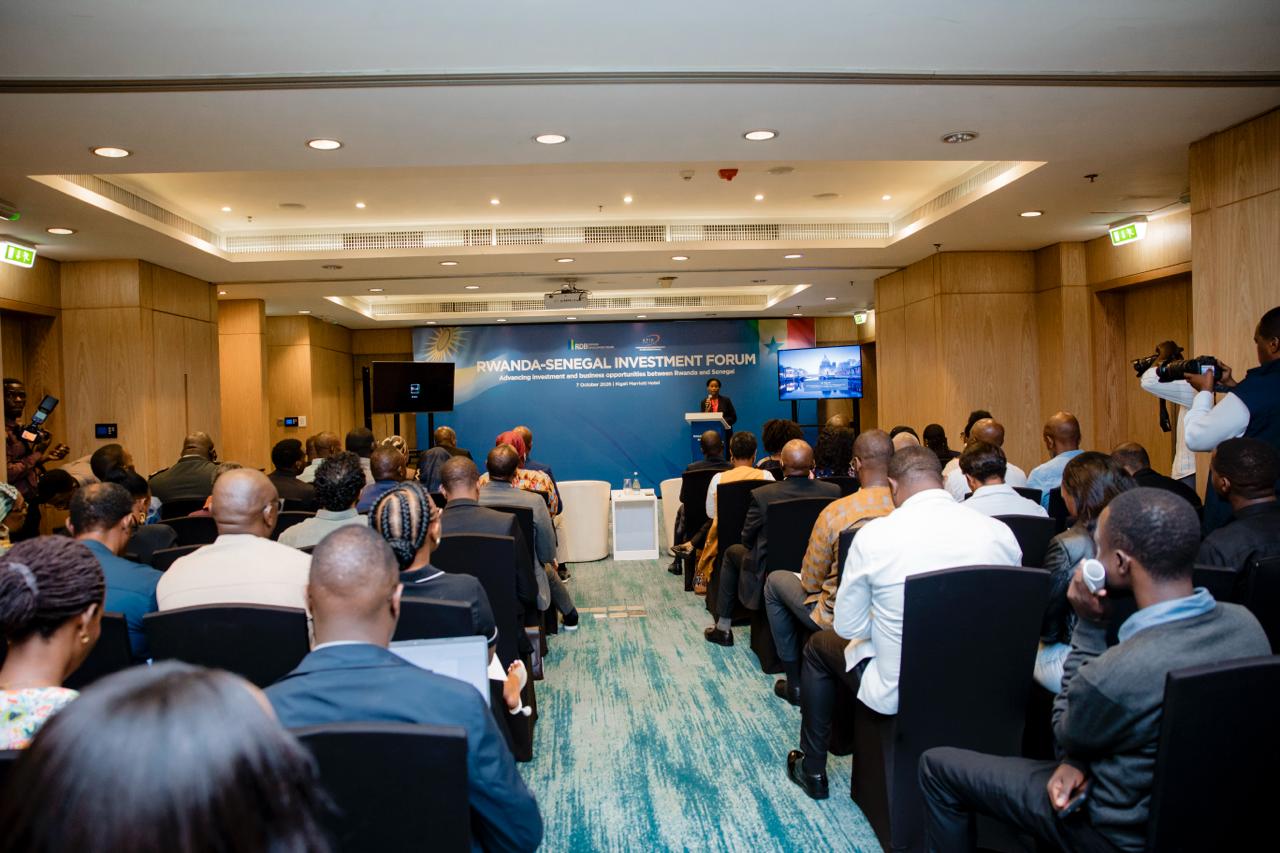
The forum brought together government officials, investors and private-sector representatives to explore opportunities in sectors including agriculture, construction, transport and logistics, tourism, health and education.
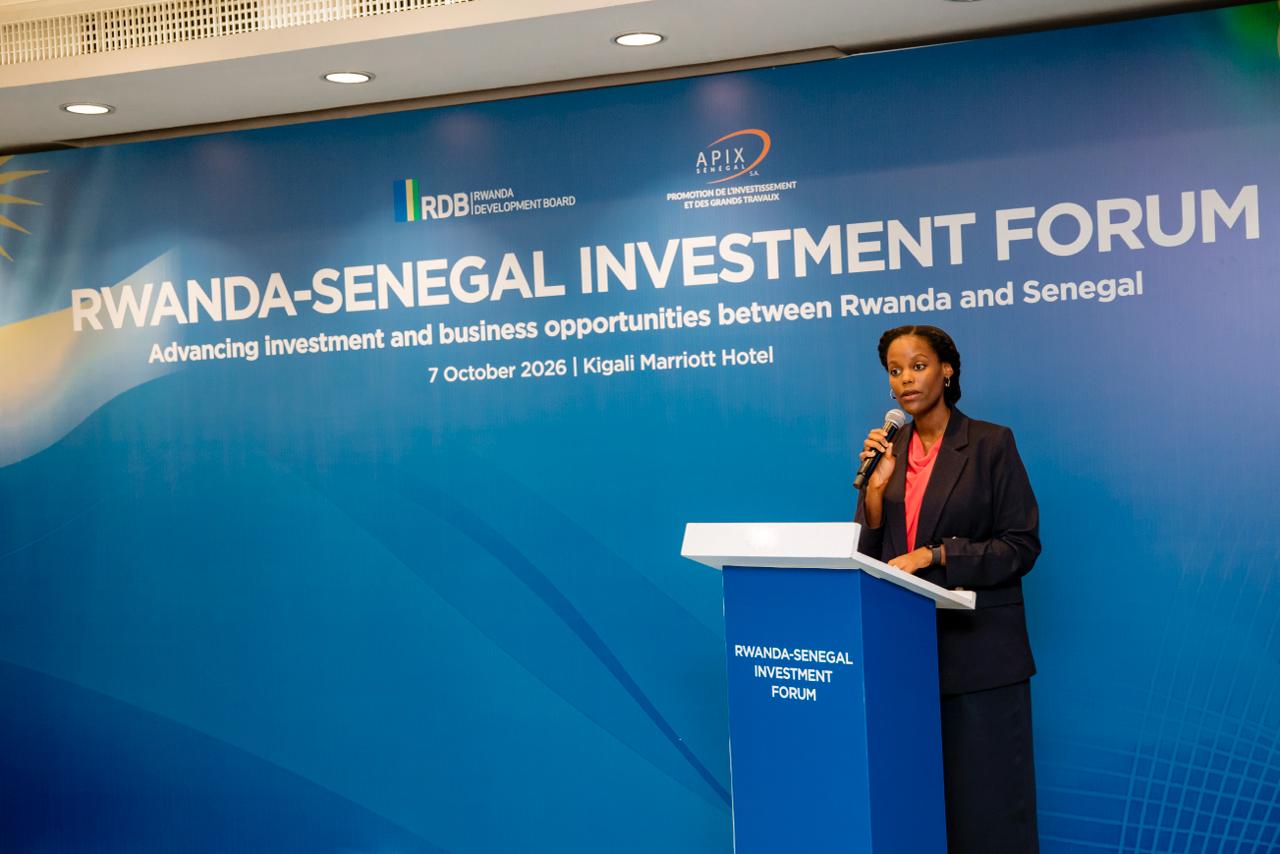
Rwanda Development Board (RDB) Deputy Chief Executive Officer Juliana Kangeli Muganza called on businesses to translate the strong political relations between the two countries into lasting economic partnerships.
Senegal’s APIX investment promotion agency also highlighted the need to move beyond institutional cooperation to generate more investment, trade and private-sector partnerships.
The latest engagements reflect ongoing efforts by Rwanda and Senegal to deepen economic cooperation and strengthen ties that date back to 1975.
President Paul Kagame has received Senegal’s Foreign Minister Cheikh Niang at Urugwiro Village to discuss ways to strengthen bilateral relations between the two countries.
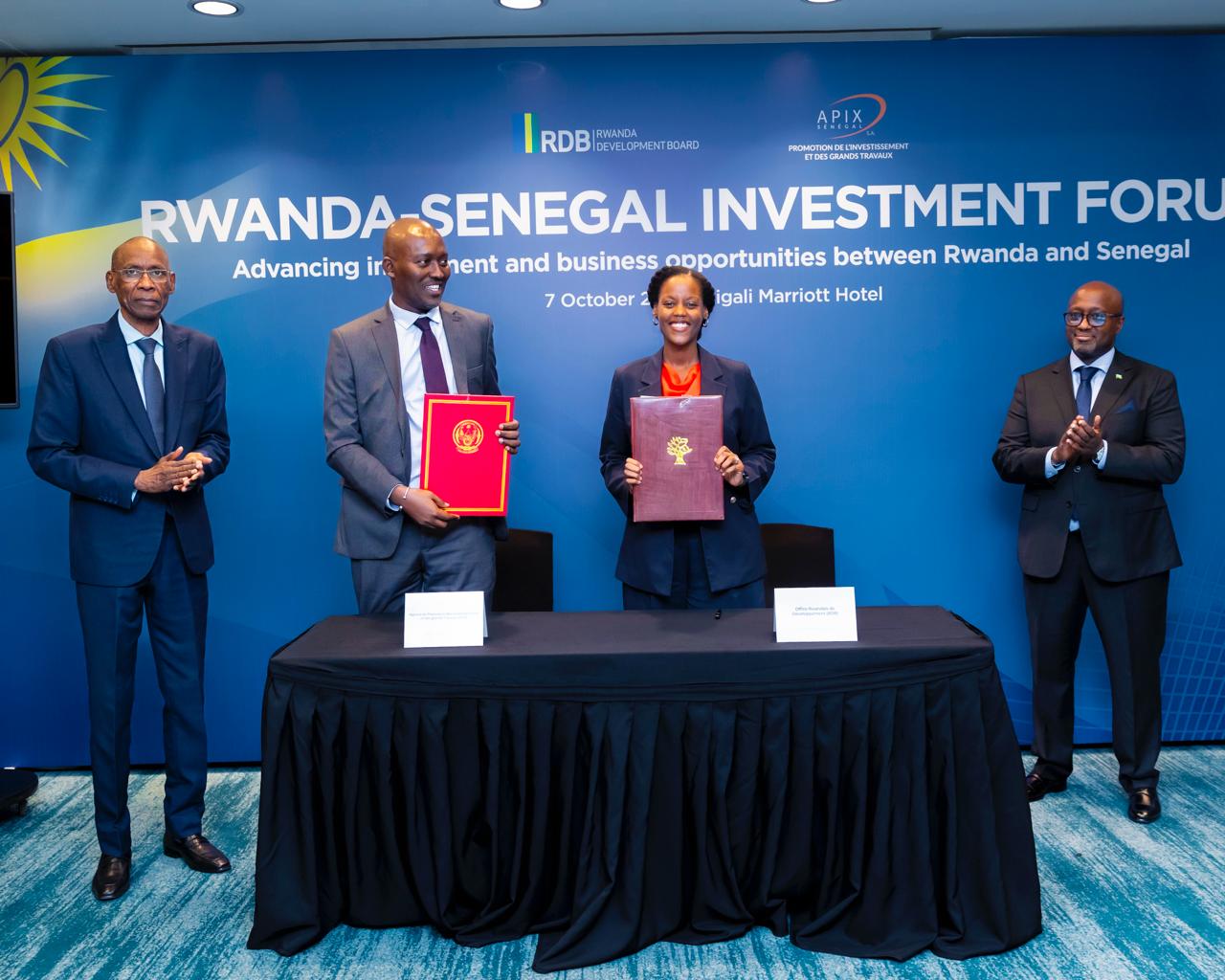
The agreements were signed during a business forum held in Kigali on October 7, 2026, on the sidelines of the inaugural session of the Rwanda-Senegal Joint Commission for Cooperation. The forum brought together government officials, investors, businesses and other stakeholders from both countries.
Participants explored opportunities in transport and logistics, construction, agriculture and agro-processing, textiles, leather, services, tourism, health and education, while business-to-business meetings provided an opportunity to discuss potential trade deals, joint ventures and investment projects.
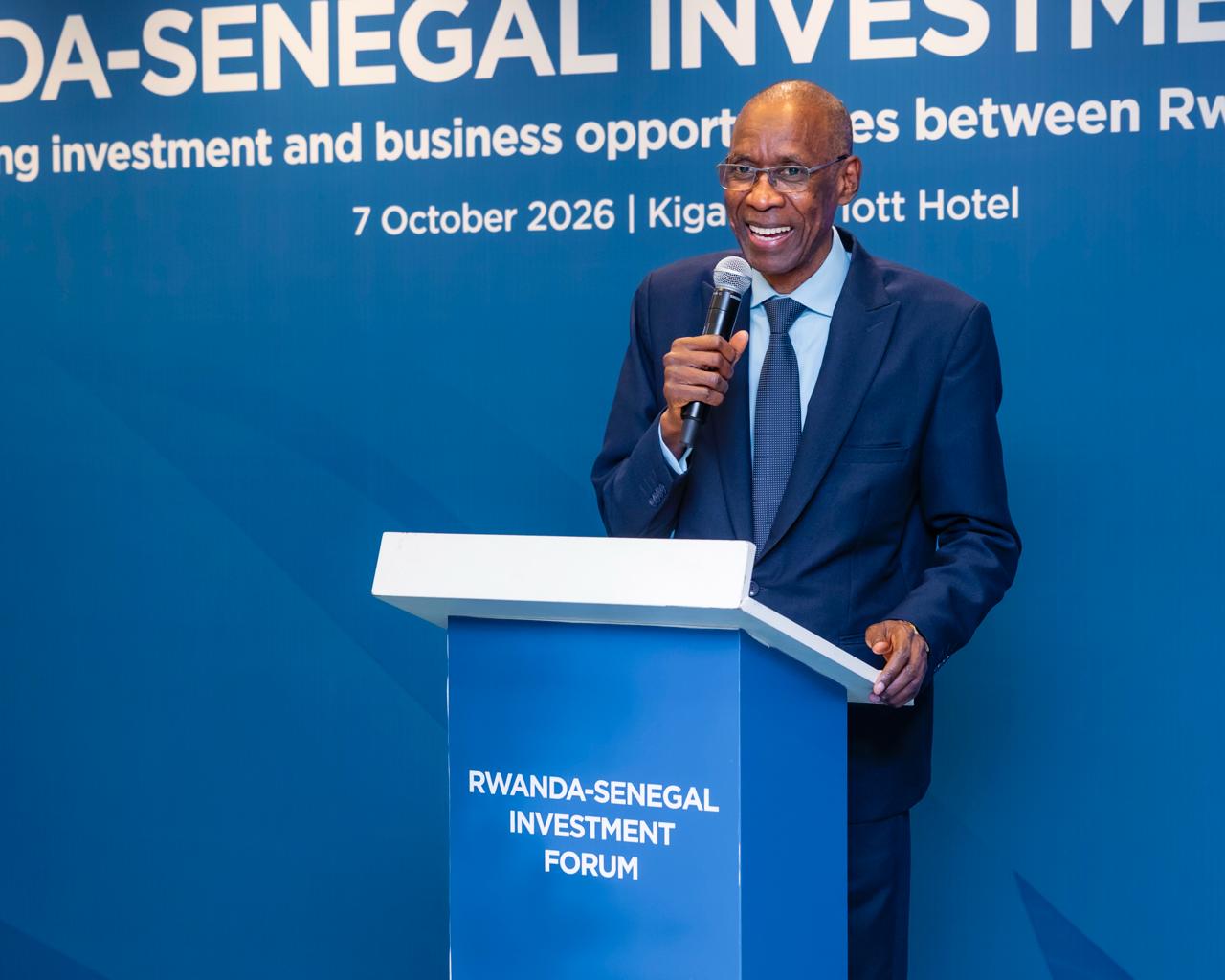
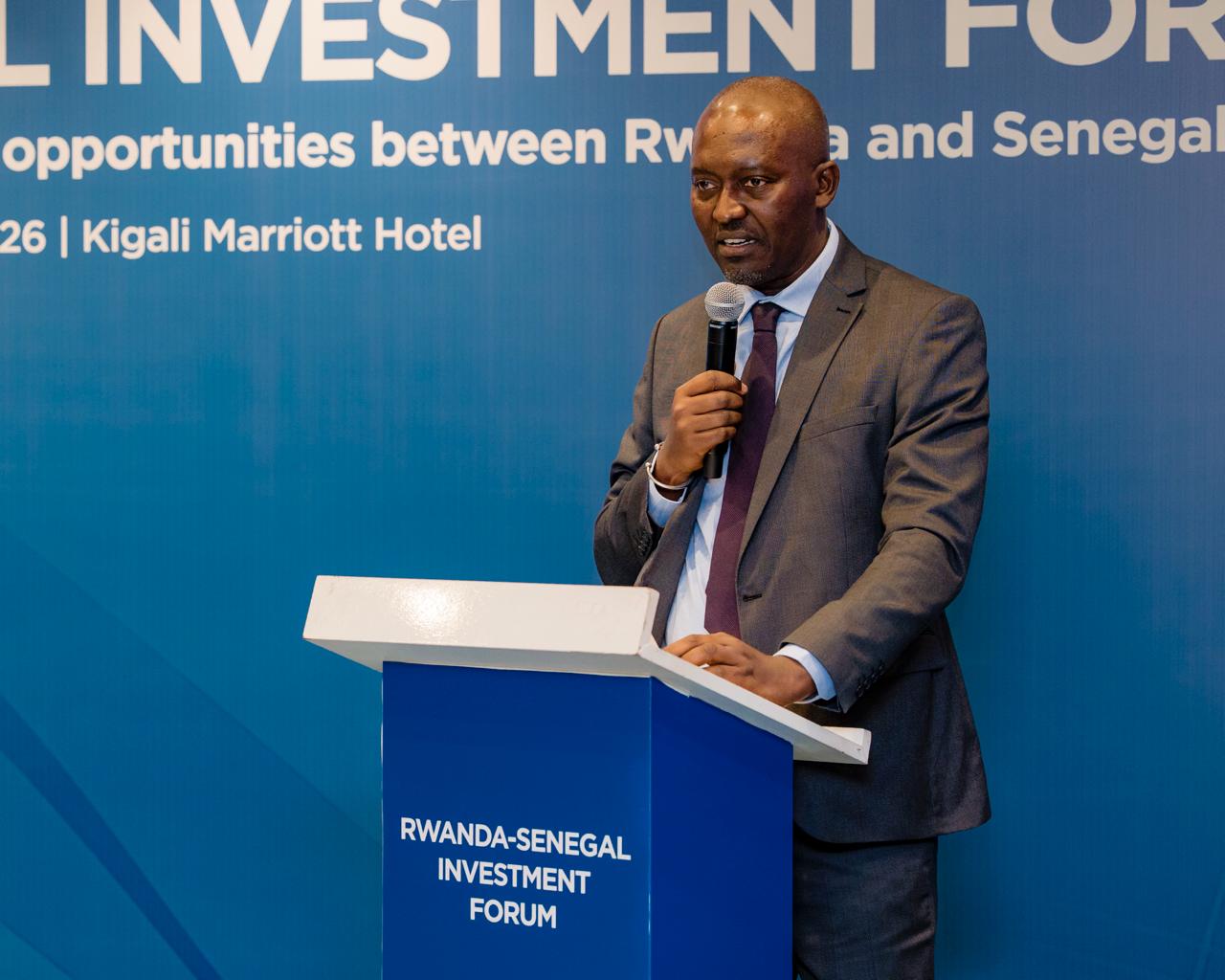
RDB Deputy Chief Executive Officer Juliana Kangeli Muganza urged businesses to turn the strong political ties between Rwanda and Senegal into lasting economic partnerships.
She highlighted Rwanda’s 9.4% economic growth in 2025 and the second quarter of 2026, as well as $2.62 billion in investments registered through 799 projects in 2025, expected to create more than 38,000 jobs.
Muganza said the RDB supports investors through its One Stop Centre, streamlined procedures and connections with relevant institutions and partners and urged the private sector to trade, invest, build partnerships and create jobs.
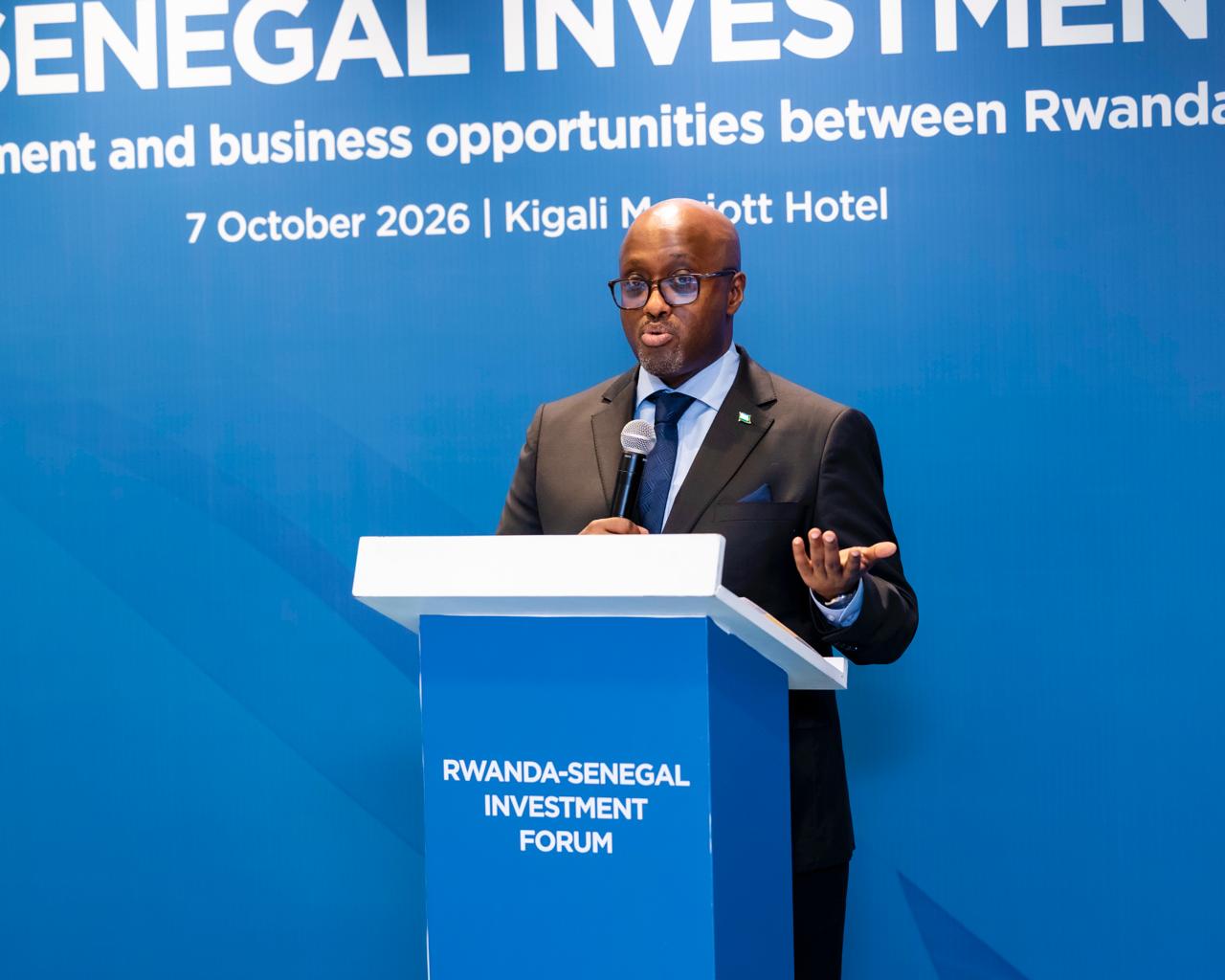
APIX Deputy CEO Moustapha Cissé said cooperation should move beyond institutional relations to generate more investment, trade and private-sector partnerships.
He identified agriculture, industry, innovation, infrastructure, logistics, services, tourism, health and education among the priority areas.
Rwanda’s Foreign Minister Olivier Nduhungirehe said the forum should lead to concrete business partnerships rather than remain a platform for dialogue.
“We want this forum to be not simply a space for dialogue, but the starting point for a new phase of cooperation between the business communities of Rwanda and Senegal,” he said.
Senegalese Foreign Minister Cheikh Niang said both countries have complementary strengths that could support stronger economic ties.
“Rwanda and Senegal each have their own strengths. Our collective responsibility is to ensure that these strengths can complement each other more,” he said.
The forum comes amid strong political ties between Senegal and Rwanda, based on mutual respect and a shared commitment to strengthening cooperation.
Rwanda’s Foreign Minister Olivier Nduhungirehe has called for the Rwanda-Senegal business forum to lead to concrete partnerships between the two countries’ business communities.Senegal’s Foreign Minister Cheikh Niang has said the two countries’ complementary strengths can create new opportunities for economic cooperation.Senegal’s APIX Deputy CEO Moustapha Cissé has urged the two countries to translate institutional cooperation into increased investment, trade and private-sector partnerships.Rwandan and Senegalese business leaders have explored opportunities for trade, investment and partnerships across sectors including agriculture, logistics, tourism, health and education.RDB Deputy CEO Juliana Kangeli Muganza has called on businesses to turn Rwanda-Senegal political ties into lasting commercial partnerships.
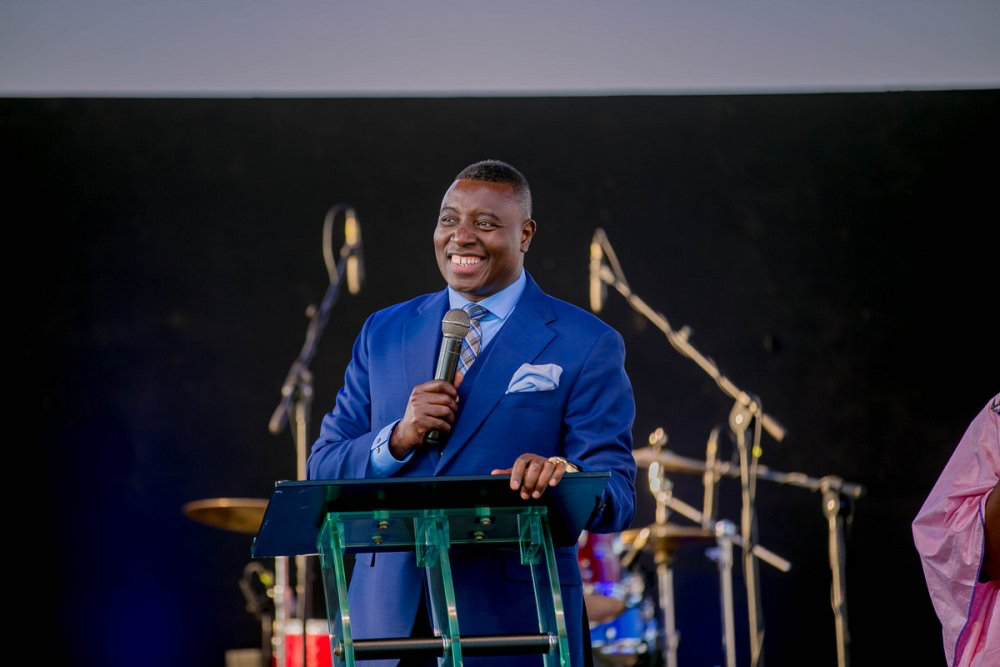
The remarks were made on August 7, 2026, during a sermon delivered by Apostle Gitwaza to Christians. An excerpt from the teaching began circulating widely on social media in recent days, drawing criticism from various people.
In the clip, Gitwaza tells Christians to be cautious about the first person to hold a newborn, claiming that witches could use nurses and midwives to affect a child’s reproductive health.
“If you give birth to a boy or a girl, be careful about the first person you do not know who takes the baby. The spirit of witchcraft is in many nurses and midwives; Satan uses them there. Who were the ones killing the Israelites? It was the midwives,” he is heard saying.
He goes on to claim that children could suffer reproductive harm shortly after birth, alleging that boys could have their sperm “taken away” while girls could have their “eggs” removed, which he said would affect their ability to have children later in life.
“If you have a baby boy and realize he has impregnated someone, be concerned but also rejoice that he is active. Many are targeted there when they are born. A girl may grow up without eggs. So pray for pregnant women, and even when children grow up, be careful about sending them to sleep in places you do not know. At night, they go and use them as sacrifices. Do not let your child sleep in a place you do not know again,” he said.
Zion Temple apologises
In a statement issued on October 7, 2026, Zion Temple Celebration Center said it had become aware that excerpts from the teaching were circulating on social media and acknowledged that the remarks had hurt nurses and midwives.
“We became aware that statements contained in the clip were understood by members of the public, particularly nurses and midwives, as disrespectful and as undermining their profession and the important role they play in the health and wellbeing of our society,” the church said.
The church said there had been no intention to discredit nurses, midwives or any other profession.
“We recognise, however, that the words used caused hurt and concern. For this, we sincerely apologise to nurses and midwives and to all those who were affected by the message,” it said.
Zion Temple said it highly values nurses and midwives and appreciates their dedication, professionalism and contribution to saving lives, caring for families and improving the wellbeing of communities.
The church also said it had held discussions with representatives of the nurses and midwives association to express its regret and explore ways to strengthen mutual understanding and trust between the two sides.
It said the discussions were constructive, with both sides agreeing to continue strengthening cooperation and public trust in nurses and midwives.
Gitwaza signed the statement apologising to nurses and midwives over recent statements linking them to witchcraft.
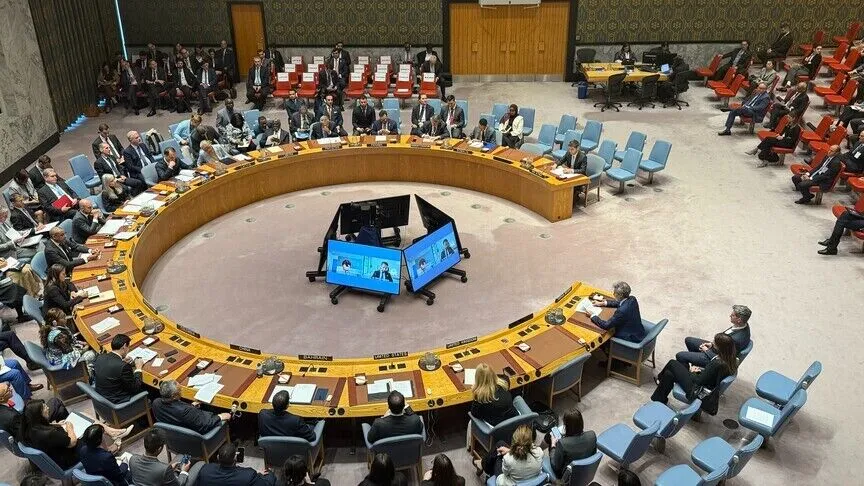
“The fifth round of straw polls has taken place,” said Aglaia Balta, the UN ambassador of Greece, whose country holds the rotating presidency of the Security Council for the month of October.
Each candidate will be informed of the results through the respective permanent representatives of nominating member states. The president of the UN General Assembly will also be informed that the straw poll has been conducted, she told reporters after the conclusion of the secret vote.
Security Council straw polls on secretary-general candidates are informal closed-door ballots used to determine the viability of the candidates. Their results are not officially released.
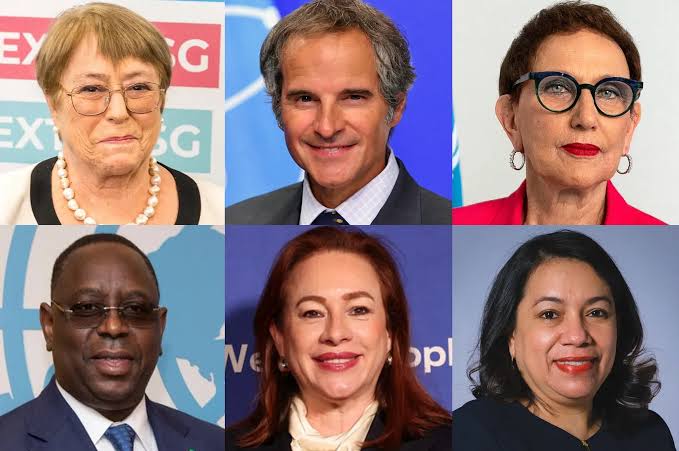
Seven candidates remain in the race for the next UN secretary-general: Ivonne A-Baki, a former Ecuadorian minister and diplomat; Maria Fernanda Espinosa, a former UN General Assembly president and former foreign minister and defense minister of Ecuador; Rafael Grossi of Argentina, current director general of the International Atomic Energy Agency; Rebeca Grynspan, a former vice president of Costa Rica and current secretary-general of the UN Conference on Trade and Development; Olara Otunnu of Uganda, a former UN under-secretary-general; Carolyn Rodrigues-Birkett, Guyana’s permanent representative to the United Nations; and Macky Sall, a former president of Senegal.
Current UN Secretary-General Antonio Guterres’ term of office expires at the end of this year. The next secretary-general will assume office on Jan. 1, 2027.
Security Council straw polls on secretary-general candidates are informal closed-door ballots used to determine the viability of the candidates.
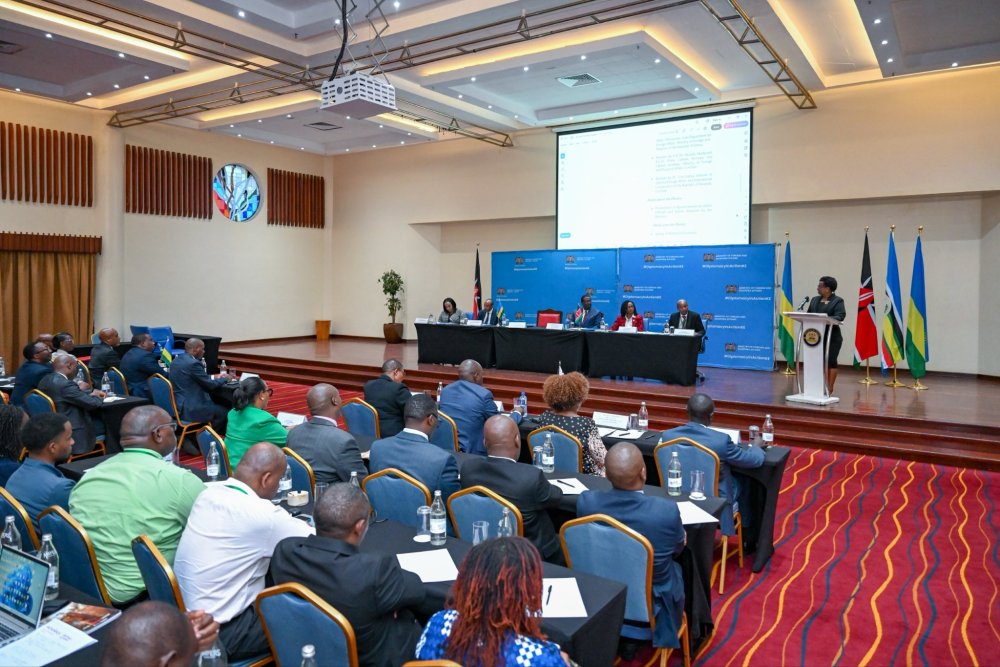
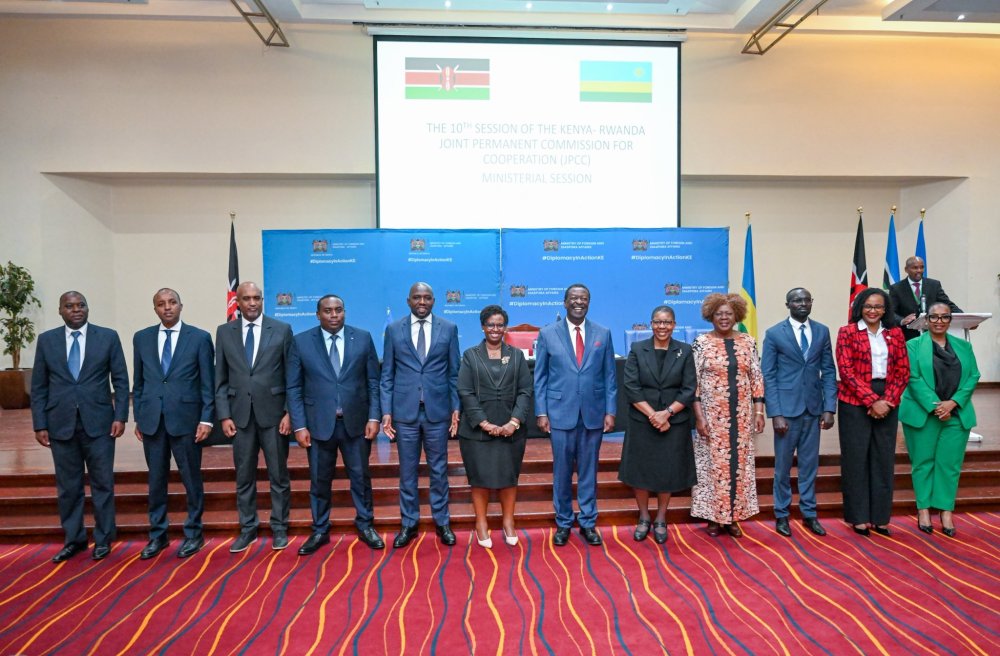
The agreements were inked during the 10th Session of the Kenya–Rwanda Joint Permanent Commission for Cooperation (JPCC), held in Nairobi from October 5 to 6, 2026.
According to the joint communiqué issued at the conclusion of the meeting, the agreements are intended to further strengthen the longstanding bilateral relationship between the two countries and provide a framework for increased cooperation across several sectors.
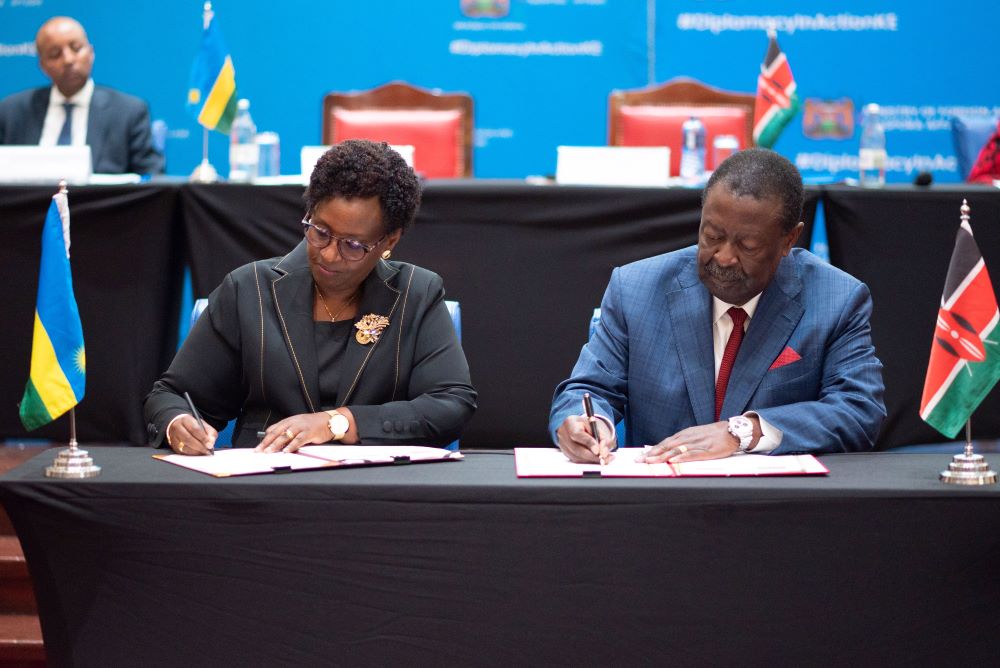
The newly signed instruments include an Agreement on Mutual Legal Assistance in Criminal Matters and an Agreement on the Transfer of Sentenced Persons, alongside a Memorandum of Understanding (MoU) on political consultations.
The two countries also signed MoUs covering immigration matters, housing and urban development, diaspora management, water resources management and irrigation, and local governance.
Other agreements provide for cooperation between the Rwanda Investigation Bureau (RIB) and the Kenya National Police Service, as well as collaboration in culture and heritage and conservation.
The development comes as Kenya and Rwanda seek to translate their political relations into stronger practical cooperation, particularly in trade, investment, infrastructure, energy and regional integration.
The communiqué also noted that the two countries discussed ways to address barriers to trade, facilitate the movement of goods and services and strengthen business-to-business links where the Northern Corridor and the Port of Mombasa remain central to the economic relationship, with Rwanda continuing to use the port for its imports.
The two sides also highlighted initiatives including the Kenya Ports Authority Liaison Office in Kigali, land allocated to Rwanda at Miritini and Naivasha, and direct RwandAir flights between Kigali and Mombasa.
These discussions formed part of broader efforts to strengthen cooperation beyond trade and infrastructure, with Kenya and Rwanda also reaffirming their commitment to working together on peace and security, particularly in the Great Lakes Region.
The two countries also pledged to strengthen coordination through regional and continental bodies, including the East African Community (EAC), African Union (AU), COMESA and the International Conference on the Great Lakes Region (ICGLR).
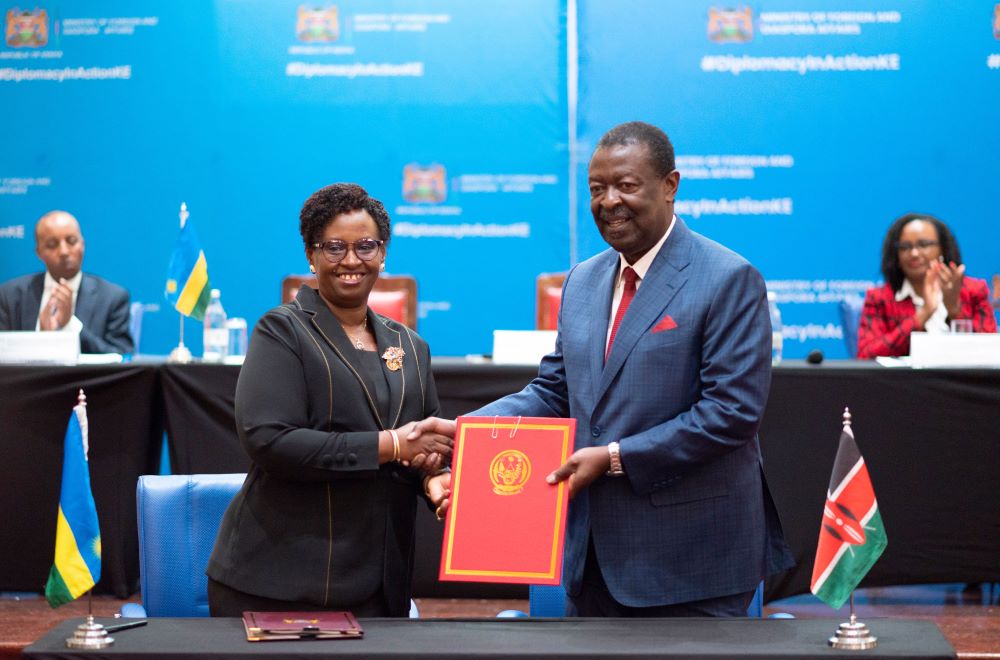
At the conclusion of the session, Kenya’s Prime Cabinet Secretary and Cabinet Secretary for Foreign and Diaspora Affairs, Musalia Mudavadi, commended the strong bilateral relations between the two countries and expressed satisfaction with the outcomes of the JPCC.
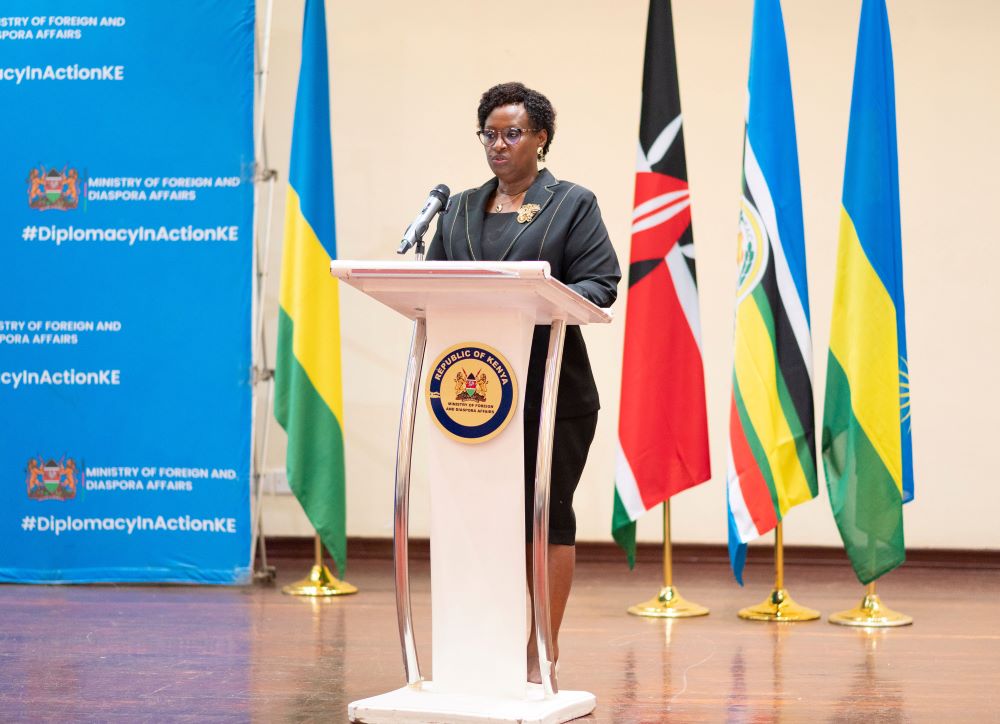
Rwanda’s Minister of State for Foreign Affairs, Dr. Usta Kaitesi, expressed appreciation to the Government and people of Kenya for the warm reception and hospitality extended to her delegation during their stay.
The 10th JPCC follows the previous session held in Kigali in 2023, which resulted in the signing of 10 memoranda of understanding in various areas of cooperation.
The two countries agreed that the 11th Session of the Kenya–Rwanda JPCC will be held in Rwanda in 2028, with the exact dates to be agreed through diplomatic channels.
Kenya’s Prime Cabinet Secretary Musalia Mudavadi and Rwanda’s Minister of State for Foreign Affairs, Dr. Usta Kaitesi exchanging documents after signing the agreements. The 10th Kenya–Rwanda JPCC has concluded in Nairobi, with the next session scheduled to take place in Rwanda in 2028.Kenya’s Prime Cabinet Secretary Musalia Mudavadi and Rwanda’s Minister of State for Foreign Affairs, Dr. Usta Kaitesi signing agreements on behalf of both countries. Rwanda’s Minister of State for Foreign Affairs, Dr. Usta Kaitesi, has commended Kenya for the hospitality extended to her delegation during their stay in Nairobi.Officials from Kenya and Rwanda pose for a group photo at the conclusion of the session.
A Downing Street spokesperson declined to comment on “foreign nations’ military operations,” but said the base was safe. The spokesperson cited Defence Secretary Wes Streeting as saying last week that Britain had “tried and tested approaches to defend our bases around the country and throughout the world.”
U.S. Secretary of State Marco Rubio said Monday that he would not directly link an incident near the base last week to the decision to withdraw the bombers, describing movements at that time as routine exercises and redeployments.
Rubio said that the United States continued to have full confidence in the security of its bases, adding that British authorities had been cooperative following the incident.
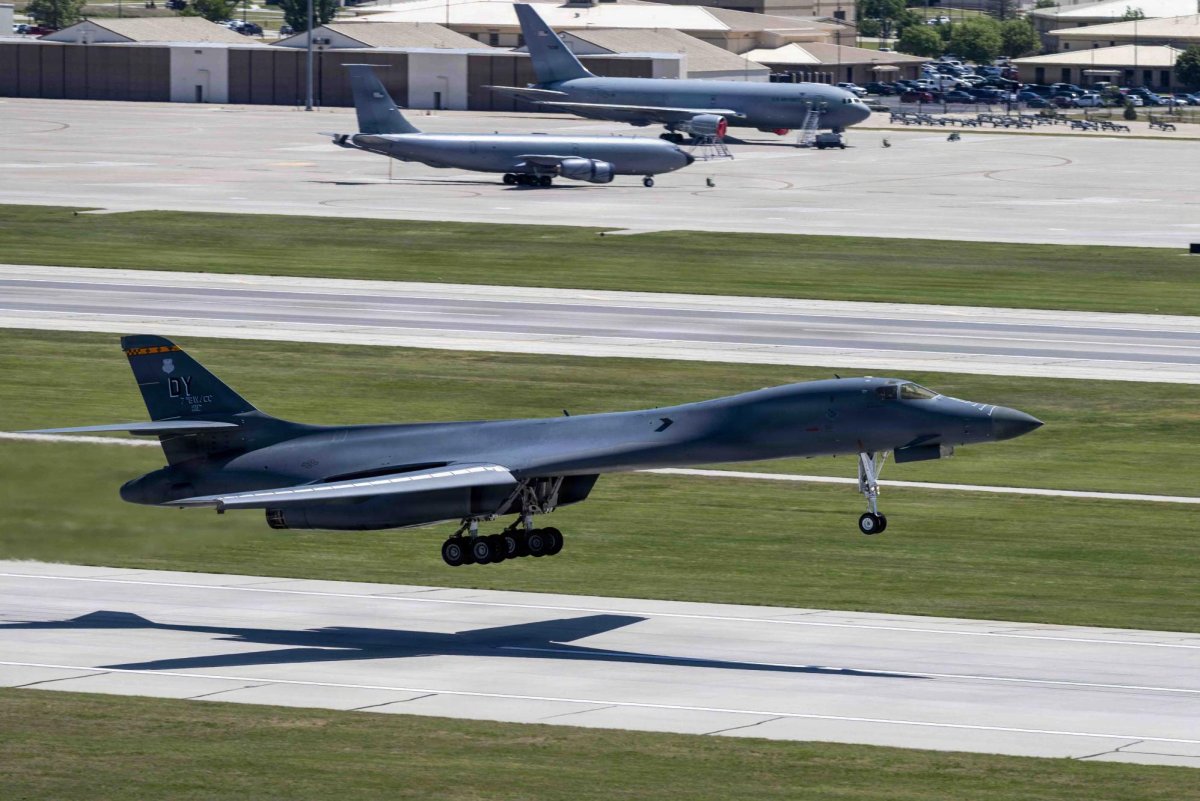
The Pentagon confirmed on Sunday that all U.S. bombers deployed to RAF Fairford had returned to their home stations in the United States.
About a dozen B-1 bombers had been stationed at the base before their departure.
The withdrawal came after six suspects were arrested in connection with a suspected attack on the base, which U.S. and British officials said had been foiled.
On Sept. 27, British police evacuated homes near RAF Fairford after several men were arrested on suspicion of offenses under the Explosives Act. Army bomb-disposal experts were also called in to examine a number of vehicles.
About a dozen B-1 bombers had been stationed at the Royal Air Force (RAF) Fairford base before their departure.
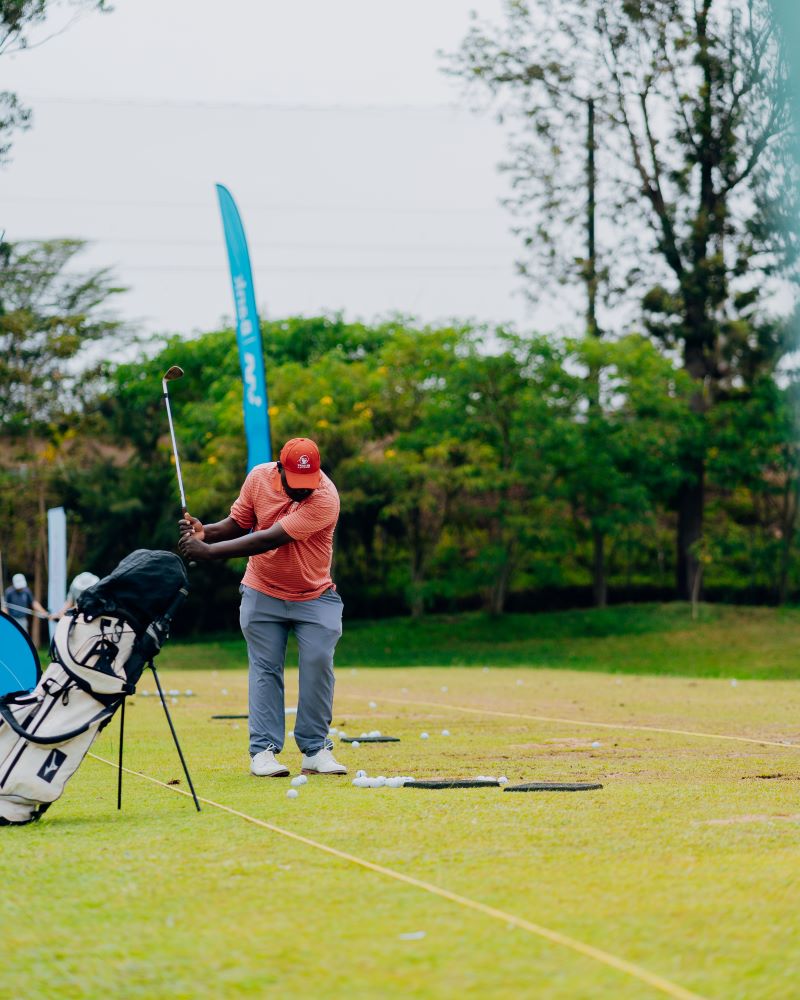
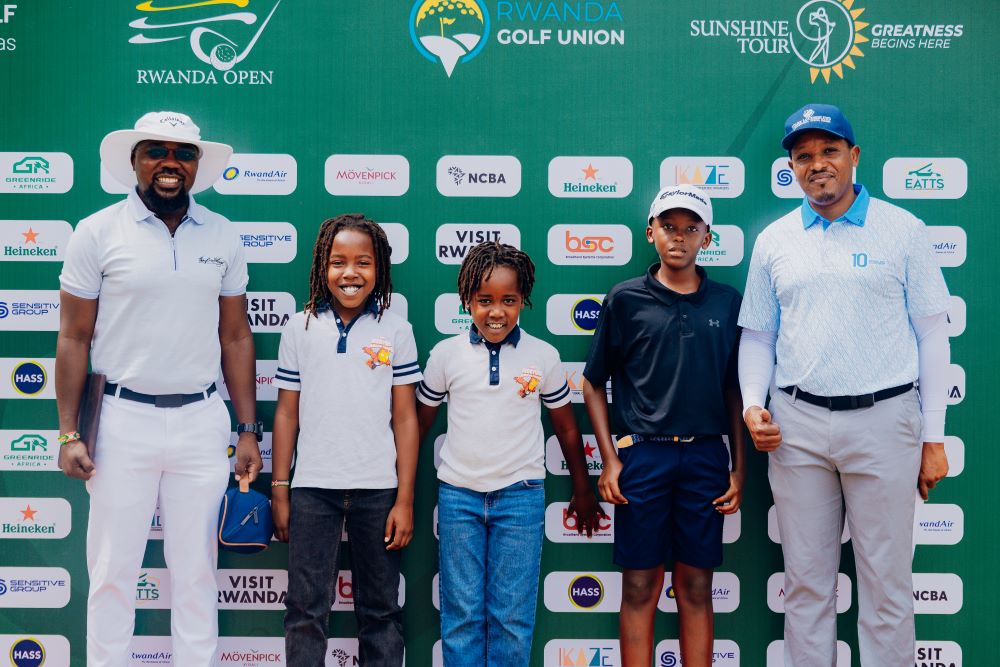
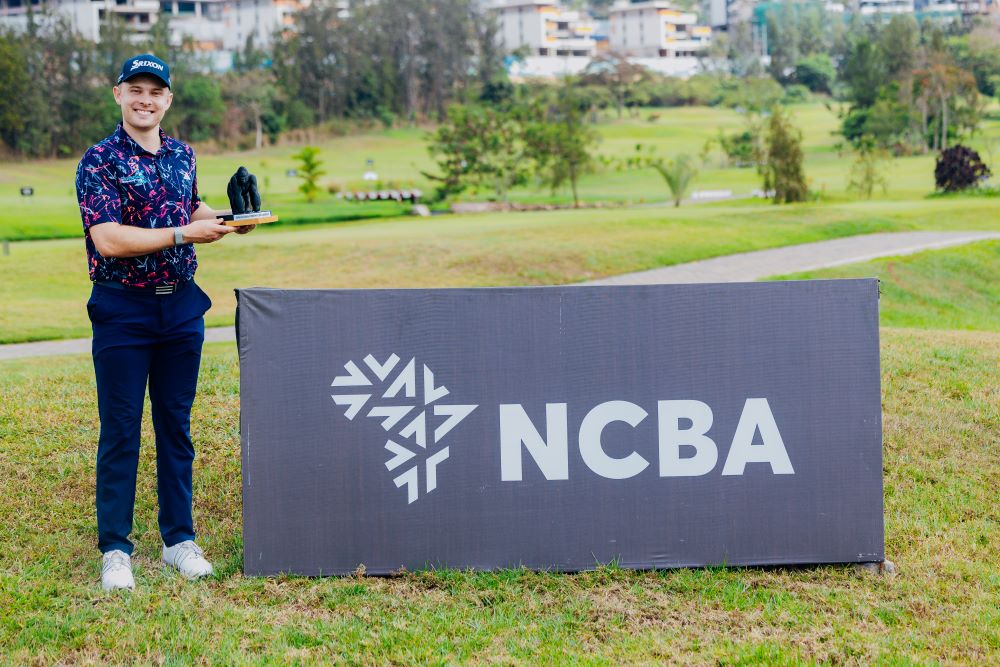
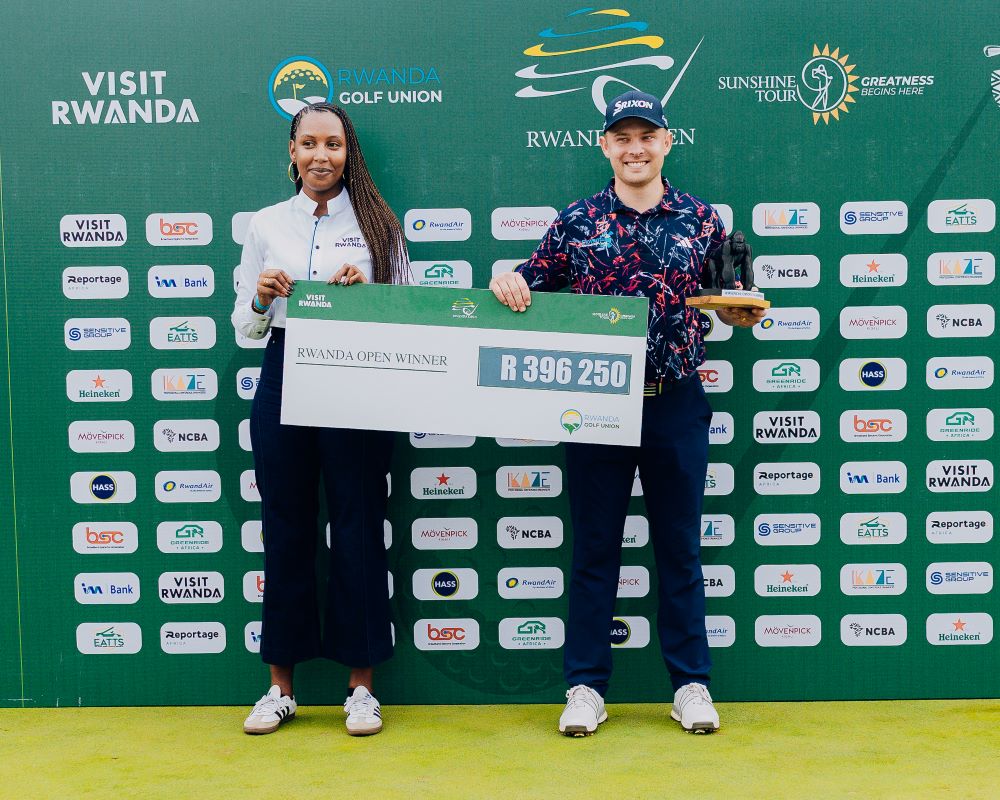
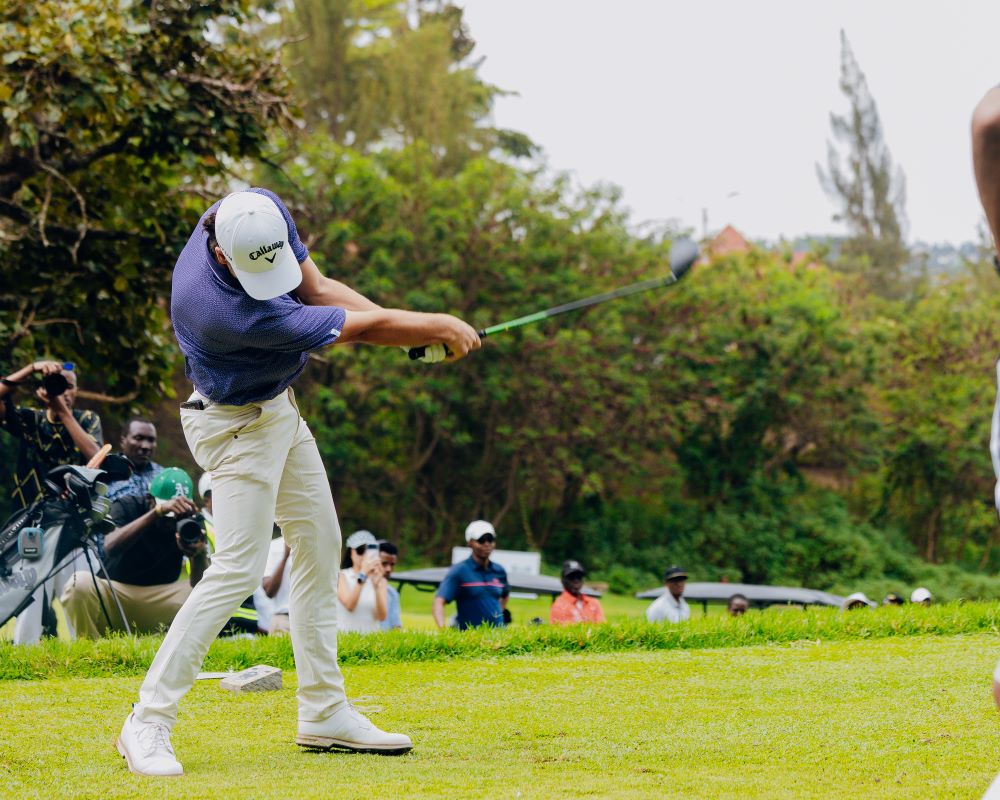
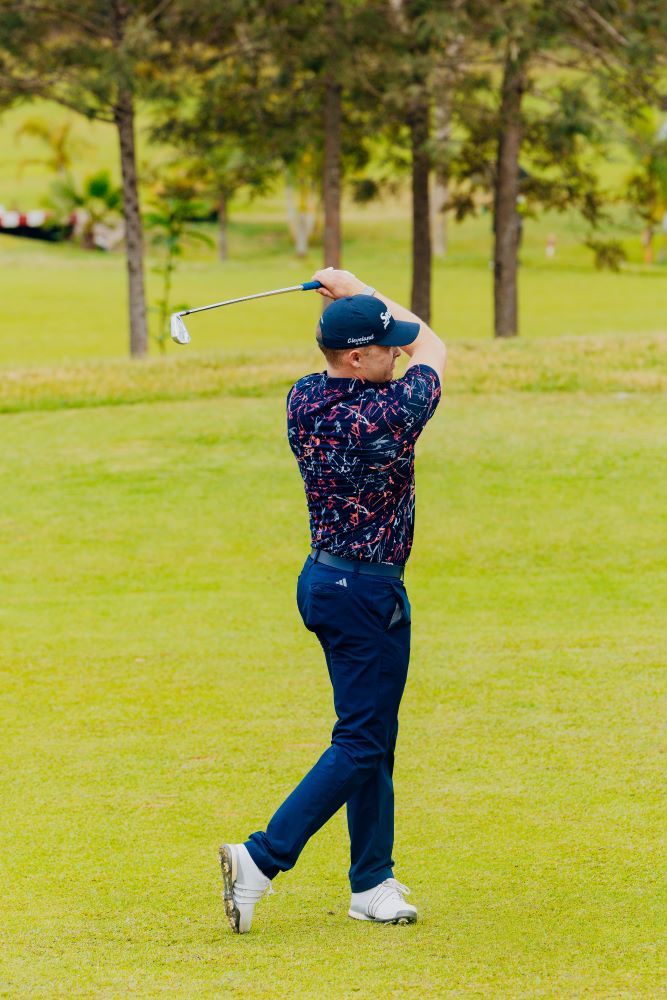
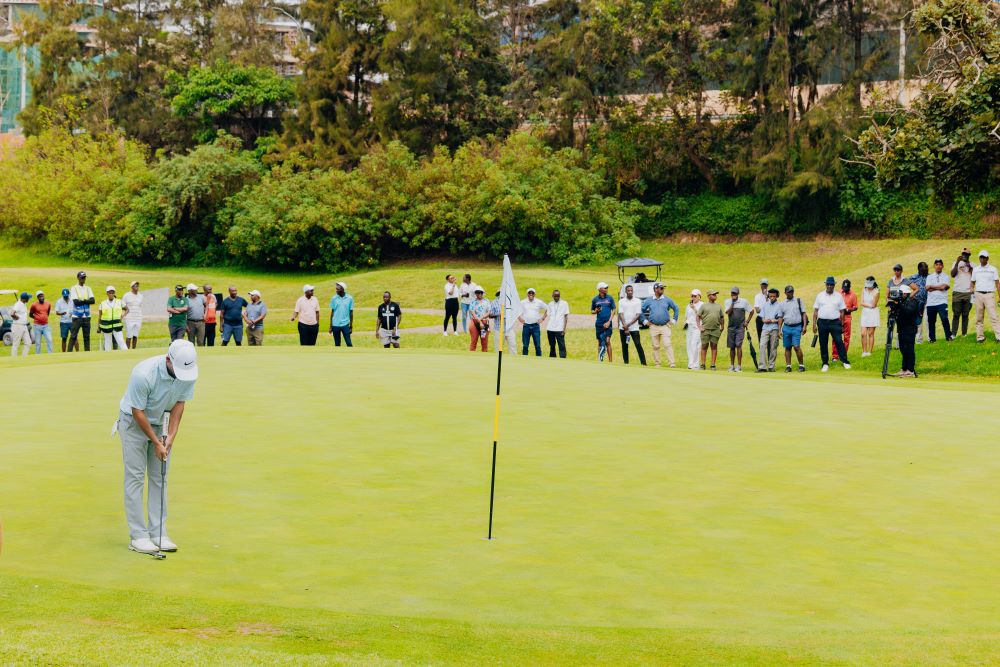
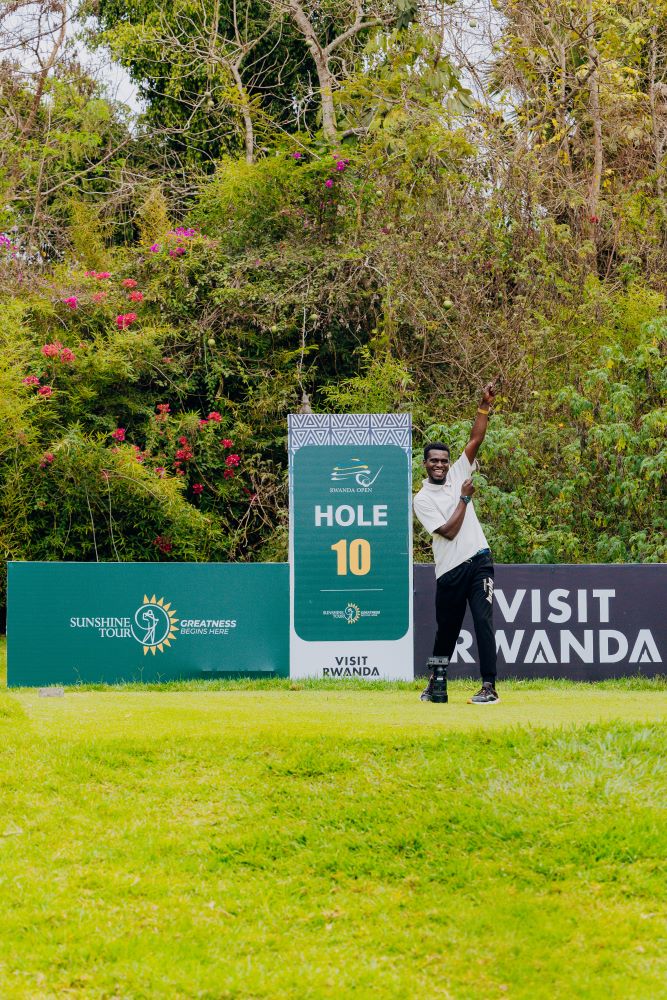
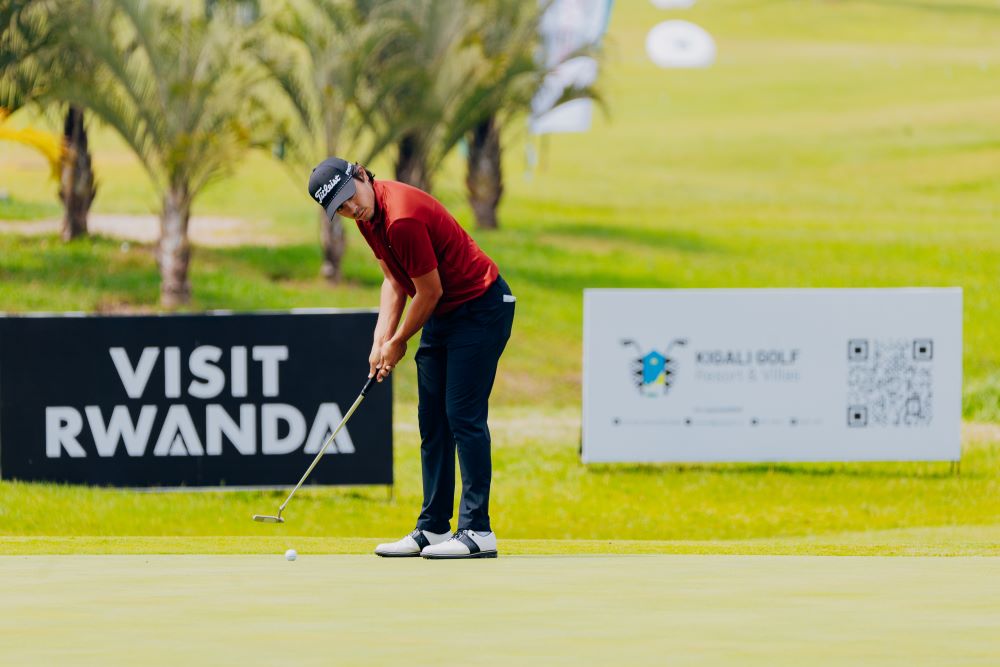
The international Sunshine Tour event, which was combined with the annual Rwanda Open, was held on Sunday, September 27, 2026, at Kigali Golf Resorts & Villas.
About 150 players from different countries took part in the tournament, which was won by South African golfer Kyle De Beer.
The tournament also provided an opportunity for Rwandan golfers to compete at an international level, with 13 players representing the country.
Permanent Secretary at the Ministry of Sports, Ngabo Brave Olivier, said Rwanda aims to increase the number of players competing in the tournament, both from Rwanda and abroad.
“The doors are open to everyone who wants to come to Rwanda. We want the number of players competing in the tournament to increase beyond 150, while also increasing the number of Rwandans to a level where we can eventually win the tournament,” he said.
The goal of increasing participation in golf is among the reasons NCBA Bank Rwanda has continued to support the tournament. The bank also supports Kenyan golfer Njoroge Kibugu, who has competed in several tournaments backed by the bank.
Since 2023, NCBA Bank Rwanda has joined its operations in Kenya, Uganda and Tanzania in supporting Rwandan golfers to access international competitions, including tournaments bringing together top players from across the region.
In 2024, the bank expanded its support to junior golfers through competitions such as the NCBA Junior Golf Series, which has reached about 4,000 children.
In 2026, NCBA invested more than Rwf683 million in over 160 golf tournaments across East Africa, including competitions organised in Kigali.
The bank’s continued involvement in golf is aimed at supporting the development of the sport while creating more opportunities for players, particularly young golfers, to gain competitive experience.
NCBA Bank Rwanda has expanded its support for golf by sponsoring the Rwanda Open 2026 at Kigali Golf Resorts & Villas.NCBA Bank Rwanda has continued to support Rwandan golfers seeking opportunities to compete in international tournaments.NCBA Bank Rwanda has supported junior golf through competitions that have reached about 4,000 children since 2024.NCBA Bank Rwanda has continued supporting golf in Rwanda through its sponsorship of the Rwanda Open 2026.About 150 golfers have competed in the Rwanda Open 2026, supported by NCBA Bank Rwanda.
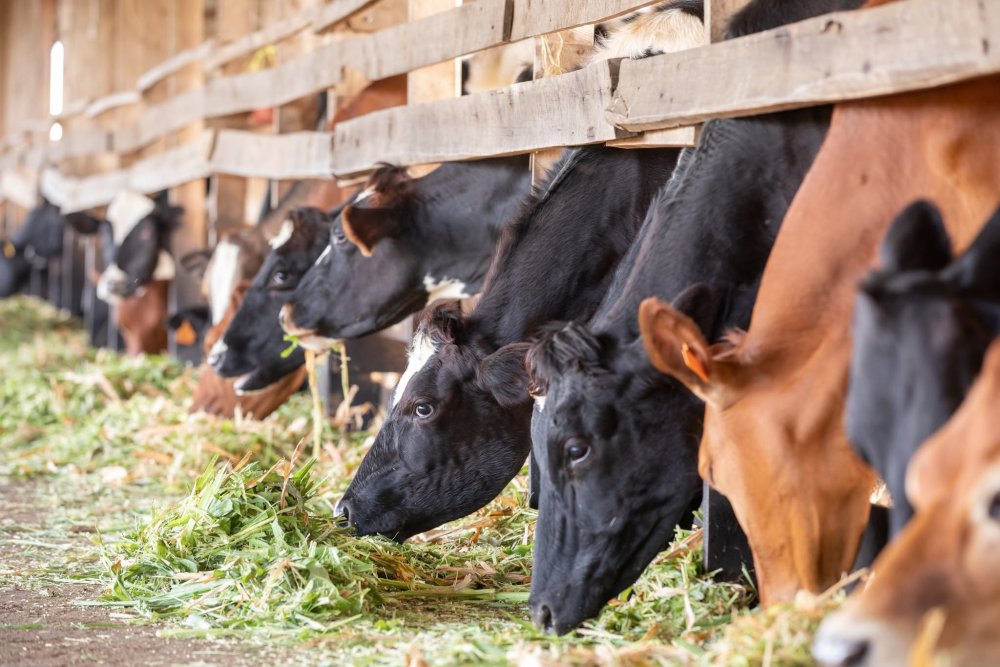
Prime Minister Dr. Justin Nsengiyumva told Parliament on October 2, 2026 that changing weather conditions and a livestock disease outbreak had contributed to a decline in milk production, particularly over the past two months.
He said the outbreak had been brought under control, allowing livestock markets to reopen, while prices of livestock products such as meat had started to decline. “We also expect milk to become available again because the rains have started,” Dr. Nsengiyumva said.
Milk shortages have been reported on the market for some time. In early September, an inspection of nine shops in Gishushu, Nyarutarama and Gisimenti found that only one had milk in stock. Inyange Industries had also attributed the decline in milk supplies to a prolonged dry spell that significantly reduced milk production.
Farmers in different parts of the country also reported that a lack of water and pasture had reduced milk production.
A farmer in Nyagatare said the amount of milk he sold each day had fallen from nearly 100 litres to less than 20 litres. Another farmer in Gicumbi said a cow that previously produced 10 litres of milk was producing about two litres.
Earlier last month, IGIHE visited Nyabugogo and found that the price of a carton of Inyange milk had reached Rwf19,000 in some places. Traders who were asked about the price said their purchase costs had increased.
One trader, who requested anonymity, said they normally sold a carton to customers for Rwf8,500, but prices had changed because of higher prices charged by their suppliers.
A survey of different markets in Kigali also found that Inyange milk was being sold at significantly higher prices in some ordinary shops, although it was still available at Rwf8,500 in some supermarkets.
The government expects milk shortages that have affected the market in recent months to ease after an outbreak that had affected livestock was brought under control.
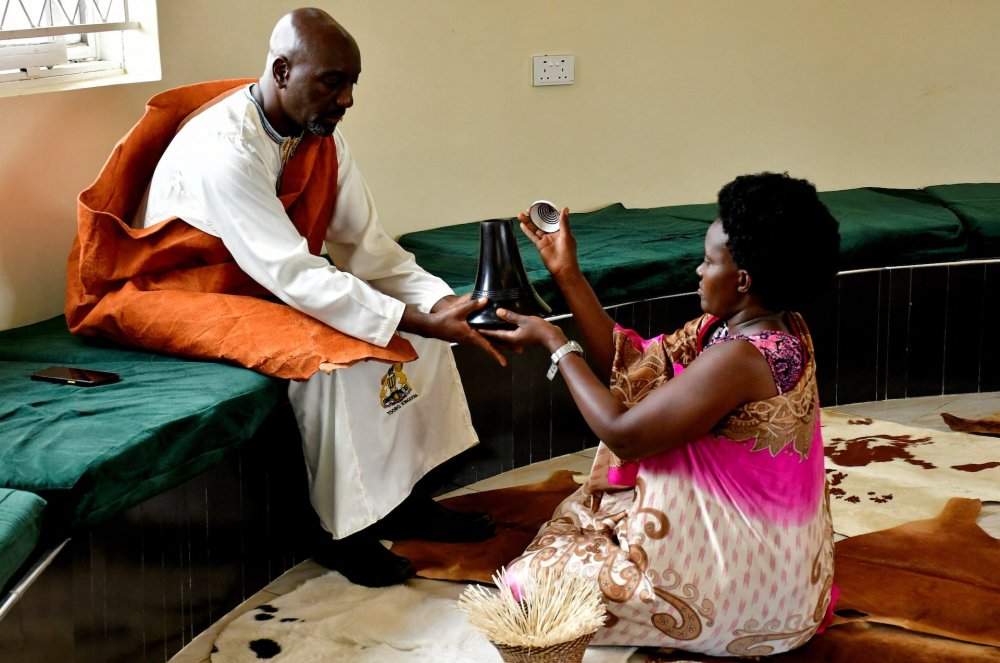
His coronation follows weeks of uncertainty over who would succeed King Oyo Nyimba Kabamba Iguru Rukidi IV, who died in August.
Kijanangoma, 56, is a cousin of Oyo Nyimba. He took the royal name Edward Rukidi Nyabongo I during a ceremony held in Fort Portal on September 29, 2026. A 21-member council from the royal Babiito clan selected him as the new king.
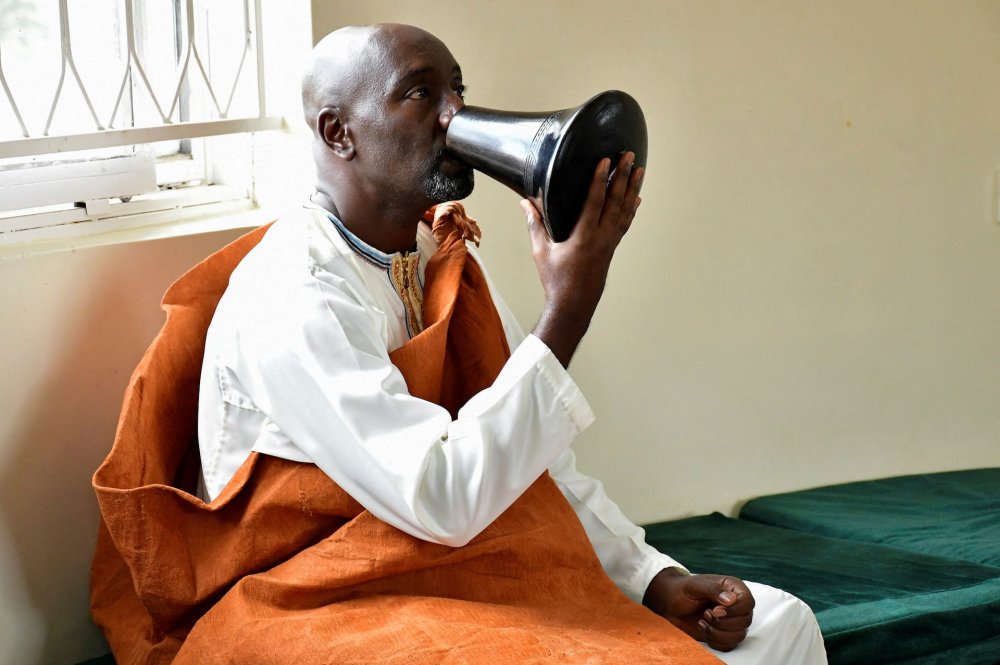
The coronation featured traditional rituals, including the slaughter of a bull and the spilling of chicken blood. Nyabongo I also walked from midnight to 3 a.m. to Karuziika Palace, where he took part in a traditional contest for the crown.
Kijanangoma first became known as a journalist at Uganda Broadcasting Corporation (UBC), where former colleagues described him as humble and approachable.
He later joined Rwanda Television, where he worked as an English-language news anchor.
His coronation comes following the death of Oyo Nyimba, who died on August 27, 2026, in the United States while receiving treatment for cancer. He was 34.
Oyo was buried on September 12 at the royal cemetery in Karambi, Fort Portal.
He ascended the Tooro throne in 1995 at the age of three following the death of his father. His young age and images of him wearing royal attire and a crown attracted international attention.
Oyo’s mother, Best Kemigisa, and his sister, Princess Ruth Komuntale, have said he left behind a young son and that a document indicates the child was designated as his successor.
Oyo had never married and no child of his was publicly known before his death. The child in question became known publicly only after his death.
Kijanangoma has taken the royal name Edward Rukidi Nyabongo I following his coronation in Fort Portal.Edward Rukidi Kijanangoma has been crowned the 13th King of Tooro in Uganda.
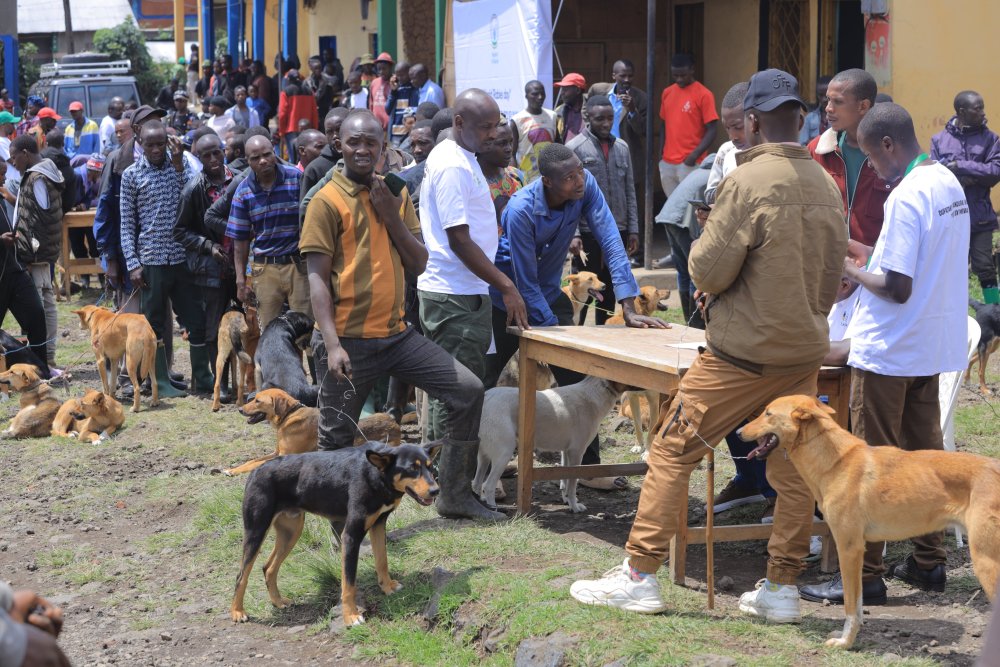
The annual observance, held every September 28, seeks to raise awareness of rabies, promote vaccination of animals and educate communities on how to prevent the disease.
This year’s national event was held in Bisate Sector, Musanze District, an area close to Volcanoes National Park.
Among the activities carried out during the event were dog vaccination, spaying and neutering, as well as microchipping to help identify and keep records of the animals.
Uwingabire Claudine, a resident living near Volcanoes National Park, said she was pleased to have her dogs vaccinated.
“I have two dogs, and recently they went after a neighbour as if they wanted to bite them, which could have sparked a dispute. So I was happy that they came to vaccinate them for free,” she told IGIHE.
Prosper Uwingeri, the Chief Park Warden of the Volcanoes National Park, urged residents living near the park to keep their dogs from entering the protected area, particularly for hunting.
He said dogs entering the park could threaten wildlife and also create challenges for conservation and tourism.
“Preventing rabies through a One Health approach will help us protect the park and the different species found there. People living around the park depend on activities such as farming, livestock keeping and access to water, but these activities should not lead to dogs being sent into the park because they can harm wildlife,” Uwingeri said.
“The issue of dogs concerns us. They do not create a good image for tourism when they are released and end up hunting in the forest. We love dogs and want to protect them,” he added.
Nshimiyimana Laslas, Director of the Neglected Tropical Diseases (NTDs) and Other Parasitic Diseases Unit at RBC, reminded residents that both dogs and cats can transmit rabies.
“Both cats and dogs can transmit rabies. Once symptoms appear, the disease is almost always fatal. We want to eliminate rabies by 2030, and this requires ensuring that no one dies from rabies after being bitten by an infected animal,” he said.
Nshimiyimana called for closer cooperation between the human, animal and environmental health sectors in the fight against rabies, particularly in communities surrounding Volcanoes National Park.
“People who keep dogs at home are the first line of defence against rabies. We should have them vaccinated, keep them properly confined, take good care of them and prevent them from coming into contact with other animals. Releasing them can also expose animals in the park to the disease,” he said.
RBC has reported that 3,227 people were bitten by dogs across Rwanda in 2025.Rwanda has marked World Rabies Day amid concerns over the 3,227 dog-bite cases recorded in 2025.