The programme will be financed through a $200 million loan from the AfDB and a $100 million loan from AIIB, reflecting growing multilateral cooperation in Rwanda’s energy sector.
It will be implemented by the Ministry of Infrastructure through the Rwanda Energy Group (REG), working alongside the Energy Development Corporation Limited (EDCL) and the Energy Utility Corporation.
The second phase builds on the outcomes of the first Results-Based Financing programme, which significantly expanded energy access in Rwanda through off-grid solutions that reached at least 370,000 households.
The earlier phase also enabled 460,000 people to access clean cooking solutions, with the project ultimately improving the livelihoods of more than two million people while supporting job creation across the energy value chain.
The performance-based financing model links disbursements to independently verified results, with a focus on strengthening transmission and distribution networks, improving grid reliability, and expanding both on-grid and off-grid electricity connections.
Officials say the approach has strengthened accountability and delivery systems within Rwanda’s energy sector.
“The results-based approach under RBF I strengthened our implementation systems and accountability,” said Jean Bosco Mugiraneza, Director General for Energy at the Ministry of Infrastructure. “We are building on these lessons to accelerate connections, improve service reliability, and deliver greater impact for households, businesses, and productive users across Rwanda.”
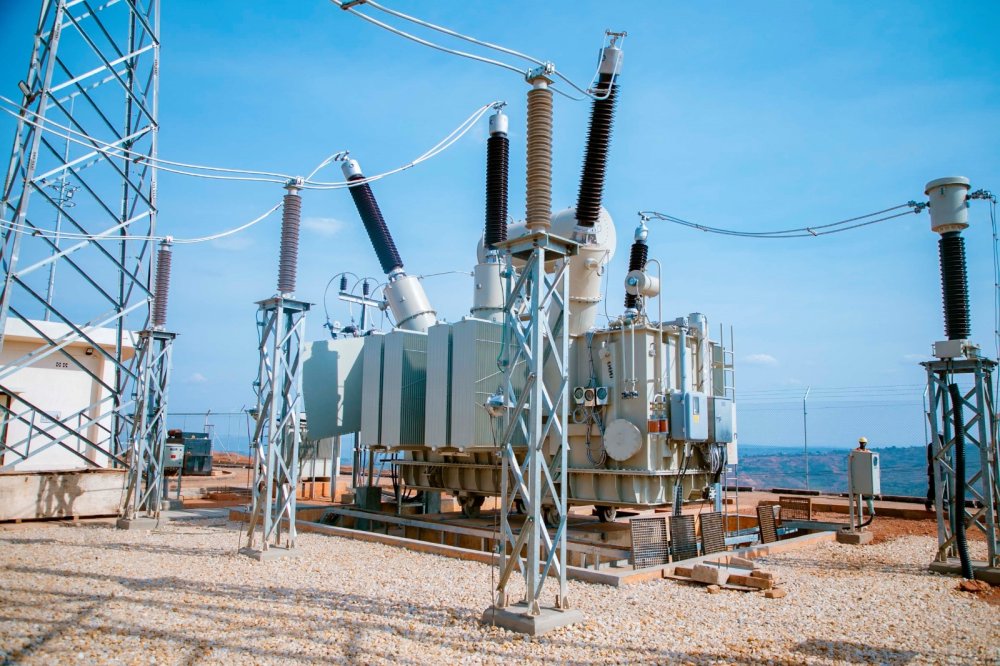
Under RBF II, the programme will support the rehabilitation of four substations and the construction of about 3,855 kilometres of medium and low voltage transmission lines.
It is expected to connect an additional 200,000 households and 850 commercial users to the national grid, while also providing 50,000 new off-grid electricity connections.
The programme will further deliver clean cooking devices to 100,000 households and 310 public institutions, and install street lighting along 200 kilometres of roads in secondary cities.
According to the partners, expanded electrification is expected to reduce the cost of doing business for small and medium-sized enterprises, improve productivity in rural areas, and enhance essential services such as healthcare delivery.
“The Energy Sector Results-Based Financing II programme is a transformative investment that will accelerate Rwanda’s progress toward universal energy access,” said Aïssa Touré Sarr, the AfDB Country Manager for Rwanda. “Through our partnership with AIIB and the Government of Rwanda, we are leveraging co-financing to scale impact while ensuring accountability, efficiency, and tangible results for communities across the country.”
The launch was followed by a high-level technical workshop bringing together government institutions, development partners, and implementing agencies to align procurement processes, financial management systems, environmental and social safeguards, and monitoring and evaluation frameworks.
RBF I and II are part of Rwanda’s broader ambition to achieve universal electricity access by 2030. They also align with the AfDB’s strategic priorities on climate-resilient infrastructure and efforts to bridge the rural-urban infrastructure gap while strengthening resilience to climate shocks.
The programme complements other African Development Bank-supported energy investments in Rwanda, including the Ruzizi III Hydropower Project and the Rwanda Transmission System Reinforcement and Last Mile Connectivity programme.
Leave a Reply