The incident occurred on July 9, 2026, in Nyamabuye Village, Kanzenze Cell, Ntarama Sector.
By the time of publication, security personnel and local residents had launched a rescue operation to retrieve those trapped.
The Executive Secretary of Ntarama Sector, Patrick Rwasa, told IGIHE that preliminary information indicated that between eight and 10 people were inside the quarry when it collapsed.
“We have been informed that between eight and 10 people were excavating in the quarry. It collapsed on all of them. We are doing everything possible to rescue them, although, given the time that has elapsed, we are not optimistic that they are still alive,” he said.
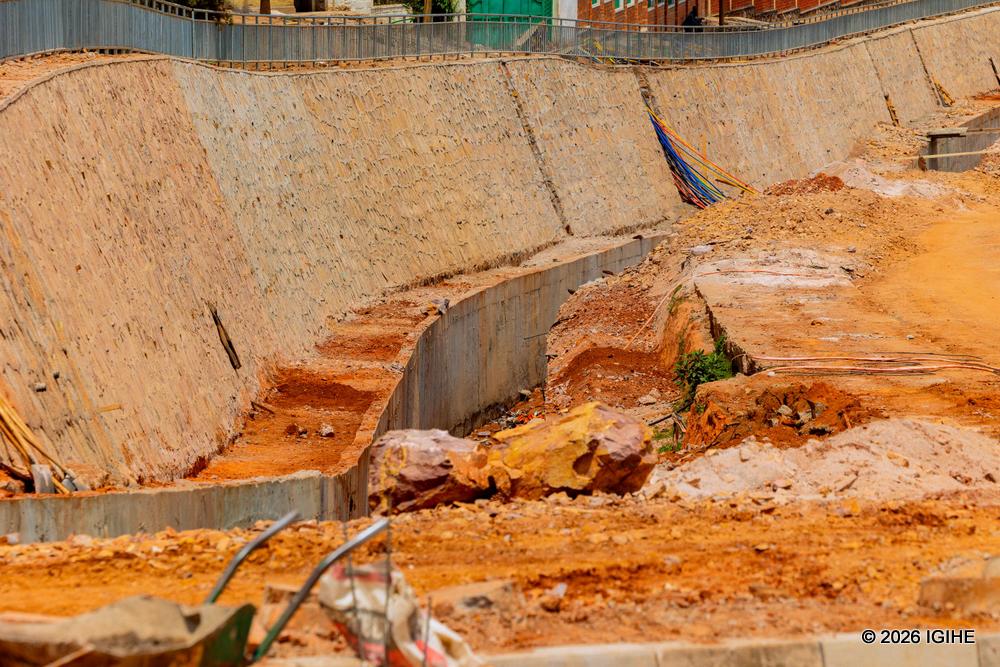
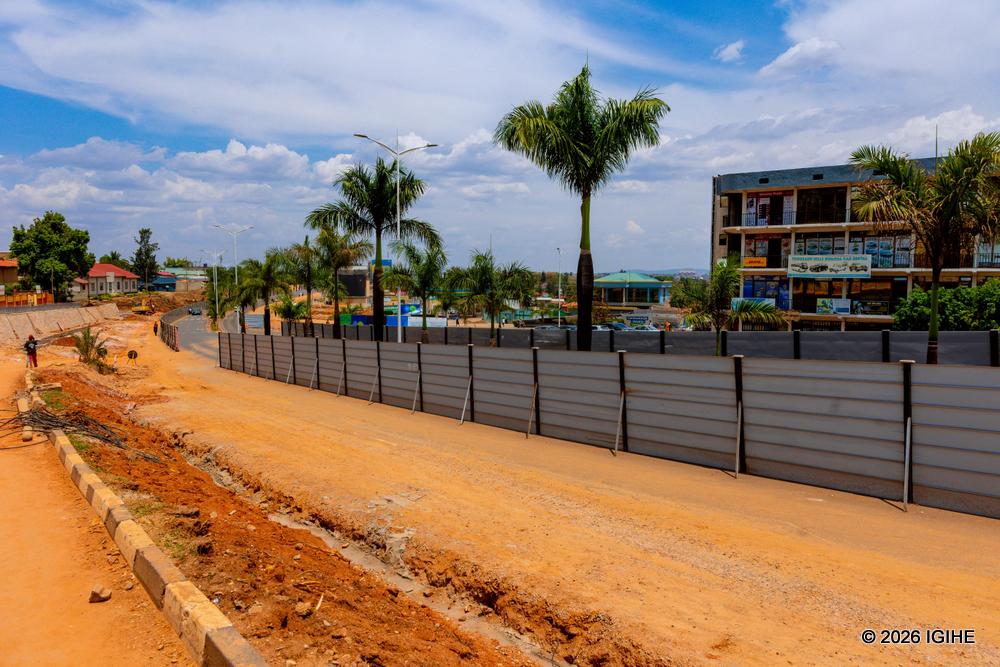
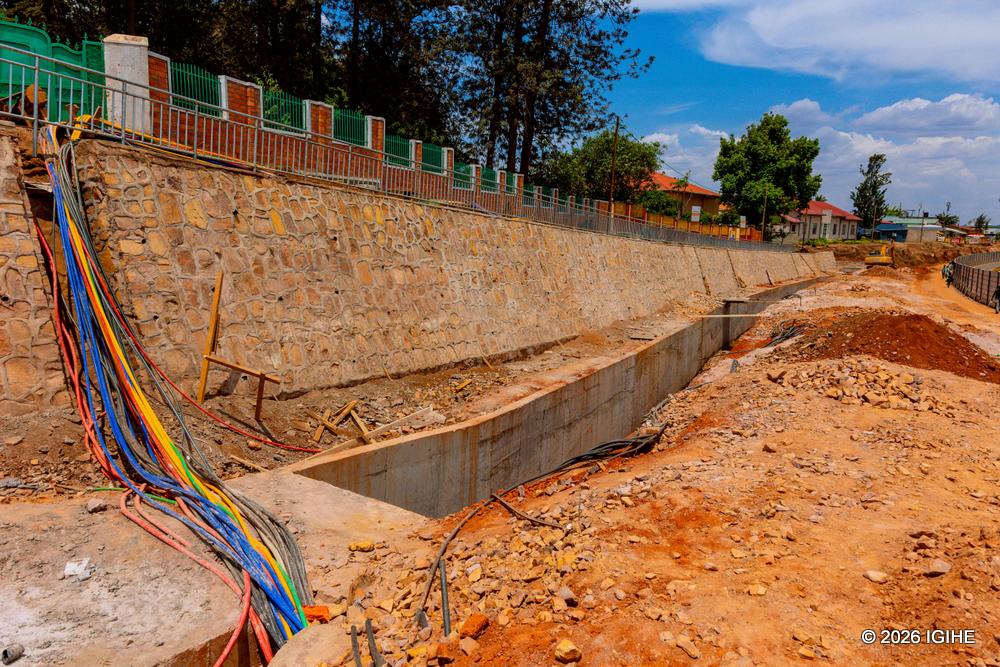
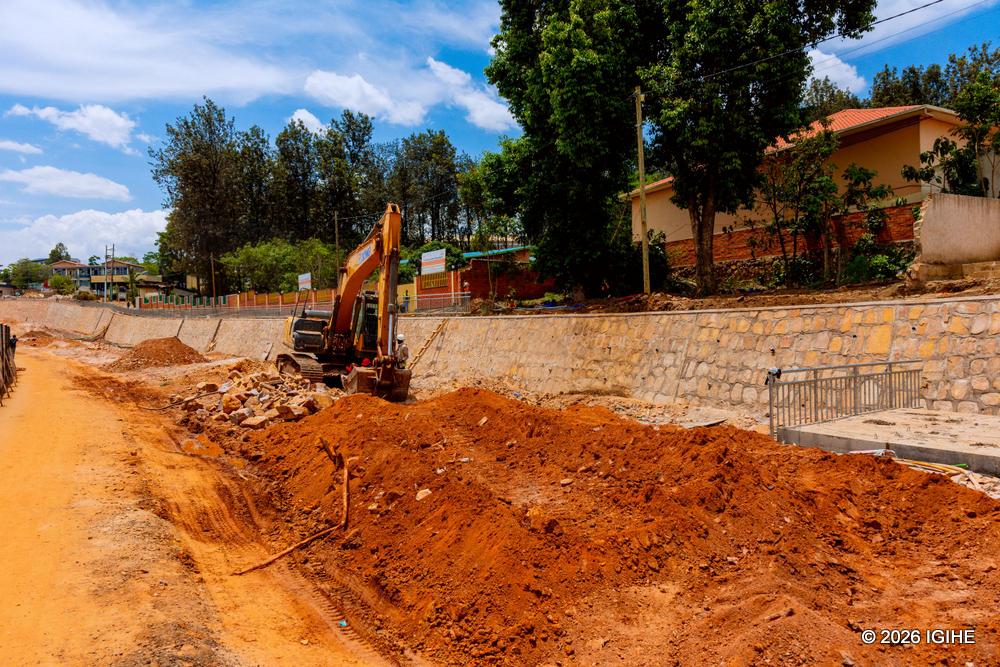
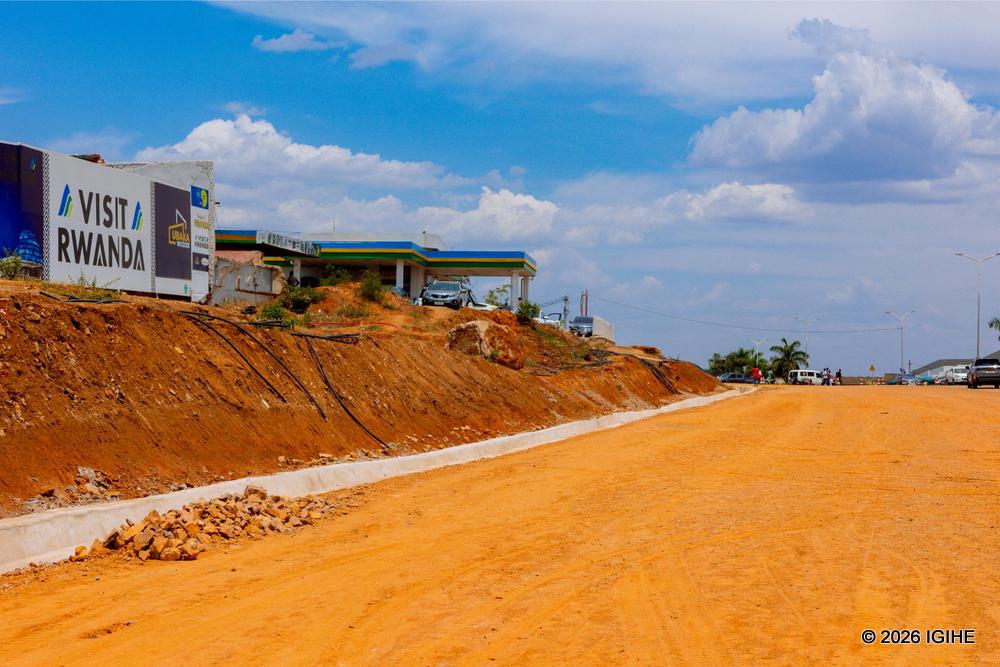
A quarry used for extracting construction stones in Bugesera District, Western Province collapsed on at several people on Thursday morning. Photo used for illustration
His remarks come amid continued calls from the United States urging Rwanda to lift defensive measures deployed along its border with the Democratic Republic of Congo (DRC).
Washington has linked its position to agreements signed between Rwanda and the DRC on June 27, 2025, and again on December 4 of the same year, aimed at addressing insecurity in eastern Congo.
However, Kigali maintains that the DRC has not fully implemented its commitments, particularly regarding the dismantling of the FDLR terrorist group, which Rwanda considers a persistent security threat operating in the region.
Speaking in an interview with RBA on July 5, 2026, Brig Gen Karuretwa said Rwanda’s current security posture is informed by past experiences, particularly the “Abacengezi” insurgency period, when waiting for threats to reach national borders resulted in severe consequences.
He explained that Rwanda’s approach is based on preventing insecurity before it reaches its territory.
“I referred to the Abacengezi war. Waiting for the enemy to reach our borders and bring their operations onto Rwandan soil is something we have experienced and know the consequences of. We are not poor students of history. Looking at how things unfolded during that period, decisions were taken on how defensive measures should be structured so that citizens can continue to live safely without being affected by threats originating from the DRC,” he said.
The RDF spokesperson added that all states maintain defensive measures tailored to protect national security and respond to evolving threats.
According to Brig Gen Karuretwa, Rwanda’s defensive posture has not remained static but has evolved over time. He noted that even joint operations conducted by Rwanda and the DRC in 2019 to dismantle armed groups were part of earlier defensive arrangements.
However, he said the current situation is different, alleging that elements within the DRC leadership have collaborated with hostile groups, complicating regional security dynamics.
“But when you face a situation like the one we have now, where the President of the DRC has chosen to work with our enemies in ways that bring insecurity from within Congo, defensive measures do not disappear—they change,” he said.
Brig Gen Karuretwa further stated that the FDLR remains a group composed of individuals responsible for the 1994 Genocide against the Tutsi, arguing that the group has continued to maintain hostile intent toward Rwanda.
He also claimed that the group has established structures, including training facilities in areas of eastern DRC such as Walikale and Pinga, which he described as widely known locations.
“Saying we should only focus on those who crossed at that time ignores reality. I do not know whether it is ignorance or deliberate denial. These are well-known facts. The issue of the FDLR has not reduced; it has increased,” he said.
He emphasized that Rwanda will not accept pressure to lift its defensive measures as long as what it considers the root security threat remains unresolved.
“There is no time when pressure on Rwanda has not existed. Defensive measures will remain. They will evolve depending on the situation. If we return to joint operations like those of the past, that would be welcome. But saying we should remove defensive measures entirely—that is not something we will do,” he said.
Brig Gen Karuretwa is also a member of a joint security committee involving Rwanda, the United States, and the DRC, which monitors the implementation of peace agreements. He reaffirmed that Rwanda’s position in these discussions has consistently been guided by what it considers national security realities rather than external pressure.
Brig Gen Karuretwa has said Rwanda’s current security posture is informed by past experiences.
At the time, RPA forces had been fighting Ex-FAR for nearly four years. From the battalion of about 600 soldiers stationed at the CND building in Kigali, they received an urgent order from their commander, Major General Paul Kagame, to move quickly and rescue the Tutsi who were being massacred.
Speaking to Rwanda Broadcasting Agency (RBA) on July 5, 2026, the spokesperson of the Rwanda Defence Force (RDF), Brigadier General Patrick Karuretwa, recalled that in 1994 he was a very young soldier, not yet 20 years old, but old enough to understand the gravity of what was happening around him.
Brig Gen Karuretwa explained that as the RPA advanced toward Kigali, he began witnessing clear evidence of the genocide while passing through Nyacyonga. Bodies of victims murdered in horrific ways were scattered across the area. Some soldiers recognized members of their own families among the dead.
“I remember when we reached Nyacyonga on our way to Kigali. That was when the signs of the genocide became real to me. We saw bodies and the terrible ways in which people had been killed. The reports we had heard on the BBC and other radio stations were now unfolding before our eyes,” he said.
“Among us were soldiers who had originally come from Rwanda. As we advanced, some of them found the bodies of their close relatives—siblings, parents, even fiancées. We witnessed all of this firsthand.”
Brig Gen Karuretwa admitted that, as a young soldier, his immediate reaction was anger. Like many of his comrades, he felt that those responsible for the killings deserved to be killed in return. The RPA had the means to do so, as its soldiers were highly trained and heavily armed.
“To tell you the truth, as a young soldier who was not even 20 years old, I felt enormous anger. Most of us believed that those committing these atrocities should simply be killed. We had weapons, we were trained to fight, and we were soldiers,” he recalled.
He remembered questioning the logic of restraint at the time.
“I asked one of my colleagues, ‘We were trained to use weapons and fight the enemy. If the people who committed these crimes are not the enemy, then who is?’”
Yet, he said, the trust they had in their commanders, particularly in Paul Kagame, made the difference.
“The phrase ‘Afande yavuze’—‘The Commander has spoken’—was an order. We trusted our leaders completely.”
According to Brig Gen Karuretwa, one of the greatest achievements of the RPA leadership during the war to stop the genocide was preventing its soldiers from taking revenge despite the horrors they witnessed and the personal losses many suffered.
“The anger was real. I can honestly tell you that I carried that anger with me into Kigali. But ‘The Commander has spoken.’ That meant there was another way this problem would be solved. My job as Patrick Karuretwa, a young soldier at the time, was simply to continue carrying out my duties,” he said.
“We could easily have begun retaliating immediately. It is remarkable that a leadership could formulate such a vision, issue clear instructions, and have everyone follow them. That was extraordinary.”
After the liberation struggle ended on July 4, 1994, Rwanda faced a new challenge: building a national army. This required integrating former Ex-FAR soldiers who had remained in the country into the RPA, which later became the RDF.
Karuretwa acknowledged that, as a young soldier at the time, he struggled to understand why former enemies were being incorporated into the force.
“If you had asked Patrick Karuretwa as a private or corporal during those years whether he understood the decision to integrate Ex-FAR into the RDF, I would have been confused. These were people we had been fighting against,” he said.
“However, when I look at Rwanda today, I see that unity and reconciliation became one of the most important foundations of the country’s recovery. It all started then.”
He noted that even during the liberation struggle, some captured Ex-FAR soldiers were integrated into the RPA while retaining their ranks and being treated with dignity and respect. This reinforced a key message: the enemy was not an individual soldier, but bad leadership.
“It sent a very powerful message to Ex-FAR and to Rwandan society as a whole—that the enemy was not a person. The enemy was not the soldier standing before you; the enemy was bad governance,” he explained.
“If someone left that system and joined us, they were no longer our enemy. It was a powerful message that required a vision many people did not have at the time, especially considering that Ex-FAR soldiers had been taught that the Tutsi were the enemy.”
Karuretwa said President Kagame’s message that the enemy was not the individual soldier but the ideology and leadership behind the violence helped RPA troops understand the true purpose of their struggle.
“That approach helped us greatly because some of those soldiers who joined the RPA and later the RDF became excellent soldiers,” he said.
“Even today, there are commanders serving in leadership positions whom you would never imagine had once been part of a system that viewed Tutsi as enemies. At the time, it was difficult even to imagine such a thing, let alone implement it. But sometimes I ask myself: if we had not done it, where would we be today?”
Today, the Rwanda Defence Force is widely recognized for its professionalism, both within Rwanda and in international peacekeeping missions. Its conduct and achievements are often seen as a reflection of the unity, reconciliation, and progress that Rwanda has built over the past 32 years.
In 1994, after nearly four years of fighting Ex-FAR forces, RPA troops were ordered to urgently intervene and rescue Tutsi being targeted during the Genocide against the Tutsi.Major General Paul Kagame instructed RPA soldiers not to seek revenge, an order they strictly followed throughout the liberation struggle.Brig Gen Patrick Karuretwa said that as a young soldier in 1994, he did not initially understand the restriction on revenge, but later came to recognize the importance of unity and reconciliation.
The event gathered Russian government officials, heads of diplomatic missions, members of the diplomatic corps, development and academic partners, friends of Rwanda, and members of the Rwandan community from across Russia and Belarus. More than 350 guests attended the commemoration, including 51 heads of missions, 17 defence attachés, and 82 diplomats.
In his address, Rwanda’s Ambassador to the Russian Federation, Maj Gen Joseph Nzabamwita, said Liberation Day honours the men and women who liberated Rwanda under the leadership of President Paul Kagame, ended the 1994 Genocide against the Tutsi, and laid the foundation for the country’s unity, reconciliation, security, and national transformation.
Marking Kwibohora32 under the theme “Rwanda’s journey continues,” the ambassador reflected on Rwanda’s socio-economic progress over the past three decades, noting that the country’s economy has grown more than tenfold since 1994.
He also highlighted Vision 2050, through which Rwanda aims to achieve upper-middle-income status by 2035 and high-income status by 2050.
Ambassador Nzabamwita reaffirmed Rwanda’s commitment to further strengthening its longstanding cooperation with the Russian Federation, noting increasing momentum in bilateral relations across key sectors. These include nuclear energy, healthcare, education, and military-technical cooperation.
He said both countries remain committed to translating their engagements into practical and mutually beneficial projects that support shared development goals.
Representing the Russian Ministry of Foreign Affairs, Mr. Anatoli Bashkin, Director of the Department of Sub-Saharan African States, conveyed Russia’s congratulations to the Government and people of Rwanda on the occasion of Liberation Day.
He commended the resilience of the Rwandan people and the country’s progress in reconciliation, peace, security, and socio-economic transformation over the past 32 years.
Mr. Bashkin reaffirmed Russia’s support for Rwanda’s sovereign development path, describing Kigali as an important partner on the African continent.
He further noted that both countries share commitments to international law, peacekeeping cooperation, and engagement on global and regional issues. He also expressed Russia’s readiness to expand cooperation and support the implementation of joint projects in nuclear energy, healthcare, education, and military-technical fields, while welcoming Rwanda’s participation in the upcoming Third Russia-Africa Summit in Moscow.
The official programme featured cultural performances by the traditional dance troupe Imena mu Nganzo and a live band, showcasing Rwanda’s cultural heritage through music, dance, and rhythm.
Following the ceremony, Ambassador Nzabamwita met with members of the Rwandan community in Russia and Belarus, including newly elected RCA community leaders and 51 students graduating from bachelor’s and master’s programmes.
He reminded Rwandans abroad that their country values and supports them, noting that education opportunities abroad are meant to equip young Rwandans with skills that contribute to national development.
He encouraged students to pursue academic excellence and make full use of opportunities in Russia by learning best practices and applying them to Rwanda’s development priorities.
The ambassador also emphasized that liberation is an ongoing struggle against injustice and all forms of backwardness. He urged students to acquire advanced knowledge and modern skills to address contemporary challenges and contribute to Rwanda’s security and progress, expressing confidence that Rwanda will continue to prosper and once again become a “country of milk and honey.”
He further advised Rwandans living in Russia to take care of their health, adapt to the cold climate, engage in sports and extracurricular activities, and maintain discipline in their daily lives.
More than 350 guests, including diplomats and partners, joined Rwanda’s Liberation Day commemoration in the Russian Federation.Cultural troupe Imena mu Nganzo performs traditional Rwandan dance and music during Kwibohora32 celebrations in Moscow.Russian government officials and members of the diplomatic corps attend Rwanda’s Kwibohora32 reception in Moscow.High-level guests gathered in Moscow as Rwanda marked the 32nd anniversary of Liberation Day, Kwibohora32, hosted by the Embassy of Rwanda in Russia.Defence attachés from various countries also attended the ceremony.
With the death toll climbing to around 1,450 and thousands of people still unaccounted for, authorities say the focus remains on saving lives despite increasingly difficult conditions.
Emergency crews have been working around the clock since the disaster struck, navigating collapsed buildings, damaged roads and unstable structures in a race against time.
Although hopes of finding more survivors naturally diminish with each passing day, rescuers remain determined to continue their efforts for as long as there is a chance that people are still trapped beneath the rubble.
There have been moments of hope amid the devastation. On Sunday, French and U.S. rescue teams pulled a father and his teenage son alive from the remains of a collapsed building in the coastal town of Caraballeda, several days after the earthquakes.
Their rescue offered encouragement to families still waiting for news of missing relatives and to emergency workers who have refused to give up the search.
Officials say more than 3,150 people have been injured, placing enormous pressure on hospitals and emergency medical services already stretched by the scale of the disaster.
At least 12,700 people have also been forced to leave their homes, many now relying on temporary shelters and humanitarian assistance as they await news about when it will be safe to return.
The coastal state of La Guaira has been among the hardest-hit areas, with widespread destruction reported in several communities.
Buildings have collapsed, homes have been destroyed and critical infrastructure has suffered extensive damage, making rescue operations more challenging and slowing the delivery of aid to affected neighborhoods.
Authorities say thousands of people are still missing, though the exact number remains uncertain as emergency officials continue registering survivors and verifying reports from families searching for loved ones. The uncertainty has added to the anguish of communities anxiously hoping for good news while rescue operations continue.
Government officials have pledged to maintain search-and-rescue efforts, stressing that every possible opportunity to save lives will be pursued. International rescue teams have also joined local responders, bringing specialized equipment and expertise to support operations in some of the worst-affected areas.
Beyond the immediate rescue mission, Venezuela now faces a growing humanitarian challenge. Thousands of displaced residents require food, clean water, medical care and temporary accommodation, while damaged infrastructure is complicating relief efforts.
Aid organizations continue working alongside national authorities to provide emergency assistance to families whose lives have been upended by the disaster.
As the country mourns those who have lost their lives, attention remains focused on those who may still be rescued and on helping survivors begin the long road to recovery.
For many families, hope persists that loved ones will yet be found, while the nation confronts the enormous task of rebuilding communities shattered by tragedy.
Emergency crews continue searching through collapsed buildings as Venezuela confronts one of its deadliest natural disasters in recent history.
The group includes 85 Sudanese nationals, many of whom have been displaced by the ongoing conflict in Sudan.
It also consists of 66 Eritreans, two Ethiopians and 12 South Sudanese nationals. The arrivals were received in collaboration with the United Nations High Commissioner for Refugees (UNHCR).
Many of those evacuated from Libya are migrants and asylum seekers who had hoped to reach Europe by crossing the Mediterranean Sea. A significant number attempt the journey without valid travel documents, while others perish before reaching their destination.
The evacuees are hosted under the Emergency Transit Mechanism (ETM), a UNHCR programme that provides temporary protection for refugees and asylum seekers stranded in Libya while durable solutions, including resettlement opportunities, are sought.
In a statement posted on X, MINEMA reaffirmed Rwanda’s commitment to offering refuge to people in need.
Since 2019, Rwanda has received more than 3,000 refugees and asylum seekers evacuated from Libya. Of these, 2,623 have been successfully resettled in third countries.
Among the countries that have received the largest number of refugees and asylum seekers transferred from Rwanda are Canada, Finland and the United States.
A group of 173 asylum seekers have been evacuated from Libya arrived in Rwanda under the Emergency Transit Mechanism, a programme implemented in partnership with UNHCR.The latest group of asylum seekers received in Rwanda includes nationals from Sudan, Eritrea, Ethiopia and South Sudan who were evacuated from Libya.Officials from MINEMA and UNHCR welcomed 173 asylum seekers evacuated from Libya as Rwanda received the 23rd group under the Emergency Transit Mechanism.
To illustrate the seriousness of the issue, Macron drew parallels between today’s digital platforms and the role once played by the extremist RTLM radio station, which incited violence during the genocide.
Through RTLM, broadcasters such as Habimana Kantano, Valérie Bemeriki, and Belgian national Georges Ruggiu used hate propaganda to encourage killings, dehumanising victims and directing attackers toward those who had fled.
According to ongoing observations, much of the current genocide denial and distortion is driven by individuals in the diaspora, particularly in Europe. These include descendants of individuals involved in the genocide, as well as actors accused of being motivated by financial incentives.
Among those frequently cited is Denise Zaneza, who lives in Belgium and is the daughter of Marcel Sebatware, a former senior manager at CIMERWA cement company and an active member of the CDR party.
Sebatware is accused of having played a significant role in organising violence in Cyangugu Prefecture and of helping establish an Interahamwe militia network in Bugarama. Although he was later convicted by Gacaca courts, he continued to present himself as an opposition political figure in exile and was involved in forming the FDU-Inkingi political movement abroad.
Zaneza describes herself as a human rights activist and uses YouTube platforms to promote the claim that Rwanda experienced “two genocides,” including one against Hutu populations—an assertion widely rejected by established historical records and recognised as genocide denial discourse.
She has also alleged that the RPF-Inkotanyi were involved in genocide, despite their widely documented role in stopping the killings and restoring stability.
In a 2021 statement, Zaneza claimed that violence against Hutu populations began in 1990 and continued after 1994. However, these claims contrast with repeated calls from Rwanda’s leadership for reconciliation and non-retaliation during and after the genocide.
For instance, in October 1994, then Vice President and Minister of Defence Paul Kagame urged RPA soldiers to avoid revenge attacks and instead uphold justice and national unity.
Despite such directives, isolated incidents of revenge killings were reported and subsequently addressed through arrests and military justice procedures at the time.
Another figure mentioned in relation to genocide denial narratives is Théophile Mpozembizi, also linked to FDU-Inkingi networks in exile. He is similarly accused of promoting claims of “double genocide” through online platforms and public statements.
Rwandan official accounts argue that such narratives are often shaped by family histories tied to individuals implicated in planning or executing the 1994 genocide against the Tutsi.
On June 14, 2026, the Minister of National Unity and Civic Engagement, Jean Damascène Bizimana, provided detailed accounts of the roles played by Marcel Sebatware and Jean Pierre Mpozembizi.
He explained that both were part of a network of extremist elites linked to the former Habyarimana regime and involved in political mobilisation that contributed to the organisation of violence between 1990 and 1994.
According to Bizimana, the group used their positions within CIMERWA to recruit and train Interahamwe militia members, distribute weapons, and prepare lists targeting Tutsi civilians.
He further stated that between April 14 and 17, 1994, large-scale killings in Bugarama were carried out with their direct involvement, supported by local militia and elements of the former army.
The minister also alleged that company resources, including vehicles, fuel, and funds, were used to facilitate attacks across various locations in Cyangugu and Kibuye prefectures.
Following the defeat of the genocidal regime in July 1994, fleeing perpetrators reportedly looted company assets and moved large sums of money into exile, with the intention of sustaining political and military resistance abroad.
Dr. Bizimana argues that individuals such as Zaneza and Mpozembizi should clearly distance themselves from the crimes attributed to their relatives and cooperate with justice mechanisms, as part of broader efforts to counter genocide denial and preserve historical truth.
Denise Zaneza describes herself as a human rights activist.Théophile Mpozembizi portrays himself as a political activist advocating for democracy and peace.Minister Dr. Jean Damascène Bizimana stated that the actions of Zaneza and Mpozembizi are driven by their support for their parents, who played a significant role in the 1994 Genocide against the Tutsi.
Speaking recently, Senyoni, who currently serves as Secretary of the Rwanda Demobilisation and Reintegration Commission (RDRC), recounted his experience within the military hierarchy during the final years preceding the 1994 Genocide against the Tutsi.
He explained that he joined the former Rwandan Armed Forces in 1984 and later received specialized training abroad in military administration and secretarial services. In 1987, he was assigned to the Secretariat of the Army High Command.
In 1990, after the launch of the liberation struggle by the Rwanda Patriotic Front (RPF), Senyoni was transferred to the military camp in Gako, where he coordinated administrative and financial affairs. As the war intensified, he continued carrying out secretarial duties related to military operations.
By April 1994, Senyoni was still serving in that role and became directly involved in documenting one of the most consequential meetings held after Habyarimana’s plane was shot down on April 6.
“On the evening of April 7, 1994, Bagosora, who was then Chief of Staff at the Ministry of Defence, convened a meeting of senior military officers at the former École Supérieure Militaire, which I believe is now part of UR-CST,” Senyoni recalled.
“Meeting notes were usually taken by hand. The handwritten records from that meeting were brought to the military secretariat, where I typed them before they were forwarded to the Ministry of Defence.”
According to Senyoni, one of the key resolutions adopted during the meeting was the appointment of Bagosora as President to succeed Habyarimana.
“The meeting concluded that Bagosora should become President of the Republic and replace Habyarimana,” he said. “However, when the minutes reached the Ministry of Defence, French military advisers working under military cooperation arrangements reviewed them and warned that if Bagosora became President, the RPF would immediately accuse the military of shooting down the presidential plane and carrying out a coup.”
Senyoni said the French advisers urged military leaders to follow constitutional procedures instead. The officers accepted the advice, effectively ending Bagosora’s ambitions to assume the presidency.
“At that point, they instructed members of the Presidential Guard to bring Théodore Sindikubwabo from Butare,” he said.
Meanwhile, the Genocide against the Tutsi had already begun. Prime Minister Agathe Uwilingiyimana had been killed, along with Joseph Kavaruganda, the President of the Constitutional Court. Violence was spreading rapidly across Kigali.
Under Rwanda’s constitutional arrangements at the time, if the President could no longer perform his duties, the office would pass either to the Prime Minister or the Speaker of Parliament.
Since Uwilingiyimana had already been murdered, Sindikubwabo, who was then Speaker of Parliament, became the constitutional successor. However, he was in Butare, in southern Rwanda.
Senyoni said confusion and divisions within the Presidential Guard complicated efforts to bring him to Kigali.
“The soldiers sent to retrieve him believed he was being brought to Kigali to be killed,” Senyoni said. “They transported him poorly in a pickup truck borrowed from a convent. He was not even wearing socks.”
According to Senyoni, Sindikubwabo arrived at Army Headquarters visibly frightened, convinced he would be killed. However, later that evening, Radio Rwanda announced that he had become President.
“The Genocide continued, and eventually we fled to what is now the Democratic Republic of the Congo. I crossed into Bukavu,” he said.
Senyoni remained in the DRC until 2010, when he decided to return to Rwanda. Three of his five children returned with him and later received educational support from the Imbuto Foundation.
Today, he says he is grateful for the opportunity to serve Rwanda once again. He has spent the past 15 years as Secretary of the RDRC and regularly encourages former combatants still living in eastern DRC to return home.
He emphasized that Rwanda remains open to those willing to reintegrate and urged all Rwandans to continue safeguarding national unity and reconciliation.
Alphonse Senyoni, who typed the minutes of the meeting that initially designated Théoneste Bagosora as president, said the plan was abandoned following advice from French military advisers.Senior officers in the former Rwandan Armed Forces (Ex-FAR) had agreed to appoint Col. Théoneste Bagosora as successor to President Juvénal Habyarimana before the proposal was later dropped.
Officially inaugurated by Rwandan President Paul Kagame and French President Emmanuel Macron on June 2, 2026, the monument is being described as “a light that has been lit in the city of Paris.”
On the evening of June 2, 2026, French and Rwandan authorities officially inaugurated the memorial, named Les Archives, erected along the banks of the Seine River in the heart of Paris in tribute to the victims of the 1994 Genocide against the Tutsi.
The ceremony was attended by President Emmanuel Macron, Paris Mayor Emmanuel Grégoire, senior officials from the French and Rwandan governments, Secretary General of the Organisation Internationale de la Francophonie (OIF) Louise Mushikiwabo, IBUKA-France President Marcel Kabanda, and numerous representatives of survivors’ associations.
Speaking to IGIHE, several IBUKA leaders from Europe and Rwanda expressed their satisfaction, saying the memorial will help the international community better understand the true history of the Genocide against the Tutsi.
IBUKA-France President Dr. Marcel Kabanda described the memorial as “a light lit in Paris” that will help dispel the darkness of ignorance and genocide denial.
“This memorial is like a light that has been lit in the city of Paris so that people may emerge from the darkness surrounding this history. That darkness is sustained by genocide deniers. They create a fog, but this memorial illuminates the way, enabling people to learn about the history of the Genocide against the Tutsi, understand it, preserve it, and resist those who seek to minimize or distort it.”
He also emphasized that the speeches delivered by Presidents Kagame and Macron reflected a sincere commitment to cooperation between Rwanda and France.
“Each spoke openly and honestly, without evasion. Both Heads of State demonstrated their willingness to work together. What I take from this is a relationship built on sincerity, without hypocrisy or deception. This partnership has already made significant progress, and we hope it will continue moving forward, as President Macron himself stated.”
Dr. Kabanda was also thanked by both Heads of State and the Mayor of Paris for his dedication and efforts in helping bring the memorial project to fruition.
For his part, IBUKA-Rwanda President Dr. Philbert Gakwenzire stressed that the memorial not only honors the victims of the Genocide against the Tutsi but also carries a universal message aimed at preventing future atrocities.
“This memorial pays tribute to the victims, provides comfort to survivors, and sends a message to Rwandans, the French people, and humanity as a whole. It invites us to reflect on our history so that genocide never happens again. It reminds us of our past, the difficult relationship that once existed between France and Rwanda, but also the progress that has been made in restoring ties between our two countries.”
He also highlighted the educational role of memorial sites.
“A memorial should be a place of learning. It should help us understand what happened so that it never happens again. It tells the story of those who were killed during the Genocide against the Tutsi and shows that when leaders make poor decisions, entire populations suffer the consequences. That is exactly what happened during the genocide.”
Dr. Gakwenzire further argued that, given the influence France held in Rwanda at the time, it could have helped prevent the genocide.
“Considering the influence France had over the Republic of Rwanda at the time, had they simply raised a finger and said that these events must stop, they should never have happened. That is why this moment is so important. It shows that France now recognizes certain responsibilities and wishes to build, together with Rwanda, a future based on shared values and a message to the world.”
IBUKA-Italy President Dr. Honorine Mujyambere described the memorial as an important tool in the fight against genocide denial in Europe.
“This is an extremely important initiative, especially in Europe, where genocide denial remains widespread. The fact that France has taken such a step is highly significant. We know the role France played in this history, what was said, what was left unsaid, and what was not done. Today, France has taken strong and meaningful action.”
She added that the memorial will help preserve the memory of the victims while raising awareness about Rwanda’s history.
“Anyone who passes by this memorial will inevitably ask what happened here. It will encourage people to seek the truth about this history and will greatly contribute to combating genocidal ideology, which we know remains particularly prevalent in parts of Europe.”
IBUKA-Switzerland President César Murangira also described the memorial as a major symbol in the process of healing the wounds that long characterized relations between Rwanda and France.
“This memorial carries immense symbolic value. It contributes to healing long-standing wounds in relations between France and Rwanda. It reflects France’s acknowledgment of its role and responsibilities in this history, thereby opening an important path toward truth-seeking, remembrance, and reconciliation.”
According to him, the establishment of the memorial in Paris sends a powerful and hopeful message. It reflects a commitment to honoring the victims, preserving historical truth, and continuing to build a relationship between Rwanda and France founded on truth, remembrance, and reconciliation.
He also emphasized the significance of the memorial’s location, situated near major French institutions such as the Quai d’Orsay, home to the Ministry for Europe and Foreign Affairs, the National Assembly, and Les Invalides—sites that hold a prominent place in France’s political and historical life.
During the inauguration ceremony, President Kagame thanked French individuals who contributed to bringing the truth about the Genocide against the Tutsi to light, including former Paris Mayor Anne Hidalgo, her successor, journalists, historians, and human rights advocates.
The Rwandan Head of State also noted that the memorial stands as a powerful symbol of historical truth—a truth firmly rooted and impossible to shake. He described it as a testament both to the dignity of the Rwandan people and to the memory of the Genocide against the Tutsi.
Photos marking the unveiling of the memorial in Paris
Preliminary investigations revealed that the victims were working at night when the landslide occurred, which made rescue efforts harder, Gabin Razafindrakoto, commander of Vatomandry gendarmerie brigade, told Xinhua.
The mayor of the city has ordered the immediate closure of the site to prevent any further mining activities and reduce the risk of additional incidents, he said.
Authorities are trying to determine the exact circumstances of the landslide.