To illustrate the seriousness of the issue, Macron drew parallels between today’s digital platforms and the role once played by the extremist RTLM radio station, which incited violence during the genocide.
Through RTLM, broadcasters such as Habimana Kantano, Valérie Bemeriki, and Belgian national Georges Ruggiu used hate propaganda to encourage killings, dehumanising victims and directing attackers toward those who had fled.
According to ongoing observations, much of the current genocide denial and distortion is driven by individuals in the diaspora, particularly in Europe. These include descendants of individuals involved in the genocide, as well as actors accused of being motivated by financial incentives.
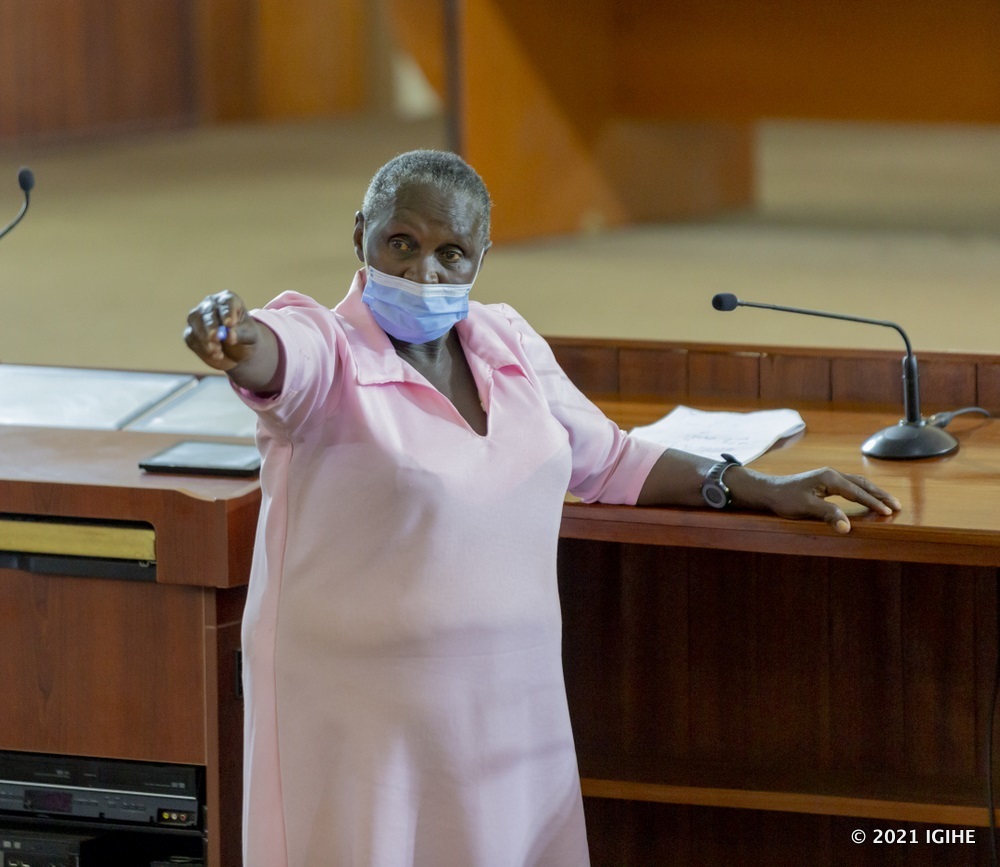
Among those frequently cited is Denise Zaneza, who lives in Belgium and is the daughter of Marcel Sebatware, a former senior manager at CIMERWA cement company and an active member of the CDR party.
Sebatware is accused of having played a significant role in organising violence in Cyangugu Prefecture and of helping establish an Interahamwe militia network in Bugarama. Although he was later convicted by Gacaca courts, he continued to present himself as an opposition political figure in exile and was involved in forming the FDU-Inkingi political movement abroad.
Zaneza describes herself as a human rights activist and uses YouTube platforms to promote the claim that Rwanda experienced “two genocides,” including one against Hutu populations—an assertion widely rejected by established historical records and recognised as genocide denial discourse.
She has also alleged that the RPF-Inkotanyi were involved in genocide, despite their widely documented role in stopping the killings and restoring stability.
In a 2021 statement, Zaneza claimed that violence against Hutu populations began in 1990 and continued after 1994. However, these claims contrast with repeated calls from Rwanda’s leadership for reconciliation and non-retaliation during and after the genocide.
For instance, in October 1994, then Vice President and Minister of Defence Paul Kagame urged RPA soldiers to avoid revenge attacks and instead uphold justice and national unity.
Despite such directives, isolated incidents of revenge killings were reported and subsequently addressed through arrests and military justice procedures at the time.
Another figure mentioned in relation to genocide denial narratives is Théophile Mpozembizi, also linked to FDU-Inkingi networks in exile. He is similarly accused of promoting claims of “double genocide” through online platforms and public statements.
Rwandan official accounts argue that such narratives are often shaped by family histories tied to individuals implicated in planning or executing the 1994 genocide against the Tutsi.
On June 14, 2026, the Minister of National Unity and Civic Engagement, Jean Damascène Bizimana, provided detailed accounts of the roles played by Marcel Sebatware and Jean Pierre Mpozembizi.
He explained that both were part of a network of extremist elites linked to the former Habyarimana regime and involved in political mobilisation that contributed to the organisation of violence between 1990 and 1994.
According to Bizimana, the group used their positions within CIMERWA to recruit and train Interahamwe militia members, distribute weapons, and prepare lists targeting Tutsi civilians.
He further stated that between April 14 and 17, 1994, large-scale killings in Bugarama were carried out with their direct involvement, supported by local militia and elements of the former army.
The minister also alleged that company resources, including vehicles, fuel, and funds, were used to facilitate attacks across various locations in Cyangugu and Kibuye prefectures.
Following the defeat of the genocidal regime in July 1994, fleeing perpetrators reportedly looted company assets and moved large sums of money into exile, with the intention of sustaining political and military resistance abroad.
Dr. Bizimana argues that individuals such as Zaneza and Mpozembizi should clearly distance themselves from the crimes attributed to their relatives and cooperate with justice mechanisms, as part of broader efforts to counter genocide denial and preserve historical truth.
Denise Zaneza describes herself as a human rights activist.Théophile Mpozembizi portrays himself as a political activist advocating for democracy and peace.Minister Dr. Jean Damascène Bizimana stated that the actions of Zaneza and Mpozembizi are driven by their support for their parents, who played a significant role in the 1994 Genocide against the Tutsi.
Speaking recently, Senyoni, who currently serves as Secretary of the Rwanda Demobilisation and Reintegration Commission (RDRC), recounted his experience within the military hierarchy during the final years preceding the 1994 Genocide against the Tutsi.
He explained that he joined the former Rwandan Armed Forces in 1984 and later received specialized training abroad in military administration and secretarial services. In 1987, he was assigned to the Secretariat of the Army High Command.
In 1990, after the launch of the liberation struggle by the Rwanda Patriotic Front (RPF), Senyoni was transferred to the military camp in Gako, where he coordinated administrative and financial affairs. As the war intensified, he continued carrying out secretarial duties related to military operations.
By April 1994, Senyoni was still serving in that role and became directly involved in documenting one of the most consequential meetings held after Habyarimana’s plane was shot down on April 6.
“On the evening of April 7, 1994, Bagosora, who was then Chief of Staff at the Ministry of Defence, convened a meeting of senior military officers at the former École Supérieure Militaire, which I believe is now part of UR-CST,” Senyoni recalled.
“Meeting notes were usually taken by hand. The handwritten records from that meeting were brought to the military secretariat, where I typed them before they were forwarded to the Ministry of Defence.”
According to Senyoni, one of the key resolutions adopted during the meeting was the appointment of Bagosora as President to succeed Habyarimana.
“The meeting concluded that Bagosora should become President of the Republic and replace Habyarimana,” he said. “However, when the minutes reached the Ministry of Defence, French military advisers working under military cooperation arrangements reviewed them and warned that if Bagosora became President, the RPF would immediately accuse the military of shooting down the presidential plane and carrying out a coup.”
Senyoni said the French advisers urged military leaders to follow constitutional procedures instead. The officers accepted the advice, effectively ending Bagosora’s ambitions to assume the presidency.
“At that point, they instructed members of the Presidential Guard to bring Théodore Sindikubwabo from Butare,” he said.
Meanwhile, the Genocide against the Tutsi had already begun. Prime Minister Agathe Uwilingiyimana had been killed, along with Joseph Kavaruganda, the President of the Constitutional Court. Violence was spreading rapidly across Kigali.
Under Rwanda’s constitutional arrangements at the time, if the President could no longer perform his duties, the office would pass either to the Prime Minister or the Speaker of Parliament.
Since Uwilingiyimana had already been murdered, Sindikubwabo, who was then Speaker of Parliament, became the constitutional successor. However, he was in Butare, in southern Rwanda.
Senyoni said confusion and divisions within the Presidential Guard complicated efforts to bring him to Kigali.
“The soldiers sent to retrieve him believed he was being brought to Kigali to be killed,” Senyoni said. “They transported him poorly in a pickup truck borrowed from a convent. He was not even wearing socks.”
According to Senyoni, Sindikubwabo arrived at Army Headquarters visibly frightened, convinced he would be killed. However, later that evening, Radio Rwanda announced that he had become President.
“The Genocide continued, and eventually we fled to what is now the Democratic Republic of the Congo. I crossed into Bukavu,” he said.
Senyoni remained in the DRC until 2010, when he decided to return to Rwanda. Three of his five children returned with him and later received educational support from the Imbuto Foundation.
Today, he says he is grateful for the opportunity to serve Rwanda once again. He has spent the past 15 years as Secretary of the RDRC and regularly encourages former combatants still living in eastern DRC to return home.
He emphasized that Rwanda remains open to those willing to reintegrate and urged all Rwandans to continue safeguarding national unity and reconciliation.
Alphonse Senyoni, who typed the minutes of the meeting that initially designated Théoneste Bagosora as president, said the plan was abandoned following advice from French military advisers.Senior officers in the former Rwandan Armed Forces (Ex-FAR) had agreed to appoint Col. Théoneste Bagosora as successor to President Juvénal Habyarimana before the proposal was later dropped.
Officially inaugurated by Rwandan President Paul Kagame and French President Emmanuel Macron on June 2, 2026, the monument is being described as “a light that has been lit in the city of Paris.”
On the evening of June 2, 2026, French and Rwandan authorities officially inaugurated the memorial, named Les Archives, erected along the banks of the Seine River in the heart of Paris in tribute to the victims of the 1994 Genocide against the Tutsi.
The ceremony was attended by President Emmanuel Macron, Paris Mayor Emmanuel Grégoire, senior officials from the French and Rwandan governments, Secretary General of the Organisation Internationale de la Francophonie (OIF) Louise Mushikiwabo, IBUKA-France President Marcel Kabanda, and numerous representatives of survivors’ associations.
Speaking to IGIHE, several IBUKA leaders from Europe and Rwanda expressed their satisfaction, saying the memorial will help the international community better understand the true history of the Genocide against the Tutsi.
IBUKA-France President Dr. Marcel Kabanda described the memorial as “a light lit in Paris” that will help dispel the darkness of ignorance and genocide denial.
“This memorial is like a light that has been lit in the city of Paris so that people may emerge from the darkness surrounding this history. That darkness is sustained by genocide deniers. They create a fog, but this memorial illuminates the way, enabling people to learn about the history of the Genocide against the Tutsi, understand it, preserve it, and resist those who seek to minimize or distort it.”
He also emphasized that the speeches delivered by Presidents Kagame and Macron reflected a sincere commitment to cooperation between Rwanda and France.
“Each spoke openly and honestly, without evasion. Both Heads of State demonstrated their willingness to work together. What I take from this is a relationship built on sincerity, without hypocrisy or deception. This partnership has already made significant progress, and we hope it will continue moving forward, as President Macron himself stated.”
Dr. Kabanda was also thanked by both Heads of State and the Mayor of Paris for his dedication and efforts in helping bring the memorial project to fruition.
For his part, IBUKA-Rwanda President Dr. Philbert Gakwenzire stressed that the memorial not only honors the victims of the Genocide against the Tutsi but also carries a universal message aimed at preventing future atrocities.
“This memorial pays tribute to the victims, provides comfort to survivors, and sends a message to Rwandans, the French people, and humanity as a whole. It invites us to reflect on our history so that genocide never happens again. It reminds us of our past, the difficult relationship that once existed between France and Rwanda, but also the progress that has been made in restoring ties between our two countries.”
He also highlighted the educational role of memorial sites.
“A memorial should be a place of learning. It should help us understand what happened so that it never happens again. It tells the story of those who were killed during the Genocide against the Tutsi and shows that when leaders make poor decisions, entire populations suffer the consequences. That is exactly what happened during the genocide.”
Dr. Gakwenzire further argued that, given the influence France held in Rwanda at the time, it could have helped prevent the genocide.
“Considering the influence France had over the Republic of Rwanda at the time, had they simply raised a finger and said that these events must stop, they should never have happened. That is why this moment is so important. It shows that France now recognizes certain responsibilities and wishes to build, together with Rwanda, a future based on shared values and a message to the world.”
IBUKA-Italy President Dr. Honorine Mujyambere described the memorial as an important tool in the fight against genocide denial in Europe.
“This is an extremely important initiative, especially in Europe, where genocide denial remains widespread. The fact that France has taken such a step is highly significant. We know the role France played in this history, what was said, what was left unsaid, and what was not done. Today, France has taken strong and meaningful action.”
She added that the memorial will help preserve the memory of the victims while raising awareness about Rwanda’s history.
“Anyone who passes by this memorial will inevitably ask what happened here. It will encourage people to seek the truth about this history and will greatly contribute to combating genocidal ideology, which we know remains particularly prevalent in parts of Europe.”
IBUKA-Switzerland President César Murangira also described the memorial as a major symbol in the process of healing the wounds that long characterized relations between Rwanda and France.
“This memorial carries immense symbolic value. It contributes to healing long-standing wounds in relations between France and Rwanda. It reflects France’s acknowledgment of its role and responsibilities in this history, thereby opening an important path toward truth-seeking, remembrance, and reconciliation.”
According to him, the establishment of the memorial in Paris sends a powerful and hopeful message. It reflects a commitment to honoring the victims, preserving historical truth, and continuing to build a relationship between Rwanda and France founded on truth, remembrance, and reconciliation.
He also emphasized the significance of the memorial’s location, situated near major French institutions such as the Quai d’Orsay, home to the Ministry for Europe and Foreign Affairs, the National Assembly, and Les Invalides—sites that hold a prominent place in France’s political and historical life.
During the inauguration ceremony, President Kagame thanked French individuals who contributed to bringing the truth about the Genocide against the Tutsi to light, including former Paris Mayor Anne Hidalgo, her successor, journalists, historians, and human rights advocates.
The Rwandan Head of State also noted that the memorial stands as a powerful symbol of historical truth—a truth firmly rooted and impossible to shake. He described it as a testament both to the dignity of the Rwandan people and to the memory of the Genocide against the Tutsi.
Photos marking the unveiling of the memorial in Paris
Preliminary investigations revealed that the victims were working at night when the landslide occurred, which made rescue efforts harder, Gabin Razafindrakoto, commander of Vatomandry gendarmerie brigade, told Xinhua.
The mayor of the city has ordered the immediate closure of the site to prevent any further mining activities and reduce the risk of additional incidents, he said.
Authorities are trying to determine the exact circumstances of the landslide.
Over the past quarter-century, the institution has grown significantly in both human capacity and technological capability. Today, RNP officers not only play a central role in maintaining security within Rwanda but also contribute to peacekeeping and security operations beyond the country’s borders.
A key feature of this transformation is the wide range of modern equipment now used in daily policing operations. These tools support all police departments, each depending on its specific mandate, and are increasingly driven by advanced technology to match global standards of law enforcement.
Water, air, and land operations
The marine policing unit is equipped with modern boats designed with advanced technology. These vessels are used for transporting personnel, conducting patrols, and carrying out rescue operations on large water bodies. They are fitted with cameras capable of capturing real-time images, as well as powerful lighting systems that allow clear visibility during night operations or emergencies.
Police officers assigned to water security also use specialized diving equipment. This allows them to conduct underwater search operations, retrieve objects, and rescue individuals who may have drowned or be in distress.
In aerial surveillance, the police rely on helicopters that patrol different areas of the country. These aircraft are used to monitor security situations, capture aerial images, and transmit real-time information to ground units for quick response.
Alongside helicopters, drones have become one of the most widely used tools in modern policing. More unmanned aerial vehicles are expected in the near future to be deployed for various purposes.
According to CIP Félicien Kanamugire, head of the drone operations unit in the Rwanda National Police, drones perform multiple tasks depending on their design and purpose.
Some drones are high-speed, capable of flying up to 100 kilometers per hour and remaining airborne for up to four hours without recharging.
They are equipped with high-resolution cameras that transmit live footage directly to operators on the ground.
Other types are designed for low-speed and short-duration missions but are equipped with advanced night-vision cameras and strong lighting systems, making them effective for nighttime surveillance.
“These drones can even detect a person hiding under trees. For example, in areas like Nyungwe Forest, they can identify individuals, track movement, and even help estimate numbers,” CIP Kanamugire explained. “They can also follow vehicles and monitor their movement until the end destination.”
Some drones are also fitted with loudspeakers used for public communication and awareness campaigns. These allow police to broadcast messages while in flight, making them useful in crowd control and public information dissemination.
The police also plan to expand their drone fleet with new models designed for specialized missions, including firefighting support. These drones are expected to assist in extinguishing fires in high-rise buildings or areas that are difficult for fire trucks to reach.
Future additions also include drones capable of assisting in public order management. These will be able to spray water or non-lethal substances such as paint to disperse unlawful gatherings, while also providing live aerial monitoring.
Robotics and explosive disposal
The Rwanda National Police also uses advanced robotics technology in explosive ordnance disposal. These robots are designed to detect and neutralize explosive devices without exposing officers to danger.
According to CIP Joseph Biziyaremye, head of the explosives unit, some of these machines—known as “robotic security dogs”—are capable of detecting explosives and toxic substances. They transmit information to operators who remain safely inside armored vehicles.
There are also robots designed specifically for bomb disposal operations. These machines can enter buildings, conduct searches, and handle suspicious objects that may pose a threat to public safety.
Some are even equipped with firearms, allowing them to neutralize armed threats when necessary. Canine unit and training systems
The police canine unit plays an important role in security operations. Trained dogs assist in searching, detecting narcotics, identifying explosives, and supporting various policing tasks.
RNP currently has a program to expand its dog breeding and training capacity locally, reducing the need to import trained dogs from abroad.
This initiative aims to strengthen internal capacity and improve efficiency in canine operations.
The training process is highly structured. It begins from birth, where puppies are carefully monitored and cared for using veterinary equipment, including systems similar to incubators when necessary.
As the dogs grow, they undergo physical training and continuous development programs to prepare them for operational duties in different security environments.
Public order and transport equipment
Rwanda National Police also uses specialized equipment for crowd control during demonstrations or public disturbances.
These include armored vehicles capable of transporting officers safely, as well as water cannon trucks and systems designed to disperse crowds using water or irritant sprays.
The traffic police unit is equipped with motorcycles, patrol vehicles, and advanced surveillance cameras used to monitor road safety and enforce traffic regulations.
In addition, modern screening technologies allow large groups of people to be searched efficiently without requiring physical contact with officers.
Fire and rescue services
The fire and rescue department has also undergone major transformation since its establishment in 2002.
At its inception, the unit had only one fire truck nationwide, during a period when the country was still recovering from the aftermath of the 1994 Genocide against the Tutsi.
Today, the department has a fleet of fire trucks stationed across the country. Some are capable of extinguishing fires in high-rise buildings exceeding 50 meters in height and can also assist in rescuing people trapped in tall structures.
In Kigali, fire trucks are strategically positioned in key locations such as UTC, Remera, Masoro industrial zone, and Kacyiru at police headquarters, ensuring rapid response in case of emergencies anywhere in the city.
Over 25 years, the Rwanda National Police has evolved into a modern, technology-driven institution equipped with advanced tools across land, air, and water operations.
This evolution reflects a broader transformation in Rwanda’s security sector, where innovation and technology now play a central role in ensuring public safety and national development.
The police marine unit uses modern boats equipped with cameras and lighting systems for rescue and patrol missions.Rwanda National Police officers use specialized diving equipment for underwater search and rescue operations.Helicopters are deployed by RNP for aerial surveillance and real-time security monitoring across the country.Some RNP drones can fly at high speeds and remain airborne for several hours during missions.Drones have become essential tools in Rwanda Police operations for surveillance and public safety management.High-resolution drone cameras provide real-time footage to operators on the ground for quick decision-making.Night-vision drones are used by police to monitor security situations during low-light conditions.Rwanda National Police uses robotics technology for safe and effective explosive ordnance disposal.Bomb disposal robots are used to enter buildings and neutralize potential threats safely.The RNP canine unit plays a vital role in detecting narcotics, explosives, and supporting security operations.RNP uses incubator-like systems to care for young puppies when necessary.Armored vehicles are used by RNP for safe transport of officers during crowd control operations.The traffic police unit uses motorcycles and patrol vehicles to enforce road safety regulations.Advanced surveillance cameras are used by RNP to monitor traffic and improve road safety.Some fire trucks in Rwanda can extinguish fires in buildings over 50 meters high.Fire trucks are strategically positioned in Kigali to ensure rapid emergency response.Rwanda National Police continues to expand its technological capacity across all security units.Rwanda National Police seeks expansion of its local dog breeding and training program to strengthen capacity.Modern screening technologies allow police to search large crowds without physical contact.These machines can be used in the event of an accident to save human lives.These vehicles can spray water or tear gas to disperse protesting crowds.These vehicles are equipped with cameras that can record footage, allowing the police to identify every individual who took part in protests.These motorcycles are used in traffic security and road safety operations.
The programme will be financed through a $200 million loan from the AfDB and a $100 million loan from AIIB, reflecting growing multilateral cooperation in Rwanda’s energy sector.
It will be implemented by the Ministry of Infrastructure through the Rwanda Energy Group (REG), working alongside the Energy Development Corporation Limited (EDCL) and the Energy Utility Corporation.
The second phase builds on the outcomes of the first Results-Based Financing programme, which significantly expanded energy access in Rwanda through off-grid solutions that reached at least 370,000 households.
The earlier phase also enabled 460,000 people to access clean cooking solutions, with the project ultimately improving the livelihoods of more than two million people while supporting job creation across the energy value chain.
The performance-based financing model links disbursements to independently verified results, with a focus on strengthening transmission and distribution networks, improving grid reliability, and expanding both on-grid and off-grid electricity connections.
Officials say the approach has strengthened accountability and delivery systems within Rwanda’s energy sector.
“The results-based approach under RBF I strengthened our implementation systems and accountability,” said Jean Bosco Mugiraneza, Director General for Energy at the Ministry of Infrastructure. “We are building on these lessons to accelerate connections, improve service reliability, and deliver greater impact for households, businesses, and productive users across Rwanda.”
Under RBF II, the programme will support the rehabilitation of four substations and the construction of about 3,855 kilometres of medium and low voltage transmission lines.
It is expected to connect an additional 200,000 households and 850 commercial users to the national grid, while also providing 50,000 new off-grid electricity connections.
The programme will further deliver clean cooking devices to 100,000 households and 310 public institutions, and install street lighting along 200 kilometres of roads in secondary cities.
According to the partners, expanded electrification is expected to reduce the cost of doing business for small and medium-sized enterprises, improve productivity in rural areas, and enhance essential services such as healthcare delivery.
“The Energy Sector Results-Based Financing II programme is a transformative investment that will accelerate Rwanda’s progress toward universal energy access,” said Aïssa Touré Sarr, the AfDB Country Manager for Rwanda. “Through our partnership with AIIB and the Government of Rwanda, we are leveraging co-financing to scale impact while ensuring accountability, efficiency, and tangible results for communities across the country.”
The launch was followed by a high-level technical workshop bringing together government institutions, development partners, and implementing agencies to align procurement processes, financial management systems, environmental and social safeguards, and monitoring and evaluation frameworks.
RBF I and II are part of Rwanda’s broader ambition to achieve universal electricity access by 2030. They also align with the AfDB’s strategic priorities on climate-resilient infrastructure and efforts to bridge the rural-urban infrastructure gap while strengthening resilience to climate shocks.
The programme complements other African Development Bank-supported energy investments in Rwanda, including the Ruzizi III Hydropower Project and the Rwanda Transmission System Reinforcement and Last Mile Connectivity programme.
The project is expected to connect an additional 200,000 households and 850 commercial users to the national grid, while also providing 50,000 new off-grid electricity connections.
On the morning of April 16, Bugaga’s vehicle was found parked in a palm plantation in Kivoga, near the Bujumbura–Bubanza road. His body was discovered in the front seat, with one leg hanging out through the left window.
Reports indicate that when people later accessed the scene, the body had been repositioned, placing Minister Bugaga in a seated position inside the vehicle in a way that would make it difficult for a casual observer to immediately realize he had died inside the car.
One of the first elements that raised suspicion was the absence of his security detail. In Burundi, a government official of his rank is normally accompanied by security personnel at all times, making their absence unusual.
A close friend of the late minister said that before his death, Bugaga had expressed fear, although he did not clearly explain what he was afraid of. The same friend said he had been planning to leave Burundi for Canada, but later changed his mind.
The friend, who is based in Europe, added that Bugaga had asked for assistance in preparing for relocation, saying, “One day before his death, he urged me to speed up the plan.”
Other accounts suggest that amid growing fears, Bugaga had consulted friends about the possibility of resigning, but they advised him against it, warning that it could create political tension with the government of President Évariste Ndayishimiye.
Human rights activist Pacifique Nininahazwe also questioned the official version of events. He stated that Bugaga’s Toyota Hilux was found in Kivoga without a rear license plate and that no visible signs of a nearby accident scene were present, raising questions about whether the incident actually occurred there.
He further noted unusual details, saying: “The first strange thing is that the car key was not inside the vehicle but was found in Gabby Bugaga’s bag. Did he drive without a key? Or did he park the car, remove the key, lie down, and place his leg out of the window while waiting for death?”
In an official statement, the Secretary-General and government spokesperson of Burundi, Jérôme Niyonzima, insisted that there is no doubt Bugaga died in a road accident and stated that no investigation is necessary.
However, the president of the Ligue Iteka human rights organization, Anschaire Nikoyagize, warned against rushing to conclusions. He called for an independent investigation to establish the truth.
Nikoyagize noted that since President Ndayishimiye came to power in June 2020, 2,248 bodies of people who died under unclear circumstances have been recorded in Burundi, suggesting that Bugaga’s death should also be thoroughly examined rather than automatically classified as an accident.
Police said the incident occurred at around 9:30 p.m. local time (1830 GMT) and involved a 10-seater minibus, locally known as a matatu, which was traveling from the lakeside town of Naivasha toward Nakuru City.
According to police, the minibus rammed into a stalled truck that had been parked along the highway due to a mechanical problem.
The latest incident brought the total number of people killed in separate accidents on Friday to 20, which includes 16 passengers and four riders, police said, adding that 27 others were injured.
According to police, fatal accidents are common in Kenya due to reckless driving, dangerous overtaking, drunk driving, and failure to use helmets.
An estimated 4,000 Kenyans die in road accidents annually despite concerted efforts by the state and the private sector to promote road safety, according to the National Transport and Safety Authority.
The changes come in response to a sharp rise in fuel prices, which recently reached historic levels in Rwanda. For the first time, both petrol and diesel exceeded Rwf 2,000 per litre, with petrol priced at Rwf 2,303 and diesel at Rwf 2,205.
Under the revised pricing structure, passengers in Kigali will now pay Rwf 59.28 per kilometre, while intercity travels will be charged Rwf 41.58 per kilometre.
Currently, the most expensive route in the country is from Nyabugogo to Kamembe via Huye, with a fare of Rwf 11,445. This route was not among those listed in the 2024 fare structure.
Passengers traveling from Nyabugogo to Pindura will now pay Rwf 10,930, up from the previous Rwf 8,070.
For those heading from Nyabugogo to Kamembe via Karongi, the fare has increased to Rwf10,296. Meanwhile, passengers traveling from Muhanga to Kamembe via Huye will pay Rwf 9,603, compared to the previous Rwf 7,090.
The fare from Nyabugogo to Mushubi has risen to Rwf 9,524 from Rwf 7,032. Similarly, passengers traveling from Rubavu to Kamembe will now pay Rwf 9,009, up from Rwf 6,652.
Other updated fares include Rwf 4,950 for the journey from Rubavu to Karongi, Rwf 4,851 from Nkomero to Kirambo, and Rwf 5,881 for passengers traveling from Gakeri to Nyamasheke.
During a press conference, FDNB spokesperson Gaspard Baratuza said that the explosions were caused by a fire that broke out in the ammunition depot of the logistics brigade, located in the Musaga area in Mugere district.
He specified that the fire resulted in material damage to homes, private vehicles, and military equipment and installations.
“The FDNB extends its condolences to the families who lost their members in this accident and wishes a speedy recovery to the injured being treated in various hospitals,” Baratuza said.
Despite the losses suffered, Burundi remains standing and retains its defense capabilities to guarantee the peace and security of the country, he said.
The spokesperson called on the Burundian people to remain calm and to report any unexploded ordnance immediately to the administration or security forces.
Photo taken on March 31, 2026 shows smoke rising after explosions followed a fire at a military camp in Bujumbura Province, Burundi.