
Addressing investors, business leaders, and policymakers on Thursday, the CEO of the Rwanda Development Board (RDB), Jean Guy Afrika, said the changing global economy was pushing investors to prioritise countries capable of delivering stability, speed, and execution.
“We meet at a time when the global economy is changing rapidly,” the RDB CEO said. “Capital is more selective, financing is more expensive, supply chains are being reorganised, and technology is transforming every sector.”
The remarks framed Rwanda’s investment strategy around reliability rather than market size, with the country presenting itself as a platform for companies seeking to expand across East and Central Africa.

Afrika said Rwanda’s economic model had been shaped by its geography and history. Being landlocked and located roughly 1,400 kilometres from the nearest seaport pushed the country to invest heavily in logistics, aviation, connectivity, and services.
Meanwhile, the need to rebuild trust and institutions after the 1994 Genocide against the Tutsi turned institutional credibility into what officials describe as one of Rwanda’s strongest competitive advantages.
“For investors, Rwanda should therefore be seen not only as a domestic market alone, but as a base from which companies can serve the East African Community, COMESA, the Great Lakes region, and the broader African market being shaped by the African Continental Free Trade Area,” the CEO said.
A key message throughout the session was that “governance is infrastructure,” with the RDB arguing that predictable institutions and coordinated government systems are essential to turning investment commitments into operational projects.
RDB highlighted its One Stop Centre, which brings together 24 agencies and offers more than 400 services to investors through a centralised platform aimed at reducing bureaucracy and improving efficiency.
The agency also pointed to recent economic indicators to demonstrate Rwanda’s growth momentum. Rwanda’s economy expanded by 9.4 percent in 2025, while foreign private capital inflows reached $1.1 billion in 2024, marking a 23.9 percent increase year-on-year. Investment commitments reached $2.62 billion in 2025 across sectors including manufacturing, agro-processing, mining, and real estate.
The CEO said Rwanda is now entering what he described as a new phase of growth under Vision 2050 and the second National Strategy for Transformation (NST2), with enterprise, exports, innovation, productivity, and private capital placed at the centre of the country’s economic agenda.
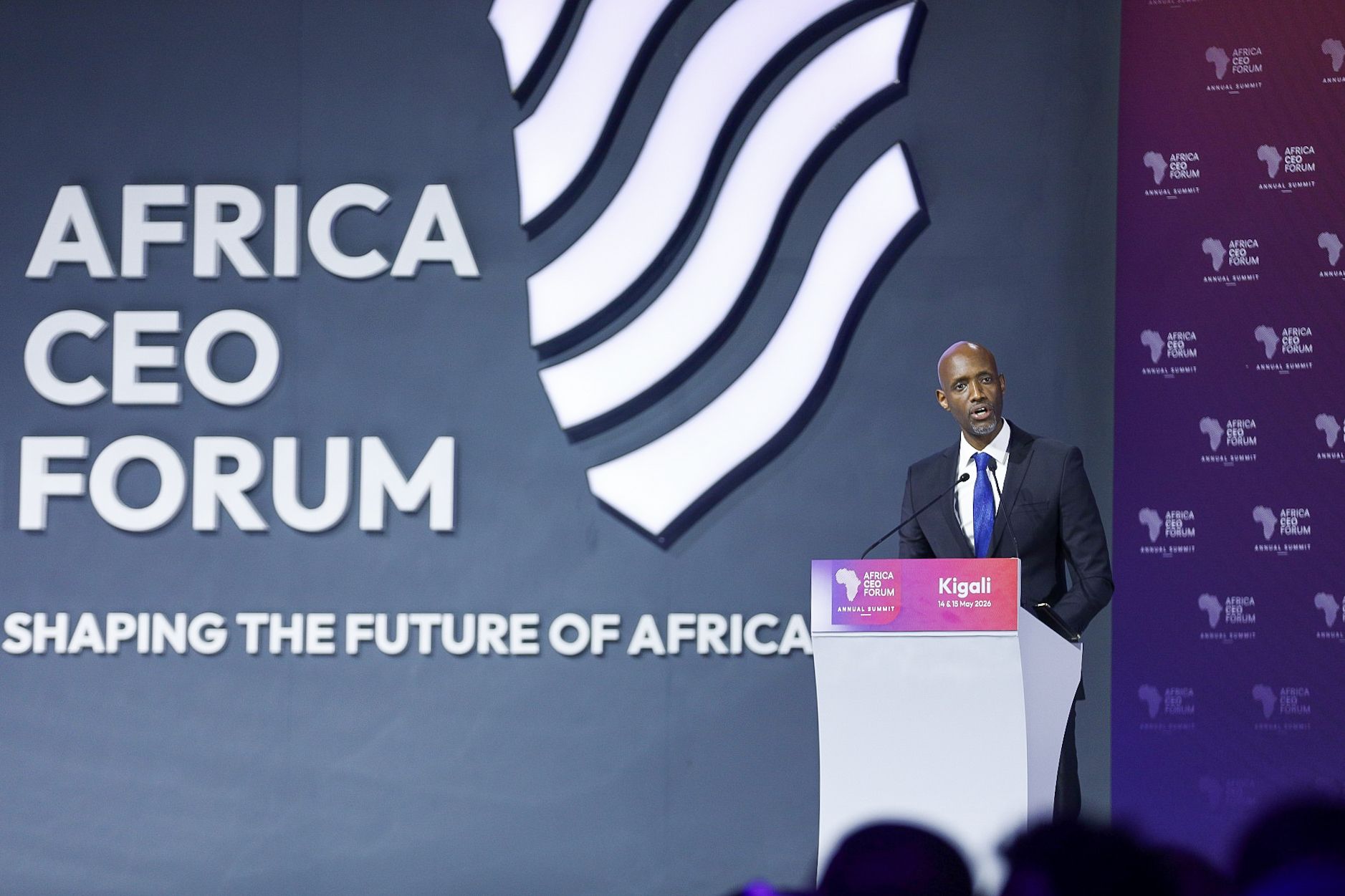
He outlined several priority sectors where Rwanda is actively seeking strategic investors capable of building supply chains, creating jobs, transferring skills, and expanding regional exports.
In agro-industry, Rwanda is prioritising processing and value addition to move beyond raw commodity exports. Opportunities highlighted included cold-chain infrastructure, food packaging, agro-processing plants, and export-ready supply chains designed to connect Rwandan products to regional and international markets.
In health and life sciences, Afrika said Rwanda is building a stronger pharmaceutical and medical manufacturing ecosystem. He referenced the achievement of WHO Maturity Level 3 certification by the Rwanda Food and Drugs Authority, which strengthens the country’s regulatory credibility in health manufacturing and pharmaceuticals.
He also pointed to BioNTech’s first commercial-scale mRNA vaccine initiative in Africa as evidence of Rwanda’s ambition to position itself as a regional hub for biotechnology and advanced medical manufacturing.
Logistics and aviation featured prominently in the presentation, with Rwanda describing itself as an emerging gateway into East and Central Africa.
The RDB boss highlighted the development of the new Kigali International Airport project, as one of the country’s flagship infrastructure investments. Once completed, the airport is expected to increase Rwanda’s passenger handling capacity eightfold, from the current one million passengers annually to eight million.
Officials say the airport will play a critical role in strengthening cargo transport, trade connectivity, tourism, and Rwanda’s ambition to become a regional aviation and logistics hub linking African markets with global supply chains.
The mining sector was also presented as a strategic growth area. Rwanda recorded $869.7 million in mineral exports in 2025, while the sector supported more than 92,000 jobs.
Afrika said Rwanda is now focusing on increasing value addition in mining through local mineral processing, traceability systems, and downstream industrial development rather than relying solely on raw mineral exports.
Tourism and MICE, Meetings, Incentives, Conferences and Exhibitions, were highlighted as another pillar of Rwanda’s services-led economy.
According to figures presented during the session, tourism revenues reached $685 million, supported by Rwanda’s continued investment in conference infrastructure, aviation connectivity, hospitality, and high-end tourism experiences.
During the session, Rwanda also signed a series of strategic investment agreements aimed at strengthening industrial development, energy infrastructure, logistics, and tourism.
One of the major agreements involved Egypt’s Elsewedy Electric, which signed a comprehensive Memorandum of Understanding with Rwanda to establish a manufacturing facility producing smart electricity and water meters, electric vehicle chargers, and power transformers.
The partnership will also include the development of a technical university or college focused on industrial and energy skills development, participation in the development and management of Phases I and II of the Kigali Special Economic Zone, and the establishment of a logistics hub intended to reinforce Rwanda’s role as a regional trade and industrial gateway.
In tourism, Rwanda signed another Memorandum of Understanding with Sunrise Resorts & Cruises to develop a new luxury hospitality resort in the country.
The agreement includes sustainability-focused infrastructure such as a solar photovoltaic power plant with battery storage and a dedicated water treatment facility to support the resort’s operations.
The event also marked a strategic restructuring of Amicable Guest Houses Ltd (AGL), a subsidiary of the Rwanda Social Security Board.
Agreements signed between RSSB, Cleo Capital Group Ltd, and The Lux Collective are expected to introduce international hospitality management standards to Rwanda’s hotel sector.
Beyond sector-specific investments, Rwanda also expanded regional cooperation by signing a Memorandum of Understanding with APIEX Benin to strengthen bilateral investment promotion and trade facilitation.
A separate strategic collaboration framework was signed with Busara Advisors to support investment promotion and strategic development initiatives.
Throughout the session, the RDB CEO repeatedly stressed that Rwanda’s value proposition lies not in being Africa’s largest market, but in offering investors stability, institutional coordination, reform-oriented governance, and reliable execution.
“We are not only looking for capital,” Afrika stated. “We are looking for partners who bring technology, operating experience, market access, and long-term commitment.”
The session, part of the annual forum which gathered more than 2,800 delegates, concluded with a direct message to investors seeking stable operating environments in Africa: “Invest in Rwanda, grow from Rwanda, and build with Rwanda.
Leave a Reply