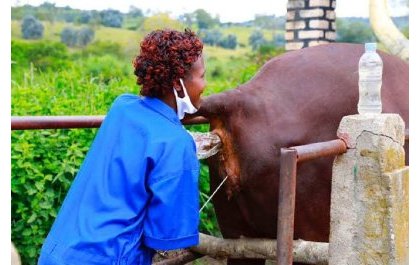
The technology, developed by KT Hub, Rwanda-based integrated agricultural and agribusiness hub, was unveiled during the 19th Rwanda Agricultural Show organised by the Ministry of Agriculture and Animal Resources (MINAGRI).
The innovation uses advanced cameras to examine animals before artificial insemination, allowing veterinarians to identify possible reproductive health challenges and confirm whether the semen being used is of good quality before it is introduced.
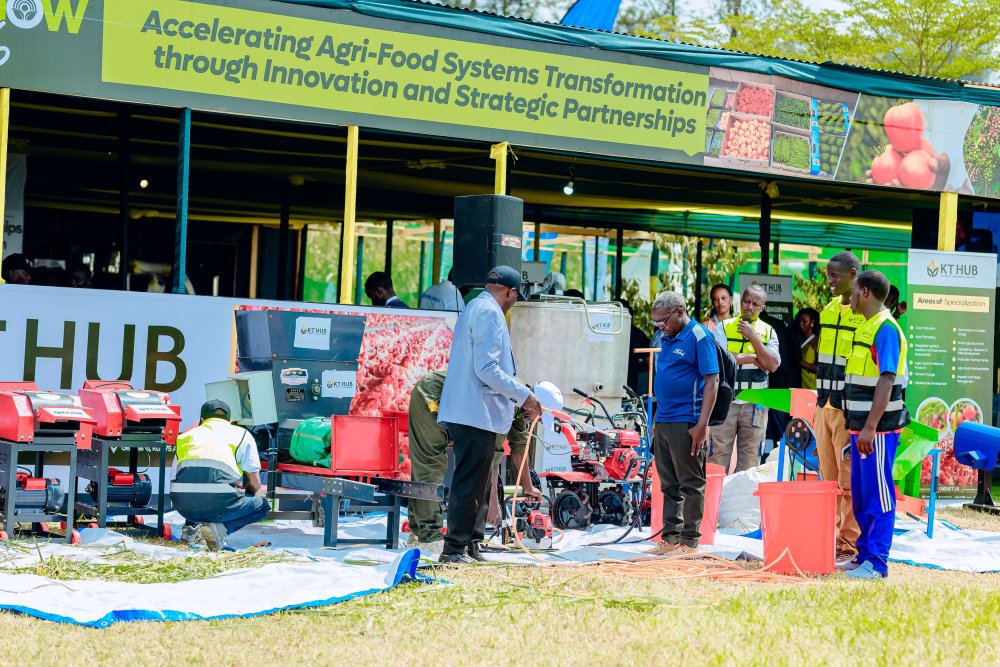
The exhibition was officially opened on July 23, 2026, at Mulindi in Kigali and will continue for 10 days, bringing together farmers, agricultural companies, researchers, government officials and other stakeholders to showcase innovations transforming Rwanda’s agriculture and livestock sectors.
MINAGRI revealed that this year’s exhibition attracted more than 600 exhibitors, including individuals, groups and companies from Rwanda and abroad. The number has increased compared to more than 500 exhibitors recorded in 2025 and about 300 exhibitors approximately five years ago.
Among the major innovations showcased was KT Hub’s artificial insemination technology, which seeks to address one of the challenges faced by livestock farmers where animals fail to conceive after insemination despite farmers following the required procedures.
KT Hub Managing Director Kabahizi Théoneste told IGIHE that the company developed the technology in partnership with the Rwanda Agriculture and Animal Resources Development Board (RAB), covering the entire process from importing animal semen to delivering it to veterinarians responsible for carrying out insemination.
He explained that the technology helps determine why artificial insemination may fail, especially in situations where farmers are unable to identify the exact cause.
“Sometimes semen can be collected properly from a male animal and stored under the right conditions, but when it is introduced into a cow or another animal, it may fail because it was wrongly placed. Some farmers believe that if a cow shows signs of fertility in the evening, it should be artificially inseminated the following morning for a better chance of conception.
However, the camera helps determine whether the reproductive system has any problems and whether it is the appropriate time for insemination,” Kabahizi said.
He added that some animals fail to conceive because of infections or other reproductive health problems that may not be visible without proper examination.
“There are cases where the area where insemination is performed has infections or other conditions that prevent successful fertilisation.
With this technology, veterinarians first examine the animal using a camera. If a problem is detected, treatment is provided before insemination is attempted again. In some cases, hormonal treatment can also be used to make the animal ready for breeding sooner,” he explained.
The technology also includes another camera designed to examine semen quality before insemination. Veterinarians capture an image of the semen, and the system provides information showing whether it is still healthy and suitable for use.
Kabahizi said KT Hub is also promoting improved cattle breeds from Brazil, which are expected to produce higher-quality milk. He noted that future generations of these cattle could produce between 25 and 30 litres of milk per day.
KT Hub introduced the technology to the government, and following its launch, the solution will gradually be made available to livestock farmers across the country.
The company also supplies animal semen and has the capacity to store up to 10 million doses, ensuring a reliable supply for artificial insemination programmes.
Veterinarians will receive specialised training on how to use the technology before being equipped with the necessary tools, including two cameras, to provide artificial insemination services to farmers.
Speaking at the exhibition, Minister of Agriculture and Animal Resources Dr. Telesphore Ndabamenye said this year’s theme focuses on promoting innovation in agriculture and livestock, noting the importance of the sectors to Rwanda’s economy.
He said agriculture and livestock contribute nearly 19 percent of Rwanda’s Gross Domestic Product (GDP), while about 70 percent of industries in the country depend on agricultural production.
“These figures show that improving agricultural and livestock production cannot be achieved without innovation and partnerships aimed at addressing the challenges affecting these sectors in Rwanda,” Dr. Ndabamenye said.
He added that the innovations showcased during the exhibition demonstrate potential solutions to challenges facing farmers, making it important to bring together innovators, stakeholders and users to discuss and promote their adoption.
The Minister said that, some of the showcased technologies could begin being implemented during the 2027 A farming season, with continued government support.
According to MINAGRI, Rwanda’s milk production has increased significantly over the past 14 years, tripling from 334,727 tonnes in 2010 to 1,092,430 tonnes in 2024.
During the same period, annual milk consumption per person increased from 37.3 litres to 79.9 litres, reflecting growth in the country’s dairy sector.


Leave a Reply