
During his two years in office, Starmer’s approach to Rwanda was defined less by efforts to strengthen ties and more by his decision to end the UK’s asylum partnership with the country.
Relations between the two countries deteriorated further as conflict intensified in eastern Democratic Republic of Congo (DRC), prompting the UK to impose sanctions on Rwanda over allegations of its involvement in the conflict.
Ending the Rwanda asylum plan
Starmer entered office promising to immediately end the policy of sending asylum seekers to Rwanda. He fulfilled that pledge as soon as he became Prime Minister on July 5, 2024, arguing that the scheme was a waste of taxpayers’ money.
The decision left Rwanda taking the UK to international arbitration, seeking compensation for payments it said were still owed after it had already invested heavily in preparations to receive asylum seekers.
At the same time, Starmer’s government suspended some UK financial support to Rwanda, citing contested allegations that Rwanda was involved in the conflict in eastern DRC.
Why did Starmer leave office?
On June 22, 2026, Starmer announced he would resign as leader of the Labour Party after mounting pressure from Labour MPs and ministers.
Many within the party feared he would not be the right person to lead Labour into the next general election as Nigel Farage’s Reform UK gained momentum among British voters.
The election of Andy Burnham as MP for Makerfield in northern England further intensified pressure on Starmer and marked the beginning of the end of his leadership.
Starmer agreed to step aside and pledged to support a smooth transition. He remained Prime Minister until July 20, 2026, when Burnham officially took office.
His departure followed declining public approval, criticism of his domestic policies, concerns over the economy and cost of living, and fears Labour could lose the next general election.
The Rwanda deal that defined his tenure
The UK-Rwanda Migration and Economic Development Partnership was launched in April 2022 under Conservative Prime Minister Boris Johnson.
The agreement provided for some asylum seekers who entered the UK through irregular routes—particularly those crossing the English Channel in small boats—to be relocated to Rwanda, where their asylum claims would be processed.
Supporters argued the plan would deter people-smuggling gangs that profit from illegal migration and often put migrants’ lives at risk.
The first deportation flight was due to leave on June 14, 2022, but was halted at the last minute following an interim ruling by the European Court of Human Rights.
In November 2023, the UK Supreme Court ruled that the scheme was unlawful, citing concerns that asylum seekers sent to Rwanda could ultimately be returned to countries where they faced persecution.
The government of Rishi Sunak responded by signing a new treaty with Rwanda in December 2023 and passing legislation declaring Rwanda a safe country for asylum seekers.
Although Parliament approved the legislation, the plan had not been implemented by the time Starmer took office in July 2024.
Opposition before taking office
Starmer opposed the Rwanda policy long before becoming Prime Minister.
In June 2022, while serving as Leader of the Opposition, he dismissed the plan as a distraction rather than a genuine solution to irregular migration.
He argued that small-boat crossings should instead be tackled through closer cooperation with France, European law enforcement agencies and efforts to dismantle people-smuggling networks before migrants reached the UK’s shores.
Starmer maintained that individuals with no legal right to remain in Britain should be returned to their countries of origin, but insisted that deporting them to Rwanda was expensive and ineffective.
On May 10, 2024, during a speech in Dover, he publicly pledged that if elected Prime Minister, he would immediately cancel the Rwanda plan.
He described it as a political “gimmick” designed to appeal to voters without solving the migration crisis.
Instead, he promised to redirect the funding into establishing a new Border Security Command bringing together investigators, intelligence officers, border officials and police.
He also argued that anti-terrorism legislation could be used to target criminal gangs involved in people smuggling.
Labour’s 2024 election manifesto similarly pledged that money allocated to the Rwanda scheme would instead be invested in border security and combating organised crime.
“Dead and buried”
Labour won the July 4, 2024 general election, making Starmer Prime Minister.
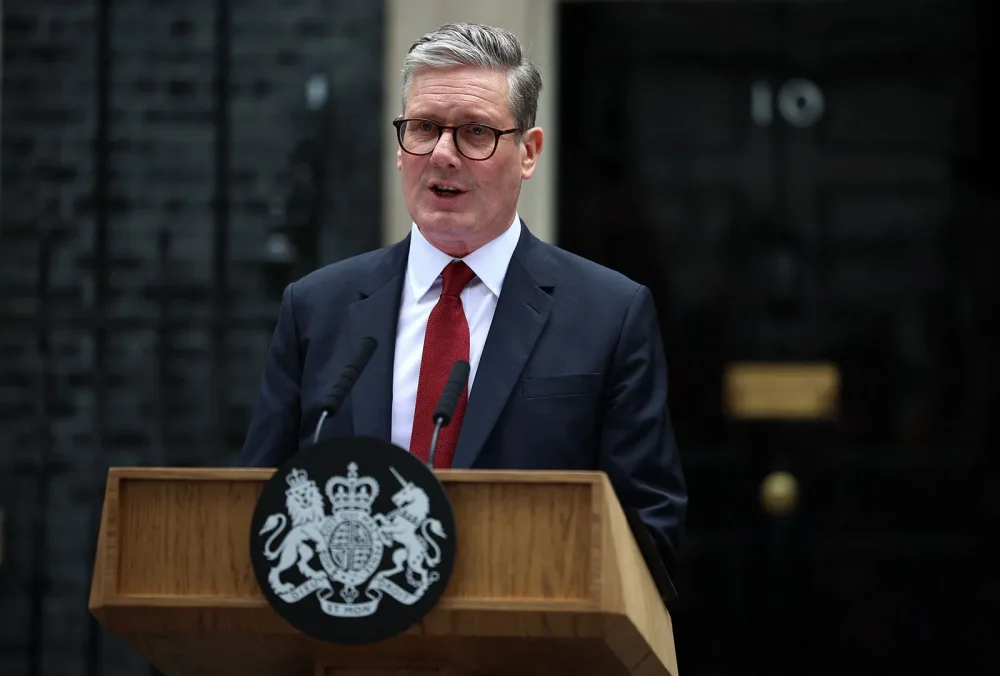
During his first press conference on July 6, he confirmed that the Rwanda asylum plan had been scrapped.
He famously declared that the scheme was “dead and buried before it started,” arguing it had never served as a deterrent to irregular migration.
The decision halted deportations to Rwanda but did not automatically terminate the legal agreement between the two countries.
Rwanda insisted it was under no obligation to refund money already received because it had fulfilled its commitments, including preparing accommodation, staffing and reception facilities for relocated migrants.
Arbitration over payments
Rwanda argued that the UK still owed scheduled payments for 2025 and 2026. On November 24, 2025, Rwanda filed a case before the Permanent Court of Arbitration in The Hague, with the claim becoming public in January 2026.
Kigali sought more than £100 million, including two scheduled payments of £50 million each, as well as additional damages for what it described as a breach of contract.
The UK maintained that both governments had agreed in November 2024 that no further payments would be made.
The agreement was formally terminated on March 16, 2026. An arbitration ruling issued on June 1, 2026, rejected Rwanda’s claim for additional payments. Rwanda accepted the decision and announced it would not appeal.
Tensions over DRC conflict
Migration was not the only issue that strained UK-Rwanda relations during Starmer’s tenure.
In early 2025, fighting escalated in eastern DRC as AFC/M23 captured Goma and Bukavu. The UK accused Rwanda of supporting the rebel group and deploying troops in Congolese territory.
Rwanda consistently rejected the allegations, maintaining that its defensive measures were aimed at protecting its national security by countering the FDLR militia and other armed groups it says threaten the country.
On February 25, 2025, the UK announced a series of measures against Rwanda. These included suspending high-level participation in Rwandan government events, limiting trade promotion activities, freezing direct financial assistance to the Rwandan government, except for support benefiting the vulnerable communities, and suspending future defence training.
London also said it would review export licences for military-related equipment destined for Rwanda and consider additional sanctions in coordination with international partners.
Rwanda condemned the measures as unjustified sanctions that demonstrated the UK’s bias in the conflict. Kigali argued that it could not be expected to compromise its own national security or that of its citizens.
As of April 2026, the UK maintained that the measures introduced in 2025 remained in place while continuing to call on all parties to implement the commitments contained in regional peace agreements.
Migration challenge remains
Although Starmer fulfilled his pledge to end the Rwanda scheme, irregular migration to the UK continued.
Since he took office, more than 77,000 migrants have reportedly entered the UK through irregular routes, raising questions among critics about whether abolishing the Rwanda policy has helped address the small-boats crisis.
Leave a Reply