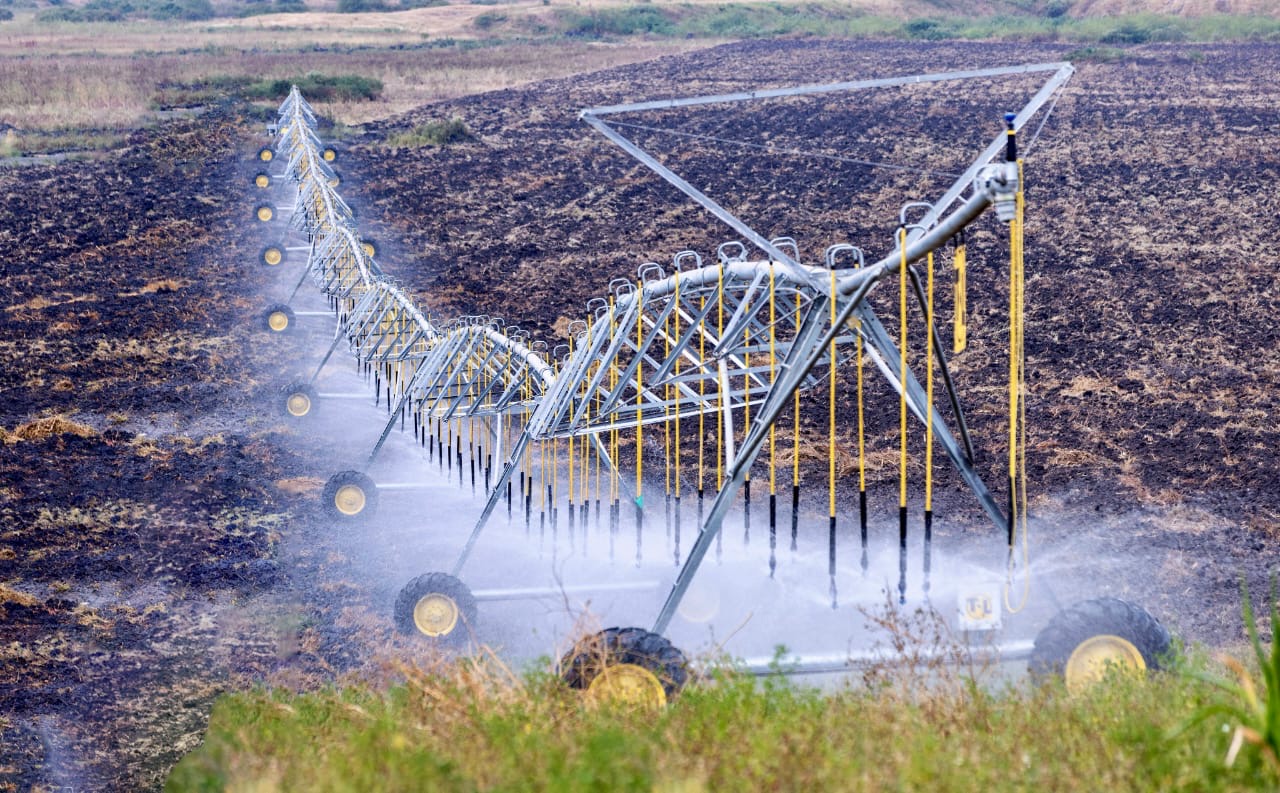
Minister of Agriculture and Animal Resources, Dr. Telesphore Ndabamenye, announced the plans on October 27, 2026, while appearing before the Chamber of Deputies to respond to issues raised during parliamentary field visits to assess agricultural production initiatives across the country.
Dr. Ndabamenye said feasibility studies are underway for land to be covered under the Commercialization and De-Risking for Agricultural Transformation (CDAT) project, with the area expected to expand in the coming years.
“The CDAT project currently has 10,000 hectares undergoing feasibility studies, and this is expected to increase to 14,000 hectares by 2029. We also have other projects supported by friendly countries,” he said.
Other planned irrigation projects will cover 6,800 hectares in Kayonza District and 2,600 hectares in Gisagara District.
“One project will provide irrigation to approximately 6,800 hectares in Kayonza, an area that frequently experiences low rainfall. We recently launched another project that will support irrigation across approximately 2,600 hectares in Gisagara District,” he said.
In Gatsibo District, another project is expected to provide irrigation to about 800 hectares, including hillside farmland.
Dr. Ndabamenye said expanding irrigated land also requires resources to develop wetlands and prepare feasibility studies to accelerate project implementation.
“There are many examples of projects aimed at expanding irrigated areas. However, we also need to continue mobilising resources for sustainable wetland development and preparing wetland feasibility studies to speed up implementation,” he said.
The Minister also revealed that efforts were underway to secure funding for irrigation in the Muvumba scheme, where approximately 10,000 hectares are planned for irrigation. The initial phase will cover 3,000 hectares.
Other projects include Nyabarongo II, which involves several sectors, including water supply and electricity generation. Its first phase is expected to support irrigation across 6,500 hectares.
“The Muvumba scheme is also being considered for funding, with plans to irrigate approximately 10,000 hectares, starting with 3,000 hectares in partnership with institutions such as the African Development Bank.
“There is also the Nyabarongo II project, which will cover 6,500 hectares in its first phase, in collaboration with the World Bank. The Mugesera project is also seeking funding, while Gabiro II will be implemented in partnership with the African Development Bank to expand irrigated land,” Dr. Ndabamenye said.
He said the projects collectively have the potential to bring more than 50,000 hectares under irrigation, contributing to the country’s national target.
“When you consider all these projects, they could potentially cover more than 50,000 hectares, helping us achieve the target we have set,” he said.
Rwanda plans to increase its irrigated land to 132,000 hectares by 2029, from 71,000 hectares in 2024.
Leave a Reply