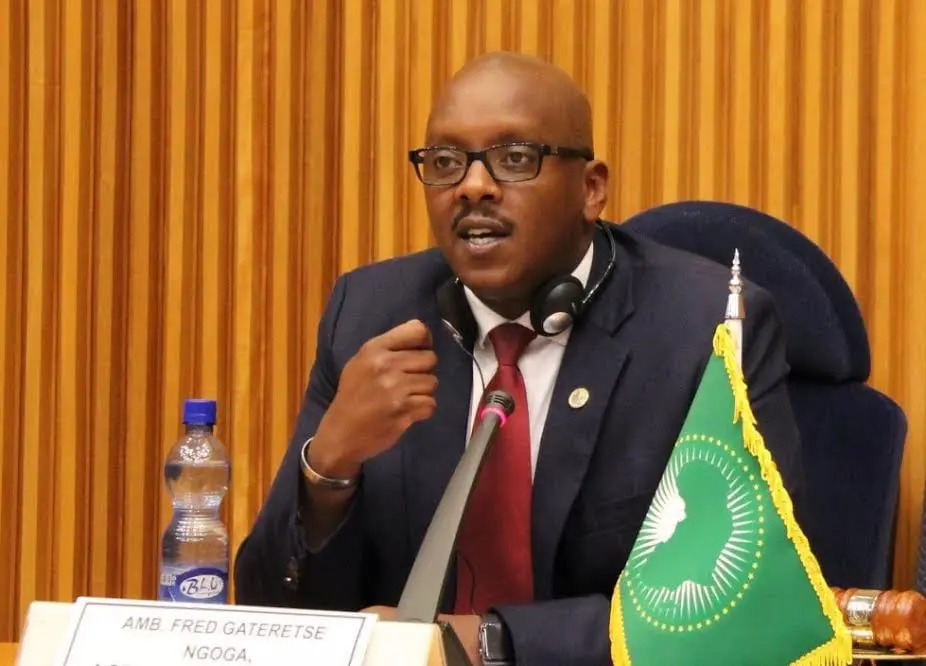
Ngoga, who serves as a senior adviser on international partnerships and regional security mechanisms at the African Union, stressed that confronting structural ethnic divisions is the only viable path to genuine long-term stability and national reconciliation.
The diplomatic friction ignited following a statement published by Ngoga on the social media platform X, where he challenged the status quo regarding ethnic relations inside the country.
“Unfortunately, in Burundi, I wish I was wrong, but discrimination against Tutsi communities still exists,” Ngoga stated.
“Acknowledging this reality is important if we are to promote justice, reconciliation, and equal dignity for all. I expect insults, but will tell you what everyone thinks.”
Under Burundi’s current constitutional framework, state and institutional positions are allocated according to ethnic quotas between Hutu and Tutsi. The system also includes specific provisions for the Twa minority, including reserved representation in parliament.
Ngoga’s remarks quickly drew sharp condemnation from high-ranking Burundian state officials. Willy Nyamitwe, Burundi’s Ambassador to the African Union, Ethiopia, and neighbouring countries, led the public pushback.
Ambassador Nyamitwe rejected Ngoga’s assessment, labelling the comments as “unprofessional” and “divisive”.
This public disagreement marks the latest chapter in an ongoing ideological clash between the two diplomats.
The pair previously sparred online following controversial statements made by Thérèse Kayikwamba Wagner, the Minister of Foreign Affairs for the Democratic Republic of the Congo (DRC).
Minister Wagner had publicly claimed that a genocide against ethnic Hutus had taken place in Burundi in 1994.
At the time, Ambassador Ngoga vigorously disputed the Congolese Foreign Minister’s historical accuracy.
He countered that Burundian Hutus were not victims of a recognised genocide in 1994, emphasising that Burundi was firmly under the governance of a Hutu president during that period.
Leave a Reply