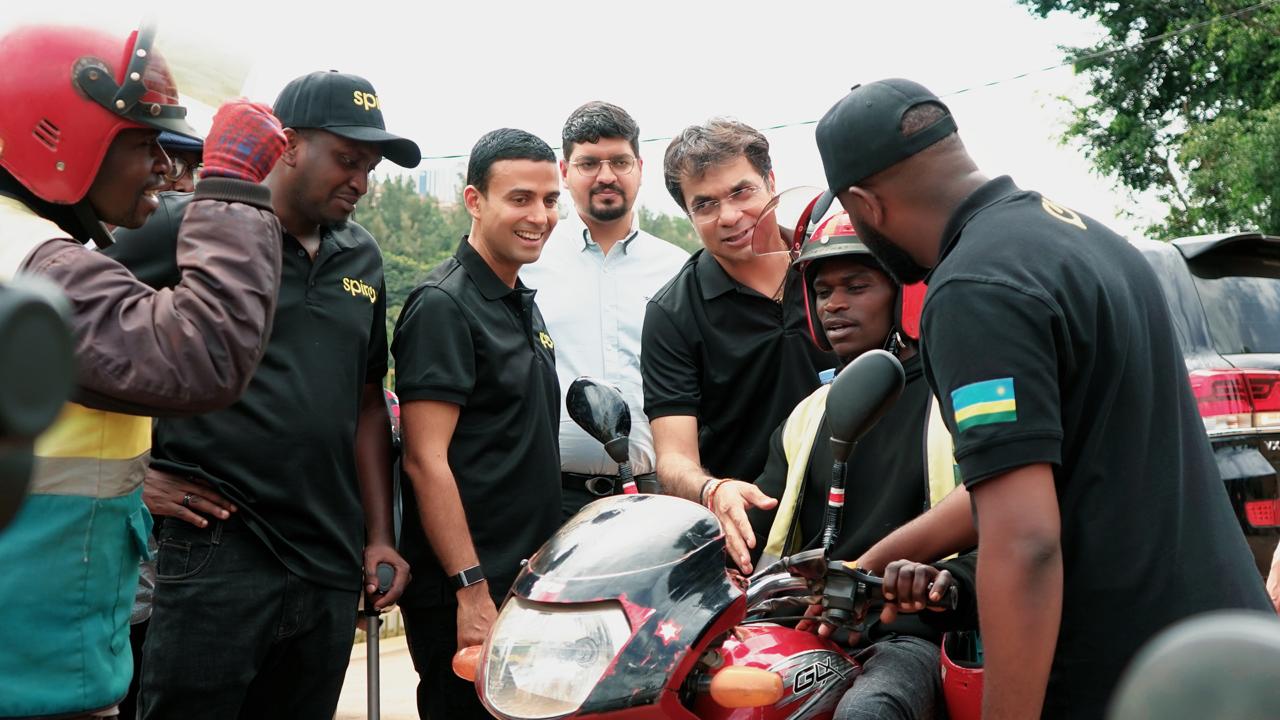
Niyibizi’s journey toward the electric motorcycle began a week earlier, on May 19, 2026, when he met the SPIRO founder along the Kinamba–Gisozi road in Gasabo District. At the time, he was riding a fuel-powered motorcycle and had stopped at one of SPIRO’s battery swap stations, where the two struck up a conversation.
During the exchange, the SPIRO Chairman asked him why he was not yet using an electric motorcycle.
“I have always wished to own one, but I could not afford it,” Niyibizi responded.
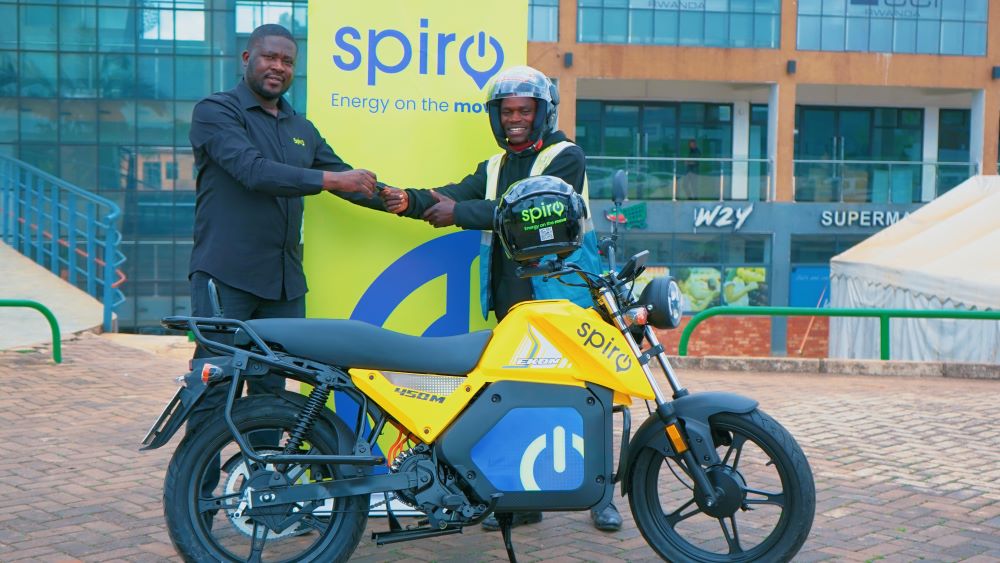
After listening to his story and learning about his aspirations as a rider, Gagan Gupta decided to support him in acquiring an electric motorcycle, turning what Niyibizi described as a long-held dream into reality.
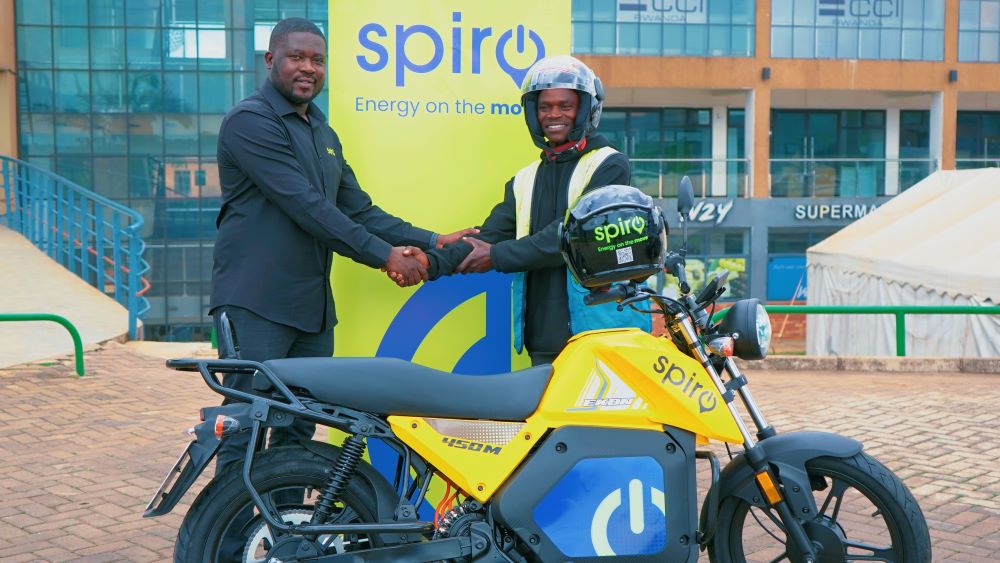
Speaking during the handover ceremony, Niyibizi said the gesture marked a turning point in his life, both professionally and personally.
“As fuel prices kept increasing, my desire to own a SPIRO motorcycle became even stronger because I could clearly see that riders using electric motorcycles are earning more compared to those still operating fuel-powered bikes,” he said.
He added that transitioning to an electric motorcycle represents a major step forward in his career.
“I sincerely thank SPIRO’s founder for giving me this motorcycle. I promise to take good care of it and encourage fellow riders to embrace electric motorcycles because they are more profitable and environmentally friendly.”
Speaking at the ceremony, SPIRO Rwanda’s Head of Commercial Department, Shanton Ngabire, encouraged Niyibizi to make the most of the opportunity.
“This motorcycle is a valuable investment you have received. Take good care of it and use it productively,” he said.
The initiative reflects SPIRO’s broader commitment to improving riders’ livelihoods while promoting environmentally friendly transport solutions in Rwanda and across Africa.
Currently, SPIRO operates across all 30 districts of Rwanda, expanding its footprint through electric motorcycles and a growing network of battery swap stations designed to enable riders to quickly and conveniently exchange batteries.
Over the next five years, the company aims to scale up to between 75,000 and 80,000 electric motorcycles in Rwanda, expand its workforce to nearly 3,000 employees, and establish close to 1,000 battery swap stations supported by between 65,000 and 70,000 batteries.
Leave a Reply