The FDLR was formed by individuals involved in planning and carrying out the 1994 Genocide against the Tutsi, including former political leaders, members of the defeated Rwandan Armed Forces (Ex-FAR), and fighters from the Interahamwe militia. Despite years of military operations against it, the group continues to recruit new members, particularly young fighters.
Operating from eastern DRC, the FDLR has long been cited by Rwanda as a direct threat to its national security because of its presence near the shared border. The Congolese government, however, has often argued that defeating AFC/M23 should take precedence over military action against the FDLR.
The group’s presence has featured prominently in regional peace efforts, including mediation talks held in Pretoria more than two decades ago, negotiations in Luanda in 2022, and discussions in Washington beginning in early 2025.
The Washington Peace Agreement included commitments to dismantle the FDLR through measures outlined in the Concept of Operations (CONOPS). However, despite signing the agreement, the DRC has continued to send conflicting signals regarding how it intends to address the group.
From denial to acknowledgement
For years, officials in Kinshasa maintained that the FDLR no longer posed a meaningful threat to Rwanda, arguing that the movement had become too weak to destabilize the region.
Congolese authorities also accused Rwanda of exaggerating the threat in order to justify interference in the DRC’s internal affairs and gain access to the country’s mineral resources.
In March 2025, former Foreign Affairs Minister Christophe Lutundula questioned whether the group even existed.
“The time had come for us to eliminate those remaining FDLR fighters Rwanda keeps talking about, but I don’t believe they exist. I don’t even know who they are,” he said.
Lutundula, who consistently argued during his tenure as foreign minister that the FDLR was no longer a significant force, also suggested Rwanda itself had shifted its narrative.
“Is Rwanda still talking about the FDLR the way it used to? No. The real issue now is the economy,” he stated.
Following the signing of the Washington Peace Agreement in June 2025, DRC Minister for Foreign Trade Julien Paluku also dismissed the existence of the FDLR, describing it as a narrative created by Rwanda.
Paluku argued that references to the group had misled the international community for three decades and accused Rwanda of using the issue to justify military intervention and the exploitation of Congolese mineral resources.
“The real FDLR Rwanda is looking for in the DRC is Congo’s minerals,” he said.
Rwanda’s ambassador to Algeria, Vincent Karega, said such remarks were unsurprising given Paluku’s previous role as governor of North Kivu Province, where the FDLR has long operated, including in Virunga National Park.
Official acknowledgement
Despite these statements, the Congolese government had previously acknowledged both the existence of the FDLR and the threat it posed.
On April 15, 2024, then FARDC spokesperson Maj. Gen. Sylvain Ekenge told Congolese state television that the FDLR was active in the country and had played a major role in violence against civilians.
“The FDLR attacks Congolese people and kills Congolese people. Of the more than 10 million people who have died over the past decade, the FDLR bears significant responsibility for those deaths,” he said.
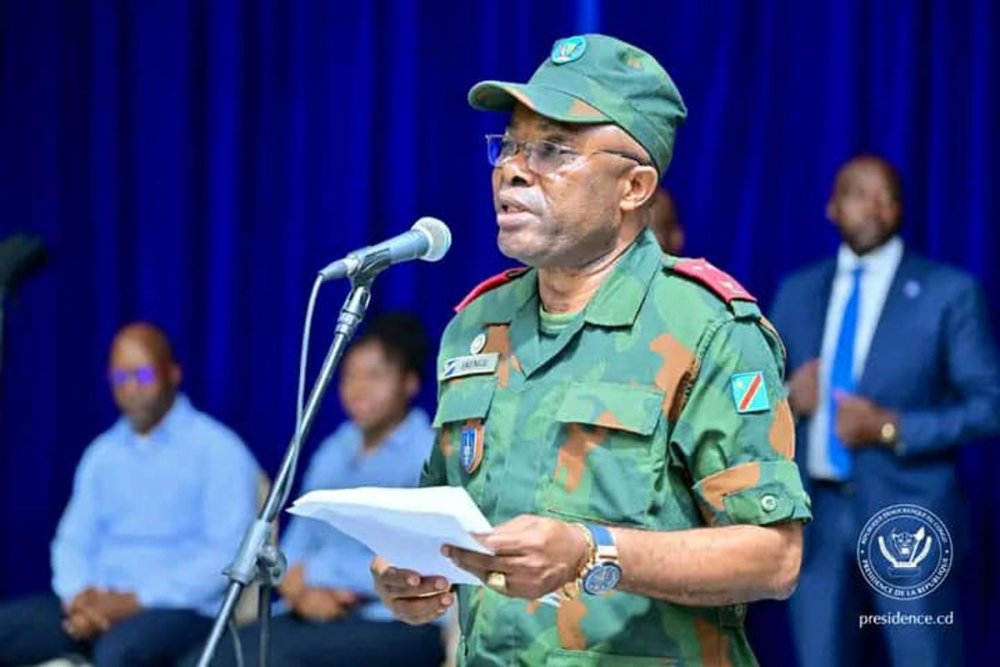
Ekenge’s remarks carried particular weight because he had previously served in North Kivu Province as military spokesperson for operations in the region and later as acting military governor.
His comments marked a significant departure from years of inconsistent messaging by the Congolese government regarding the FDLR.
In October 2025, the Congolese army issued a directive ordering its troops to end all cooperation with the FDLR. It also called on the group’s fighters to lay down their arms, warning that those who refused would face military action.
Despite the announcement, cooperation between the FARDC and the FDLR continued. The armed group reportedly continued receiving weapons and ammunition, while the 90-day deadline for its dismantlement expired without any meaningful progress.
Shifting explanations
As pressure mounted over its failure to dismantle the FDLR, the Congolese government began advancing a different explanation. Officials argued that many of the group’s fighters were based in areas controlled by AFC/M23, making it difficult for the army to carry out operations against them.
In late March 2026, the FARDC announced in Kisangani that it had launched operations targeting the FDLR. Two days later, however, the army reportedly delivered weapons and ammunition to FDLR fighters in Pinga, Walikale Territory, where the group was fighting alongside government forces against AFC/M23.
A report by the UN Group of Experts, published in late June 2026, stated that the Congolese army had assured the FDLR it would not move to dismantle the group and that both sides would continue working together as strategic partners.
According to reports from eastern DRC, FDLR fighters based in government-controlled territory were advised to relocate to areas under AFC/M23 control, creating the impression that military operations against the group could not be carried out.
On July 30, 2026, FDLR political spokesperson Cure Ngoma claimed that the group’s fighters were now located exclusively in areas controlled by AFC/M23.
“We are based in eastern Congo, specifically in the areas occupied by M23 and Rwanda. That is where our forces are located,” he said.
However, discussions held under the Joint Security Coordination Mechanism (JSCM), which brings together representatives from Rwanda, the DRC and the United States, concluded that while some FDLR fighters were indeed present in AFC/M23-controlled areas, others remained in territory controlled by the Congolese government.
In June 2026, U.S. Senior Advisor for Africa Massad Boulos told the UN Security Council that the DRC had failed to fulfil its commitment to dismantle the FDLR, even in areas under its own control.
“Despite progress, the parties continue to fall short on their obligations. The DRC has not upheld obligations for the FDLR neutralization, at least in the areas that they control,” Boulos pointed out.
A new approach to the FDLR
In recent weeks, a document circulating in international media has added another dimension to the debate.
The document, reportedly signed by FDLR president Lt. Gen. Victor Byiringiro on May 30, 2026, and addressed to President Félix Tshisekedi, outlines a proposal for the group’s fighters to disarm, undergo reintegration, and be placed in secure, supervised facilities.
The proposal has been presented as a roadmap for the group’s voluntary dissolution.
Since July 13, DRC Minister for Regional Integration Floribert Anzuluni has circulated the document among governments in Africa and Europe, presenting it as evidence that Kinshasa had reached an agreement with the FDLR on voluntary disarmament.
Rwanda, however, maintains that such an arrangement falls outside the framework of the Washington Peace Agreement.
Foreign Affairs and International Cooperation Minister Ambassador Olivier Nduhungirehe has argued that the reported proposal is not provided for under the agreement, which requires the FDLR to be dismantled through the agreed CONOPS framework.
On July 29, Nduhungirehe reiterated that the FDLR was never a party to the Washington Peace Agreement but rather the security threat the agreement seeks to eliminate.
“The signing of this so-called “protocol” between the father (the Congolese government), the son (the FDLR), and the evil spirit (the genocide ideology) is in no way consistent with the Washington Peace Agreement, which makes no provision for such an arrangement. For good reason: the genocidal FDLR is not a party to the agreement; rather, it is the subject of it,” he stressed.
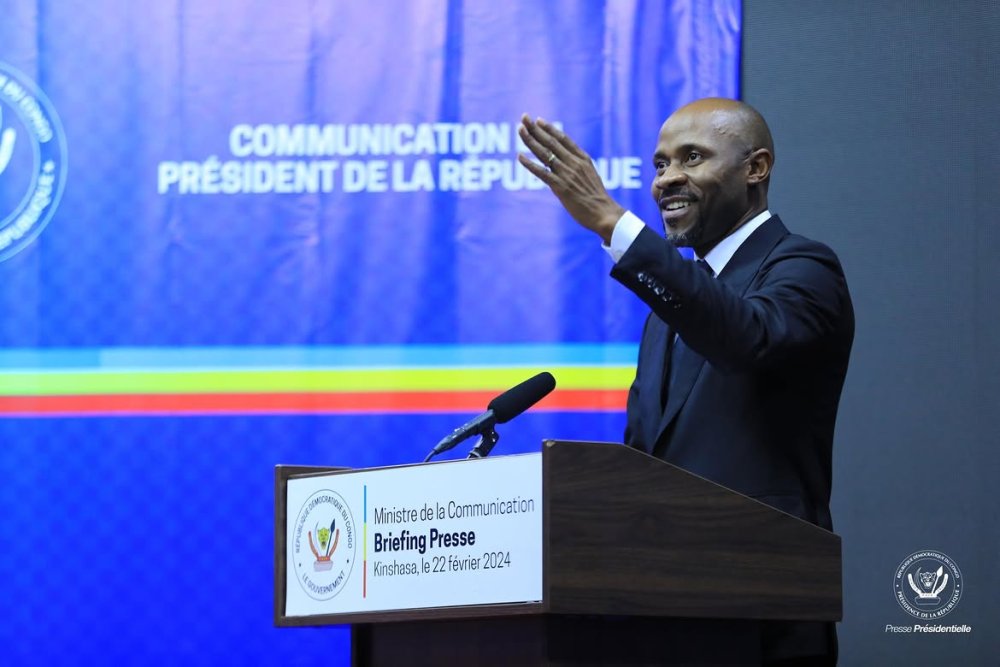
The following day, DRC government spokesperson Patrick Muyaya defended Kinshasa’s position, saying that if the FDLR had voluntarily agreed to disarm and enter a reintegration process, there would be no justification for launching military operations against it.
“You do not use force against people who have voluntarily chosen the path of peace,” Muyaya argued.
Political analyst Prof. Bob Kabamba of the University of Liège has cautioned that even if the FDLR were officially declared dissolved, the organisation could simply re-emerge under a different name.
Before becoming the FDLR, the movement previously operated as RDR and later ALiR, while its military command, political leadership and objectives remained largely unchanged.
The evolution of Kinshasa’s public position, from questioning the FDLR’s existence, to acknowledging it as a security threat, and more recently supporting a voluntary disarmament process rather than military dismantlement, has become one of the central points of contention in the implementation of the Washington Peace Agreement.
Leave a Reply