A province’s story can be read in what it makes, what it grows and what it has to repair. In Hunan, high-grade steel for motors and transformers is made alongside machines for rice farming. Former mining land is being restored, while ancient terraces still rely on gravity-fed irrigation.
These industries reach far beyond China. In 2025, Hunan exported goods worth 27.1 billion yuan (about Rwf 6.00 trillion) to Africa and imported 30.9 billion yuan (about Rwf 6.84 trillion) from the continent.
The two-way total was 58 billion yuan (about Rwf 12.84 trillion). Across 2023, 2024 and 2025, Hunan’s trade with Africa amounted to 168.52 billion yuan (about Rwf 37.30 trillion).
A central province with national weight
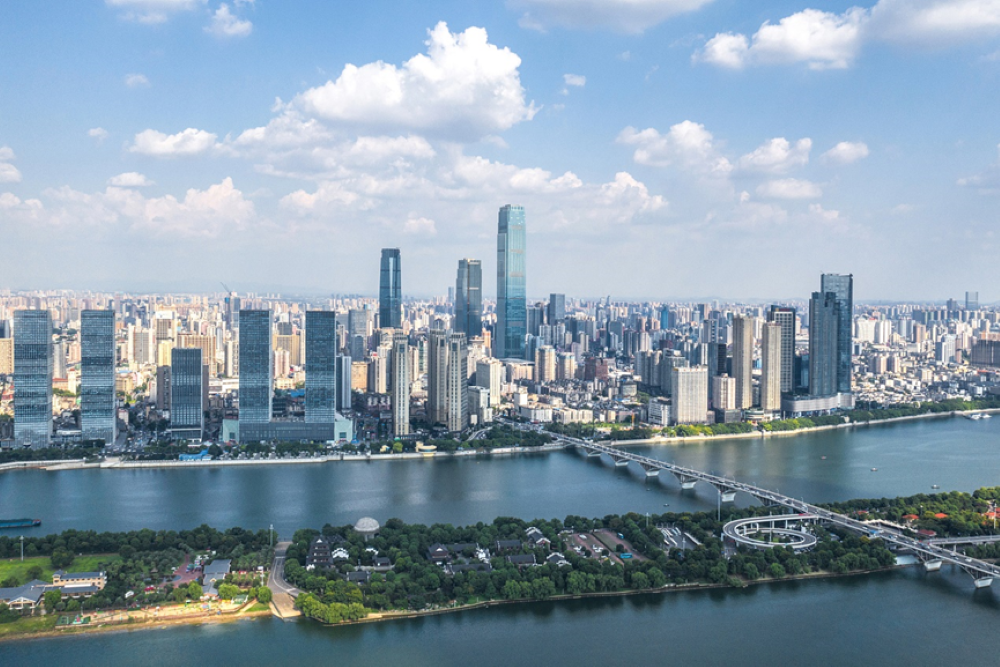
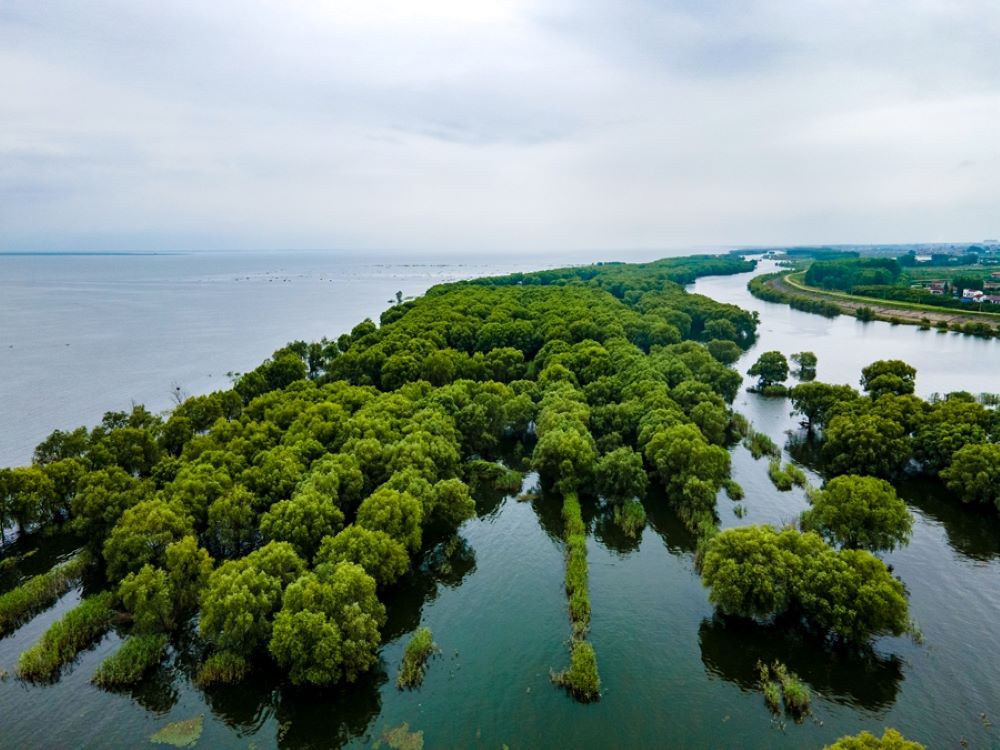
Hunan lies in south-central China, south of Dongting Lake and in the middle reaches of the Yangtze River. Covering 211,800 square kilometres, it accounts for 2.2% of China’s territory.
Its capital, Changsha, is about 1,300 kilometres from Beijing by rail, with high-speed journeys taking roughly five to seven hours.
At the end of 2025, Hunan had 64.92 million residents, about 4.6% of mainland China’s population.
It is also home to 55 ethnic groups. The 2020 census recorded 6.69 million people from ethnic groups other than Han, including Tujia, Miao, Dong and Yao communities.
Their presence is part of the province’s distinctive cultural landscape, particularly in its western and southern areas. Hunan’s economy reached 5.53 trillion yuan (about Rwf 1,223.86 trillion) in 2025, placing it among China’s ten largest provincial economies.
That was about 3.9% of China’s 140.19 trillion yuan (about Rwf 31,025.92 trillion) GDP. Dividing Hunan’s GDP by its year-end population puts output per resident at roughly 85,000 yuan (about Rwf 18.81 million). The province’s economy grew by 4.8% during the year.
Manufacturing is a major driver. It contributed 26.4% of Hunan’s GDP in 2025. Agriculture, forestry, animal husbandry and fisheries grew by 4.4%, while grain production reached 31.05 million tonnes. Mining, transport, retail, technology and tourism add to the province’s economic base.
Trade with Africa moves both ways
Hunan’s trade with Africa reached a record 58 billion yuan (about Rwf 12.84 trillion) in 2025. The province said it had led China’s central and western regions in trade with African countries for seven consecutive years, with annual trade above 50 billion yuan (about Rwf 11.07 trillion) for four years in a row.
The totals were 55.67 billion yuan (about Rwf 12.32 trillion) in 2023, 54.85 billion yuan (about Rwf 12.14 trillion) in 2024 and 58 billion yuan (about Rwf 12.84 trillion) in 2025.
The latest figure was not only a new high; it also showed a two-way exchange. Hunan’s imports from Africa exceeded its exports there by 3.8 billion yuan (about Rwf 841 billion) in 2025.
The province sells machinery, electrical products and other manufactured goods, while African agricultural products and minerals enter Chinese markets and supply chains.
President Xi Jinping has said China will “help turn China’s big market into Africa’s big opportunity.” At the 2024 Forum on China-Africa Cooperation summit, he called for closer cooperation in industry, agriculture, infrastructure, trade and investment.
Steel for motors, transformers and new energy
In Loudi, Hunan Hongwang New Materials Technology produces high-grade electrical steel, also known as silicon steel.
The material is used in motors and power transformers. The company says it also has applications in new-energy vehicles, drones, aerospace and marine equipment.
The distinction between the material and the finished product is important: Hongwang makes an industrial input used by other manufacturers.
As lecturer Zou Xianlin explained, “If we improve the grade of grain-oriented silicon steel by one level, we could save electricity equivalent to the Three Gorges Dam’s annual generation.”
Hongwang’s Loudi project was established in September 2021. Construction began in February 2022, and the first phase entered operation in March 2023.
Deputy General Manager Deng Weiquan said the company’s annual sales were about 3.5 billion yuan (about Rwf 774.60 billion) and its workforce numbered around 850.
Deng described the material’s reach in everyday terms: “All our mobile phones, power tools and cars cannot do without this silicon steel.”
Company presentations describe a campus of more than 110,000 square metres, with first-phase investment exceeding 2 billion yuan (about Rwf 442.63 billion). The completed campus could produce 660,000 tonnes a year.
Farm machinery made closer to African customers
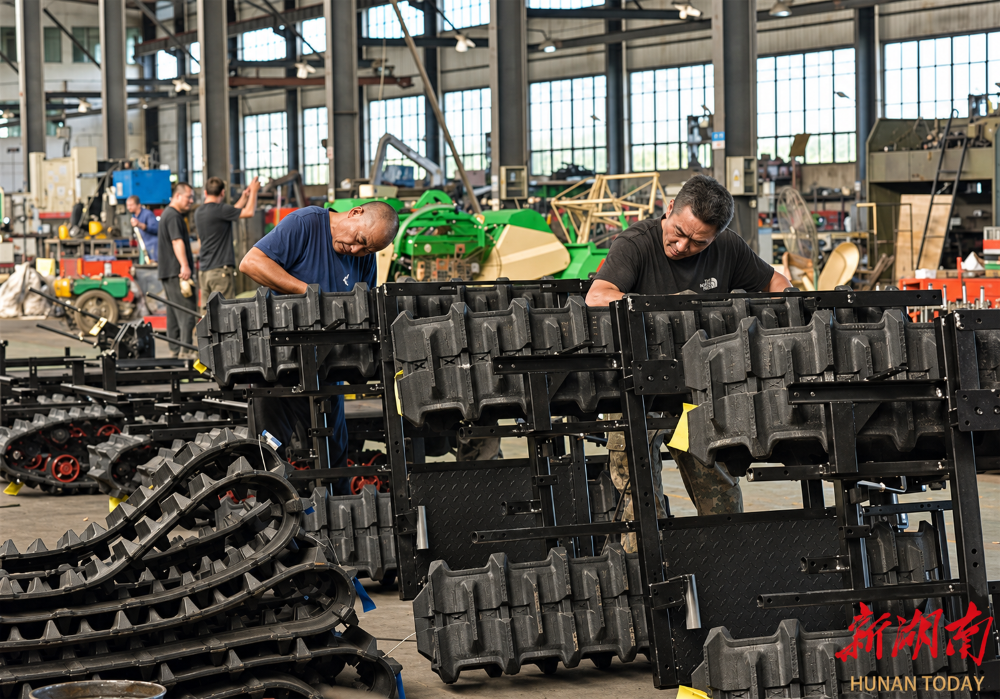
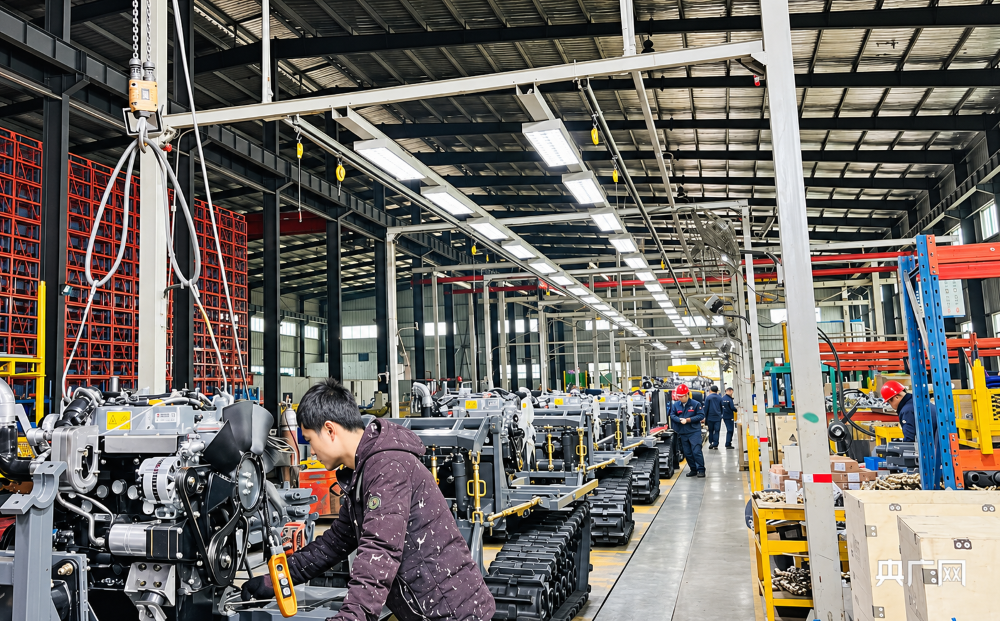
Shuangfeng County, in Loudi, has 85 agricultural machinery manufacturers and component suppliers, including 63 above designated size. The sector employs more than 30,000 people and produces rice mills, grain dryers, harvesters and tractors designed for hilly farmland.
Exports to Africa rose from 15 million yuan (about Rwf 3.32 billion) in 2024 to more than 40 million yuan (about Rwf 8.85 billion) in 2025.
Officials projected exports of 60 million to 80 million yuan (about Rwf 13.28–17.71 billion) in 2026.
Shuangfeng machinery is sold in more than ten African countries, including Rwanda, Kenya, Nigeria and Tanzania.
Nongyou Machinery, founded in Shuangfeng in 1995, has built an assembly plant in Nigeria and sends technicians to train local after-sales workers. It is also working with other manufacturers on a proposed joint venture and a production, sales and service centre in Tanzania.
Nongyou reports that automation upgrades in its own factories raised production capacity by 270%, cut production cycles by 60% and lifted its product acceptance rate from 70% to 99%.
Its 5H series grain dryers have been named a National Manufacturing Single Champion Product.
Hengyang Ruida Power Supply offers another example of exports paired with technical services. The company says its batteries have reached more than 30 African countries and its annual output value is 1.55 billion yuan (about Rwf 343.04 billion).
Repairing the environmental cost of mining
Hunan’s industrial story also includes the environmental cost of production. Antimony mining began at Xikuangshan in 1897.
The site briefing says the area accounted for roughly one-third of China’s antimony output and one-quarter of global production over its mining history.
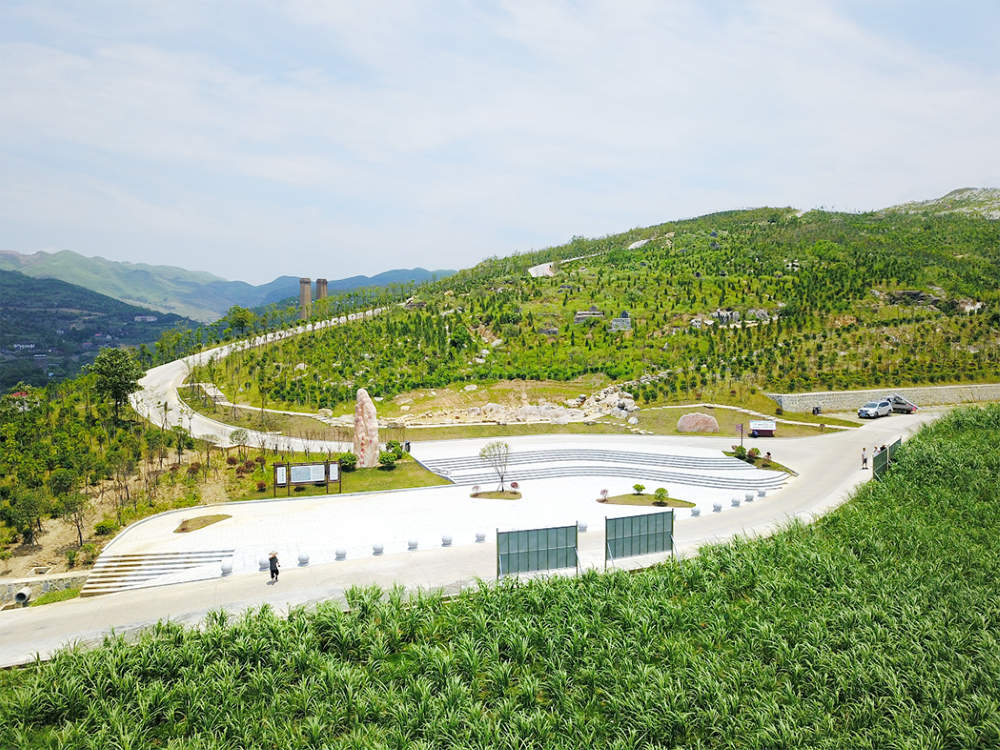
Mining damaged farmland, polluted water and left waste residues. Restoration work included six targeted campaigns, a facility designed to treat 20,000 tonnes of arsenic-alkali residue a year, rehabilitation of more than 6,000 mu of polluted land and reclamation of 1,478,800 square metres.
“We ensure that the mine can continue to produce while also making the environment beautiful,” said Zeng Guoliang of the Xikuangshan Red Army Long March Memorial Hall.
The restored area now includes ecological spaces, industrial tourism and educational activities.
Across China, authorities reported 24,000 ecological and environmental treatment projects during 2021–2025. In 2025, central investment of 29.2 billion yuan (about Rwf 6.46 trillion) was allocated to support 337 key land-greening projects.
Ancient farming knowledge beside modern industry
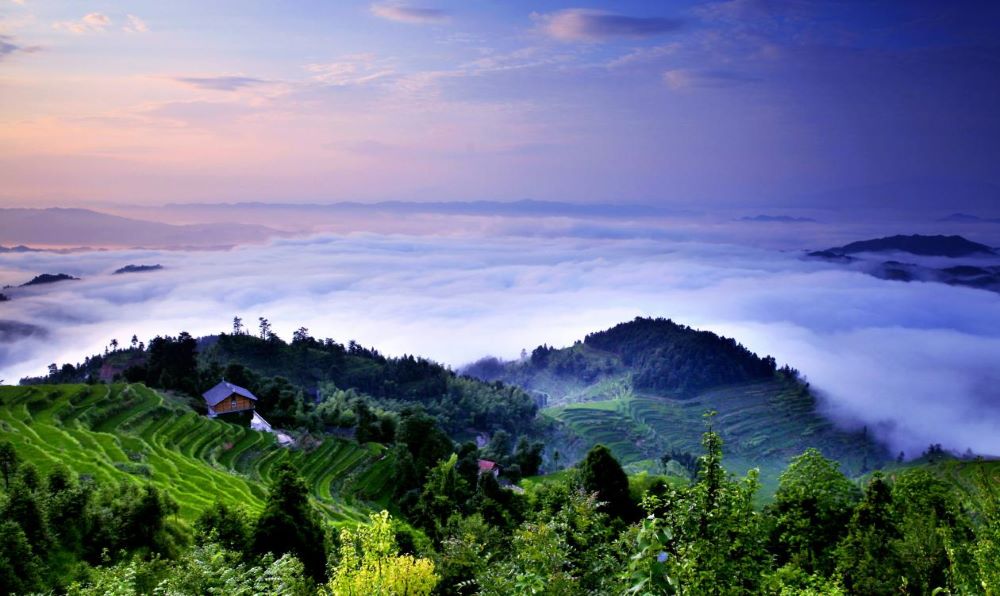
In Xinhua County, Ziquejie’s terraced fields cover more than 80,000 mu. Their gravity-fed irrigation system works without mountain reservoirs.
The terraces, whose history stretches back more than 2,000 years, are recognised as a Globally Important Agricultural Heritage System and a World Heritage Irrigation Structure.
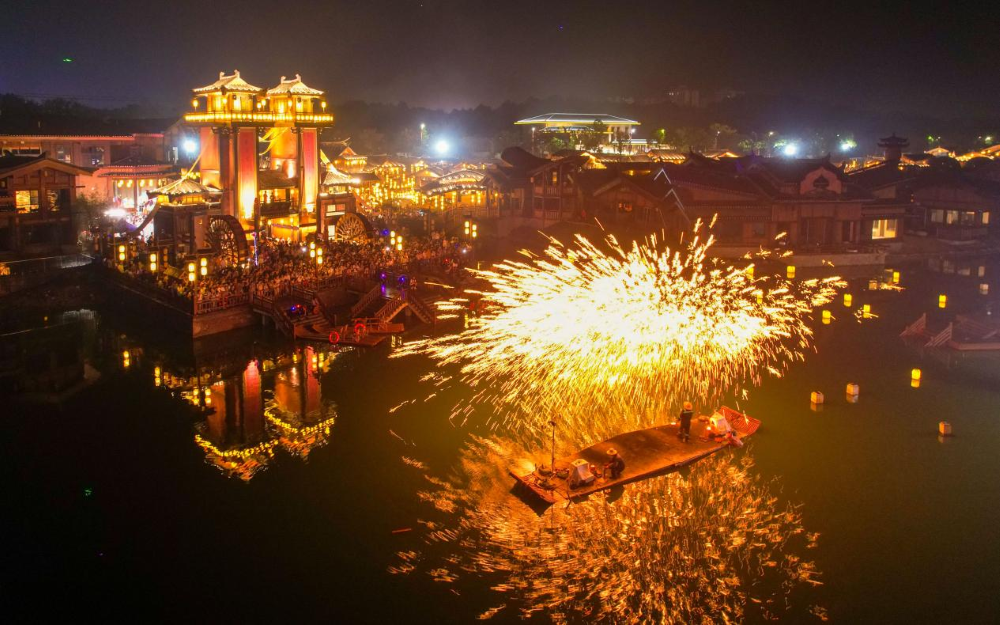
Hunan’s cultural attractions also contribute to the provincial economy. Nanyueli Temple Fair Cultural and Food Block, at the foot of Hengshan Mountain, opened in September 2024 and has received more than 10 million visitors.
More than 75% of visitor traffic occurs at night, and its single-day peak has exceeded 70,000 people.
Leave a Reply