According to the Africa Centres for Disease Control and Prevention (Africa CDC), the outbreak has so far recorded 336 suspected and confirmed cases in Ituri Province in eastern DR Congo. The outbreak marks the country’s 17th Ebola epidemic since 1976.
Africa CDC Director General Jean Kaseya said during an online press briefing that the outbreak is caused by the Bundibugyo strain of the Ebola virus, for which no strain-specific vaccine is currently available.
The agency warned that cross-border movement, mining-related mobility, and weak disease surveillance systems could complicate efforts to contain the virus.
Regional concern has intensified after Uganda confirmed an imported Ebola case linked to the outbreak in DR Congo. Ugandan authorities said a 59-year-old Congolese man who died in Kampala on Thursday tested positive for the Bundibugyo strain.
Africa CDC has classified the outbreak as Grade 3, the highest level of emergency response, with the risk rated “very high” within DR Congo, “high” across eastern Africa, and “moderate” for the rest of the continent.
The agency cited several factors behind the elevated risk, including a four-week delay in detecting the outbreak, active community transmission in a peri-urban mining area, weak contact tracing systems, infection prevention gaps, and deaths among healthcare workers.
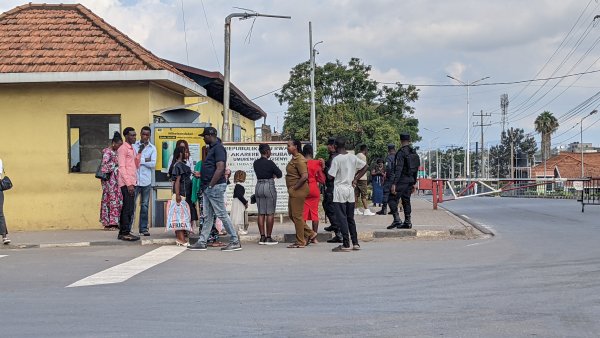
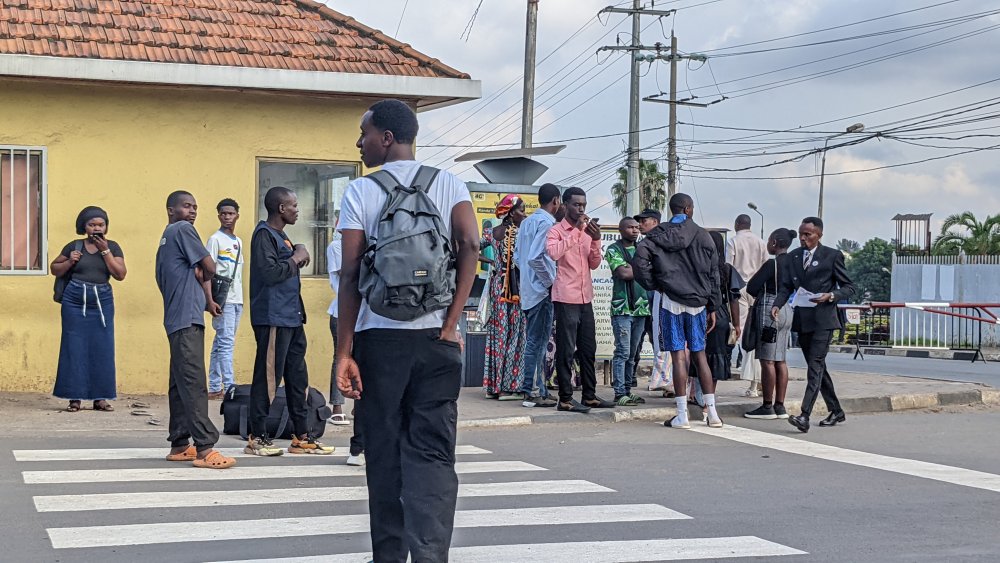
The outbreak has also prompted neighbouring Rwanda to tighten preventive measures. Authorities on Sunday temporarily closed the Petite Barrière, Grande Barrière, and Kabuhanga border posts in Rubavu District, key crossing points between Gisenyi and Goma.
Rubavu District Mayor Prosper Mulindwa said the decision was taken as a precaution to prevent the spread of Ebola into Rwanda.
“Borders connecting Goma and Gisenyi have been temporarily closed while monitoring the Ebola outbreak. We will continue engaging with citizens to explain the reasons behind this decision,” he said.
Despite the closure, health authorities continue to screen Rwandan nationals entering from DR Congo, as well as Congolese citizens returning home under strict monitoring measures.
On Sunday, the World Health Organisation (WHO) declared the Ebola outbreak in the DRC and Uganda a “public health emergency of international concern,” calling for a coordinated global response.
The WHO, however, clarified that the outbreak, caused by the Bundibugyo virus strain, does not currently meet the threshold for classification as a pandemic emergency.
Ebola is a highly contagious viral disease that can cause fever, vomiting, diarrhoea, body pain, fatigue, and in severe cases, internal and external bleeding. According to the WHO, fatality rates vary depending on the Ebola virus subtype.
According to the Africa Centres for Disease Control and Prevention (Africa CDC), the outbreak has so far recorded 336 suspected and confirmed cases in Ituri Province in eastern DR Congo. The outbreak marks the country’s 17th Ebola epidemic since 1976.
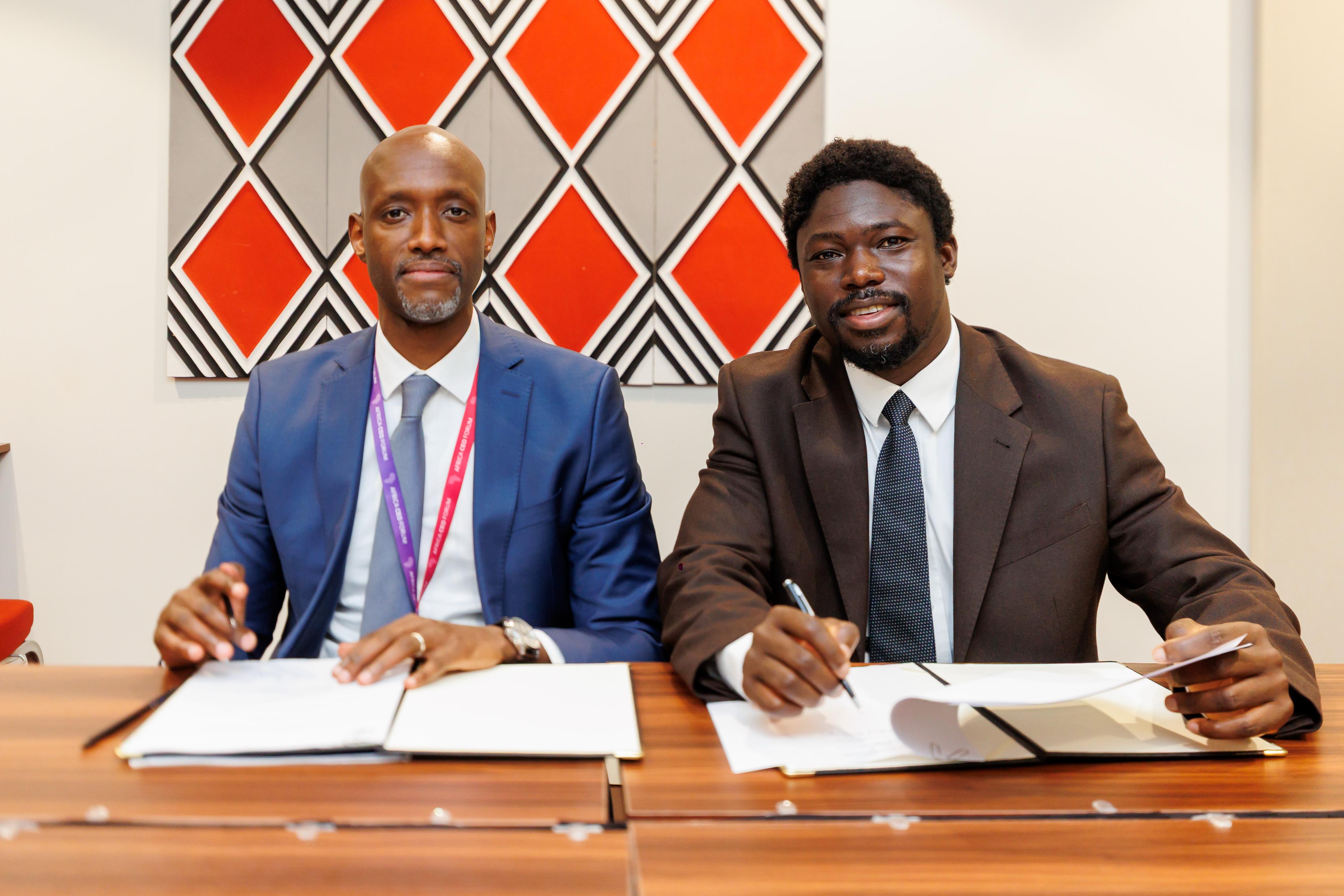
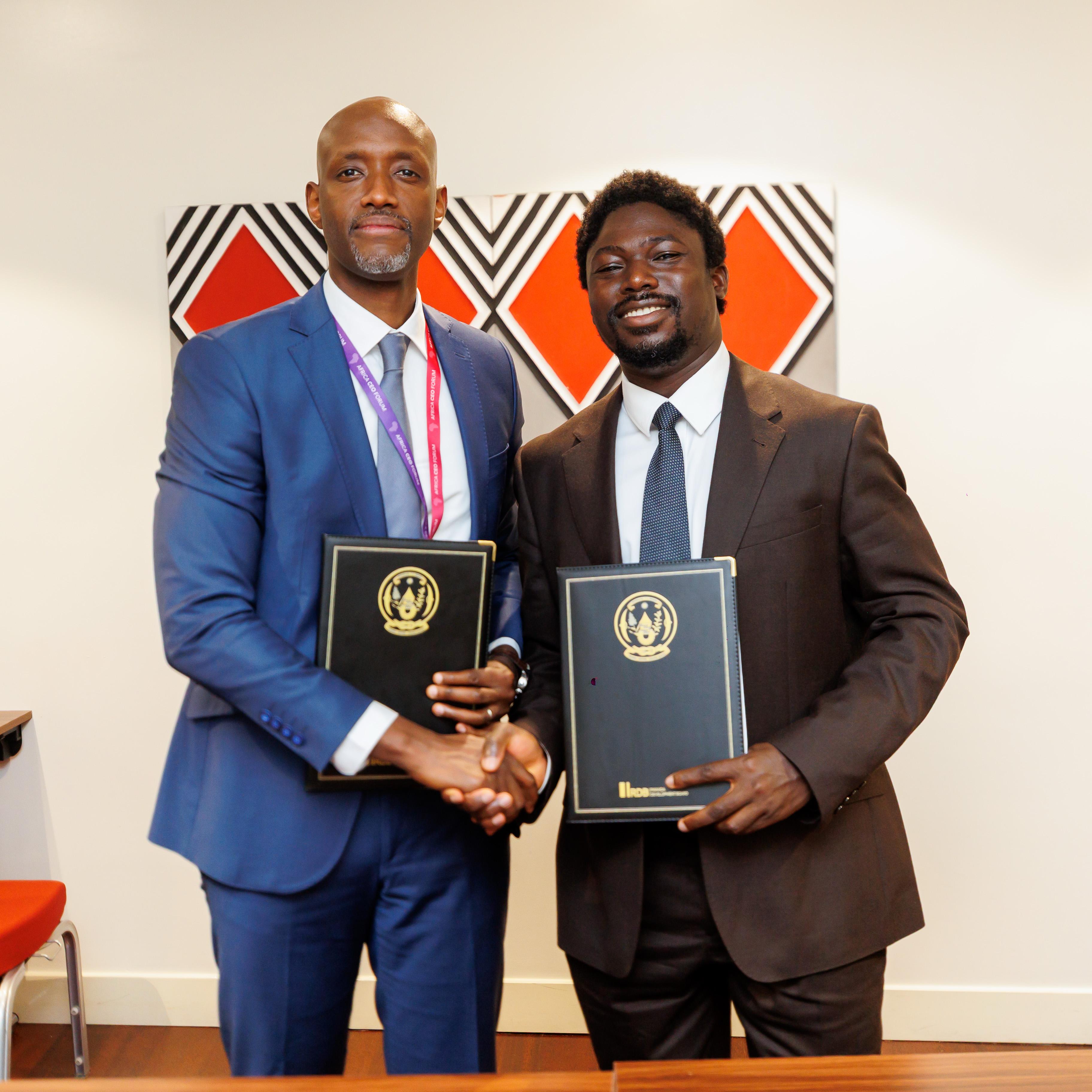
The agreement, signed during the recently concluded Africa CEO Forum, establishes a framework for discussions around technology-enabled transport solutions, digital innovation, and support for Rwanda’s urban mobility ecosystem.
Under the partnership framework, Yango Group and RDB will engage on areas including investment facilitation, regulatory engagement, and broader conversations relating to smart urban transport and digital mobility solutions.
Adeniyi Adebayo, Chief Business Officer at Yango Group, said Rwanda’s rapidly evolving digital economy makes it an attractive market for technology-driven services.
“Rwanda represents a dynamic and evolving digital economy, with growing interest in technology-enabled services,” Adebayo said after signing the MoU with RDB CEO Jean Guy Afrika.
“Through this engagement, we look forward to exploring opportunities for collaboration with relevant stakeholders while learning more about Rwanda’s mobility ecosystem,” he added.
RDB CEO Jean-Guy Afrika signed the MoU with Adeniyi Adebayo, Chief Business Officer at Yango Group.
The move signals Yango’s interest in expanding its African footprint into East Africa as Rwanda positions itself as a regional hub for innovation, smart-city development, and digital services.
Headquartered in Dubai, Yango Group operates a broad digital ecosystem across more than 30 countries in Africa, the Middle East, Latin America, Europe, and South Asia. While the company is widely known for ride-hailing services through Yango Ride, it has expanded into delivery, fintech, entertainment, AI-powered technologies, and digital business solutions.
Unlike traditional ride-hailing operators, Yango functions primarily as a technology platform that partners with local transport companies and independent fleet operators rather than directly owning vehicles or employing drivers.
The company says its business strategy focuses on adapting technology to local market conditions through what it describes as a “translocal” model. This includes tailoring mapping systems, payment solutions, and mobility technologies to suit regional infrastructure and user needs.
In Africa, Yango has already established operations in countries including Côte d’Ivoire, Ghana, Cameroon, Senegal, Zambia, Angola, Algeria, and the Democratic Republic of Congo. The company has increasingly targeted fast-growing digital economies where demand for app-based transport, delivery, and cashless services continues to rise.
Yango’s ecosystem also includes Yango Delivery, Yango Pay, Yango Maps, AI-powered logistics technologies under Yango Tech, and entertainment services through Yango Play.
Any future launch of Yango services in Rwanda, the company said, remains subject to regulatory approvals, licensing requirements, and all applicable government processes.
The agreement, signed during the recently concluded Africa CEO Forum, establishes a framework for discussions around technology-enabled transport solutions, digital innovation, and support for Rwanda’s urban mobility ecosystem.
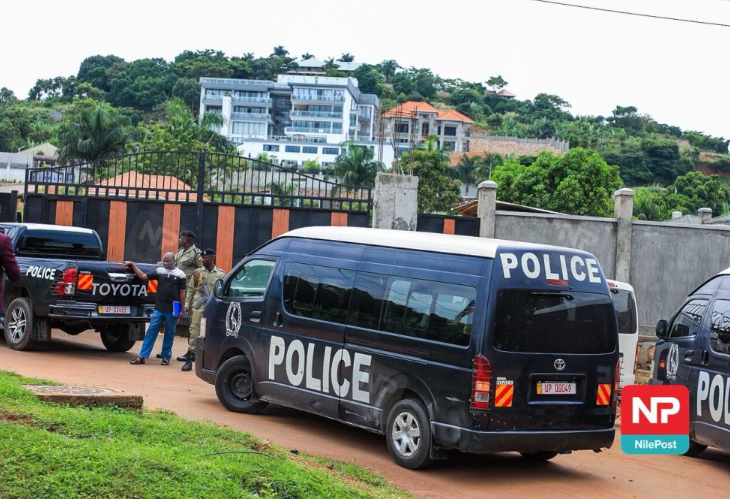
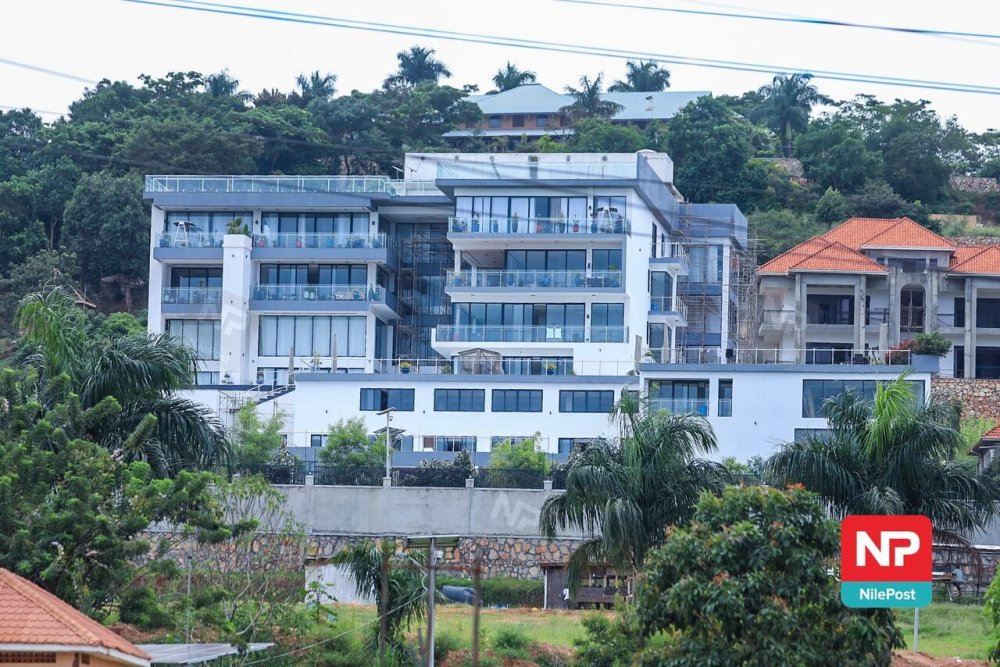
Multiple sources familiar with the ongoing operation told the Ugandan media that security deployment around the residence remained heavy throughout the day, with movement in and out of the property reportedly being closely monitored following overnight searches conducted by the Criminal Investigations Directorate (CID) and other security agencies.
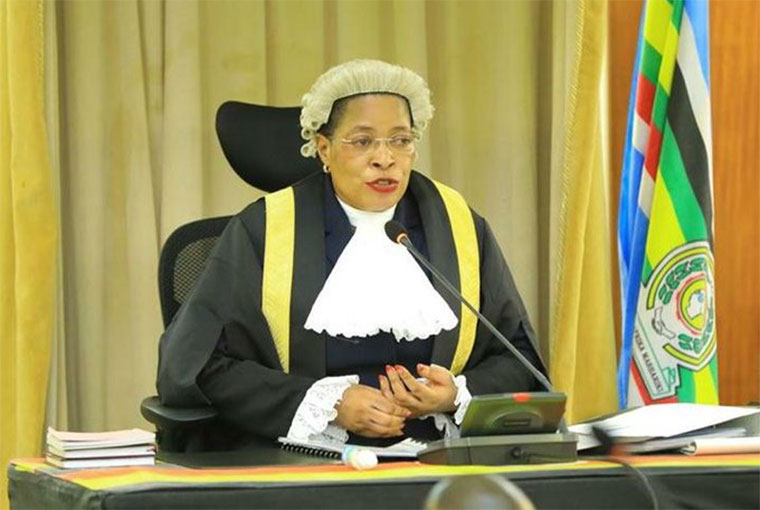
Central to the widening inquiry are specific allegations surrounding the Speaker’s recent acquisition of a luxury Rolls-Royce Cullinan, an asset valued at an estimated 3.4 billion Ugandan shillings (roughly $900,000), with an additional 1.2 billion Ugandan shillings assessed in taxes. The multi-billion shilling SUV became a major flashpoint following a formal petition delivered to the Inspectorate of Government on May 13 by Kampala-based lawyers and activists.
The petitioners argue that the high-end vehicle points to either a complete failure to declare the asset or a severe under-declaration of wealth, in direct violation of the biennial disclosure requirements under Section 4 of the Leadership Code Act. While associates of the Speaker initially defended the acquisition as a personal birthday gift, investigators are reportedly scrutinising the vehicle’s funding sources amid broader public and political outrage over ostentatious displays of wealth by public officials.
Sources alleged that personnel linked to the Special Forces Command were maintaining surveillance around the residence as investigators continued reviewing materials obtained during late Saturday night operations.
“She is under very tight restriction and security monitoring as investigations continue,” one source was quoted as saying, although authorities had not officially confirmed any form of house arrest by Sunday afternoon.
Another source said access to the property had been significantly limited as investigators examined documents and electronic materials recovered during the searches.
The latest developments come amid a widening corruption probe that has reportedly expanded to several individuals linked to Among.
Investigators also reportedly seized a mobile phone belonging to the Speaker during Saturday’s operation, with sources saying the device is expected to undergo detailed forensic examination as part of the investigation.
It remained unclear which specific agency was in custody of the phone, as the joint operation is understood to involve CID, military intelligence and other state security units.
Sources familiar with the investigation said forensic experts are expected to analyse communications, electronic transactions, financial records and other digital information stored on the device.
“The phone is now considered important evidence in the ongoing investigations,” one source said.
Another source claimed investigators were particularly interested in recovering deleted messages, call records, documents and other digital communications linked to the case.
Ugandan security and intelligence agencies have in recent years strengthened their cyber and digital forensic capabilities, allowing investigators to retrieve and analyse data from electronic devices, including deleted files and messages.
The probe intensified after Inspector General of Government Aisha Batala Nalule confirmed that her office had received formal complaints alleging possible violations of the Leadership Code Act, including failure to fully declare wealth and assets.
The political fallout from the investigation has also begun reshaping the race for the Speakership. The Patriotic League of Uganda, led by Chief of Defence Forces Gen. Muhoozi Kainerugaba, recently withdrew support for Among and instead endorsed Defence Minister Jacob Oboth Oboth for Speaker.
By Sunday afternoon, neither the Uganda Police Force, the UPDF nor Among’s legal team had issued an official statement regarding the reported house restrictions or seizure of the phone.
Security and intelligence agencies raided Anita Among’s residence. Among the items seized was Anita Among’s mobile phone.
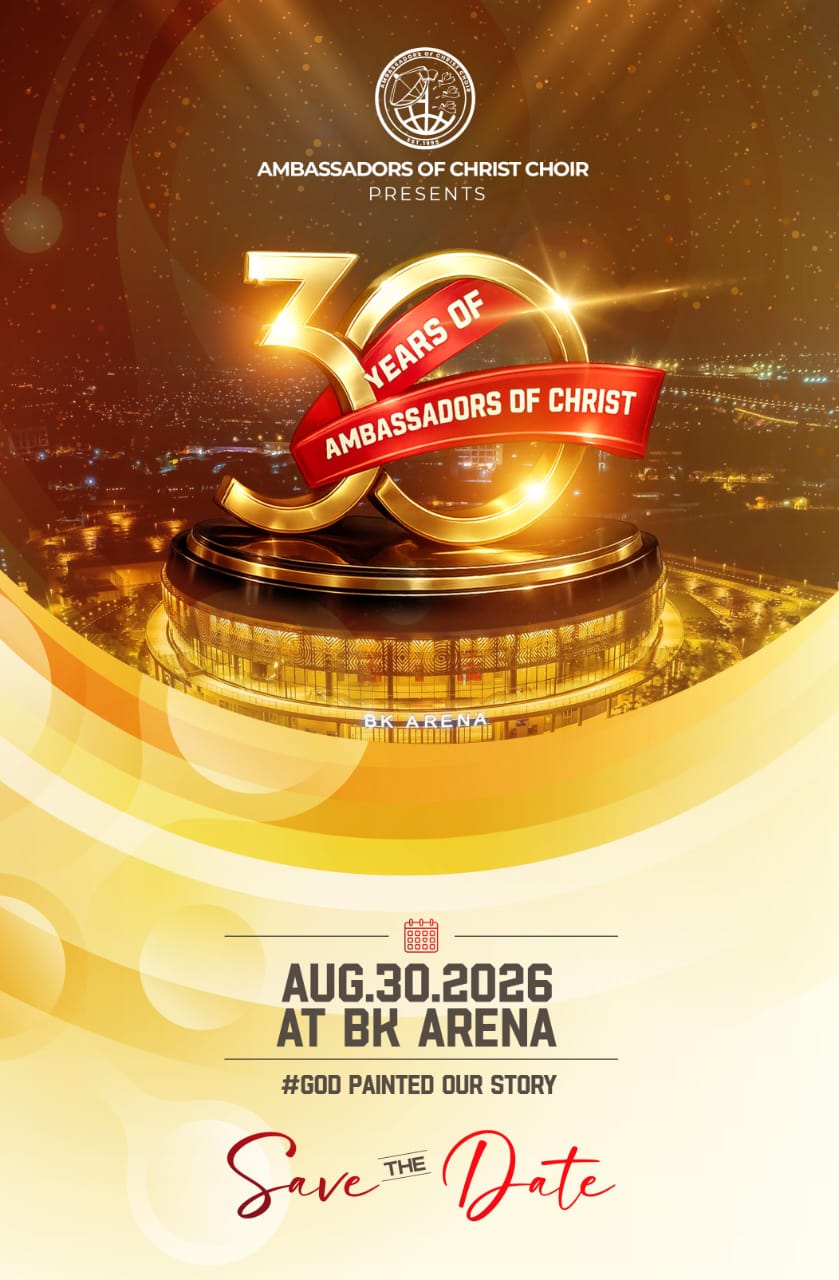
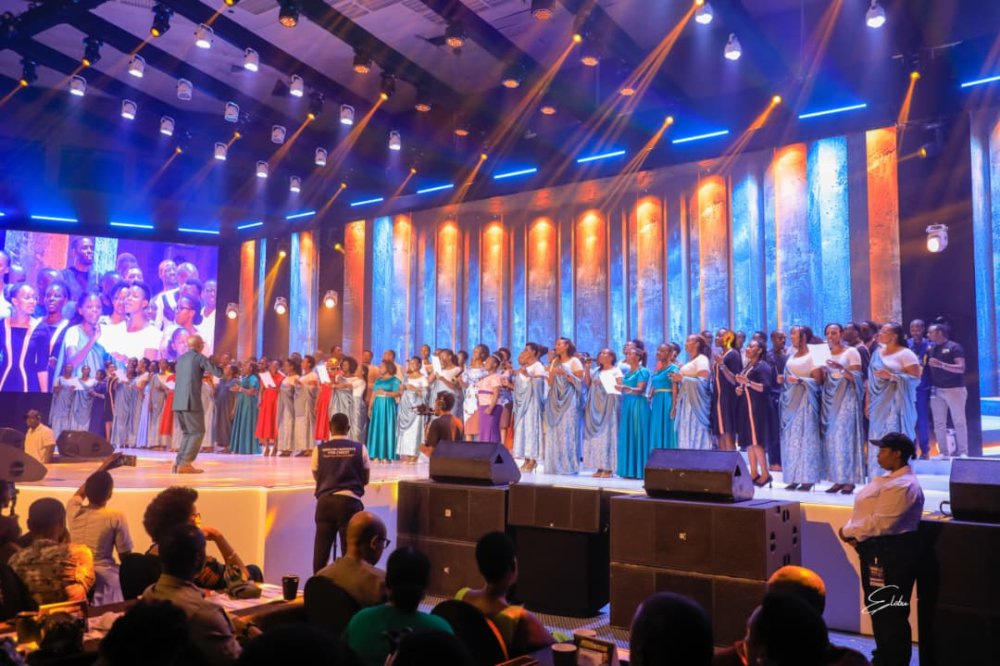
The celebrations will culminate in a major concert scheduled for August 30, 2026, at BK Arena.
Ahead of the event, the choir has already rolled out a series of community outreach activities, including a tree-planting campaign in Rusororo Sector, Gasabo District, as well as visits to youth rehabilitation centres in Iwawa and Gitagata.
The visits are part of a broader awareness campaign aimed at combating drug abuse and other harmful behaviours affecting young people.
The choir also plans to organise activities dedicated to comforting and supporting survivors of the 1994 Genocide against the Tutsi.
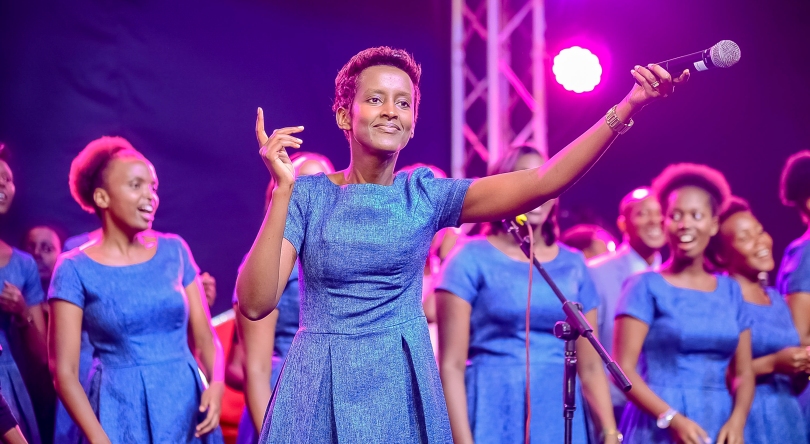
Founded in 1996, Ambassadors of Christ Choir rose to prominence through gospel songs focused on faith, spiritual resilience, devotion to God, and patriotism. Over the years, the choir has built a strong following in Rwanda and beyond, staging concerts both locally and internationally.
Former members describe the choir as more than a music group, saying it has served as a platform for mentorship, personal growth, and talent development, while also fostering lasting friendships and values that continue to shape their lives.
As part of the anniversary celebrations, the choir is preparing a range of activities that will reflect on its history, feature testimonies from former members, and highlight its contribution to the growth of gospel music in Rwanda over the past three decades.
The celebrations will culminate in a major concert scheduled for August 30, 2026, at BK Arena.Founded in 1996, Ambassadors of Christ Choir rose to prominence through gospel songs focused on faith, spiritual resilience, devotion to God, and patriotism. Over the years, the choir has built a strong following in Rwanda and beyond, staging concerts both locally and internationally.
In a statement issued under the International Health Regulations (2005) on Sunday, WHO Director-General said the outbreak, caused by the Bundibugyo virus strain of Ebola, meets the threshold of a global public health emergency but does not qualify as a pandemic emergency.
The decision follows the detection of confirmed Ebola cases in eastern DRC, Uganda’s capital Kampala, and Kinshasa, raising concerns about cross-border transmission and the spread of the disease into densely populated urban centres.
As of May 16, authorities in the DRC had reported eight laboratory-confirmed Ebola cases, 246 suspected cases and 80 suspected deaths in Ituri Province, particularly in the health zones of Bunia, Rwampara and Mongbwalu.
In Uganda, two laboratory-confirmed cases, including one death, were recorded in Kampala on May 15 and 16 among individuals who had travelled from the DRC. WHO said the two cases had no apparent epidemiological link to each other, heightening concerns over undetected chains of transmission.
Another confirmed case was also reported in Kinshasa involving a person returning from Ituri Province.
WHO warned that the true number of infections could be significantly higher than currently reported, pointing to unusual clusters of deaths with symptoms consistent with Ebola across several areas in Ituri and North Kivu provinces.
The agency also expressed concern over infections among healthcare workers, with at least four deaths reported in medical settings suspected to be linked to viral haemorrhagic fever, suggesting possible transmission within health facilities and gaps in infection prevention measures.
According to WHO, several factors are increasing the risk of wider spread, including insecurity in eastern DRC, ongoing humanitarian crises, high levels of population movement, and the presence of informal healthcare facilities.
Unlike the Zaire strain of Ebola, there are currently no approved vaccines or specific treatments for the Bundibugyo virus strain, further complicating response efforts.
WHO noted that international spread has already been documented through confirmed imported cases in Uganda and warned that neighbouring countries sharing borders with the DRC remain at high risk because of trade and population mobility.
“Neighbouring countries sharing land borders with the Democratic Republic of the Congo are considered at high risk for further spread due to population mobility, trade and travel linkages, and ongoing epidemiological uncertainty,” WHO warned.
The UN health agency called for urgent international coordination to strengthen surveillance, contact tracing, laboratory testing, infection prevention, and case management.
It also urged affected countries to activate emergency response mechanisms, strengthen community engagement, improve border screening, and establish specialised treatment centres near outbreak hotspots.
Countries neighbouring affected areas have been urged to intensify preparedness measures, including active surveillance, rapid response capacity, laboratory readiness, and public awareness campaigns.
The outbreak has already prompted Rwanda to close several border crossings with the DRC in Rubavu District as authorities move to prevent the disease from entering the country. The closure, which took effect on Sunday morning, May 17, affects the Petite Barrière, Grande Barrière, and Kabuhanga border posts.
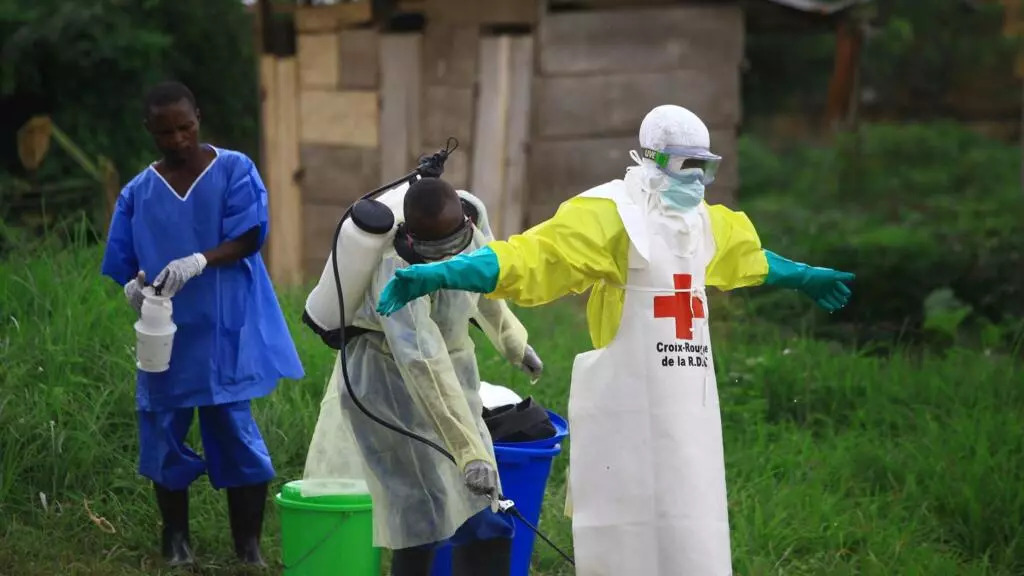
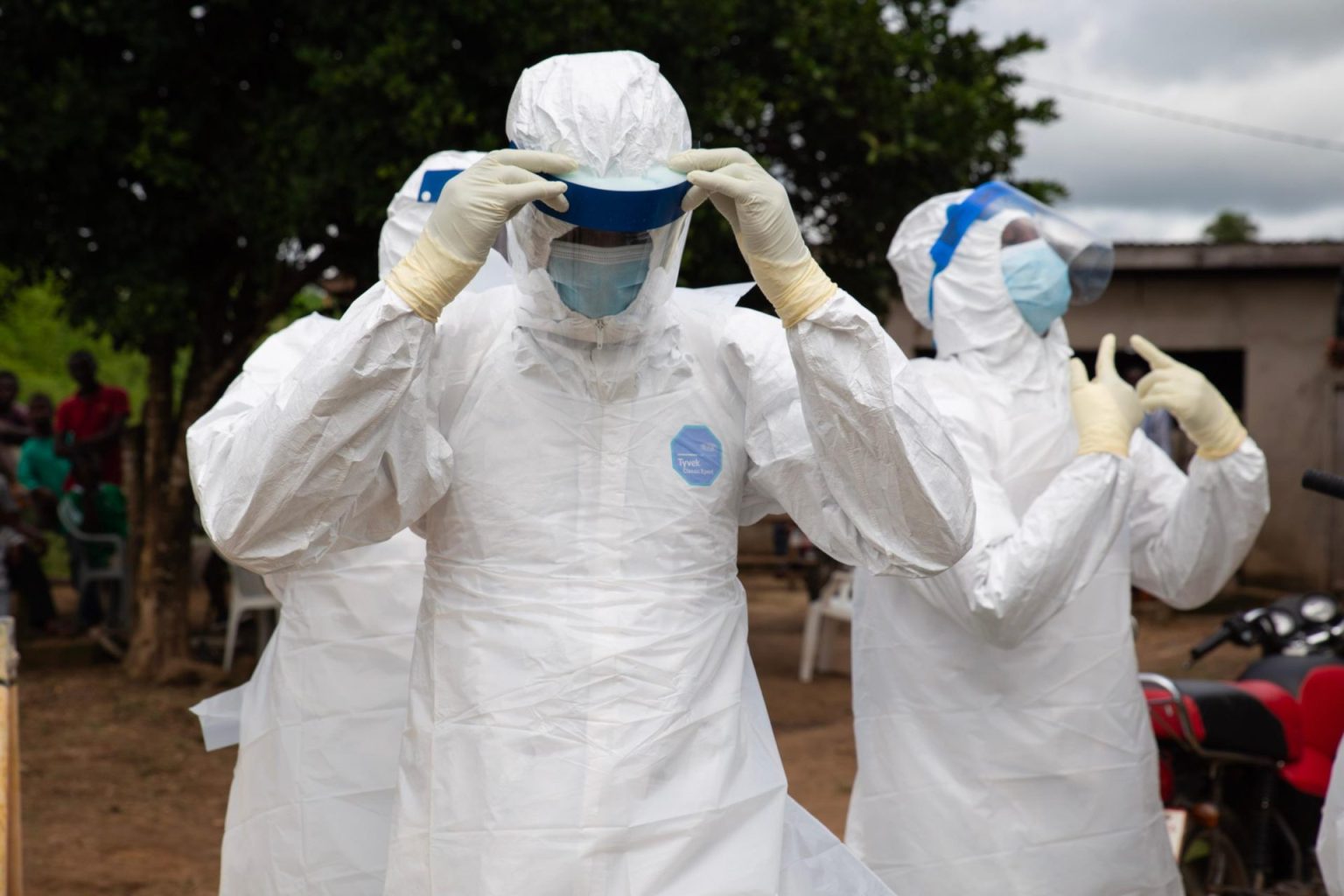
A health worker sprays disinfectant on his colleague after working at an Ebola treatment center in Beni, eastern DRC. The World Health Organisation (WHO) on Sunday declared the ongoing Ebola outbreak in the DRC and Uganda a Public Health Emergency of International Concern (PHEIC), citing the growing risk of regional spread and significant uncertainties surrounding the scale of the outbreak.
The closure, which took effect on Sunday morning, May 17, affects the busy Petite Barrière, Grande Barrière, and Kabuhanga border posts, key transit points between Gisenyi and Goma.
Rubavu District Mayor Prosper Mulindwa confirmed the decision to IGIHE, saying the borders were closed as a precautionary measure to prevent the spread of Ebola into Rwanda.
“Borders connecting Goma and Gisenyi have been temporarily closed while monitoring the Ebola outbreak. We will continue engaging with citizens to explain the reasons behind this decision,” he said.
He also urged residents to remain calm and patient, stressing that protecting lives remains the priority.
Health authorities are continuing screening operations for Rwandan nationals entering from the DRC, as well as Congolese citizens returning home, who are still being allowed to cross under monitoring.
Meanwhile, border crossings linking Rusizi District and Bukavu remain open and unaffected by the restrictions.
The latest measures come after health officials confirmed a new Ebola case in Ituri Province in eastern DRC earlier this week.
On Saturday, the Africa Centres for Disease Control and Prevention (Africa CDC) reported that the outbreak had reached 336 confirmed cases and 87 deaths, indicating continued regional spread.
A small cross-border trader, Uwizeyimana Afissa, said she only learned about the closure when she arrived at the border for work.
“We woke up and came to work transporting goods, but when we arrived, we found the border closed due to the Ebola outbreak in the neighbouring country,” she said.
She called on authorities to introduce measures that would allow trade to continue safely, such as organising traders into groups and permitting limited crossings, to prevent goods from going to waste.
Uganda has also reported Ebola cases linked to travel from the DRC, heightening regional concern over cross-border transmission.
On the same day, Uganda confirmed its first Ebola case, with the patient later dying in hospital in Kampala, bringing the country’s death toll to 88. A second case has since been confirmed.
On Sunday, the World Health Organisation (WHO) declared the Ebola outbreak in the DRC and Uganda a “public health emergency of international concern,” calling for a coordinated global response.
The WHO, however, clarified that the outbreak, caused by the Bundibugyo virus strain, does not currently meet the threshold for classification as a pandemic emergency.
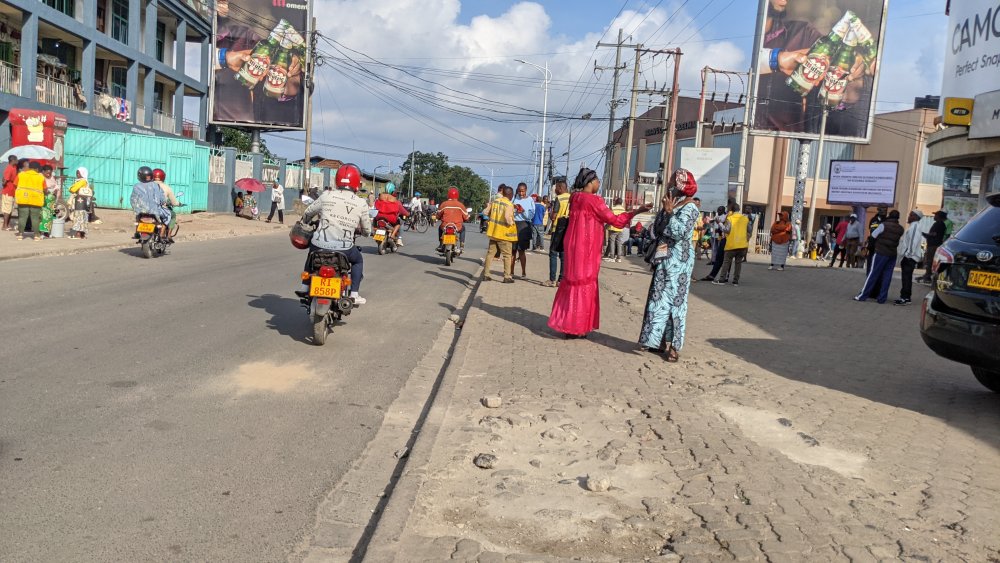
The closure, which took effect on Sunday morning, May 17, affects the Petite Barrière, Grande Barrière, and Kabuhanga border posts.Movement was subsequently suspended for residents intending to cross into Goma.Cross-border traders have been urged to exercise caution due to the Ebola outbreak in the Democratic Republic of Congo.
The announcement was made by Hamas spokesperson Hazem Qassem in a video posted on Facebook.
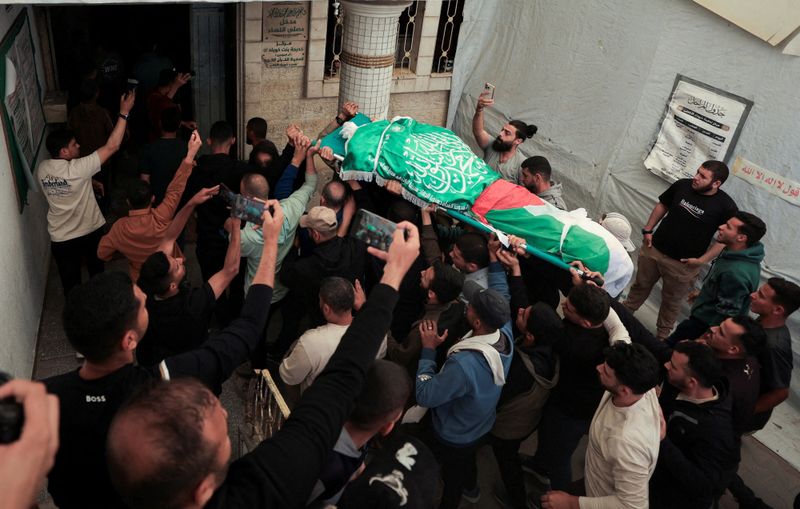
According to Palestinian sources, hundreds of Palestinians attended al-Haddad’s funeral on Saturday, with the procession starting from the Al-Aqsa Martyrs Mosque in central Gaza City. Participants carried the bodies of al-Haddad, his wife and daughter through the streets, and chanted slogans denouncing the Israeli airstrike.
Earlier on Saturday, the Israeli military and the domestic security agency Shin Bet confirmed in a joint statement that al-Haddad was killed in the Israeli airstrike on Gaza City on Friday.
They said al-Haddad was one of the planners of the Hamas attack on southern Israel on October 7, 2023.
In a separate statement, Israeli military chief Eyal Zamir said the military will continue to “hold accountable everyone who took part” in the 2023 Hamas attack. “We will not relent until we reach them all,” he said.
On Friday, Palestinian medical sources reported that at least 10 people were killed and at least 50 others injured in an Israeli airstrike on an apartment building and a vehicle in Gaza City.
Al-Haddad, known by the nickname “Ghost of al-Qassam,” was considered by Israel to be one of the most wanted figures. He had survived several previous assassination attempts, according to Israeli media.
Gaza-based Palestinian political analyst Ahed Ferwana told Xinhua that al-Haddad’s death could have an operational impact on the group’s field command.
Meanwhile, Ferwana suggested that the timing of the Israeli airstrike could be linked to domestic political considerations in Israel, as Israeli Prime Minister Benjamin Netanyahu “is attempting to bolster his standing” before a possible Knesset dissolution and in upcoming parliamentary elections.
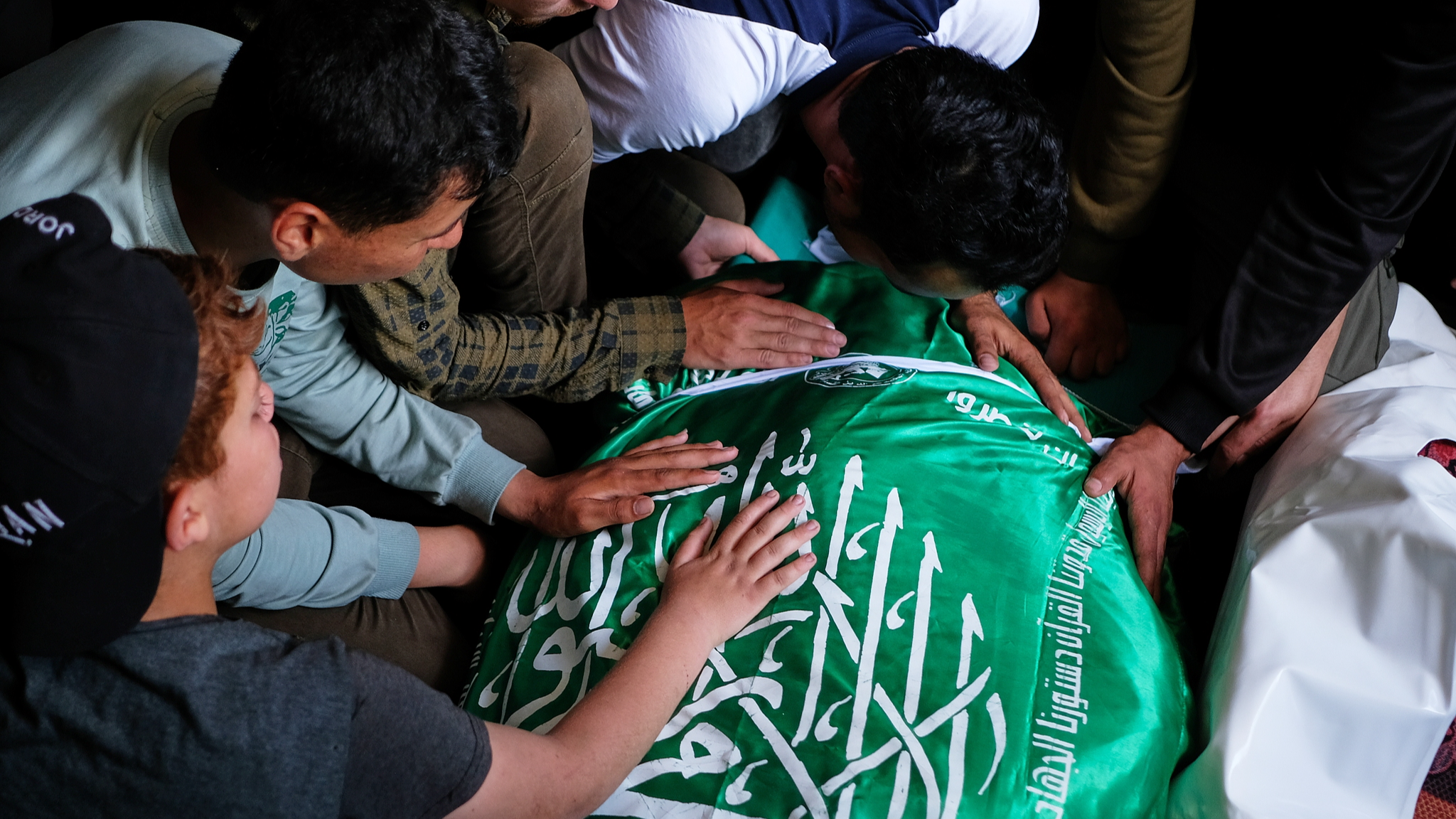
Palestinians place their hands on the body of Izz al-Din al-Haddad, commander-in-chief of Hamas’ armed wing the al-Qassam Brigades, during his funeral in Gaza City, May 16, 2026.
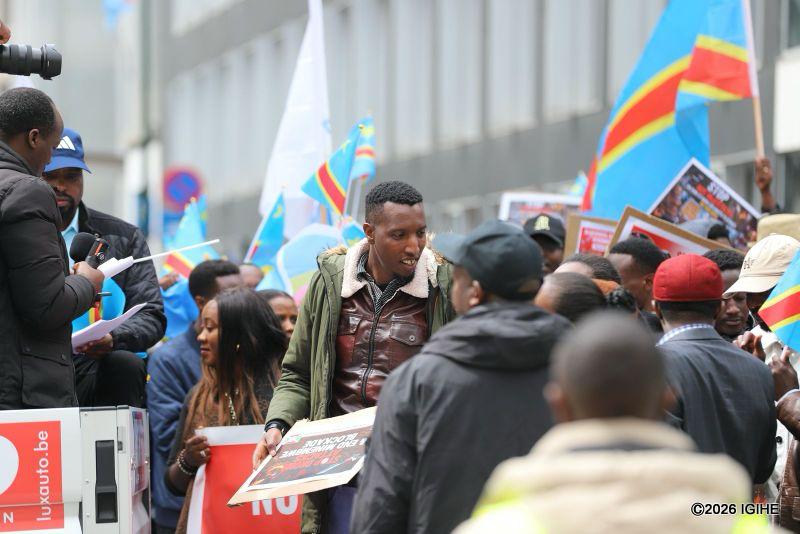
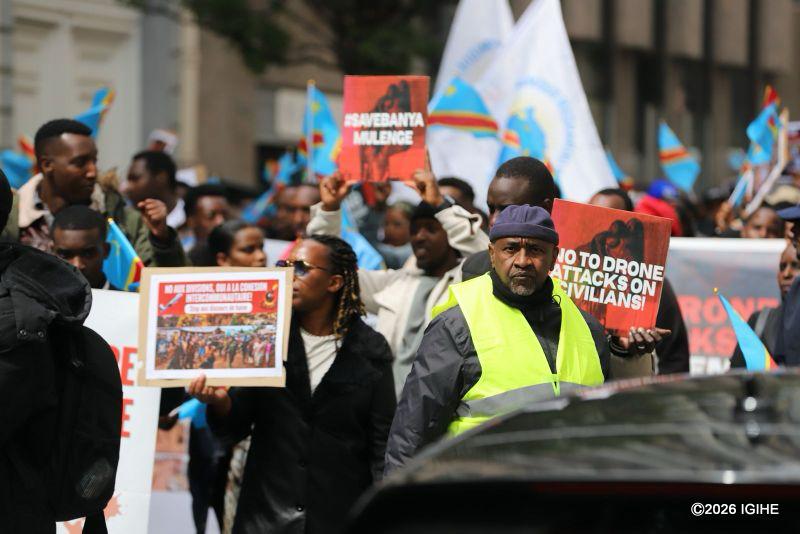
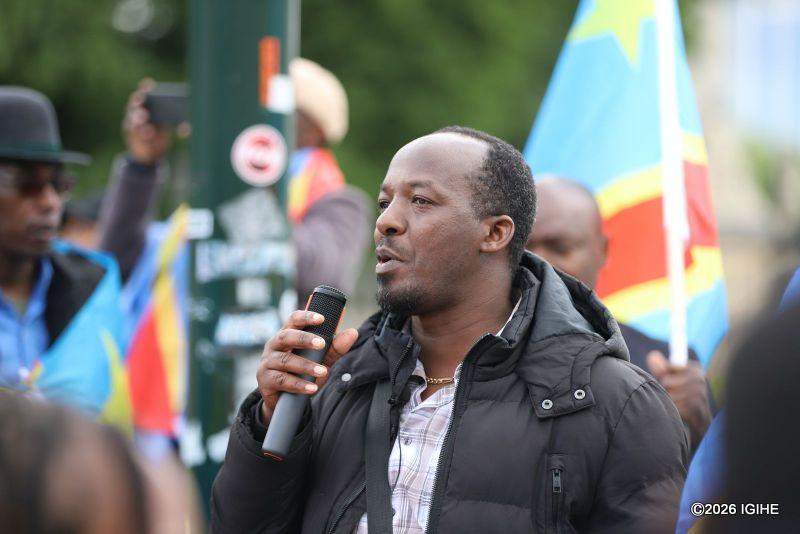
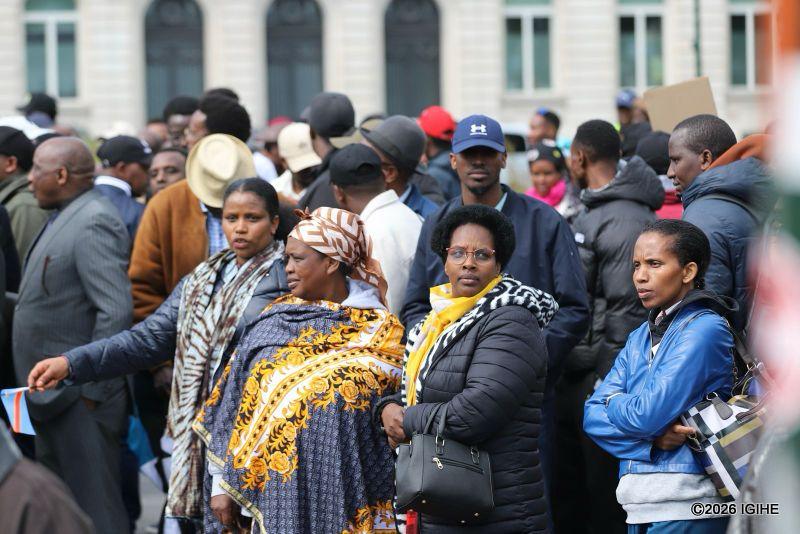
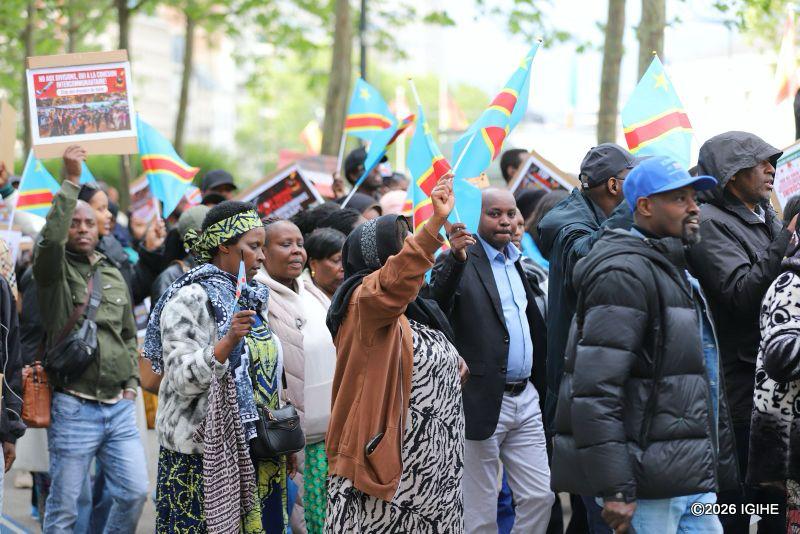
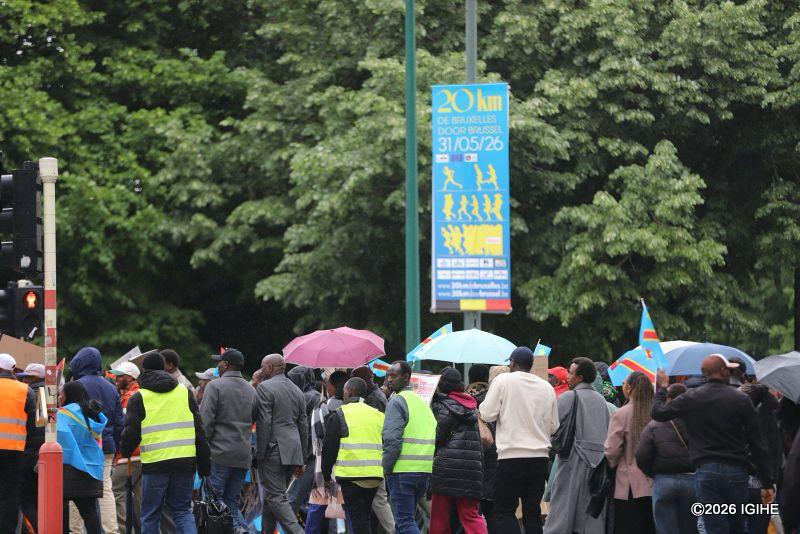
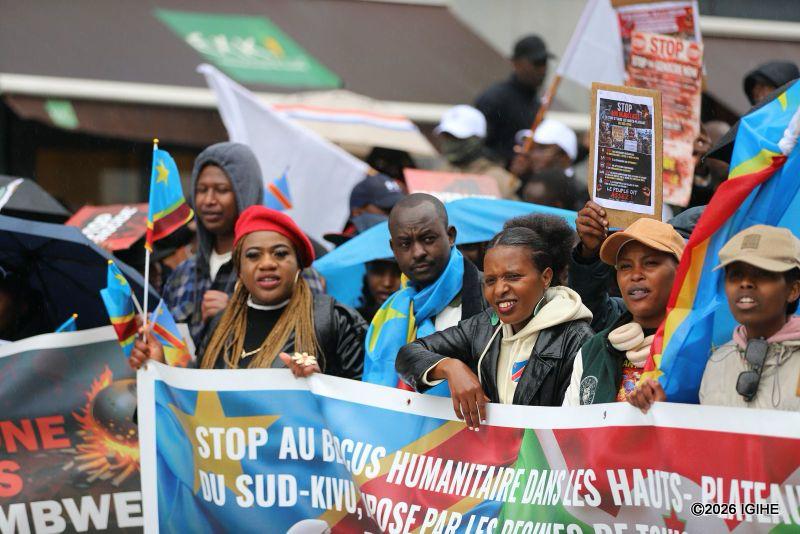
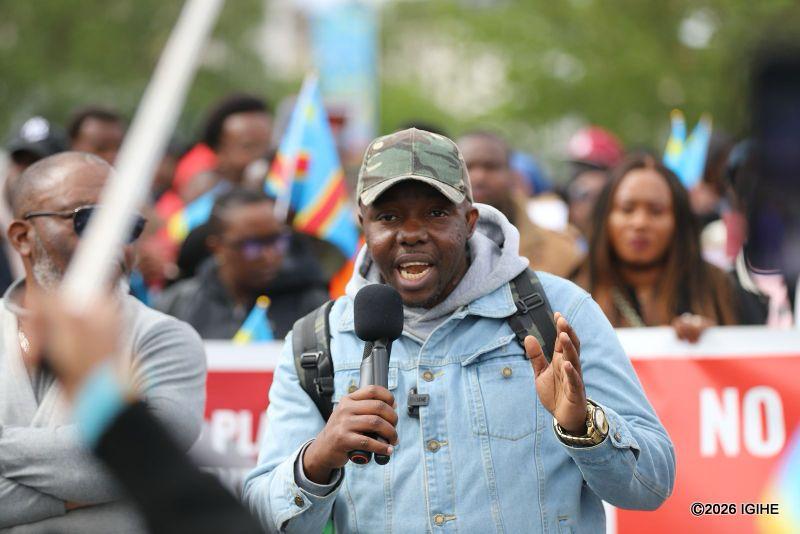
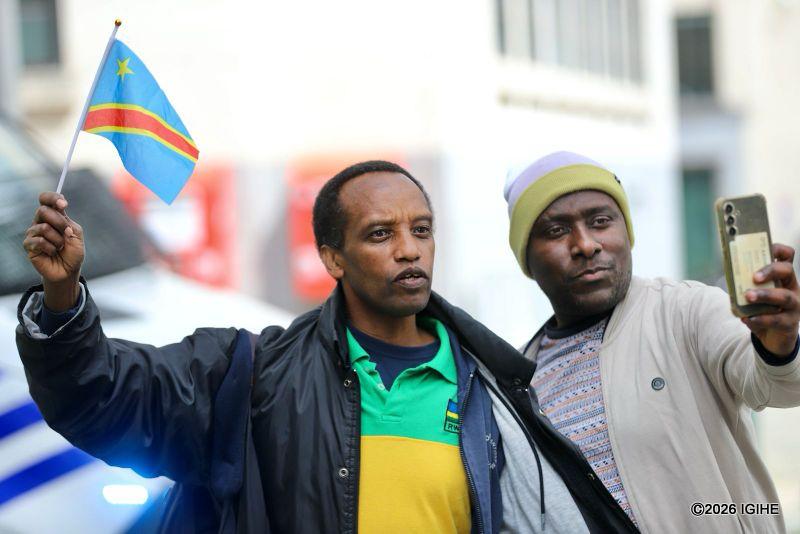
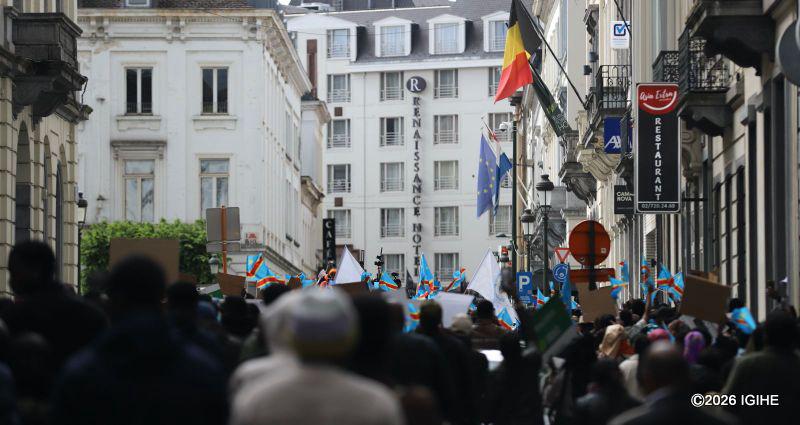
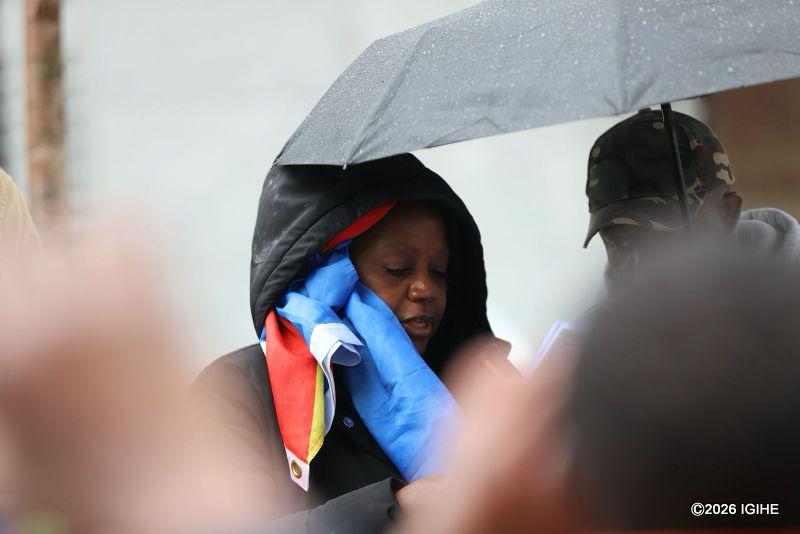
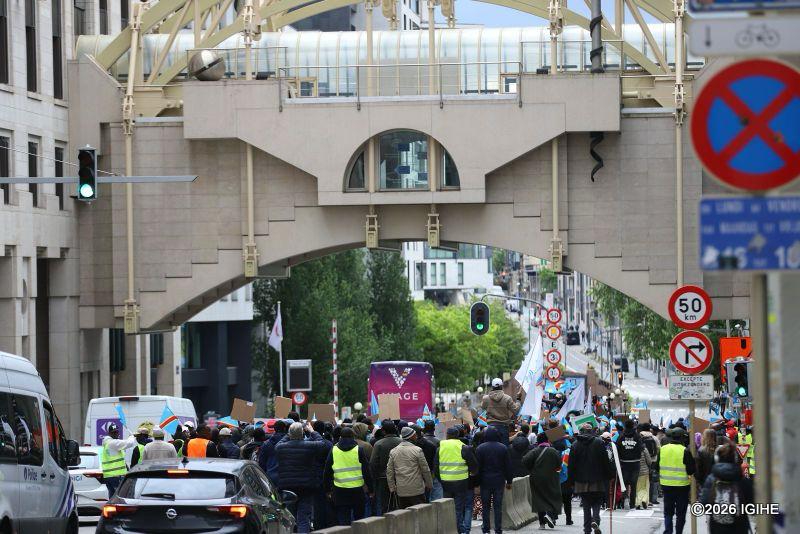
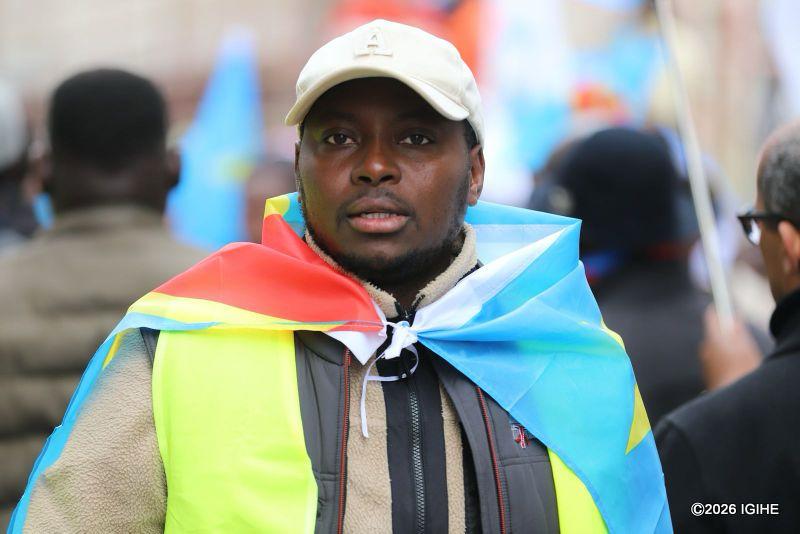
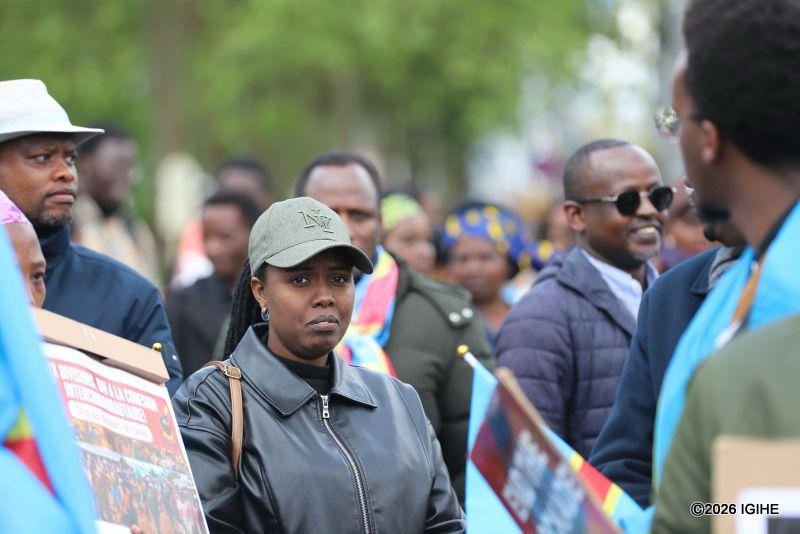
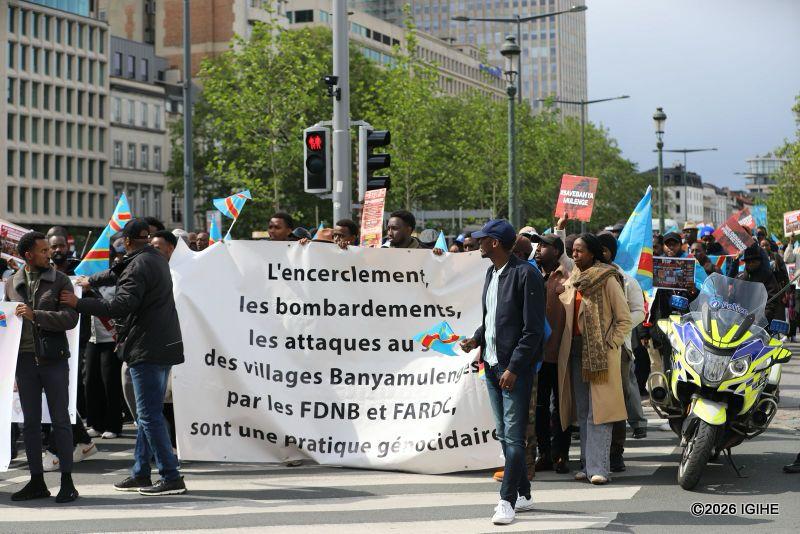
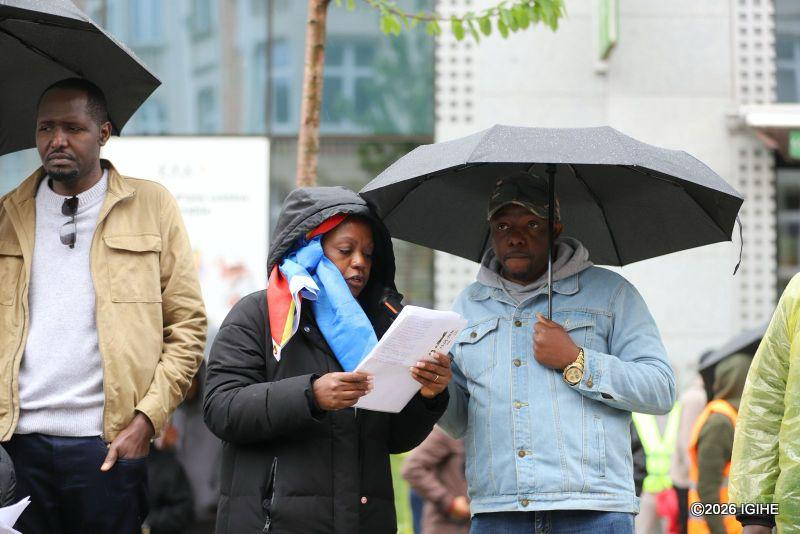
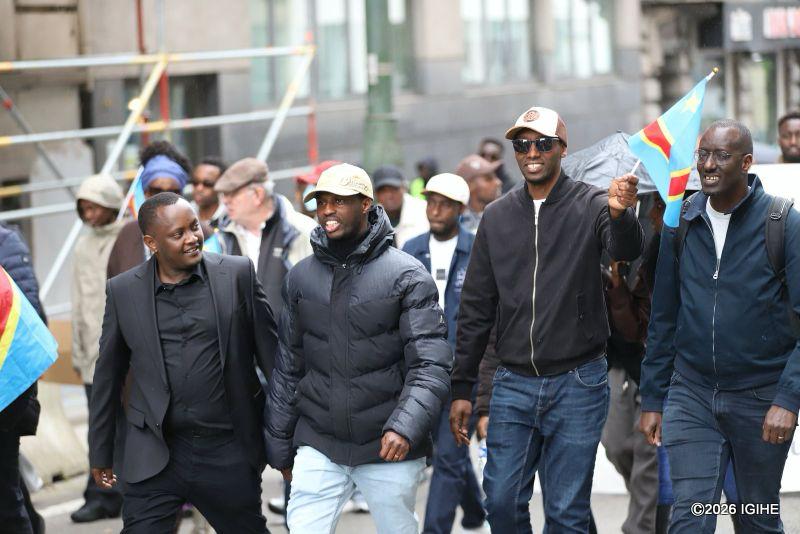
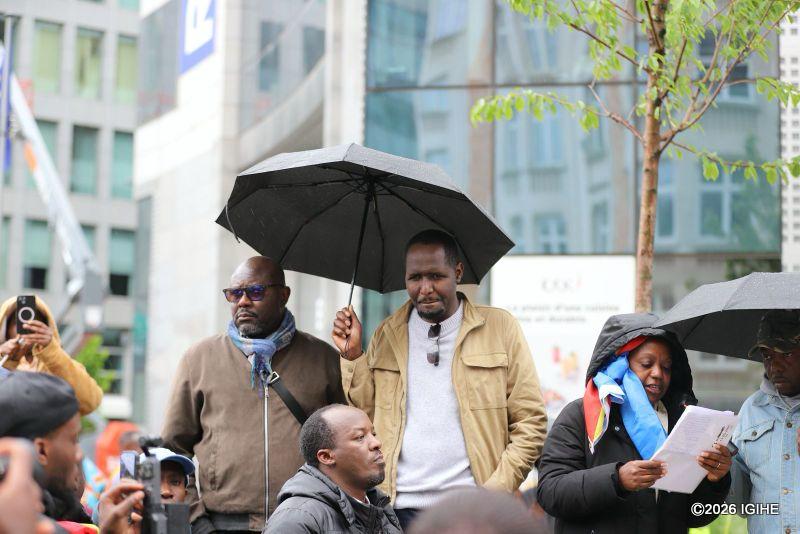
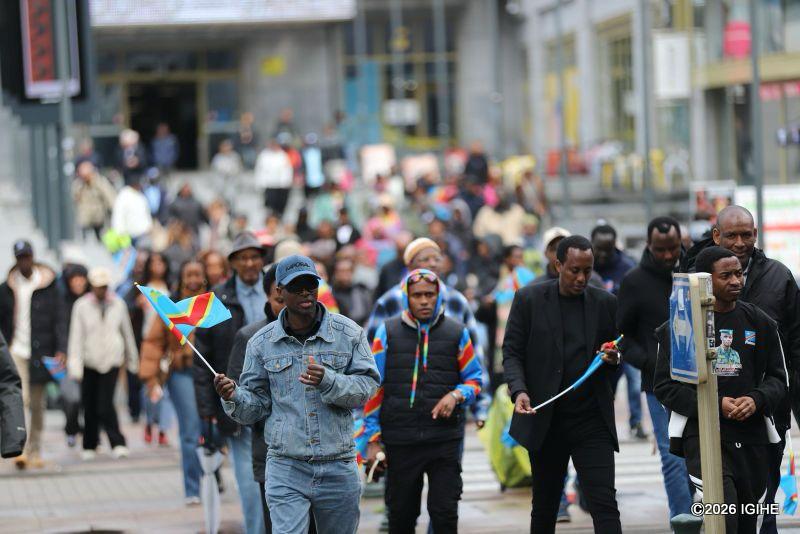
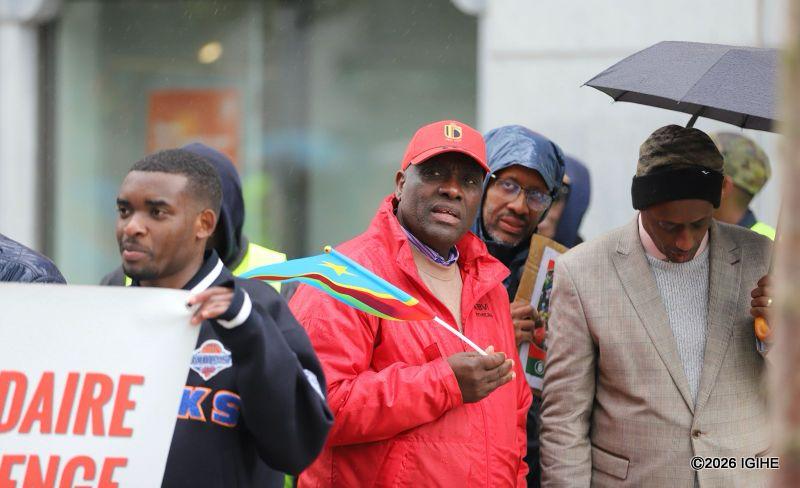
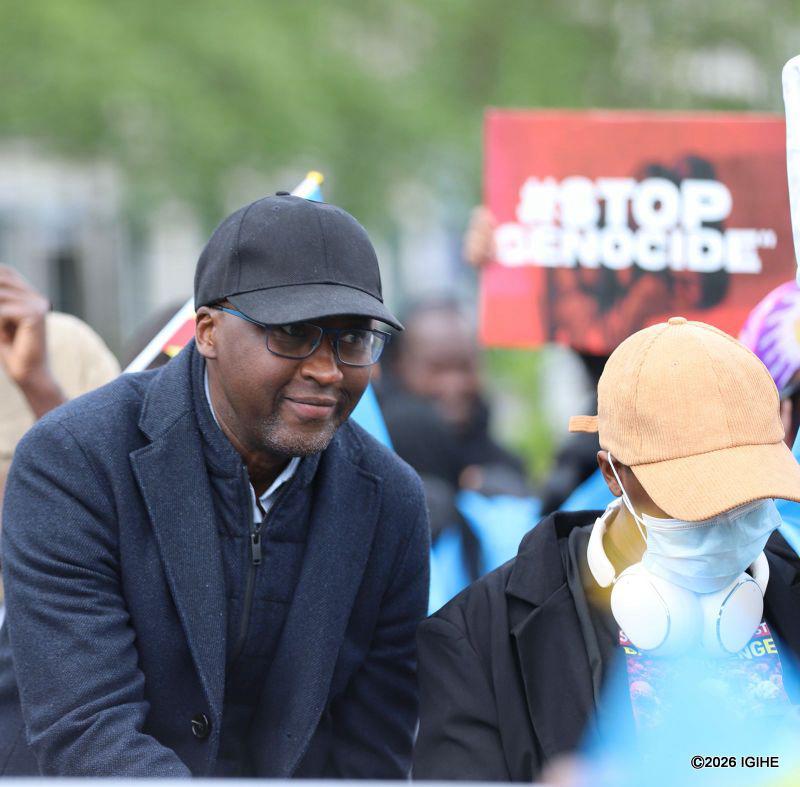
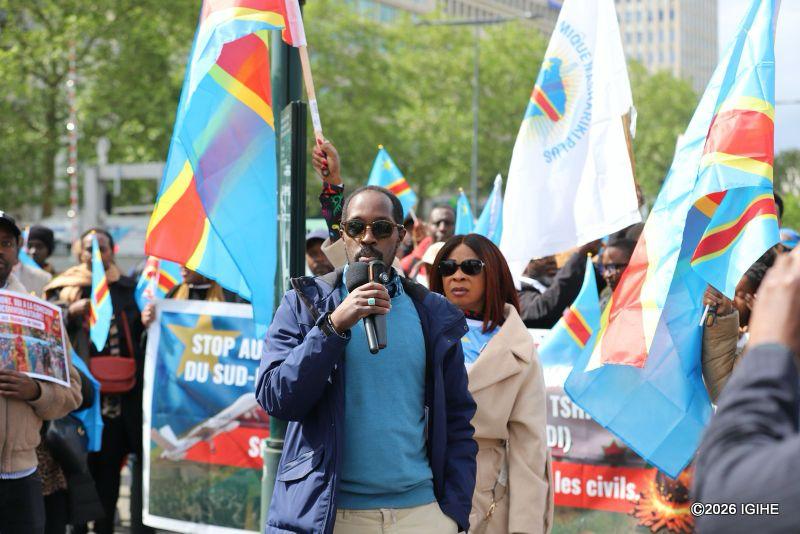
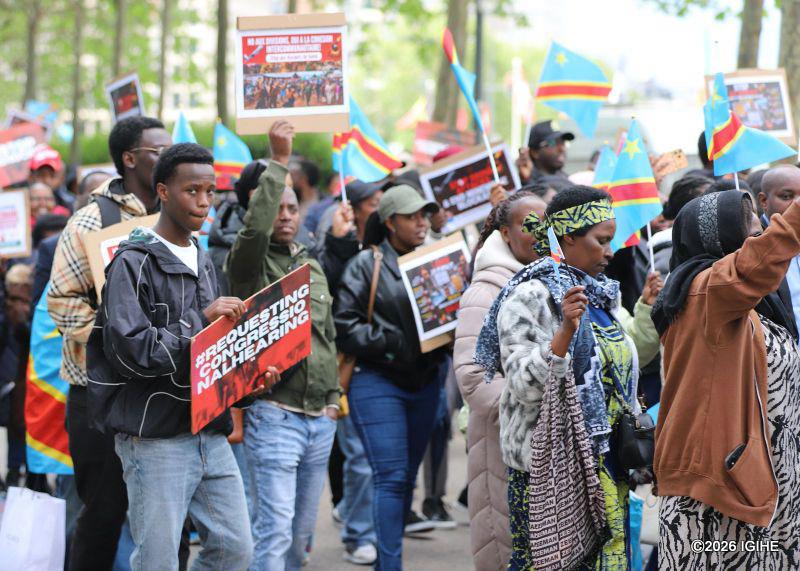
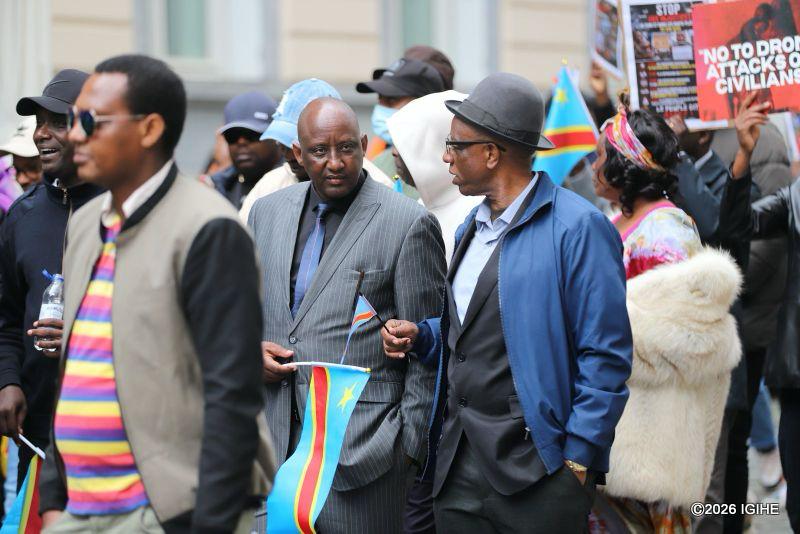
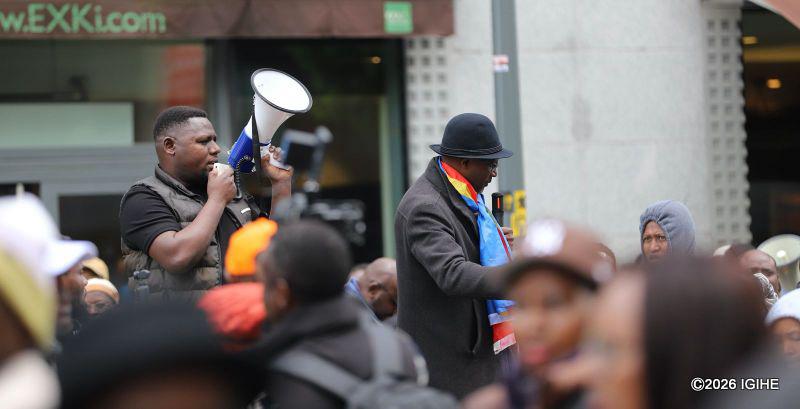
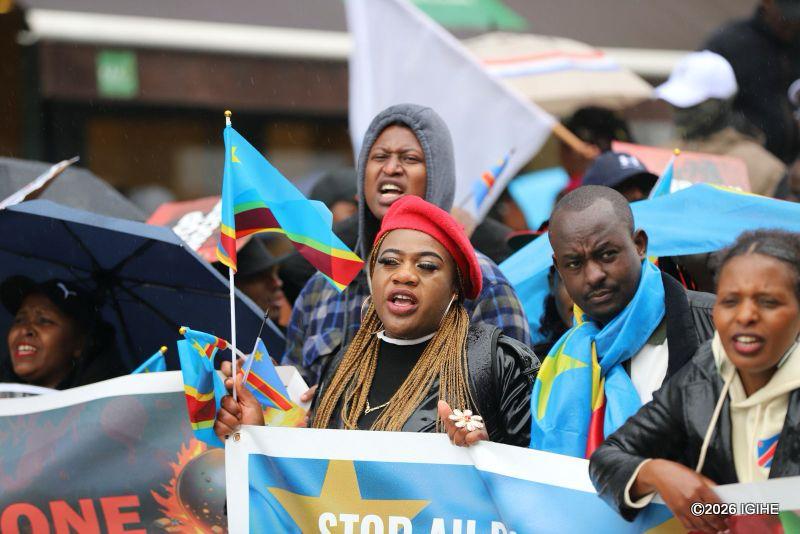
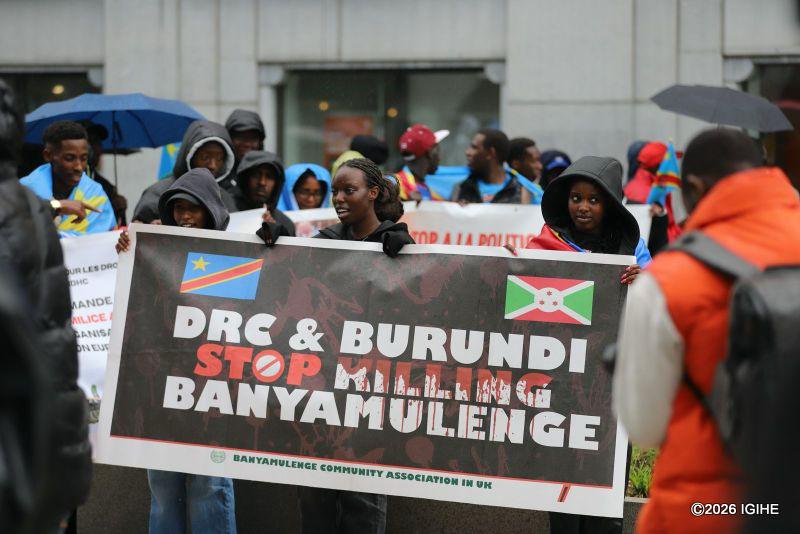
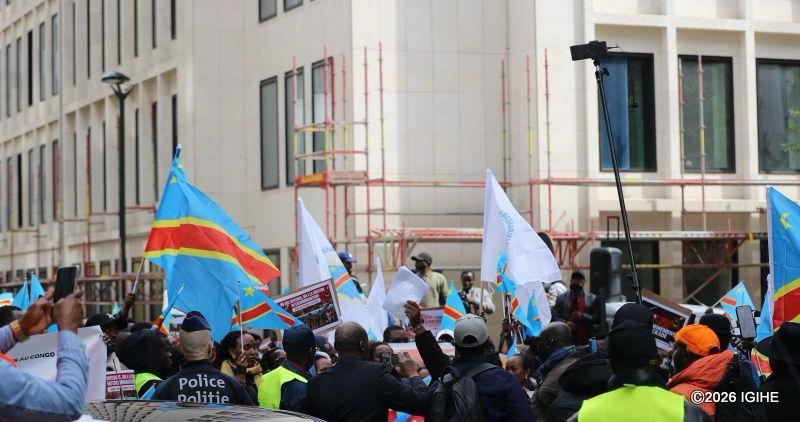
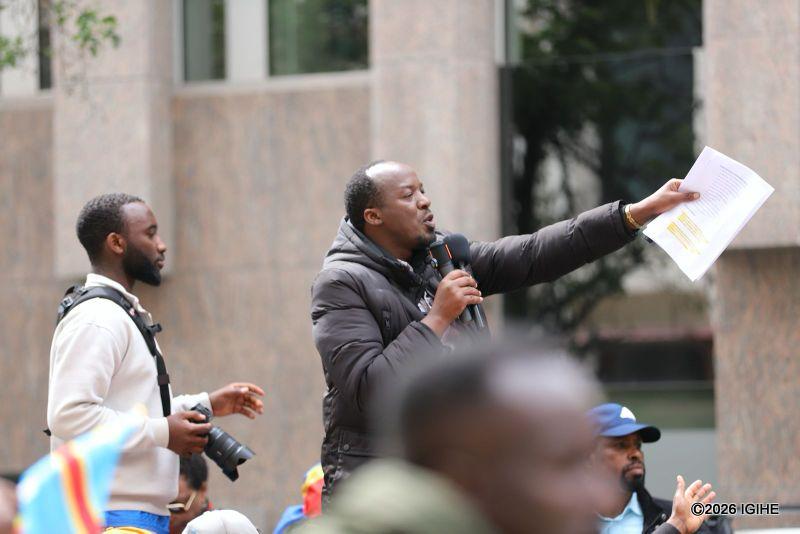
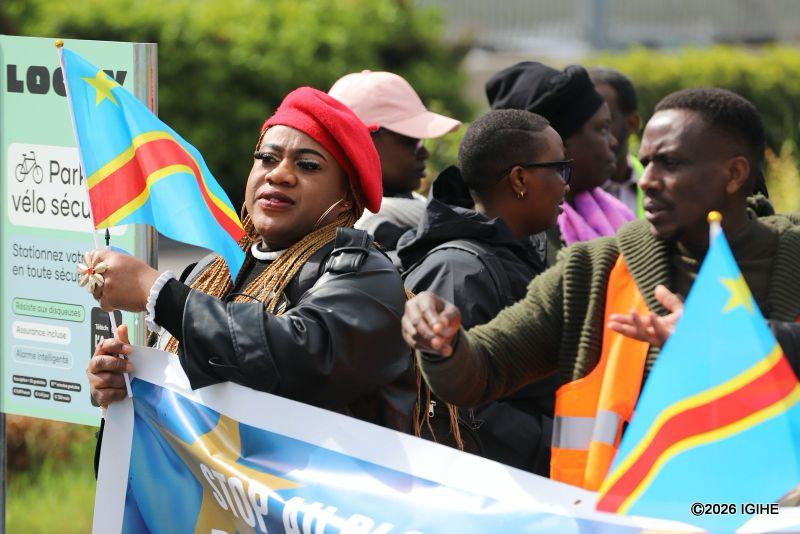
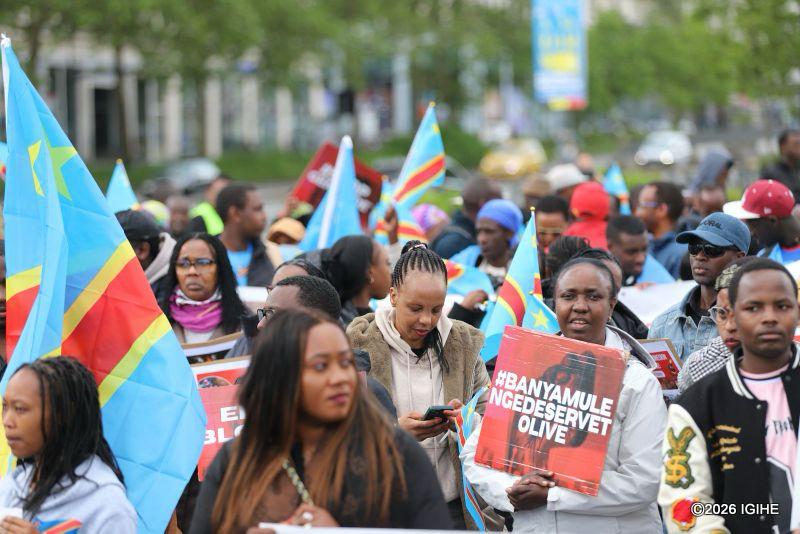
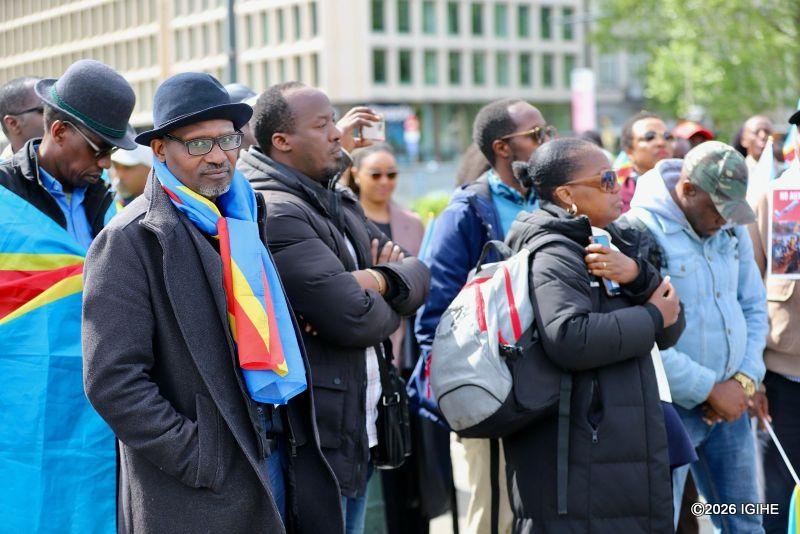
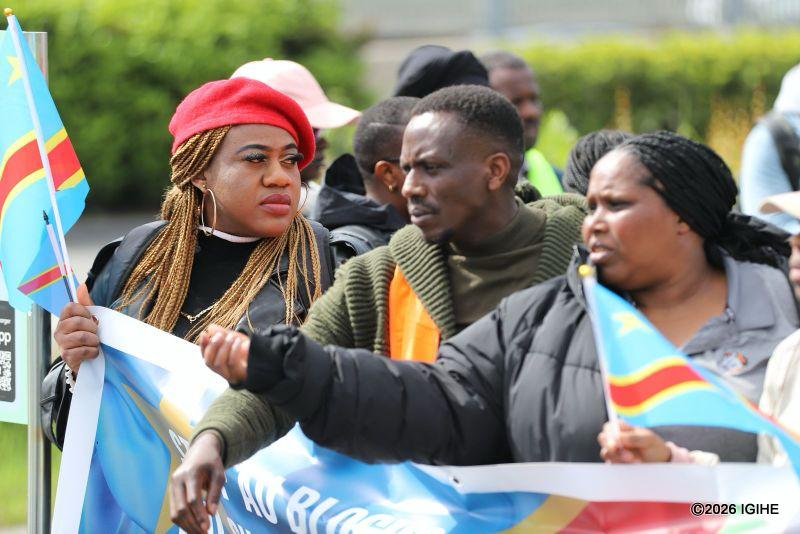
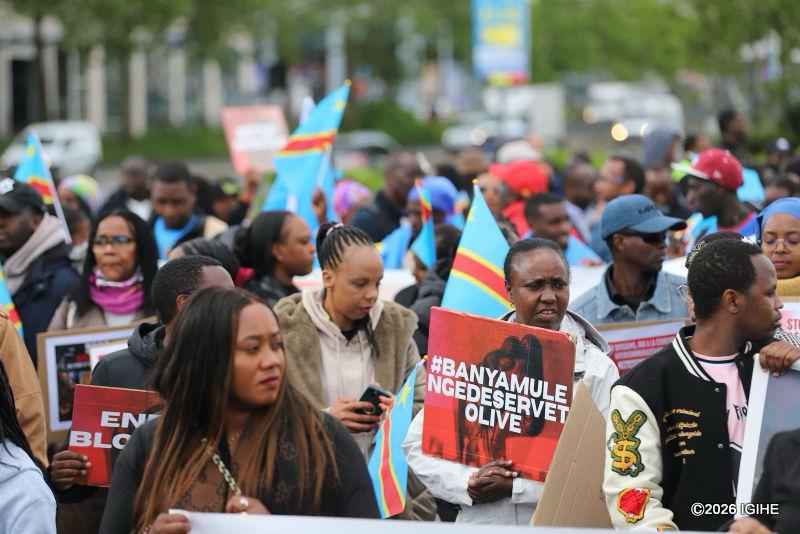
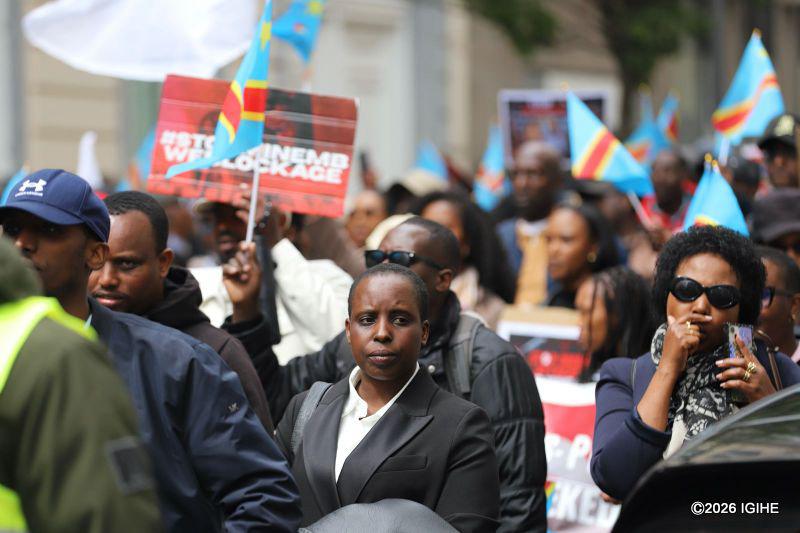
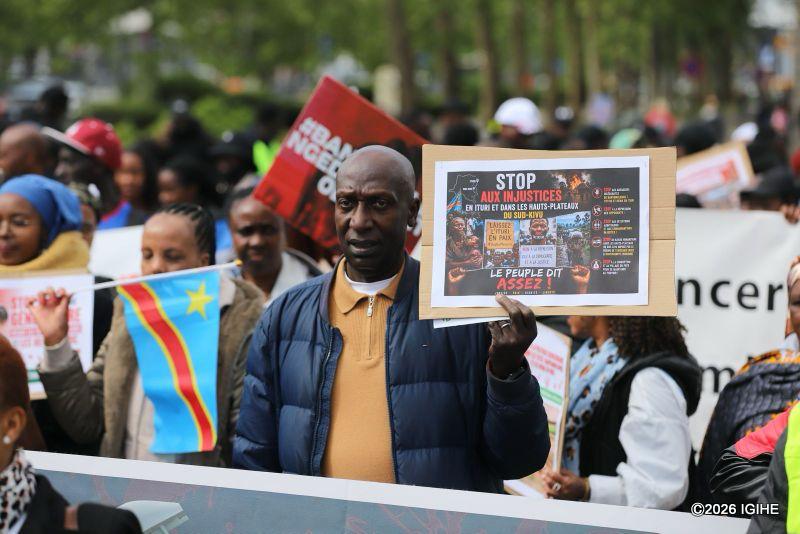
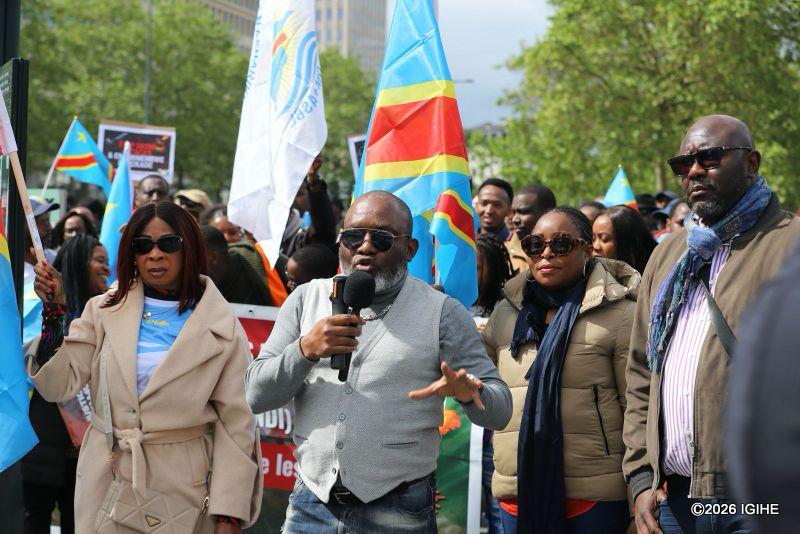
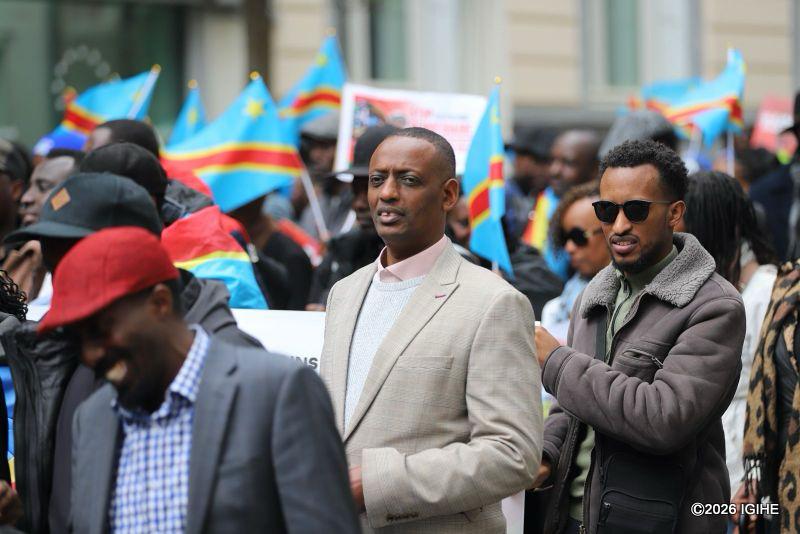
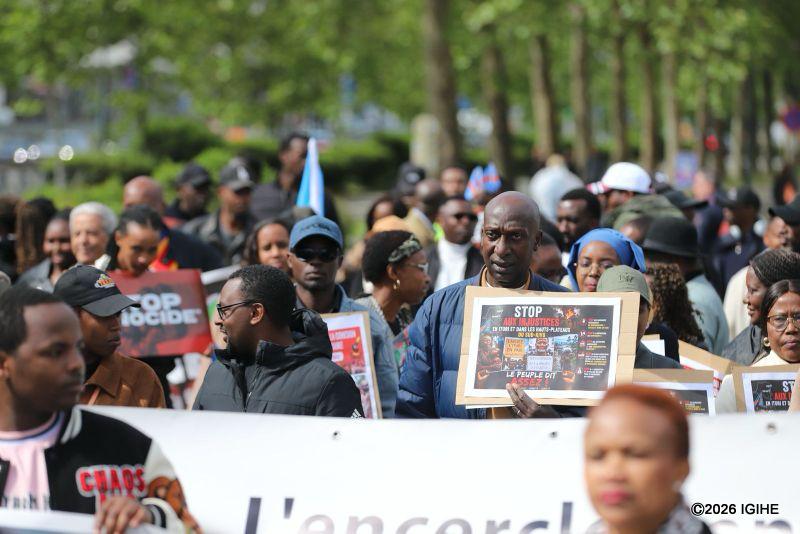
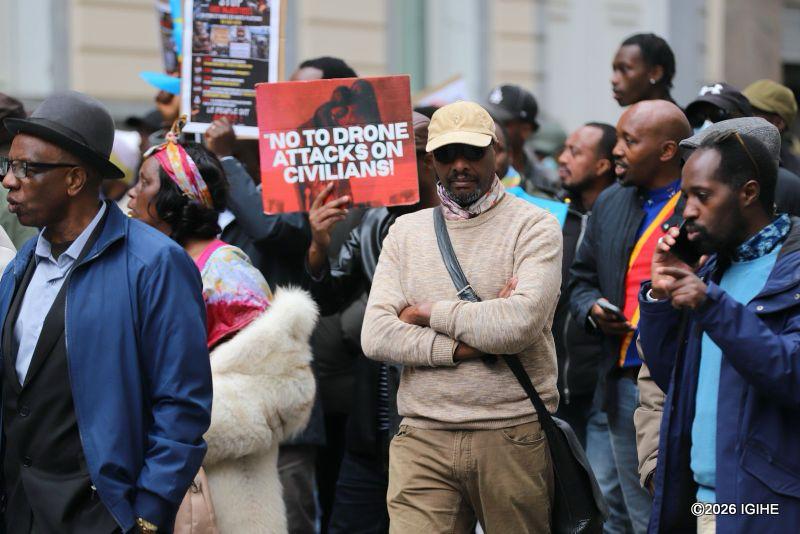
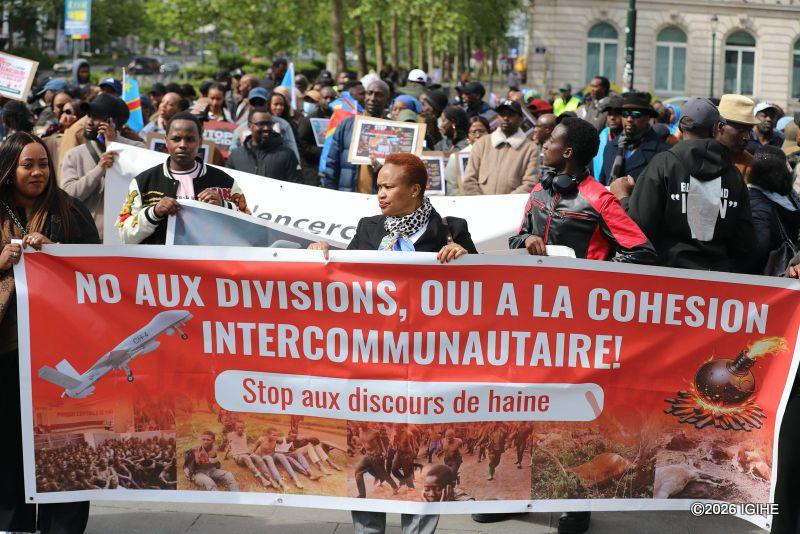
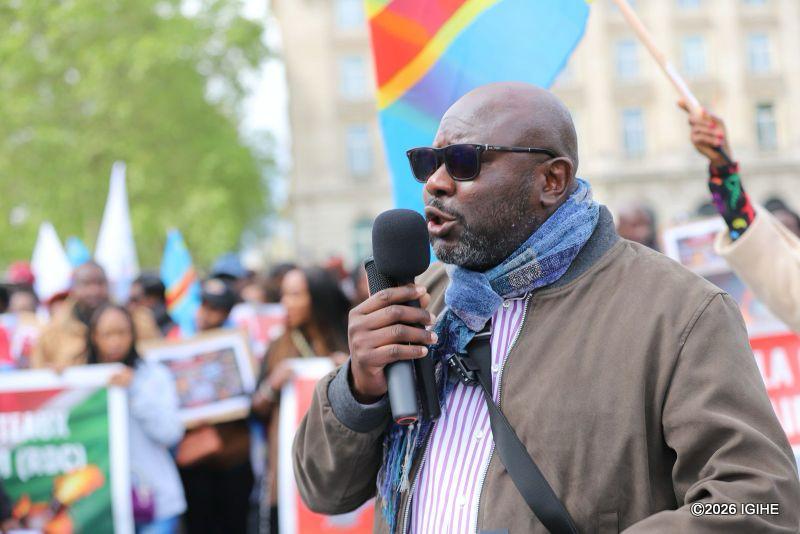
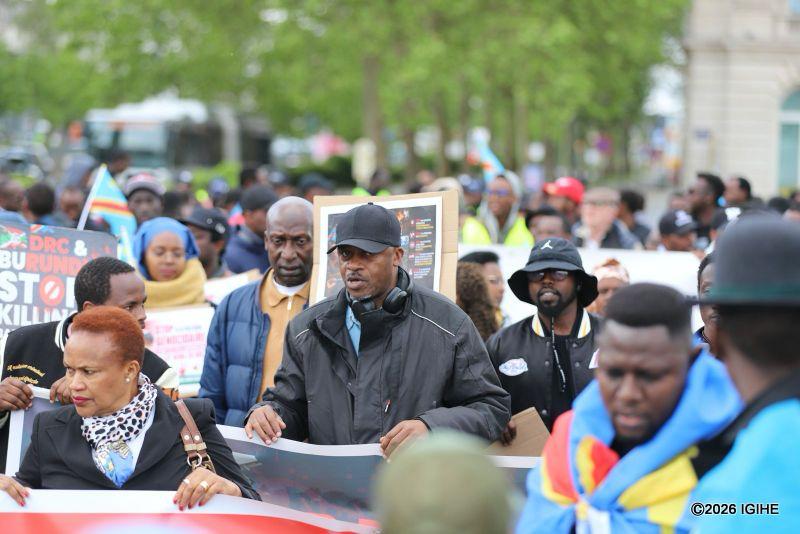
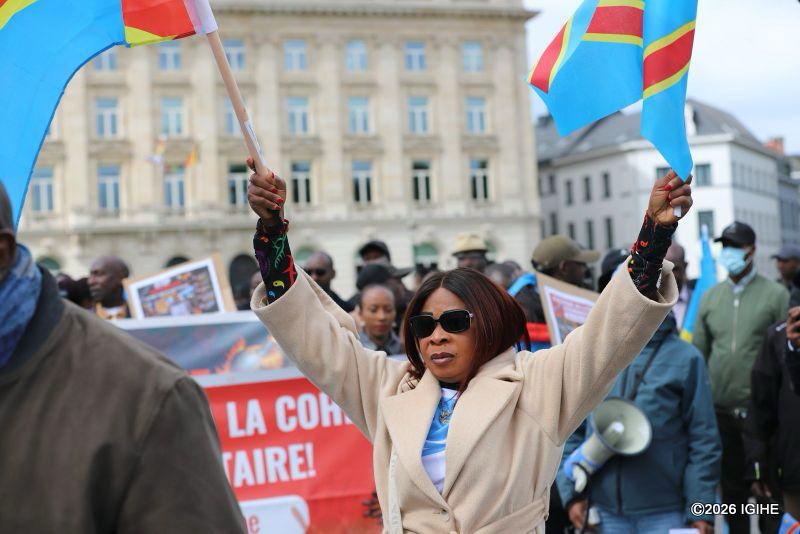
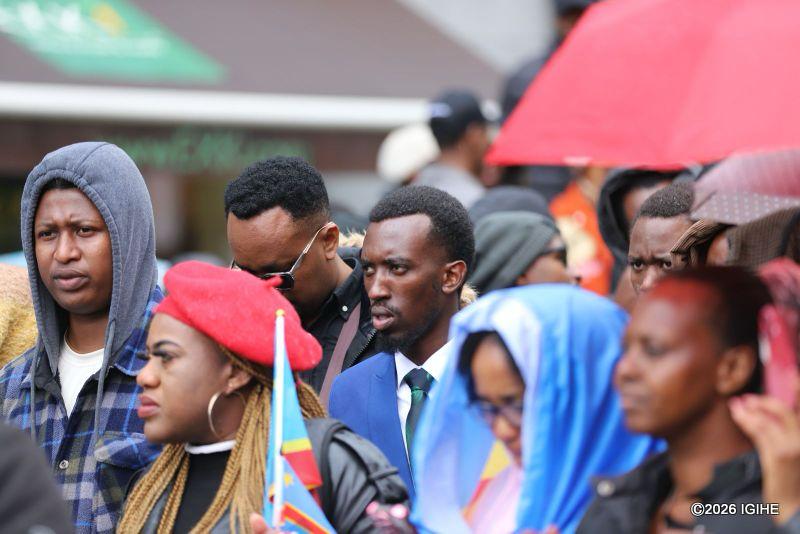
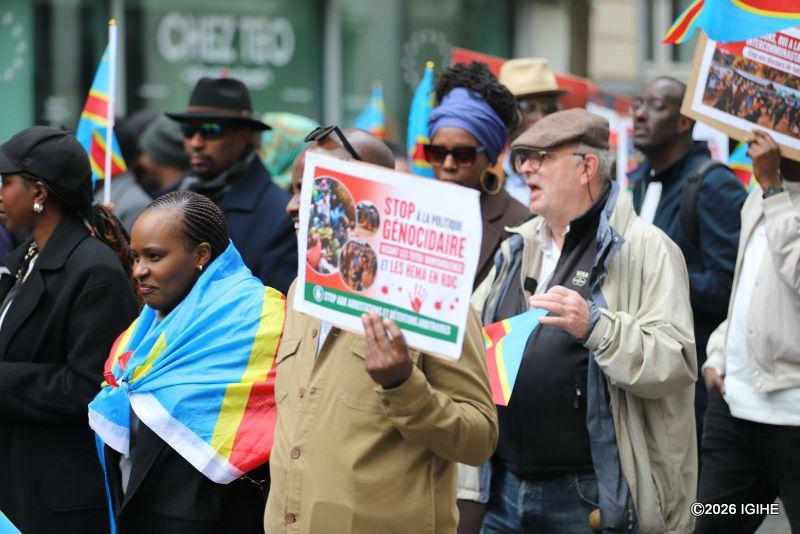
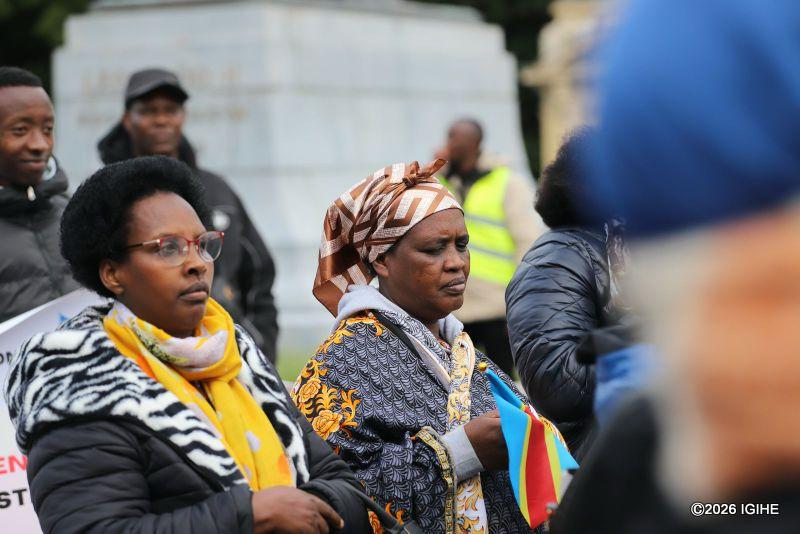
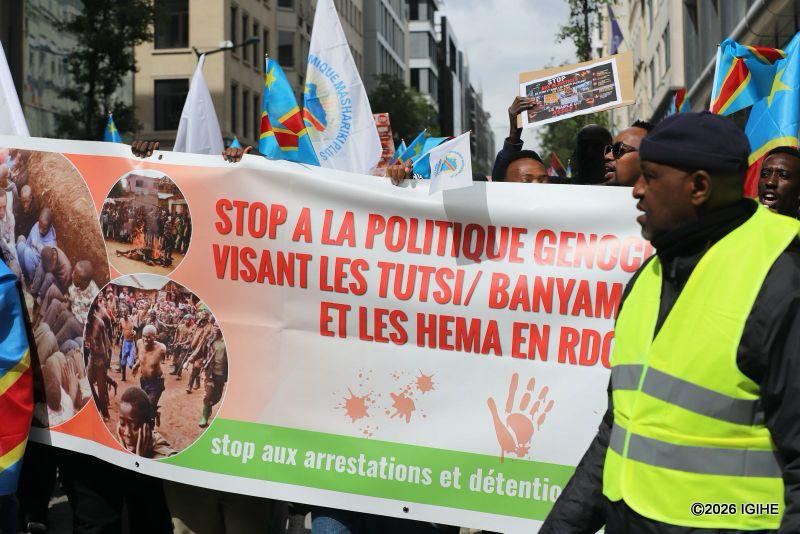
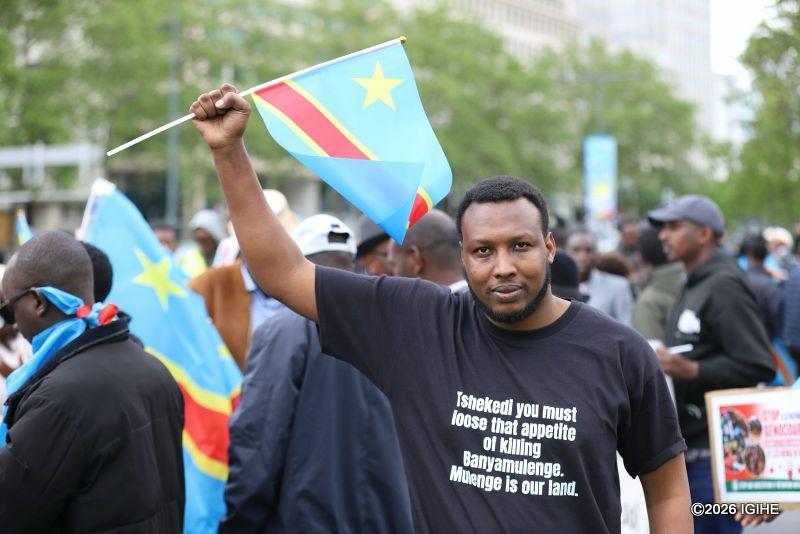
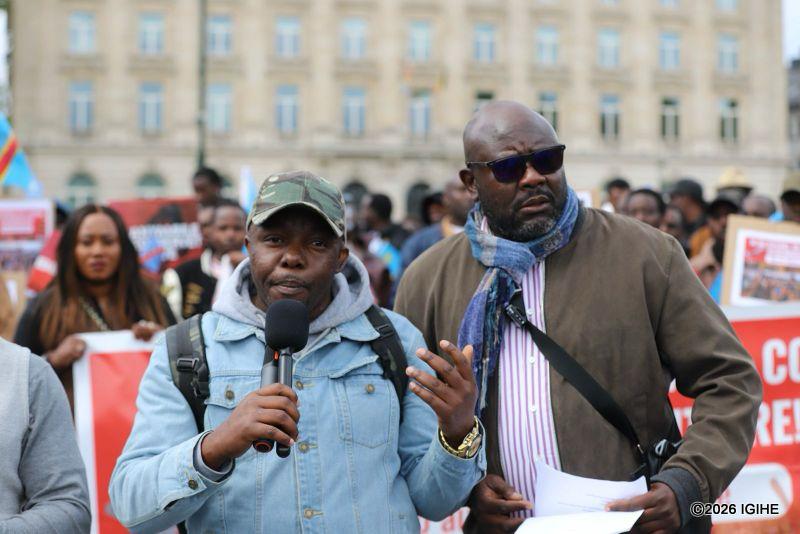
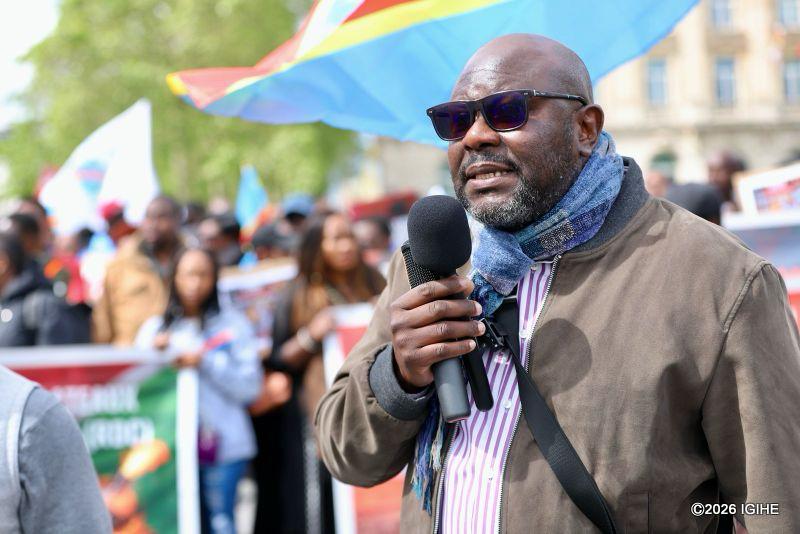
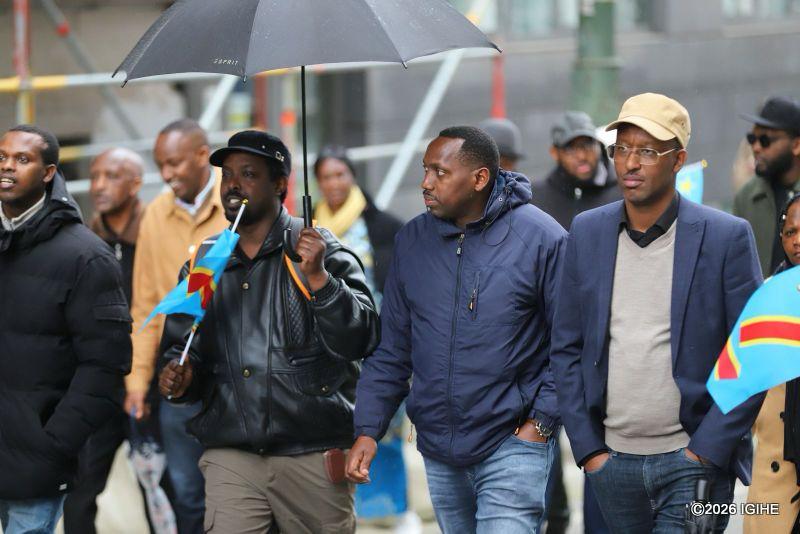
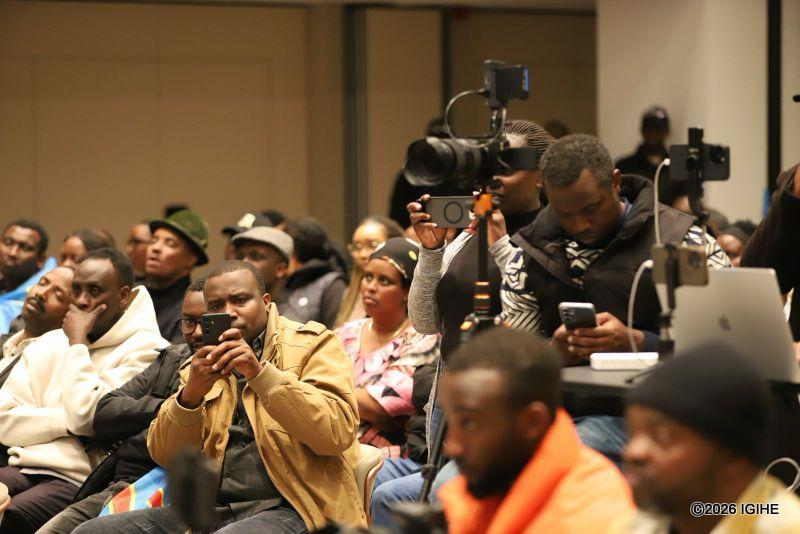
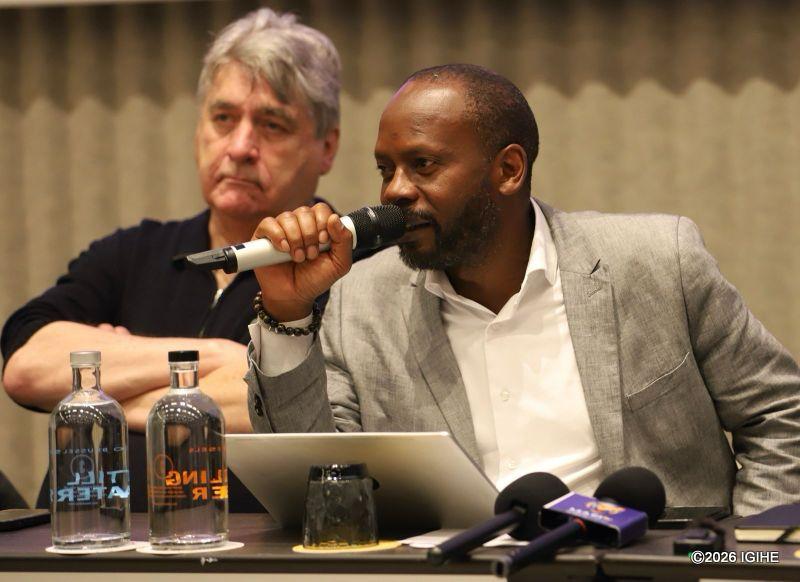
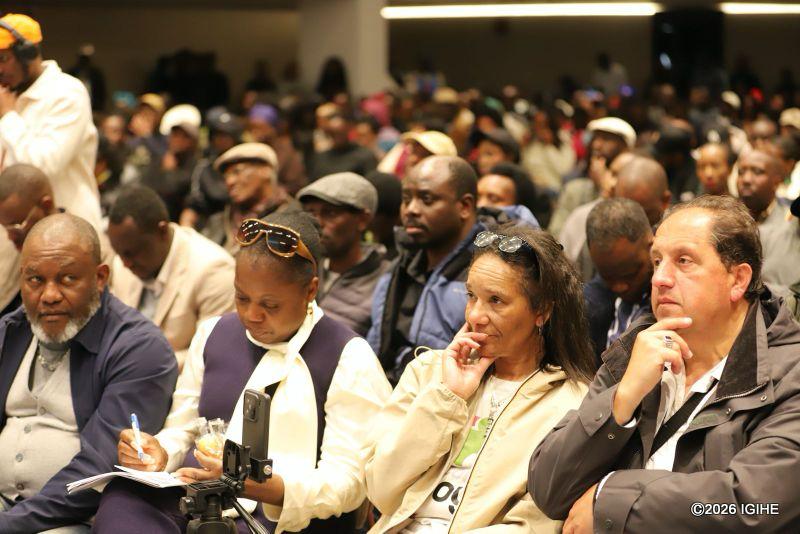
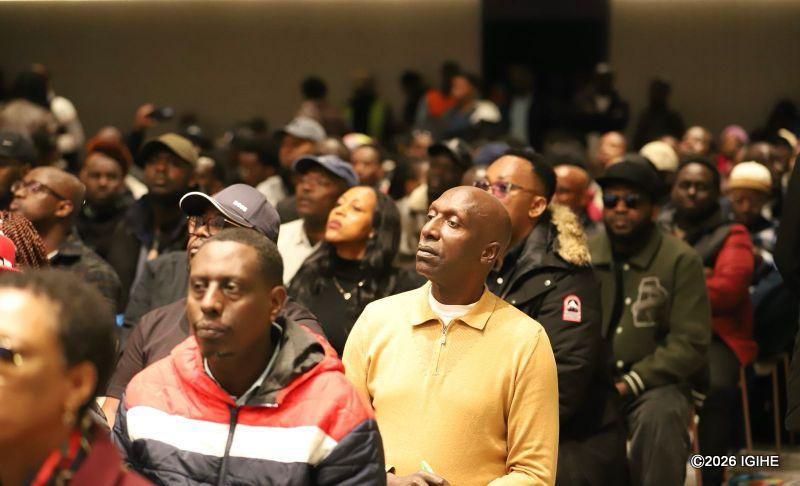
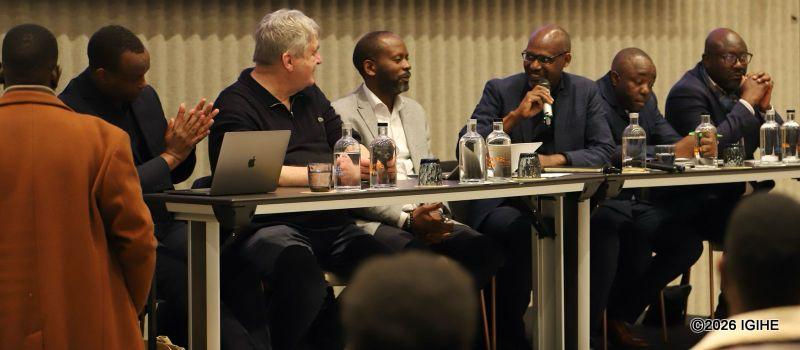
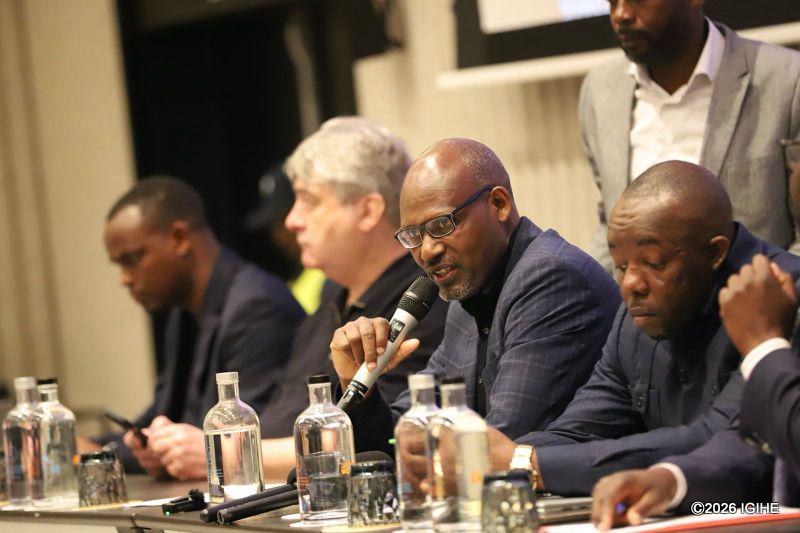
During the protest, speakers called attention to the ongoing security and humanitarian crisis in eastern Democratic Republic of Congo, urging stronger international engagement. Among them was Pitou Chomongo, president of Diaspora Plurielle and member of the International Social Body for Human Rights in Congo, who criticised what he described as the “silence and inaction” of the international community.
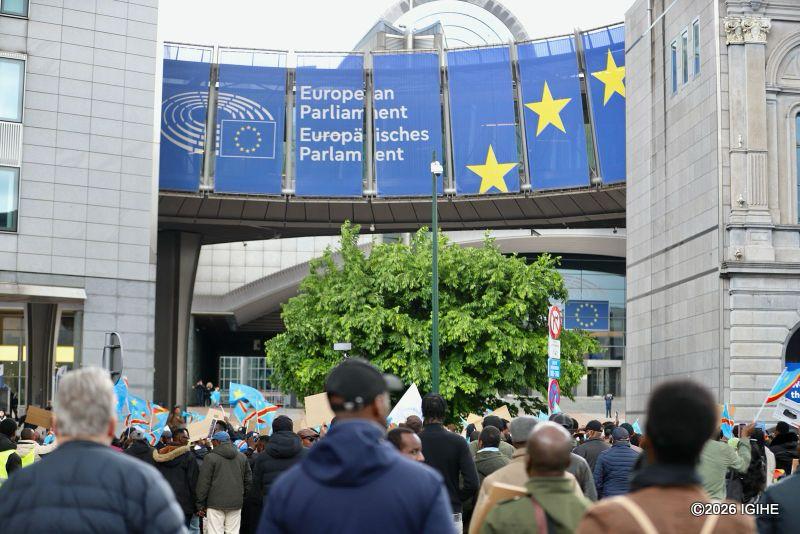
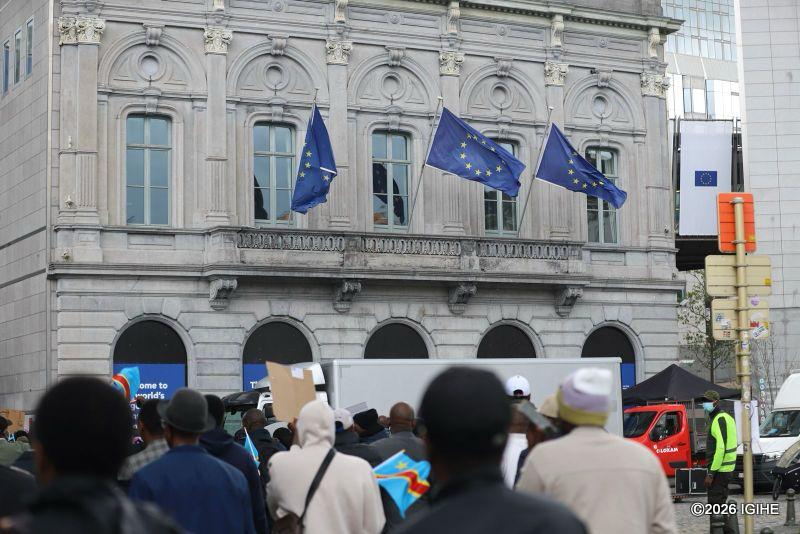
According to him, the choice of Brussels carries strong symbolic significance. The Belgian capital hosts the institutions of the European Union, representations of the United Nations in Europe, as well as NATO headquarters.
“We came here to Brussels to denounce the silence and inaction of the European Union, the United Nations, and NATO in the face of the dramatic situation our country is going through,” Pitou Chomongo told demonstrators.
The speaker believes that these major international powers play a significant role in political and diplomatic decisions affecting Africa as well as international institutions. For him, Brussels therefore represents a strategic place where the Congolese diaspora can make its voice heard.
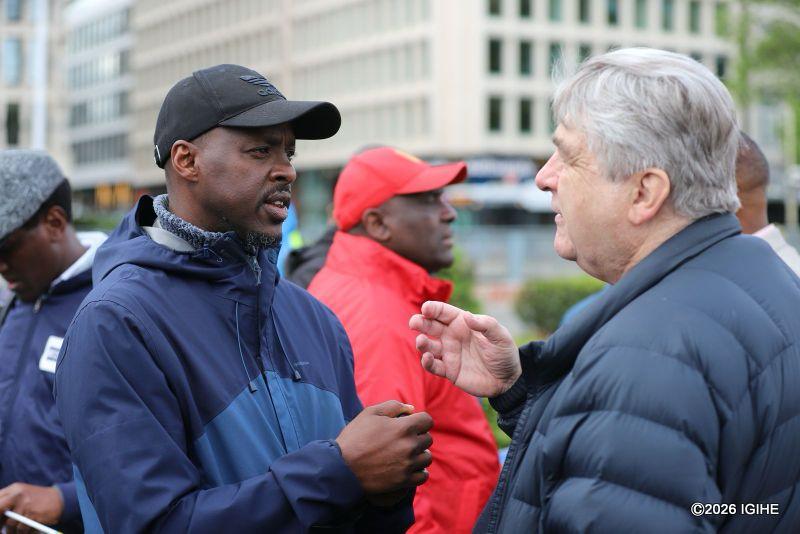
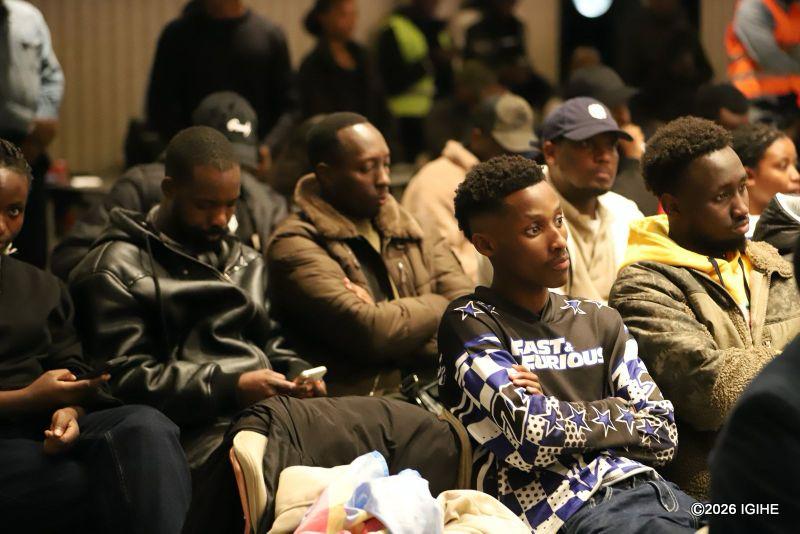
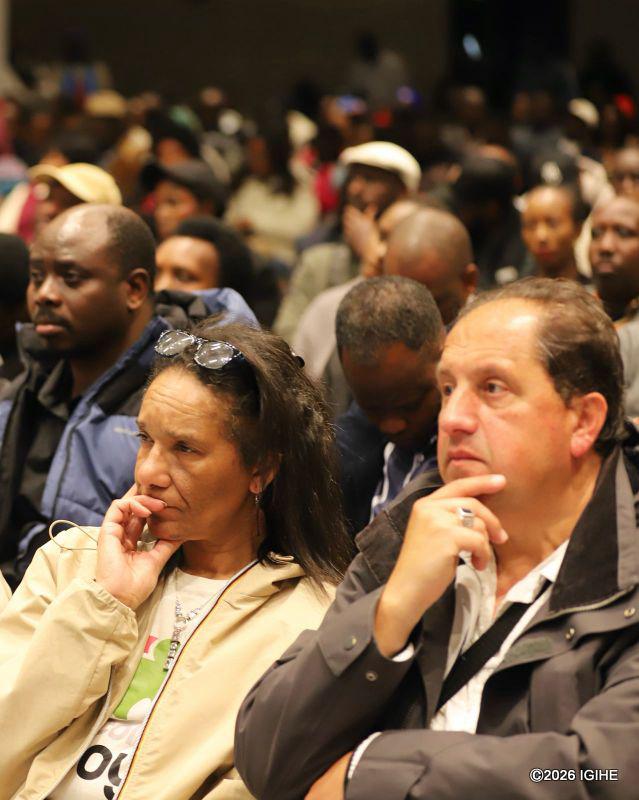
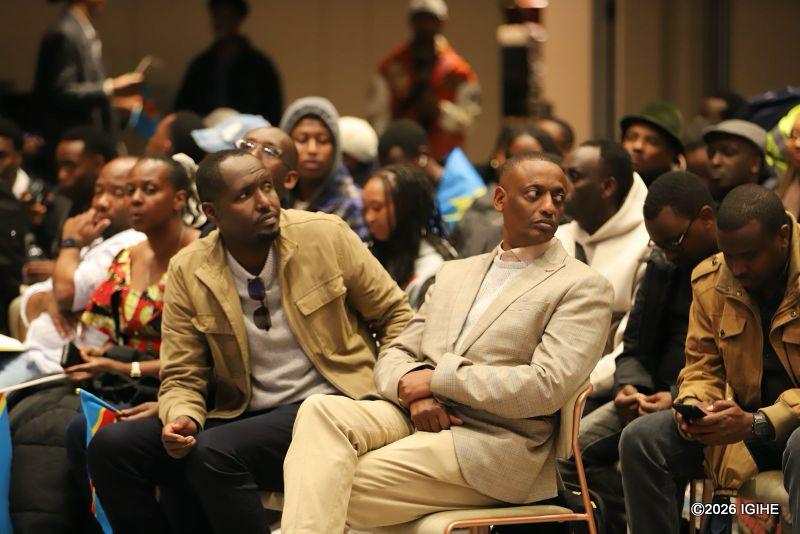
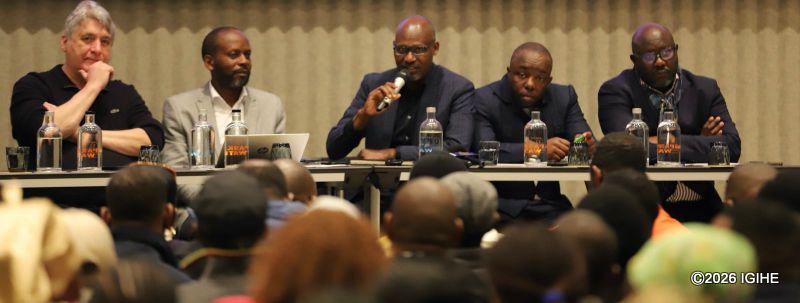
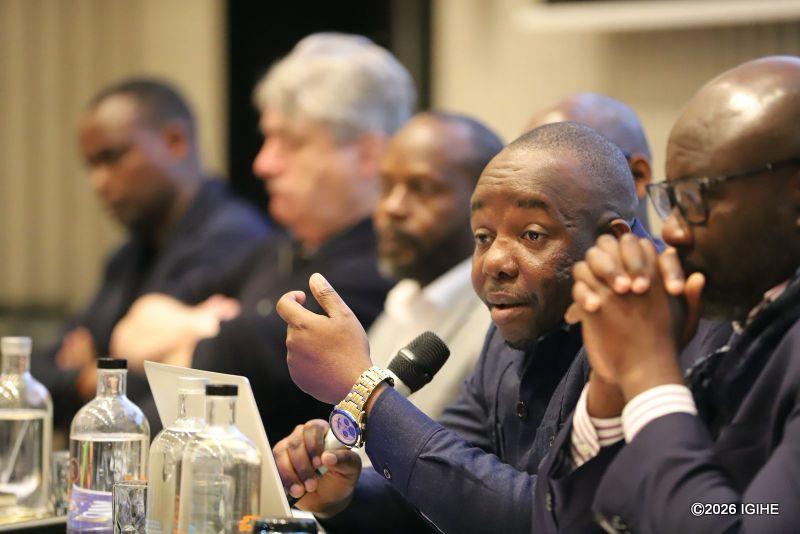
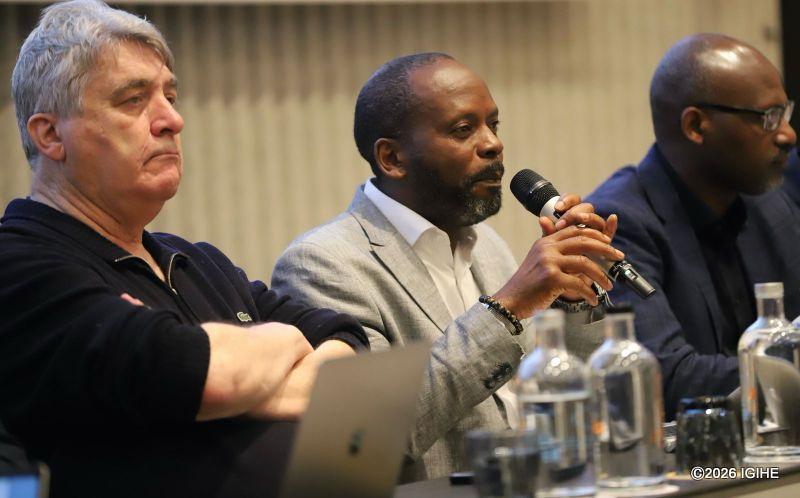
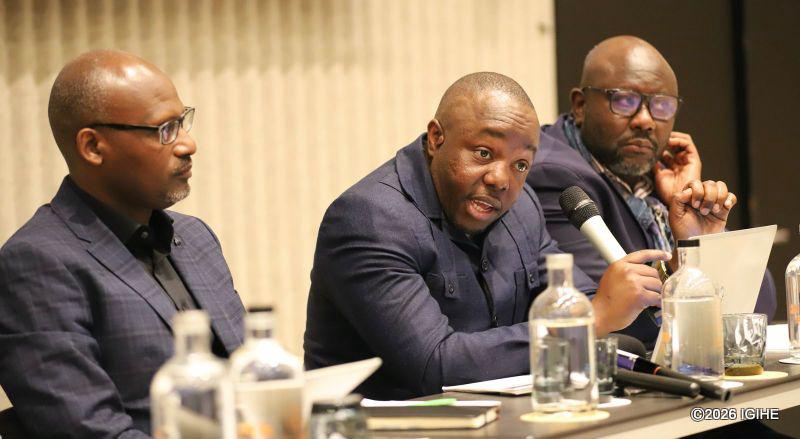
Following the demonstration, a conference and discussion session was also scheduled to further address the humanitarian and security situation in the eastern provinces of the DRC, particularly in North Kivu, Ituri, and parts of Katanga.
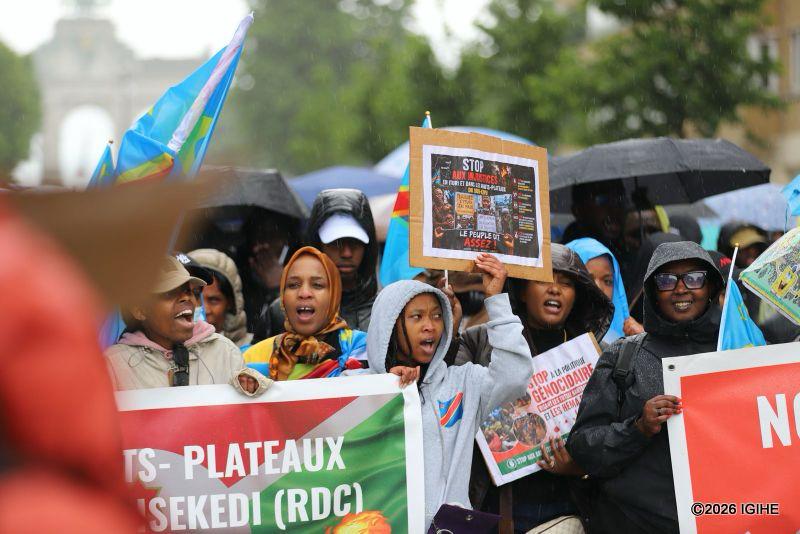
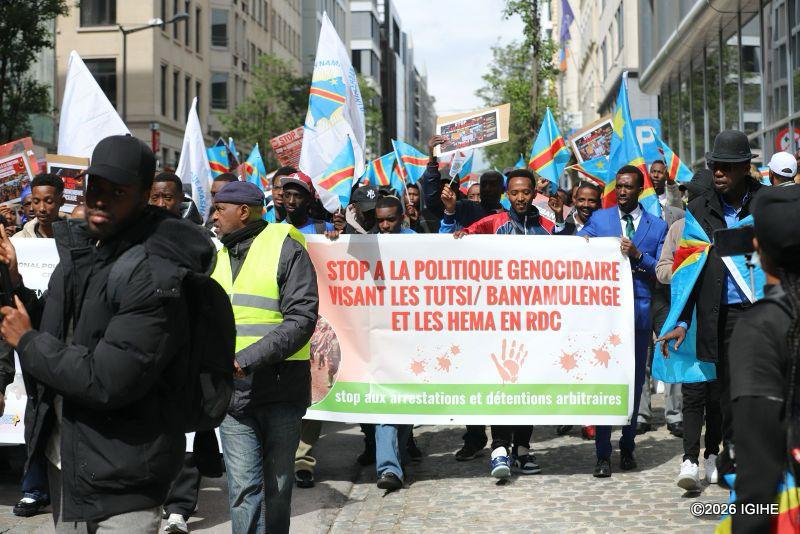
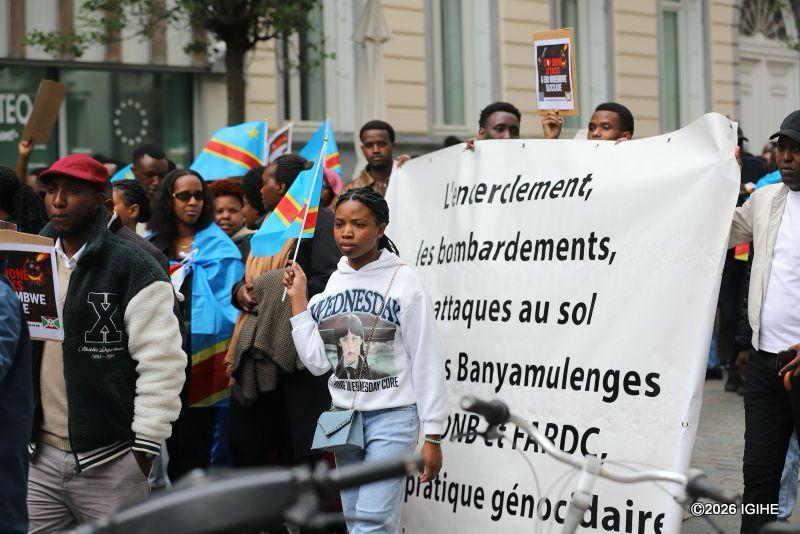
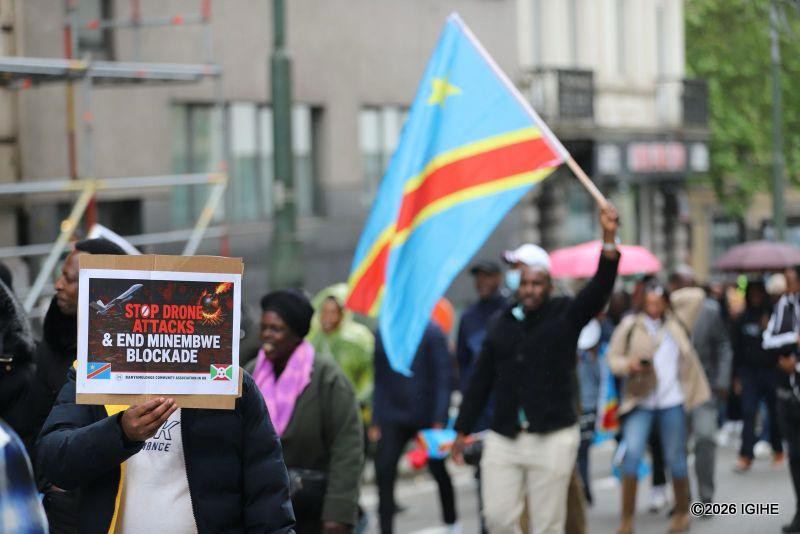
Pitou Chomongo accused the Kinshasa government of fueling hate speech and carrying out security policies targeting specific communities. He notably mentioned the Tutsi community in North Kivu, the Banyamulenge in the High Plateaus of Minembwe, and the Hema community in Ituri.
According to him, bombardments targeting civilian populations are taking place in several localities, including Minembwe and Masisi. He also denounced what he described as arbitrary arrests of military and judicial officers from Katanga.
“This is a way of putting pressure on certain communities and excluding them from national life,” he stated, accusing the authorities in power of wanting to “remain in office indefinitely.”
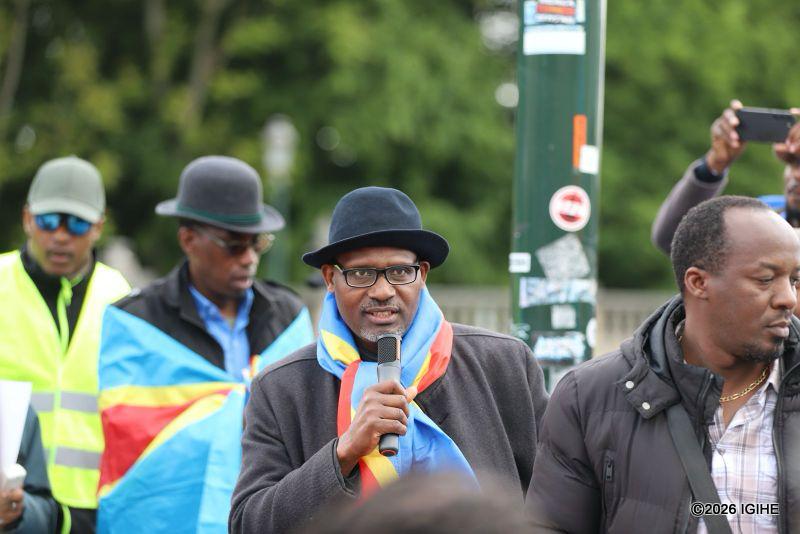
Gakiza David, representative of the Banyamulenge mutual coordination in Europe and member of the executive committee of the Gakondo association, also addressed the gathering.
He explained that the coalition brings together participants from several European countries to support this peaceful demonstration organized in Brussels. Gakiza thanked the entire coordination team involved in organizing the event, as well as all participants who attended.
Gakiza David also emphasized that the day was structured around three main activities: the peaceful demonstration, the press conference, and a question-and-answer session dedicated to discussions on the humanitarian and security situation in the Democratic Republic of Congo.
This mobilization by the Congolese diaspora comes amid ongoing tensions in eastern DRC, where security, community, and humanitarian issues continue to raise serious concerns among local populations and human rights organizations.
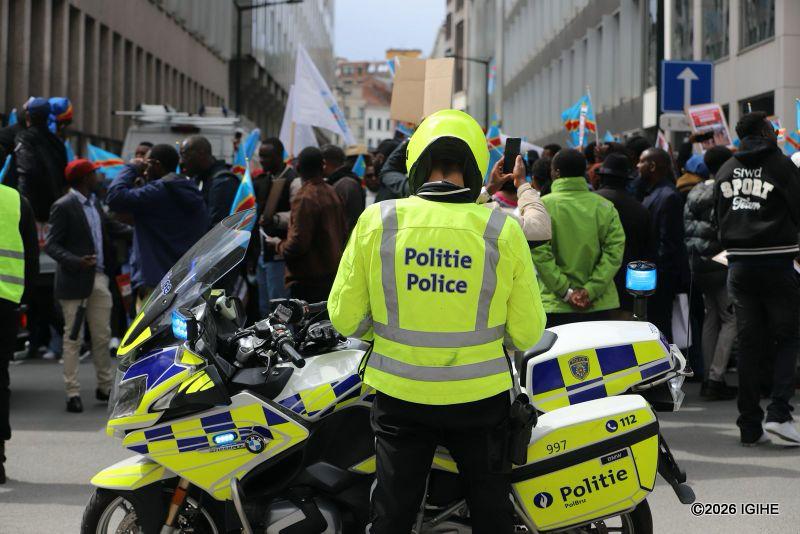
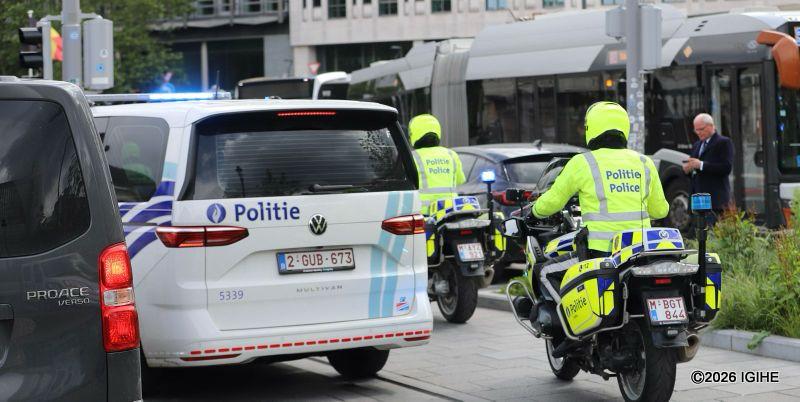
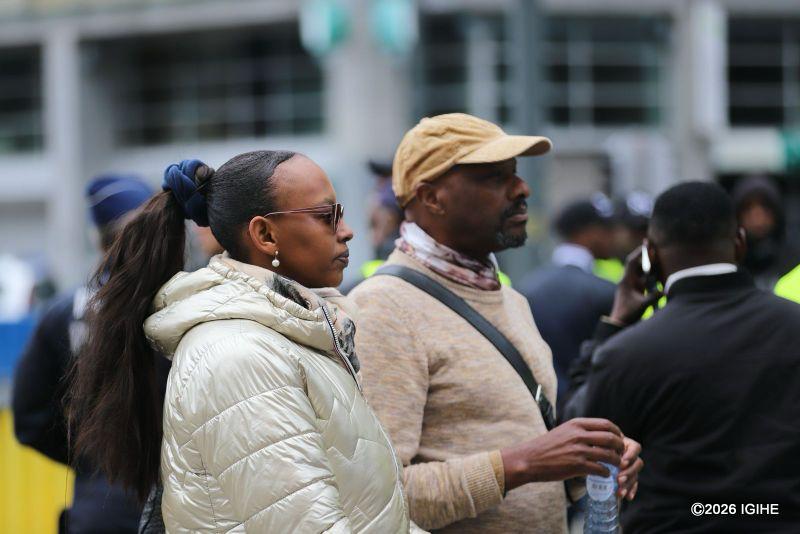
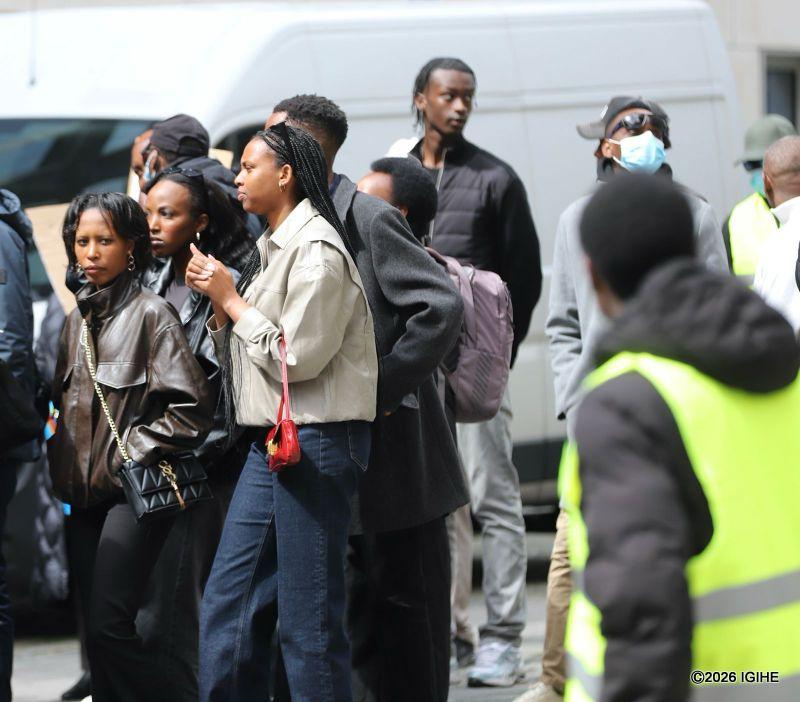
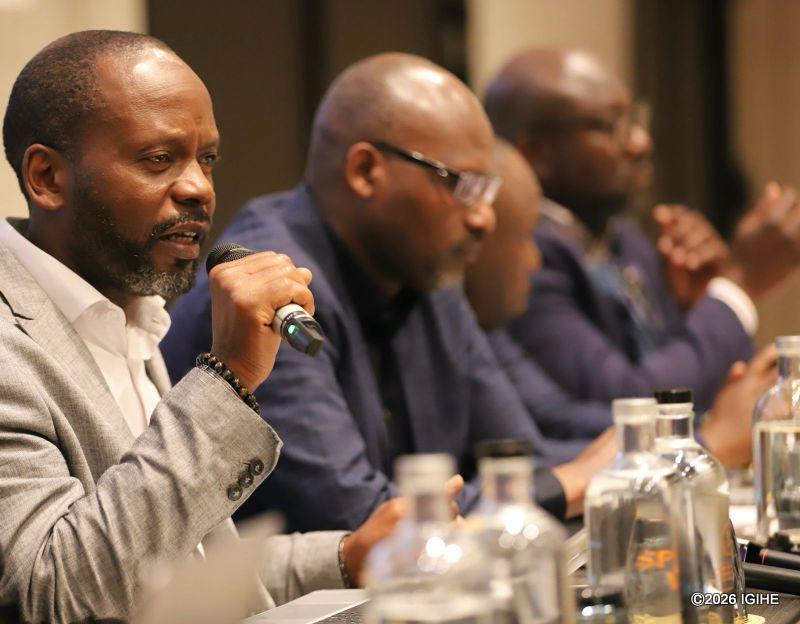
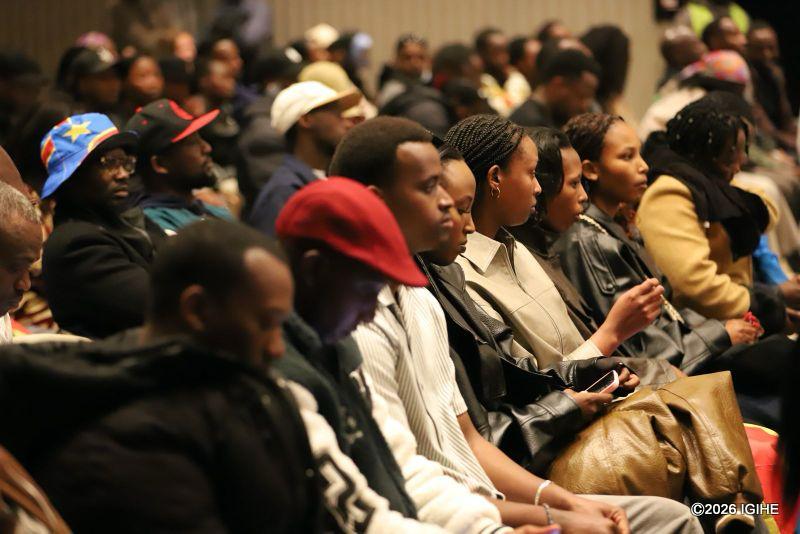
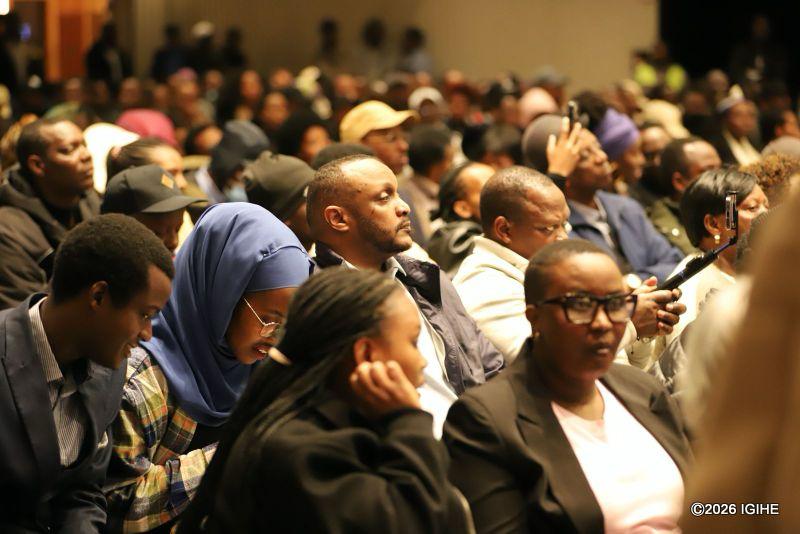
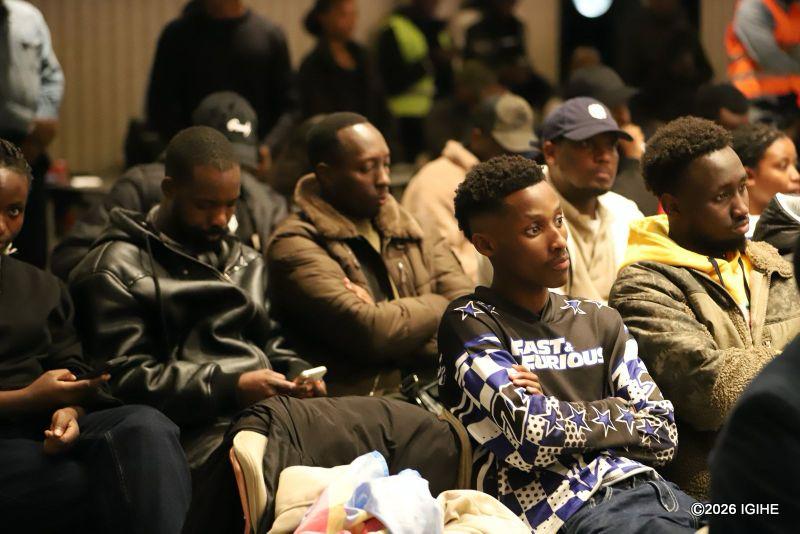
Photos taken during peaceful demonstration
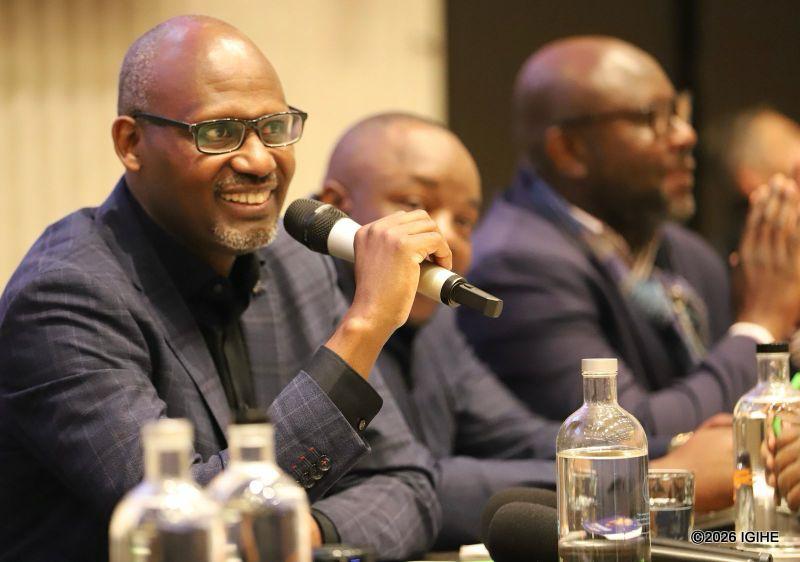
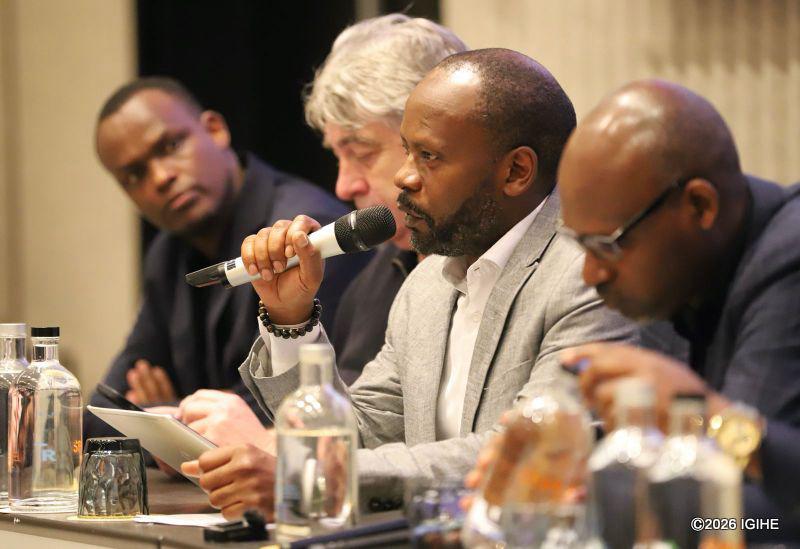
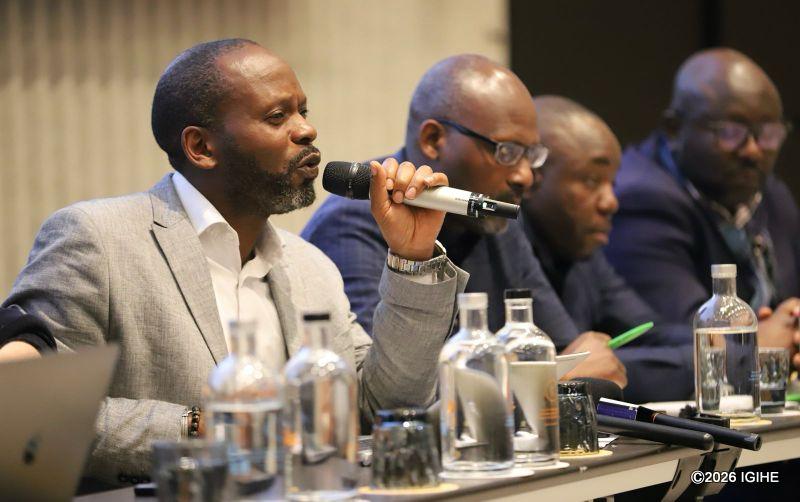
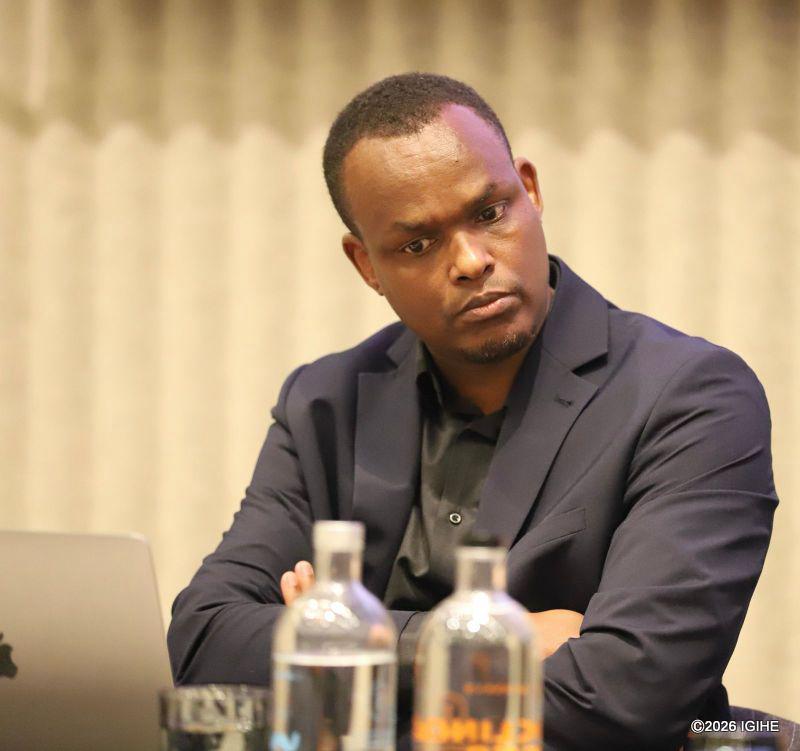
Photos from the press conference and the question-and-answer session focused on discussions about the security and humanitarian situation in the Democratic Republic of Congo
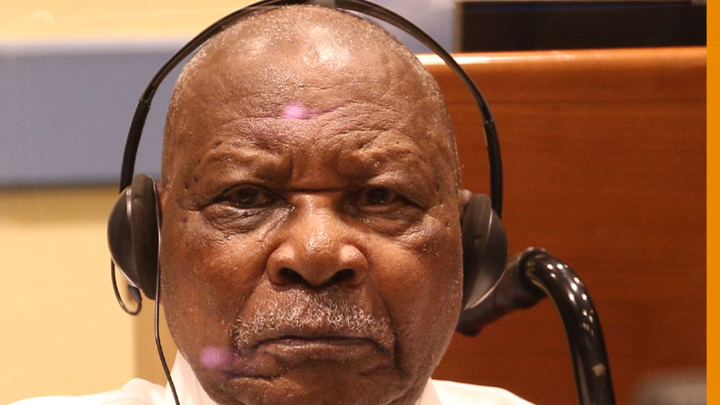
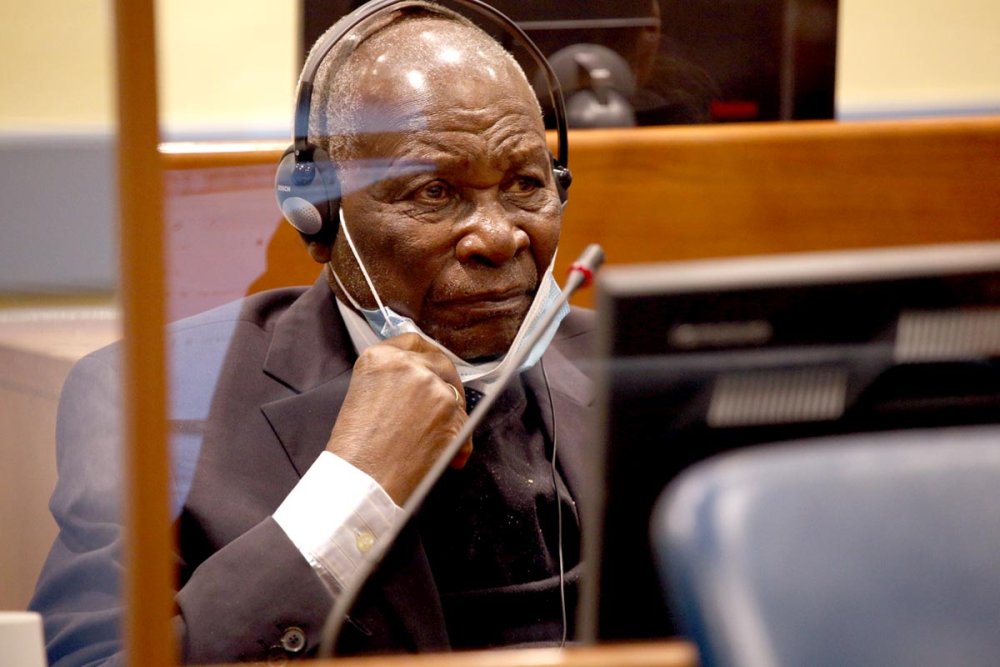
“Mr. Félicien Kabuga passed away today while hospitalized in The Hague, The Netherlands,” the Mechanism said in a statement released on Saturday, adding that the Medical Officer of the United Nations Detention Unit (UNDU) was immediately notified and that Dutch authorities had launched the standard procedures and investigations required under Dutch law.
The President of the IRMCT, Judge Graciela Gatti Santana, has also ordered a full inquiry into the circumstances surrounding Kabuga’s death. The statement said Judge Alphons Orie had been assigned to conduct the inquiry.
Kabuga had been held at the United Nations Detention Unit in The Hague since October 2020 after being arrested in France earlier that year. At the time of his death, he was awaiting provisional release to a country willing to receive him.
Kabuga faced charges of genocide, conspiracy to commit genocide, incitement to genocide, and crimes against humanity including persecution, extermination, and murder committed during the 1994 Genocide against the Tutsi in Rwanda.
An arrest warrant against Kabuga was issued by the International Criminal Tribunal for Rwanda (ICTR) on 29 April 2013. He remained a fugitive for many years before his arrest on May 16, 2020 in France, where he had reportedly been living under a false identity.
Following his arrest, Kabuga was transferred on October 26, 2020 to the Hague branch of the Mechanism, the UN body established to carry on the remaining functions of the ICTR and the International Criminal Tribunal for the former Yugoslavia (ICTY).
His trial officially began on September 29, 2022. However, proceedings were later suspended after judges found that his deteriorating health made him unfit to stand trial.
According to the IRMCT statement, the Trial Chamber issued a decision on 8 September 2023 indefinitely staying proceedings following an Appeals Chamber ruling delivered a month earlier. The Chamber also ordered that Kabuga remain detained at the UNDU pending a decision on his provisional release.
After the suspension of his trial, discussions focused on finding a country willing to receive him. Rwanda had previously indicated that it was prepared to host him, arguing that it would guarantee his rights and medical care.
However, Kabuga’s lawyers and relatives opposed a transfer to Rwanda, citing his fragile health condition and arguing that long-distance travel would pose serious risks.
Kabuga had reportedly hoped to settle in a European country, including France, but no State agreed to receive him. Dutch authorities also opposed his release into the Netherlands.
Prosecutors before the Mechanism had argued that Kabuga’s genocide-related charges significantly limited his chances of being accepted by European countries under refugee protection frameworks and immigration laws.
They also pointed to the fact that he had spent years evading arrest while allegedly relying on false identities and support networks to remain hidden.
The IRMCT was established by the United Nations Security Council through Resolution 1966 adopted in December 2010. The Mechanism began operations in Arusha, Tanzania, in July 2012 and in The Hague in July 2013.
Following the closure of the ICTR in 2015 and the ICTY in 2017, the IRMCT continued operating as a stand-alone institution responsible for handling remaining judicial functions, including appeals, enforcement of sentences, and the tracking of fugitives.
Kabuga had been held at the United Nations Detention Unit in The Hague since October 2020 after being arrested in France earlier that year.
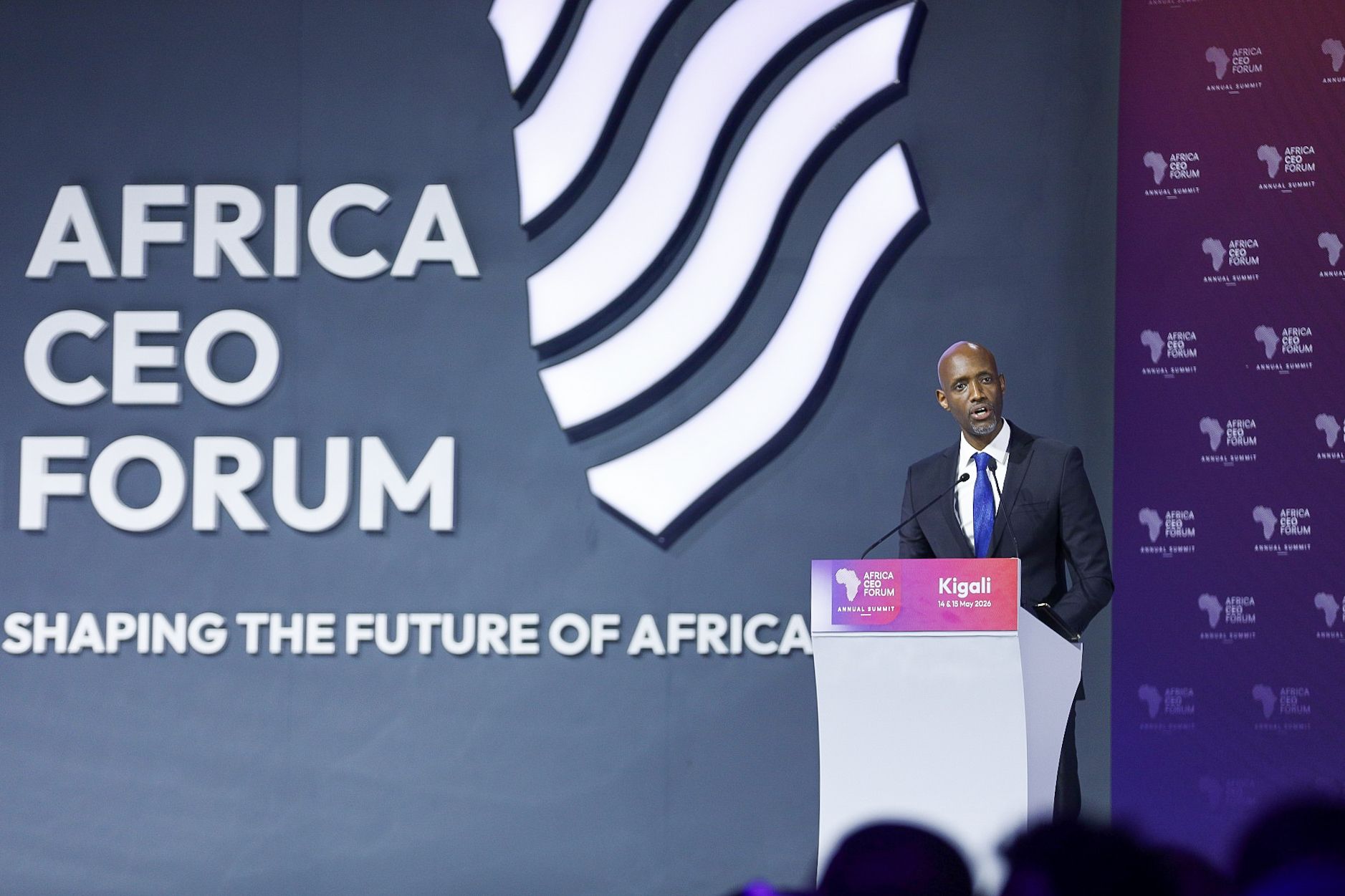
Addressing investors, business leaders, and policymakers on Thursday, the CEO of the Rwanda Development Board (RDB), Jean Guy Afrika, said the changing global economy was pushing investors to prioritise countries capable of delivering stability, speed, and execution.
“We meet at a time when the global economy is changing rapidly,” the RDB CEO said. “Capital is more selective, financing is more expensive, supply chains are being reorganised, and technology is transforming every sector.”
The remarks framed Rwanda’s investment strategy around reliability rather than market size, with the country presenting itself as a platform for companies seeking to expand across East and Central Africa.
The session was part of the annual forum, which gathered more than 2800 delegates.
Afrika said Rwanda’s economic model had been shaped by its geography and history. Being landlocked and located roughly 1,400 kilometres from the nearest seaport pushed the country to invest heavily in logistics, aviation, connectivity, and services.
Meanwhile, the need to rebuild trust and institutions after the 1994 Genocide against the Tutsi turned institutional credibility into what officials describe as one of Rwanda’s strongest competitive advantages.
“For investors, Rwanda should therefore be seen not only as a domestic market alone, but as a base from which companies can serve the East African Community, COMESA, the Great Lakes region, and the broader African market being shaped by the African Continental Free Trade Area,” the CEO said.
A key message throughout the session was that “governance is infrastructure,” with the RDB arguing that predictable institutions and coordinated government systems are essential to turning investment commitments into operational projects.
RDB highlighted its One Stop Centre, which brings together 24 agencies and offers more than 400 services to investors through a centralised platform aimed at reducing bureaucracy and improving efficiency.
The agency also pointed to recent economic indicators to demonstrate Rwanda’s growth momentum. Rwanda’s economy expanded by 9.4 percent in 2025, while foreign private capital inflows reached $1.1 billion in 2024, marking a 23.9 percent increase year-on-year. Investment commitments reached $2.62 billion in 2025 across sectors including manufacturing, agro-processing, mining, and real estate.
The CEO said Rwanda is now entering what he described as a new phase of growth under Vision 2050 and the second National Strategy for Transformation (NST2), with enterprise, exports, innovation, productivity, and private capital placed at the centre of the country’s economic agenda.
The RDB CEO Jean Guy Afrika said Rwanda’s economic model had been shaped by its geography and history.
He outlined several priority sectors where Rwanda is actively seeking strategic investors capable of building supply chains, creating jobs, transferring skills, and expanding regional exports.
In agro-industry, Rwanda is prioritising processing and value addition to move beyond raw commodity exports. Opportunities highlighted included cold-chain infrastructure, food packaging, agro-processing plants, and export-ready supply chains designed to connect Rwandan products to regional and international markets.
In health and life sciences, Afrika said Rwanda is building a stronger pharmaceutical and medical manufacturing ecosystem. He referenced the achievement of WHO Maturity Level 3 certification by the Rwanda Food and Drugs Authority, which strengthens the country’s regulatory credibility in health manufacturing and pharmaceuticals.
He also pointed to BioNTech’s first commercial-scale mRNA vaccine initiative in Africa as evidence of Rwanda’s ambition to position itself as a regional hub for biotechnology and advanced medical manufacturing.
Logistics and aviation featured prominently in the presentation, with Rwanda describing itself as an emerging gateway into East and Central Africa.
The RDB boss highlighted the development of the new Kigali International Airport project, as one of the country’s flagship infrastructure investments. Once completed, the airport is expected to increase Rwanda’s passenger handling capacity eightfold, from the current one million passengers annually to eight million.
Officials say the airport will play a critical role in strengthening cargo transport, trade connectivity, tourism, and Rwanda’s ambition to become a regional aviation and logistics hub linking African markets with global supply chains.
The mining sector was also presented as a strategic growth area. Rwanda recorded $869.7 million in mineral exports in 2025, while the sector supported more than 92,000 jobs.
Afrika said Rwanda is now focusing on increasing value addition in mining through local mineral processing, traceability systems, and downstream industrial development rather than relying solely on raw mineral exports.
Tourism and MICE, Meetings, Incentives, Conferences and Exhibitions, were highlighted as another pillar of Rwanda’s services-led economy.
According to figures presented during the session, tourism revenues reached $685 million, supported by Rwanda’s continued investment in conference infrastructure, aviation connectivity, hospitality, and high-end tourism experiences.
During the session, Rwanda also signed a series of strategic investment agreements aimed at strengthening industrial development, energy infrastructure, logistics, and tourism.
One of the major agreements involved Egypt’s Elsewedy Electric, which signed a comprehensive Memorandum of Understanding with Rwanda to establish a manufacturing facility producing smart electricity and water meters, electric vehicle chargers, and power transformers.
The partnership will also include the development of a technical university or college focused on industrial and energy skills development, participation in the development and management of Phases I and II of the Kigali Special Economic Zone, and the establishment of a logistics hub intended to reinforce Rwanda’s role as a regional trade and industrial gateway.
In tourism, Rwanda signed another Memorandum of Understanding with Sunrise Resorts & Cruises to develop a new luxury hospitality resort in the country.
The agreement includes sustainability-focused infrastructure such as a solar photovoltaic power plant with battery storage and a dedicated water treatment facility to support the resort’s operations.
The event also marked a strategic restructuring of Amicable Guest Houses Ltd (AGL), a subsidiary of the Rwanda Social Security Board.
Agreements signed between RSSB, Cleo Capital Group Ltd, and The Lux Collective are expected to introduce international hospitality management standards to Rwanda’s hotel sector.
Beyond sector-specific investments, Rwanda also expanded regional cooperation by signing a Memorandum of Understanding with APIEX Benin to strengthen bilateral investment promotion and trade facilitation.
A separate strategic collaboration framework was signed with Busara Advisors to support investment promotion and strategic development initiatives.
Throughout the session, the RDB CEO repeatedly stressed that Rwanda’s value proposition lies not in being Africa’s largest market, but in offering investors stability, institutional coordination, reform-oriented governance, and reliable execution.
“We are not only looking for capital,” Afrika stated. “We are looking for partners who bring technology, operating experience, market access, and long-term commitment.”
The session, part of the annual forum which gathered more than 2,800 delegates, concluded with a direct message to investors seeking stable operating environments in Africa: “Invest in Rwanda, grow from Rwanda, and build with Rwanda.