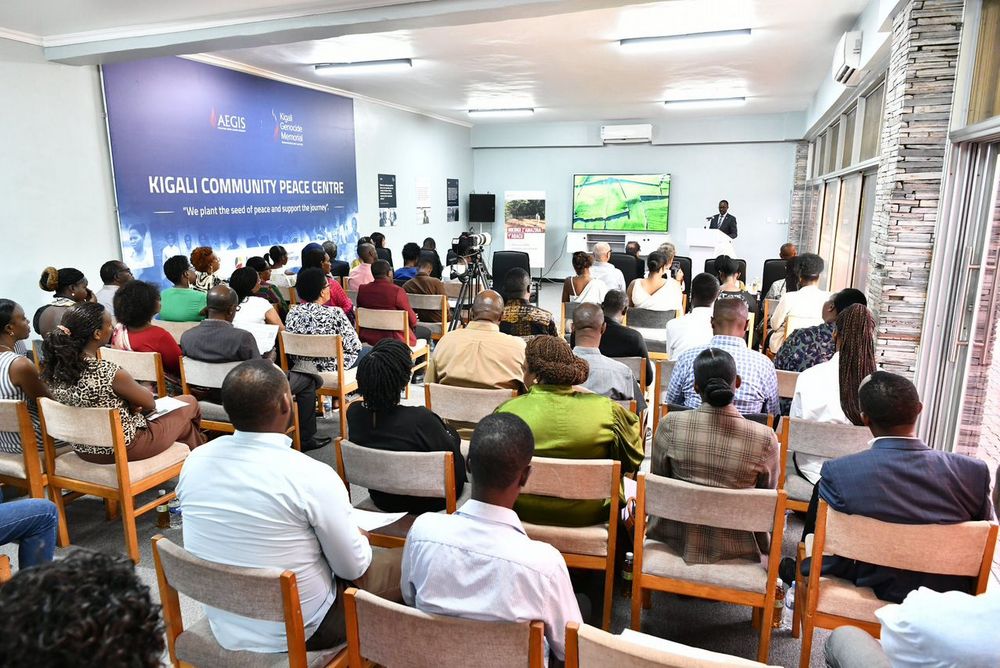
The project, titled “Inkingi z’Amazina y’Abacu”, was unveiled on May 14, 2026. It features names presented in a 3D digital structure, forming pillar-like columns that continuously display and honour the victims.
The initiative was inspired by Ancialla Umubyeyi, a resident of Vienna, Austria, who initially envisioned a physical wall bearing the names of victims of the Genocide against the Tutsi whose families live in Austria.
Although the idea was not approved in Austria, she later discussed it with memorial artists Béla Marx and Gilles Mussard, who are involved in remembrance projects combining art and memory. They advised her to transform the concept into a digital installation instead of a physical structure.
Umubyeyi explained that the project began with three digital pillars displaying 250 names provided by members of the Rwandan community in Austria. However, she said the number was too limited, prompting the team to collaborate with genocide memorials in Rwanda to ensure the use of verified names with clear historical records.
“We started with 250 names given by people living in Austria, but we realised this was not enough. We then requested to work with memorial sites in Rwanda so that we could use verified names with clear origins, which can help all Rwandans remember,” she said.
The Executive Secretary of Ibuka, Ahishakiye Naphtal, said the project represents another step forward in helping Rwandans, especially young people, to remember and learn about the history of the genocide.
“Genocide was not only about killing people, but also about erasing their identity, their history, and dehumanising them. This initiative restores dignity to each name and gives it a place in our shared history,” he said.
Aegis Trust, Rwanda Country Director Alphonse Munyantwali, said the project combines art, technology, and remembrance in a unique and meaningful way.
“This initiative will help us remember through technology by preserving and displaying the names of those killed in the 1994 Genocide against the Tutsi. It is a way of continuing to honour every name, every life, and every story. It also helps present the truth and counter genocide denial and distortion,” he said.
The project is expected to take five years to complete. It will eventually include all names recorded in genocide memorials across Rwanda, with plans to later add more personal details such as where victims lived, their families, and other historical information.
The project, titled “Inkingi z’Amazina y’Abacu”, was unveiled on May 14, 2026. The project features names presented in a 3D digital structure, forming pillar-like columns that continuously display and honour the victims. The Executive Secretary of Ibuka, Ahishakiye Naphtal, said the project represents another step forward in helping Rwandans, especially young people, to remember and learn about the history of the Genocide against the Tutsi.
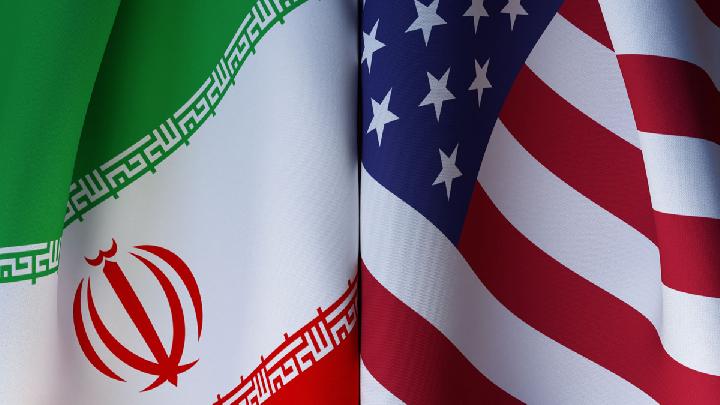
Iran proposed a two-stage negotiation process, the paper said.
The first stage aims to end the war on all fronts, and if Iran’s conditions are met, the second stage of negotiations, concerning the nuclear issue, would commence, the paper added.
Earlier this month, Iran submitted a 14-point counterproposal to the United States, calling for a permanent end to hostilities and a full withdrawal of U.S. forces from the region.
The plan was delivered through Pakistani intermediaries in response to a nine-point U.S. proposal.
While Washington’s plan calls for a two-month ceasefire, Tehran requested a 30-day timeline to resolve key issues, insisting that talks focus on “ending the war” rather than a temporary truce.
The team of Min Joong-ki, an independent counsel who led investigations into corruption allegations involving the former presidential couple, demanded that the Seoul Central District Court sentence Kim to seven and a half years in prison for selling public offices in exchange for high-priced jewelry, a painting and a designer bag.
Kim was accused of receiving a necklace, a brooch and earrings from a businessman between March and May 2022 in return for the appointment of his eldest son-in-law to a government post.
She was charged with receiving a gold turtle from a former head of the national education commission in exchange for an appointment request in April 2022 along with a wristwatch from a robot dog entrepreneur in September of the year in return for business favors.
Charges also included receiving a designer bag from a pastor between June and September 2022 and a painting from a former prosecutor in February 2023 in return for a nomination request.
Kim, who was indicted under detention in August 2025, became the first wife of a former South Korean president to be tried under detention.
Yoon was sentenced to life in jail in February for insurrection stemming from his martial law declaration in December 2024.
He was indicted under detention in January 2025 as a suspected ringleader of the insurrection, becoming the first sitting president to be arrested and indicted.
South Korea’s former first lady Kim Keon Hee, wife of former president Yoon Suk Yeol, arrives at a court to attend a hearing to review her arrest warrant requested by special prosecutors, in Seoul, South Korea, on Aug. 12, 2025. (Jung Yeon-je/Pool Photo via AP, File)
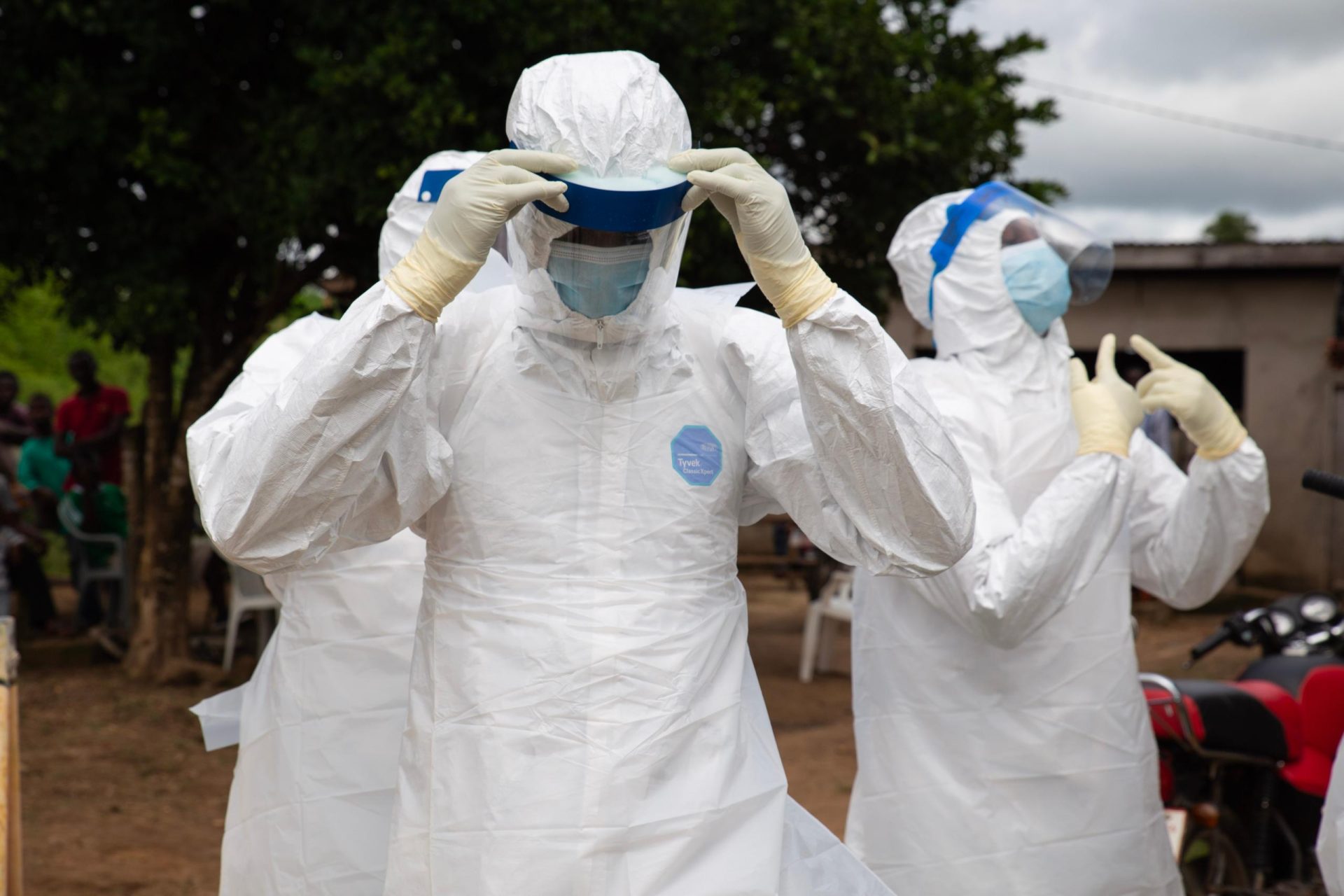
Hundreds of suspected cases have been reported in Ituri Province, according to the Africa Centers for Disease Control and Prevention (Africa CDC).
Preliminary tests by the National Institute of Biomedical Research detected the virus in 13 of 20 samples, Africa CDC said in a statement, citing consultations with the DRC’s Ministry of Health and National Public Health Institute.
About 246 suspected cases and 65 deaths have been recorded, mainly in Mongwalu and Rwampara, with four deaths among confirmed cases. Suspected cases have also been reported in Bunia.
Africa CDC warned of a high risk of further spread due to urban settings, population movement, mining activities, insecurity, and proximity to Uganda and South Sudan.
The agency is convening an urgent meeting on Friday afternoon with health authorities from the DRC, Uganda and South Sudan, as well as key international partners, to strengthen cross-border coordination, surveillance and response efforts.
Africa CDC Director General Jean Kaseya stressed that rapid regional coordination is essential due to the high mobility between affected areas and neighboring countries.
Health authorities confirmed a new outbreak of Ebola virus disease in eastern Democratic Republic of the Congo (DRC) on Friday.
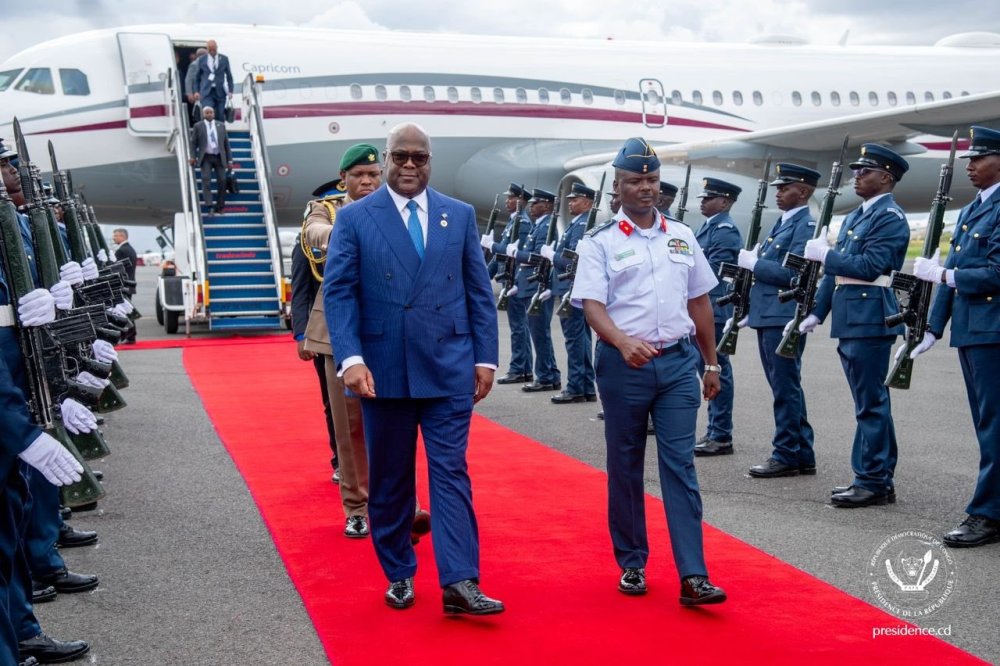
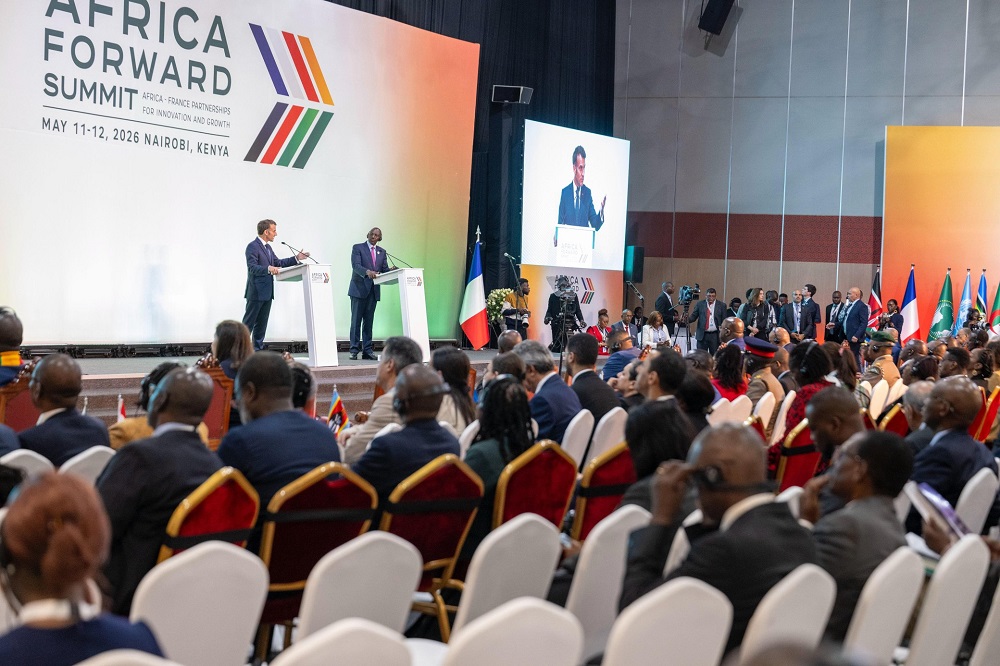
The Congolese leader had been in Uganda for the inauguration ceremony of President Yoweri Kaguta Museveni. Many expected him, like other visiting heads of state, to return directly to Kinshasa after the event. Instead, he unexpectedly headed to Nairobi before the summit concluded.
Soon after his arrival, Tshisekedi’s spokesperson, Tina Salama, said the Congolese president had not gone to Nairobi to “complain,” but to urge the international community to stop remaining silent over what she described as three decades of killings in the DRC allegedly caused by “Rwandan aggression.”
Two days after the summit, another spokesperson from the Congolese presidency, Farah Muamba Kayowa, claimed that the DRC had used the Africa-France summit to call on participants not to ignore the violence that Congo blames on Rwanda.
However, Rwanda’s Minister of Foreign Affairs and International Cooperation, Ambassador Olivier Nduhungirehe, dismissed the claims, saying the DRC never actually took part in the summit discussions where such concerns could have been raised.
Amb. Nduhungirehe, who attended the summit in Nairobi, explained that the meeting featured three high-level sessions chaired by Kenyan President William Ruto and French President Emmanuel Macron.
The discussions focused on green industrialisation and energy transition, reform of international financial institutions, and peace and security.
According to the minister, heads of state and official representatives actively participated in the exchanges — except the DRC.
“During all three sessions, the DRC’s seat remained conspicuously empty. As a result, Kinshasa was unable to ‘demand’ anything or accuse anyone in Nairobi, limiting itself to a merely symbolic presidential appearance at the close of the summit,” Amb. Nduhungirehe said.
The Rwandan government has consistently rejected accusations from Tshisekedi’s administration linking Kigali to the insecurity in eastern Congo.
Rwanda argues that the prolonged instability in the DRC is rooted in decades of poor governance and failed state policies that created conditions for armed groups to flourish across the region.
Kigali has also repeatedly pointed to the presence of the FDLR terrorist group in eastern Congo, a group formed by remnants of the former Rwandan army (Ex-FAR) and Interahamwe militias responsible for the 1994 Genocide against the Tutsi.
The group continues to operate freely in eastern DRC with the objective of destabilising Rwanda. The Congolese government is also accused of collaborating and supporting the group in its fight against the AFC/M23 coalition.
Before the inauguration ceremony in Uganda had ended, President Félix Tshisekedi traveled to Kenya as the Africa-France summit neared its conclusion.President Félix Tshisekedi arrived in Nairobi after the main discussions had concluded and only attended the summit’s closing ceremonyOn May 12, 2026, President Félix Tshisekedi attended the swearing-in ceremony of Ugandan President Yoweri Museveni.French President Emmanuel Macron and Kenyan President William Ruto officially closed the Africa-France summit in Nairobi
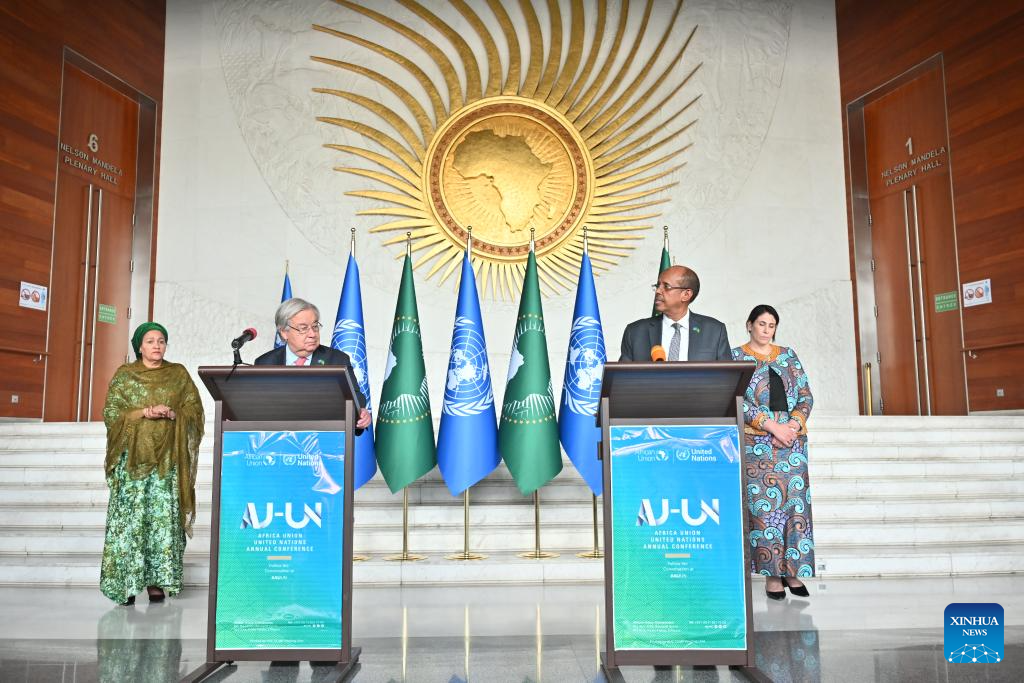
The two leaders made the allegation during a joint press conference on Wednesday at the AU headquarters in Addis Ababa, the capital of Ethiopia, after signing a new declaration to enhance the AU-UN partnership.
“Most of the security crises on the continent are fueled from abroad. Financial resources, ammunition, sometimes even fighters come to fight another war from other continents,” Youssouf told the press conference.
He said the interference goes to the extent of disrupting mediation and resolution processes, causing a serious challenge for AU and UN to address the security crisis on the continent, including in the Sahel, Sudan, the Horn of Africa and the eastern Democratic Republic of the Congo.
Youssouf said the interferences are requiring the AU, UN and other partners to deploy more efforts to contain the crises. “The AU must lead any peace negotiations on the continent, based on the principle of African solutions to African conflicts.”
Guterres, for his part, said it is absolutely intolerable that countries that are external to Africa interfere in African conflicts, providing weapons and political support with the objective of serving their strategic or economic interests.
“We need naturally to go on developing our common diplomacy, to make sure that we create the conditions for this kind of interference to cease and for other actors to be able to come to political agreements, able to end these conflicts,” he said.
According to Guterres, the world is witnessing a new kind of war where the military does not fight each other but launches drones against civilians.
“We also raise our voices, denouncing those countries that are providing drones that are not manufactured in Africa, as they are causing terrible sacrifice for the African people,” he added.
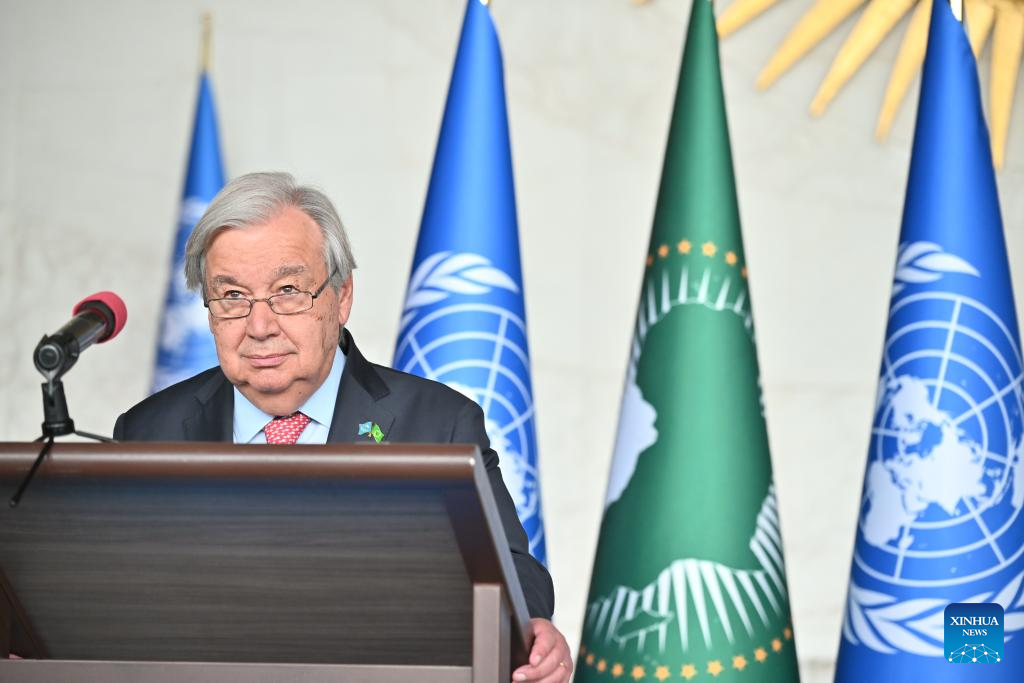
United Nations Secretary-General Antonio Guterres speaks at a joint press conference at the African Union headquarters in Addis Ababa, the capital of Ethiopia, May 13, 2026. African Union (AU) Commission Chairperson Mahmoud Ali Youssouf and United Nations (UN) Secretary-General Antonio Guterres have warned that external interferences are fueling the security crisis in Africa. United Nations Secretary-General Antonio Guterres (2nd L) and African Union Commission Chairperson Mahmoud Ali Youssouf (2nd R) attend a joint press conference at the AU headquarters in Addis Ababa, the capital of Ethiopia, May 13, 2026. African Union (AU) Commission Chairperson Mahmoud Ali Youssouf and United Nations (UN) Secretary-General Antonio Guterres have warned that external interferences are fueling the security crisis in Africa.
The initiative seeks to create a more inclusive and sustainable mobility ecosystem by enabling women to access electric motorbikes, entrepreneurship opportunities, and business support, while contributing to Rwanda’s green transport ambitions.
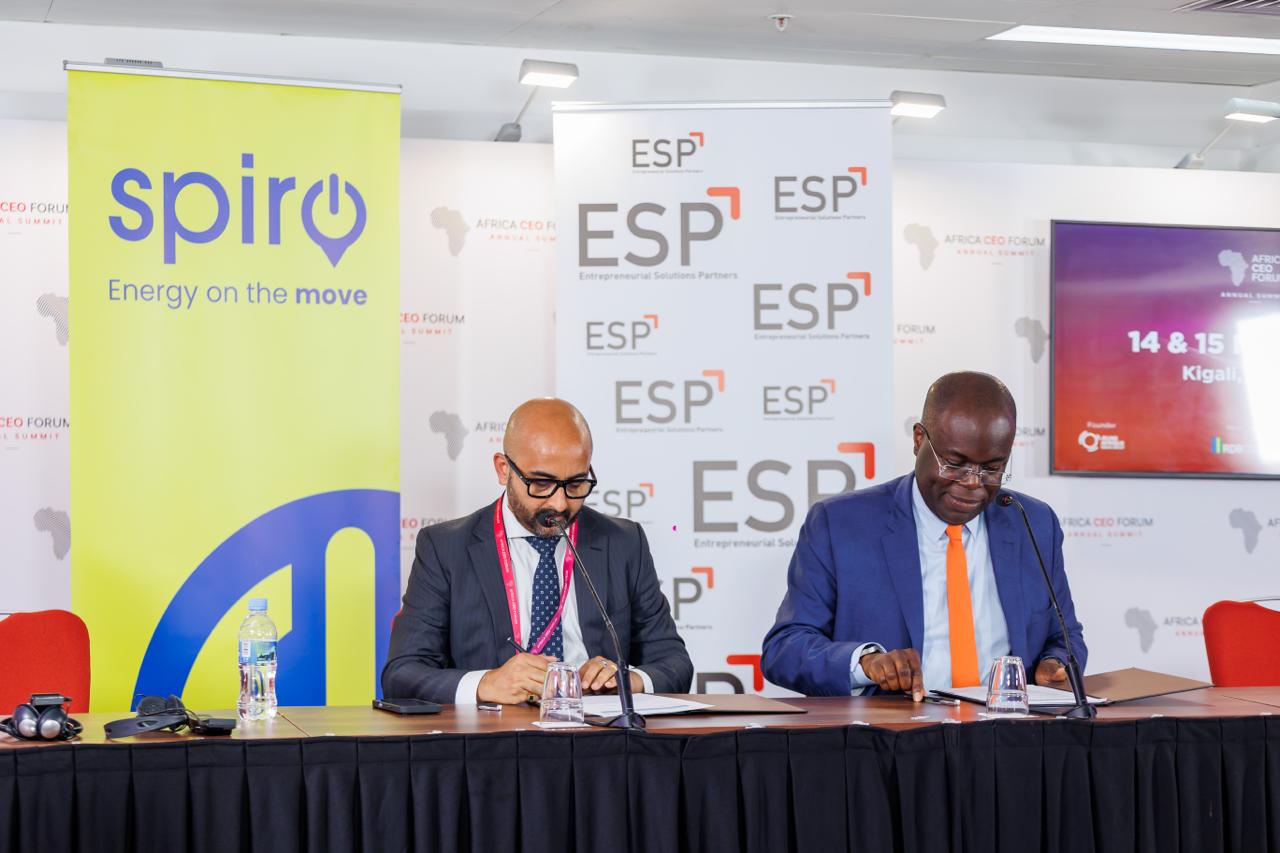
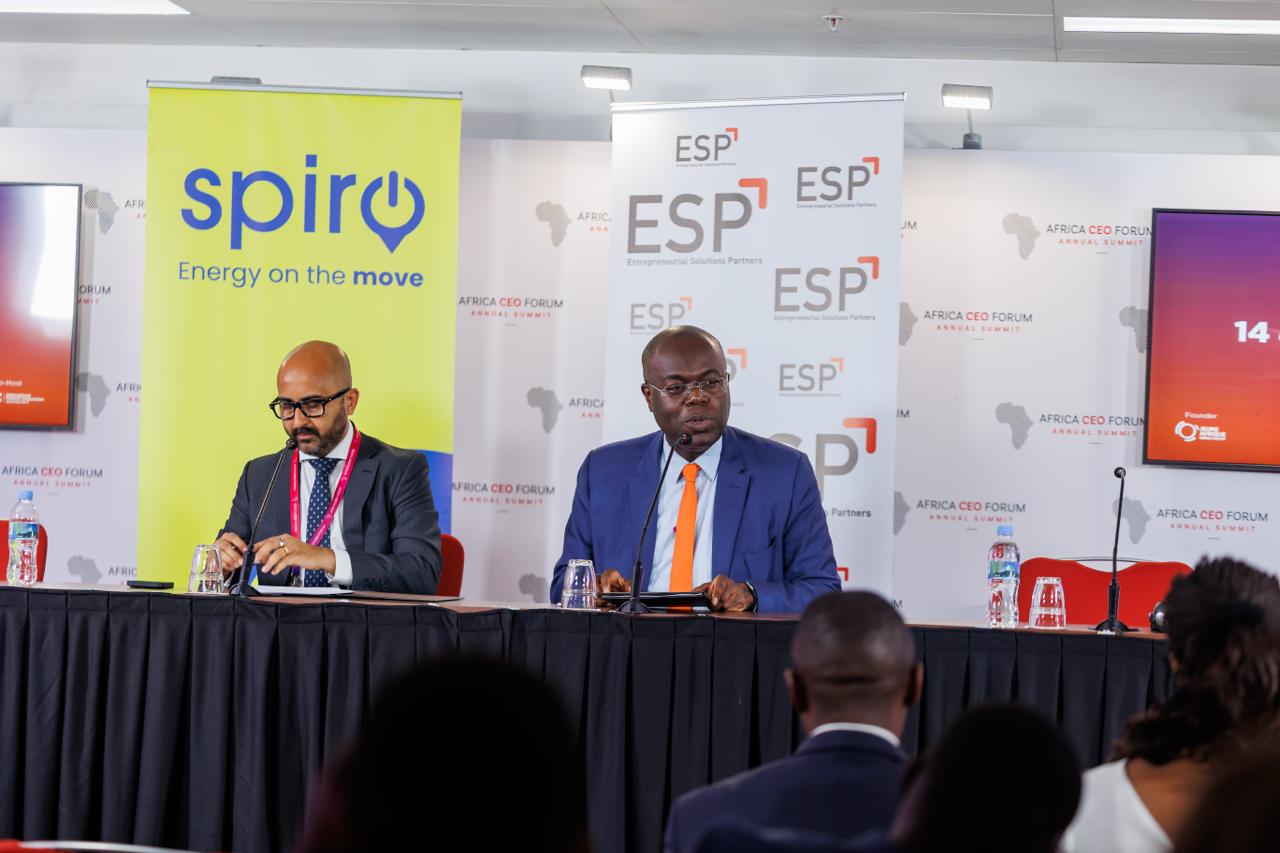
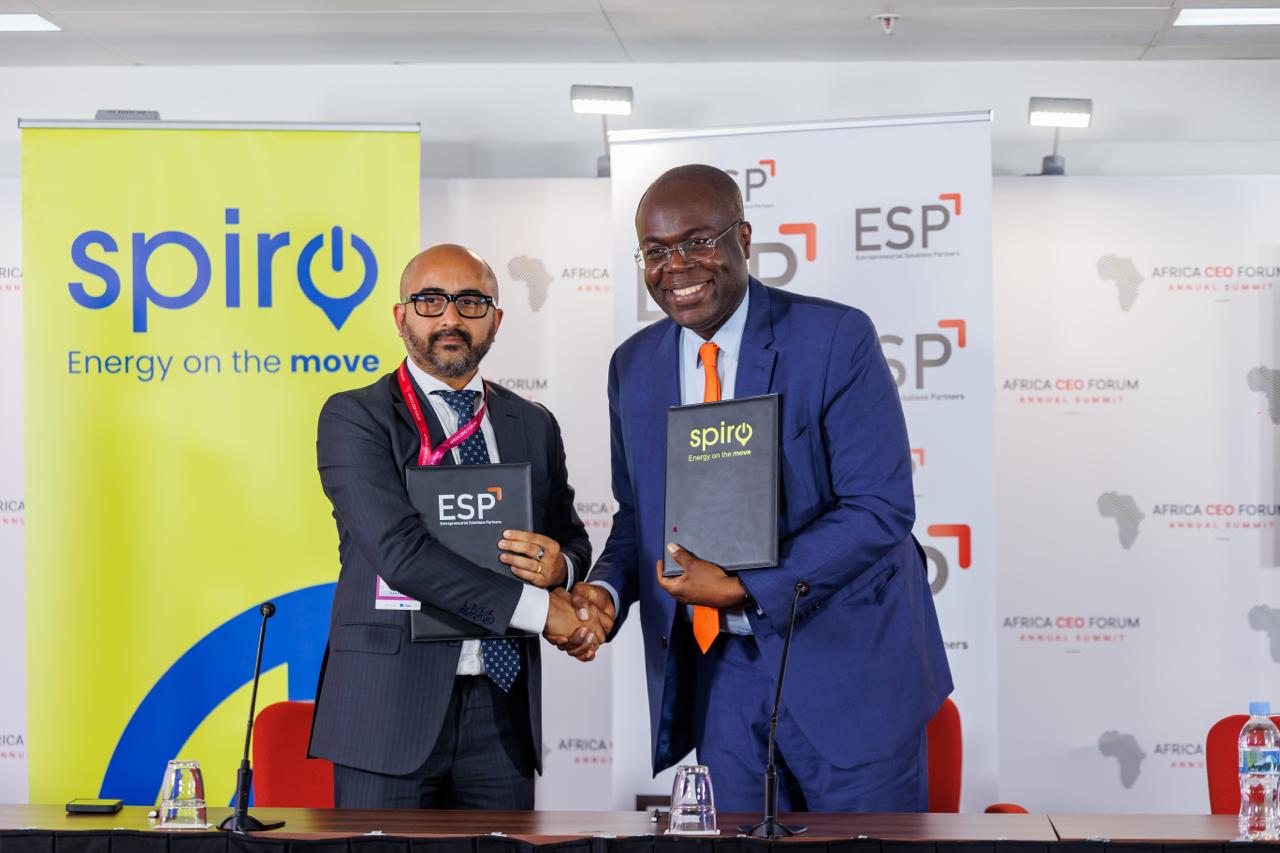
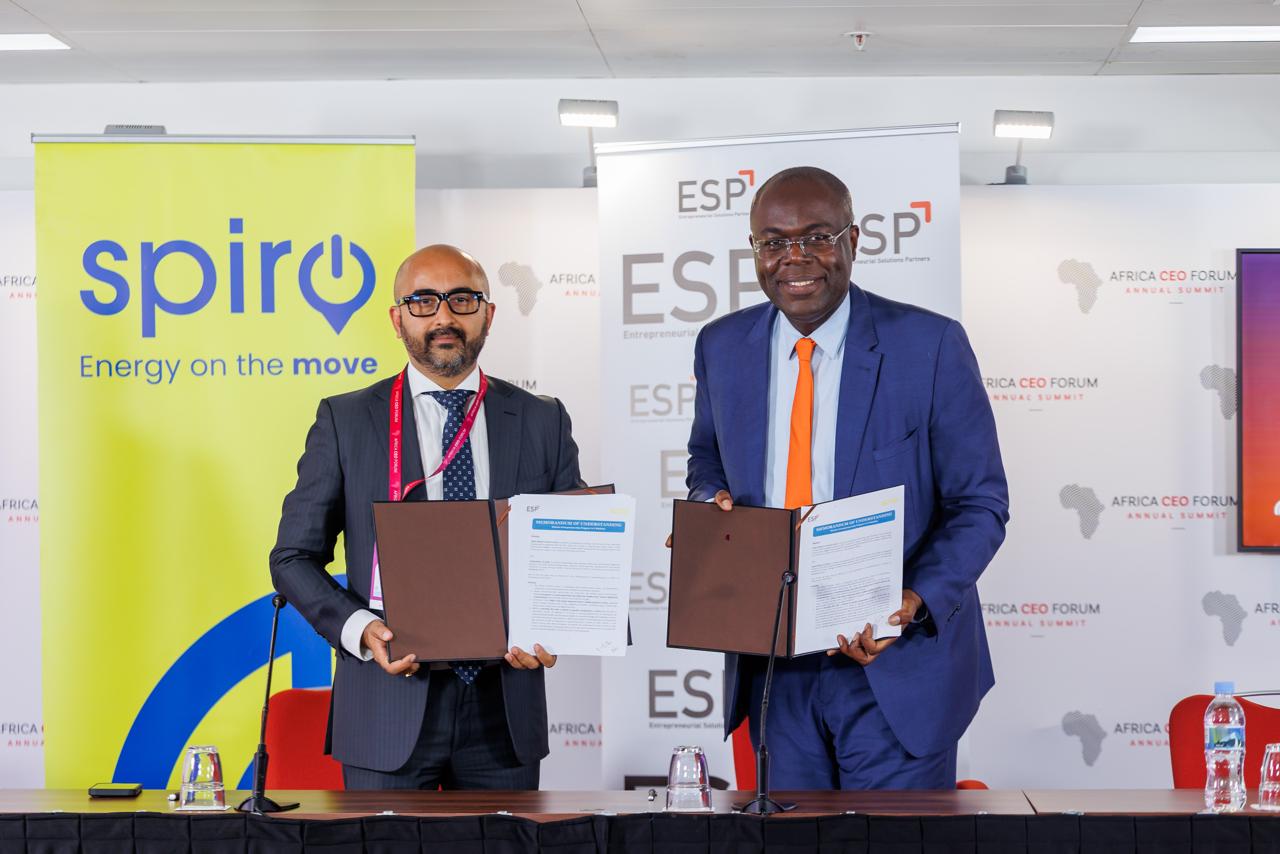
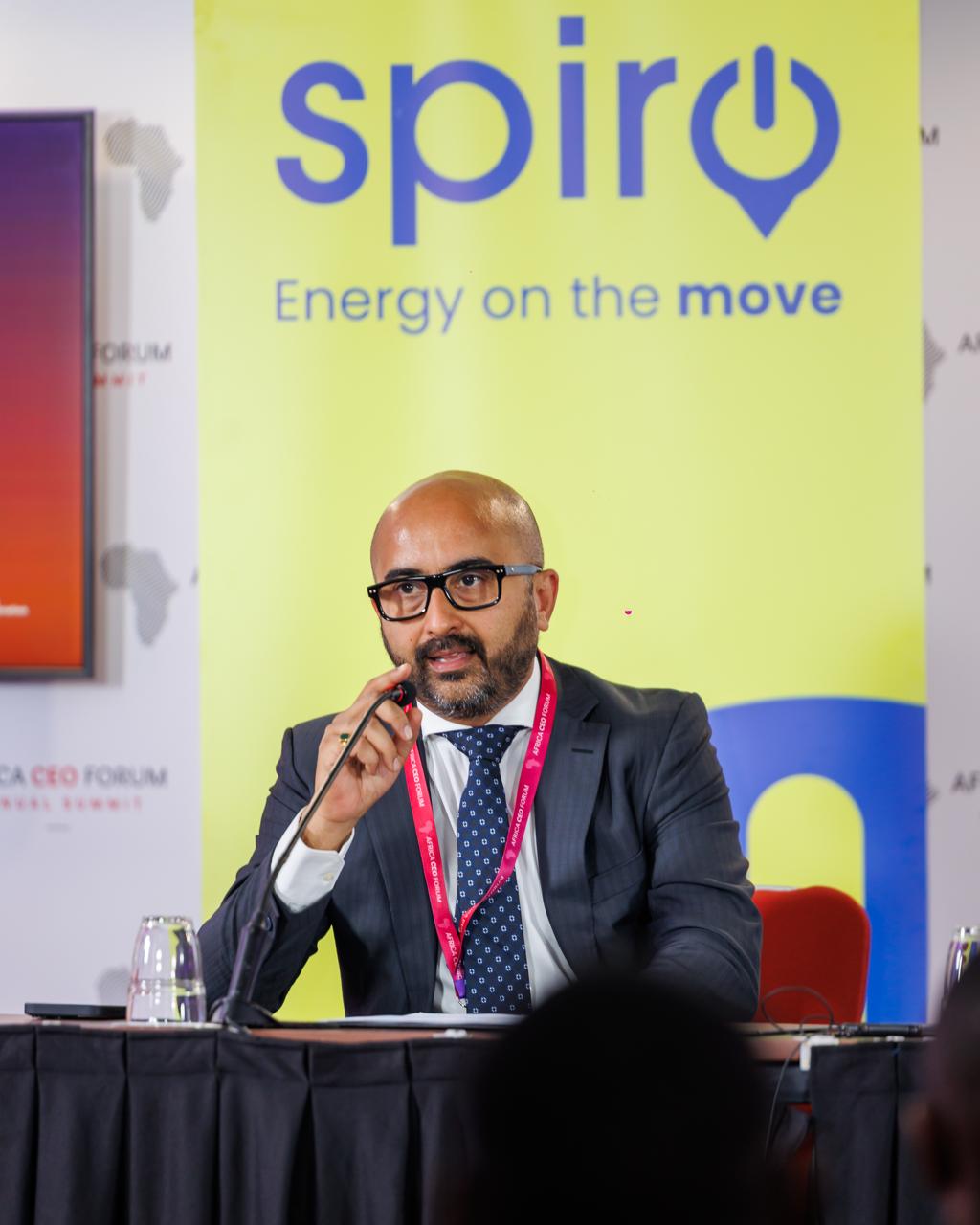
Speaking during the signing ceremony on the sidelines of the Africa CEO Forum in Kigali on Thursday, May 14, Spiro Chief Executive Officer Kaushik Burman described the partnership as a major step toward building a more inclusive e-mobility industry across Africa.
“This is a landmark milestone for us because women in the family are not just the caregivers. They are the actual doers,” Burman said.
“If we can empower women in the family to be mobile and go ahead and create, become successful entrepreneurs, it is going to create a massive flywheel of more women entrepreneurs.”
Burman said the initiative is about more than simply providing electric motorbikes, noting that Spiro envisions women participating across the entire value chain, including energy networks, sales, distribution, and manufacturing.
“It’s not just about the motorbikes. I think in future we can expand this partnership to inviting women entrepreneurs to become sales and distribution partners. They can run the energy network and create more jobs,” he said.
He added that women already make up around 40% of workers in Spiro’s assembly and manufacturing operations, including engineers, diploma holders, and blue-collar workers.
“The way I view this is not just about bike entrepreneurs, but entrepreneurship across the value chain and massive social impact,” Burman added.
ESP Co-Founder and Chief Executive Officer Eric Kacou said the partnership combines Spiro’s electric mobility infrastructure with ESP’s expertise in entrepreneurship development and business support.
“The purpose of the MoU is to make sure that we can have a more equitable e-mobility industry in Africa by enabling young women to have the same opportunities as young men when it comes to having access to an electric bicycle,” Kacou said.
“Beyond the livelihoods, it is also an opportunity for these women to mature into entrepreneurs and to support the next generations of Africans.”
Kacou explained that ESP will help structure and implement the program through targeted recruitment, training, and financial support mechanisms aimed at helping women succeed in the sector.
According to him, the initiative will focus on three critical pillars: mindset, access to assets, and entrepreneurial skills.
“What makes the difference between a successful entrepreneur and one who struggles is what they know about financial education and what they know about growing their businesses,” he said.
ESP plans to roll out the initiative in phases, selecting participants through an application process before providing training in business management, financial literacy, and motorbike operations.
Kacou noted that Rwanda offers a strong environment for piloting innovative solutions that can later be expanded across Africa.
Burman said Spiro is already committed to investing in batteries and battery-swapping infrastructure to support deployment as the initiative scales.
“This is not a sprint, this is a marathon. This is a journey,” he said.
ESP is a Pan-African consulting and investment firm focused on supporting entrepreneurs through technical expertise, incubation, and financing support.
The organisation has previously managed programs supporting women- and youth-led businesses across sectors, including tourism, construction, and agribusiness.
The Women in E-Mobility initiative is expected to create new pathways for women to become riders, entrepreneurs, and technicians within Africa’s growing clean mobility ecosystem while supporting Rwanda’s broader climate and economic inclusion goals.
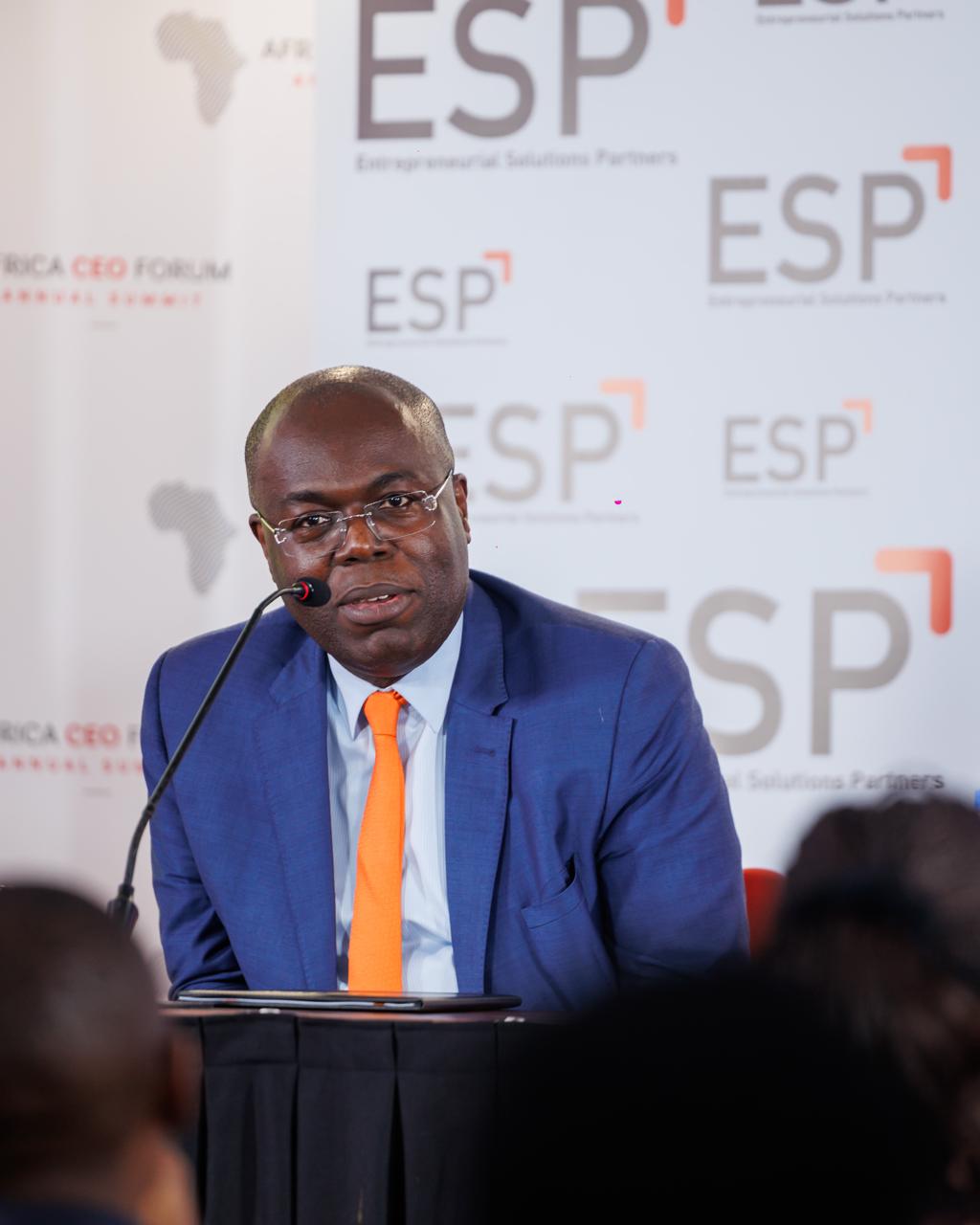
Spiro, Africa’s largest electric motorbike maker, and Entrepreneurial Solutions Partners (ESP) have signed a Memorandum of Understanding (MoU) to launch the Women in E-Mobility initiative in Rwanda, a program aimed at expanding women’s participation in Africa’s fast-growing electric mobility sector.The initiative seeks to create a more inclusive and sustainable mobility ecosystem by enabling women to access electric motorbikes, entrepreneurship opportunities, and business support, while contributing to Rwanda’s green transport ambitions.The MoU was signed on the sidelines of the Africa CEO Forum in Kigali on Thursday, May 14, 2026. Spiro Chief Executive Officer Kaushik Burman described the partnership as a major step toward building a more inclusive e-mobility industry across Africa.ESP Co-Founder and Chief Executive Officer Eric Kacou said the partnership combines Spiro’s electric mobility infrastructure with ESP’s expertise in entrepreneurship development and business support.
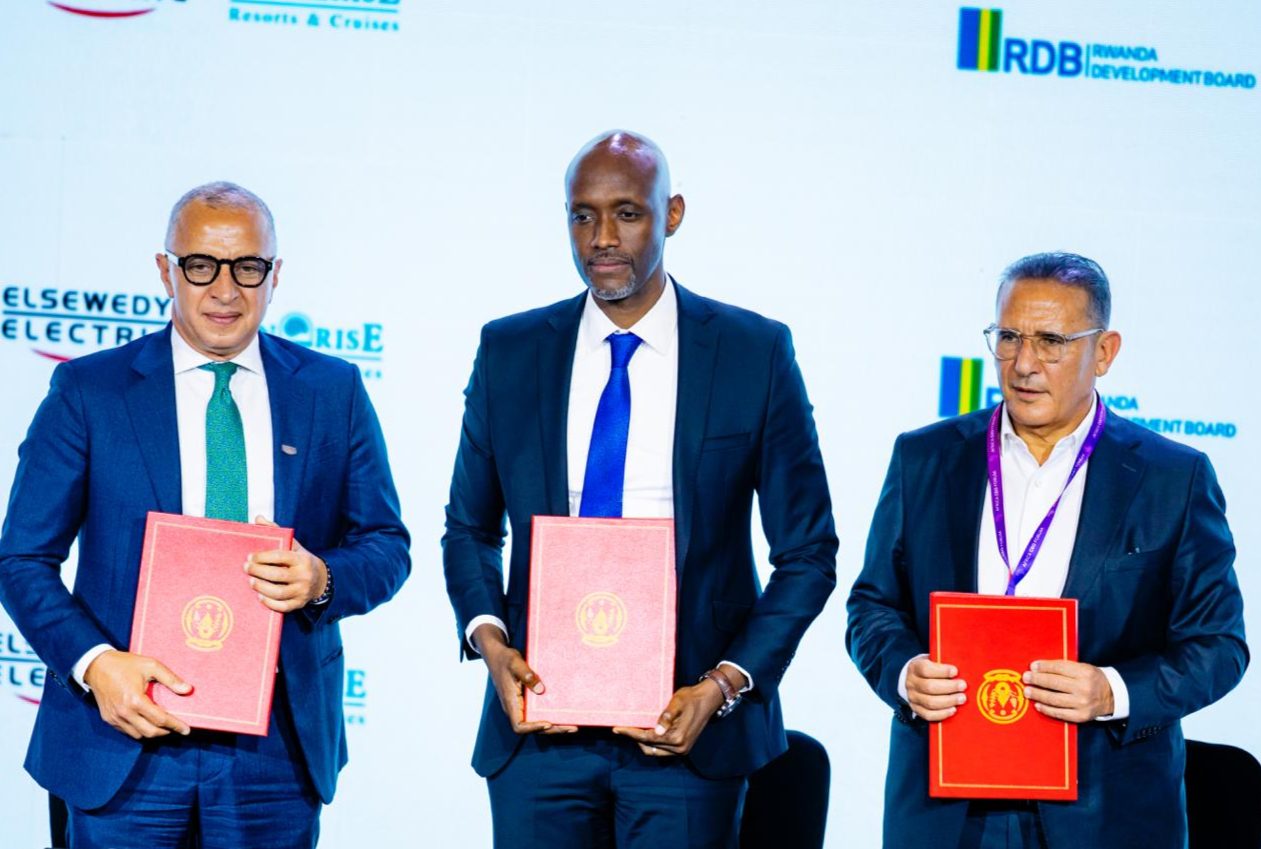
The agreements, signed during the “Invest in Rwanda” session at the Africa CEO Forum, bring together manufacturing, energy, logistics, tourism, and institutional investment partnerships under a coordinated push to deepen Rwanda’s private-sector-led growth strategy.
Elsewedy Electric to anchor industrial and energy expansion
At the centre of the agreements is a comprehensive Memorandum of Understanding with Elsewedy Electric, under which the Egyptian conglomerate will establish a manufacturing facility in Rwanda producing smart water and electricity meters, electric vehicle (EV) chargers, and power transformers.
The partnership also includes the development of a technical university or college to strengthen skills in energy and industrial systems, as well as participation in the development and management of Phases I and II of the Kigali Special Economic Zone. A new logistics hub is also planned, positioning Rwanda as a regional industrial and trade gateway.
In the tourism sector, Rwanda signed a Memorandum of Understanding with Sunrise Resorts & Cruises to develop a new luxury hospitality resort.
The agreement includes two Heads of Terms focused on sustainability infrastructure, including a solar photovoltaic power plant with battery storage and a dedicated water treatment facility to support the resort’s operations.
Though the total value of the projects has not yet been disclosed, they are expected to reinforce Rwanda’s positioning in high-value tourism and the MICE sector, which continues to anchor the country’s services-led growth strategy.
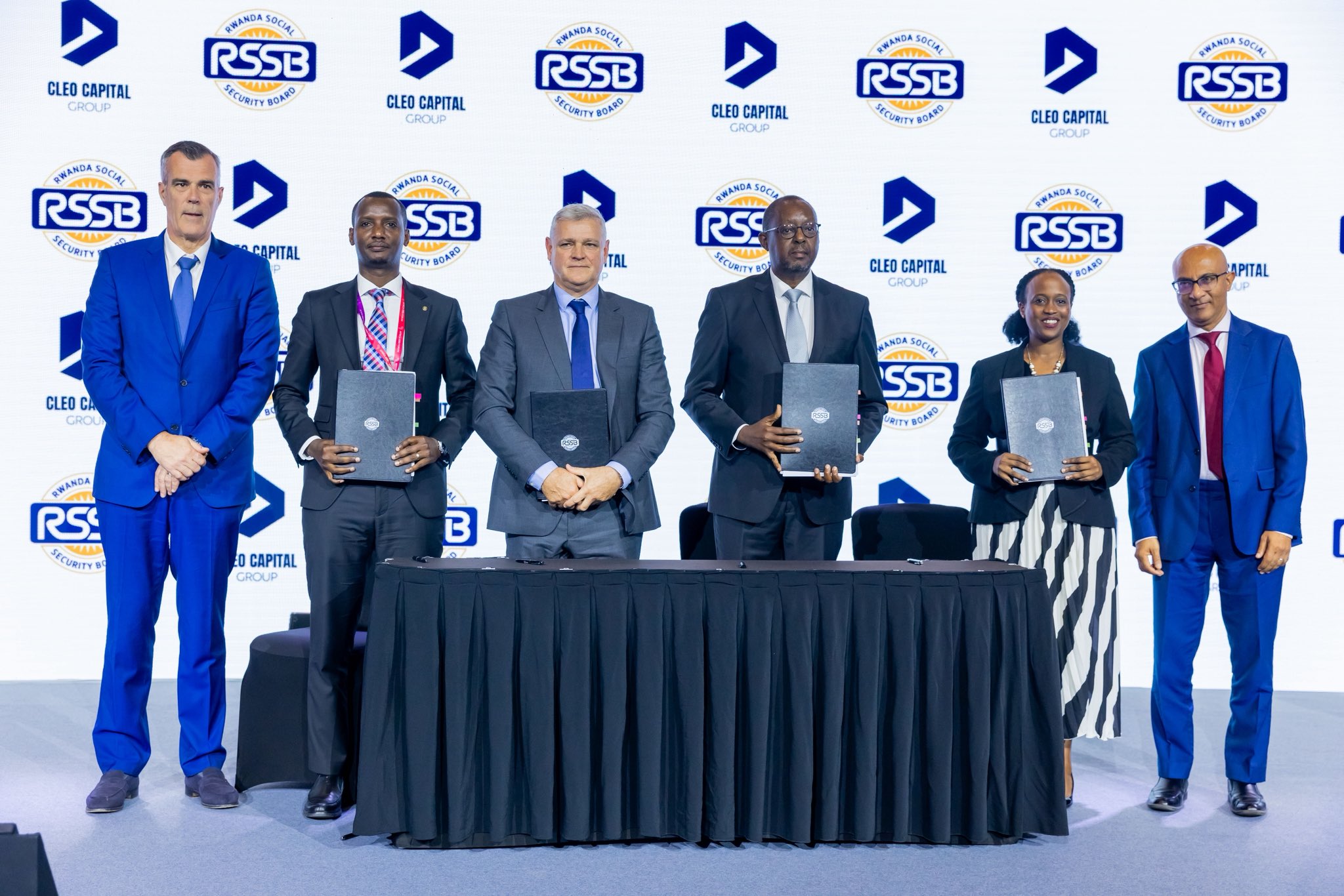
The event also saw a strategic shift for Amicable Guest Houses Ltd (AGL), a subsidiary of the Rwanda Social Security Board (RSSB). A Share Purchase Agreement (SPA) and Shareholders Agreement (SHA) were signed between RSSB and Cleo Capital Group Ltd, alongside a management agreement with The Lux Collective. This move is expected to bring world-class management standards to Rwanda’s hotel assets.
Expanding regional and advisory partnerships
Rwanda also signed a Memorandum of Understanding with Benin’s investment promotion agency, APIEX Benin, to strengthen bilateral investment cooperation and trade facilitation.
In addition, a non-binding strategic collaboration framework was signed with Busara Advisors, led by Amb. Reuben E. Brigety II, to provide advisory support on investment promotion and strategic development initiatives.
Speaking at the same session, RDB Chief Executive Officer Jean-Guy Afrika said the agreements reflect Rwanda’s broader strategy of building a predictable and execution-focused investment environment.
“Governance is infrastructure. Predictability, speed, and trust in institutions determine whether projects move from intention to implementation,” he said.
Afrika noted that Rwanda’s development approach has been shaped by structural constraints that have been converted into strategic advantages.
“Because we are landlocked, we focused on connectivity, logistics, aviation and services where reliability and speed matter,” he said, adding that Rwanda is positioned as “a platform for regional growth, not only a domestic market.”
He stressed that Rwanda is prioritising partnerships that go beyond capital inflows. “We are not only looking for capital. We are looking for partners who bring technology, operating experience, market access and long-term commitment.”
Afrika also highlighted Rwanda’s recent investment performance, citing $1.1 billion in foreign private capital inflows in 2024, representing a 23.9 percent year-on-year increase.
For 2025, he said Rwanda recorded $2.62 billion in investment commitments across priority sectors, including real estate, manufacturing, agro-processing, mining, and other strategic areas aligned with national development priorities.
He framed these figures as evidence of sustained investor confidence in Rwanda’s reform agenda and institutional stability.
Afrika said Rwanda’s investment model is designed to reduce friction and accelerate implementation through coordinated institutions such as the One Stop Centre.
“Investors are looking for places where projects can move, institutions can coordinate, and capital can become productive growth,” he said.
The agreements are expected to advance Rwanda’s long-term development agenda under Vision 2050 and the Second National Strategy for Transformation (NST2), which prioritise industrialisation, export growth, skills development and private-sector-led expansion.
The agreements, signed during the “Invest in Rwanda” session at the Africa CEO Forum, bring together manufacturing, energy, logistics, tourism, and institutional investment partnerships under a coordinated push to deepen Rwanda’s private-sector-led growth strategy.The event also saw a strategic shift for Amicable Guest Houses Ltd (AGL), a subsidiary of the Rwanda Social Security Board (RSSB). A Share Purchase Agreement (SPA) and Shareholders Agreement (SHA) were signed between RSSB and Cleo Capital Group Ltd, alongside a management agreement with The Lux Collective. This move is expected to bring world-class management standards to Rwanda’s hotel assets.
The planned investments will focus mainly on strategic sectors including energy, water supply, housing, and road infrastructure, all of which are considered vital drivers of the country’s economic growth and long-term development.
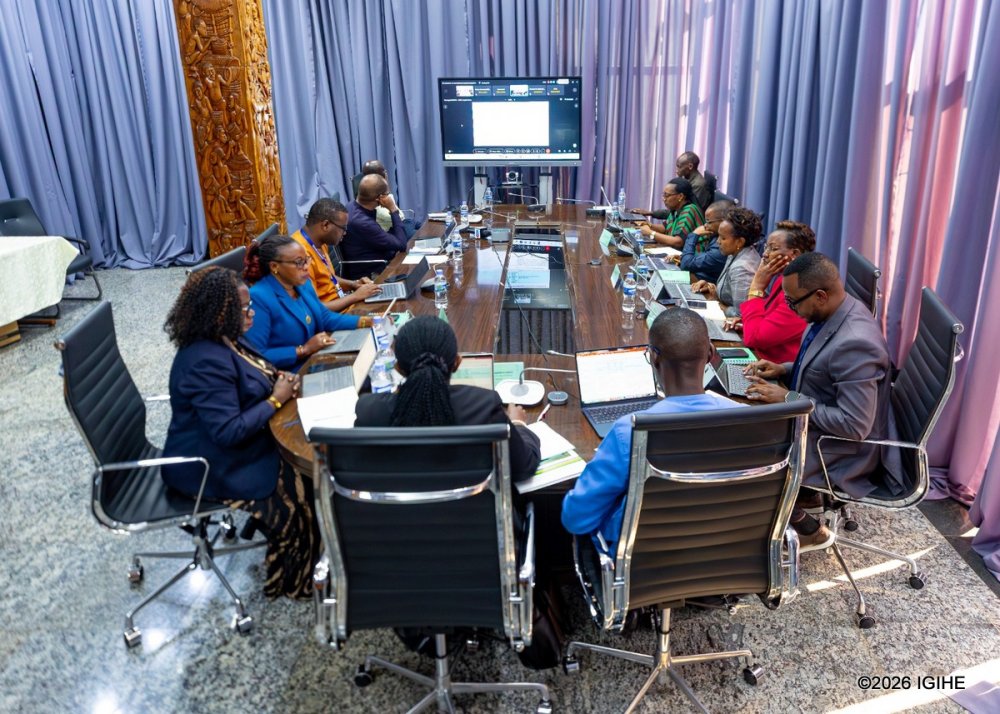
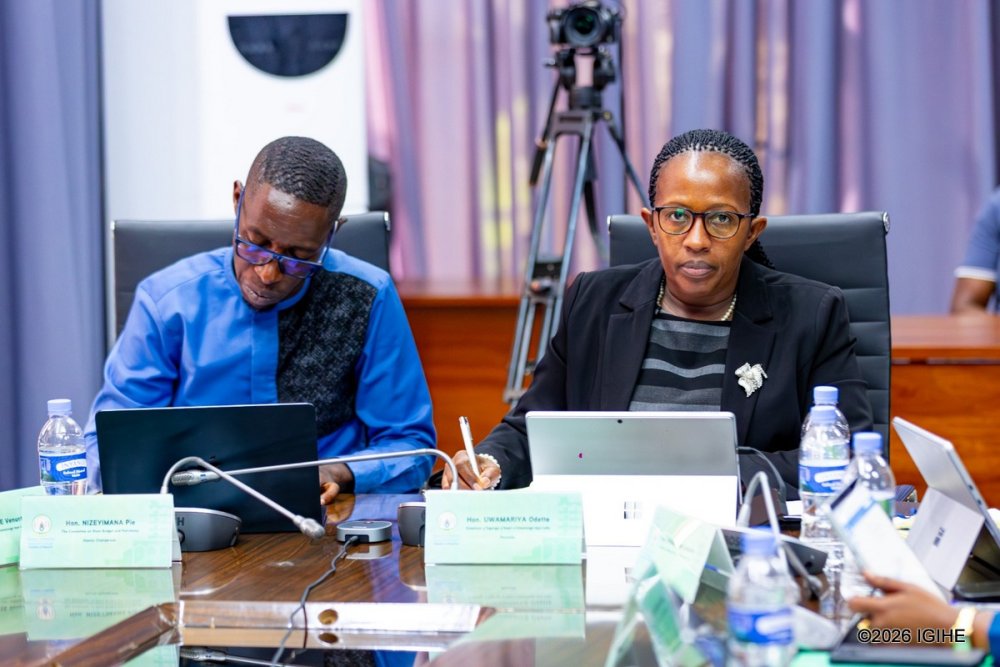
The details were presented during discussions between officials from the Ministry of Infrastructure and its affiliated agencies including the Rwanda Energy Group (REG), Water and Sanitation Corporation (WASAC), Rwanda Housing Authority (RHA), and Rwanda Transport Development Agency (RTDA) and Members of Parliament from the Parliamentary Committee on National Budget and State Property.
During the meeting, each institution outlined major projects expected to improve the welfare of citizens and accelerate national development.
The energy sector remains one of the government’s top priorities due to its crucial role in supporting economic activities and improving the quality of life for Rwandans.
Several projects are expected to be implemented during the 2026/2027 fiscal year to increase electricity generation and strengthen the country’s power supply capacity.
REG is expected to focus on 19 major projects, including ongoing initiatives that will continue until completion.
Among the flagship projects is the continued construction of the Nyabarongo II Hydropower Plant, which is expected to generate 43.5 megawatts of electricity. The project also includes a dam that will help store water and ensure stable electricity production throughout the year, while supporting irrigation activities in surrounding areas.
More than Rwf149.8 billion has been allocated to the Nyabarongo II project during the 2026/2027 fiscal year, with completion scheduled for December 2027.
The government will also continue expanding the national electricity transmission network through the Electricity Transmission Grid Expansion Project, which is funded with support from the Export-Import Bank of Korea (Exim Bank Korea). The project has been allocated Rwf15.2 billion for the upcoming fiscal year.
Additional initiatives aimed at increasing electricity access nationwide include the Accelerating Sustainable and Clean Energy Access Transformation (ASCENT) project, which will receive more than Rwf44.4 billion.
Another Rwf34.9 billion has been earmarked for strengthening the national electricity transmission grid, while Rwf1.1 billion will be invested in extending electricity access to communities in Nyamagabe and Nyaruguru districts.
The government also plans to expand the country’s strategic fuel storage infrastructure by increasing the capacity of state petroleum reserves to 60 million litres, alongside several other infrastructure projects expected to play a significant role in Rwanda’s future economic transformation.
The Nyabarongo II Hydropower Plant, currently under construction between Gakenke and Kamonyi, is expected to provide a significant solution to Rwanda’s growing energy demand.
The Water and Sanitation Corporation (WASAC) has announced a series of major infrastructure projects aimed at expanding access to clean water across Rwanda while reducing water losses within the distribution system.
The projects form part of the government’s broader efforts to improve public services, strengthen urban infrastructure, and ensure reliable water supply for both urban and rural communities.
In addition to constructing new water pipelines, WASAC plans to expand, rehabilitate, and modernize existing water distribution networks to meet the growing demand for clean water across the country.
Among the flagship projects is the expansion of the Nzove Water Treatment Plant, whose production capacity is expected to increase from 40,000 cubic metres per day to 65,000 cubic metres daily. The project has been allocated Rwf9.09 billion in the 2026/2027 fiscal year budget.
Another key initiative is the Kigali Bulk Water Supply Project, which has received Rwf14 billion. The project is expected to significantly improve water distribution in different parts of Kigali, particularly in Gisozi and Nyarutarama, while also supporting the expansion of the Karenge Water Treatment Plant.
WASAC is also set to construct the Mutobo Water Treatment Plant, which is expected to produce 40,000 cubic metres of water per day. According to the utility company, the project will help address persistent water shortages in the City of Musanze as well as in the districts of Burera, Nyabihu, and parts of Rubavu.
Other major projects include the Sake Water Treatment Plant and the continued construction of the Mwange Water Plant, which is expected to supply 23,000 cubic metres of water daily once completed.
In the Southern Province, the Nyaruguru-Huye-Gisagara Water Supply Project is expected to produce 24,000 cubic metres of water per day, further strengthening access to clean water in the region.
WASAC also plans to intensify efforts to reduce non-revenue water, commonly referred to as water lost through leakages, illegal connections, and inefficiencies within the distribution network.
Beyond water supply projects, the corporation is investing heavily in sanitation and hygiene infrastructure. Planned initiatives include the construction of wastewater treatment plants as well as the continued rehabilitation and management of the Nduba landfill, which has been allocated Rwf12 billion in the 2026/2027 budget.
The projects are expected to play a critical role in improving living standards, supporting economic growth, and ensuring sustainable access to clean water and sanitation services for communities across Rwanda.
The Nzove water treatment plant is among those set to have their production capacity expanded.
Rwanda to accelerate major road and housing projects in 2026/27
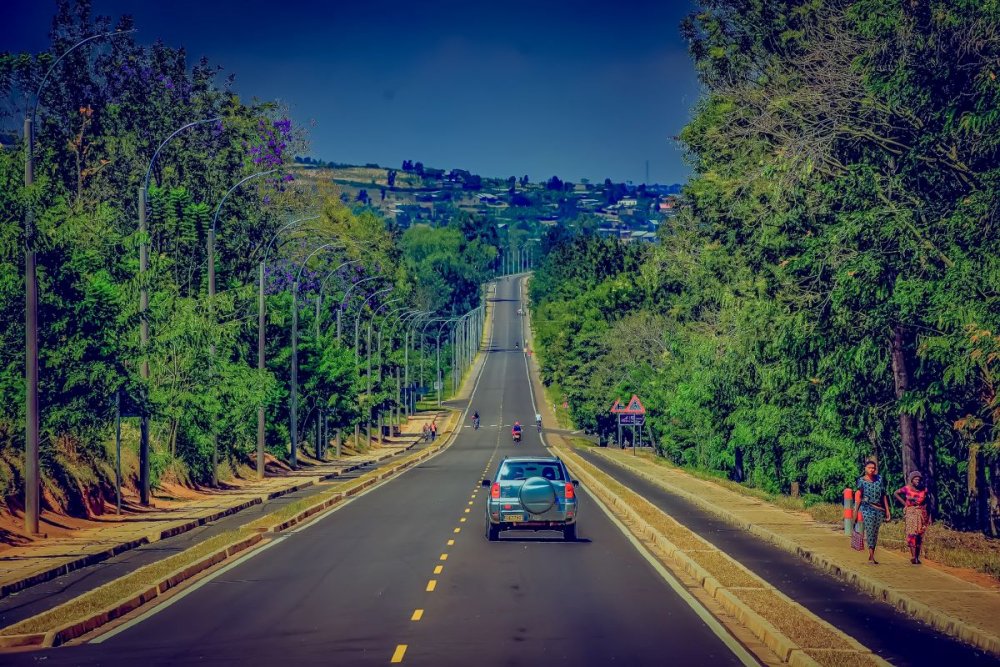
Rwanda is expected to implement extensive road construction and housing development projects during the 2026/2027 fiscal year as part of the government’s ongoing efforts to strengthen infrastructure and accelerate economic growth.
The projects will focus on upgrading major transport networks, improving urban mobility, expanding regional connectivity, and enhancing housing and settlement planning across the country.
Among the key road infrastructure projects planned is the rehabilitation of several major paved highways, including the 45-kilometre Kigali–Muhanga road, one of the country’s busiest transport corridors. Other roads scheduled for upgrading include the 63-kilometre Base–Butaro road, the 53-kilometre Ngoma–Ramiro road, and the 33-kilometre Kibaya–Rukira–Nasho road.
The government also plans to rehabilitate the 10-kilometre Prince House–Giporoso–Masaka road in Kigali to improve traffic flow and reduce congestion within the capital city.
Under the Kigali Urban Transport Improvement (KUTI) project, major road junctions will be constructed at Chez Lando, Gishushu, and Sonatube, areas widely known for heavy traffic congestion.
Additional road projects include the construction of the 10.1-kilometre Zindiro–Masizi–Birembo–Kami–Gasanze road and the Cyamitsingi–Bibare–Zindiro road. Other planned infrastructure works include the Sashwara–Rega–Kabuhanga road, the Busasamana–Muhato road, the Base–Butaro–Kidaho road, and the Ngoma–Nyanza road.
The government is also moving forward with the construction of the 11.6-kilometre expressway linking Kigali to Kigali International Airport. The strategic project is expected to ease transportation to and from the airport while supporting the growth of business and tourism activities.
Additional investments will target cross-border roads connecting Rwanda to neighboring countries, as well as the rehabilitation of the Nyabugogo–Jabana and Nyacyonga–Mukoto roads, alongside several other transport infrastructure projects planned nationwide.
Authorities also announced that greater emphasis will be placed on maintaining and rehabilitating existing roads to ensure durability, improve road safety, and support efficient transportation services across the country.
Beyond road infrastructure, construction works on ports along Lake Kivu will continue, while feeder roads will also be developed in different parts of the country to improve mobility and facilitate trade in rural communities.
Meanwhile, the Rwanda Housing Authority (RHA) revealed that several large-scale housing and urban development projects are planned for the 2026/2027 fiscal year. The projects will mainly focus on improving settlement planning, modern housing infrastructure, and urban development in different parts of the country, particularly in the City of Kigali.
The planned investments are expected to play a significant role in advancing Rwanda’s urbanization agenda, improving transportation systems, and enhancing the overall quality of infrastructure nationwide.
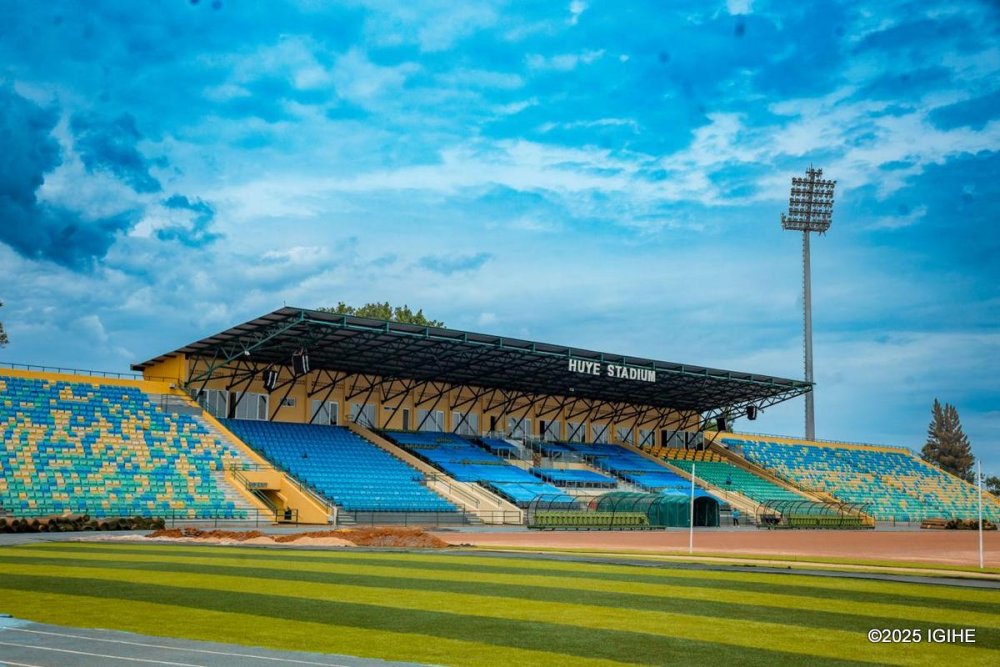
Members of Parliament in the Committee on Budget and State Assets are continuing their review of the draft national budget for the 2026/2027 fiscal year.Hon. Uwamariya Odette, Chairperson of the Parliamentary Committee on Budget and State Assets. RTDA will continue constructing roads that will facilitate trade and improve connectivity. Renovation works on Huye district international stadium will continue.
Transformation not seen in a century is accelerating across the globe, and the international situation is fluid and turbulent, said Xi.
“Can China and the United States overcome the Thucydides Trap and create a new paradigm of major-country relations? Can we meet global challenges together and provide greater stability for the world? Can we build a bright future together for our bilateral relations in the interest of the well-being of the two peoples and the future of humanity? These are the questions vital to history, to the world and to the people,” said Xi.
They are the questions of the times that the leaders of major countries need to answer together, he added.
“I look forward to working together with you to set the course and steer the giant ship of China-U.S. relations, so as to make 2026 a historic, landmark year that opens up a new chapter in China-U.S. relations,” he said.
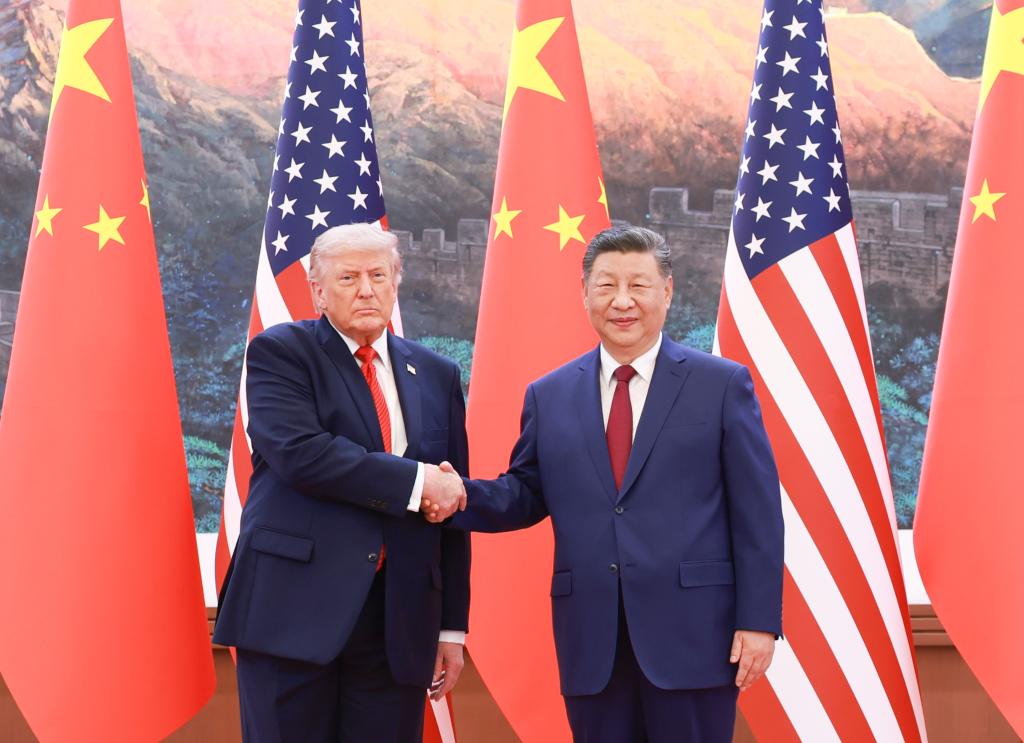
“I have agreed with President Trump on a new vision of building a constructive China-U.S. relationship of strategic stability,” Xi said.
The new vision will provide strategic guidance for bilateral relations over the next three years and beyond, and should be welcomed by the people of both countries as well as the international community, he said.
The “constructive strategic stability” should be a positive stability with cooperation as the mainstay, a sound stability with moderate competition, a constant stability with manageable differences, and an enduring stability with promises of peace, Xi said.
The building of a constructive China-U.S. relationship of strategic stability should not be a mere slogan, but concrete action taken by both sides toward the same goal, he added.
China-U.S. economic ties are mutually beneficial and win-win in nature, said Xi. “Where disagreements and frictions exist, equal-footed consultation is the only right choice,” he said.
Xi revealed that the economic and trade teams of the two countries produced “generally balanced and positive outcomes” in the latest round of bilateral trade talks on Wednesday.
“This is good news for the people of the two countries and the world,” he said, calling on the two sides to sustain the good momentum that they have worked hard to create.
Noting that China will only open its door wider, Xi said American companies are deeply involved in China’s reform and opening up, and the U.S. side is welcome to enhance mutually beneficial cooperation.
“The two sides should implement the important consensus we have reached, and make better use of communication channels in the political, diplomatic and military-to-military fields,” Xi said.
The two countries should also expand exchanges and cooperation in areas such as the economy and trade, health, agriculture, tourism, people-to-people ties and law enforcement, he added.
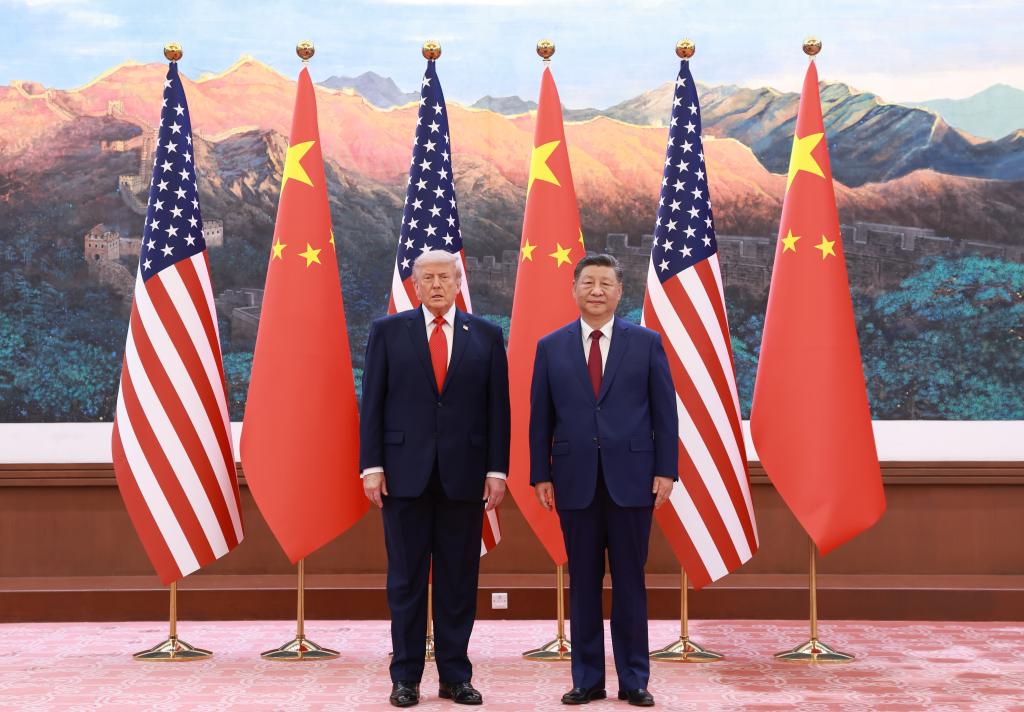
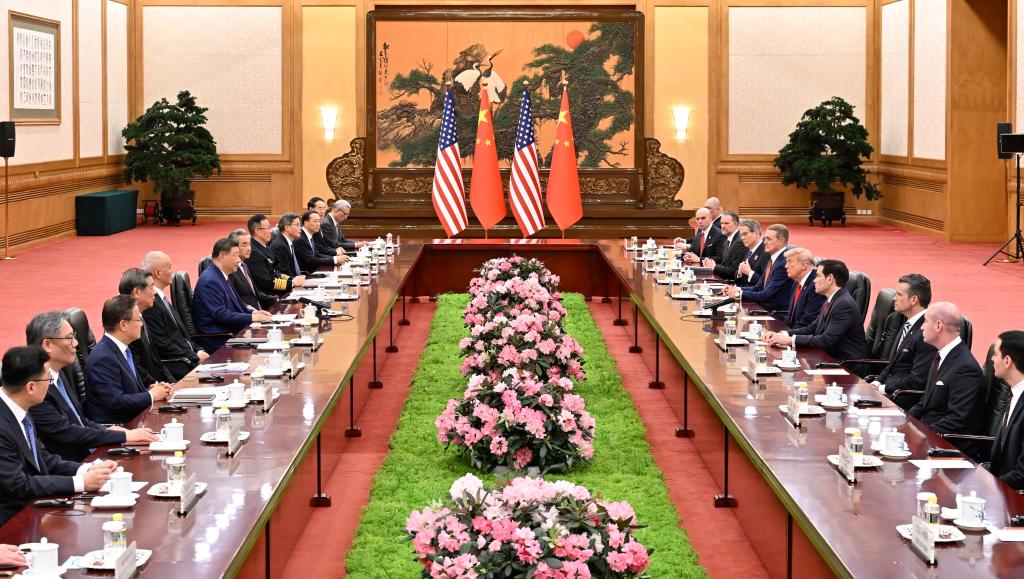
Chinese President Xi Jinping holds talks with U.S. President Donald Trump, who is on a state visit to China, at the Great Hall of the People in Beijing, capital of China, May 14, 2026. (Xinhua/Ding Lin)Chinese President Xi Jinping holds talks with U.S. President Donald Trump, who is on a state visit to China, at the Great Hall of the People in Beijing, capital of China, May 14, 2026. (Xinhua/Yin Bogu)Chinese President Xi Jinping holds talks with U.S. President Donald Trump, who is on a state visit to China, at the Great Hall of the People in Beijing, capital of China, May 14, 2026. (Xinhua/Ding Lin)