The emerging technology push is part of a wider government effort to use AI to extend agricultural expertise to millions of farmers, improve the timing and accuracy of farming decisions and address some of the constraints limiting productivity.
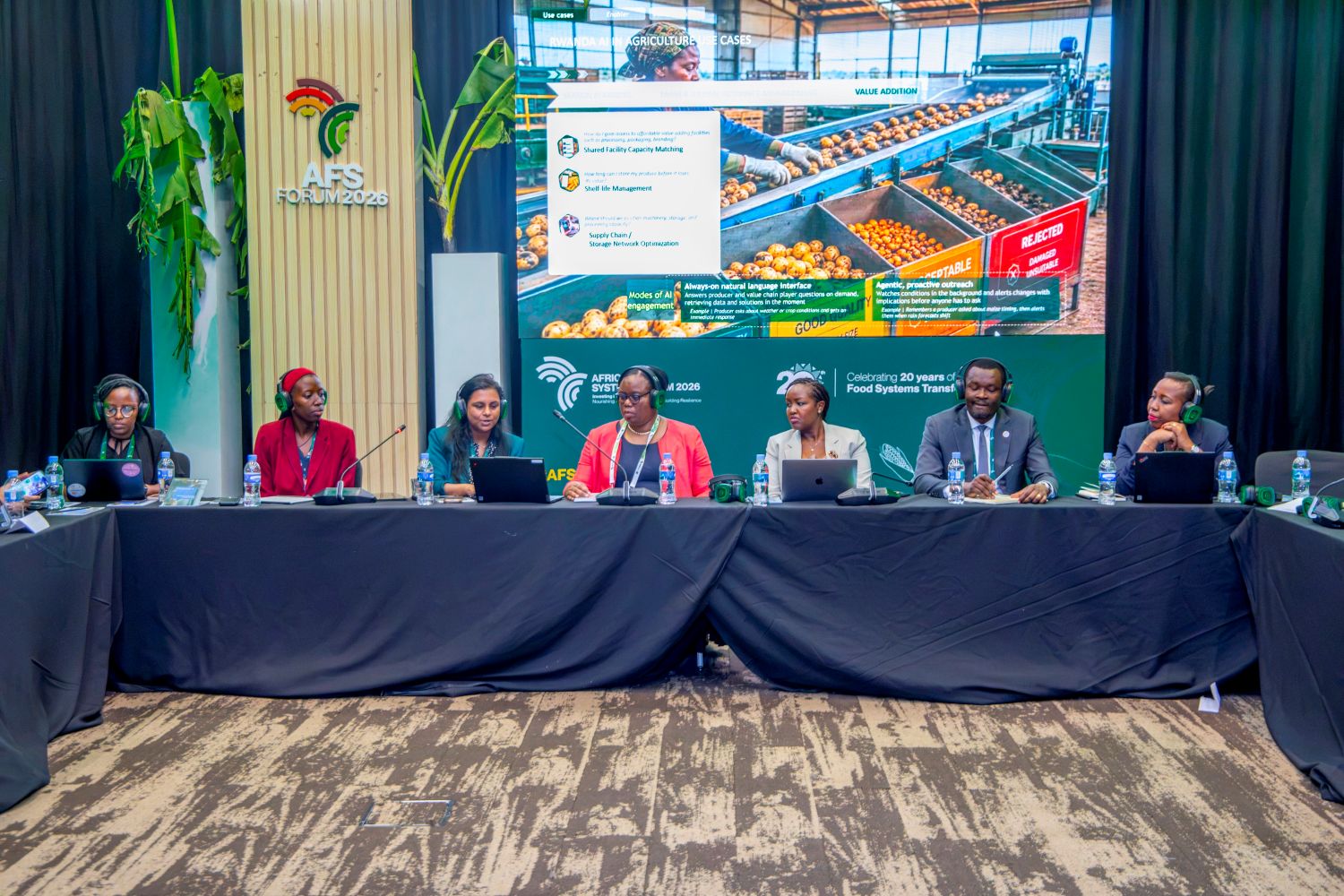
Martine Nezerwa, Chief Digital Officer at the Ministry of Agriculture and Animal Resources (MINAGRI), presented the tools on Tuesday, September 1, on the sidelines of the Africa Food Systems Forum 2026 at the Kigali Convention Centre. The tools use data on local conditions to recommend crops, planting periods and fertiliser application.
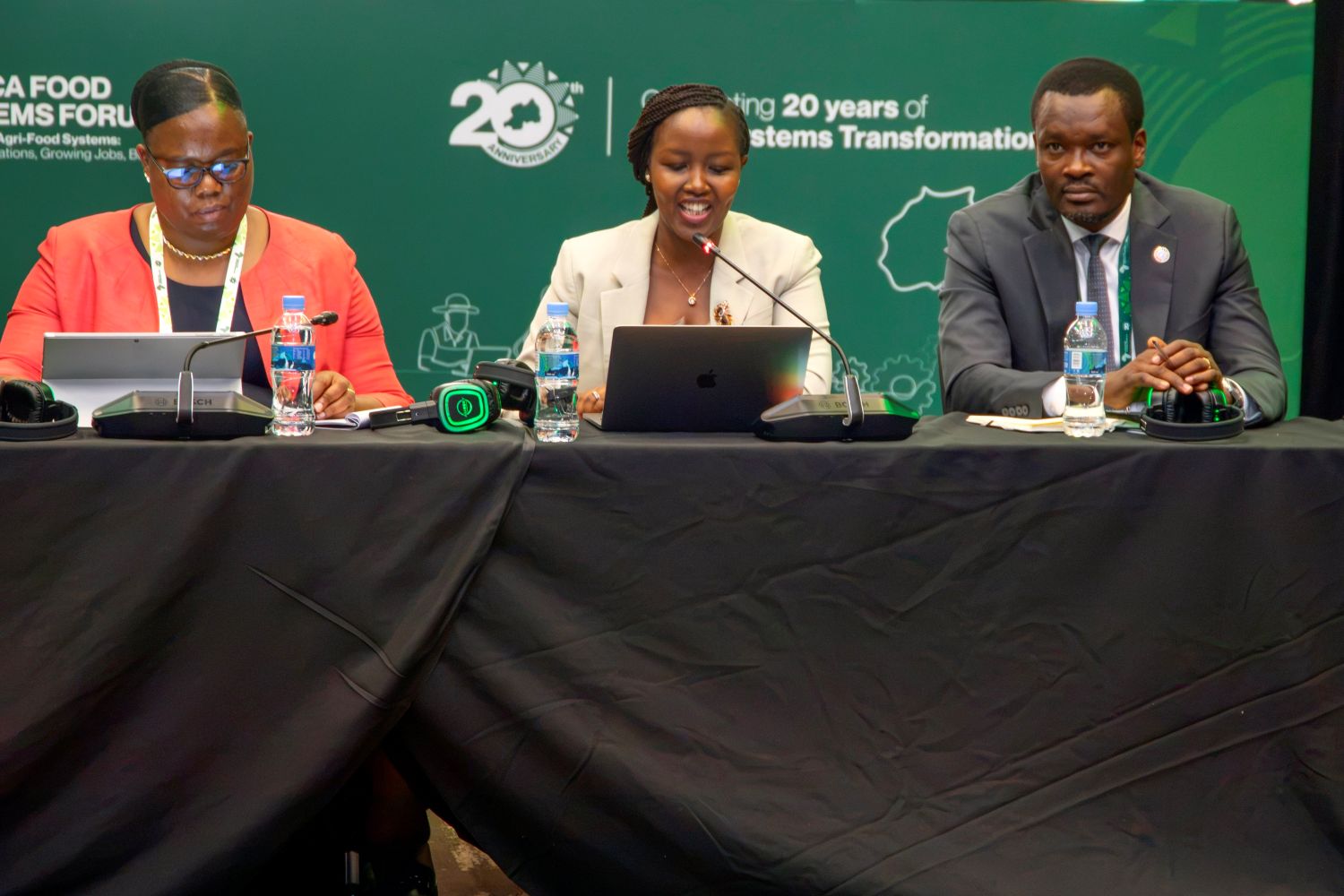
Speaking during the session, ICT Minister Paula Ingabire said agriculture presents both a major opportunity and an urgent need for AI, given the sector’s importance to employment across sub-Saharan Africa.
She said nearly half of employment in sub-Saharan Africa is in agriculture, yet many farmers continue to make critical decisions about planting, fertiliser application, crop diseases, harvesting and markets with limited information or information that arrives too late.
She stressed that AI should not be viewed as a replacement for farmers or agricultural experts, but as a tool to put better intelligence in their hands.
The minister said Rwanda wants to increase agricultural extension coverage from 35 per cent in 2023 to 69 per cent by 2029, a target that would enable the country to reach more than 2.5 million farmers.
She said expanding the number of agricultural extension officers alone would not be enough to close the gap, making technology an important multiplier.
“This is where technology will become an enabling or multiplier factor in ensuring that we can reach more farmers with fewer extension officers,” she said.
One example of this approach is Tunga, an AI-powered voice assistant being tested through the agriculture ministry’s call centre.
Tunga allows farmers to ask questions in Kinyarwanda and provides responses based on a validated agricultural knowledge base developed by MINAGRI, the Rwanda Agriculture and Animal Resources Development Board (RAB) and partners.
During the testing phase, Ingabire said Tunga was able to correctly address at least 60 per cent of the questions it received, while questions it could not confidently answer could be escalated to a human expert.
Ingabire said developing AI systems that work in local languages and through channels accessible to farmers would be critical to achieving scale.
“A brilliant model that requires an expensive smartphone and continuous broadband will not solve the problem for many of our farmers,” she stated, noting the importance of solutions that can work through voice, basic phones, extension agents and existing agricultural platforms.
Four priority areas
Ingabire outlined four areas in which Rwanda is prioritising AI applications in agriculture.
The first is farmer advisory, with the aim of providing personalised, timely advice in local languages.
The second is crop and livestock intelligence, including earlier detection of pests, diseases and other agricultural risks.
The third is markets and finance, where AI could help connect farmers to buyers while improving access to prices, credit and insurance.
The fourth is government intelligence, which could help authorities better understand production, anticipate shocks and target input subsidies and other resources.
The minister said Rwanda’s challenge is no longer demonstrating that AI can be used in agriculture, but taking successful applications beyond small-scale pilots.
“Africa has no shortage of pilots. What we need is patient multi-year financing to take solutions that are working for 10,000 farmers to millions of farmers,” she said.
Rwanda has already spent years building digital systems that can provide a foundation for AI applications.
Ingabire cited the e-Soko platform, which digitised the collection and sharing of agricultural market prices, and Smart Nkunganire, which digitises the agro-input subsidy value chain.
More than 1.5 million farmers are registered on Smart Nkunganire and can order subsidised seeds and fertilisers through USSD transactions, she said.
According to the minister, these systems have created a growing digital footprint of Rwanda’s agricultural economy, alongside investments in connectivity, digital identity and digital public infrastructure.
She said the next step is to extract greater value from these foundations through AI.
Focus on locally relevant AI
The minister also called for investment in agricultural data, African-language datasets and locally validated AI models.
She said farmers in Africa grow crops that may be poorly represented in global datasets and often speak languages that are underrepresented in existing AI systems.
“We need African language datasets, agriculture knowledge bases, as well as locally validated models,” she stressed.
She also called for greater investment in the last mile so that AI-powered services are accessible to farmers who do not have smartphones or reliable broadband connectivity.
For Rwanda, the government wants to move from isolated AI projects to an integrated system that brings together agricultural data, advisory services, markets, finance and government decision-making.
The country is also seeking to coordinate investment in computing infrastructure across sectors rather than having agriculture, healthcare, education and other sectors develop separate requirements for computing power and GPUs.
Ingabire said Rwanda’s approach to AI sovereignty is focused on maintaining strategic autonomy and avoiding irreversible dependence on external players while continuing to encourage innovation.
Meanwhile, Minister of State for Agriculture and Animal Resources Dr. Solange Uwituze said AI would be necessary if Rwanda is to meet its long-term food production ambitions.
She said Rwanda’s Vision 2050 targets feeding a population of roughly 23 million people on the country’s existing land area, requiring major increases in production.
“We need to do things differently. We need to multiply 15 times our current production levels, and we need to adopt vertical agriculture,” Uwituze said.
She pointed to precision agriculture, farmer cooperative management, irrigation, post-harvest handling and market linkages as areas where AI could support the transformation.
Rwanda is also using food basket sites, where farmers are organised around larger land-use areas and provided with inputs, extension services, irrigation, post-harvest facilities and market and financial linkages.
Uwituze said these systems will generate large amounts of data that can be used to improve agricultural decision-making.
She also noted that Rwanda has completed soil profiling to identify nutrient deficiencies in different locations and is moving away from a one-size-fits-all approach to fertiliser application.
Through cooperation with Morocco, Rwanda has begun developing tailored fertiliser recommendations based on local soil conditions.
With early tests pointing to potential yield gains of about 20 per cent, Rwanda is now looking to move these applications from promising pilots to tools that can reach millions of farmers.
Leave a Reply