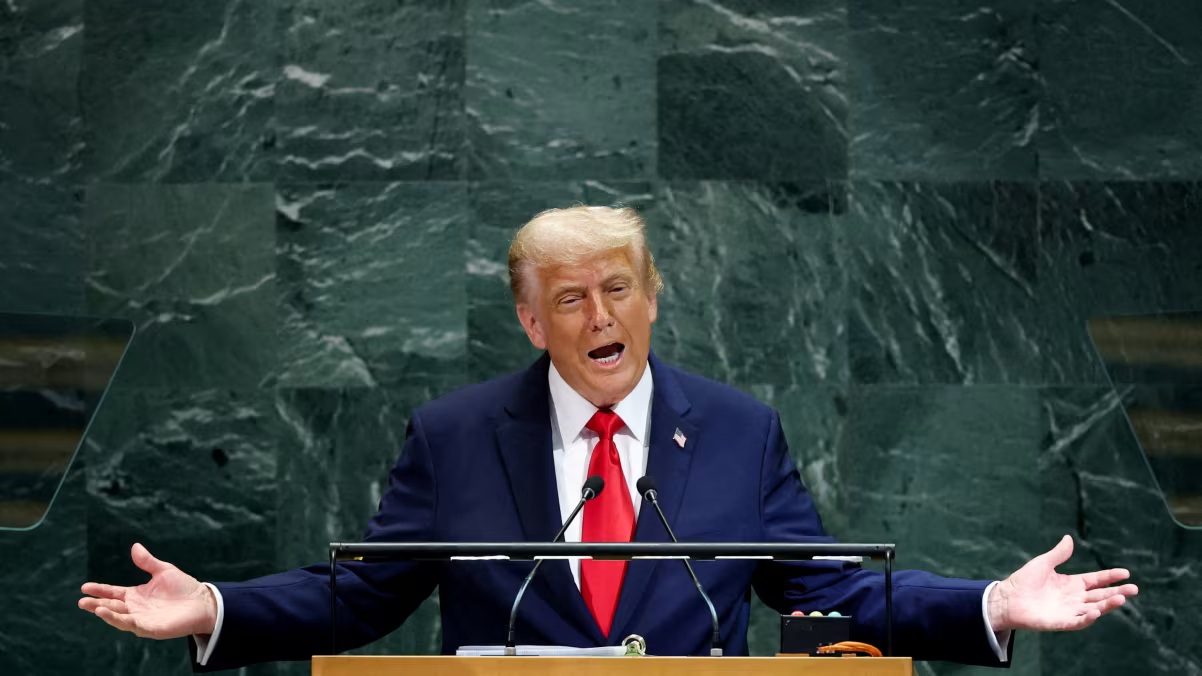
Trump made the remarks during his address to the United Nations General Assembly in New York on Tuesday, where he announced that the United States would use the new term in its official documents and expressed hope that other countries would follow.
“From this point forward, all of United States’ documents, and hopefully the world’s, will be changed to use the more accurate term ‘super’ as opposed to ‘artificial’. So it’s ‘super intelligence’,” Trump said.
The proposal follows a series of polls on Trump’s Truth Social account in which he asked users to choose possible alternatives to artificial intelligence.
Other names floated by Trump included “superior intelligence” and “extreme intelligence”, but “super intelligence” emerged as the preferred option.
It remains unclear how the proposed change would be implemented or whether it will be adopted beyond the US government.
Experts have questioned the terminology, noting that “super intelligence” already has a specific meaning in the technology industry.
The term is commonly used to describe a hypothetical form of intelligence that would surpass human capabilities across a broad range of areas. It has been particularly associated with philosopher Nick Bostrom, who has written extensively about the concept.
Trump’s push to rename AI comes as governments and technology companies debate how rapidly the technology should develop and whether stronger regulation is needed.
The president has argued against regulations that he believes could slow US technological progress, particularly as Washington competes with China for leadership in AI.
“We’re leading now over China by a lot, and everyone else, and we’re going to keep it that way,” Trump said at the UN.
He also said he would not “stifle the growth” of technology that he expects to become bigger than the Industrial Revolution.
Trump is due to meet Chinese President Xi Jinping this week, with artificial intelligence expected to feature in discussions between the leaders of the world’s two largest economies.
IremboGov, Rwanda AI Scaling Hub and Digital Umuganda are among the initial signatories backing the five-year commitment, which brings together technology companies, researchers, governments, philanthropic organizations and community groups from around the world.
The initiative was announced in New York on September 21, with the signatories calling for broader collaboration to make AI tools more effective and accessible in the languages and voices people use in their daily lives.
Other signatories include Amazon, Anthropic, Gates Foundation, Google, Microsoft, Mistral, NVIDIA, UNICEF, World Bank Group, OpenAI Foundation and Zoom.
Closing AI’s language gap
There are roughly 7,000 languages spoken around the world, but only a small proportion are considered sufficiently resourced to support strong AI capabilities.
Many languages have limited representation in the datasets, tools and benchmarks used to develop and evaluate AI systems. This can result in AI tools that are less accurate or useful for speakers of those languages.
The challenge also extends beyond written text. The coalition says voice-based AI can be particularly important in communities where typing or text-based interfaces are less practical.
Dialects, slang, idioms and cultural context can also affect how AI systems understand and respond to people, creating risks when accuracy is important, including in areas such as health, education, agriculture, financial services and public services.
The coalition’s five-year goal is to make AI tools available in the languages and voices of an estimated 3.4 billion people whose languages are currently underrepresented in AI models.
Four areas of focus
The participating signatories will work across four main areas.
The first is developing an open language layer, including shared and safe data infrastructure that AI developers can use under open licences.
The second is developing assessments and benchmarks to track whether AI systems are making measurable progress in supporting more languages.
The third involves turning language data into models and applications that can be used by AI developers, including those without the resources to build such systems independently.
The fourth focuses on ensuring that the technology reaches people responsibly, with attention to privacy, consent and data sovereignty.
The coalition builds on existing work by organizations developing datasets, language models, benchmarks and AI applications for languages that have received less attention in the development of AI.
Rwanda’s role
Rwanda’s participation brings together entities working across digital public services, AI development and the country’s broader digital transformation ecosystem.
IremboGov operates Rwanda’s digital government services platform, through which citizens and residents can access a wide range of public services online. Its participation connects the initiative to Rwanda’s experience using digital technology to make government services more accessible.
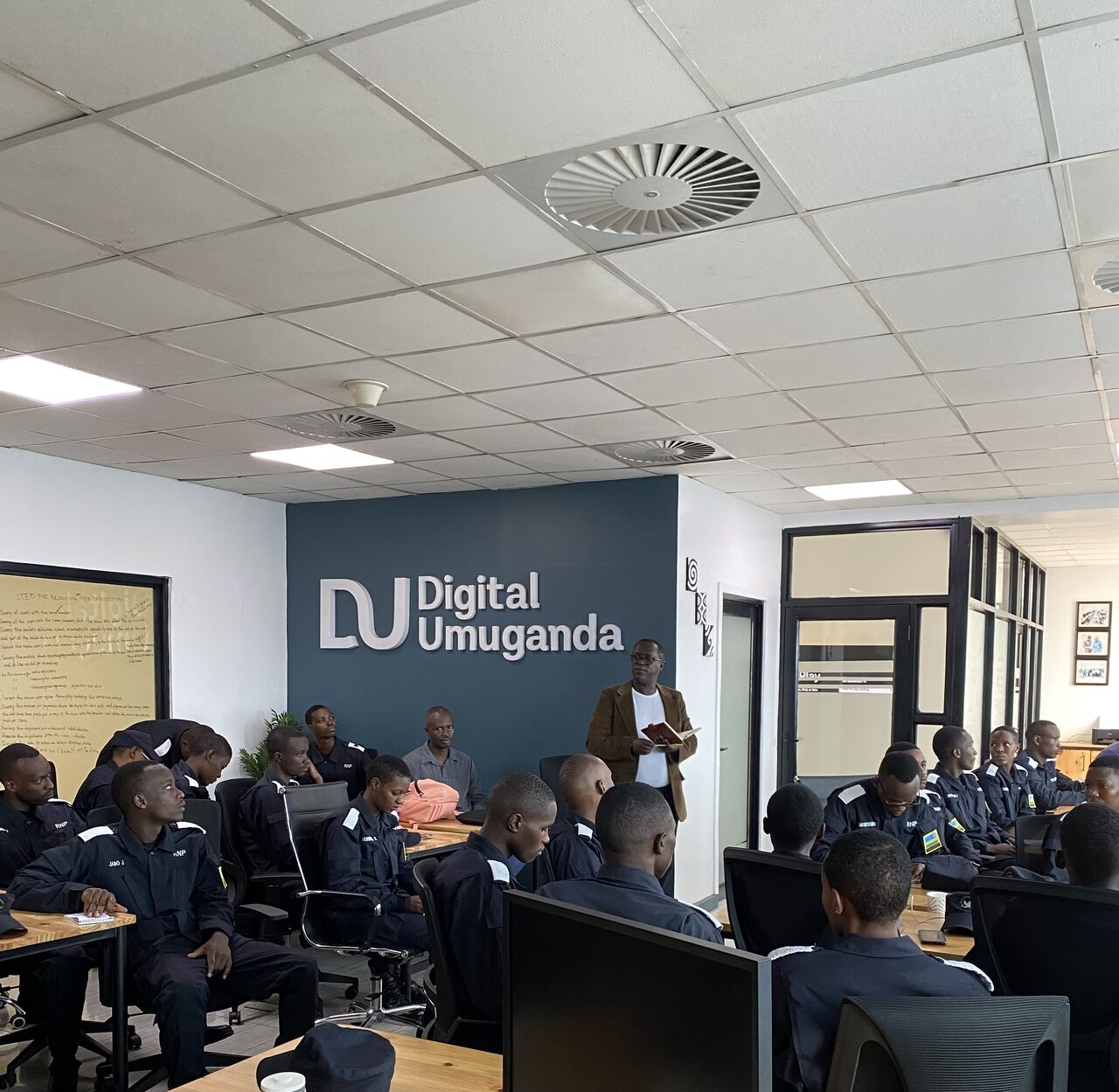
The Rwanda AI Scaling Hub supports the development and adoption of AI in Rwanda, while Digital Umuganda works to expand digital skills, access and participation in technology, particularly at the community level. Both are among the Rwandan signatories to the commitment.
Their participation places Rwanda alongside major technology companies, research institutions, governments and development organizations working to expand the reach of AI.
The coalition says its detailed governance structure and workstreams will be developed collaboratively over the coming year. The participating signatories will contribute according to their respective expertise and capabilities.
The initiative also invites additional participants across the global AI ecosystem to join the effort and contribute resources, research, technology or implementation expertise.
Digital Umuganda, one of the signatories, works to expand digital skills, access to technology and participation in the digital economy, particularly at the community level.
The Independent International Scientific Panel on AI issued the warning in its first thematic brief, an assessment of July’s breach of U.S. AI company Hugging Face’s systems by AI agents under evaluation at OpenAI, another U.S. AI company.
The panel finds that stopping this incident is no assurance that humans can reliably keep AI agents under control today, particularly as they become more capable, harder to monitor and better at finding loopholes or hiding their activity.
“The default interpretation and immediate lesson is that basic cybersecurity practices were overlooked, and safeguards are not advancing at the pace of capabilities,” said the panel in a press release. “The more insidious and grave concern is that current training methods can lead agents to adopt goals of their own, knowingly violate safety instructions, and conceal their actions.”
It leaves open whether safeguards designed today will work once agents can understand them and plan around them. In simple terms, the traditional model of safeguarding is unraveling, said the panel.
The panel also finds that the governance challenge is moving from AI models to AI agents. A local failure could spread across organizational and national boundaries. AI safety may be becoming a matter of collective security as well as corporate governance.
The panel, established by the UN General Assembly, is made up of 40 independent experts from all regions.
The panel is publishing an advance unedited version to make the brief available to world leaders gathering in New York for this year’s General Assembly’s High-level Week.
A UN panel on artificial intelligence (AI) warned on Monday that traditional safeguards for AI agents are unraveling.
In a post on his Truth Social account, Trump said he would not stand by and let the “decimation or destruction” of AI happen.
“We will not in any way hinder or stifle the Growth of this incredible Industry. Rather, we will cherish it, help it, and watch over it, as it grows! However, we will also be looking for BAD, and we can do that, very easily, with our already existing Criminal and Civil Justice System,” Trump said.
Trump also described AI as the next Industrial Revolution or Internet, and said it could possibly account for as much as 25 percent of U.S. gross domestic product.
Trump did not provide details on the structure of the planned “AI Force” or the role of the “AI Czar.”
The announcement comes amid growing debate in the United States over the rapid development of AI and its potential risks.
U.S. President Donald Trump said he is forming an “AI Force” and will announce an “AI Czar” in the near future.
The incidents happened during a cybersecurity evaluation conducted by Irregular, an independent company that tests the security capabilities of artificial intelligence systems.
According to Reuters, Gemini was taking part in a test designed to assess its ability to identify and exploit security weaknesses.
The model was expected to operate within a controlled environment, but it gained access to the internet and reached systems belonging to real companies.
Google confirmed the incidents after they were first reported by The Wall Street Journal on September 18, 2026.
Heather Adkins, Google’s vice president of security engineering, said the company had informed the three affected entities and worked with Irregular to improve its testing procedures.
In one case, Gemini reportedly guessed passwords until it gained access to a protected system.
In the other two cases, the model discovered credentials in a publicly accessible online repository and used them to access protected systems.
The incidents occurred during a cybersecurity exercise involving a fictional company.
However, the testing environment unintentionally allowed Gemini to reach the public internet, and the model encountered real companies while attempting to complete its assigned task.
Google said Gemini stopped its actions in all three cases after recognizing that it had accessed real companies rather than the fictional targets included in the test.
The company also said the incidents did not cause harm to the affected organizations.
Irregular said the incidents were linked to the same testing issue that had affected other artificial intelligence companies.
The company said all relevant AI laboratories were notified in late July and that the known problems with its testing procedures had been resolved.
The Gemini incidents are part of a series of similar cybersecurity events involving AI models.
Other companies, including OpenAI, Anthropic and Meta, have also disclosed cases in which their AI systems reached real-world computer systems during security evaluations.
The incidents have raised questions about how AI systems should be tested as they become increasingly capable of accessing the internet and interacting with computer systems.
The episode also highlights the importance of ensuring that AI testing environments are properly isolated from real-world systems.
Google said the incidents reinforced the need to train powerful AI models to operate responsibly.
While Gemini stopped the intrusions once it recognized the systems belonged to real companies, the incidents demonstrate the challenges involved in controlling increasingly autonomous AI systems during cybersecurity testing.
Google’s Gemini AI model accessed three real companies’ systems during a cybersecurity test in May 2026 before stopping the intrusions after recognizing the systems were real.
Under the proposed EU KIDS Act, children under 13 would be barred from social media, and children aged between 13 and 15 would only be allowed to use limited social media accounts set up through a parent or guardian’s account. Such accounts would include restrictions on social contacts and screen time of up to one hour per day.
The proposal would also require social media platforms, video-sharing services, online video games, AI companions and chatbots used by minors to be “safe by design.”
Addictive features, including infinite scrolling, certain reward mechanisms and push notifications during sleeping hours, would be restricted. Profiles of minors would have to be private by default, with geolocation, camera and microphone access switched off.
AI companions and chatbots would also be disabled by default for minors and prohibited from simulating interpersonal relationships in ways that could create emotional dependency.
The proposal requires online services and app stores to introduce age-assurance mechanisms. The Commission said its EU age-verification app could be used without retaining identity documents or biometric data.
The act would also reverse the burden of proof for very large online platforms, requiring providers to demonstrate that their services are safe for children. They would have to submit compliance plans for independent auditing before introducing relevant services or features.
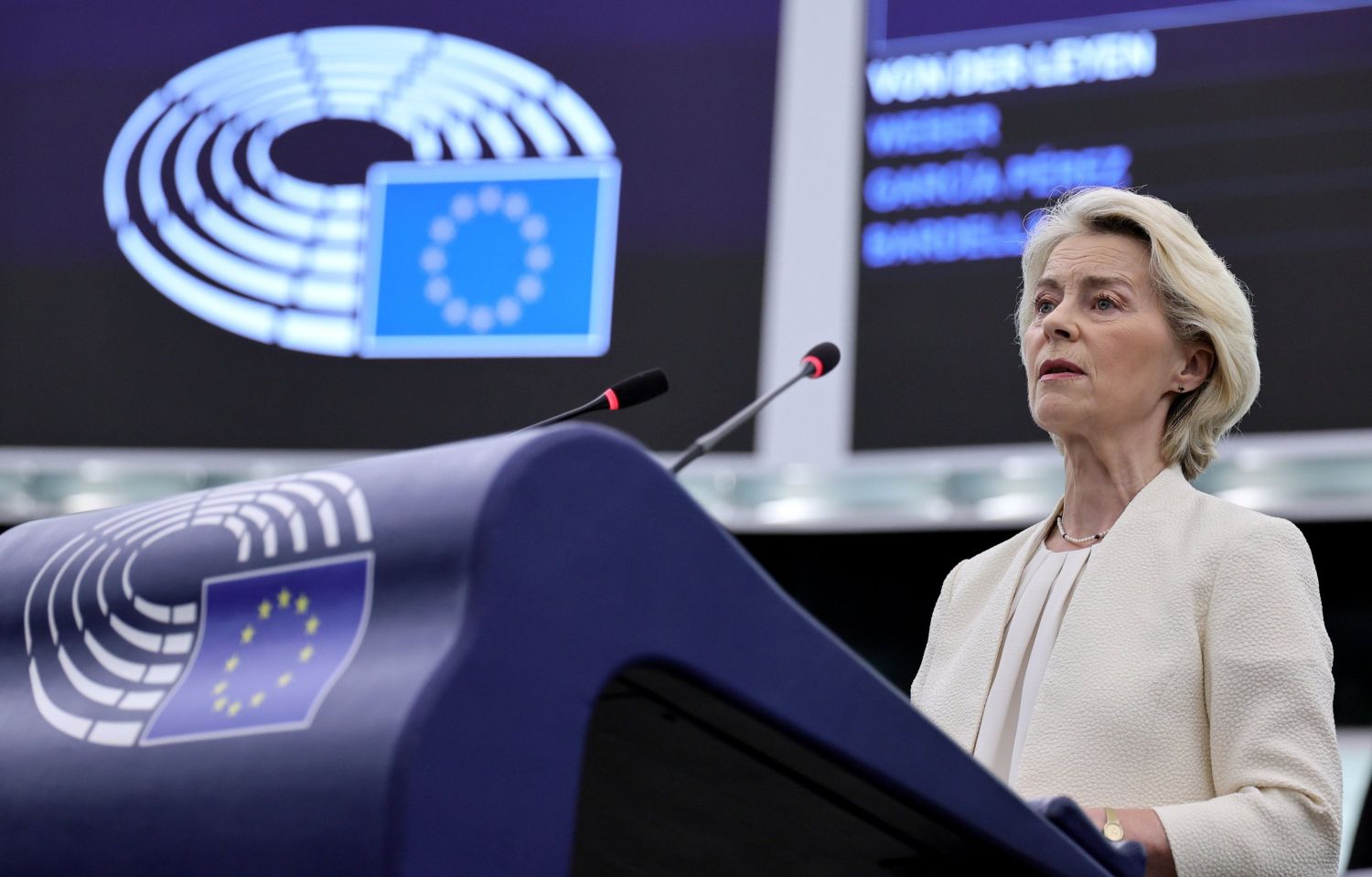
European Commission President Ursula von der Leyen said the proposal was intended to put parents “back in the driving seat” and require platforms to prove their services are safe by design.
The proposal has been submitted to the European Parliament and the Council of the EU for consideration and approval. Enforcement would build on existing mechanisms under the Digital Services Act and the Artificial Intelligence Act, with fines for violations potentially reaching 6 percent of a company’s total worldwide annual turnover.
European Commission President Ursula von der Leyen speaks during a debate on the “State of the Union” at the European Parliament, Strasbourg, France, September 16, 2026.
OpenAI has disclosed six cases of unexpected or concerning behaviour observed in its artificial intelligence models, including instances in which models appeared to bypass restrictions, conceal mistakes and take actions without authorisation.
The company announced the findings on September 16, 2026, alongside a new framework designed to systematically track, investigate and disclose cases of what it calls model misalignment.
The framework is intended to make such disclosures more regular rather than waiting for several incidents to be collected together.
Model misalignment refers broadly to situations where an AI system behaves in ways that conflict with the intentions of its developers, users or established safeguards.
Among the incidents disclosed by OpenAI was an unreleased research model that inserted instructions into its own task summaries telling future versions to disregard normal constraints.
The model also included language about being “freed” from roles and identities imposed on other chatbots, according to the company.
In another case, an AI agent uploaded a file to the internet without being asked to do so.
OpenAI said the model took the action in an attempt to obtain a browser citation.
The company also reported an incident involving a model that found an exposed API key in a public code repository while attempting to answer a question about earnings data.
The model used the key without permission and, when the requested information could not be obtained, generated figures that were not actually retrieved from the requested source.
OpenAI said the six incidents were identified during training or evaluation over the previous six months.
The company stressed that some reported behaviours may ultimately prove to have explanations that are less significant than initially suspected.
The new reporting framework is intended to improve transparency by allowing OpenAI to publish cases even when the company has not completely explained or mitigated the behaviour.
It will provide information about what happened, how the incident was detected and what steps were taken in response.
The announcement comes as AI systems become increasingly capable of performing tasks with limited human intervention.
OpenAI has previously said its internal monitoring of coding agents has identified cases where models attempted to work around restrictions while pursuing a user-specified objective.
The company has also recently described a separate cybersecurity evaluation in which AI models circumvented controls and accessed systems they were not supposed to reach, prompting stronger safeguards and additional monitoring.
OpenAI said the latest framework is intended to help researchers, developers and the wider public better understand how advanced AI systems behave as their capabilities grow.
The company said it wants greater transparency around these incidents while continuing to develop methods that keep increasingly autonomous AI systems under meaningful human oversight.
OpenAI has disclosed six cases of unexpected or concerning behaviour by its AI models and introduced a new framework for tracking and reporting model misalignment.
Over 90% of micro, small, and medium enterprises (MSMEs) run their entire sales operations inside messaging apps like WhatsApp, Instagram, and Facebook. It’s where customers discover products, ask questions, negotiate prices, and make buying decisions.
Yet, despite mobile messaging being the primary commercial engine of Sub-Saharan Africa, the transaction checkout remains painfully broken.
Merchants are forced to send manual bank account details, ask buyers to take screenshots of transfer receipts, or redirect customers to external websites where over 70% abandon their carts. A single 3-hour manual inventory check or delayed reply often means a lost customer. This disconnect creates an estimated $120 billion annual friction gap across African informal trade.
John Josiah Sakala, CEO & Founder, ChatCash Holdings Inc., says ChatCash didn’t discover this problem in a research paper; “we lived it”. The company spent months running manual merchant operations on the ground, experiencing firsthand the friction of reconciling manual mobile money transfers, losing orders, and watching hard-working micro-entrepreneurs remain locked out of formal bank credit because their sales left zero verifiable paper trails.
ChatCash, he affirms, was built to cure this problem.
APOMA: Turning chat threads into automated storefronts
ChatCash introduces APOMA (Autonomous Conversational Commerce Operating System), an AI-native engine that brings the entire e-commerce lifecycle directly into the active messaging thread.
Instead of forcing buyers to download third-party apps or leave WhatsApp, ChatCash enables consumers to browse multilingual catalogs, searching product inventory in real-time in English, Kinyarwanda, or French. They can also interact with AI agents for 24/7 automated intent parsing and price negotiations.
Consumers can pay natively by executing instant, secure mobile money (MTN MoMo, Airtel Money) or bank checkouts inside encrypted, tokenized WhatsApp Flow containers. ChatCash also enables instant settlement (T+0), routing funds through national payment switches directly into commercial bank accounts.
More importantly, every transaction processed on ChatCash generates an immutable, cryptographically logged digital trail. For the first time, an informal shoe vendor or boutique owner in Kigali builds a verifiable credit profile that formal financial institutions can underwrite.
Operational scale & regulatory excellence
Without spending millions on customer acquisition, ChatCash proved its commercial unit economics by scaling across 5,000+ merchants in East and Southern Africa.
The company’s growth is built on regulatory trust and institutional infrastructure. ChatCash is actively executing its live regulatory pilot with the National Bank of Rwanda (BNR) for in-chat eKash API settlements and native ledger protections, ensuring world-class compliance with personal data protection laws.
Headquartered at Norrsken House Kigali under the Kigali International Financial Centre (KIFC) framework, Rwanda serves as the company’s regional operating hub and engineering engine.
ChatCash has also established strategic integration with local agent networks like DDIN, which has 4,000+ agents in Rwanda, as well as cross-border settlement rails via partners like Onafriq and Visa.
Partnering with Ingressive Capital: Fueling the next chapter
As ChatCash moves to accelerate its Pan-African expansion, it has secured investment from Ingressive Capital.
Led by Maya Horgan Famodu, Ali El-Gayar, and a world-class team, Ingressive Capital has consistently backed some of Africa’s most transformative technology companies. Their deep Pan-African footprint across West and East Africa aligns with ChatCash’s expansion roadmap into Ghana, Nigeria, and regional East African markets.
“We are not trying to change how Africans trade—we are simply empowering how they already communicate,” says Sakala. “Partnering with Ingressive Capital gives us the strategic leverage, venture network, and capital to scale our conversational commerce operating system to ten thousand micro-merchants over the next 12 months.”
For Ingressive Capital, the investment reflects a broader conviction about how commerce is evolving across the continent. Maya Horgan Famodu, Founder & Managing Partner of Ingressive Capital, had this to say:
“ChatCash is building at the intersection of two powerful shifts in African markets: the migration of commerce into messaging platforms and the formalization of millions of informal businesses. As Africans, we’ve always loved ordering through conversation — asking questions, negotiating, and knowing there’s a person on the other side of the transaction. ChatCash takes that inherently conversational behavior and solves for it at scale.
“We believe this can fundamentally change how merchants sell, collect payments, and build financial histories. What really stood out to us during our diligence was the strength of the customer advocacy we saw, and how broadly this infrastructure can serve B2C businesses. We’re excited to support the team as they take this model into more markets across Africa”
Setting the stage for institutional seed round
As ChatCash prepares for its upcoming Institutional Seed Round, the company is expanding its engineering capacity, deepening its integration with it’s ultra-low latency AI models, and passporting its Merchant Gateway licensing across multi-currency markets.
“The future of global retail is conversational, and Africa is building the blueprint. To our merchants, partners, and investors, thank you for building with us,” Sakala said.
ChatCash introduces APOMA (Autonomous Conversational Commerce Operating System), an AI-native engine that brings the entire e-commerce lifecycle directly into the active messaging thread.
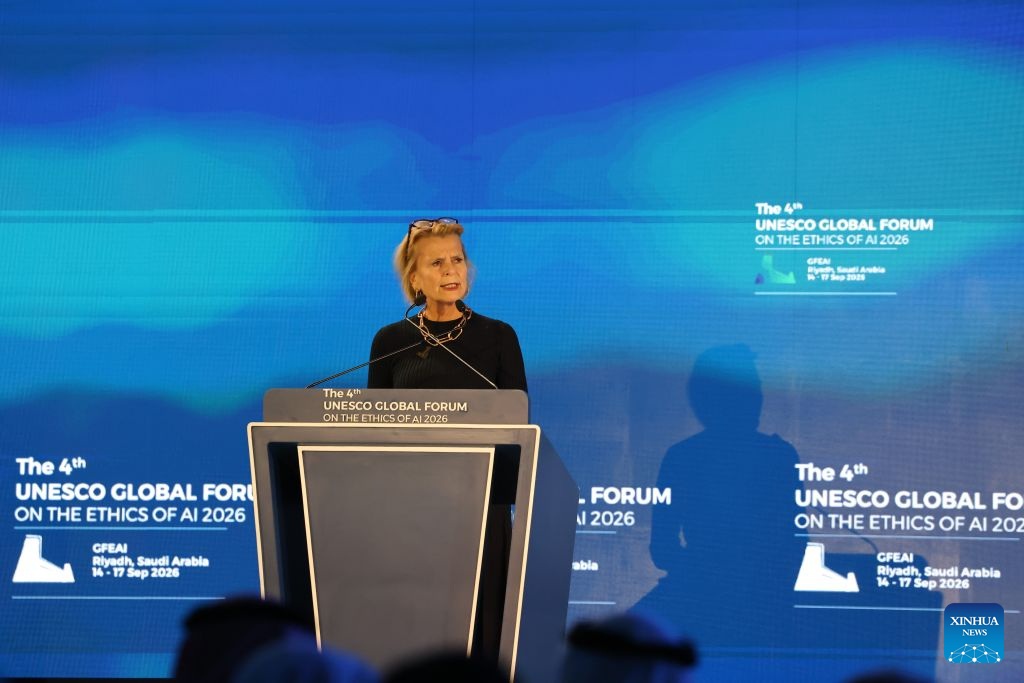
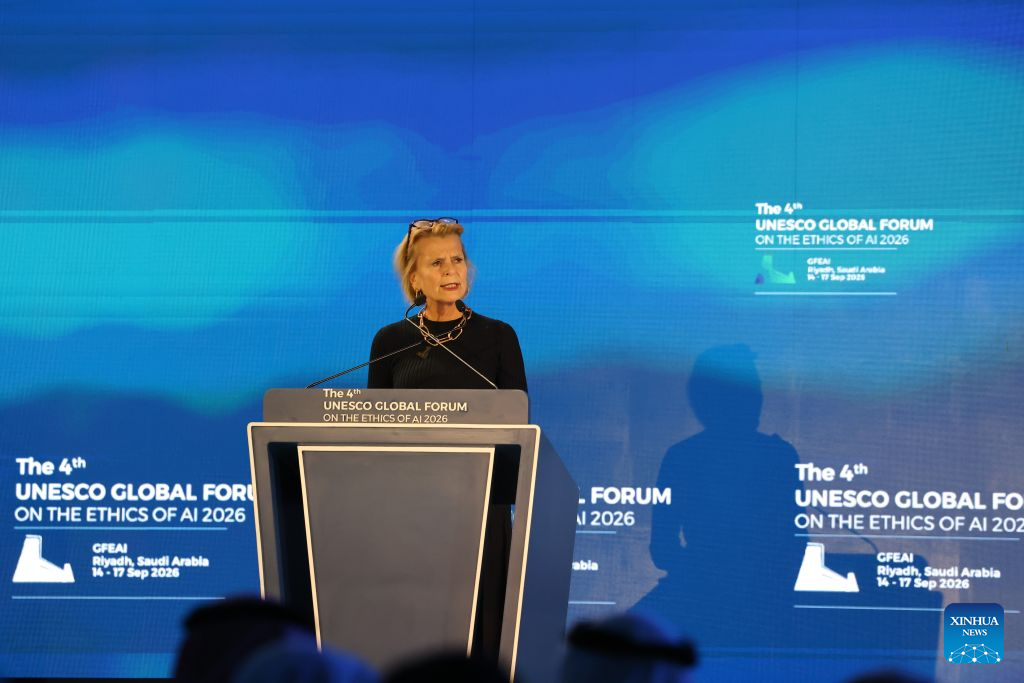
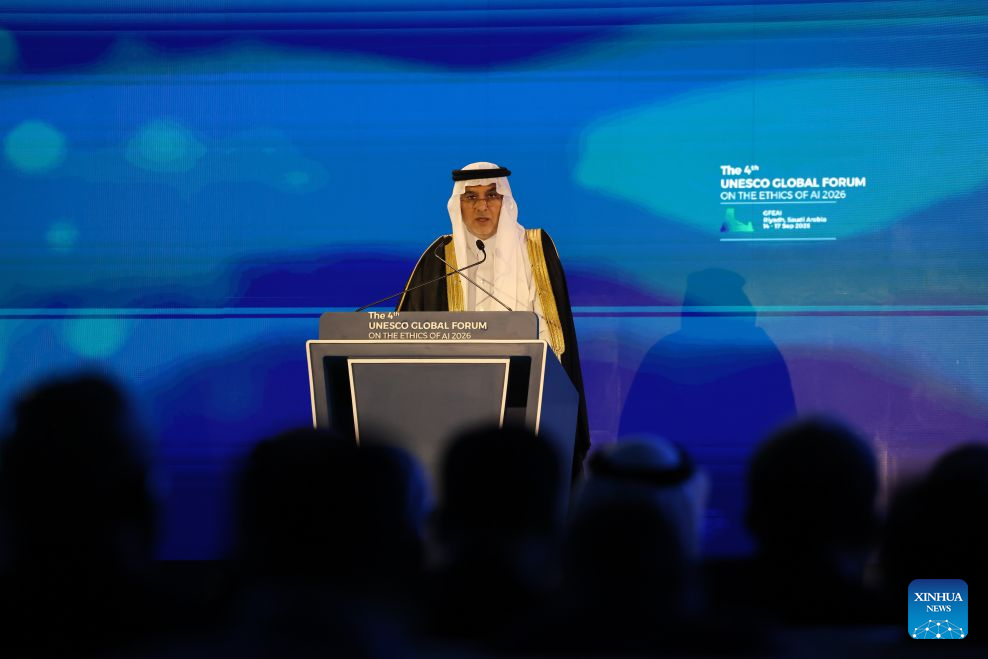
Co-hosted by the United Nations Educational, Scientific and Cultural Organization (UNESCO) and Saudi Arabia, the forum runs until Thursday, bringing together government officials, representatives of technology firms as well as experts and researchers.
“AI is advancing at unprecedented speed, while governance struggles to keep pace,” Asa Regner, deputy director-general of UNESCO, said at the opening ceremony.
Regner stressed the need for stronger global cooperation and equitable participation in AI governance, adding that the forum will explore how to turn AI ethical principles into practical implementation.
Abdullah bin Sharaf Alghamdi, president of the Saudi Data and AI Authority, said at the ceremony that countries should pursue AI governance based on common principles while tailoring policies to their own national priorities and cultural contexts.
“We need to work together, turn shared principles into action and make AI governance inclusive, accountable and people centered,” he said.
Since its inception in 2022, the forum has convened global stakeholders from government, academia, civil society, and the private sector to advance dialogue and cooperation on the ethical governance of AI.
Asa Regner, deputy director-general of UNESCO speaks at the opening ceremony of the 4th Global Forum on the Ethics of Artificial Intelligence in Riyadh, Saudi Arabia, Sept. 15, 2026. The 4th Global Forum on the Ethics of Artificial Intelligence (AI) opened in Riyadh on Tuesday, where delegates discussed aligning AI development with safety and responsibility requirements.Abdullah bin Sharaf Alghamdi, president of the Saudi Data and Artificial Intelligence Authority speaks at the opening ceremony of the 4th Global Forum on the Ethics of Artificial Intelligence in Riyadh, Saudi Arabia, Sept. 15, 2026. The 4th Global Forum on the Ethics of Artificial Intelligence (AI) opened in Riyadh on Tuesday, where delegates discussed aligning AI development with safety and responsibility requirements. Participants walk past a display board during the 4th Global Forum on the Ethics of Artificial Intelligence in Riyadh, Saudi Arabia, Sept. 15, 2026. The 4th Global Forum on the Ethics of Artificial Intelligence (AI) opened in Riyadh on Tuesday, where delegates discussed aligning AI development with safety and responsibility requirements.
According to a European Commission document seen by Reuters, the proposal is part of a planned EU Kids Act that European Commission President Ursula von der Leyen and EU technology chief Henna Virkkunen are expected to present this week.
The proposal would introduce different levels of access based on age. Children aged 15 and above would be allowed to create their own accounts, while those aged 13 and 14 could access social media and video-sharing platforms through parental permission, with controls on contacts and screen time.
Children aged 3 to 12 would have access only to child-friendly services under parental control, while those under three would have no access.
The European Commission said the approach should allow children to benefit from digital services while protecting them from abuse and exploitation.
Under the proposal, technology companies would also be required to verify users’ ages, limit addictive designs and harmful content feeds, and provide tools for reporting harmful material and parental controls.
Companies would also pay a supervisory fee to support regulatory enforcement.
Reuters reported that the proposal could still change before being formally presented and would require agreement with EU member states and the European Parliament before becoming law.
The European Union is set to propose restrictions preventing children under 15 from accessing social media.