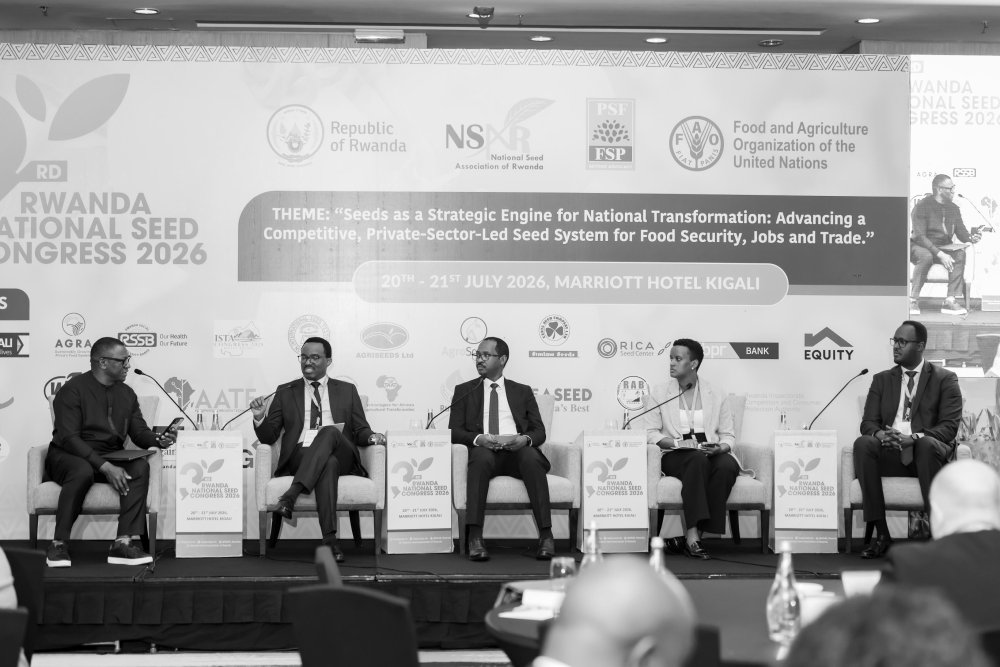
The announcement was made during the opening of the third National Seed Conference in Kigali, a two-day event that brought together policymakers, researchers, seed producers and agricultural experts from more than 20 countries to discuss the role of quality seeds in strengthening food security and promoting commercial agriculture.
Speaking at the conference, the Director General for Agriculture Modernisation at the Ministry of Agriculture and Animal Resources (MINAGRI), Dr Patrick Karangwa, said Rwanda no longer imports food crop seeds after investing heavily in research and local seed production over the past several years.
He explained that until about eight years ago, the country depended almost entirely on imported seeds for staple food crops. However, government investment in agricultural research, seed multiplication and production infrastructure has enabled Rwanda to meet its domestic demand.
“Quality seed is the foundation of high agricultural productivity, and it begins with strong research,” Dr Karangwa said. “The government invested significantly in research, equipment and the seed production sector. As a result, since 2021, farmers have been able to access all the food crop seeds they need within the country.”
Although farmers remain free to import seeds, he noted that imported food crop seeds are no longer eligible for government subsidies because certified alternatives are now readily available on the local market.
However, Rwanda still imports seeds for specialised crops that are not considered food staples, including plants used in perfume production and spices such as chilli peppers.
“We have not yet prioritised those crops because our initial focus was on ensuring food security through the local production of food crop seeds,” he said.
Rwanda targeting export markets
Having achieved self-sufficiency, Rwanda is now encouraging local seed producers to expand beyond the domestic market and explore business opportunities across Africa.
According to Dr. Karangwa, several Rwandan seed companies have already begun testing their products in different African countries as part of efforts to secure export markets.
“Our seed producers have already started exploring regional markets and conducting trials in several countries,” he said. “They are looking beyond Rwanda because relying only on the domestic market could result in surplus production that cannot be absorbed locally.”
He noted that exporting seeds is a complex process that requires producers to meet international quality standards and obtain certification from recognised regulatory bodies.
Seeds must also undergo field trials in destination countries to confirm that they perform well under local climatic and agricultural conditions before they can be commercialised.
Regulatory gaps remain a challenge
Innocent Namuhoranye, Chairperson of the National Seed Association of Rwanda (NSAR) and CEO of Agriseeds Ltd, said local producers have already started exporting vegetable seeds within the region, while maize seeds are currently undergoing trials in the Central African Republic.
Despite this progress, he said outdated regulations remain one of the biggest obstacles to expanding Rwanda’s seed exports.
“There is still a gap in our regulatory framework, particularly in the certification of locally produced seeds,” Namuhoranye said. “Our legal system needs to be aligned with international standards so that Rwandan seed producers can compete more easily in global markets.”
Africa’s share of the global seed market remains small
The Minister of State for Agriculture and Animal Resources, Dr. Solange Uwituze, said Africa continues to play only a minor role in the global seed industry despite its enormous agricultural potential.
She noted that the global seed market is currently valued at around $85 billion annually, yet Africa accounts for only 2.2 percent of that market.
“That is a significant gap, but it is also a huge opportunity for African countries to increase their participation in the global seed trade,” she said.
Within Africa, the seed market is estimated to be worth $3.45 billion, with South Africa accounting for nearly half of the continent’s market, while investment in the sector remains relatively low in many other countries.
Farmers urged to embrace certified seeds
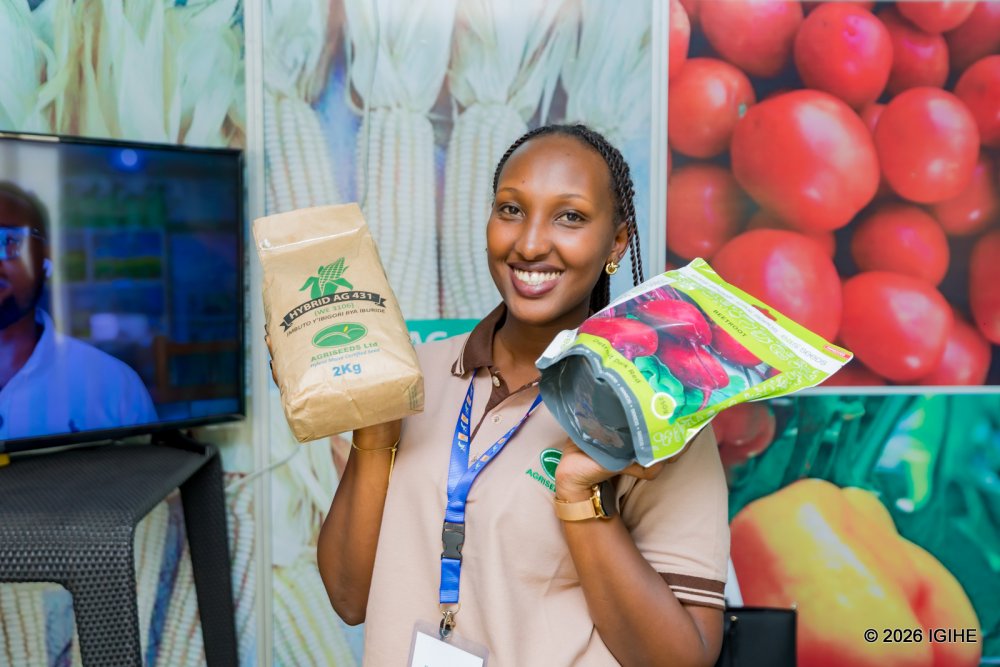
Meanwhile, Lucie Ikirezi Uwase, Head of Agriculture at Agriseeds Ltd, a Rwandan company specialising in maize and vegetable seed production, said the market for certified seeds continues to grow, but changing farmers’ attitudes remains a challenge.
She observed that many farmers still save seeds from previous harvests for replanting instead of purchasing certified seeds, which are developed to deliver higher yields and greater resistance to pests and diseases.
“Farmers need to understand that seeds harvested from previous crops should not automatically be replanted,” she said. “To improve productivity and increase harvests, they should purchase certified seeds every planting season.”
As Rwanda strengthens its seed industry and expands local production, government officials believe the country is well positioned to become a regional supplier of high-quality certified seeds, supporting both agricultural transformation and food security across Africa.


Leave a Reply