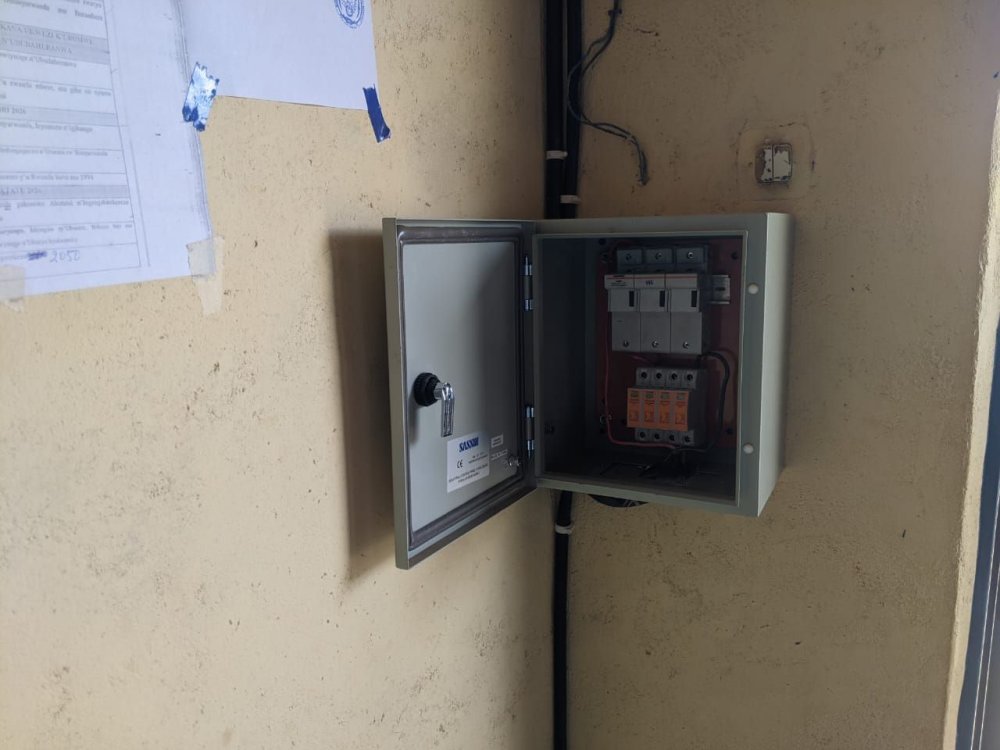
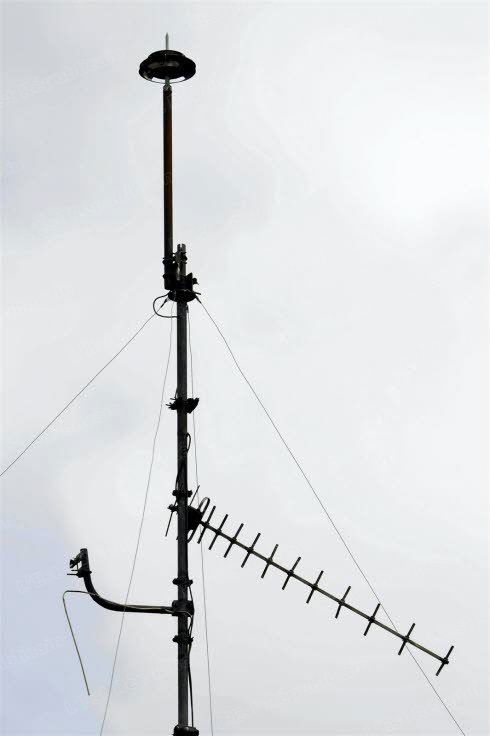
The disclosure was made by the Director General of Surveillance and Preparedness at MINEMA, Christine Niyotwambaza, on July 23, 2026, during the inauguration of high-capacity lightning protection systems installed at GS Musango and Musango local church center, in Rwankuba Sector, Karongi District.
They are located in one of the five sectors in Karongi District that are frequently affected by lightning strikes.
Residents say lightning remains a deadly threat in the area.
John Dushimimana, a resident of Rwankuba Sector, told IGIHE that lightning has repeatedly claimed lives, killed livestock and damaged electrical appliances.
“I know more than seven people from Rwankuba Sector who have died after being struck by lightning. The main reason is that we do not have lightning protection systems in our homes. We do not know where to buy them or how much they cost,” he said.
Karongi District Vice Mayor in charge of Economic Development, Julienne Ntakirutimana, said the sectors most vulnerable to lightning are Rwankuba, Gitesi, Ruganda and Rugabano because they lie along the Congo-Nile Ridge, where high-altitude terrain makes lightning strikes more common.
Niyotwambaza said the high cost of lightning protection systems is the main reason many households remain unprotected.
“Lightning protection systems are very expensive. You cannot find one costing less than Rwf3 million,” she said.
She revealed that MINEMA, in partnership with RP Karongi College, the Rwanda Standards Board (RSB) and the National Council for Science and Technology (NCST), is set to assess a locally developed lightning protection system next week.
According to Niyotwambaza, Rwanda currently lacks the capacity to certify the equipment, meaning it will be sent abroad for technical evaluation.
“If experts who specialize in lightning protection confirm that it meets the required safety standards, we will move to the next stage of manufacturing it locally. Once production begins in Rwanda, we will also work on reducing its cost so that ordinary citizens can afford to install it on their homes,” she said.
MINEMA statistics show that over the past four years, lightning strikes have killed 287 people and left more than 950 others with permanent disabilities.
Amiri Mugarura, an official at Otawa, a company that distributes lightning protection systems in Rwanda, said plastering houses with cement and wearing plastic-soled shoes can reduce the risk of being struck by lightning by up to 85 percent.

Leave a Reply