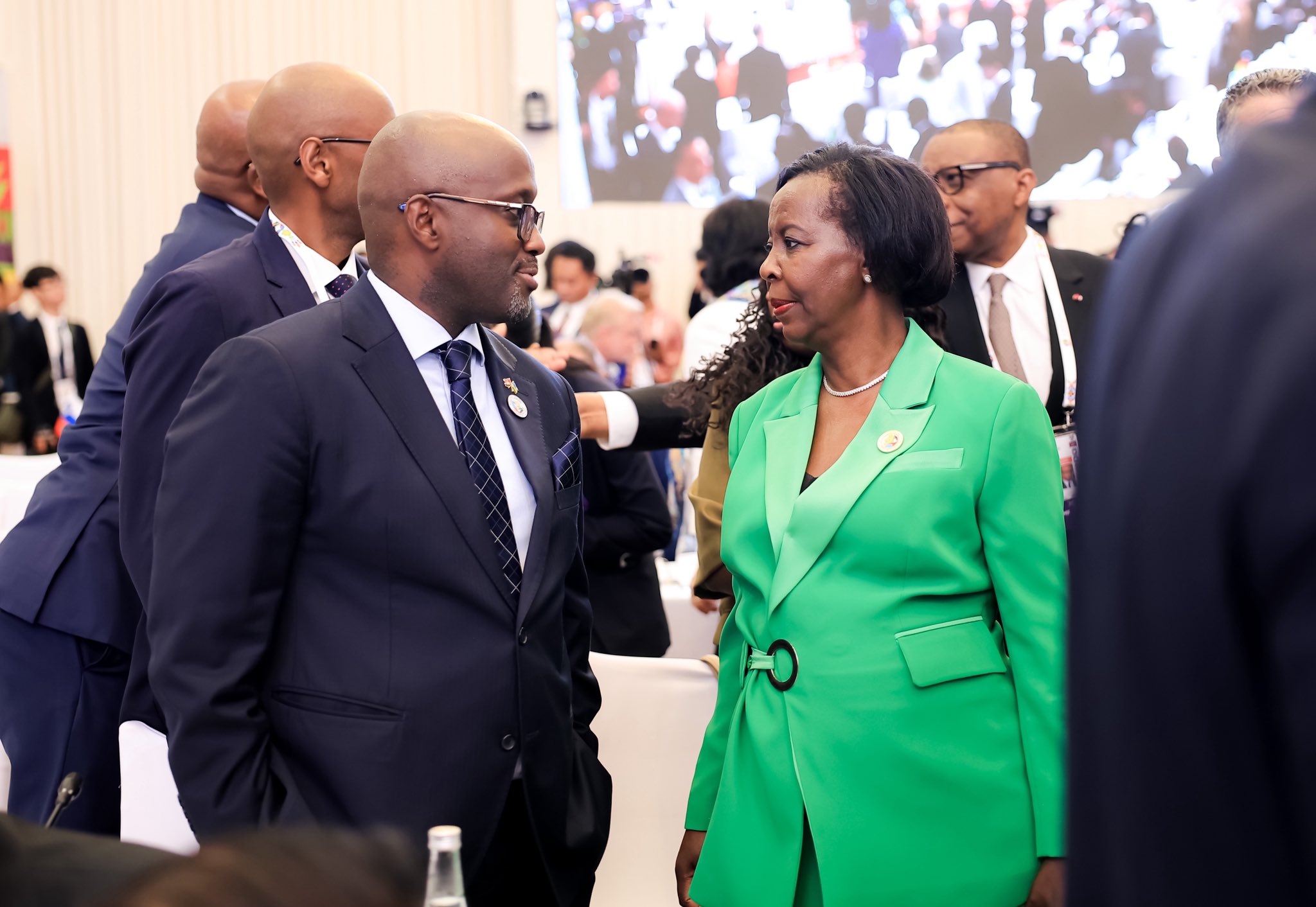
In an exclusive interview with IGIHE, Nduhungirehe explained how the DRC threatened to withdraw from the organisation if Louise Mushikiwabo was re-elected, France’s subsequent diplomatic efforts to prevent her candidacy from proceeding, and how President Kagame engaged three African leaders in efforts to find a compromise during the 20th Francophonie Summit in Phnom Penh, Cambodia, on November 15–16, 2026.
The summit concluded without the election of a new Secretary-General, with member states instead agreeing to extend Mushikiwabo’s tenure by 12 months to allow reforms to the organisation’s electoral rules ahead of the next election in 2027.
Nduhungirehe said the outcome followed disagreements between countries that wanted the election to proceed under the existing rules and those seeking to prevent it.
“Some wanted the election not to take place under any circumstances, while others wanted the rules to be respected,” he said.
He identified France and the DRC as the leading opponents of holding the election, arguing that they knew Mushikiwabo had strong chances of securing another term.
DRC threatened to leave Francophonie over Mushikiwabo’s re-election
According to Nduhungirehe, diplomatic exchanges between Paris and Kinshasa intensified ahead of the summit, including visits by the French Foreign Minister to Kinshasa, where he met President Tshisekedi, and a subsequent visit by the DRC’s Foreign Minister to Paris.
Following these engagements, Congolese officials informed their French counterparts that the country would withdraw from Francophonie if Mushikiwabo was re-elected.
Nduhungirehe described the threat as an attempt to pressure the organisation into accepting the DRC’s position.
“What happened is that, following the visit of the French Foreign Minister to Kinshasa, where he met President Tshisekedi, and the subsequent visit of the DRC Foreign Minister to Paris, Congolese leaders told the French Foreign Minister that the DRC would leave Francophonie if Louise Mushikiwabo was re-elected,” he said.
He criticised France for accepting what he described as pressure and subsequently asking Mushikiwabo to withdraw her candidacy while promoting Dacian Cioloș, a candidate from Romania.
He further alleged that French diplomatic representatives approached different capitals, particularly in countries supporting Rwanda’s candidate, spreading information that Rwanda was preparing to withdraw Mushikiwabo’s candidacy.
According to him, the reports were false and were intended to weaken support for her re-election.
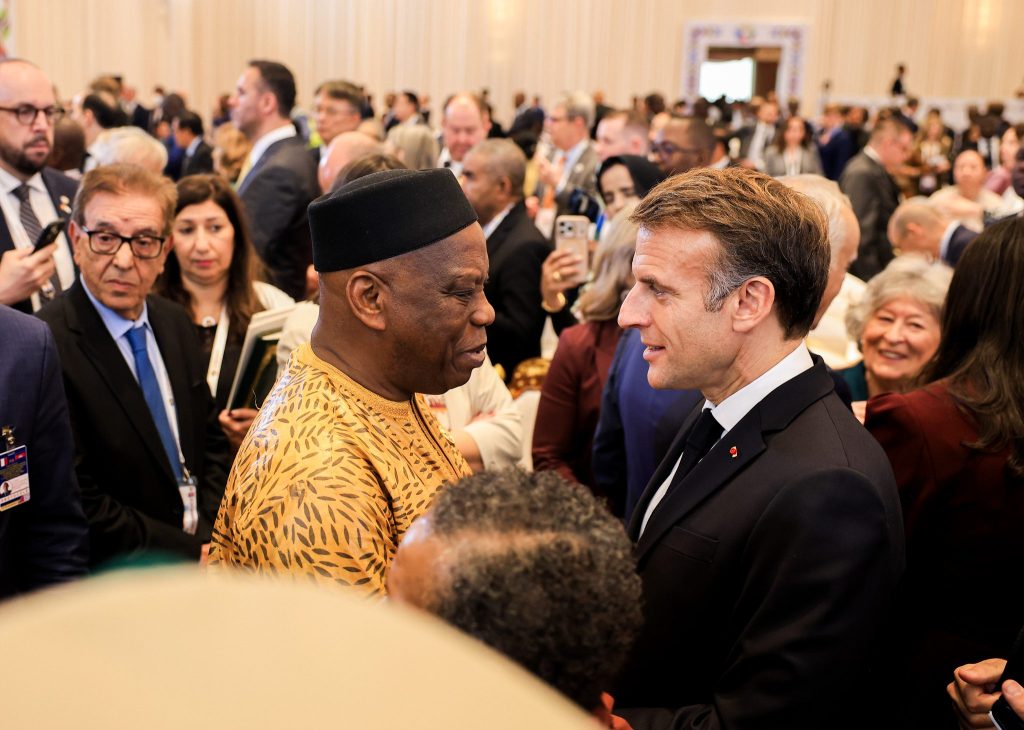
Macron wrote to Kagame, setting a November 14 deadline
One of the developments Nduhungirehe highlighted was a letter Macron sent to President Kagame shortly before the summit.
He said the letter arrived on the night of November 12, 2026, proposing that Kagame and Tshisekedi reach an agreement by November 14. If they failed, both countries would have to withdraw their candidates.
“On the night of November 12, the President of the Republic received a letter from French President Emmanuel Macron that we could not accept,” Nduhungirehe said.
He added: “It gave President Kagame and President Tshisekedi a deadline of November 14 to reach an agreement. If they failed to do so, both heads of state were expected to withdraw their candidates.”
Nduhungirehe said Rwanda rejected the proposal, arguing that it contradicted the principles of an international organisation whose membership extends beyond 90 countries and governments, including 53 full members.
He said no country, regardless of its influence, should dictate how elections are conducted or compel other members to support its preferred candidate.
“Francophonie must not become the old Françafrique,” he said, referring to the historical relationship between France and its former African colonies, in which Paris has been accused of maintaining significant political and economic influence.
“Francophonie is an international organisation comprising more than 90 countries and governments. No country, however powerful, should dictate how elections are conducted or force others to accept its candidate.”
He also questioned France’s position, saying the organisation should operate on the basis of equality among its members rather than the influence of individual countries.
Kagame consulted three African leaders to find a compromise
As disagreements continued during the closed-door meeting of heads of state and government in Phnom Penh, President Kagame proposed a compromise to prevent the organisation from remaining divided over the election.
Nduhungirehe said Kagame initially proposed extending Mushikiwabo’s mandate by two years, until the next Francophonie Summit scheduled to take place in Ottawa, Canada, in 2028.
During that period, she would oversee reforms to the rules governing the election of the Secretary-General. Rwanda also committed not to present another candidate for the position after the extension, whether Mushikiwabo or another Rwandan.
Kagame discussed the proposal with three African leaders: Senegalese President Bassirou Diomaye Faye, Togo’s President Faure Gnassingbé and Benin’s President Romuald Wadagni.
“Because the disagreements continued, President Kagame proposed a compromise. He spoke with President Bassirou Diomaye Faye of Senegal, Faure Gnassingbé of Togo and President Romuald Wadagni of Benin,” Nduhungirehe said.
He explained that the three leaders suggested reducing the proposed extension from two years to 12 months, a request Rwanda accepted.
“During our discussions with the three African leaders, they asked us to reduce the two years we had proposed to one year, meaning 12 months. We accepted,” he said.
The proposal was subsequently presented to Tshisekedi, who initially preferred a different arrangement.
According to Nduhungirehe, the Congolese President wanted Mushikiwabo’s tenure to end, with the organisation temporarily placed under its Administrator, Caroline St-Hilaire, a Canadian who assumed the position in 2023.
However, following further discussions, Tshisekedi eventually accepted the proposal to extend Mushikiwabo’s tenure by 12 months.
The arrangement allows her to remain in office while the organisation prepares changes to its electoral framework ahead of the 2027 election.
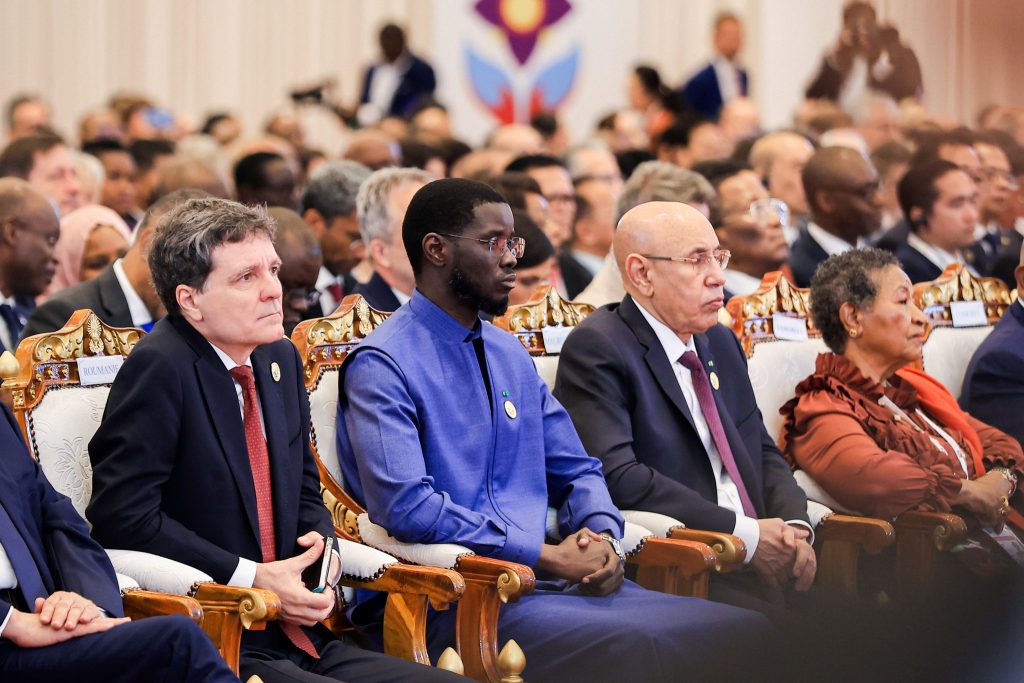
Nduhungirehe questions DRC’s support for Romanian candidate
The minister also questioned the DRC’s decision to support Romanian candidate Dacian Cioloș despite an African Union position supporting three African candidates for the Francophonie leadership.
He said the African Union Executive Council, which met in Addis Ababa on July 28–29, 2026, had endorsed three candidates: Mushikiwabo of Rwanda, Juliana Amato Lumumba of the DRC and Coumba Ba of Mauritania.
The decision was intended to encourage African countries to agree on one candidate from the continent rather than support candidates from outside Africa.
“The decision supported three African candidates and called on African countries to choose one among them. Obviously, it was not intended to support a candidate from outside Africa,” he said.
Nduhungirehe said he was surprised that Tshisekedi instead backed Cioloș and publicly promoted his candidacy during the closed-door meeting in Cambodia.
“The DRC chose to align itself with a candidate from Romania. Even during the closed-door meeting, the Congolese President campaigned for that candidate, saying he was the best candidate for Africa. That was difficult to understand,” he said.
Electoral rules to undergo three major reforms
Nduhungirehe said discussions among heads of state in Phnom Penh identified three main areas requiring changes in the rules governing the election of the Francophonie Secretary-General.
The first concerns the number of terms a Secretary-General can serve. He explained that the existing rules do not set a limit, but several leaders proposed restricting the position to two terms.
The second concerns geographical rotation, which would provide for the position to alternate among different regions or continents represented in the organisation.
The third involves changing the voting system from a simple majority to an absolute majority.
Under the current rules, a candidate who receives more votes than the other contenders can win, even without securing more than half of the votes cast.
However, Nduhungirehe said several heads of state supported requiring a candidate to obtain more than half of the votes.
“The rules we currently have state that the Secretary-General is elected by a simple majority. This means that the candidate who receives more votes than the others wins,” he said.
“But many heads of state supported moving to an absolute majority, where a candidate must secure more than half of the votes. This would mean holding two rounds of voting if no candidate achieves the required majority in the first round.”
These are among the reforms Mushikiwabo is expected to oversee during her 12-month extension.
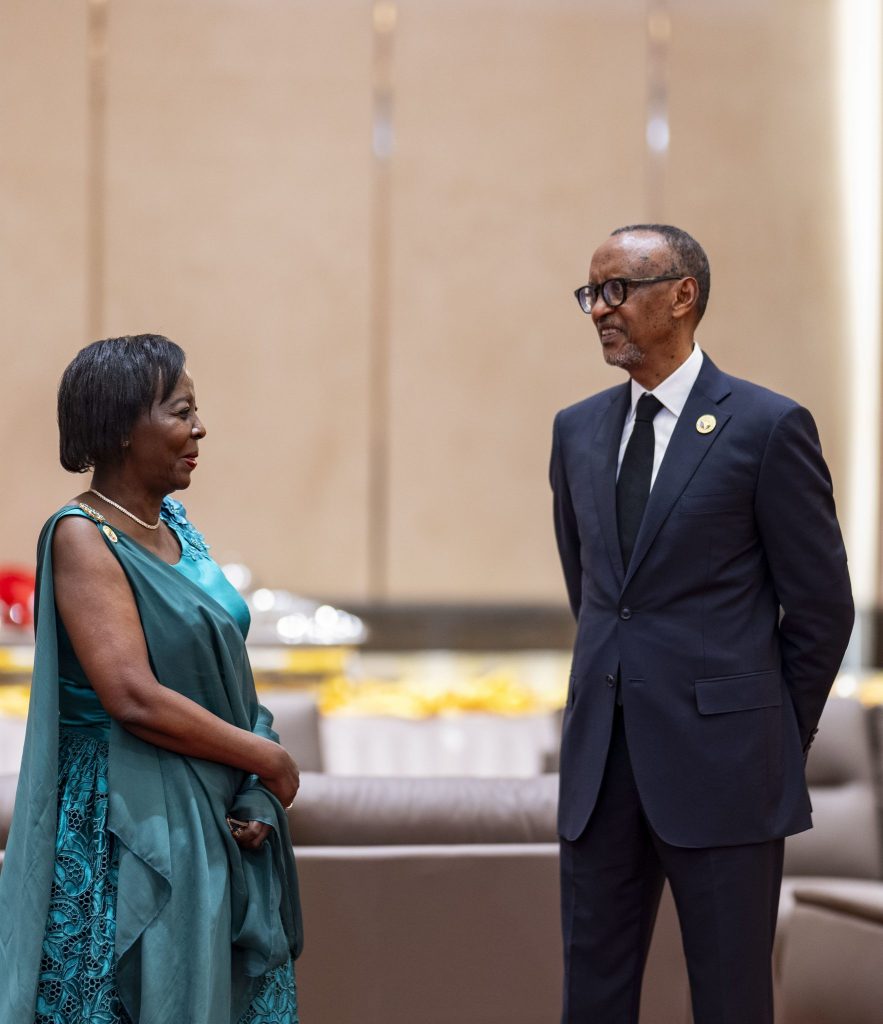
France accused of pressuring countries through development cooperation
Nduhungirehe also alleged that France increased pressure on countries supporting Mushikiwabo in the days leading up to the summit.
He said some governments received messages suggesting that their development cooperation with France could face difficulties if they continued backing Rwanda’s candidate.
He did not identify the countries involved but said the pressure, alongside Macron’s letter to Kagame, raised questions about how decisions are reached within Francophonie.
He maintained that consensus should not mean that member states must automatically accept France’s preferences.
“When we talk about consensus, it should not mean that whatever France wants must be done. There must be genuine agreement among countries. Francophonie does not belong to France, and France cannot force member states to accept its positions,” he said.
Despite the agreement reached in Cambodia, Nduhungirehe said the organisation still faces a fundamental question: whether its members will respect the rules they collectively adopt.
He noted that the existing electoral rules had been approved in Geneva by the heads of state themselves, making their implementation as important as the proposed reforms.
“The electoral rules adopted in Geneva were not respected, and they had been established by the heads of state themselves, not by anyone else,” he said.
He questioned whether the organisation would be able to enforce the revised rules in 2027, particularly if several candidates contest the position and some members again insist on reaching consensus instead of proceeding with a vote.
“The question now is this: Louise Mushikiwabo has been given the responsibility of reforming the rules to address the concerns raised by heads of state. But do we have confidence that those rules will be respected?” he said.
He added that the next election could again face difficulties if countries attempted to prevent voting whenever their preferred candidate could not secure an agreement among members.
Leave a Reply