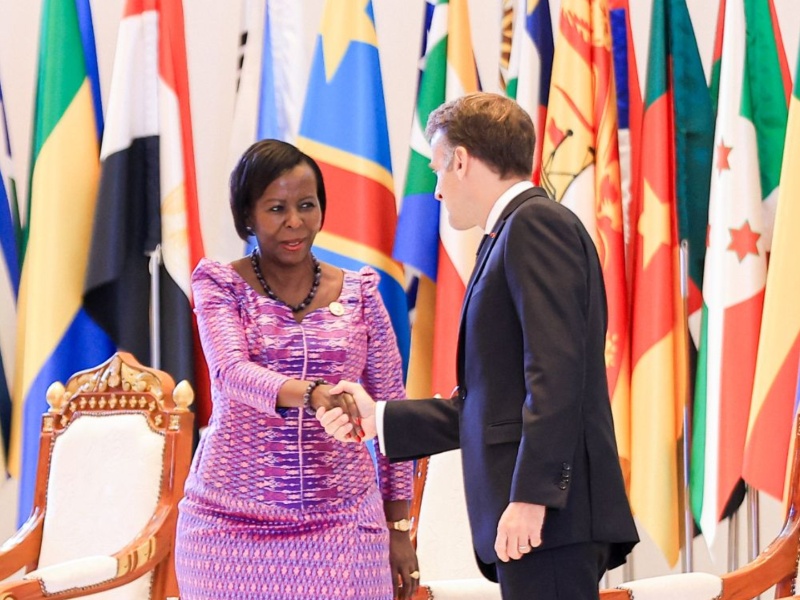
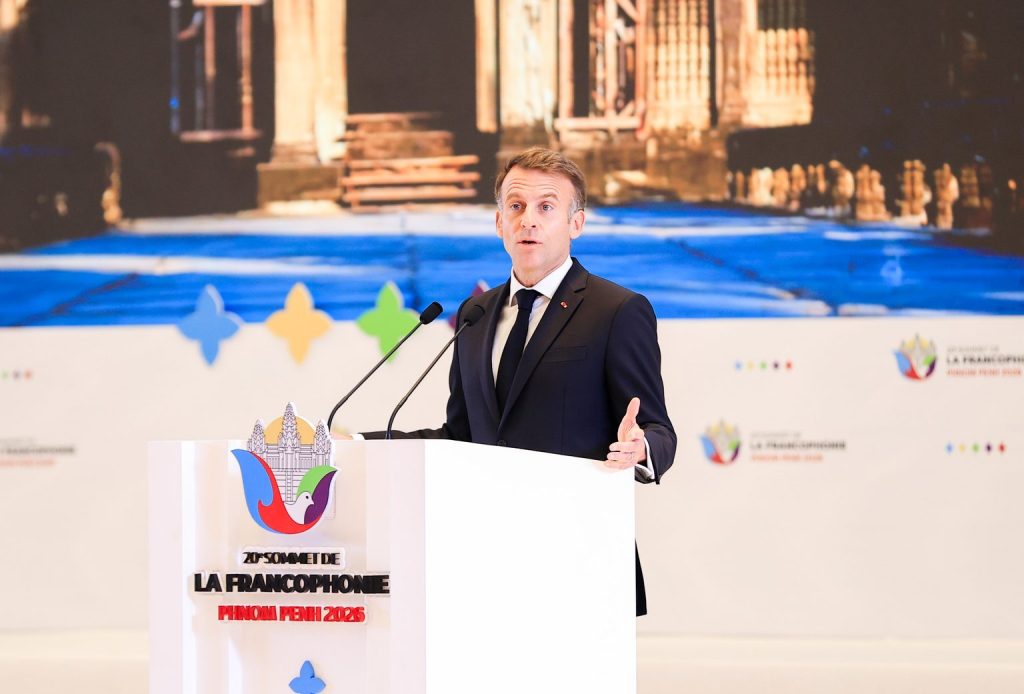
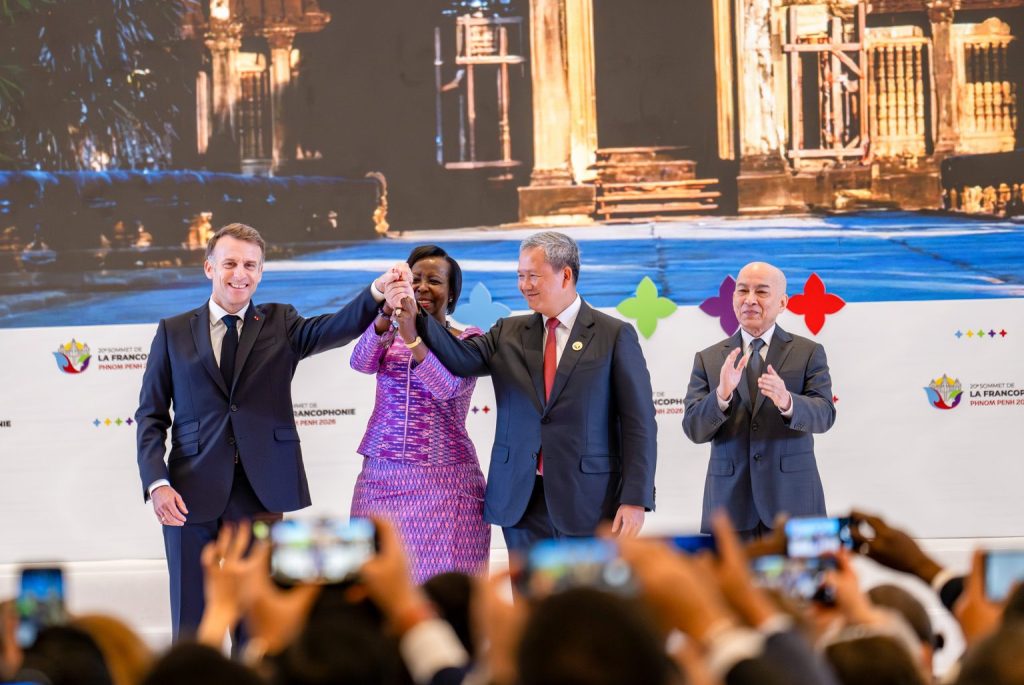
Macron made the appeal on Sunday, November 15, 2026, while opening the Summit of Heads of State and Government of the OIF in Phnom Penh, Cambodia.
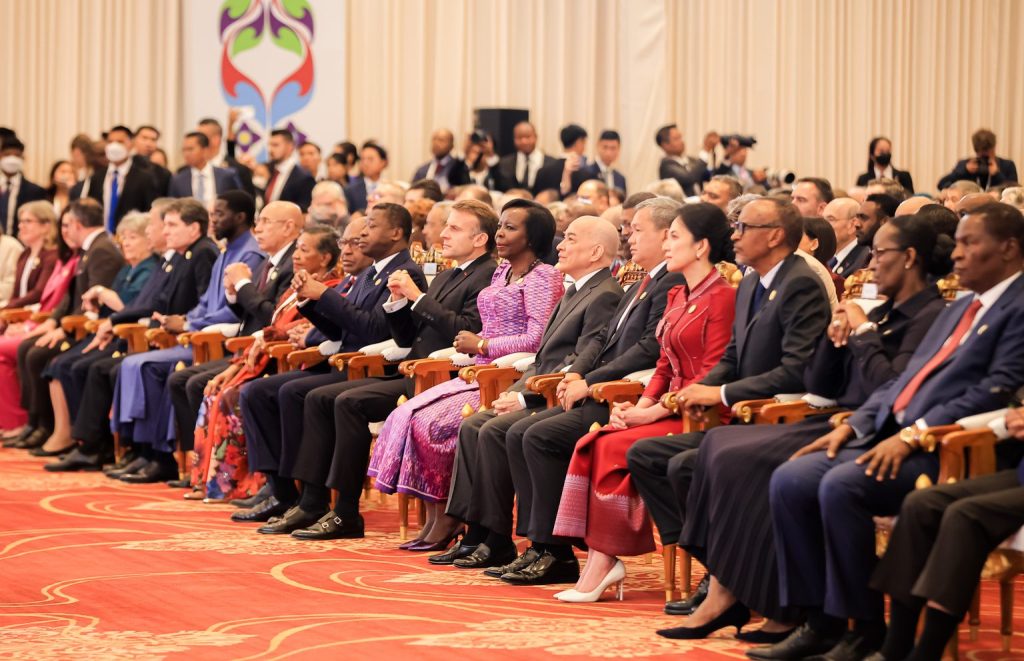
The two-day summit has brought together leaders from across the organisation, including President Paul Kagame, DRC President Félix Tshisekedi and Canadian Prime Minister Mark Carney.
In his address, Macron said the OIF’s expansion made it increasingly important for member states to build consensus and guard against divisions that could weaken the organisation.
“The expansion of the OIF requires us to build consensus in order to preserve our unity. We must do everything possible to safeguard what gives this organisation its strength, namely its unity,” he said.
He added that the OIF should not become an organisation marked by isolation or internal divisions.
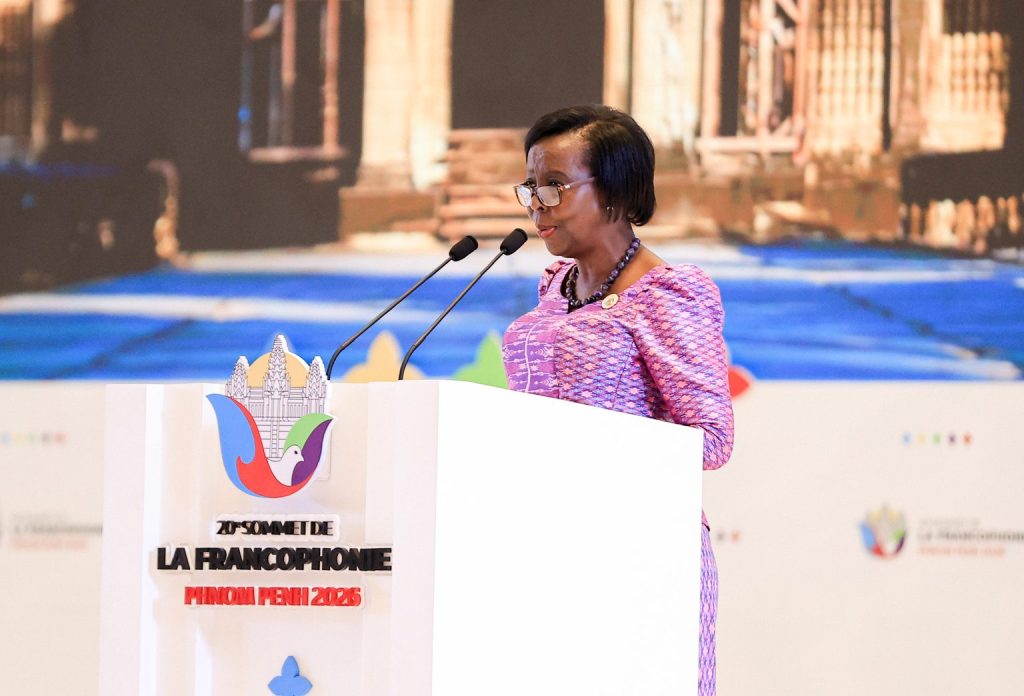
Macron’s remarks come as the organisation prepares to elect its next Secretary-General, with Rwanda’s Louise Mushikiwabo seeking a third term.
Her candidacy has remained a contentious issue between Rwanda and the DRC, whose government opposes her re-election amid longstanding tensions over the conflict in eastern DRC.
Kinshasa initially nominated Juliana Lumumba, daughter of Patrice Lumumba, one of the country’s leading independence figures, to challenge Mushikiwabo.
However, on Saturday, November 14, the DRC announced the withdrawal of Lumumba’s candidacy and its support for Dacian Cioloș, who served as Romania’s Prime Minister from 2015 to 2017.
Another contender is Coumba Ba, a former minister in Mauritania.
The DRC has also threatened to withdraw from the OIF if Mushikiwabo secures another term.
Rwanda rejects French proposal to withdraw Mushikiwabo’s candidacy
Rwanda has rejected a proposal by Macron for Mushikiwabo to withdraw from the race in an effort to reach consensus among member states.
The French President reportedly raised the matter with Kagame, but Kigali maintained that Mushikiwabo would remain in the race.
The disagreement has also raised questions about France’s influence in the organisation and the extent to which its major members should shape decisions on its leadership.
The Élysée Palace confirmed that Macron held talks with Kagame on Sunday morning, November 15.
It said the French President had encouraged Rwanda, the DRC and Mauritania to hold discussions to identify a candidate acceptable to all sides, following the consensus-based approach used in previous elections.
France and Canada favour selecting the OIF Secretary-General through consensus.
However, the organisation introduced new electoral rules in 2022, providing for a vote if member states fail to agree on a candidate. Under the rules, the position goes to the candidate who secures a simple majority.
Rwanda’s Minister of Foreign Affairs and International Cooperation, Olivier Nduhungirehe, has reaffirmed that Mushikiwabo will remain in the contest until the end of the electoral process.
“Rwanda is not a country that takes orders from another country, no matter how wealthy that country may be. No country has the right to tell another country that has nominated a candidate to withdraw that candidate,” he said, adding, “Those days when one country thought it could make decisions for everyone in the Francophonie are over.”
Mushikiwabo, meanwhile, has argued that unity within the OIF does not require member states to hold identical views or make similar decisions.
“The International Organisation of the Francophonie is not a defensive alliance. The fact that its members are united does not mean that they must have the same perceptions or make the same decisions on every issue,” she said on Sunday.
Nduhungirehe also criticised the DRC’s decision to support a non-African candidate, pointing out that Africa accounts for 27 of the organisation’s 53 full member states.
The continent is also home to 65% of the world’s French-speaking population, a proportion projected to reach 90% by 2050.
Since the position of OIF Secretary-General was established in 1997, three of the four people who have held the office have been Africans: Boutros Boutros-Ghali, Abdou Diouf and Louise Mushikiwabo.
Leave a Reply