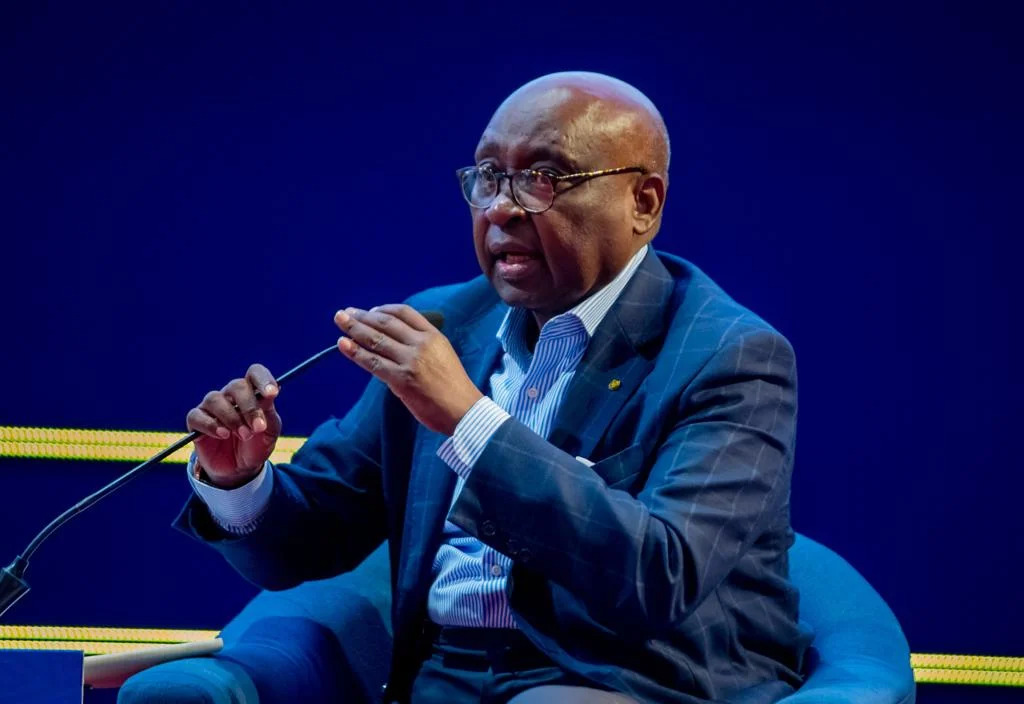
Born on October 5, 1951, in Byumba, Rwanda, Kaberuka grew up during a difficult period in the country’s history. The persecution of 1959 forced many Rwandans, including his family, into exile. Decades later, he would become one of the key figures involved in rebuilding Rwanda’s economy after the 1994 Genocide against the Tutsi and would go on to lead one of Africa’s most important financial institutions.
Kaberuka studied economics and development, beginning his higher education at the University of Dar es Salaam. He later obtained a Master of Philosophy in Development Studies from the University of East Anglia in 1979 before earning a PhD in Economics from the University of Glasgow.
His economic thinking was shaped by his experiences studying in the United Kingdom during the economic turmoil of the 1970s. In an interview with Jeune Afrique, Kaberuka recalled how Britain’s economic crisis, marked by high inflation and a request for support from the International Monetary Fund in 1976, influenced his views.
“The economic and industrial crisis had a profound impact on me,” Kaberuka recalled. “Imagine the United Kingdom with 25 percent inflation having to seek assistance from the International Monetary Fund in 1976. It taught me to be skeptical of theories. Since then, my approach has been simple: What works?“
Rebuilding Rwanda’s economy
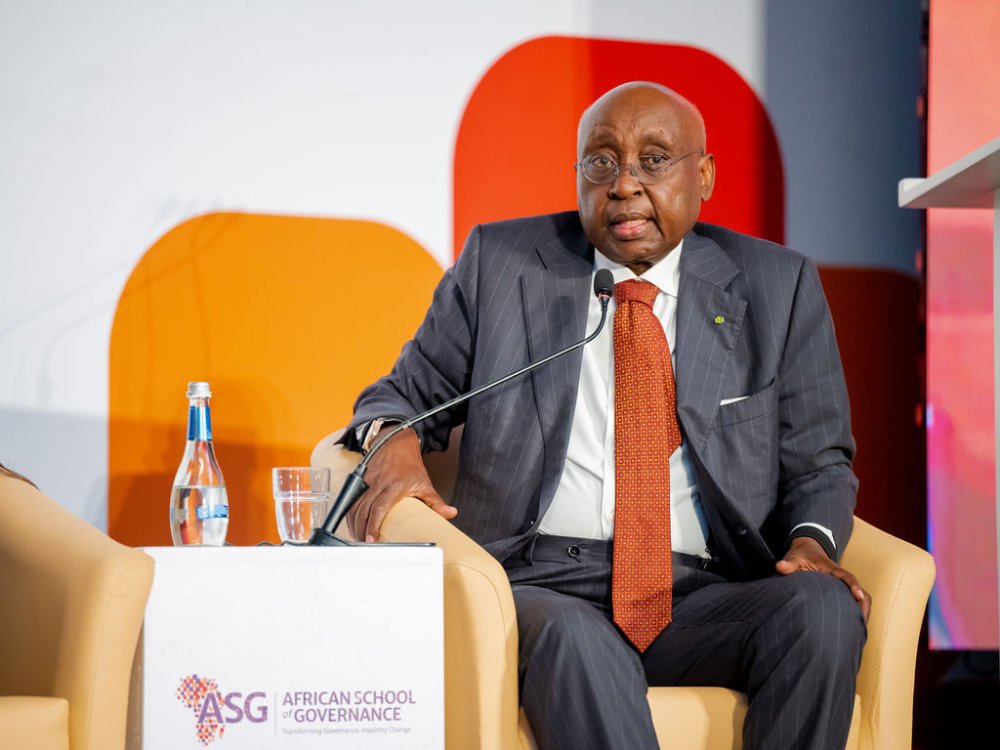
After the 1994 Genocide against the Tutsi, Kaberuka returned to Rwanda and became part of the team that helped rebuild the country’s economy.
As Minister of Finance and Economic Planning from 1997 to 2005, he introduced reforms that focused on liberalising the economy, strengthening domestic revenue collection, granting greater independence to the central bank and maintaining strict fiscal discipline.
His leadership during this period contributed to Rwanda’s economic recovery, with development institutions such as the French Development Agency describing the country’s approach as an effective development model in sub-Saharan Africa.
In 2005, Kaberuka was elected President of the African Development Bank (AfDB), a position he held until 2015.
During his decade at the helm of the institution, he oversaw a major expansion of the bank’s financial capacity, with its capital increasing from $30 billion to $100 billion and annual commitments doubling.
Leading through the 2008 financial crisis
Kaberuka’s leadership was tested during the global financial crisis of 2008, when concerns grew that Africa could face severe economic consequences.
He recalled receiving calls from worried officials asking whether Africa would become the continent most affected by the crisis.
To assess the situation, he brought together finance ministers and central bank governors in Tunis, where the AfDB was then headquartered, to discuss the impact and agree on a response.
The assessment was that African banking systems would remain relatively resilient because they were less connected to Western financial markets. However, the continent would face challenges from declining global demand and reduced trade volumes.
Rather than applying a single economic prescription across countries, Kaberuka promoted solutions adapted to local circumstances, including budget support, balance-of-payments assistance and infrastructure investments.
Economist Modibo Makalou Mao noted that during the crisis, Kaberuka avoided standard solutions and instead favoured approaches adapted to the size, level of development and needs of individual economies.
In Togo, AfDB financing supported strategic projects such as the Lomé-Cotonou corridor, which was viewed as a stronger driver of growth than traditional fiscal adjustment measures.
Supporting African industrial growth
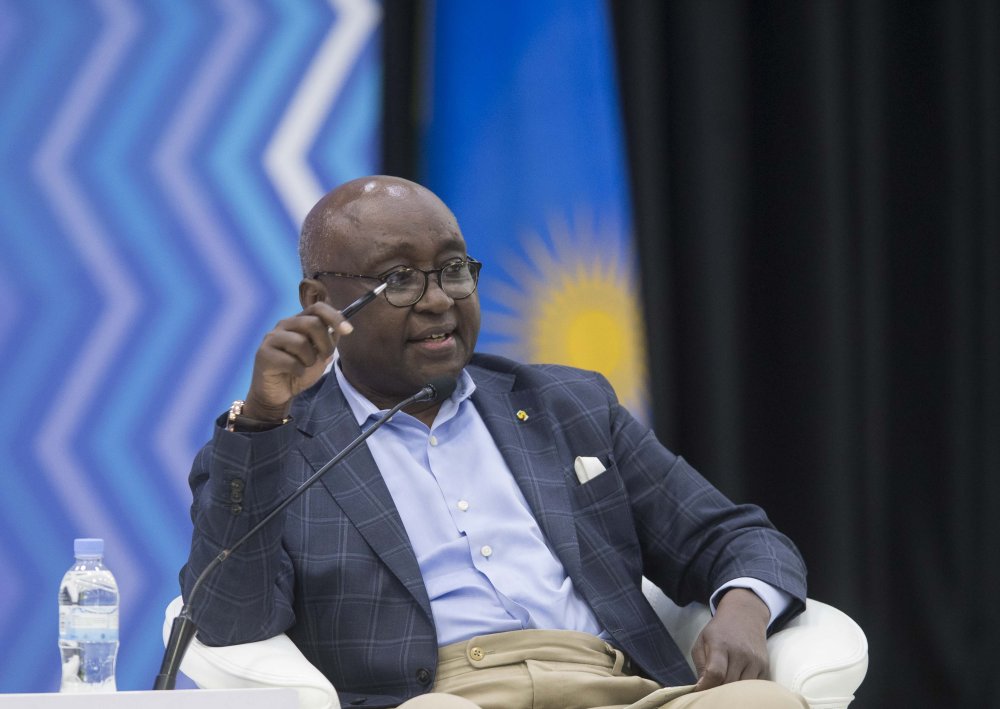
During his leadership at the AfDB, Kaberuka also focused on supporting industrial small and medium-sized enterprises (SMEs), inspired by Germany’s Mittelstand model.
He argued that SMEs were central to economic transformation because they played a major role in job creation.
“The foundation of its success is SMEs. They are the ones that impact the unemployment curve,” he said, referring to Germany’s experience.
A champion of financial self-reliance
After leaving the AfDB, Kaberuka continued working on global and continental development issues.
He served as Chair of the Board of the Global Fund and later as the African Union’s Special Envoy for COVID-19, where he advocated for Africa to gradually reduce its dependence on external assistance.
While recognising the importance of international solidarity, particularly in the fight against HIV/AIDS, he argued that such support should not replace long-term financial independence.
“The pandemic and the recent withdrawal of USAID have confirmed the need for autonomy,” he said.
Frannie Leautier, an executive at SouthBridge Investments, the investment firm co-founded by Kaberuka, said his view of finance goes beyond mobilising resources.
“Donald Kaberuka has always seen in finance much more than a mechanism for mobilising resources. For him, it is a lever of dignity, sovereignty and transformation,” she said.
A lasting influence on Africa’s development agenda
Even after leaving public office, Kaberuka has remained active in discussions on Africa’s economic future, advocating for stronger institutions, industrial growth and greater financial independence.
His career reflects a rare combination of policymaking, financial leadership and development expertise, from helping rebuild Rwanda’s economy to transforming the African Development Bank into a stronger continental institution.
At 74, Kaberuka remains a prominent voice in Africa’s development debate, with a legacy built on his belief that financial systems should serve development and ultimately improve people’s lives.
Leave a Reply