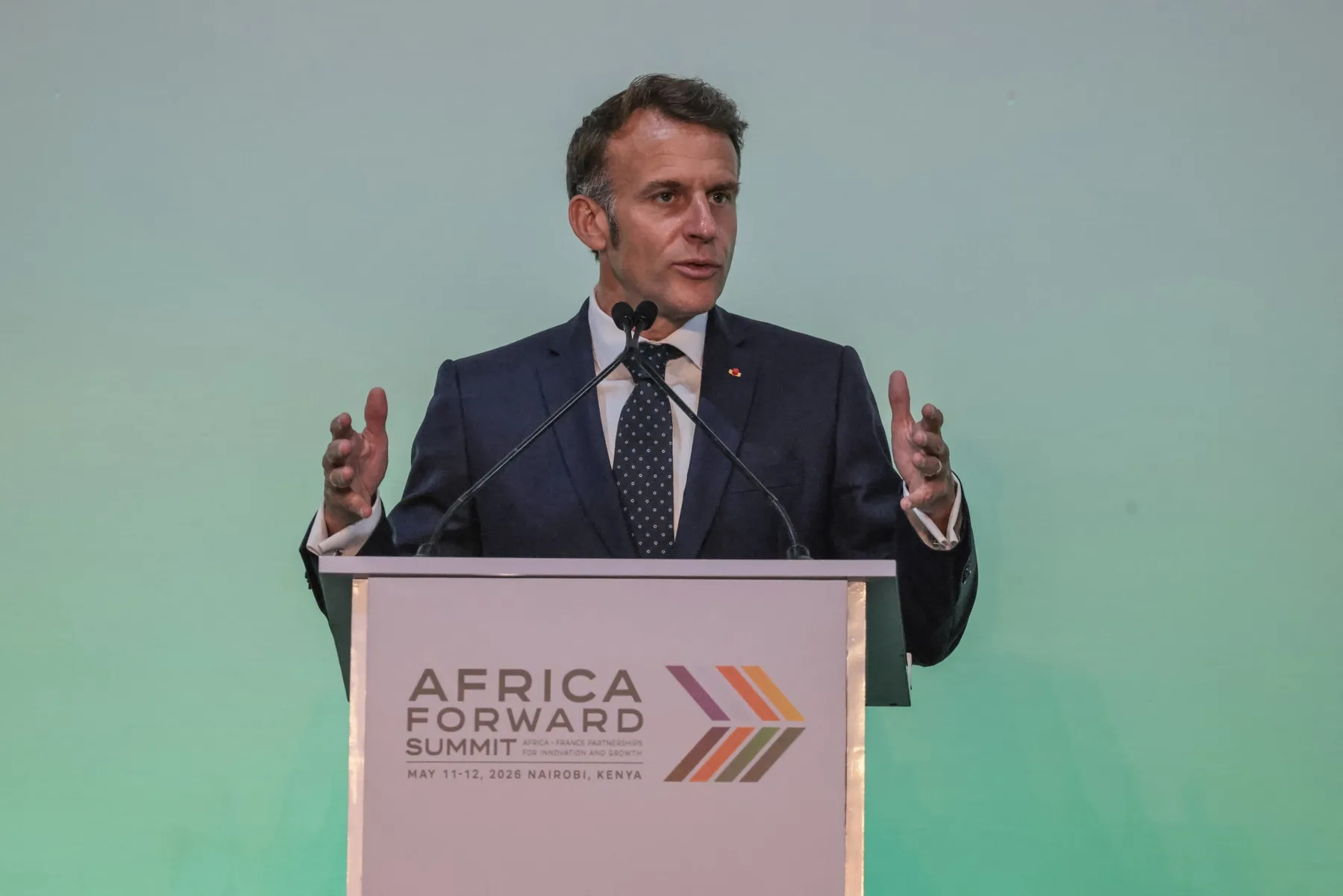
The investment package, unveiled during the “Inspire & Connect” Business Forum co-hosted by France and Kenya, combines €14 billion in public and private financing from French companies and institutions with an additional €9 billion pledged by African investors and entrepreneurs.
Speaking at Nairobi’s convention centre, Macron said the initiative would focus on sectors including energy transition, artificial intelligence, digital infrastructure, maritime industries and agriculture. He added that the investments are expected to create around 250,000 direct jobs across Africa and France.
“We are not simply here to come and invest on the African continent alongside you, we need the great African business leaders to come and invest in France,” Macron told delegates. “That too is what underpins this relationship, now entirely free of hang-ups.”
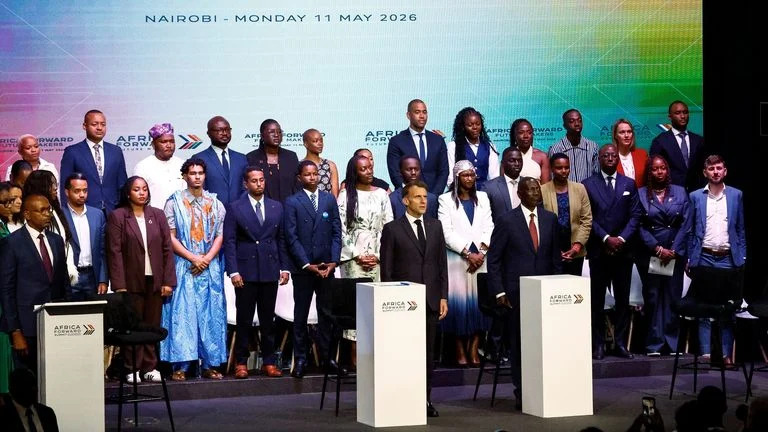
The two-day summit attracted heads of state, investors and thousands of business leaders from across Africa and Europe. Organisers initially expected up to 2,500 participants, but attendance reportedly reached nearly 7,000, with more than 700 business meetings held alongside 32 panel discussions.
Rwanda’s President Paul Kagame is among the heads of state attending the summit and is scheduled to co-chair a high-level roundtable on Artificial Intelligence and Digital Technologies. The discussion is expected to explore Africa’s growing role in shaping global digital policy and accelerating innovation-led development, an area where Rwanda has increasingly positioned itself as a continental leader.
In addition to the AI session, President Kagame is expected to address a plenary session bringing together African and French chief executive officers, where discussions will focus on green industrialisation and energy transition.
The summit represented a symbolic shift in France’s Africa strategy. It was the first Africa-France summit held in an English-speaking African country since 1973, reflecting Paris’ effort to strengthen ties beyond its traditional francophone sphere amid declining influence in parts of West Africa and the Sahel.
A significant portion of the financing drive was coordinated by Proparco, the private-sector financing arm of the French Development Agency. The institution announced more than €500 million in agreements during the summit, including a €300 million partnership with Ecobank aimed at strengthening agricultural value chains and a €200 million cross-currency transaction with the West African Development Bank.
Proparco also launched the Africa AgriTrade Coalition, a group of 16 financial institutions with combined balance sheets nearing €400 billion. The coalition aims to address Africa’s estimated $50 billion agricultural trade finance gap.
Macron used the summit to position Europe as a stable and reliable economic partner in contrast to growing global competition from China and the United States.
The French leader also called for reforms to international financial systems to encourage greater private investment in Africa, saying the continent’s youthful population and economic potential remain underfinanced.
“There is no reason today for there to be so little private investment coming into a continent as full of energy and youth as yours,” Macron said.
The summit comes as France continues to recalibrate its role in Africa following military withdrawals from Mali, Burkina Faso and Niger after coups in those countries between 2020 and 2023. Macron defended France’s previous military presence in the Sahel, saying French forces had operated at the request of local governments to combat jihadist insurgencies.
“When our presence was no longer wanted after the coups, we left,” he said in comments published ahead of the summit. “That wasn’t a humiliation but a logical response to a given situation.”
Macron also addressed the issue of colonial-era cultural artefacts, saying the return of looted African artworks had become “unstoppable.” France recently passed legislation enabling the restitution of African cultural objects held in French collections.
Despite the ambitious announcements, critics questioned whether France’s strategy represents a genuine break from past practices. Togolese economist Kako Nubukpo argued that elements of the old economic system still persist, citing the continued use of the CFA franc and the influence of major French corporate groups across francophone Africa.
Others pointed to contradictions within France’s own fiscal policies. France’s development assistance budget has been reduced several times in recent years, with aid spending projected to fall well below the country’s long-standing international target.
Still, French officials presented the Nairobi summit as evidence of a broader transformation in France-Africa relations, one based on partnership, co-investment and shared economic growth rather than the hierarchical relationships associated with the colonial era.
Leave a Reply