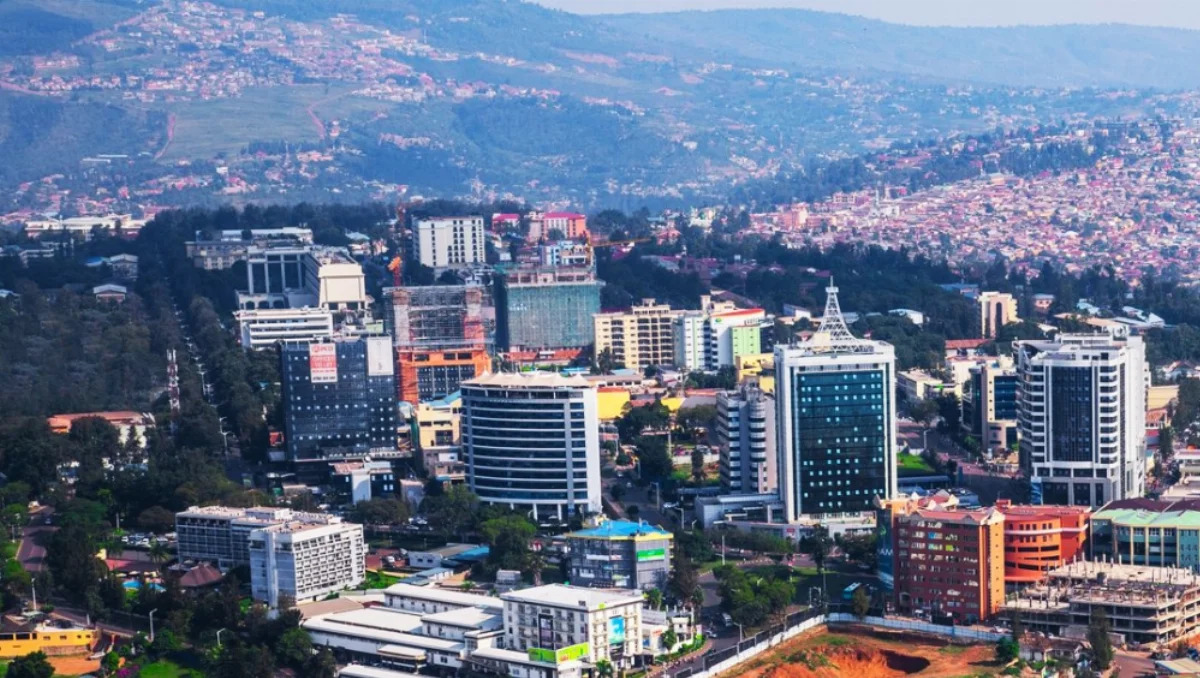
The assessment, released on September 11, highlights continued confidence in the country’s economic fundamentals and policy framework despite a challenging global and regional environment.
Fitch expects Rwanda’s economy to grow by 7.8% in 2026, down from 9.4% in 2025 but still well above the 4.5% median for countries rated ‘B’. Growth is expected to be supported by continued expansion in agriculture, services and construction, including infrastructure projects such as the Bugesera airport.
The agency expects inflation to average 11.7% in 2026, above the National Bank of Rwanda’s 2%-8% target. It noted that the central bank has raised its policy rate by a cumulative 150 basis points to 8.75% since February 2026.
Fitch forecasts Rwanda’s current account deficit to widen to nearly 15% of GDP in 2026, driven by resilient domestic growth, higher imports linked to the Bugesera airport project, and increased fuel and fertilizer costs. The deficit is largely financed through foreign direct investment and official borrowing.
The agency estimates Rwanda’s net external debt will reach 63% of GDP in 2026, compared with a 48% median for ‘B’-rated countries. However, it noted that 87% of Rwanda’s external debt is highly concessional, helping to mitigate the risks associated with the country’s external financing position.
On public finances, Fitch expects the fiscal deficit to remain broadly stable at 4.5% of GDP in the fiscal year ending June 2027, compared with 4.4% in FY2026.
The agency said tax reforms implemented since FY2025 helped tax receipts exceed the government’s target by 0.6 percentage points of GDP in FY2026. Further gains are expected, although revenue growth could moderate in FY2027 due to the impact of the Iran war, lower grants and weaker non-tax revenues.
Fitch projects general government debt to decline in FY2027-FY2028, averaging about 65% of GDP, after peaking at around 74% in FY2025. The decline is expected to be driven mainly by strong nominal GDP growth and, to a lesser extent, spending consolidation.
The agency also expects Rwanda to rely more heavily on external borrowing to finance its fiscal deficit, with external financing remaining largely concessional. Multilateral and bilateral partners are projected to account for about 82% of total external financing in FY2027-FY2028.
Fitch expects regional security risks to remain elevated, with the conflict in eastern DRC continuing to pose risks to Rwanda’s external financing position. However, the agency does not anticipate a sharp escalation in the near term.
The Ministry of Finance and Economic Planning welcomed the reaffirmation, saying it reflects continued confidence in Rwanda’s economic fundamentals and policy framework.
“The reaffirmation reflects continued progress in strengthening Rwanda’s macroeconomic foundations while maintaining a focus on sustainable growth, investment, resilience and fiscal sustainability,” the ministry affirmed.
The latest assessment comes six months after Fitch revised Rwanda’s sovereign outlook to Stable from Negative while retaining the ‘B+’ rating. At the time, the agency cited improved access to external financing and reduced uncertainty over Rwanda’s funding position.
Fitch Ratings is an American-British credit rating agency and one of the “Big Three” global rating agencies alongside Moody’s and S&P Global Ratings.
Leave a Reply