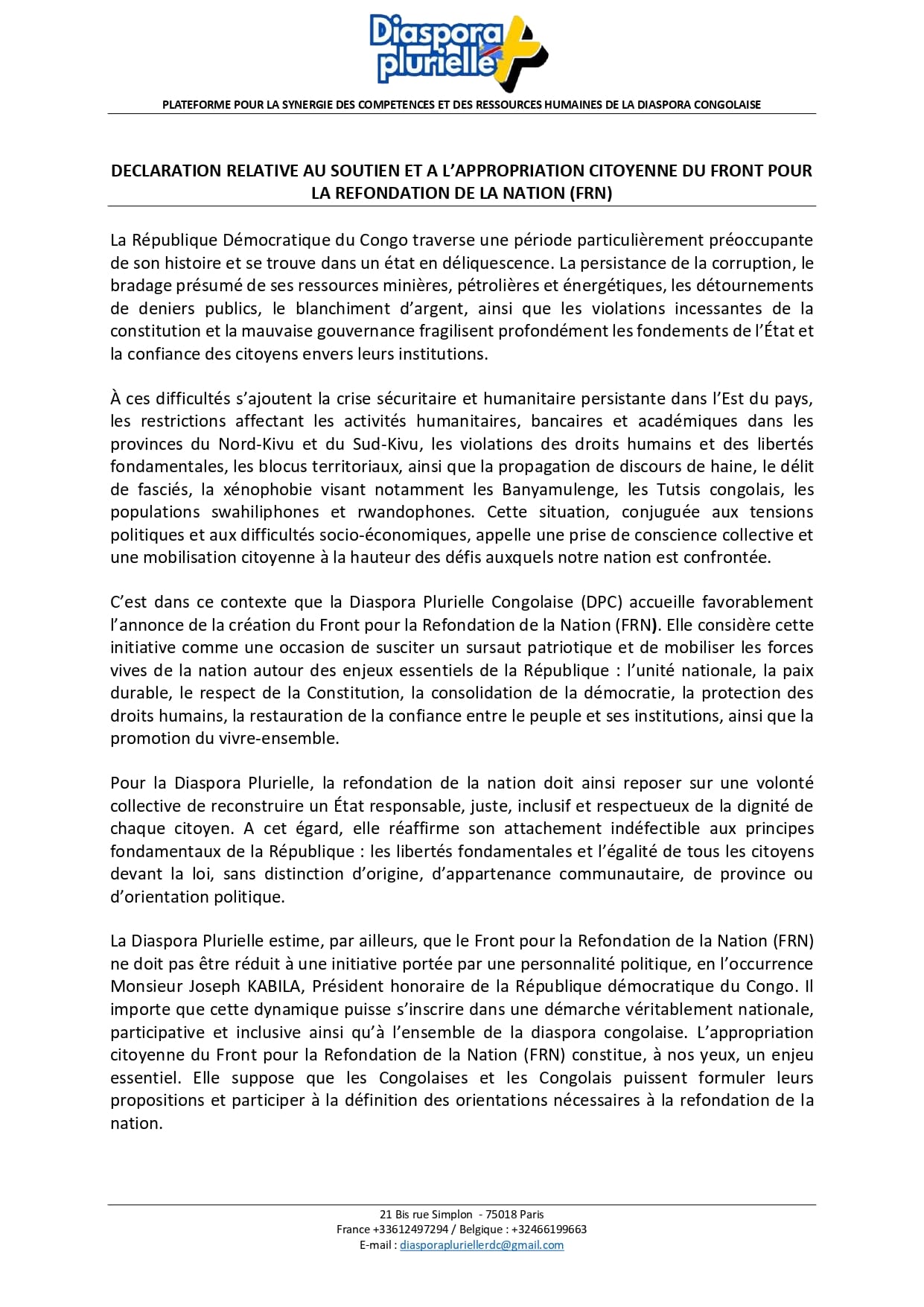
In a statement entitled “Declaration on Support for and Citizen Ownership of the Front for the Refoundation of the Nation (FRN),” the organisation calls for an inclusive national process grounded in justice, democracy, respect for the Constitution and peaceful coexistence.
The emergence of the FRN comes amid the protracted conflict in eastern Democratic Republic of the Congo (DRC), where the M23 has fought government forces and seized control of territory.
Corruption, insecurity and human rights
The DPC denounces what it describes as persistent corruption, misappropriation of public funds, money laundering and violations of the Constitution. According to the organisation, these challenges weaken state institutions and undermine public confidence in the authorities.
The platform also raises concerns about the continuing security and humanitarian crisis in eastern DRC, particularly in North Kivu and South Kivu. It denounces human rights violations, restrictions affecting certain essential activities and the spread of hate speech targeting, among others, the Banyamulenge, Congolese Tutsi, Swahili-speaking communities and Kinyarwanda-speaking populations.
For the DPC, these challenges require a collective response that transcends political divisions and community affiliations.
FRN should go beyond a single political figure
The organisation has welcomed the creation of the Front for the Refoundation of the Nation, an initiative associated with former Congolese president Joseph Kabila. However, it stresses that the initiative should not be reduced to a project driven by a single political figure.
The DPC advocates a genuinely national, participatory and inclusive process involving Congolese citizens both at home and abroad.
Its stated priorities include national unity, lasting peace, democratic consolidation, respect for the Constitution, the protection of human rights and the restoration of trust between citizens and public institutions.
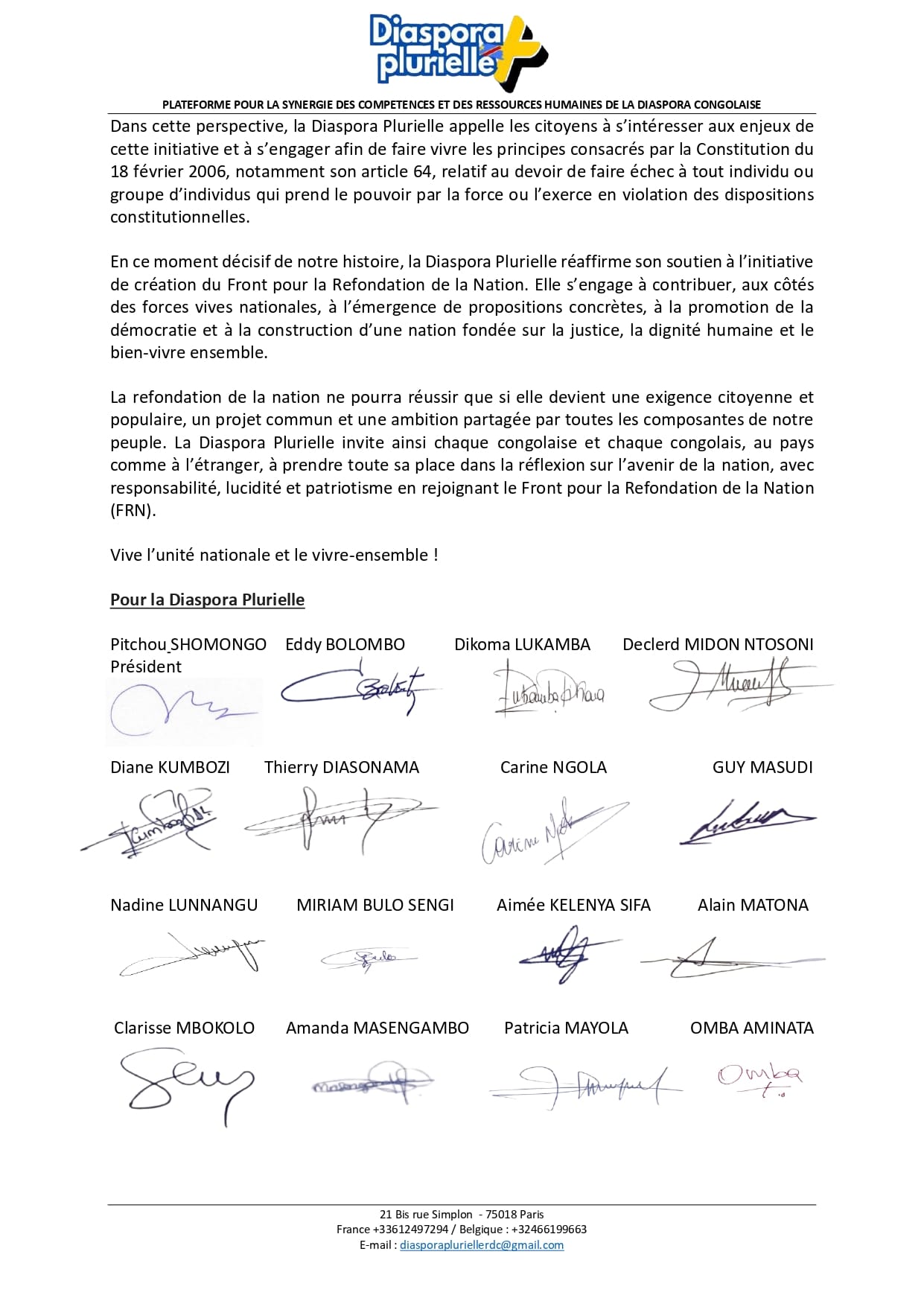
The statement also refers to Article 64 of the DRC Constitution of 18 February 2006, which establishes the duty to oppose any individual or group that seizes power by force or exercises it in violation of constitutional provisions.
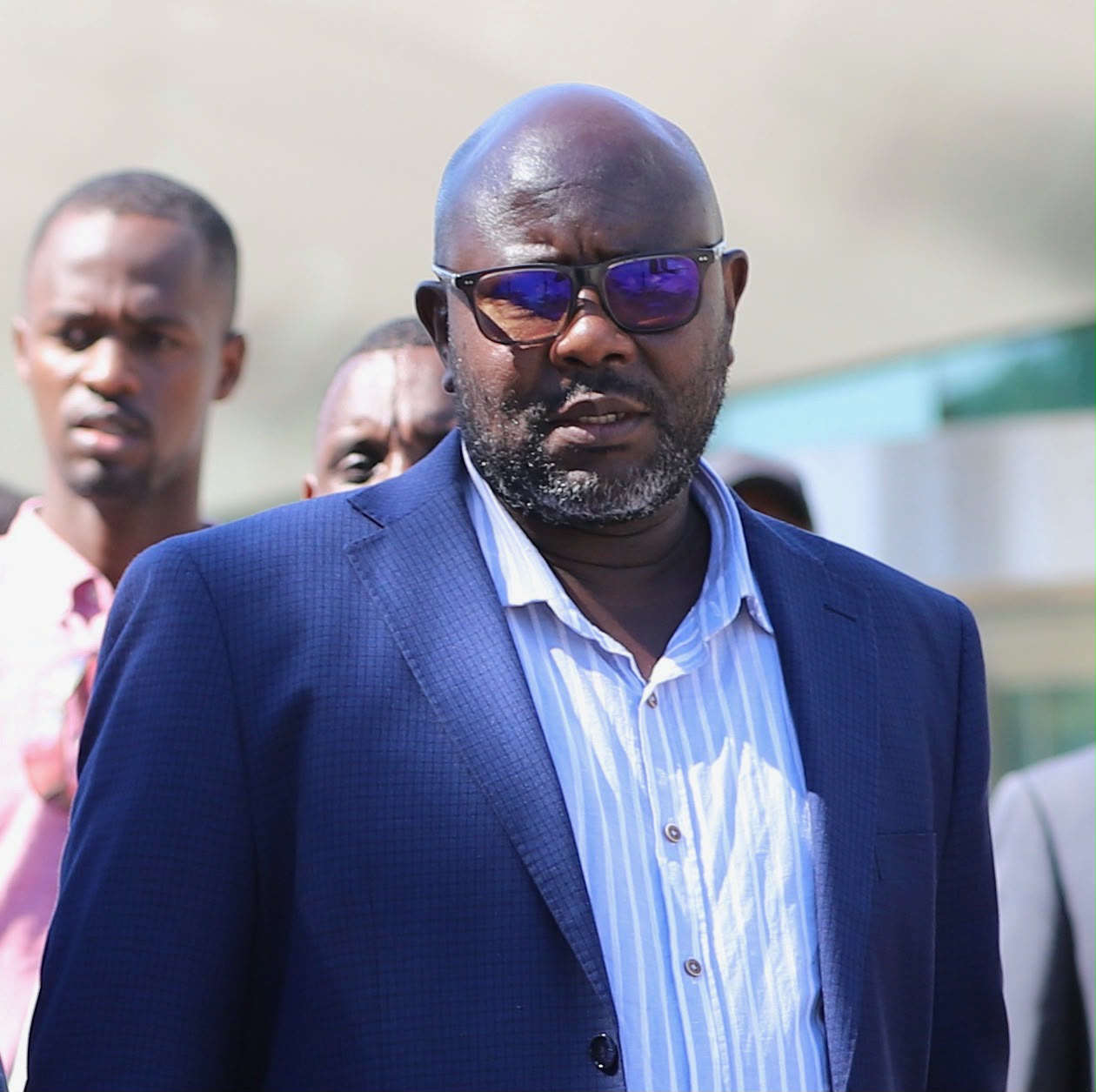
Pitchou Shomongo emphasises justice and peaceful coexistence
The DPC’s position echoes concerns expressed by Pitchou Shomongo during a mobilisation held in The Hague, the Netherlands, in support of the Banyamulenge community.
At the time, he stated: “If we are in The Hague today, it is to make our demands, to insist that justice be done.”
He also stressed the importance of peaceful coexistence, saying: “We want people to live in peace; we want people to live together.”
These statements, which should be understood in the context of that mobilisation, highlight concerns about justice, the protection of communities and the fight against hate speech.
While the mobilisation in The Hague focused specifically on calls for justice concerning the Banyamulenge, the DPC’s support for the FRN addresses the broader questions of governance and the institutional future of the DRC.
A call for citizen engagement
Through its statement, the Congolese Plural Diaspora urges citizens to take part in discussions about the country’s future and contribute concrete proposals for national renewal.
According to the organisation, the success of this process will depend on its adoption by the wider population and on respect for equality before the law, regardless of origin, community affiliation or political opinion.
The DPC concluded its statement with a message promoting national unity and peaceful coexistence: “Long live national unity and peaceful coexistence!”
Leave a Reply