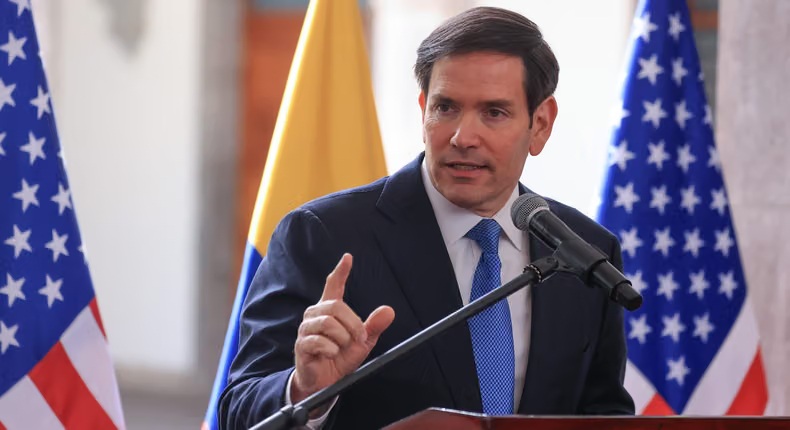
US Secretary of State Marco Rubio announced the policy on Tuesday, saying Washington had determined that the South African government had not adequately addressed concerns previously raised by the Trump administration.
The restrictions will target people whom the US says are responsible for or complicit in the enactment or implementation of laws or policies that enable uncompensated land seizures, race-based discrimination or the incitement of imminent violence against minority ethnic or racial groups in South Africa.
The US did not immediately identify any individuals affected by the restrictions.
Rubio said the policy was being imposed under Section 212(a)(3)(C) of the US Immigration and Nationality Act, which allows the secretary of state to declare a foreign national inadmissible where their entry could have potentially serious adverse consequences for US foreign policy.
“These actions directly undermine peace, economic stability, and the rule of law,” Rubio said in the statement.
The move is the latest escalation in relations between Washington and Pretoria, which have deteriorated since President Donald Trump returned to office in January 2025.
The Trump administration has repeatedly accused South Africa of discriminating against Afrikaners, the predominantly white descendants of European settlers, through its racial-equity policies and land reform programme. South Africa has rejected those allegations.
At the centre of the dispute is South Africa’s land reform policy. President Cyril Ramaphosa signed legislation allowing the state to expropriate property in the public interest, including in limited circumstances where compensation may be set at zero.
The law requires authorities, in most cases, to first seek agreement with property owners, while disputes can be challenged in court. The South African government has argued that the legislation is intended to address land inequalities created during apartheid and does not permit arbitrary seizure of property.
Land ownership remains a politically sensitive issue in South Africa, where the black majority was dispossessed of land and denied many rights under apartheid.
Trump has previously accused South Africa of failing to protect white farmers and offered refugee status to Afrikaners seeking to leave the country. South African authorities have rejected claims of a campaign of persecution against white people and have said allegations of a “white genocide” lack credible evidence.
The latest US measures come after Washington imposed a 30% tariff on South African exports in August, adding to tensions between the two countries.
The US embassy in Pretoria said the new visa restrictions were the first in a series of measures intended to demonstrate Washington’s position on the issue.
“The South African government has not adequately addressed the previously laid out concerns,” Rubio said.
US Secretary of State Marco Rubio announced the policy on Tuesday, saying Washington had determined that the South African government had not adequately addressed concerns previously raised by the Trump administration.
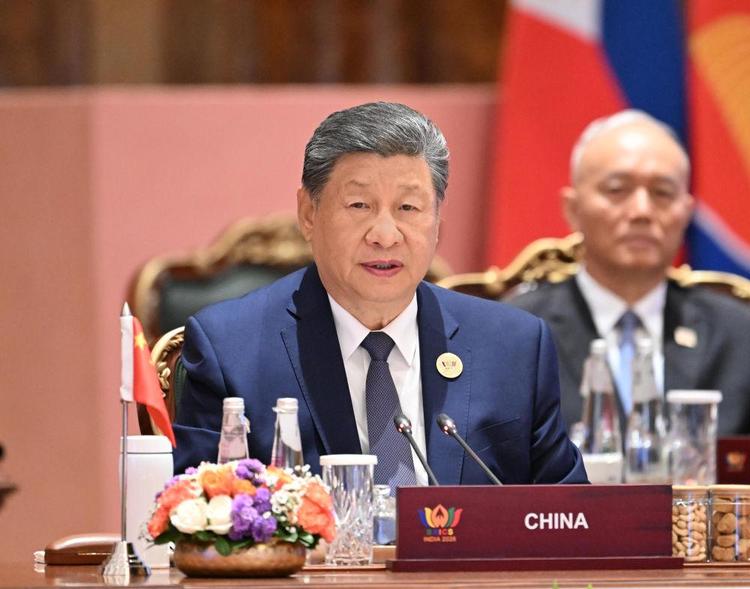
In a speech when attending the second day of BRICS summit in New Delhi, Xi also outlined concrete proposals to further strengthen greater BRICS cooperation, with a focus on emerging areas including artificial intelligence, trade, digital industries and manufacturing.
Key driver of multipolarity
Xi pointed out that when changes unseen in a century are accelerating across the world, the Global South, with its collective rise, has become a key driver of world multipolarity.
At the same time, the international landscape is volatile and fraught with risks and challenges, Xi said, adding that to bring stability to the world and make it a better place, BRICS countries must seize the historical initiative, rally the Global South, and advance the well-being of all humanity.
Global South countries should jointly defend the rule of law in international affairs, safeguard the basic norms of international relations including sovereign equality, noninterference in internal affairs, and the peaceful settlement of disputes, Xi said. It should be ensured that international law and international rules are applied to all, and free from double standards, he added.
Global South countries should hold high the banner of multilateralism, uphold the authority and role of the United Nations, and support multilateral institutions in advancing reform and increasing efficiency, Xi said.
He also called for promoting the reform of the World Trade Organization in the right direction, as well as reforming and improving the international financial architecture to increase the representation and voice of developing countries.
Global South countries should stay committed to a people-centered development philosophy and strive to deliver on the 2030 Agenda for Sustainable Development, Xi said.
Global South countries should also jointly advance security governance, tackle both traditional and nontraditional security threats, and improve global climate governance, Xi said, also calling for working faster to evolve a consensus-based global AI governance framework, so that new technologies can light the way toward shared prosperity.
“It is a solidarity that unlocks partnerships, unlocks democratization of the international system, unlocks an open international system, and unlocks an inclusive international system,” said Charles Onunaiju, director of the Center for China Studies in Nigeria.
Rakhim Oshakbayev, director of the TALAP Center for Applied Research in Kazakhstan and former Kazakh vice minister for investment and development, said BRICS cooperation should “bring together developing countries’ shared aspirations and promote coordination and cooperation.”
BRICS countries should continue seeking common interests, he said, noting that the grouping’s expansion had placed greater demands on internal coordination.
Greater BRICS cooperation
During the speech, Xi proposed five initiatives on “greater BRICS” cooperation in areas of AI, trade and investment facilitation, digital industry, intelligent manufacturing, and science and technology talent development.
To accomplish great things and achieve major progress, the foundation of greater BRICS cooperation must be cemented, Xi said, calling for leveraging BRICS’ close ties with fellow emerging markets and Global South countries, upholding open cooperation for mutual benefit, safeguarding stable and smooth industrial and supply chains, and fostering a large integrated market.
“We should build incubators for innovation, upgrade traditional industries, develop emerging industries, and deploy future industries,” Xi said.
On the open source and inclusive AI initiative, Xi said that China will be a pioneer in establishing a BRICS AI open source community, support the cooperation in developing and applying large language models, hold specialized AI seminars and training courses, and build an open ecosystem for AI.
On the trade and investment facilitation initiative, China proposes to establish a BRICS special economic zone partnership, under which countries can set up an intelligent portal, coordinate policies, and build a new frontier for open development, Xi said, adding that in an effort to cultivate new drivers of economic and trade cooperation, China will hold the BRICS Forum on Trade in Services next year.
On the digital industry cooperation initiative, Xi said that China will push for establishing a BRICS digital ecosystem cloud platform, and conduct digital skills training, technological exchange and industrial alignment, so as to jointly enable the development of the digital economy.
On the intelligent manufacturing cooperation initiative, China stands ready to assist fellow BRICS countries in building smart factories and developing standards and norms, and jointly promote manufacturing transformation and upgrading, he said.
On the science and technology talent development initiative, China proposes to set up a BRICS engineer cultivation alliance for joint development of engineers and mutual recognition of competency standards, Xi said, adding that China will launch a BRICS youth exchange program for scientific and technological innovation, so as to cultivate more high-caliber talent.
The five initiatives proposed by Xi focus on key areas including technology, industry, trade and talent, providing concrete pathways to lay a solid foundation for practical cooperation among the broader BRICS community, said Serik Korzhumbayev, editor-in-chief of the Delovoy Kazakhstan newspaper.
It demonstrates China’s firm resolve to share the opportunities of its modernization, a reflection of the spirit of openness, inclusiveness and mutual benefit that underpins BRICS cooperation, he said.
Xi has outlined concrete proposals to further strengthen greater BRICS cooperation
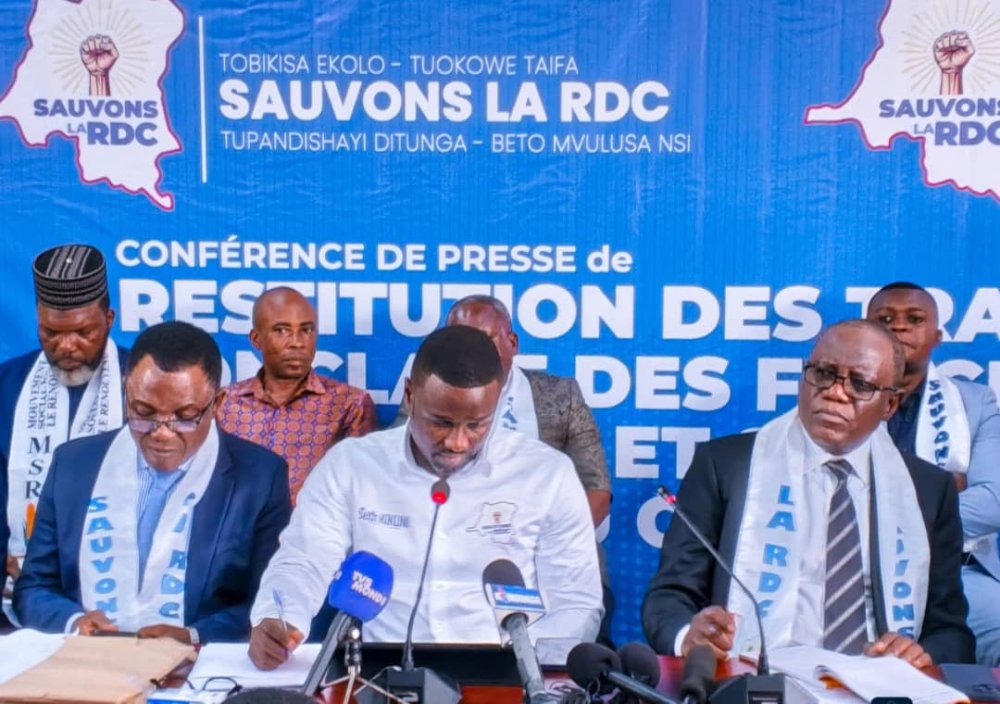
In a statement issued on September 13, the Sauvons la RDC coalition said a presidential decree establishing the framework for a committee tasked with preparing the dialogue showed that the government wanted to control the process.
“Based on this decree, Mr Félix Tshisekedi, who has a tendency to grant himself excessive powers, has made himself the Alpha and Omega of the so-called national dialogue,” the coalition said.
It added that Tshisekedi’s influence extended from the selection of members of the organising committee to the conclusions of the dialogue.
“From the beginning to the end of this dialogue, from the selection of members of the organising committee to the conclusions that will emerge from it, everything, without exception, depends on his will and is based on his power to make decisions as he pleases,” it said.
The coalition also questioned whether the dialogue would be inclusive, arguing that the president’s announcement offered little assurance that different political groups and representatives of Congolese interests would be adequately involved.
Sauvons la RDC further argued that the dialogue was not primarily aimed at resolving the country’s problems but at consolidating the current administration’s hold on power and serving Tshisekedi’s interests.
The coalition invoked Article 64 of the DRC Constitution, which provides for citizens to oppose any individual or group that takes power in violation of constitutional principles.
The coalition has previously made Article 64 central to its political position, particularly in its opposition to any attempt to extend Tshisekedi’s stay in power beyond the constitutional framework.
Tshisekedi announced the national dialogue on August 27, presenting it as an effort to address the country’s challenges and strengthen national cohesion. The September 13 presidential decree established the committee responsible for preparing the process.
The committee is expected to prepare the administrative, material and logistical arrangements for the dialogue and submit a preliminary report to Tshisekedi. A subsequent decree is expected to formally convene the dialogue and set out its principles, stages, representation and mechanisms for monitoring its conclusions.
Sauvons la RDC has called for independent mediation, the participation of different stakeholders and a credible mechanism to monitor the implementation of any resolutions reached through the dialogue.
The government has ruled out participation by those fighting against the constitutional order as political components of the dialogue. Discussions involving the AFC/M23 are being handled separately through the Doha process.
Sauvons la RDC sees little hope in Tshisekedi’s proposed national dialogue, accusing the Congolese president of seeking full control.
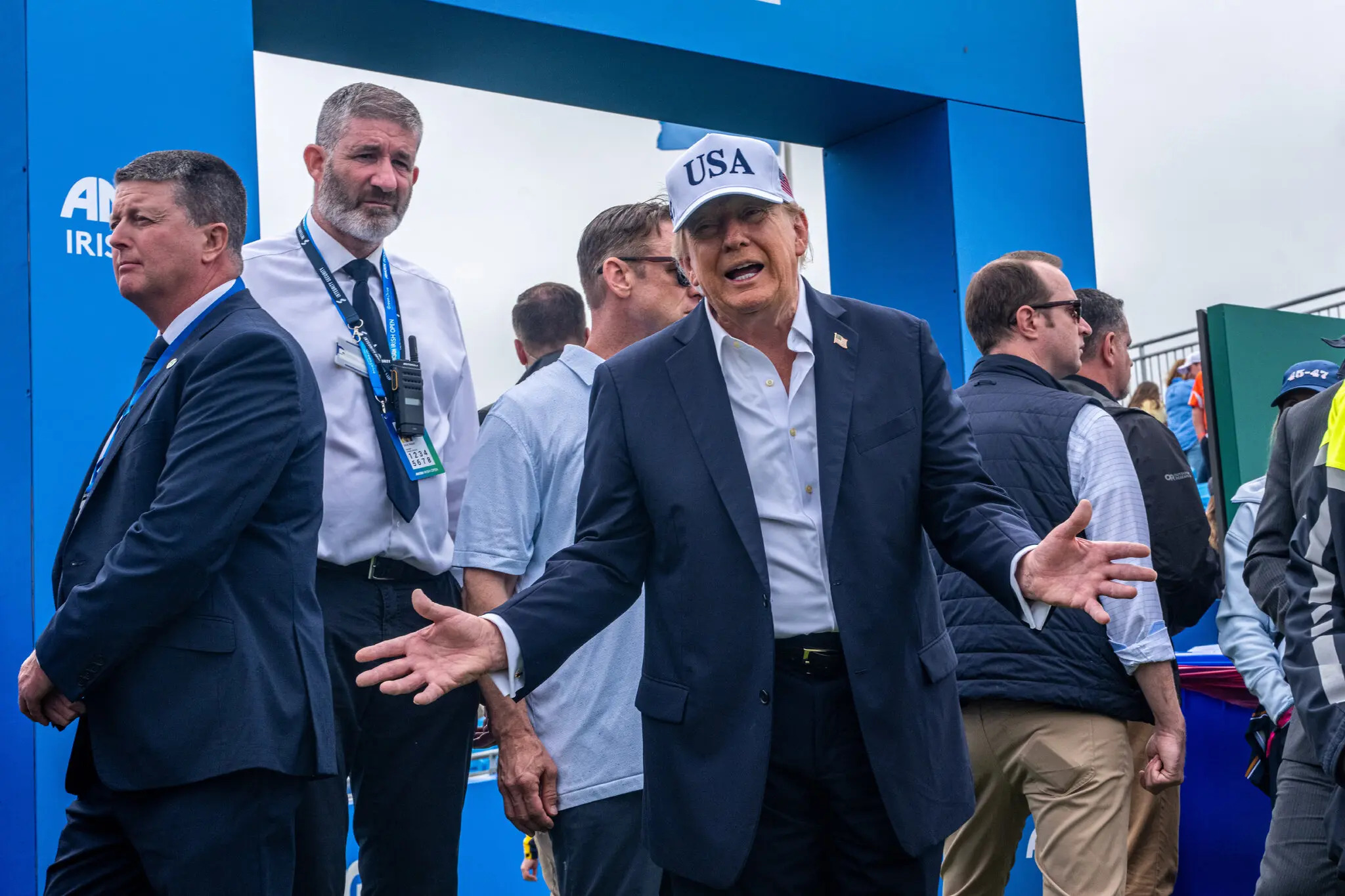
Trump made the remarks on Sunday after being asked whether he had spoken with Ukrainian President Volodymyr Zelenskyy following his conversation with Russian President Vladimir Putin.
“Mr. Zelenskyy has to do one thing. He has to stop knocking out diesel fuel in Russia,” Trump told a reporter at his golf course in Ireland.
“He has to stop knocking out diesel fuel in Russia. We spoke to Mr. Zelenskyy about it. There are plenty of other targets. Don’t hit diesel fuel, because that’s hurting, that’s hurting the world.”
Trump said diesel prices were rising as supplies from Russia were being disrupted, arguing that the impact was being felt beyond the countries involved in the war.
Diesel prices in the United States climbed above $6 a gallon on Friday for the first time, according to AAA, amid a wider energy crunch that has also been driven by the conflict involving Iran and disruptions to oil supplies through the Strait of Hormuz.
Ukraine has intensified attacks on Russian energy infrastructure in an effort to disrupt Moscow’s ability to finance and sustain its war. The strikes have hit oil refineries and other fuel facilities across Russia, contributing to supply shortages and restrictions on fuel exports.
Hours before Trump made his remarks, Ukraine’s military said it had struck the TANECO oil refinery in Nizhnekamsk, in Russia’s Tatarstan republic, in a joint operation involving the country’s military, security service and military intelligence.
Local officials said the attack killed two civilians and wounded others.
Ukraine has maintained that Russian refineries are legitimate military targets, arguing that the facilities help fund Moscow’s war effort and supply fuel to Russian forces.
Russia has also repeatedly targeted Ukraine’s energy infrastructure, with missile and drone attacks hitting power facilities as the country prepares for another winter under the threat of prolonged electricity shortages.
Trump’s intervention comes as diesel supplies face pressure from damage to refining infrastructure in both Russia and the Middle East. Higher diesel prices could also push up the cost of transporting goods, potentially feeding into broader consumer price increases.
Trump made the remarks on Sunday after a reporter asked about his talks with Zelenskyy, urging Ukraine to stop targeting Russian diesel facilities because it was “hurting the world.”
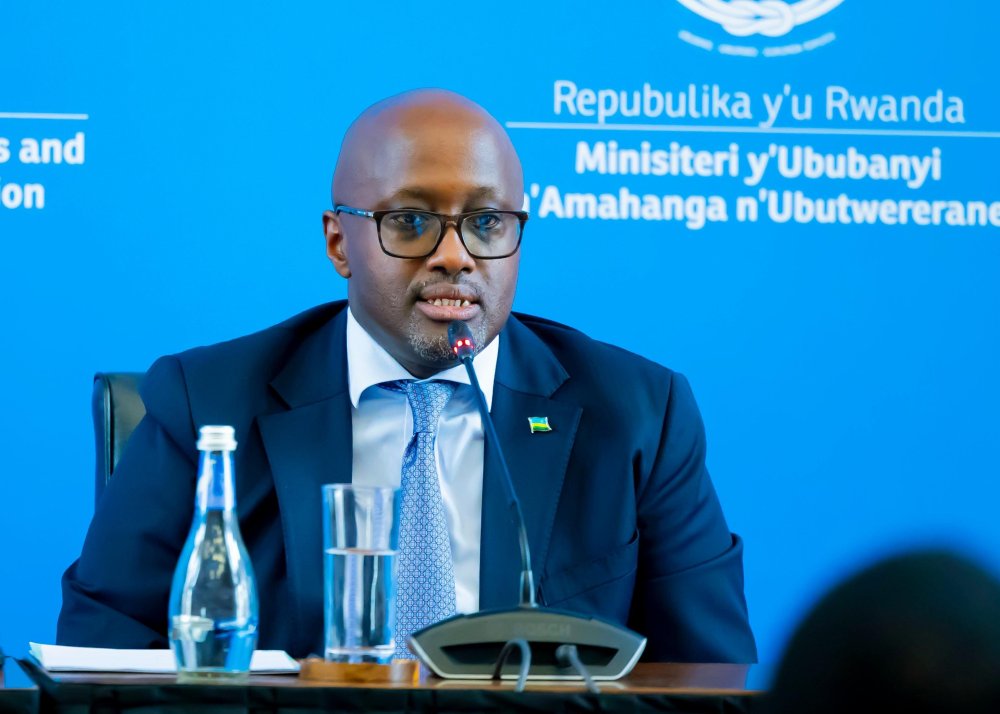
Bizimana said in a post on X on Sunday that the FDLR was “an alibi used to cover real motivations of the war imposed on Congolese people.”
Nduhungirehe responded by pointing to Bizimana’s role within the African Union and its previous resolutions against the FDLR, an armed group formed by individuals involved in the 1994 Genocide against the Tutsi in Rwanda.
“Let me recall that Édouard Bizimana is not only the Minister of Foreign Affairs of Burundi but also the Chairperson of the AU Executive Council,” Nduhungirehe wrote.
He said the African Union had adopted multiple resolutions condemning the FDLR and calling for its disarmament and repatriation.
“If he doesn’t read documents of the organisation he chairs, let me remind him that the African Union adopted multiple resolutions condemning the FDLR genocidal force and calling for its disarmament and repatriation,” Nduhungirehe said.
Nduhungirehe also cited the African Union’s support for the Washington peace agreements between Rwanda and the DRC, which include a commitment by Kinshasa to neutralise the FDLR.
The June 27, 2025 Washington Peace Agreement and the December 4, 2025 Washington Accords for Peace and Prosperity were signed in the presence of Burundi President Évariste Ndayishimiye.
Nduhungirehe questioned Bizimana’s characterisation of the FDLR as an “alibi”, noting that Burundi is not a signatory to the agreements.
“How then is it possible that Édouard Bizimana, whose country is not signatory to those Accords, comes from nowhere to claim that the FDLR is an ‘alibi’?” he wrote.
He further accused Burundi’s army of cooperating with the FDLR in eastern DRC and criticised Bizimana for denying the continued threat posed by the group.
“It’s appalling to note that the Chairperson of the African Union, whose army collaborates with the FDLR in eastern DRC, continues to deny the existence of a genocidal force that was condemned on multiple occasions by the very organisation he chairs,” Nduhungirehe said.
He concluded by calling on the AU to be more careful in choosing leaders for its institutions.
“The African Union should be serious and avoid, for the future, to hand over the reins of our precious organisation to people who obviously don’t have the capacity to lead it,” he wrote.
Bizimana has previously argued that the FDLR does not pose a significant threat to Rwanda.
In an interview broadcast in August, he said the group had never attacked Rwanda, despite repeated references to such attacks in discussions about the conflict in eastern DRC and evidence to the contrary.
“The FDLR has never attacked Rwanda. They have been talking about it for more than 30 years, but the group has never carried out an attack in Rwanda,” Bizimana said.
He added that Burundi could not support the FDLR, saying the group “has no value”.
Bizimana has also previously described the FDLR as a pretext in discussions about the conflict between Rwanda and the DRC.
Let me recall that Édouard Bizimana is not only the Minister of Foreign Affairs of Burundi but also the Chairperson of the AU Executive Council.
If he doesn't read documents of the organisation he chairs, let me remind him that the African Union adopted multiple resolutions… https://t.co/nea3vHsyTB
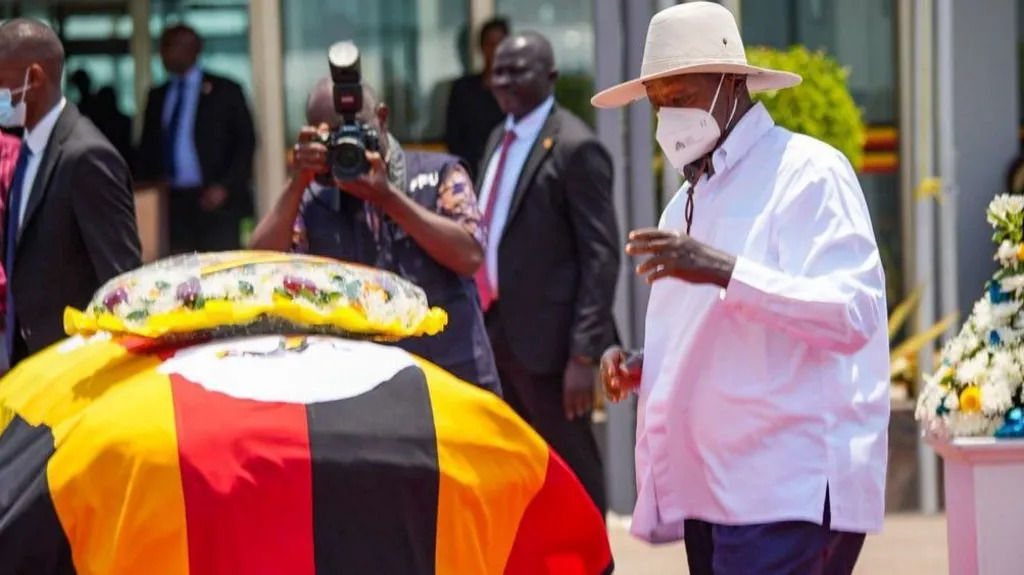
Museveni said on Saturday that the government would work with whoever emerges as the next king once the succession dispute is resolved, urging the people of Tooro to prioritise unity.
“When the issue of the new king of Batooro is resolved, we shall be happy to work with the new king as we did with His Highness Oyo,” Museveni said.
His remarks were delivered by Uganda’s Deputy Speaker Thomas Tayebwa during King Oyo’s burial service at St John’s Cathedral in Fort Portal.
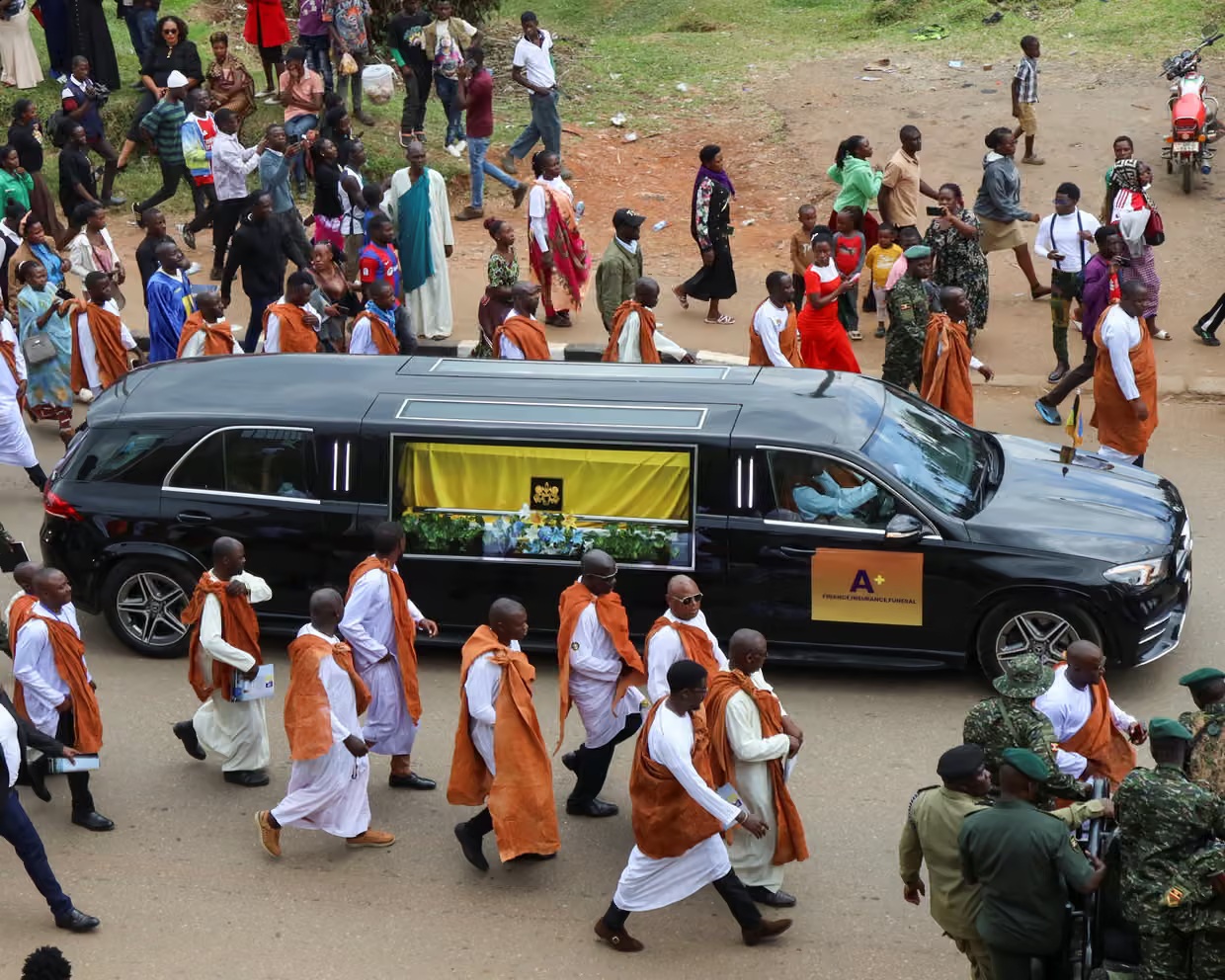
Royal guards escort the body of the late King Oyo for his burial at the Karambi Royal Tombs, in Fort Portal.
Museveni’s comments came as disagreement continued over the choice of Oyo’s successor.
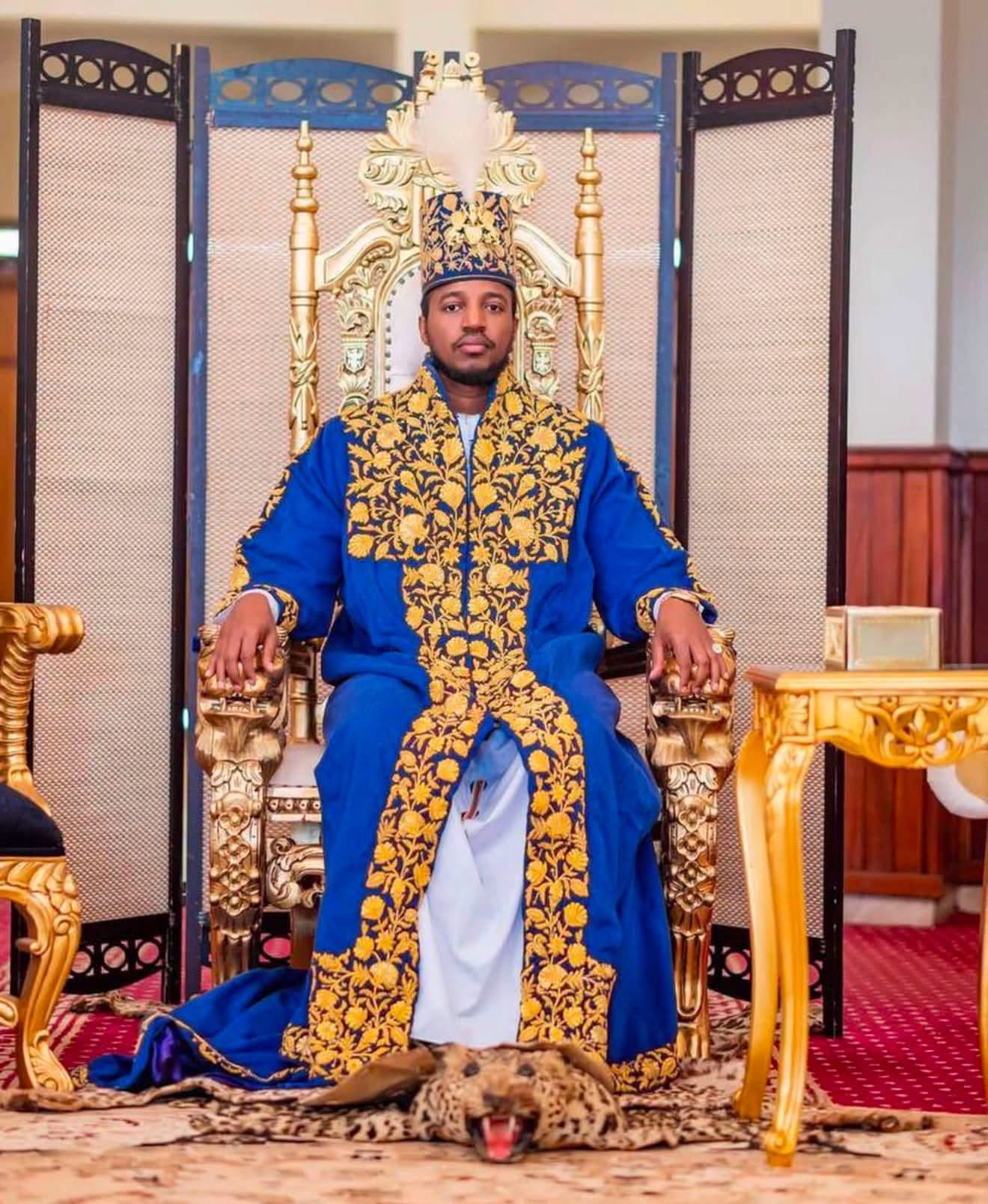
The Babiito clan, which oversees the royal succession, declared Prince Edward Rukidi Kijanangoma as the new King of Tooro during the late monarch’s final send-off.
Prince Charles Akiiki Kamurasi, the Musuuga and head of the Babiito Clan, said the selection was made by princes and princesses under his leadership and followed Uganda’s laws, as well as Tooro traditions and customs.
But members of Oyo’s immediate family have rejected the decision.
The Babiito clan has defended its decision to name Kijanangoma as Oyo’s successor.
Princess Ruth Komuntale, Oyo’s sister, said the late king left a will in 2022 naming his young son as heir to the throne. Princess Elizabeth Bagaya, Oyo’s paternal aunt, and Margaret Komubaizi, assistant Batebe of Tooro, have also backed the family’s position, saying consultations over the will had not been completed.
The dispute has emerged following Oyo’s death last month at the age of 34 while undergoing cancer treatment in the United States.
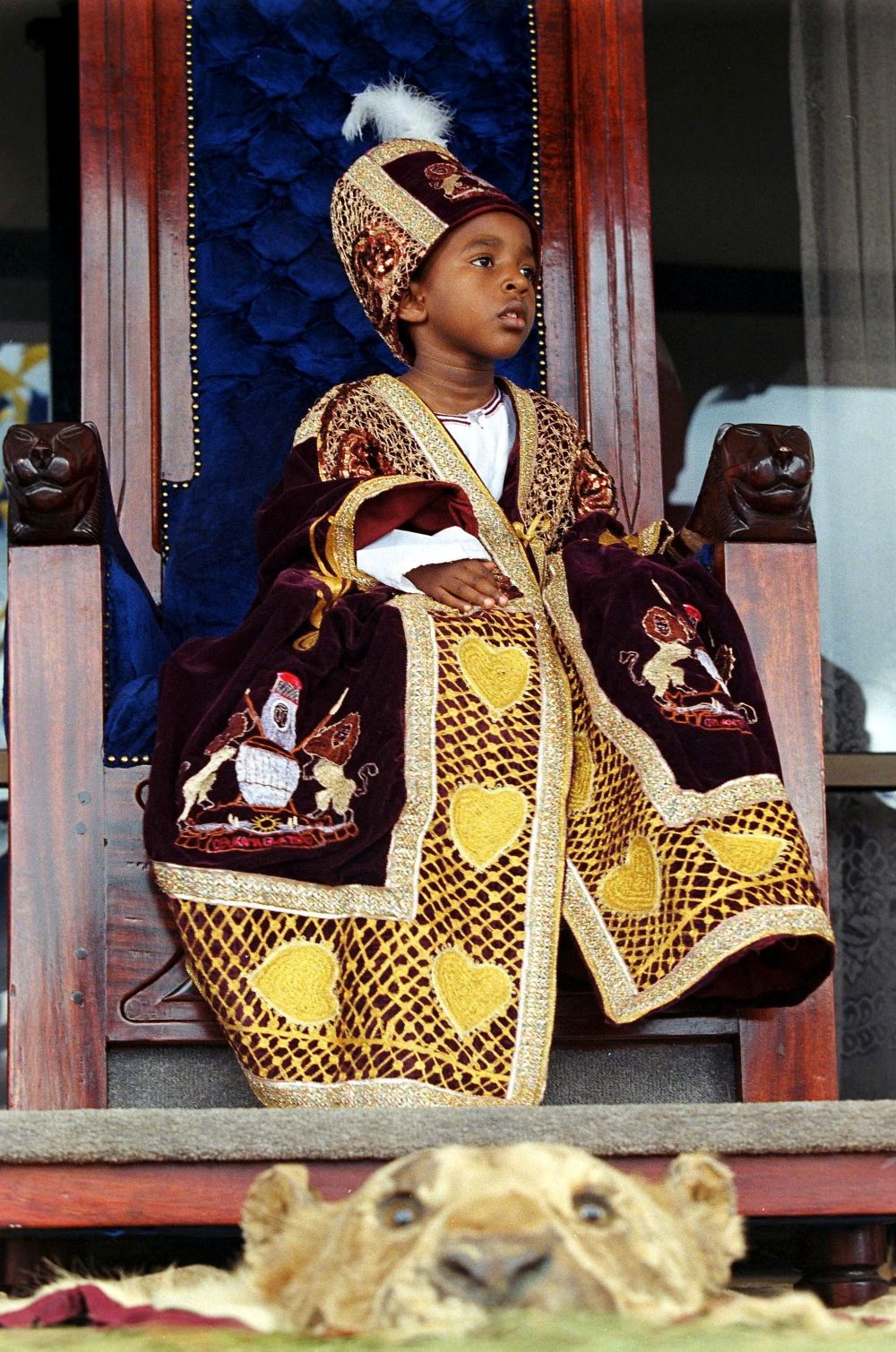
Oyo became king at the age of three and was recognised by Guinness World Records as the world’s youngest reigning monarch at the time. He ruled Tooro for more than three decades.
Oyo became king at the age of three.
The kingdom is one of Uganda’s traditional institutions, which were abolished in 1967 and restored in the 1990s under Museveni. The monarchs are recognised as cultural leaders rather than political or administrative authorities.
Museveni said Oyo had maintained a good relationship with the central government by focusing on his cultural responsibilities and supporting development.
“He was a good leader of culture that never clashed with the central government because he remained in his lane of culture and mobilising people for development,” Museveni said.
“It is a big loss. May his soul rest in eternal peace.”
Museveni also stressed that Uganda’s cultural leaders are not meant to participate in politics, administration or legislation, but to preserve languages, customs and traditions.
He said traditional institutions could also contribute to economic development by promoting wealth creation.
During Saturday’s burial service, Archbishop of the Church of Uganda Stephen Kazimba Mugalu also appealed for unity, warning that statements made during grief could deepen divisions and undermine Oyo’s legacy.
The Babiito clan has defended its decision to name Kijanangoma, with its head saying the succession process followed Tooro’s culture and traditions.
Museveni said the priority should now be finding a peaceful solution that preserves unity among the Batooro.
“I appeal to the Batooro to use peaceful and legal means to resolve this matter and also look for maximum unity instead of division,” he said.
The dispute has emerged following Oyo’s death last month at the age of 34 while undergoing cancer treatment in the United States.
Citing a source close to Iran’s negotiating team, the semi-official Tasnim news agency said that the understanding was reached after “intensive technical and diplomatic talks between Iran and Oman, which culminated in a final agreement in late August.”
Under the understanding, the Gulf’s entry route “lies entirely within Iran’s territorial waters,” and a portion of the exit route also falls “within Iranian territorial waters,” the source said.
The source stressed that the route would operate under Iranian arrangements and the waterway’s southern route will be closed once the new system becomes operational, noting that the United States had insisted that the southern route must be opened.
“The understanding in no way means that the Strait of Hormuz will be opened,” the source said, adding that Iran has seven conditions for reopening the waterway and has conveyed them to the United States.
The source underlined that the waterway will remain closed unless those conditions are implemented, with reopening depending entirely on the U.S. behavior.
Iran’s Foreign Ministry spokesman Esmaeil Baghaei announced on Friday that Gulf littoral states’ foreign ministers are scheduled to meet in Oman on Monday to exchange views on regional issues, including the Iran-Oman talks on designating safe routes in the Strait of Hormuz.
Speaking to Al Jazeera on Saturday, Baghaei said the gathering would “hopefully” be attended by foreign ministers from Gulf states as well as Iran and Iraq.
“As part of the agenda, we are going to brief the delegations about the results of the Iran and Oman consultations regarding the safe passage of ships through the Strait of Hormuz,” he said, adding that the two countries had conducted the consultations as “the two coastal states of the Strait of Hormuz.”
Late last month, Iran and Oman said in a joint statement that they had exchanged views on a proposed phased framework that includes establishing a temporary joint shipping corridor in the strait.
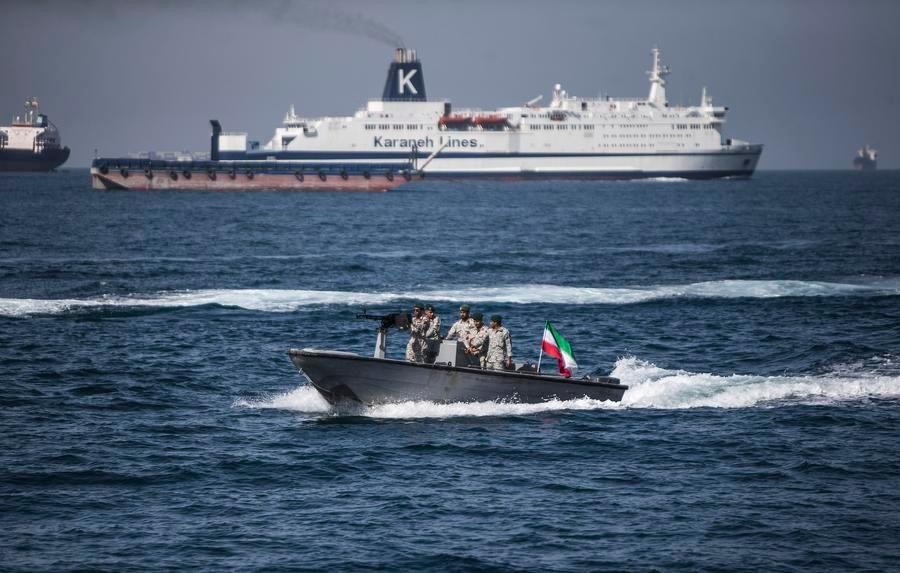
Following U.S.-Israeli strikes on Iran on Feb. 28, Tehran restricted passage through the strategic waterway, while U.S. forces imposed a naval blockade targeting vessels traveling to or from Iranian ports.
The Strait of Hormuz, linking the Gulf with the Arabian Sea, is one of the world’s most important routes for oil and gas shipments. Oman and Iran sit on opposite sides of the strait and have maintained consultations over maritime security and navigation in the strategic waterway.
Iran and Oman have agreed on the details of new entry and exit routes for the Strait of Hormuz and will brief Gulf countries on the outcome of their consultations at a regional meeting in Muscat on Monday, Iranian officials said on Saturday.
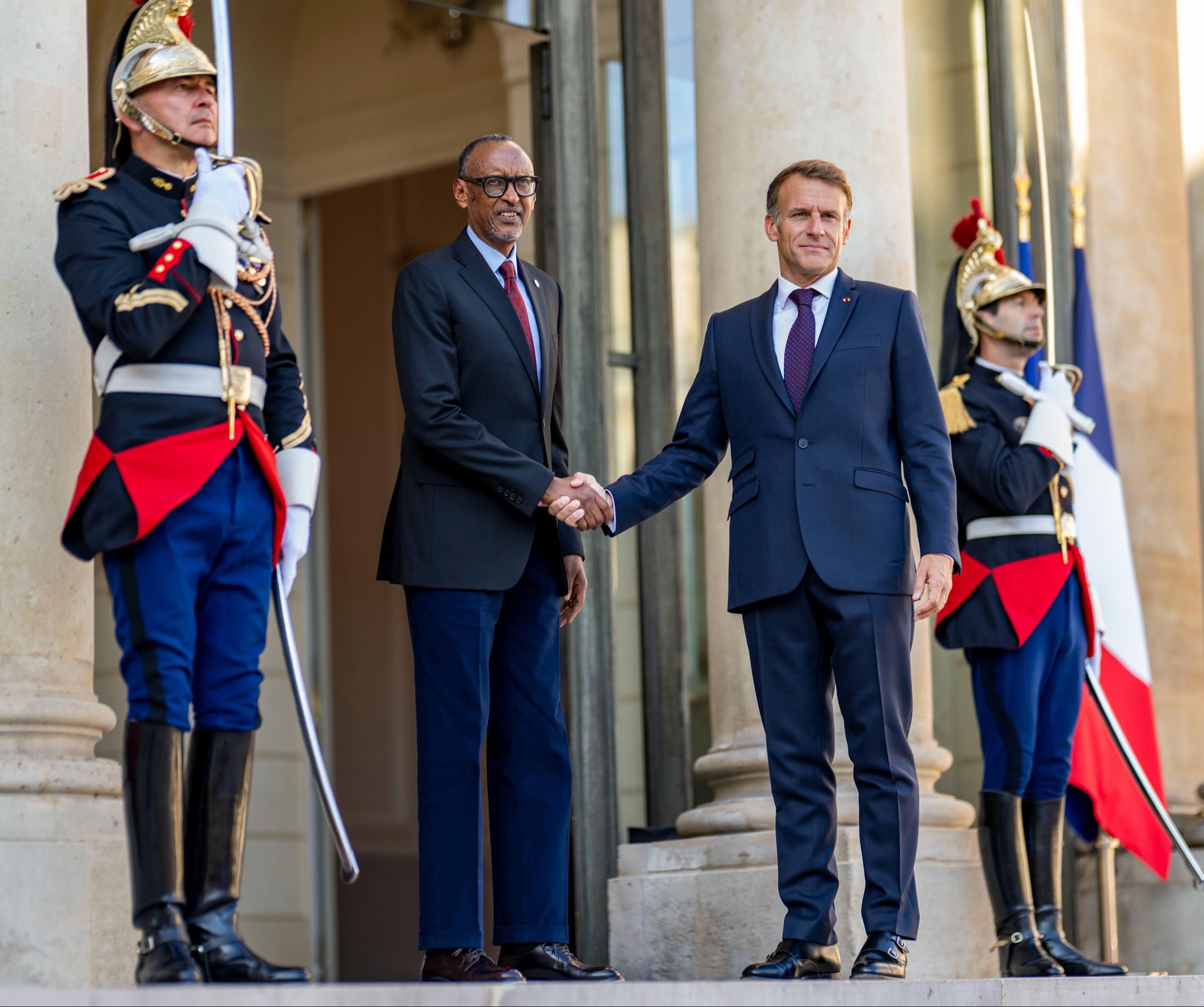
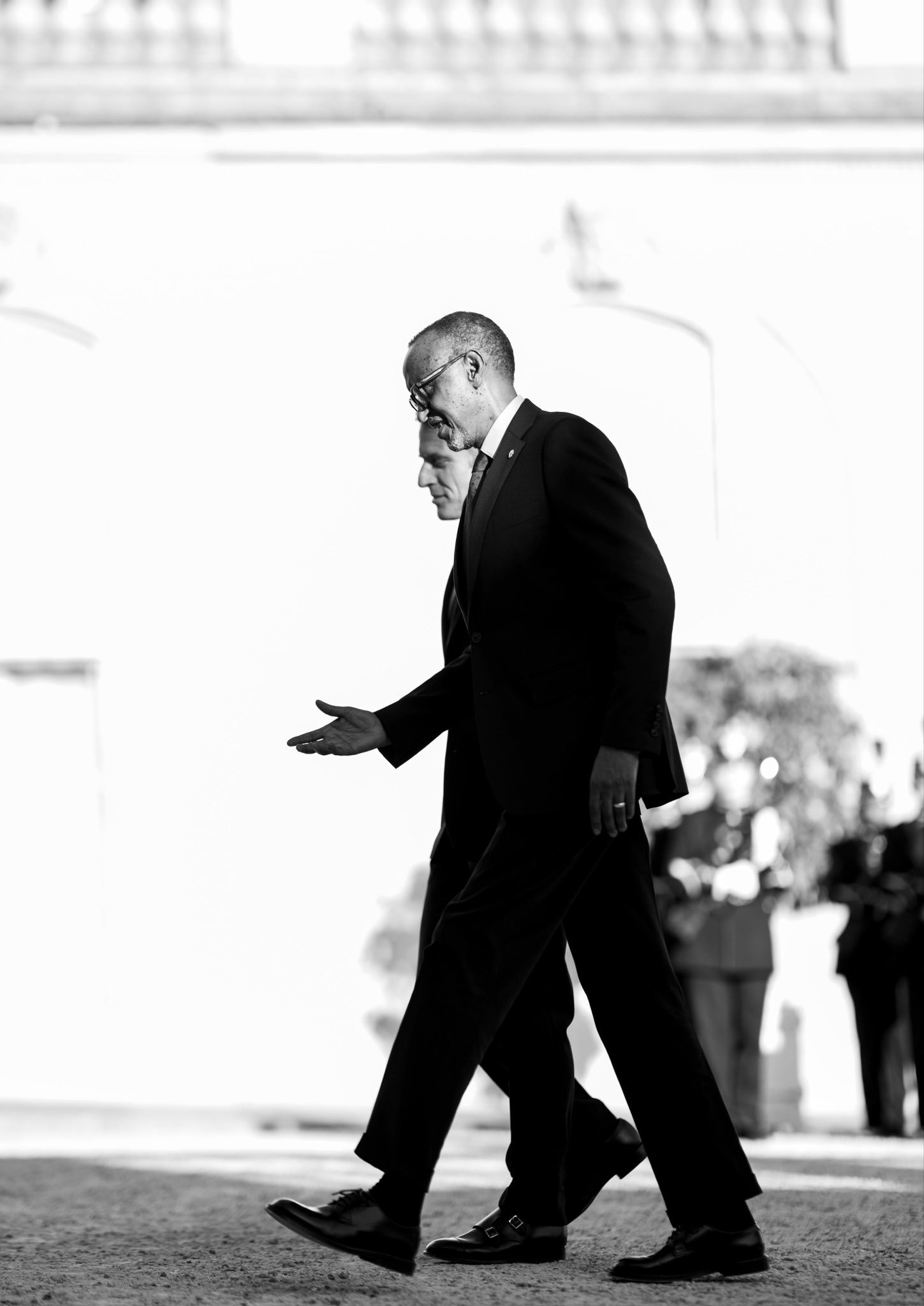
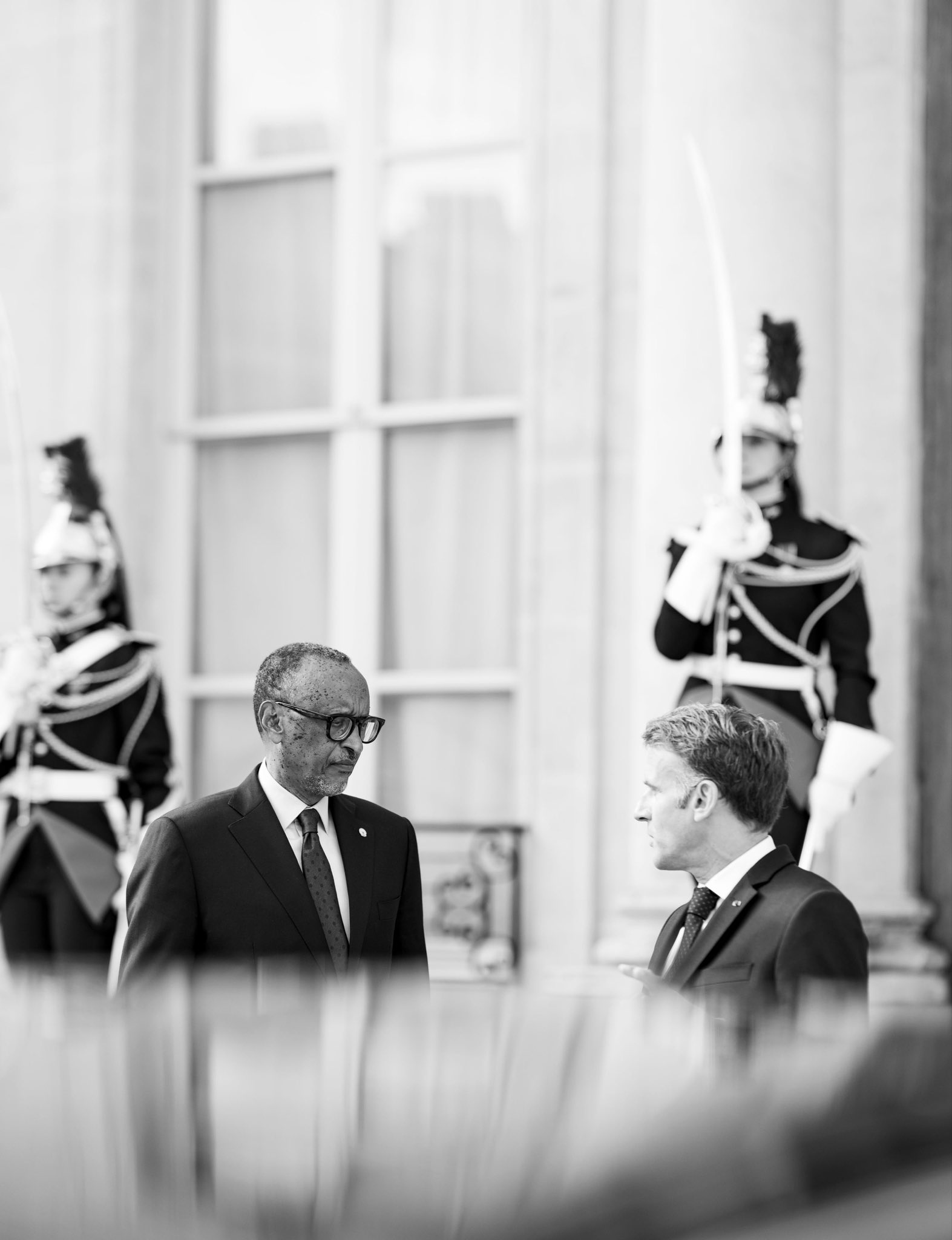
According to the Office of the President, the two leaders discussed the strengthening of Rwanda-France relations, cooperation in areas of mutual interest, as well as regional and global developments.
The meeting came as Kagame attended the International Space Summit, a two-day gathering convened by Macron that brought together Heads of State and Government, space agency leaders and industry representatives to discuss governance, security and sustainable development in the space sector.
Addressing the summit, Kagame called for greater African participation in the rapidly growing global space economy, warning against reproducing existing inequalities in the sector.
“For a continent with a young and increasingly connected population, this sector offers enormous potential,” Kagame said, arguing that African countries should be contributors to science, research and global decision-making rather than merely users of space technologies.
He highlighted Rwanda’s national space policy and the use of space technologies and artificial intelligence in agriculture, infrastructure and disaster management.
Kagame also raised concerns over access to orbital and spectrum resources as satellite constellations expand, citing Rwanda’s support for African efforts to regain several orbital slots through the African Telecommunications Union.
He called for clear international rules for the space sector, with developing countries given a meaningful voice in shaping global frameworks and greater access to technology and knowledge.
“Ultimately, we should avoid reproducing in space the inequalities that exist in other domains,” he said, adding that Rwanda was ready to work with France, Europe and other partners to deepen space cooperation.
The meeting follows another engagement between Kagame and Macron in Paris in June, when they inaugurated a monument honouring victims of the 1994 Genocide against the Tutsi.
At the event, Kagame commended Macron for acknowledging France’s historical responsibility, describing his recognition of the country’s failures as “something more valuable than an apology.”
The latest talks come as Rwanda and France continue to strengthen cooperation across political, economic and technological areas, alongside discussions on regional and international affairs.
President Macron hosted his Rwandan counterpart, President Paul Kagame, for talks at the Élysée Palace in Paris on Friday morning.According to the Office of the President, the two leaders discussed the strengthening of Rwanda-France relations, cooperation in areas of mutual interest, as well as regional and global developments.
According to the Office of the President, during the talks on Thursday, the two leaders reaffirmed the strong and longstanding relations between Rwanda and Congo-Brazzaville and exchanged views on challenges facing the African continent.
They also discussed the need to advance effective and sustainable solutions led by African countries.
The meeting came as the two countries continue to strengthen diplomatic and political relations and cooperation across several areas.
Rwanda opened its embassy in Congo-Brazzaville in August 2016, further formalising diplomatic engagement between the two countries.
In November 2021, Rwanda and Congo-Brazzaville signed a series of agreements covering military cooperation, collaboration in improving teaching and learning at universities, land management, sustainable development and environmental protection.
The agreements also covered the promotion of bilateral trade and expansion of cooperation in air transport development.
According to the Office of the President, during the talks on Thursday, the two leaders reaffirmed the strong and longstanding relations between Rwanda and Congo-Brazzaville and exchanged views on challenges facing the African continent.
Trump campaigned for a second term as a president who would end foreign wars rather than start new ones.
However, his administration is now deeply involved in a conflict with Iran that analysts say risks becoming a new “forever war.”
The US launched “Operation Epic Fury” alongside Israel on February 28, targeting Iran’s military and nuclear capabilities.
The campaign has relied heavily on US air and naval power rather than a large-scale deployment of American ground troops.
Despite inflicting significant economic and military damage on Iran, the campaign has not achieved all of the objectives critics say Trump set out to accomplish, including dismantling Iran’s nuclear programme or triggering a change in the Iranian government.
The conflict has also created economic pressure beyond the battlefield. Iran’s disruption of oil shipments through the Strait of Hormuz has contributed to higher US gasoline prices and pushed global oil prices higher.
The economic impact has added to political pressure on Trump and strained relations with some US allies.
Analysts say the conflict reflects some of the problems that complicated the wars in Afghanistan and Iraq, including difficulties in defeating an entrenched opponent and establishing a clear path to ending military operations.
Sina Toossi of the Center for International Policy said Trump had broken a post-Iraq and Afghanistan reluctance in Washington to launch another major, potentially open-ended war in the Middle East.
The comparison comes as the United States approaches the 25th anniversary of the September 11 attacks, which killed nearly 3,000 people and led to the US invasion of Afghanistan, followed by the 2003 invasion of Iraq.
The Iraq war was launched partly on intelligence that Iraq possessed weapons of mass destruction, but those weapons were never found.
The conflicts in Afghanistan and Iraq became lengthy and costly, while contributing to instability across the Middle East.
Trump’s political rise was partly fueled by public frustration with the consequences of those wars.
During his 2024 campaign, he promised to avoid military adventurism and focus more heavily on Americans’ economic concerns.
Critics now argue that his Iran strategy risks repeating some of the mistakes of the post-9/11 era, including underestimating an adversary’s resilience and failing to establish a clear exit strategy.
The White House has defended the campaign. Spokeswoman Anna Kelly said Trump had the courage to confront Iran over its nuclear programme and argued that his administration had achieved its objectives, while sanctions and a US maritime blockade were putting further pressure on Iran’s economy.
For now, however, the conflict remains unresolved. With rising energy costs, political pressure at home and concerns over its wider regional consequences, the war is increasingly becoming a test of whether Washington can avoid repeating the experience of the post-9/11 “forever wars.”
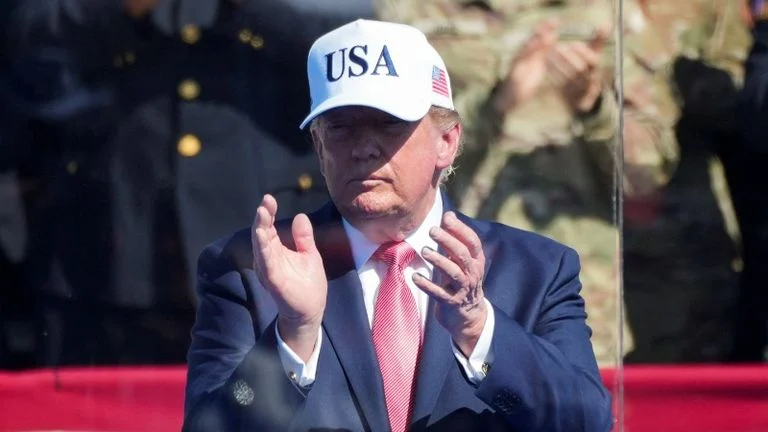
US President Donald Trump faces growing scrutiny over the ongoing conflict with Iran.