“Orders have already been given, and the U.S. Military is ready, willing, and able, for a one year period of time, subject to extension, to completely decimate and destroy all areas of Iran,” he wrote in a post on Truth Social.
Earlier Friday, Trump said that Washington has agreed to continue negotiations with Iran, although it has informed Tehran that the ceasefire is over.
“The Islamic Republic of Iran has asked us to continue ‘talks.’ We have agreed to do so, but the United States has stated to them, in no uncertain terms, that the Cease Fire is OVER!” Trump wrote on Truth Social.
U.S. forces carried out repeated strikes against Iran earlier this week in response to several attacks on commercial vessels transiting the Strait of Hormuz. In retaliation, Iran struck U.S. military bases and facilities in Kuwait, Bahrain, Qatar, and Jordan with missiles and drones.
In a fresh phone call, Saudi Crown Prince and Prime Minister Mohammed bin Salman Al Saud discussed the U.S.-Iran talks with Trump.
The Saudi Press Agency reported that the two sides discussed Saudi-U.S. cooperation and ways to enhance it in various fields. They also stressed the importance of ensuring maritime navigation security, protecting sea lanes, and supporting efforts that contribute to regional security and stability.
Iranian Foreign Minister Seyed Abbas Araghchi is scheduled to visit Oman on Saturday for consultations on the Strait of Hormuz, as part of efforts to facilitate safe maritime traffic in the strategic waterway, Iranian Foreign Ministry spokesman Esmaeil Baghaei said.
The spokesman rejected U.S. claims that Iran had requested negotiations with Washington, saying no such request had been made. Yet he noted that Iran did not turn down the request of Qatar, a regional mediator, to visit Iran on Friday for discussions.
U.S. forces carried out repeated strikes against Iran earlier this week in response to several attacks on commercial vessels transiting the Strait of Hormuz.
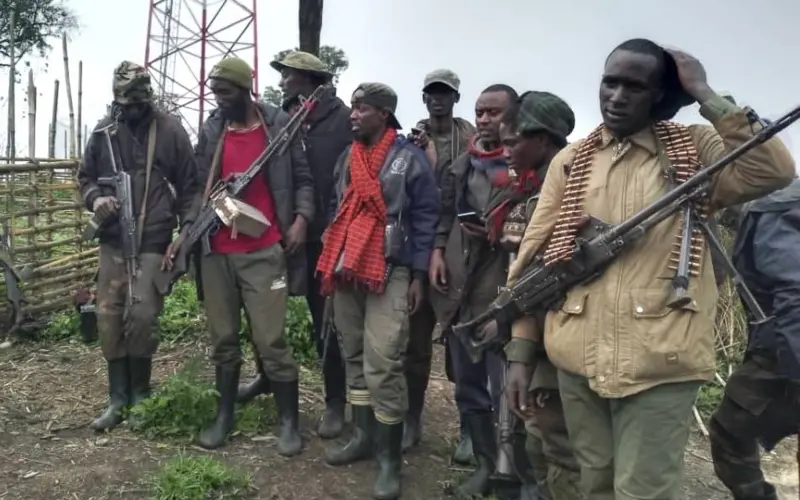
According to the report presented to the UN Security Council Sanctions Committee on June 5, 2026, mercenary groups provide battlefield support, maintain military assets including combat aircraft, and train members of the Armed Forces of the Democratic Republic of the Congo (FARDC) in advanced drone operations, radar systems, jungle warfare, intelligence gathering, operational planning, secure communications and target identification.
Despite the longstanding cooperation, the UN experts say coordination between FARDC and the various mercenary groups has been undermined by weak command structures, resulting in confusion over lines of authority and responsibility.
Advanced training and cooperation with Wazalendo
The report says foreign mercenaries maintain operational bases in Kisangani, Kinshasa, Walikale, Kalemie in Tanganyika Province and Kindu in Maniema Province. Testimonies and other evidence gathered by the UN indicate they continue to play an active role in military operations across North and South Kivu.
In Walikale, North Kivu, and the town of Baraka in South Kivu, foreign mercenaries reportedly provided advanced military training to members of the Wazalendo militias. The programme covered reconnaissance techniques, including identifying enemy positions and operating surveillance drones.
According to testimonies cited in the report, participants were selected based on their level of education. Upon completing the training, many were deployed alongside FARDC troops, with some reportedly issued sniper rifles for operations against the AFC/M23 coalition.
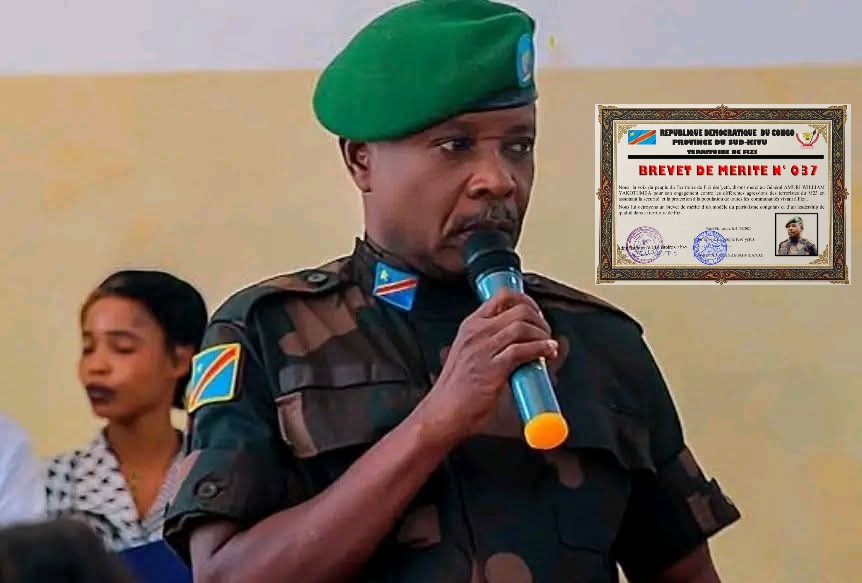
Among those who benefited from the training were fighters under commanders sanctioned by the United Nations, including Guidon Shimiray, leader of the NDC-R armed group operating in Walikale, and members of the CNPSC led by William Yakutumba.
Foreign mercenaries trained fighters under William Yakutumba.
Operations in South Kivu
Between January and March 2026, mercenaries fought alongside FARDC during heavy fighting in South Kivu, participating in coordinated drone and ground operations in several areas, including Minembwe Commune and its surrounding areas.
During the same period, Wazalendo fighters were ordered to withdraw from the highlands of South Kivu and were replaced by a FARDC special forces unit known as “Hiboux” together with foreign mercenary contingents.
The report says the mercenaries were not deployed across all operational areas. Instead, they were assigned to specialised missions, including coordinating heavy artillery fire, drone strikes and intelligence support. They were also deployed to the city of Uvira in January 2026.
On February 1, 2026, multiple drone strikes involving foreign mercenaries targeted positions held by the MRDP-Twirwaneho armed group in Minembwe.
Foreign mercenaries participated in major offensives against MRDP-Twirwaneho.
Between February 2 and 8, mercenary units reportedly assisted the Hiboux special forces in recapturing the strategic Point-Zéro junction, a key crossroads linking the roads to Uvira, Baraka and Minembwe.
Secret agreement with Erik Prince
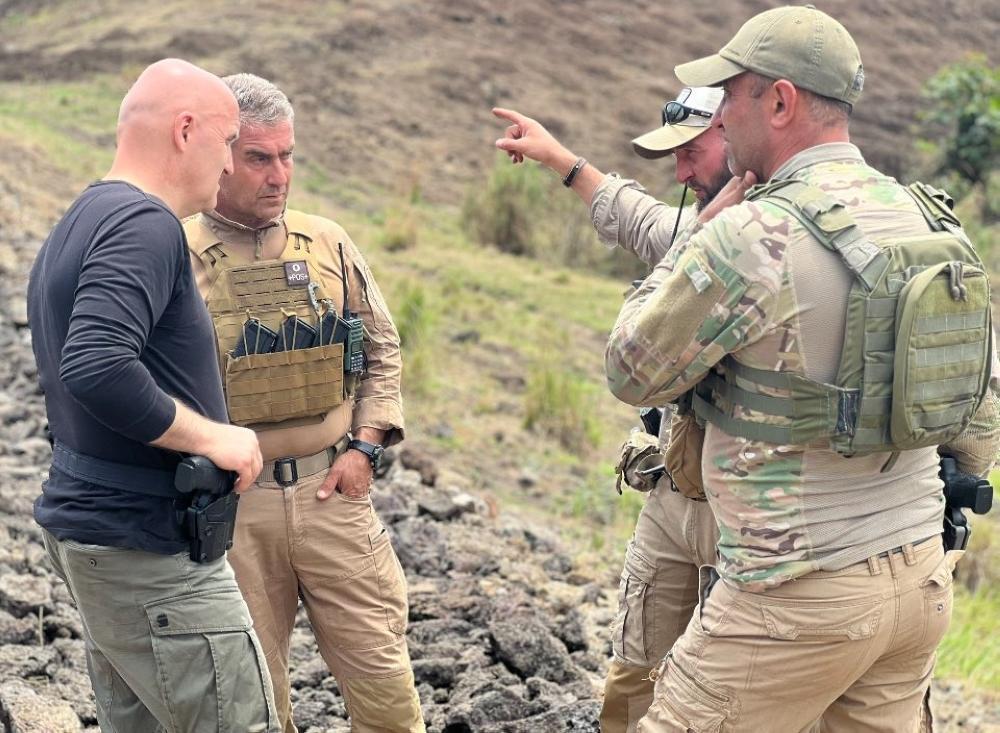
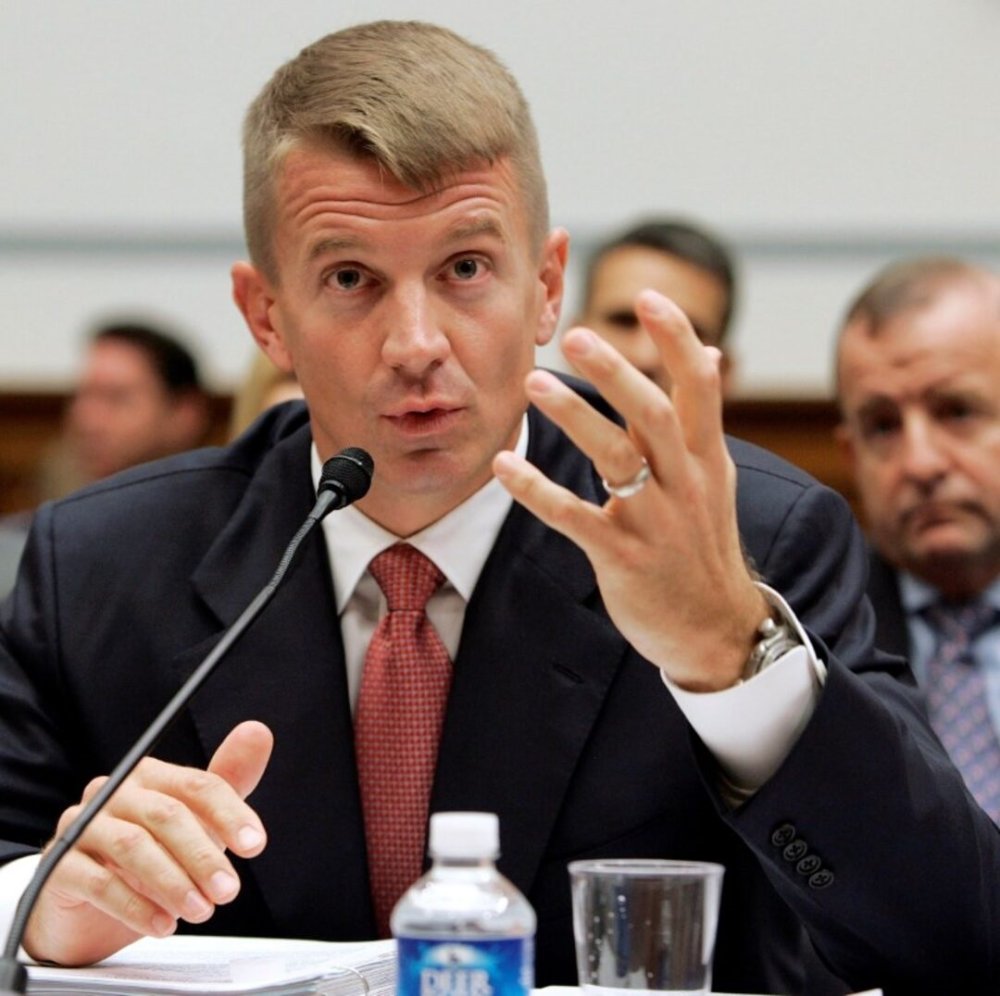
The report also details a confidential five-year cooperation agreement signed between the DRC government and American security contractor Erik Prince in December 2024. Prince is best known as the founder of the private military company Blackwater.
Under the agreement, Prince committed to providing military assistance to FARDC and overseeing security at mining sites across the country through contractors working under his companies.
Prince is best known as the founder of the private military company Blackwater.
In June 2025, Prince’s United Arab Emirates-based company, Quantum Global Consulting, registered a subsidiary in the DRC known as Quantum Global Consulting Africa.
The company also established another entity, Vectus Global, headed by Christophe Sirot, a dual French-American national.
According to the report, Vectus Global signed a contract with the DRC Ministry of Finance to help increase state revenues from mining, combat cross-border smuggling, tackle corruption and reduce tax evasion.
At the end of April 2026, the Ministry of Finance announced the creation of a special unit tasked with securing mining sites, replacing soldiers and police officers previously assigned to those duties. The UN experts say the unit appears to be linked to Vectus Global.
The report further states that the agreement contained confidential military provisions assigning Vectus Global responsibility for strengthening border security, particularly in areas near Rwanda and Zambia.
The contract also authorised the company to advise FARDC on the acquisition and operation of combat aircraft and to recruit former foreign military personnel to support the Congolese armed forces.
According to the UN experts, the broader objective was to strengthen FARDC’s military capabilities against Rwanda through advanced military technology, specialised training, strategic advice and the acquisition of modern weapons.
By late 2025, one Vectus employee told the UN investigators that the company’s priorities had shifted from securing mining operations to supporting military activities as the conflict intensified.
In February 2026, another employee reportedly told the experts that the DRC government had enlisted Vectus Global to help plan an operation to retake the city of Uvira after it fell to AFC/M23 fighters, with company personnel deployed to South Kivu to support the operation.
However, during an interview with the UN experts in March 2026, Sirot denied that Vectus Global had participated in combat operations, insisting that the company’s contract did not include any battlefield role.
The report nevertheless says multiple witnesses, including Vectus employees, identified Sirot as the individual responsible for coordinating the company’s military-related activities.
More than 300 recruits from El Salvador
Another major finding concerns the recruitment of former soldiers and police officers from El Salvador.
According to the report, former Salvadoran military personnel and police officers began arriving in the DRC from July 2025 to support the government’s coalition in its conflict against AFC/M23.
Initially assigned to maintain military equipment in Kisangani, Tshopo Province, many were later redeployed to Walikale, Baraka and Kalemie.
The UN experts found that a company known as Importaciones de Productos Americanos S.A. de C.V. coordinated the recruitment of more than 300 mercenaries in El Salvador for deployment to the DRC.
The company is registered in El Salvador and is owned by Juan Emilio Velasco Alfaro, a retired colonel in the Salvadoran military, and Rodrigo Antonio Tejada Alvarengar, a former lieutenant.
Most recruits signed one-year contracts that came into effect in July 2025, with each promised a monthly salary of US$4,225.
The report says some of the recruits returned to El Salvador before completing their contracts because of delays in salary payments by the DRC government or injuries and illnesses sustained during deployment.
The Government of El Salvador told the UN experts that it was unaware its citizens had travelled to fight in the DRC and had never authorised their deployment.
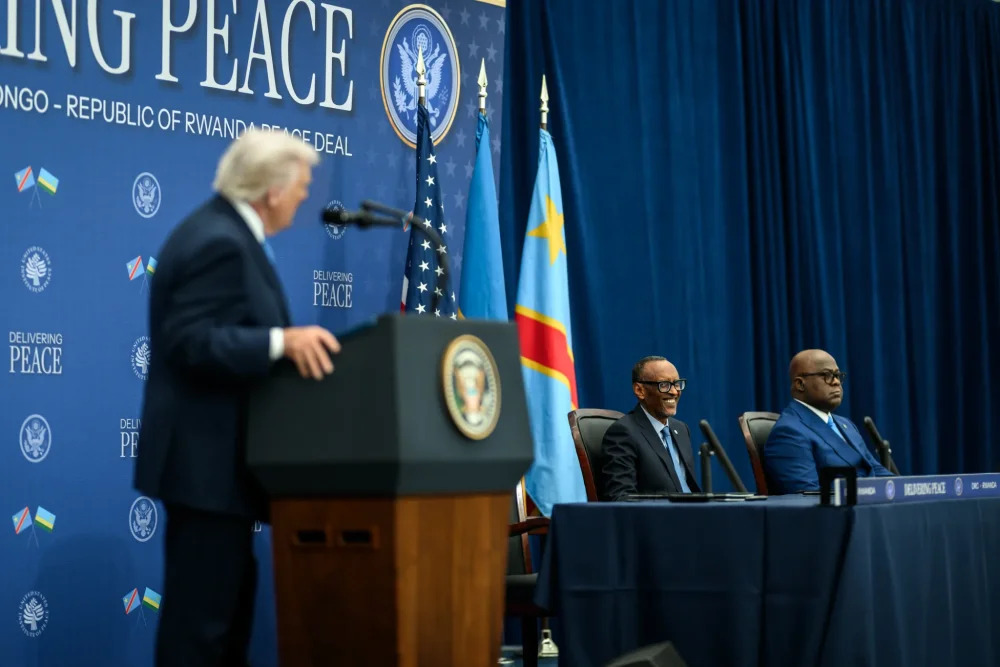
Trump made the remarks on July 8 while speaking to reporters aboard Air Force One after attending a NATO summit in Türkiye, where he portrayed the DRC conflict as one of eight wars he had helped bring to an end.
Responding to a question about Venezuelan opposition figure María Corina Machado, who he said had credited him with resolving conflicts around the world, Trump cited the tensions between the DRC and Rwanda among disputes he claimed to have settled.
“Think of the wars settled, eight wars that were going to last 30 years. Even if you look in the Congo, the Congo versus Rwanda. I settled it. After 14 years and about 15 million people had their heads chopped off. I settled that one,” Trump said.
Trump’s remarks appear to refer to the peace agreement signed by Rwanda and the DRC in Washington, which was designed to address years of tensions between the two neighbours.
The agreement outlines steps including the dismantling of the Democratic Forces for the Liberation of Rwanda (FDLR), an armed group linked to the 1994 Genocide against the Tutsi that Rwanda maintains remains a security threat and operates with support from elements within the Congolese security system.
Implementation of the agreement has faced significant challenges, with Kigali accusing Kinshasa of failing to honour its commitments, particularly regarding the neutralisation of the FDLR, while also questioning the neutrality of the US mediation.
Rwanda’s Foreign Minister Olivier Nduhungirehe recently expressed disappointment, arguing that peace cannot be achieved if only one party implements its obligations under the agreement, following sanctions imposed on Rwanda.
The agreement was built on two key pillars: the neutralisation of the FDLR and the lifting of Rwanda’s defensive measures. However, Nduhungirehe argued that implementation has stalled mainly due to what he described as a lack of political will from Kinshasa.
“The main issue is the political will by the government in Kinshasa to cease fire,” Nduhungirehe said, adding that drone attacks had intensified after the signing of the agreement.
He further accused the Congolese side of failing to take action against the FDLR, instead citing continued collaboration with the group.
Nduhungirehe said that while US officials had acknowledged partial progress by Rwanda, Washington had overlooked the DRC’s failure to fulfil its commitments under the agreement.
“So for us, we are disappointed by the increasingly biased U.S. mediation,” he said, stressing that peace agreements require both parties to implement their obligations simultaneously.
He questioned why sanctions had been imposed only on Rwanda, including recent measures targeting Rwanda’s Gasabo Oil Refinery and the Rwanda Defence Forces, while similar action had not been taken against the DRC.
According to the minister, sanctions risk undermining the mediation process.
“Those sanctions are unfair, one-sided and counter-productive,” he said, warning that applying pressure on only one party could embolden the other and worsen insecurity.
Trump’s claim also comes against the backdrop of continued clashes in eastern DRC, where the AFC/M23 rebel group and forces aligned with the Kinshasa government remain engaged in fighting despite diplomatic efforts.
At the end of last week, MRDP-Twirwaneho fighters allied with AFC/M23 announced that they had captured areas including Point-Zéro, Kalingi, Mikenke, Gitavi, Ilundu, Kalongi, Gakenke, Lubemba, Bicumbi and Baruta Rwitsankuku, locations previously held by forces comprising the Congolese army, Burundian troops, FDLR, Wazalendo fighters and foreign mercenaries.
On July 8, 2026, intense clashes were again reported in the same areas, involving FARDC-aligned forces and Twirwaneho fighters. The fighting was concentrated around Rugezi, Mulima, Point Zero, Kazaroho, Bilalo Mbili and Mikenke.
This followed heavy fighting in late June 2026 between Wazalendo militias and AFC/M23 near Ngungu town in Masisi territory, as well as in Rubaya, Bibwe, Minjenje and Pinga.
United States President Donald Trump’s claim that he “settled” the conflict in the eastern Democratic Republic of Congo (DRC) has drawn fresh questions over the state of the peace process, as continued tension in the region suggests that the crisis remains far from resolved.
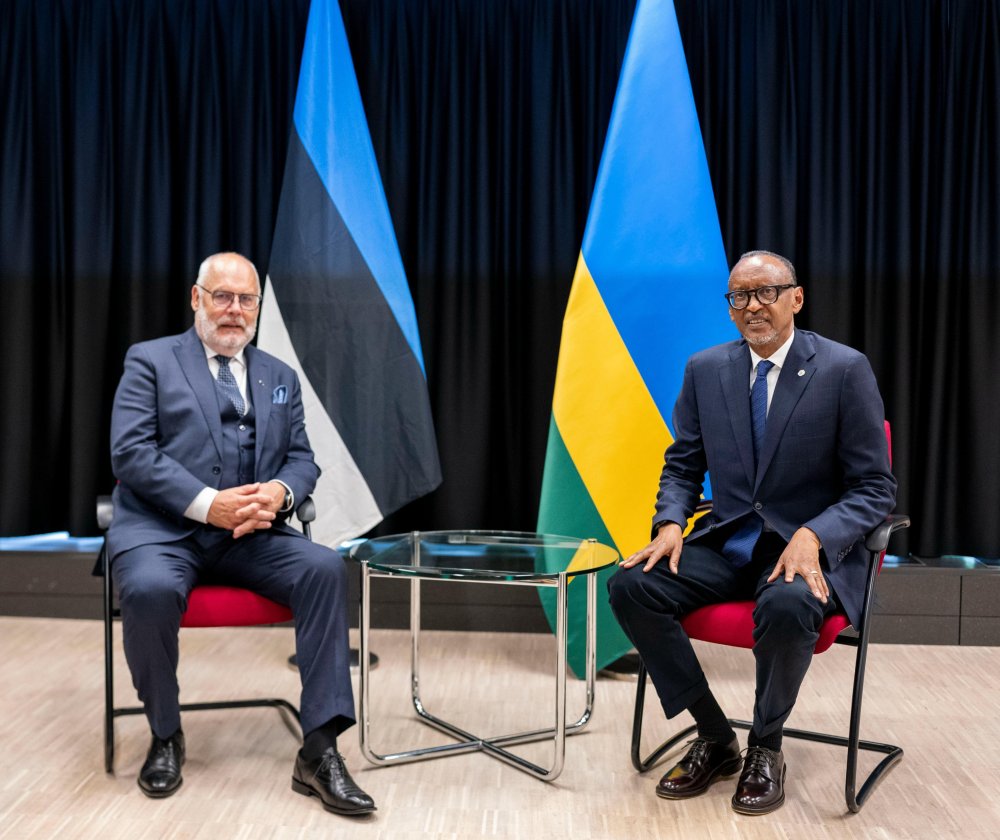
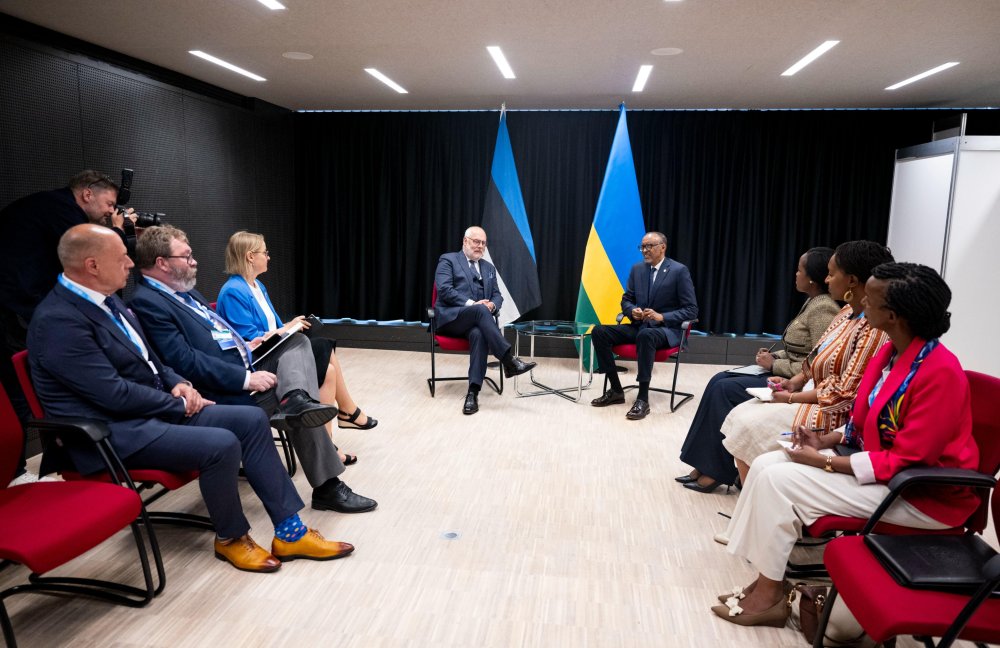
The meeting took place on July 8, 2026, on the sidelines of the AI for Good Global Summit 2026 in Geneva, Switzerland, according to the Office of the President.
Estonia is a small country in the Baltic region of Northern Europe. The capital, Tallinn, dates back to the 13th century and its Historic Centre, the Old Town is on UNESCO’s list of World Heritage Sites.
With a sparse population, over half of Estonia is covered with forests, the country has the 4th best urban air quality in the world and 2222 islands along its coastline.
With a total population of 1.3 million, about 1.1 million people speak Estonian, making it one of the world’s smallest official national languages.
The country has also transformed the government into a digital government, branding itself as e-Estonia. It was the first country to adopt online voting in 2005, first country with a data embassy and the first country to offer cross-border digital identity to anyone in the world.
President Alar Karis assumed office in 2021, succeeding Kersti Kaljulaid, who served as Estonia’s president from 2016.
Rwanda and Estonia have maintained cordial relations over the years, with leaders from both countries engaging regularly to advance bilateral cooperation.
In 2018, on the sidelines of the Munich Security Conference in Germany, President Kagame met with then-President Kersti Kaljulaid, shortly after her official visit to Rwanda.
Kaljulaid had visited Rwanda on November 16, 2017, during a trip from Ethiopia, marking her first visit to Africa since taking office.
During that visit, the two countries highlighted their shared commitment to digital innovation and identified significant opportunities for cooperation in technology-based development, e-government, and digital public services.
While in Rwanda, Kaljulaid also visited the Kigali Genocide Memorial, where she paid tribute to the victims of the 1994 Genocide against the Tutsi.
In a message left at the memorial, she conveyed condolences on behalf of the people of Estonia to Rwanda, survivors, and the families of those who died in the genocide.
President Paul Kagame and Estonian President Alar Karis held bilateral talks on the sidelines of the AI for Good Global Summit 2026 in Geneva, Switzerland.President Kagame and President Alar Karis exchanged views on expanding cooperation in digital innovation and e-governance.
“These incidents that we have seen in the last 24 hours risk derailing the diplomatic progress achieved between the Islamic Republic of Iran and the United States,” said Stephane Dujarric, the spokesman, at a daily press briefing.
He said that “a return to full-scale hostilities would have catastrophic consequences — for the peoples of the region, for international peace and security, and for the global economy as a whole.”
The secretary-general called on all parties to exercise maximum restraint, avoid any further escalatory action, and take immediate steps to de-escalate. The UN chief further recalled the obligations of all parties to fully comply with international law.
Guterres urged Iran and the United States to promptly resume negotiations and to address outstanding issues through diplomacy.
The United Nations remains committed to supporting all efforts to prevent a return to conflict, restore stability, and advance a comprehensive and durable resolution to this conflict, said the spokesman.
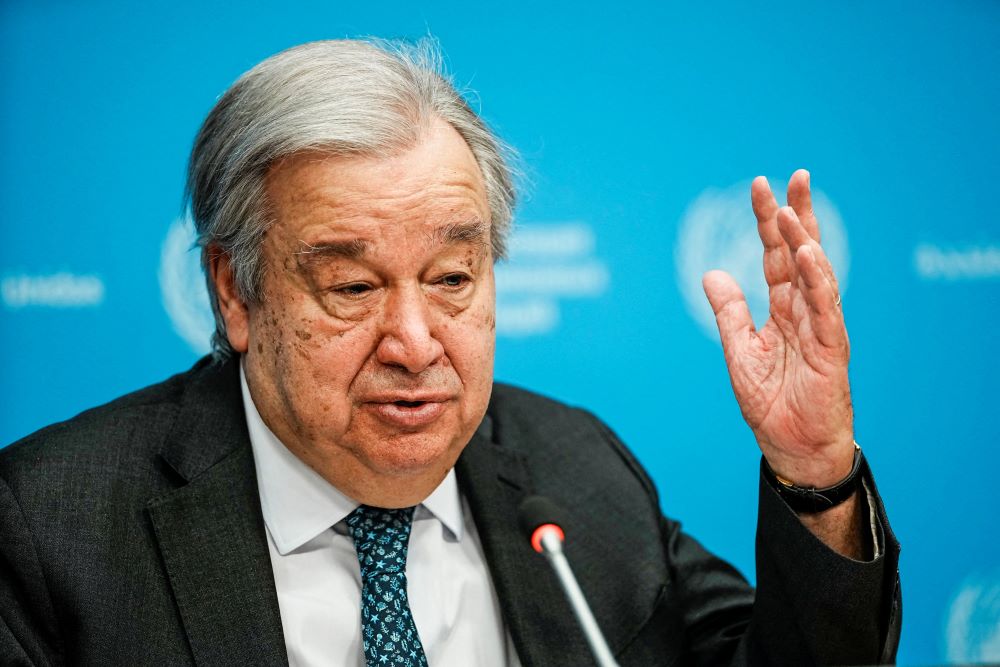
United Nations Secretary-General Antonio Guterres speaks during a press conference outlining his priorities for 2026 at U.N. headquarters in New York City, U.S., January 29, 2026. REUTERS/Eduardo Munoz
The United States is “holding Iran accountable for recent unjustified aggression against commercial shipping and civilian crews freely navigating a vital international waterway,” the command said in a post on X.
More than 20 U.S. Navy warships were patrolling waters across the Middle East on Wednesday, the command said in an earlier post.
The move came after U.S. President Donald Trump warned at the NATO summit in Ankara earlier the same day that the U.S. military would probably hit Iran again.
“I’ll give a little warning: We’re going to hit them hard tonight,” Trump said, adding that he did not expect a full-fledged conflict with Iran.
Following Trump’s remarks at the summit, Iran’s Press TV, citing an informed source, reported that Iran would close the Strait of Hormuz and strike twice as many targets given any fresh U.S. attack.
The developments came as the United States and Iran traded fresh attacks from Tuesday night into Wednesday, marking a new round of escalation.
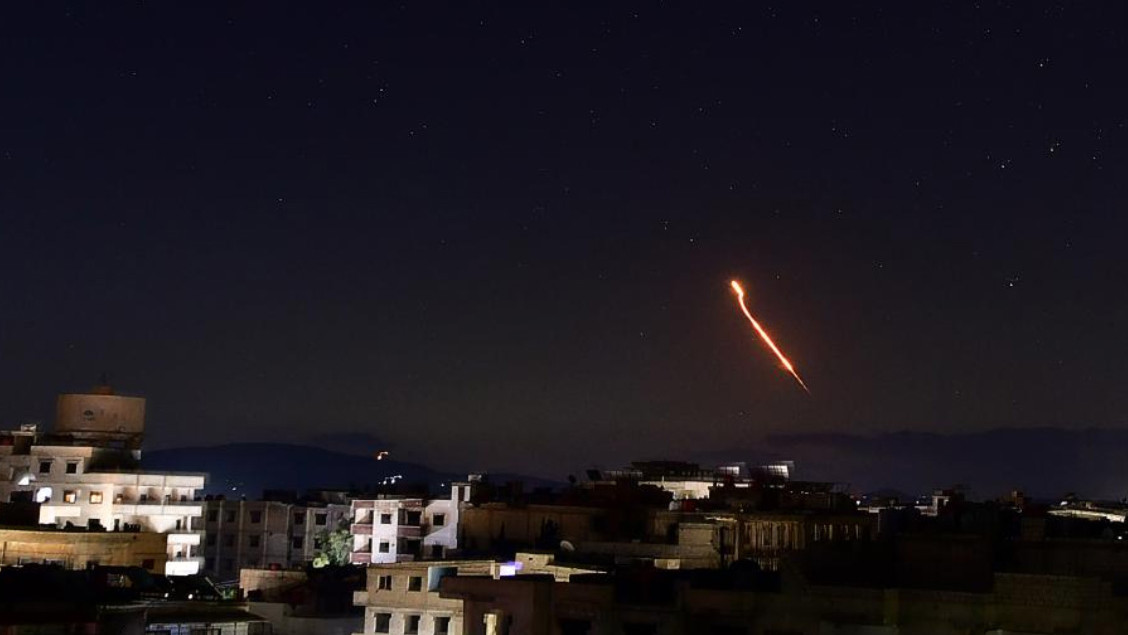
US forces conducted strikes against Iran for a second straight day to “degrade” Iran’s ability “to threaten freedom of navigation in the Strait of Hormuz,” as announced by the United States Central Command.
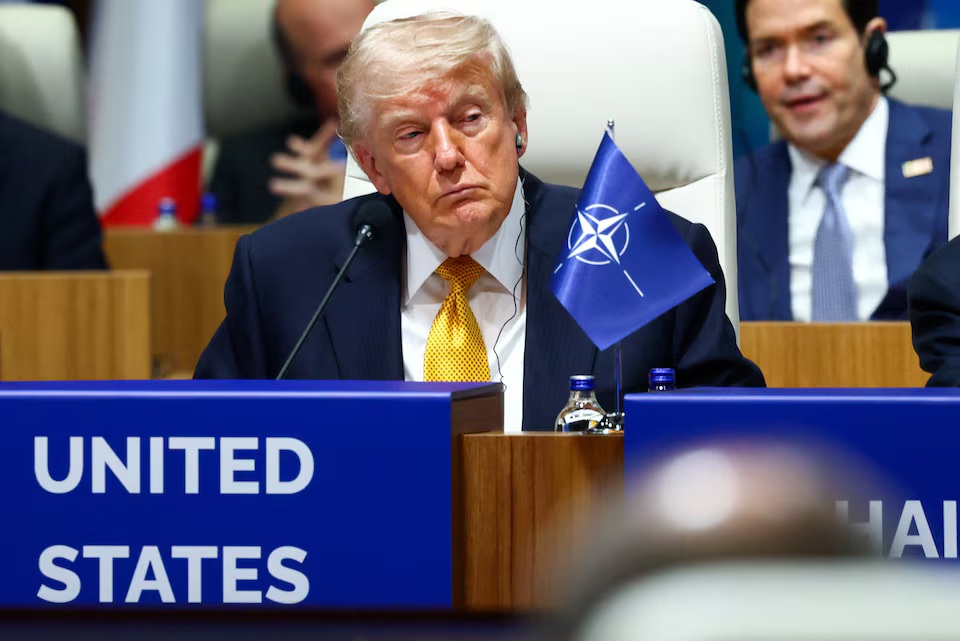
Speaking at the NATO summit in Ankara, Trump described Spain as a “terrible partner” and instructed Treasury Secretary Scott Bessent to stop all trade with the country, escalating a dispute over Madrid’s opposition to NATO’s new defence spending target of 5% of gross domestic product (GDP).
“I don’t want to do any trade with them, alright?” Trump said before turning to Bessent, who replied, “Yes, sir.”
Trump then added: “Take it immediately. Don’t even talk to them. They’re hopeless. They’re bad people … They make so much money with us, and we’re going to see that they make a lot less.”
The comments marked the second time Trump has publicly directed Bessent to halt trade with Spain. He made a similar threat in March after Madrid rejected higher military spending targets, although trade between the two countries continued uninterrupted.
European leaders had hoped the summit would showcase NATO unity, stronger support for Ukraine and increased defence commitments. Instead, Trump’s remarks reignited tensions within the alliance over military spending, the Iran conflict and broader transatlantic relations.
Trump has repeatedly criticized Spain after Prime Minister Pedro Sanchez refused to allow the United States to use Spanish airspace and military bases during the Iran war. Washington and Madrid jointly operate two major military bases in southern Spain that support U.S. naval and air operations.
“Spain doesn’t agree to anything, and you shouldn’t carry them,” Trump told NATO Secretary General Mark Rutte during the summit.
Rutte sought to ease tensions, noting that Spain had increased defence spending to 2% of GDP last year but acknowledged “there are still issues we have to solve.”
Spain dismissed Trump’s latest comments, with Sanchez’s office describing them as “business as usual” and insisting bilateral relations with Washington remained “excellent.”
The Spanish government also noted that Spain runs a trade deficit with the United States and stressed that, as part of the European Union’s customs and trade union, individual member states cannot negotiate separate trade arrangements with Washington.
Spanish Health Minister Monica Garcia was more critical, writing on X that Spain was “a sovereign, democratic country that defends multilateralism and peace.”
“What’s terrible is confusing diplomacy with bullying,” she said.
Trump also widened divisions within NATO by renewing his demand that the United States should control Greenland, the semi-autonomous Danish territory that has become a recurring point of contention with Copenhagen.
“Greenland is very important for the United States, but it’s not important for Denmark,” Trump said, arguing that Washington should have retained control of the island after World War II.
Danish Prime Minister Mette Frederiksen rejected the suggestion, saying: “We are ready to defend every inch of NATO, including our own territory.”
Trump’s remarks extended beyond Europe, with the U.S. president declaring that a fragile ceasefire with Iran was effectively over following fresh American strikes and accusing Tehran of violating the truce.
“It’s over. I don’t want to deal with them,” Trump said. “They’re scum. They’re sick people. They’re led by sick people.”
Rutte defended the U.S. military response against Iran and praised Trump for pushing European allies to spend more on defence.
“I think what you did last night was absolutely necessary. It was a very strong response,” Rutte said, adding that Trump’s pressure had helped European countries “raise their game” on military spending.
Despite Trump’s threats, analysts say it would be difficult for the United States to single out Spain for trade restrictions because trade policy with EU member states is negotiated collectively by Brussels rather than individual governments.
Meanwhile, major U.S. investors continue to view Spain positively. BlackRock recently identified Spain as its preferred market for equity exposure, citing stronger economic growth than most developed economies, even as overall U.S. investment in Spain declined during the first quarter of 2026.
Spain exports products including olive oil, auto parts, steel, chemicals and wine to the United States, although economists say its economy is less exposed to potential U.S. trade retaliation than several other European countries.
Speaking at the NATO summit in Ankara, Trump described Spain as a “terrible partner” and instructed Treasury Secretary Scott Bessent to stop all trade with the country.
Answering journalists’ questions before a meeting with Turkish President Recep Tayyip Erdogan at the Presidential Complex, Trump sharply criticized European allies.
Stating that Italy, France, and Germany “let us down,” Trump asked, “So why are we spending hundreds of thousands of dollars, and they didn’t come to our aid?”
Erdogan said during the meeting that Türkiye was making every effort to stabilize Iran-U.S. relations.
The reluctance of European countries to send warships to support U.S. efforts to “reopen” the Strait of Hormuz had prompted criticism from Trump, who harshly accused European allies of benefiting from U.S. security guarantees while refusing to offer help in the Iran war.
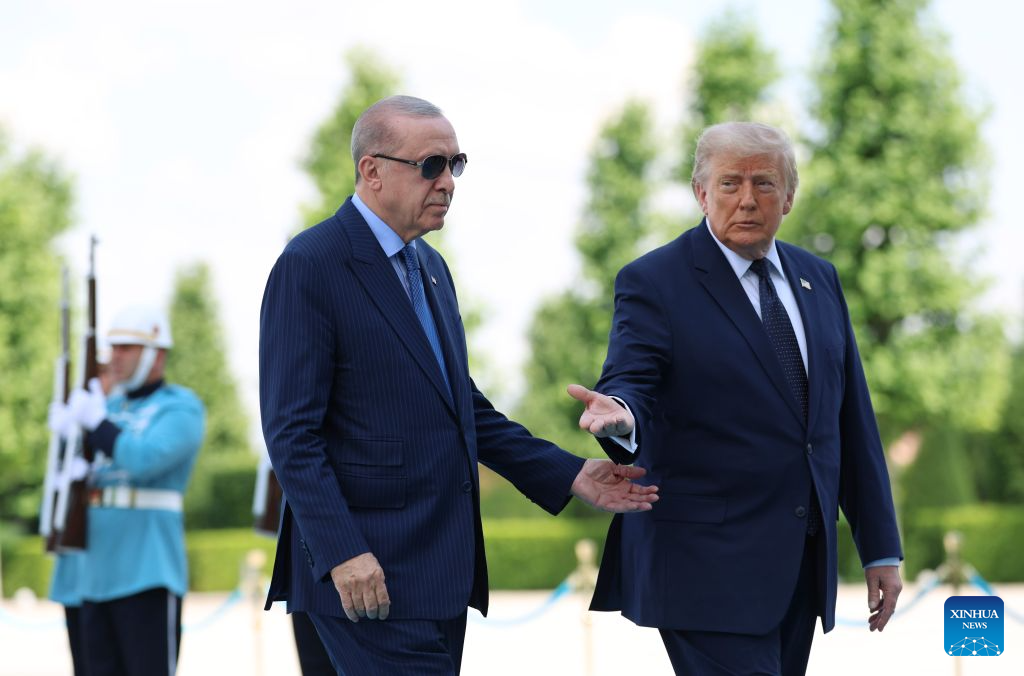
Turkish President Recep Tayyip Erdogan (L) meets with U.S. President Donald Trump at the Presidential Complex in Ankara, Türkiye, July 7, 2026. (Mustafa Kaya/Handout via Xinhua)
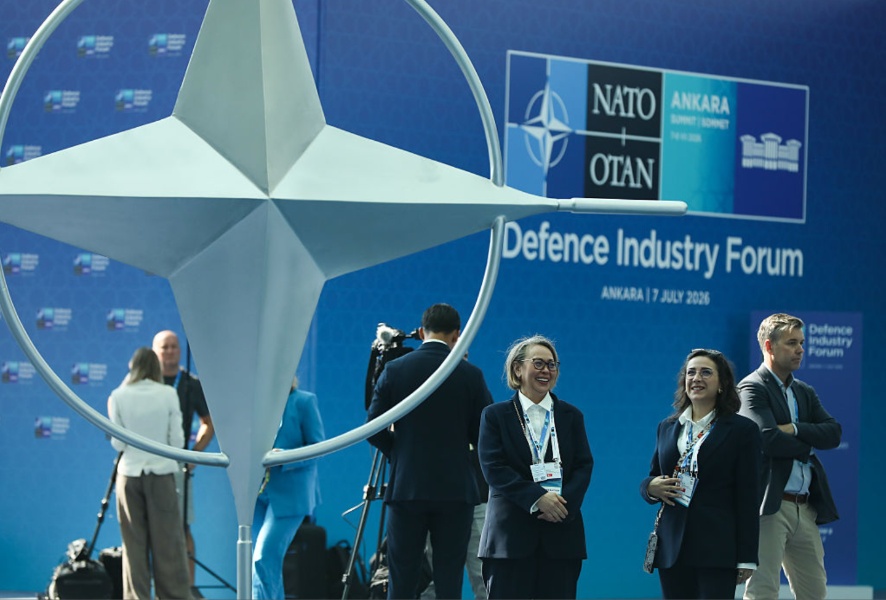
Marking its first inclusion in a NATO summit, the forum brought together senior NATO officials and representatives from major Western defense companies to discuss efforts to integrate military supply chains across member states.
At the event, NATO Secretary General Mark Rutte launched the Drone Edge Initiative aimed at strengthening counter-drone capabilities, saying member states would commit more than 40 billion U.S. dollars to the sector over the next five years.
He also unveiled a new Front Door platform designed to facilitate private defense companies’ access to alliance contracts, and a 2.8-billion-dollar industrial cooperation initiative under which U.S. defense companies, including Lockheed Martin, could partner with European firms to produce U.S.-designed weapons, such as Abrams tanks and ATACMS missiles, in Europe.
As part of broader efforts to expand logistical and operational capacity, several allies, including Türkiye, launched new joint procurement initiatives to enlarge NATO’s fleets of strategic transport and aerial refueling aircraft.
Türkiye also announced plans to contribute two domestically-produced observation satellites to support NATO’s space capabilities.
The latest initiatives come as Rutte continues to press allies to raise defense spending to 5 percent of gross domestic product by 2035, amid calls from Washington for European members to shoulder a greater share of the alliance’s defense responsibilities.
The push has triggered strong public opposition in the host country. On Tuesday, anti-NATO rallies were held in Ankara, where students, socialist groups and lawmakers gathered to protest the alliance’s expanding defense budgets.
A broader wave of protests took place over the weekend, when thousands of demonstrators took to the streets in Istanbul, Ankara, and Izmir to denounce NATO’s pressure to prioritize military spending over public welfare.
The NATO leaders’ summit opened in the Turkish capital of Ankara on Tuesday with a Defense Industry Forum, unveiling major defense industry initiatives aimed at accelerating weapons production and procurement, amid growing concerns over the alliance’s expanding militarization.
The move follows Burkina Faso’s announcement on June 26 that it was ending diplomatic ties with France with immediate effect, citing what it described as a breakdown in the conditions necessary for relations based on mutual respect, trust, non-interference and respect for national sovereignty.
The decision was announced in a statement from Burkina Faso’s Prime Minister’s Office, which said it followed “a thorough assessment of the current state of bilateral relations between Burkina Faso and France.”
“The conditions essential for promoting relations based on mutual respect, reciprocal trust, respect for the principle of non-interference in internal affairs and national sovereignty are no longer in place,” the statement said.
Burkina Faso’s government said the decision represented “a choice of responsibility and sovereignty,” while stressing that it did not affect historical, cultural and social ties between the Burkinabè and French peoples.
The government also reaffirmed its commitment to protecting foreign nationals living in Burkina Faso and urged citizens to show “responsibility, restraint and civic-mindedness” towards French nationals and other expatriates.
Following the announcement, France criticised the decision, describing it as “hostile and unfounded.” The French Foreign Ministry said the move reflected what it called “the concerning trajectory of the Burkinabè authorities.”
Paris said it was reviewing reciprocal measures in response to the diplomatic break and monitoring the situation of French citizens and personnel in Burkina Faso.
The rupture marks another setback in relations between France and countries in the Sahel region, where several military-led governments have moved to reduce dependence on traditional Western partners.
France had already withdrawn its military forces from Burkina Faso and suspended development assistance in 2023 after relations deteriorated following the military takeover in the country.
The diplomatic split also comes as Burkina Faso, alongside Mali and Niger under the Alliance of Sahel States (AES), pursues a foreign policy focused on diversifying partnerships and strengthening cooperation with non-Western countries.
The Burkinabè authorities said the country would continue pursuing “an independent foreign policy” centred on strengthened South-South cooperation, balanced relations with other nations, and the promotion of peace, security and sustainable development.
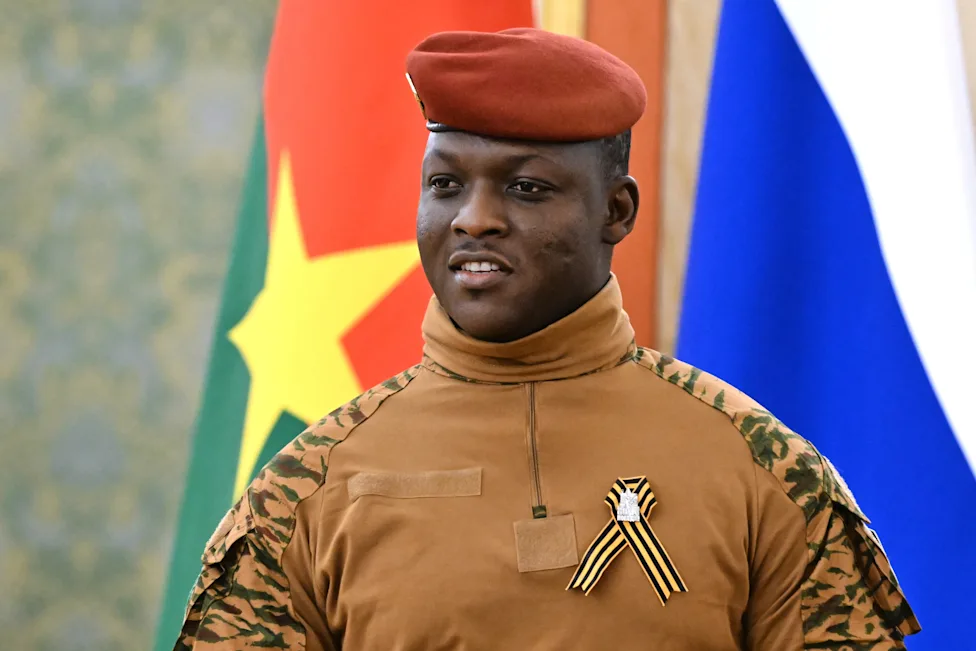
Burkina Faso’s military junta, led by Captain Ibrahim Traoré, announced the immediate and complete severance of formal diplomatic ties with Paris last month.