The move follows Burkina Faso’s announcement on June 26 that it was ending diplomatic ties with France with immediate effect, citing what it described as a breakdown in the conditions necessary for relations based on mutual respect, trust, non-interference and respect for national sovereignty.
The decision was announced in a statement from Burkina Faso’s Prime Minister’s Office, which said it followed “a thorough assessment of the current state of bilateral relations between Burkina Faso and France.”
“The conditions essential for promoting relations based on mutual respect, reciprocal trust, respect for the principle of non-interference in internal affairs and national sovereignty are no longer in place,” the statement said.
Burkina Faso’s government said the decision represented “a choice of responsibility and sovereignty,” while stressing that it did not affect historical, cultural and social ties between the Burkinabè and French peoples.
The government also reaffirmed its commitment to protecting foreign nationals living in Burkina Faso and urged citizens to show “responsibility, restraint and civic-mindedness” towards French nationals and other expatriates.
Following the announcement, France criticised the decision, describing it as “hostile and unfounded.” The French Foreign Ministry said the move reflected what it called “the concerning trajectory of the Burkinabè authorities.”
Paris said it was reviewing reciprocal measures in response to the diplomatic break and monitoring the situation of French citizens and personnel in Burkina Faso.
The rupture marks another setback in relations between France and countries in the Sahel region, where several military-led governments have moved to reduce dependence on traditional Western partners.
France had already withdrawn its military forces from Burkina Faso and suspended development assistance in 2023 after relations deteriorated following the military takeover in the country.
The diplomatic split also comes as Burkina Faso, alongside Mali and Niger under the Alliance of Sahel States (AES), pursues a foreign policy focused on diversifying partnerships and strengthening cooperation with non-Western countries.
The Burkinabè authorities said the country would continue pursuing “an independent foreign policy” centred on strengthened South-South cooperation, balanced relations with other nations, and the promotion of peace, security and sustainable development.
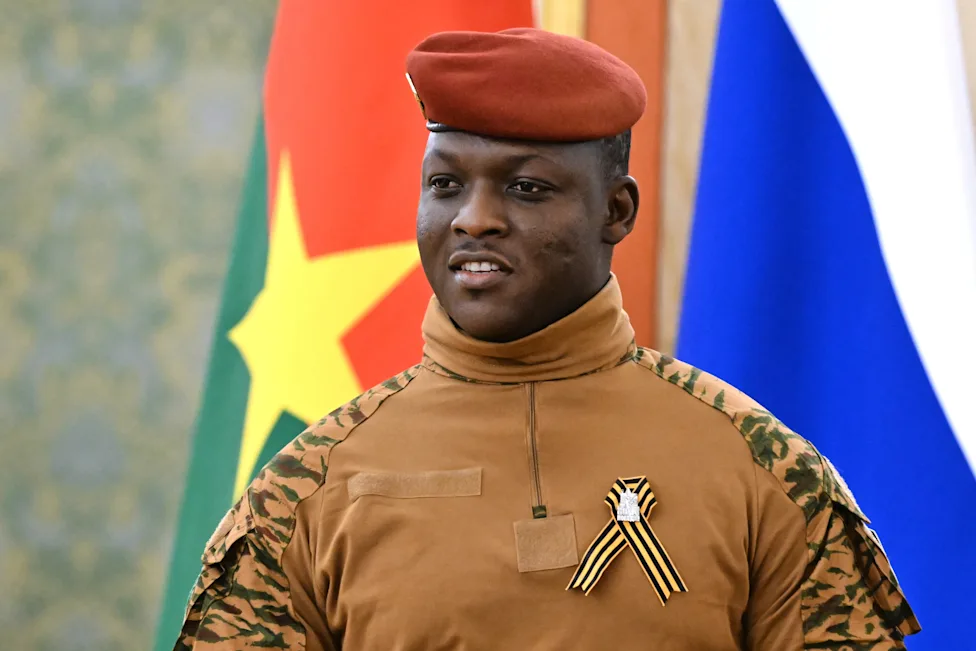
Burkina Faso’s military junta, led by Captain Ibrahim Traoré, announced the immediate and complete severance of formal diplomatic ties with Paris last month.
In a statement released Sunday, the National Gathering of Libyan Parties warned that the proposal, spearheaded by U.S. presidential adviser Massad Boulos, threatens to derail a United Nations-backed roadmap designed to finally hold national elections by February 2027.
The coalition said it was following with “deep concern and condemnation” political consultations and movements taking place outside Libya regarding the country’s political future. The alliance argued that such efforts are conducted without national consensus and seek to entrench de facto authorities while prolonging Libya’s transitional period.
Specifically, the coalition rejected the controversial initiative proposed by Boulos, the U.S. president’s senior adviser for Arab and African affairs, as well as the visits and political maneuvers associated with it. The alliance stated they constitute an infringement on Libya’s internal affairs and undermine the Libyan people’s right to self-determination.
The U.S. initiative vs. the UN framework
Spearheaded by Boulos, the American plan relies on transactional diplomacy to merge Libya’s fractured institutions by striking a pragmatic power-sharing deal between the country’s primary rival factions. However, the plan also couples this political unification with a push to open Libya’s vast oil reserves, the largest in Africa, to U.S. energy investments, while managing a new transitional government for up to three years.
This approach has drawn sharp domestic criticism. Opponents argue the plan bypasses established United Nations diplomatic channels, led by UN envoy Hanna Tetteh, which recently succeeded in getting Libya’s rival factions to agree to national elections by February 17, 2027.
The National Gathering reaffirmed that ending the current transitional phases through free and fair presidential and parliamentary elections, based on a consensual constitutional framework, remains the only viable path to resolving Libya’s political crisis. They stressed that any true roadmap must ensure the active participation of all domestic political forces, particularly formalized political parties, rather than just armed factions or entrenched elites.
Libya has been trapped in a severe institutional split since its planned December 2021 elections collapsed. The country remains divided between the UN-recognized Government of National Unity (GNU) under Abdul Hamid Dbeibeh in Tripoli, and eastern-based authorities aligned with the House of Representatives and military commander Khalifa Haftar. The dual governments have caused parallel spending crises that the country’s Central Bank warns are financially unsustainable.
The National Gathering of Libyan Parties, which comprises 24 distinct political parties, aims to coordinate the positions of its member parties, strengthen their participation in the political process, promote an end to the country’s gridlock, and advocate for democratic elections as the sole means to conclude Libya’s prolonged post-conflict transition.
A coalition of 24 Libyan political parties has rejected a new U.S.-led diplomatic initiative aimed at unifying Libya’s divided governments, condemning it as foreign interference that prioritizes external oil interests and elite power-sharing over democratic elections.
However, the discussions reportedly went beyond those official themes and instead focused on coordinating military operations in the ongoing conflict in eastern DRC, where AFC/M23 continues to fight the Congolese government.
The meeting came at a critical moment, as the movement, composed of Congolese who have for years faced persecution, killings, and displacement in their own country, continues to mount pressure on the coalition of the Congolese army (FARDC), Wazalendo militias, the FDLR, and Burundian forces.
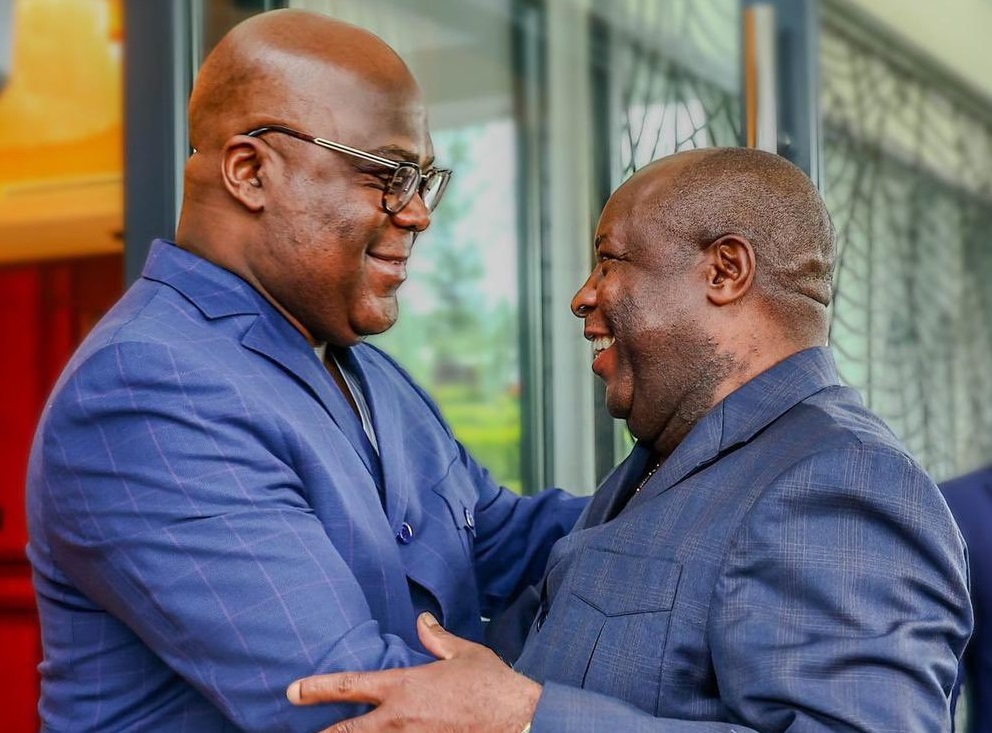
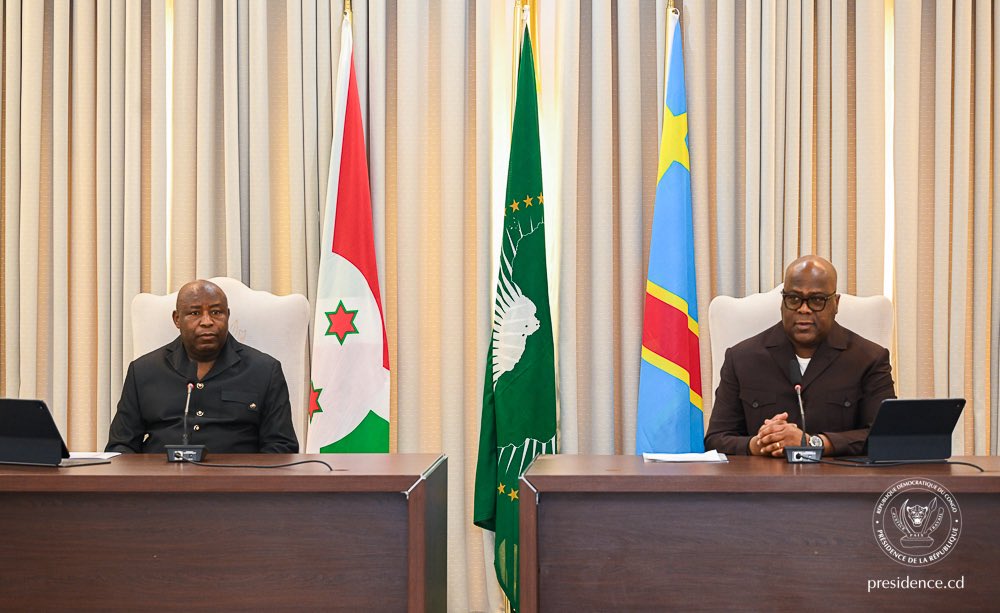
Tshisekedi, sources say, asked Ndayishimiye to deploy additional Burundian troops to regain control of areas previously vacated by AFC/M23.
Without hesitation, Ndayishimiye pledged full military support, continuing what has been longstanding military cooperation between Burundi and the DRC over the past several years.
He assured the Congolese leader that Burundi would continue supporting the Congolese military coalition in maintaining control over strategic areas in South Kivu while helping Kinshasa recapture territories under the control of AFC/M23, including Goma and Bukavu.
Beyond this commitment, the composition of Ndayishimiye’s delegation also reflected the significance of the issues the two allies intended to discuss.
Unlike previous visits to Kinshasa, Ndayishimiye did not travel with senior military and intelligence officials.
Sources say the move was deliberate, allowing Ndayishimiye and Tshisekedi to hold private talks on sensitive matters without the presence of other senior officials.
That is exactly what happened, with Burundi’s top military officials left behind to ensure the discussions remained strictly confidential.
Among the issues discussed was the payment of Burundian troops deployed to eastern DRC to support the Congolese army in its war against AFC/M23.
The issue is said to have generated growing dissatisfaction among Burundian soldiers, who have yet to receive the operational bonuses promised for their deployment in the DRC.
The bonuses have reportedly triggered serious disagreements within the Burundian military, particularly among deployed troops, senior commanders, and politicians over the management of funds provided by the DRC.
These allegations add to accusations against Burundian troops, including occupying areas vacated by AFC/M23 and abusing Kinyarwanda-speaking Congolese, particularly members of the Tutsi community.
The alleged abuses reportedly occurred after AFC/M23 withdrew from areas it had controlled, allowing the Congolese military coalition to move in.
After AFC/M23 withdrew from the city of Uvira on January 17, 2026, residents suffered the very fate they had feared and warned about during demonstrations held before the movement’s departure.
Soon afterward, they were robbed, assaulted, their homes were attacked and looted, and they were subjected to severe abuse.
Similar incidents reportedly occurred again in Walikale in March 2026 after AFC/M23 withdrew from the area. Civilians were allegedly killed, robbed, and had their property destroyed by the coalition.
Such actions have become characteristic of the Congolese military coalition. In October 2023, after AFC/M23 withdrew from Nturo in Masisi Territory, government troops and allied armed groups burned an entire village comprising more than 300 households belonging to Congolese Tutsis and killed residents.
Burundi has continued deliberately cooperating with the Congolese government in killing its own citizens.
Nevertheless, AFC/M23 continued defending itself, fighting back against what it describes as criminals and pushing them all the way to Uvira, a city near Bujumbura, Burundi’s economic capital.
Despite what is described as a major military setback, Burundi has continued pursuing the same course.
Human rights organizations estimate that more than 20,000 Burundian troops have been deployed to eastern DRC. Ndayishimiye reportedly promised Tshisekedi additional reinforcements, with the new troops expected to focus on the mountainous areas of South Kivu Province.
The reason, it is reported, is that the region remains a primary target of the Congolese government’s plan to continue exterminating Tutsis and destroying their property. The area is home to many Tutsi cattle herders, most of whom have long endured ethnic discrimination, exclusion, and the denial of their rights.
Kinshasa has also continued denying many of these residents Congolese citizenship, portraying them instead as foreigners.
This abandonment by their own government, coupled with deliberate killings, forced local residents to establish a self-defense group known as Twirwaneho.
Residents of Minembwe continue to accuse Burundian troops of treating them as collaborators, alleging that they work with both AFC/M23 and Twirwaneho.
These concerns have been reinforced by remarks from the spokesperson for the Burundian army, Brig. Gen. Gaspard Baratuza, who said that residents of Minembwe cooperate with the enemy. He added that military operations against them would continue until they abandoned their collaboration with armed groups.
Although Ndayishimiye continues to involve himself in the killing and persecution of Congolese Tutsis, he is serving as Chairperson of the African Union in 2026.
He is also portrayed as the only African president to openly support Tshisekedi’s actions in a campaign against his own citizens.
Other regional leaders, especially those within the East African Community (EAC), have rejected Tshisekedi’s plan to displace part of the Congolese population.
The East African Community Regional Force (EACRF) withdrew from eastern DRC after Tshisekedi sought to steer the mission away from its peacekeeping mandate and instead turn it into a force to fight AFC/M23.
Burundi was the only country to support Tshisekedi’s position. Most EAC leaders have continued to maintain that political dialogue remains the only viable solution to the conflict.
Sources say that during a recent visit to Kinshasa by Burundian President Évariste Ndayishimiye, Tshisekedi asked him to deploy additional Burundian troops to help regain control of areas previously held by AFC/M23.
Citing unnamed sources, the report said the upcoming round will focus on U.S. sanctions on Iran, Iranian frozen assets, and the Iranian nuclear file.
It added that the level of representation of the Iranian delegation will be decided after the funeral of late Iranian Supreme Leader Ayatollah Ali Khamenei.
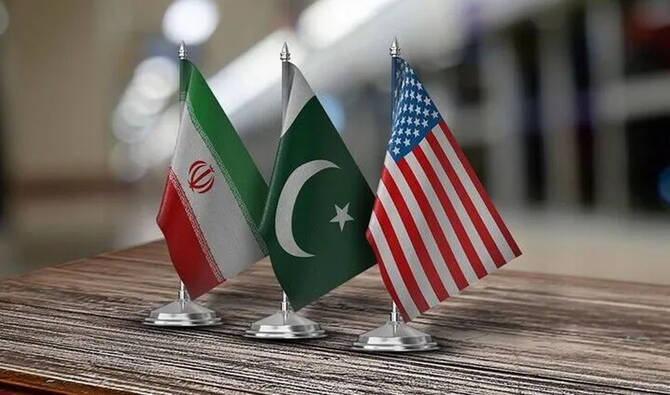
On June 18, Iran and the United States signed a memorandum of understanding (MoU) on ending the war in the region on all fronts, including Lebanon.
On June 22, technical negotiations between Iran and the United States were held in Switzerland following high-level consultations between Iranian and U.S. delegations the previous day with the mediation of Pakistan and Qatar.
On Wednesday, Qatari Foreign Ministry spokesperson Majed Al-Ansari confirmed that Qatari and Pakistani mediators had concluded separate meetings with U.S. and Iranian negotiators, making positive progress on issues related to the MoU.
He said the parties agreed to continue discussions in the coming period, with the next meeting to be scheduled at the earliest possible time.
The coalition, which includes prominent opposition figures such as Martin Fayulu, Jean-Marc Kabund, Moïse Katumbi, Augustin Matata, and Delly Sesanga, confirmed that it had received an invitation from Burundi’s President Évariste Ndayishimiye.
President Ndayishimiye called on opposition leaders to hold urgent consultations to discuss security concerns, political disputes, and challenges affecting state institutions in the DRC.
Ndayishimiye, a close ally of President Tshisekedi, issued the invitation in his capacity as Chairperson of the African Union (AU).
Reports from Kinshasa indicate that he had first urged President Tshisekedi to engage in dialogue with the C64 coalition in order to address their grievances, particularly those linked to the government’s proposed constitutional reforms.
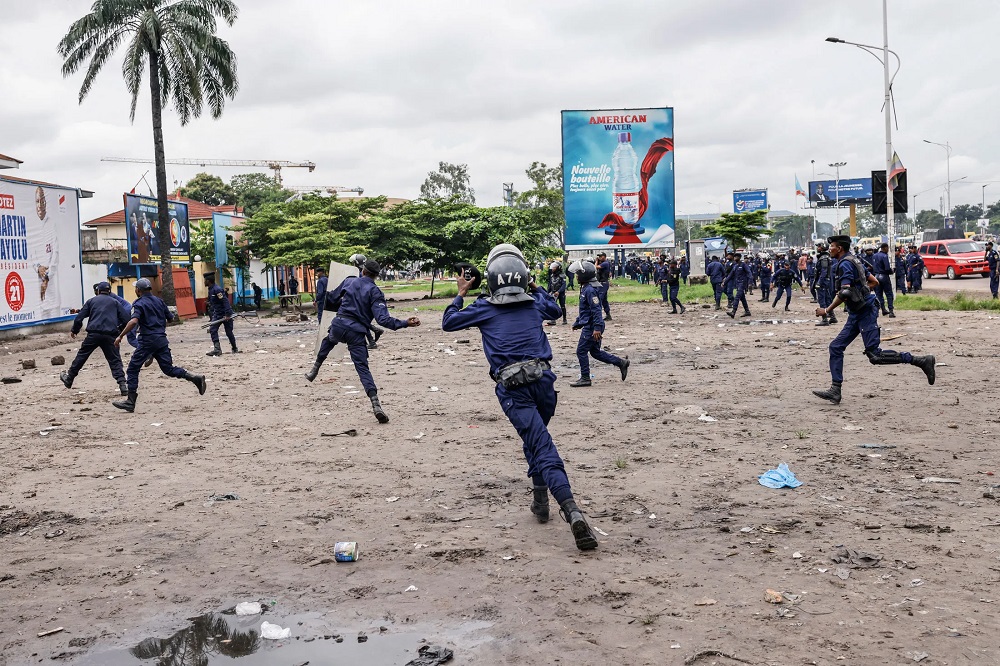
Tensions had escalated after opposition leaders staged a protest outside the National Assembly on June 12, where they were met with police intervention and clashes involving members of the ruling UDPS party’s youth wing, known as Forces du Progrès.
The C64 coalition had initially planned a major demonstration in front of the presidential palace on July 8, 2026, demanding President Tshisekedi’s resignation, accusing him of violating the constitution through attempts to amend it.
However, Interior Minister Jacquemain Shabani Lukoo rejected the planned protest, accusing the opposition of undermining national stability and insisting that no one has the authority to call for the resignation of a sitting commander-in-chief in the context of ongoing national security efforts.
The minister also banned all large public gatherings in Kinshasa, citing the need to prevent the spread of Ebola. He said the decision was a public health measure aimed at containing the virus.
However, opposition leaders dismissed the justification, arguing that Ebola cases are concentrated in eastern provinces far from the capital and claiming the ban was politically motivated to block their demonstration.
On July 2, opposition leader Martin Fayulu, head of the ECIDé party, reiterated calls for nationwide protests, insisting that President Tshisekedi must resign. He urged citizens to participate in a major demonstration scheduled for July 8.
Following an invitation from President Ndayishimiye, C64 leaders held an emergency meeting in Kinshasa on July 3 and agreed to reconsider their strategy, opting to engage in dialogue with the Burundian leader.
The coalition said it intends to use the talks to present its concerns and advocate for the protection of the DRC constitution.
They also said they would highlight the suffering of Congolese citizens and what they described as a growing threat to democracy in the country.
As a result, the coalition announced the postponement of its planned protest, rescheduling it to July 22.
Opposition leaders called on Congolese citizens, both at home and abroad, to remain mobilized in support of their cause until the government abandons its constitutional reform agenda.
They emphasized that defending the constitution is a national duty and insisted that their determination remains unchanged.
President Évariste Ndayishimiye called on President Félix Tshisekedi to open dialogue with opposition leaders.The protest that took place on June 12, 2026, was marked by incidents of violence involving police officers.
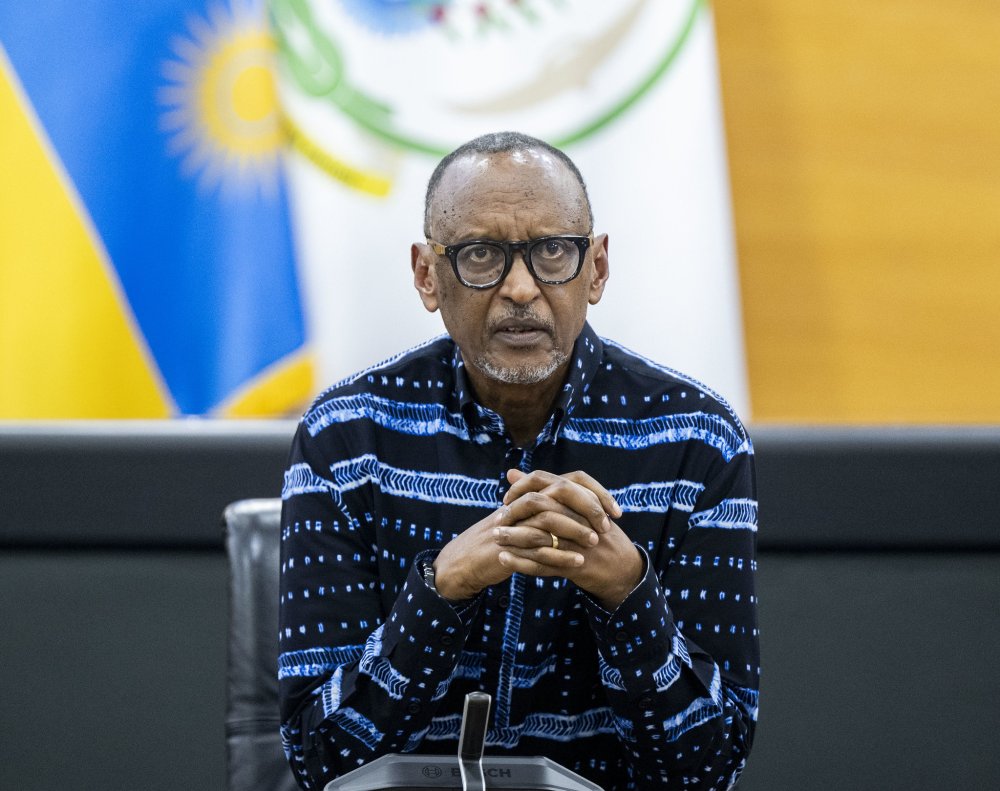
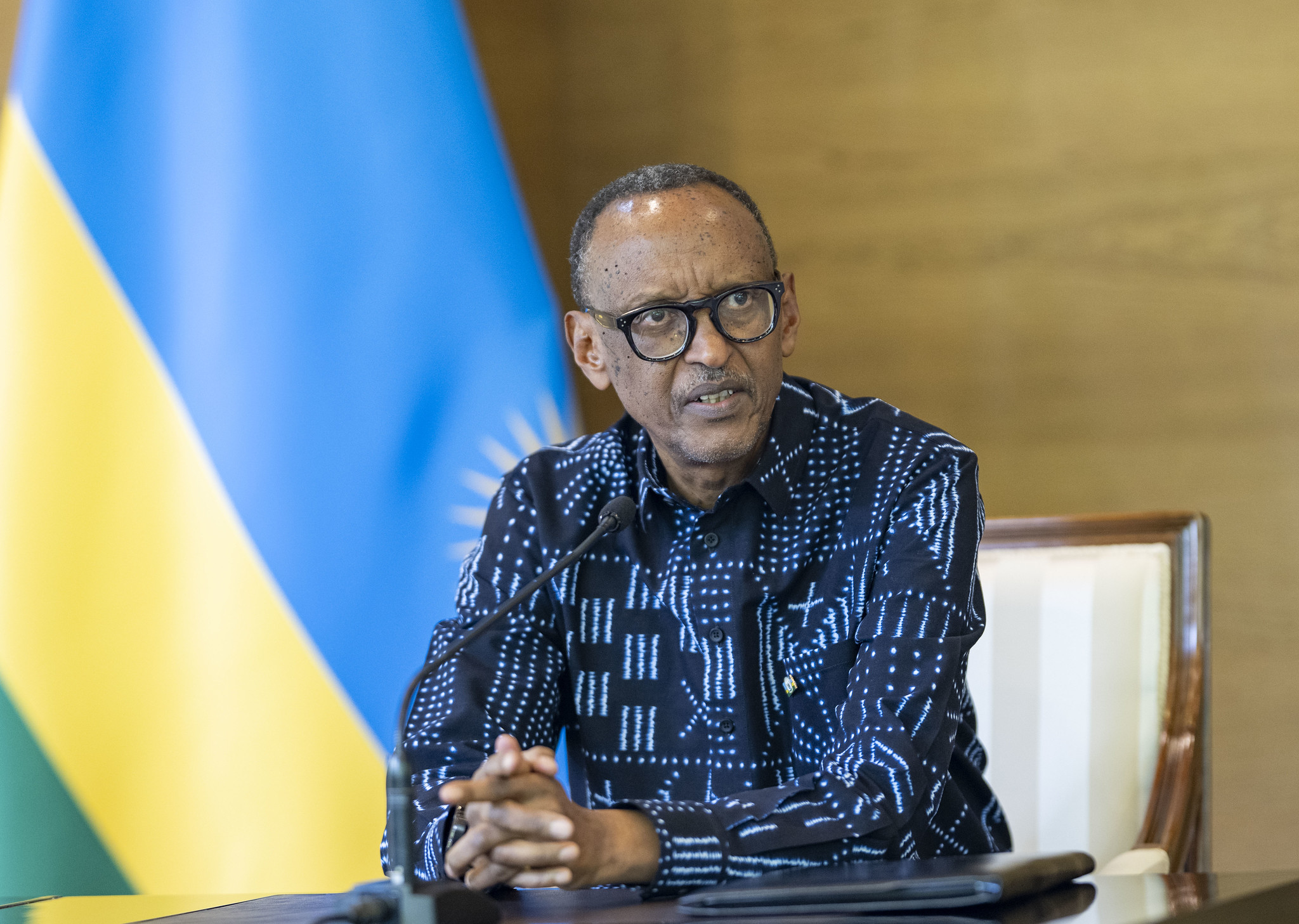
In his address to the nation on Saturday, Kagame said Rwanda’s painful history continues to shape its determination to remain vigilant against threats to national unity and security.
“What happened here will never happen again, for one simple reason: we will not allow it,” the President said as he paid tribute to men and women of the Rwandan Patriotic Army (RPA), whose courage and sacrifice during the liberation struggle ended the Genocide against the Tutsi in 1994.
His remarks came as Rwanda commemorates Kwibohora 32, marking 32 years since the Rwandan Patriotic Army (RPA) ended the 1994 Genocide against the Tutsi by taking control of Kigali on July 4, 1994.
Genocide ideology remains a threat
While acknowledging the country’s remarkable transformation over the past three decades, Kagame cautioned that the ideology which fueled the genocide has not disappeared.
“However, the ideas behind the genocide have not disappeared completely,” he said. “They persist in different forms, and remain present across our region.”
The neighbouring Democratic Republic of Congo (DRC) has particularly come under scrutiny, where persistent reports of violence and targeted attacks against the Tutsi and Banyamulenge communities have been documented. These incidents, which continue to be reported in different parts of the region, have raised concerns about the endurance of ethnic-based insecurity and the broader spread of genocide ideology beyond Rwanda’s borders.
President Kagame warned that Rwanda’s history has taught painful lessons about the consequences of ignoring such dangers.
“We have seen, and suffered too much to ever take this threat lightly.”
The President stressed that continued vigilance is essential to preserving the peace and stability that Rwanda has built since liberation.
Security is a matter of survival
Kagame underscored that security is not simply a policy objective but the foundation upon which Rwanda’s development depends.
“Security and good governance are the foundation of everything we have built,” he said.
He rejected the notion that Rwanda’s security decisions should be influenced by external approval, insisting that protecting citizens remains the government’s foremost responsibility.
“Security is a matter of survival, not external approval. Without it, nothing else holds together.”
The President said Rwanda would continue taking the necessary measures to defend its people and sovereignty.
“That is why we remain vigilant and firm.”
Responsibility rests with Rwandans
Addressing Rwanda’s younger generation, Kagame said many have grown up
without experiencing the violence that devastated the country in 1994, making it important to pass on the lessons of history.
“A new generation is now coming of age, who did not witness the darkest moments of our history,” he said.
He urged young Rwandans to recognize that the country’s future ultimately depends on its own citizens.
“Like those before them, this generation must understand that no one carries greater responsibility for Rwanda than we do ourselves.”
While international partners may offer support, Kagame said Rwanda cannot depend on others to guarantee its future.
“Some may support us, others may disagree, or misunderstand us. Ultimately, they can all turn their back on us. We do not have that option.”
“It is our duty to ensure that every Rwandan can live in peace, and build a good life here.”
Liberation as a continuing mission
Kagame described liberation as an ongoing process that extends beyond military victory, saying the country’s mission today is to continue improving the lives of its people while protecting the unity that has underpinned Rwanda’s recovery.
“That is why liberation will never end, but will continue to evolve, as we work to improve the lives of our people, year after year.”
He called on Rwandans to reject division in all its forms and remain focused on building a stronger future together.
“The future we deserve is within reach. As long as we remain united, reject division in all its forms, and focus on what we are building together, there is little we cannot accomplish.”
“The record of the past thirty-two years speaks for itself,” he added.
In his address to the nation on Saturday, President Paul Kagame said Rwanda’s painful history continues to shape its determination to remain vigilant against threats to national unity and security.
In his address on Saturday, July 4, the Head of State paid tribute to the men and women of the Rwandan Patriotic Army (RPA), whose military campaign brought an end to the 1994 Genocide against the Tutsi and fundamentally altered Rwanda’s history.
“I want to begin by recognising the men and women of the Rwandan Patriotic Army (RPA), whose courage and sacrifice changed the course of our history,” Kagame said. “Some of them did not live to see this day. But what they fought for is visible in the transformed Rwanda that we see around us.”
Liberation Day, known locally as Kwibohora, is observed annually on July 4. It marks the day in 1994 when the RPA, led by Kagame, took control of Kigali, effectively ending the 100-day Genocide against the Tutsi in which more than one million people were killed.
The President reflected on Rwanda’s past, describing decades before liberation as a period characterised by systematic exclusion, fear, and division. He said the liberation struggle was driven by the need to restore the dignity and rights of all Rwandans.
“For decades, Rwanda was shaped by a deliberate system of exclusion, fear and division,” Kagame said. “The purpose of the liberation struggle was to restore what had been taken away: the right of Rwandans to live in dignity.”
While celebrating Rwanda’s achievements over the past three decades, Kagame warned that the ideology that culminated in the genocide has not been completely eradicated.
“However, the ideas behind the genocide have not disappeared completely,” he said. “They persist in different forms, and remain present across our region.”
He stressed that Rwanda’s painful history serves as a constant reminder of the need for vigilance.
“We have seen, and suffered too much to ever take this threat lightly,” he said.
Security remains a national priority
A central theme of the President’s address was the importance of national security and good governance, which he described as the pillars of Rwanda’s development.
“Security and good governance are the foundation of everything we have built,” Kagame stated.
He emphasised that security should never be viewed through the lens of international approval but as an essential requirement for the country’s survival.
“Security is a matter of survival, not external approval. Without it, nothing else holds together.”
Reaffirming Rwanda’s determination to protect its people, Kagame declared that the country would never allow a repeat of the atrocities experienced in 1994.
“That is why we remain vigilant and firm,” he said. “What happened here will never happen again, for one simple reason: we will not allow it.”
Passing the responsibility to a new generation
The President also addressed Rwanda’s younger generation, many of whom were born long after the events of 1994 and have grown up in a peaceful and rapidly developing country.
He said it was essential that young Rwandans understand both the country’s history and their responsibility in preserving its future.
“A new generation is now coming of age, who did not witness the darkest moments of our history,” Kagame said.
“Like those before them, this generation must understand that no one carries greater responsibility for Rwanda, than we do ourselves.”
He cautioned against relying excessively on external actors, noting that while international partners may support Rwanda, ultimate responsibility for the country’s future rests with its citizens.
“Some may support us, others may disagree, or misunderstand us. Ultimately, they can all turn their back on us. We do not have that option.”
“It is our duty to ensure that every Rwandan can live in peace, and build a good life here.”
Liberation as an ongoing journey
Kagame described liberation not as a historical event confined to 1994 but as an ongoing national mission focused on improving the lives of Rwandans.
“That is why liberation will never end, but will continue to evolve, as we work to improve the lives of our people, year after year,” he said.
He expressed confidence that Rwanda’s future remains promising, provided citizens continue to reject division and remain united behind shared national goals.
“The future we deserve is within reach. As long as we remain united, reject division in all its forms, and focus on what we are building together, there is little we cannot accomplish.”
Highlighting Rwanda’s progress since liberation, Kagame said the country’s transformation over the past 32 years demonstrates what can be achieved through unity, resilience, and disciplined leadership.
“The record of the past thirty-two years speaks for itself,” he said. “Let us continue on the right path we have chosen.”
He concluded by wishing Rwandans and their families a happy Liberation Day.
President Paul Kagame has called on Rwandans to remain united, vigilant, and committed to safeguarding the country’s hard-won peace as Rwanda marks the 32nd anniversary of Liberation Day.
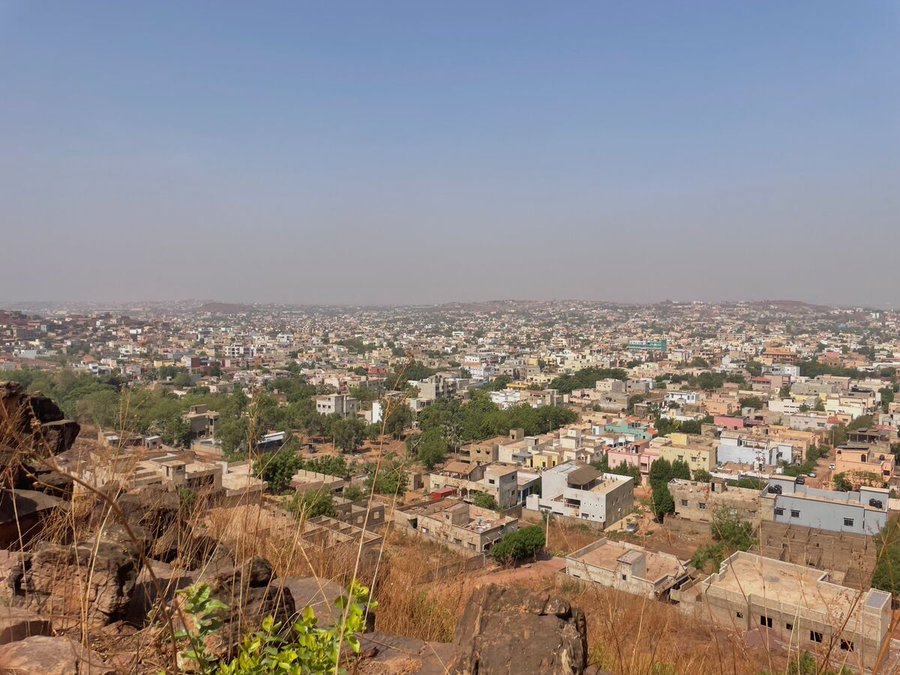
In a brief statement, the army said the attempted attacks targeted the military positions in Aguelhok, Anefis, Gao, Sevare and Kenioroba.
“The situation is being monitored,” the army said, without immediately providing details about the suspected attackers, the circumstances surrounding the incidents or any possible casualties.
Mali has faced a volatile security situation for years, with attacks by armed groups occurring frequently, particularly in the northern and central parts of the country.
In April, the country’s Defense Minister Sadio Camara was killed in an attack on his residence in the town of Kati, near the capital Bamako, carried out by armed terrorist groups.
The Malian Armed Forces said the attempted attacks targeted the military positions in Aguelhok, Anefis, Gao, Sevare and Kenioroba.
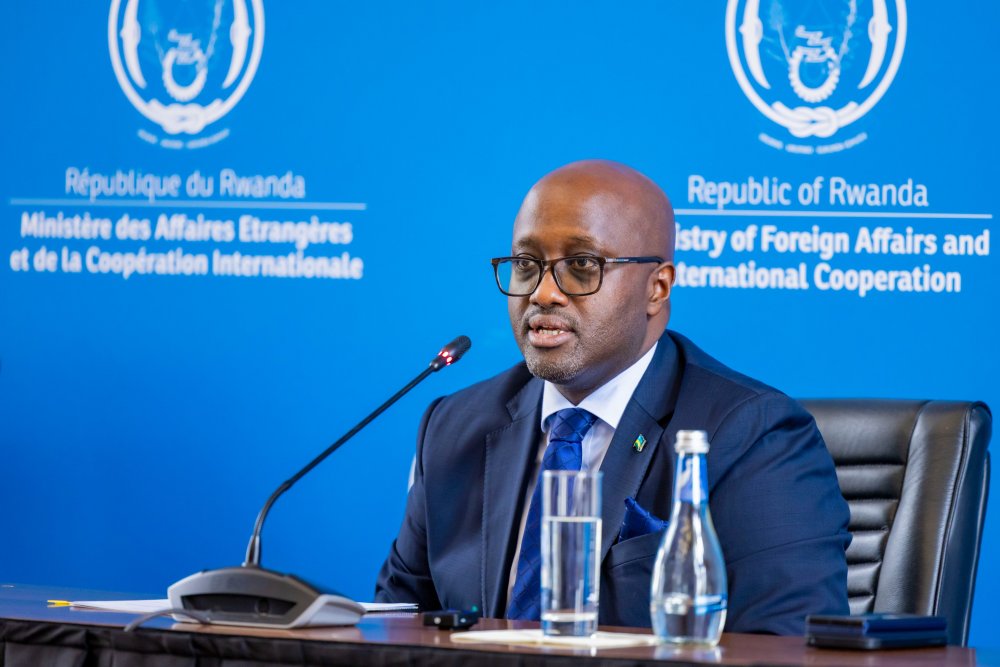
Speaking in an interview with Radio France Internationale (RFI), Nduhungirehe said Rwanda also informed Washington that Jean Luc Habyarimana, the son of former Rwandan President Juvénal Habyarimana, and Fabien Singaye had been received in Kinshasa.
“We gave the mediator all the information showing the continued cooperation between President Félix Tshisekedi, his army and the FDLR,” Nduhungirehe said.
“We also shared information about a political movement trying to operate through individuals such as Jean Luc Habyarimana and Fabien Singaye, who have arrived in Kinshasa. Jean Luc Habyarimana, for example, was photographed in Kinshasa.”
Singaye previously served as second secretary at the Rwandan Embassy in Switzerland. Rwandan authorities have accused him of acting as an intelligence operative under the Habyarimana government, monitoring Tutsi exiles opposed to the regime who were preparing to return to Rwanda.
Nduhungirehe further argued that despite the peace agreement signed between Rwanda and the DRC last year under US mediation, the government in Kinshasa has not demonstrated the political will to implement its commitments.
He said the DRC had failed to dismantle the FDLR as required under the Washington peace agreement and instead continued to provide the group with military support.
To support the claim, Nduhungirehe cited events of March 29, 2026, when the Deputy Chief of Staff of the Armed Forces of the DRC (FARDC), Lt Gen Jacques Ndulu Ychaligonza, travelled to Kisangani in Tshopo Province and announced the start of operations to dismantle the FDLR.
“However, two days later, on March 31, they sent two helicopters to Walikale carrying weapons, ammunition and money to the FDLR. We shared this information with the Americans,” he said.
On June 27, Massad Boulos, the US President’s Senior Adviser for Africa, told the United Nations Security Council that the DRC had failed to fulfil its commitment to dismantle the FDLR, at least in areas under its control.
Nduhungirehe said it was significant that the US mediator had publicly acknowledged the DRC’s failure to dismantle the armed group. He argued that, if the mediation process is to remain impartial, pressure should be exerted on Kinshasa to ensure compliance with the peace agreement.
Rwanda’s Minister of Foreign Affairs and International Cooperation, Ambassador Olivier Nduhungirehe, has said Kigali provided the United States with information demonstrating continued cooperation between the government of the Democratic Republic of Congo (DRC) and the FDLR militia group linked to the 1994 Genocide against the Tutsi.
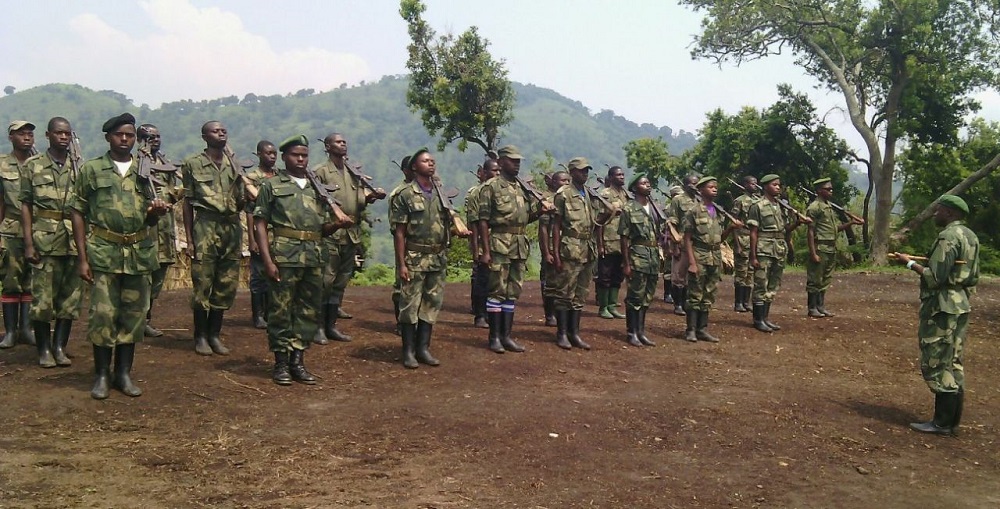
A report by United Nations experts on the Democratic Republic of the Congo identifies the Democratic Forces for the Liberation of Rwanda (FDLR) as a persistent armed group contributing to insecurity in eastern DRC and posing a continued security concern for Rwanda.
The report, released at the end of June, provides detailed estimates of the group’s structure, leadership, and manpower, highlighting significant discrepancies in figures reported by different sources.
According to the findings, the FDLR is organized into three main factions: FDLR-FOCA, FDLR-RUD, and FDLR-FPP. These factions have reportedly adopted alternative names in an effort to conceal their affiliation with the broader movement. FDLR-FOCA operates under the name “Bataillon Jungle,” FDLR-RUD uses the designation “FDP-R,” while FDLR-FPP also refers to itself simply as “FPP.”
The report notes that while these factions operate with a degree of autonomy, they remain part of a coordinated structure. It identifies Pacifique Ntawuguka, also known as Gen Omega Israel, as the military commander of FDLR-FOCA. Lt. Gen. Gaston Iyamuremye, alias Victor Byiringiro, serves as the group’s political leader. Brig. Gen. Emmanuel Nsengiyumva, also known as Faida Hakimu, leads FDLR-RUD, while Col. Dan Hategekimana, known as Dan Simplice, commands FDLR-FPP.
Despite this apparent fragmentation, Gen Omega is described as the overall coordinating authority, playing a central role in strategic decisions and inter-factional coordination.
The report highlights major inconsistencies regarding the group’s manpower. The FDLR itself claims to have more than 10,000 fighters, with nearly half engaged in active military operations. The CRAP unit further claims a strength exceeding 20,000 combatants.
However, UN experts and intelligence assessments dispute these figures, estimating the FDLR’s actual strength at between 3,500 and 4,500 fighters. The Washington peace framework had previously placed the figure at between 3,000 and 3,500, suggesting that the group may be inflating its numbers to project greater military capacity.
The report also details the geographical presence of the FDLR factions across eastern DRC. FDLR-RUD operates primarily in Bwisha and Bwito in Rutshuru, as well as in Jomba, Binza, Busanza, and Bukoma. FDLR-FPP is also active in Rutshuru. The largest faction, FDLR-FOCA, maintains a broader presence across North Kivu, particularly in Nyiragongo, Masisi, Rutshuru, and Walikale.
In addition, the FOCA-linked CRAP unit is reported to claim operational presence on the outskirts of Goma, with observations that some of its elements have infiltrated the city.
Given Goma’s proximity to the Rwandan border, these claims raise significant security concerns, suggesting that the group linked to the 1994 Genocide against the Tutsi may still retain the capacity to operate within strategically sensitive urban areas.
The report further cites ongoing battlefield activity involving the FDLR in North Kivu, including instances where its fighters have operated independently or alongside elements of the Armed Forces of the DRC (FARDC) and local militia groups known as VDP/Wazalendo.
On 29 March 2026, FARDC announced the launch of operations against the FDLR. The following day, it deployed specialized units, including “Hiboux” and “Jungle Battalion” forces from Kisangani, to Walikale.
However, the report questions the effectiveness and sincerity of these operations, noting that some officials in Kinshasa and FARDC officers in eastern DRC privately assured FDLR leaders that military action against the group would not be fully implemented.
It further claims that on 7 April 2026, a confidential meeting took place in Pinga, Walikale, involving senior FARDC generals and representatives of FDLR-FOCA, during which continued cooperation between the two sides was reportedly discussed and agreed upon.
The report also notes that in late March 2026, a FARDC helicopter delivered weapons to Pinga intended for FDLR-FOCA fighters. These supplies were reportedly destined for units under Maj. Gen. Uzabakiriho Cyprien, also known as Kolomboka Niyo Tedium Mugisha, operating in Masisi. The equipment was allegedly received by the FDLR-CRAP unit before being transported onward to frontline positions.
According to the report, similar incidents occurred in late 2025, when FDLR elements operating in Bwito reportedly traveled to Pinga to collect weapons and ammunition.
Under the Washington peace framework, the FDLR was designated for dismantlement. A high-level meeting held on 17–18 March 2026 identified six priority areas for operations aimed at neutralizing the group, five in North Kivu and one in South Kivu.
These locations were designated as Named Areas of Interest (NAIs), including zones such as Pinga–Mpeti–Lukweti in North Kivu highlands.
The report notes that operations were scheduled to begin on 31 March 2026 in NAI-1, specifically in the Pinga–Lukweti area, as part of efforts to implement the agreed peace framework.
The United Nations estimates that the actual strength of the FDLR is over 4,500 combatants.UN experts indicate that the FDLR has split into three factions as part of an effort to conceal its identity and operations.