The facilities, with a combined capacity of 17,500 cubic meters, are being built on six hectares in Rusororo, Gasabo District at an estimated cost of Rwf65 billion. They are expected to start supplying gas by July 2026.
The project supports Rwanda’s national goal of reducing reliance on wood-based fuels, improving public health, and strengthening resilience to climate change.
Abdul Rahman, the project’s construction manager, told RBA that the new storage facilities will allow large quantities of gas to be preserved efficiently and provide benefits to consumers.
“The gas will be transported in trucks carrying 20 to 25 tons, stored in these large tanks, and then distributed to daily-use facilities and cylinders for customers,” Rahman explained.
He added that the tanks will also allow other gas distributors in Rwanda to source supplies locally, helping to lower prices.
“With a storage capacity of 17,500 cubic meters, the country will have two main advantages; a secure national supply during emergencies or global market disruptions, and the ability to reduce prices through bulk storage and distribution,” he said.
Rahman further noted, “Currently, we import 200–300 tons at a time. With the new tanks, we can bring in 1,000 to 4,000 tons, creating room for better negotiations with suppliers. This will reduce costs for industries and eventually for consumers.”
Local gas distributors have welcomed the project, highlighting its benefits for both businesses and customers.
Jean Damour Ntibutura said, “Previously, we faced high transport costs and limited supply, which raised prices. Once these tanks are operational, new investors may also build smaller local tanks, improving supply and stabilizing costs.”
Dr. Joseph Akumuntu, Chairperson of the Rwanda Petroleum Importers and Distributors Association (ASSIMPER), described the storage facilities as a solution to fluctuating gas prices.
“The tanks will provide transparency and stability, ensuring everyone knows supply levels and reducing price discrepancies,” he said.
Plans are also underway to make gas more affordable by allowing citizens to purchase smaller quantities according to their budgets.
The facilities, with a combined capacity of 17,500 cubic meters, are being built on six hectares in Rusororo, Gasabo District.
Bestowed on only a handful of industry leaders in the GSMA’s history, the honour recognises contributions that have left an enduring and defining mark on the global communications ecosystem.
The award was presented at Mobile World Congress in Barcelona in the distinguished presence of His Majesty Felipe VI, the Prime Minister of Spain, Pedro Sanchez, the President of Catalonia, Salvador Illa, and global industry leaders.
A visionary in the telecom sector, Sunil Bharti Mittal has built Bharti Airtel into one of the world’s leading mobile operators, with operations across India and Africa, ranking among the top three globally and serving over half a billion customers.
He pioneered the expansion of mobile services across emerging markets and served as Chairman of the GSMA from 2017 to 2018, where he championed policies that encouraged investment and innovation while strengthening the industry’s commitment to connecting the unconnected and advancing digital inclusion.
He was previously honoured with the GSMA Chairman’s Award in 2008 and again in 2016 for his outstanding contribution to the growth and development of the global mobile industry and was felicitated at Mobile World Congress in February 2019 in recognition of his Chairmanship.
Sunil Bharti Mittal expressed delight at receiving the award and thanked the GSMA for the recognition.
“I accept it not only as a personal milestone, but as a tribute to India’s telecom journey, the collective spirit of Bharti, and the rise of Indian telecom companies on the global stage. Equally the award reflects the progress of an industry that has connected billions and belongs to the customers we serve, the teams who built our institutions, and the partners who believe in the transformative power of connectivity.
“Telecommunication is a force that expands opportunity, places essential services in the palm of every individual and unlocks human potential. Helping shape its evolution into a powerful accelerator of modern progress has been a privileged responsibility. As innovation accelerates, we will continue to work with our partners & stakeholders to ensure that growth advances equity and creates lasting opportunities for generations to come,” he noted.
The Lifetime Achievement Award is a rare honour, bestowed only on select individuals whose leadership and innovation have left an enduring mark on the industry.
Headquartered in India, Airtel is a global communications solutions provider with over 600 million customers in 15 countries across India and Africa. The company also has its presence in Bangladesh and Sri Lanka through its associate entities.
The company ranks amongst the top three mobile operators globally and its networks cover over two billion people. Airtel is India’s largest integrated communications solutions provider and the second largest mobile operator in Africa.
Airtel’s retail portfolio includes high-speed 4G/5G mobile, Wi-Fi (FTTH+ FWA) that promises speeds up to 1 Gbps with convergence across linear and on-demand entertainment, video streaming services, digital payments and financial services.
For enterprise customers, Airtel offers a gamut of solutions that includes secure connectivity, cloud and data centre services, cyber security, IoT, and cloud-based communication.
Airtel’s digital arm – Xtelify, empowers telcos globally to leverage the power of AI, data and technology to accelerate their digital transformation and drive growth.
Xtelify also offers Airtel Cloud in India enabling enterprises with a sovereign, telco-grade cloud platform that guarantees secure migration, effortless scaling, lower costs and no vendor lock-ins. Within its diversified portfolio, Airtel also offers passive infrastructure services through its subsidiary Indus Tower Ltd.
Sunil Bharti Mittal, Founder and Chairman of Bharti Enterprises, receives the GSMA Lifetime Achievement Award from Vivek Badrinath, Director General of the GSMA, at Mobile World Congress in Barcelona.
He succeeds Eric Karekezi Ngabonziza, who had served as acting CEO since January 7 following the departure of Botswana’s Thapelo Tseole.
Ngarambe assumes this role at an important stage in the continued development of Rwanda’s capital markets, as CMA advances its mandate to build sound, efficient and inclusive markets that support long-term investment and contribute to national economic growth.
Marc Holtzman, Chairman of CMA, welcomed Ngarambe on his appointment, expressing full confidence in his abilities.
“Romeo brings over 13 years of international experience as a strategic finance and investment leader, with a proven track record in commercial growth, capital markets operations and corporate advisory across multinational organisations.
“He has demonstrated strong expertise in shaping financial strategies, strengthening governance frameworks and developing performance measures aligned with institutional objectives while upholding the highest standards of regulatory compliance.”
The Minister of Finance and Economic Planning, Yusuf Murangwa, added: “Mr. Ngarambe has shown exceptional capability in leading cross-functional teams, producing data-driven insights to support executive decision-making, building strategic partnerships and improving operational efficiency in dynamic, client-focused environments.”
Prior to his appointment, Ngarambe held senior finance leadership roles at Corning Inc., where he oversaw budgeting, forecasting, reporting, investment analysis and governance initiatives across multiple operations.
He also served at Deloitte & Touche LLP as a Senior Business Risk Consultant, leading capital markets and advisory assignments, including due diligence, structured finance reviews and investor protection engagements.
Ngarambe holds a Master of Science in Accounting from Binghamton University and a Bachelor of Science in Business Administration from Toccoa Falls College. He is a certified Project Management Professional (PMP).
Hortense Mudenge, Rwanda Finance CEO and CMA Vice Chairperson welcomed the appointment as a significant milestone.
He expressed confidence that strengthened collaboration between the Kigali International Financial Centre, the Rwanda Stock Exchange and the Capital Markets Authority will accelerate efforts to attract international investment and deepen the competitiveness of Rwanda’s capital markets.
Ngarambe’s appointment reflects CMA’s continued commitment to strong institutional leadership as the Authority works to strengthen market confidence, reinforce regulatory effectiveness and advance Rwanda’s long-term capital market ambitions.
Romeo Ngarambe is the new CEO of Rwanda’s Capital Market Authority (CMA).
Rwanda has concluded its participation in the 2026 edition of the Paris International Agricultural Show (SIA), marking its fifth appearance at one of Europe’s largest agriculture and livestock exhibitions.
Held over nine days at Paris Expo–Porte de Versailles and officially opened by French President Emmanuel Macron on February 21, the global trade fair brought together more than 1,000 exhibitors and over 100 participating countries, attracting hundreds of thousands of visitors.
Rwanda was represented by the National Agricultural Export Development Board (NAEB), the Embassy of Rwanda in France, and 15 exporting companies showcasing products including coffee, tea, honey, chili, and other value-added agricultural goods.
Located in Pavilion Seven, the Rwandan stand highlighted the country’s progress in developing export-ready products and strengthening agricultural value chains.
The exhibition provided a platform for farmers, entrepreneurs, traders, and investors to exchange expertise, build partnerships, and explore market opportunities. Beyond product displays, participants engaged in business meetings and networking sessions with global buyers and importers.
Janet Basiima, Export Market Development and Innovation Division Manager at NAEB, said Rwanda’s presence focused on expanding market access and strengthening the international visibility of its agricultural products.
“We came with around 15 exporters showcasing tea, coffee, honey, and other agricultural goods. Our participation is aimed at expanding markets for Rwanda’s agricultural and livestock products,” she said. Basiima added that while more than 100 countries are represented at the exhibition, France remains a strategic market, currently ranking fourth among destinations for Rwanda’s agricultural exports.
She also noted that improved logistics continue to support export growth. According to Basiima, direct flights operated by RwandAir between Kigali and Paris three times a week provide a practical advantage in transporting Rwandan products to European markets.
During a visit to the Rwandan pavilion, Rwanda’s Ambassador to France, François Nkulikiyimfura, emphasized the importance of strengthening trade relations with a country widely recognized for its agricultural expertise. He assured exhibitors of continued diplomatic support in accessing new markets and building sustainable partnerships.
Exhibitors themselves reported encouraging outcomes from the trade fair. Ritha Umutoni, CEO of Rixu Rwanda Coffee, said participation extends beyond direct sales opportunities.
“Attending is not just about meeting buyers,” she said. “We also engage in planned activities, meeting executives from large importing and exporting companies worldwide. It’s a place to learn, visit other key markets in France, and expand our business ideas and practices.”
Umutoni also praised Rwanda’s leadership under President Paul Kagame, saying it enables Rwandans to engage confidently on international platforms.
Other exhibitors echoed similar sentiments. Stephanie Kayirangwa, Managing Director of Fita Ltd, commended NAEB for facilitating participation and the embassy for providing ongoing support.
Aloys Rubayiza, Managing Director of Rwanda Mountain Coffee, said he was impressed by the attention Rwandan products received during his first participation.
“This was Rwanda’s fifth participation, and we noticed buyers returning for Rwandan coffee and tea because they enjoyed it. It confirmed that our coffee is gaining recognition internationally,” he said.
Valentin Rwayitare, SIA Coordinator on behalf of the Rwandan Embassy in France, emphasized its role in creating opportunities to expand markets and described it as a platform to learn from best practices that can advance Rwanda’s agricultural export ambitions.
The Paris International Agricultural Show is known not only for trade and exhibitions but also for its scale and diversity. The event features agricultural technologies, value chains, and more than 4,000 animals, including cattle, sheep, pigs, and horses, reflecting the breadth of the global agriculture sector.
Rwanda’s participation aligns with broader national export ambitions. Agricultural and livestock exports remain a key driver of the country’s economy, generating more than $893.1 million in revenue by December 2025.
Under the Second National Strategy for Transformation (NST2), Rwanda aims to increase annual foreign exchange earnings from agricultural and livestock exports to $1.5 billion by 2029.
The country’s continued presence at major international trade fairs signals a sustained commitment to promoting its agricultural sector, strengthening global visibility, and positioning Rwandan products more competitively on the international market.
Visitors were impressed by Rwandan coffee. Rubayiza Aloys, the Managing Director of Rwanda Mountain Coffee, showcasing his products to visitors. Rwanda is participating in SIA trade fair in France for the fifth time.Rwanda’s Ambassador to France, François Nkulikiyimfura, promised support to those seeking expanded market opportunities in the country. Amb. Nkulikiyimfura speaks with Stephanie Kayirangwa, CEO of Fita Ltd, which produces chili and various flavors.Amb. Nkulikiyimfura talks with participants, including coffee exporter NzungizeRitha Umutoni, CEO of Rixu Rwanda Coffee, told IGIHE that the main reason for attending such fairs is to promote “Made in Rwanda” products.Ambassador François Nkulikiyimfura in conversation with IGIHE.Rubayiza Aloys, the Managing Director of Rwanda Mountain Coffee, welcomed the attention Rwandan exhibitors receive from foreign visitorsRwanda’s pavillion received significant attention. Rwandans were pleased with opportunities to expand markets in Europe.Swiss visitors admired Rwandan coffeeRwandans at SIA 2026 trade fair have been pleased with the available opportunities. Janet Basiima, Export Market Development and Innovation Division Manager at NAEB, said Rwanda continues to broaden market access while strengthening the global visibility of its agricultural products. The exhibition provides a valuable platform to promote innovation in agriculture and livestock development.The event takes place at Paris Expo–Porte de Versailles from late February to early March each year. Nzungize is among participants representing Rwandan companies exporting coffee.
This marks a significant step in Rwanda’s broader effort to build a more digital, resilient and inclusive financial system.
The test was conducted in collaboration with commercial banks, payment service providers, financial technology innovators, and various public institutions. According to BNR, the ‘proof of concept’ ran for five months, from May to October 2025.
In a statement, the central bank said the proof of concept phase demonstrated meaningful progress toward a technology-driven financial ecosystem that is accessible to all.
The phase showed that Rwanda’s e-FRW could support fast and secure payments, promote financial innovation, and strengthen the country’s transition toward a cashless and digitally driven economy.
BNR noted that the exercise generated practical insights into the technological infrastructure required to operate the digital currency, user experience considerations, risk management approaches, and key legal and regulatory priorities. A detailed report on the findings is available on the central bank’s website.
Next phase
A broader 12-month pilot phase is planned next. This stage will involve selected groups of diverse users across Kigali, a secondary city, and selected rural areas.
The expansion will prioritize financial inclusion by testing simple channels such as USSD and low-cost devices.
Real-life transactions will be tested in controlled environments in partnership with merchants and other stakeholders.
The program will also involve collaboration with domestic and international institutions to examine interoperability between different payment systems and explore potential cross-border use cases.
BNR stressed that the pilot will be conducted under strict data protection standards and strong cybersecurity safeguards, in close coordination with financial institutions and public authorities. The central bank emphasized that no final decision has yet been made regarding the official issuance of the e-FRW.
“Any decision to introduce CBDC in Rwanda will be informed by evidence gathered from the pilot phase on the outcomes of the expanded pilot, stakeholders feedback, and broader policy and regulatory considerations,” BNR stated.
CBDC as a complementary option to Mobile Money
Ingrid Cyuzuzo, the Manager in charge of Financial Sector Development and Innovation at the National Bank of Rwanda, recently explained that if introduced domestically, the CBDC would hold the same monetary value as existing national currency while expanding digital payment options.
As Rwanda continues to lead in Mobile Money adoption, she said the CBDC could enhance digital payment efficiency and expand use cases, including transactions that currently exceed Mobile Money capabilities.
What a CBDC means
A CBDC is a digital form of currency issued by a country’s central bank. Like physical cash—banknotes and coins—it represents sovereign money, but in digital form. Some models are designed to function even in low-connectivity environments.
BNR believes the introduction of a digital currency could attract new payment innovations to Rwanda’s financial market and simplify money transfers across different regions of the world.
Globally, countries such as Bahamas, Jamaica, and Nigeria have already adopted CBDCs, while more than 130 others are developing or piloting similar systems as part of broader efforts to modernize domestic and international payment ecosystems.
The manufacturing sector played a key role in this expansion. By the close of the 2024/25 fiscal year, it contributed 22% to GDP and continued driving job creation.
During this period, 111 new industrial facilities were set up across the country: 84 focused on processing agricultural and livestock products, 15 producing various items, 10 manufacturing construction materials, and two involved in mineral processing.
A standout example is A1 Iron & Steel, which converts iron ore into steel at the Musanze Industrial Zone. Backed by $20 million in foreign investment, it exemplifies the wave of international ventures launched in recent years.
Data released on February 17, 2026, by the National Bank of Rwanda, the National Institute of Statistics, and the Rwanda Development Board highlight the steady upward trend in foreign direct investment (FDI).
Inflows climbed to $548 million in 2021, $663 million in 2022, $886.9 million in 2023, and finally exceeded $1 billion in 2024.
In 2024, the top source countries included Mauritius ($251.1 million), Kenya ($140.3 million), China ($108.6 million), the United States ($103.9 million), and Germany ($65.3 million).
By regional blocs, the Common Market for Eastern and Southern Africa (COMESA) led with $418.6 million, followed by the Organisation for Economic Co-operation and Development (OECD) countries at $340.6 million, the Southern African Development Community (SADC) at $293.4 million, Asian nations at $228.2 million, and the East African Community (EAC) at $159.1 million.
Private sector external debt inflows also increased significantly, reaching $543.6 million in 2024, a 28.5% rise from the prior year’s $423 million. The majority (60.8%) came from related entities abroad, with the remaining 39.2% from unrelated entities.
Foreign investment in 2024 supported the creation of 69,341 jobs, with Rwandans comprising 97.6% of the workforce, a notable increase from the 59,916 jobs generated the previous year.
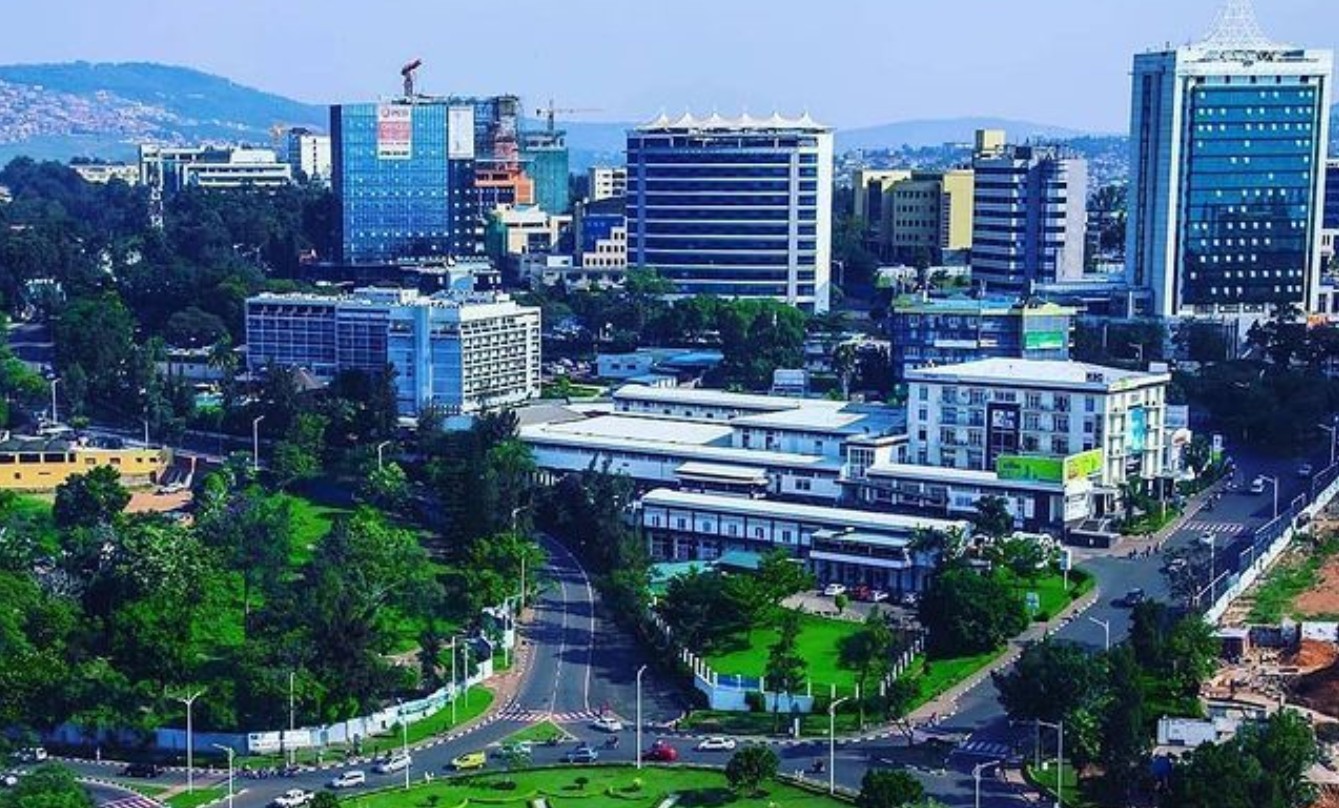
This photo shows the view of Kigali, the capital of Rwanda.
Since their inception in 2018, the Financial Afrik Awards have grown into a premier platform for Africa’s financial and economic leadership, bringing together policymakers, investors, entrepreneurs, and financial sector experts to debate, analyze, and celebrate the continent’s transformative economic developments.
AMIFA was recognized for its unwavering commitment to financial inclusion, particularly its efforts to expand access to financing for micro, small, and medium-sized enterprises (MSMEs) and low-income populations across multiple African regions. The award underscores AMIFA’s role as a socially responsible financial institution driving sustainable, inclusive growth.
Receiving the trophy, Mr. Mouhssine Cherkaoui, Chief Executive Officer of AMIFA Holding, stated that, “This award recognizes the commitment and relevance of the Groupe BCP’s strategy, deployed through AMIFA, in promoting financial inclusion. It reflects the concrete impact of our actions in improving access to financing for MSMEs and low-income populations. AMIFA actively works to reduce the financing gap for hundreds of thousands of economic actors.”
“We dedicate this award to all our clients and partners who trust us, as well as to our more than 1,100 employees who, every day, carry our values of proximity, citizenship, innovation, and performance with dedication, enthusiasm, and ambition,” he added.
Created by the Banque Centrale Populaire Group, AMIFA operates in eight African countries; Burkina Faso, Côte d’Ivoire, Gabon, Guinea Conakry, Madagascar, Mali, Rwanda, and Senegal, with a share capital of 897,398,000 dirhams (approximately 98 million USD).
The recognition at the Financial Afrik Awards reinforces AMIFA’s standing as a key player in African microfinance, highlighting its continued efforts to deliver inclusive financial services that generate lasting value for local economies.
AMIFA has been named ‘Champion of African Financial Inclusion’ at the 7th edition of the Financial Afrik Awards, held in Banjul on 22nd and 23rd January 2026. AMIFA was recognized for its unwavering commitment to financial inclusion.
The National Agricultural Export Development Board (NAEB) has announced ongoing efforts to expand international markets for Rwanda’s agricultural products.
The announcement comes as Rwanda participates for the fifth time in the Paris International Agricultural Show (SIA), an international agriculture and livestock exhibition held annually in France. The event takes place at Paris Expo–Porte de Versailles from late February to early March each year.
In an interview with IGIHE, Janet Basiima, Export Market Development and Innovation Division Manager at NAEB, said Rwanda continues to broaden market access while strengthening the global visibility of its agricultural products.
She noted that although this marks Rwanda’s fifth participation, the exhibition itself has been held for more than six decades.
“We came with around 15 exporters showcasing tea, coffee, honey, and other agricultural goods. Our participation is aimed at expanding markets for Rwanda’s agricultural and livestock products,” she said.
Basiima added that the delegation is not only exhibiting but also engaging potential buyers who import products from Africa to explore new trade partnerships. She emphasized that, beyond the more than 100 countries represented at the exhibition, France itself remains a significant market for Rwanda.
She further highlighted that France ranks fourth among destinations for Rwanda’s agricultural exports. According to Basiima, the presence of RwandAir flights to Paris three times a week provides a strategic advantage, making it easier to transport Rwandan products to newly secured markets.
This year’s exhibition opened on February 21, 2026, and was officially launched by French President Emmanuel Macron, as is customary each year.
Rwanda is exhibiting at Pavillion Seven, where it is showcasing progress in developing export-ready agricultural and livestock products. The country is represented by NAEB and the Embassy of Rwanda in France.
The exhibition provides a valuable platform for farmers, entrepreneurs, traders, and investors to exchange expertise, foster partnerships, and promote innovation in agriculture and livestock development.
Janet Basiima, Export Market Development and Innovation Division Manager at NAEB, said Rwanda continues to broaden market access while strengthening the global visibility of its agricultural products. The exhibition provides a valuable platform to promote innovation in agriculture and livestock development.The event takes place at Paris Expo–Porte de Versailles from late February to early March each year. Nzungize is among participants representing Rwandan companies exporting coffee.
The new capital will support the continued expansion of Spiro’s industry-leading battery swapping network across existing and new markets, while further advancing the company’s proprietary technology platform, including automated battery swaps, fast charging, and renewable energy integration.
“Demand for Spiro’s innovative, industry-leading battery swapping infrastructure continues to grow and is reshaping mobility in Africa by providing reliable, clean transportation options across the continent,” said Kaushik Burman, CEO of Spiro.
“With strong financial backing and cutting-edge technology, Spiro is leading Africa’s transition to sustainable mobility. This new funding reinforces our vision of building a robust, scalable energy network tailored for Africa by Africans.”
“Spiro’s growth exemplifies the power of Made-in-Africa, for-Africa solutions,” said Gagan Gupta, Founder of Spiro. “By combining local insights with global best practices, we are creating a resilient, green energy ecosystem that supports economic development and climate goals. This funding empowers us to bring affordable clean energy and mobility to millions of Africans while deploying an industry leading energy infrastructure that will contribute meaningfully to a greener future in Africa.”
Laurène Aigrain, Managing Director of Africa Go Green Fund highlighted that Spiro has built a strong platform that is delivering tangible impact across multiple African markets, and expressed delight at supporting the next phase of its growth as it scales critical clean mobility infrastructure.
“This transaction reflects our commitment to backing commercially robust businesses that combine innovation with measurable environmental and social impact.”
“Spiro is one of the largest and fastest-growing players in the pan-African e-mobility market,” said Raghav Sachdeva, CIO of Nithio.
“They have demonstrated that electric mobility can scale rapidly while delivering real economic value to riders and meaningful emissions reductions. We are proud to support Spiro’s continued growth and see e-mobility as a critical pillar of Africa’s clean energy transition.”
Spiro is operational in six countries; Kenya, Uganda, Rwanda, Nigeria, Benin and Togo, with pilots underway in Cameroon and Tanzania. To date, Spiro has deployed more than 80,000 electric bikes, circulated over 300,000 batteries, completed more than 30 million battery swaps, established over 2,500 swap stations, and enabled more than one billion CO₂- free kilometres travelled.
The company remains committed to advancing the UN Sustainable Development Goals related to clean energy, sustainable cities, and climate action.
“Driving Africa’s transition to electric mobility is central to how we view sustainable economic development across the continent,” said Oluranti Doherty, MD, Export Development at Afreximbank. “By supporting Spiro, Afreximbank is committed to financing the future of sustainable African trade; we are promoting a green industrial value chain that keeps innovation at the forefront of a just energy transition.”
Spiro has more than 80,000 electric motorcycles.The new capital will support the continued expansion of Spiro’s industry-leading battery swapping network across existing and new markets.Spiro has achieved over one billion kilometres of low-carbon emissions travel.
The rewards, equivalent to 10% of the VAT paid on Electronic Invoicing System (EBM) invoices requested during October, November, and December 2025, include 157,020 consumers from the final quarter of the year. An additional nine consumers received a combined Rwf 7,091,931 for invoices from July–September 2025, following verification for individual rewards exceeding Rwf 500,000.
To date, the VAT Reward programme, known as Tengamara Na TVA, has distributed more than Rwf 3.7 billion to 370,147 beneficiaries.
The programme has not only provided financial rewards but also reinforced tax compliance and civic responsibility, according to Assistant Commissioner for Taxpayer Services and Communications, Jean Paulin Uwitonze.
He noted that the 157,029 beneficiaries for this quarter have contributed to the collection of more than Rwf 13 billion toward national development.
“Since the launch of this programme, participants have continued to experience tangible benefits. Beyond the rewards, the initiative strengthens civic responsibility and reinforces a culture of tax compliance,” he stated.
Uwitonze emphasised that rewards are granted only for invoices accrued by final consumers in the relevant quarter, provided traders have declared and paid the VAT. He urged both consumers and traders to comply with invoicing requirements, noting that failure to issue or request EBM invoices is a legal violation.
Tengamara Na TVA encourages consumers to request EBM invoices for every purchase, offering a 10% VAT reward and a share of penalties from non-compliant traders. The programme aims to promote transparency and shared responsibility in national development.
To qualify, consumers must register for the VAT reward programme by providing their name, a Rwandan mobile phone number, a Mobile Money or bank account, and a national ID. Registration can be done by dialing *800# or through the MyRRA platform. The same channels allow users to check their reward accounts and track issued invoices.
To date, the VAT Reward programme, known as Tengamara Na TVA, has distributed more than Rwf 3.7 billion to 370,147 beneficiaries.