The two-day forum, co-organized by the Government of Rwanda and TradeMark Africa (TMA), will bring together Heads of State, government officials, development partners, academicians, multilateral organizations, and private sector leaders from 14 TMA implementation countries and beyond.
TMA focuses on promoting trade and regional integration across a range of countries, including Burundi, the Democratic Republic of Congo (DRC), Djibouti, Ethiopia, Kenya, Malawi, Rwanda, Somalia, South Sudan, Tanzania, Uganda, Zambia, Zimbabwe, and Eritrea. These nations form the core of TMA’s efforts to enhance trade facilitation, reduce barriers, and drive economic growth through innovative projects and partnerships.
Held under the theme ‘Digital Trade,’ this year’s forum will highlight transformative digital trade practices and technologies. The forum will be officially opened at the Kigali Convention Centre by Rwanda’s Prime Minister, Édouard Ngirente.
According to the organizers, key discussions will explore the interoperability of digital payments, the use of distributed ledger technology (DLT) and artificial intelligence in trade processes, and the role of automation in supporting green trade initiatives. The sessions aim to address leveraging technology to streamline trade facilitation, enhance policy frameworks, and foster sustainable development across Africa.
This marks the first time the forum will be held in Rwanda, following previous editions in Kenya (2011, 2012, 2014, and 2019) and Uganda (2018).
David Beer, CEO of TradeMark Africa, emphasized the forum’s significance in advancing Africa’s economic prosperity.
“TradeMark is driven entirely by generating practical results to remove trade barriers and drive up exports within and from Africa. While we have seen serious progress from trade facilitation interventions in the last decade, there is another big step forward to take,” he said.
“The 2024 forum will focus on propagating digitization successes more widely and introducing cutting-edge technologies. We look forward to sharing lessons and presenting innovative ideas to help governments and the private sector further drive down the cost and time of trade.”
The forum is expected to drive Africa’s trade integration, leveraging digital solutions to build sustainable, seamless trade systems that enhance regional and global competitiveness.
This year’s conference will culminate in the development of the Africa Trade Development Forum Kigali Declaration, which will capture the key insights and decisions arising from the event’s discussions.
Additionally, TradeMark Africa (TMA) is set to unveil the Trade Facilitation Flagship Document, a report that outlines emerging trends in Africa’s trade facilitation and showcases innovative technologies designed to streamline and enhance trading processes.
IremboPay simplifies the payment process, ensuring it is as fast as it is secure—allowing you to focus on enjoying your time without worrying about complicated transactions. Besides, we don’t know any other fintech platform or payment gateway you can use in Kinyarwanda. Do you?
IremboPay began as a solution for IremboGov, a platform designed to streamline access to government services. Its initial focus on efficiency quickly proved successful, demonstrating the ability to handle high transaction volumes with remarkable reliability. As it gained traction, it became clear that the robust infrastructure behind IremboPay could extend beyond public services, paving the way for broader enterprise applications.
Today, IremboPay is a powerful standalone payment solution ready to enhance payment processing for businesses across various industries.
IremboPay functions as a payment gateway—and more! It helps businesses collect payments securely and efficiently through various methods, such as mobile money, debit and credit cards, agents, and bank transfers. It makes transactions simple, offering customers a quick and seamless payment experience.
With easy integration into your system, IremboPay ensures a smooth, unified payment experience across platforms. It is a complete fintech solution with advanced features like real-time processing, support in multiple languages, offline payment options, insightful analytics, and automatic reconciliation, among others. It’s like having a versatile tool that handles payments and empowers businesses to improve their daily operations and boost customer satisfaction.
{{Nine reasons (out of 900) why your business should use IremboPay
}}
We could list all the 900 reasons, but we figured you’d appreciate getting the highlights before next year. So, here are nine reasons why IremboPay is the ideal payment solution for your business:
{{Multilingual support
}}
Serving a diverse clientele means communicating effectively. IremboPay supports English, French, and Kinyarwanda support, enhancing accessibility and customer engagement.
Effortless integration.
No one really likes complicated setups. If you want to add payment processing to your existing systems, IremboPay offers user-friendly APIs
that simplify integration. You can start accepting payments quickly without the headaches.
Ability to use payment links
If you’re looking for a quick and easy setup, our payment link solution allows you to accept payments without needing an integration; you can generate them and send them to your customers via email, WhatsApp, SMS, or any other platform, and they can then pay through all our supported channels.
{{Unmatched reliability
}}
With a 99.9% uptime, IremboPay ensures your payment systems are always operational. This reliability means fewer disruptions, allowing you to focus on your core business without worrying about payment failures.
{{Real-time processing
}}
Time is precious. Whether you run a hotel, restaurant, tour company, school, or manufacturing plant, the last thing you want is to hold your customers hostage because you can’t verify in time that they paid you, as their proof of payment took too long to reflect in your systems. IremboPay’s real-time capabilities ensure payments are completed on the spot, keeping your relationship with your customers intact.
{{Diverse payment options
}}
Flexibility is crucial in today’s marketplace. IremboPay supports various payment methods, including mobile money, cards, agents, and local bank transfers, with more options on the way. This diversity caters to different customer preferences, making transactions seamless for everyone.
{{Multi-currency acceptance
}}
IremboPay facilitates transactions in multiple currencies, including RWF, EUR, GBP, and USD. This flexibility attracts a broader range of customers, including international travellers and expatriates who can pay in their preferred currency.
{{Actionable insights
}}
IremboPay provides robust analytics, giving businesses valuable insights into customer behaviour and transaction trends. This data empowers one to make informed decisions, optimise inventory, and tailor offerings to meet market demands.
Offline payment capabilities
IremboPay supports offline payments through local mobile operators and banks, ensuring transactions can occur even in areas with limited connectivity. All your users need is a Bill ID, which they can present to agents, banks, and mobile money operators to make payments instantly.
{{Who needs IremboPay?
}}
IremboPay offers comprehensive solutions designed to enhance operational efficiency and customer satisfaction across various sectors.
In tourism and hospitality, it streamlines check-ins and payments to create a welcoming guest experience.
For education, the platform simplifies fee collection processes, making tuition and other payments easier to manage securely and efficiently.
Similarly, transport services benefit from real-time payment processing, ensuring smooth transactions for flights, public transport, and car rentals.
The manufacturing industry leverages IremboPay to maintain production flow by facilitating effective payment management and ensuring timely transactions with suppliers.
Moreover, software and IT companies enhance their services by integrating this reliable payment solution, improving client experiences and building trust in their offerings.
For a business to reach new heights, every decision counts. The right tools today pave the way for tomorrow’s success.
With IremboPay, you’re not keeping up; you’re setting the pace! Instant payments, limitless potential: #IremboPay grows with you, offering everything from… pic.twitter.com/jFfWgvK9IB
No matter your industry, IremboPay has the tools to support your payment needs.
As IremboPay grows, it’s ready to transform how businesses handle payments, regardless of scale or size. Choosing IremboPay means you not only enhance your operational capabilities but also adopt a solution that guarantees efficiency, reliability, trust, and innovation.
Ready to discover how IremboPay can elevate your business? Visit [{{www.irembopay.com}}->https://www.irembopay.com] or email irembopay@irembo.com to learn more and start your journey toward streamlined payments today.
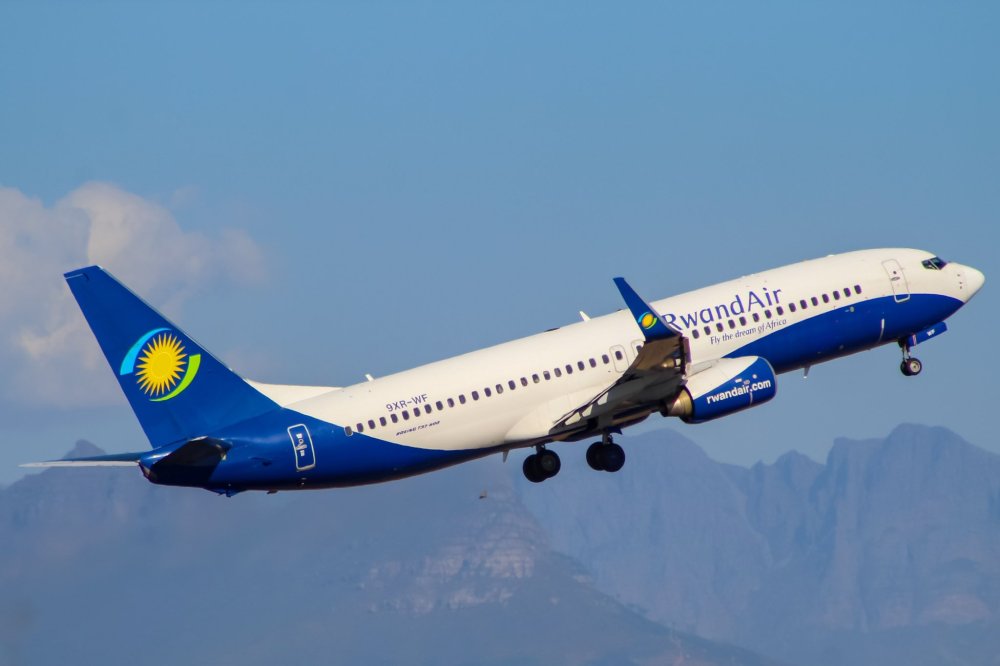
The route marks RwandAir’s eighth cargo destination across Africa and the Middle East.
Other destinations include Kigali (Rwanda), Nairobi (Kenya), Entebbe (Uganda), Brazzaville (Republic of the Congo), Bangui (Central African Republic), Djibouti, and Sharjah and Dubai in the United Arab Emirates (UAE).
“We are thrilled to introduce Harare, Zimbabwe, as our eighth cargo destination! This milestone inaugural ad-hoc cargo flight highlights our commitment to enhancing connectivity, supporting global trade, and solidifying our position as a leading cargo carrier in the region,” the airline announced in a statement on Wednesday.
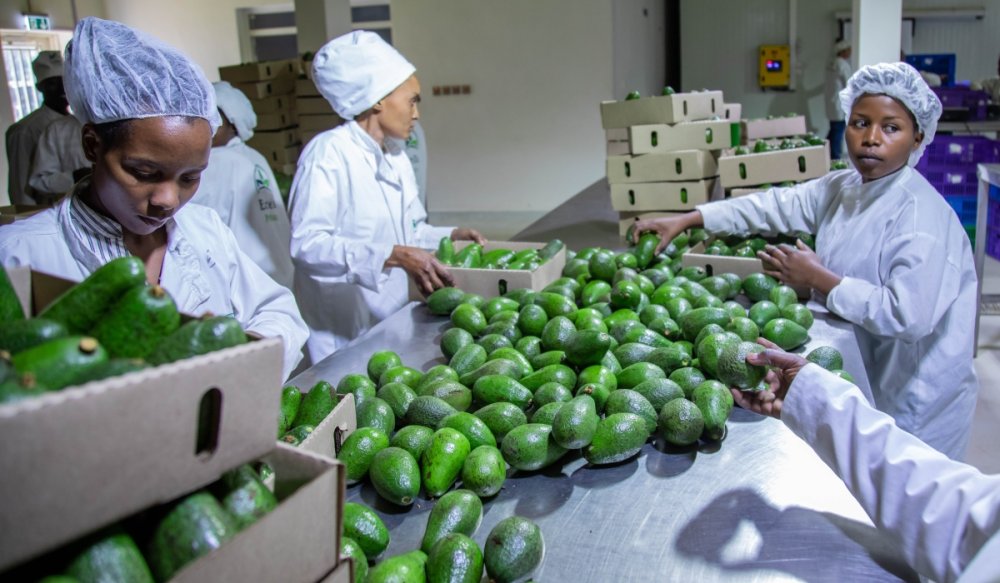
RwandAir plays a crucial role in Rwanda’s economy, facilitating the transportation of fresh produce, medical supplies, and other essential goods. The new destinations will enhance market reach, offering cargo services to a wider range of businesses and consumers, thereby driving the diverse and growing economy of both the country and the continent.
In November 2022, RwandAir acquired its first dedicated freighter, significantly improving its cargo services. Previously, the airline relied on passenger planes to transport goods. The Boeing B737-8SF freighter, with a capacity of approximately 23.9 tons and a range of 2,620 kilometers, offers cost-efficient operations compared to other cargo aircraft.
Later, in May 2023, RwandAir further strengthened its cargo services through a partnership with Qatar Airways. This collaboration led to the establishment of a new cargo hub in Kigali, aiming to position the city as a central air cargo hub in Africa. As part of the initiative, Qatar Airways introduced a Boeing 777x freighter to Kigali, enhancing the airline’s capacity for regional and international cargo transport.
The airline’s continued commitment to expanding its cargo services is set to bolster Rwanda’s economic growth and strengthen its position as a vital logistics hub in Africa.
In a statement, Ecobank Group revealed that the bond was oversubscribed by more than 2.1 times, reflecting strong investor confidence in the institution’s financial growth and strategy.
The issuance marks a major milestone for ETI, as it is the first public Eurobond issuance by a financial institution in sub-Saharan Africa since 2021.
The bonds, also known as notes, will mature in October 2029 and offer an interest rate of 10.125%, payable semi-annually in arrears to the investors who have lent Ecobank $400 million.
Jeremy Awori, CEO of Ecobank Group, emphasized the importance of the bond’s success, saying, “Our successful Notes issuance demonstrates how Ecobank is blazing the trail for sub-Saharan African financial institutions and corporates in accessing the international capital markets.”
The CEO added that the strong demand for the bond from both international and African investors is a testament to the growing trust in Ecobank’s ‘Growth, Transformation, and Returns Strategy’.
The net proceeds from the bond will be used for general corporate purposes, including refinancing a $350 million Senior Bridge-to-Bond Loan Facility secured earlier in the year. This move is expected to further enhance Ecobank’s financial position and support its strategic initiatives.
Ayo Adepoju, the Group’s Chief Financial Officer, thanked the bank’s partners, including Absa, Africa Finance Corporation, and Standard Chartered Bank, who acted as Joint Lead Managers and Bookrunners for the bond issuance.
“We deeply value and appreciate the strong support from our Development Finance Institution partners and bond investors,” he said.
With a presence in 35 African countries and a growing international footprint, Ecobank’s latest bond issuance strengthens its position in the global capital markets and supports its long-term growth objectives.
The market opening ceremony at the LSE was attended by members of the ETI board and management, celebrating a key achievement in Ecobank’s ongoing expansion and commitment to African financial growth.
The agreement, formalized at the 2024 Lagos International Trade Fair, was signed between the Lagos Chamber of Commerce and Industry (LCCI) and Rwanda’s Private Sector Federation (PSF) on the sidelines of the ongoing trade event in Lagos. Kanamugire Callixte, Deputy CEO of PSF Rwanda, and Gabriel Idahosa, President of the LCCI, represented their respective organizations at the signing ceremony.
Under the MoU, LCCI and PSF Rwanda will collaborate in several areas, including facilitating trade by streamlining procedures, reducing barriers, and promoting the exchange of goods and services between Nigeria and Rwanda; and promoting investment by identifying opportunities in both countries, organizing trade missions, and fostering business partnerships.
Other priority areas include sharing information by exchanging data on market trends, trade regulations, and investment incentives to aid business decision-making; building capacity through joint workshops, training programs, and knowledge-sharing initiatives to enhance business competitiveness in both countries; and hosting events to organize trade fairs, exhibitions, and business forums for networking and partnership-building.
The MoU identifies specific sectors for collaboration, such as agriculture (with a focus on Rwandan coffee and tea production), energy, manufacturing, technology, and creative industries.
Rwanda’s High Commissioner to Nigeria, Ambassador Christophe Bazivamo, praised the agreement as a testament to the two countries’ shared vision of prosperity.
“This MoU is a testament to our shared vision—a vision of a vibrant and interconnected African business landscape where Rwanda and Nigeria stand as beacons of economic collaboration and mutual growth,” he said.
“The Rwandan government is fully committed to supporting this endeavour. We have implemented policies to streamline business procedures, enhance infrastructure, and promote a conducive investment climate.”
The Lagos International Trade Fair, which kicked off on November 1, 2024, is the largest international exhibition in West Africa. During the 10-day event, participants have a chance to network with potential buyers and create business partnerships.
This remarkable growth reflects Rwanda’s position as one of Africa’s top countries for ease of doing business, where new businesses can be registered in just one day.
According to the NISR’s 2023 Establishment Census, the number of businesses in Rwanda almost doubled from 154,236 in 2014 to 269,326 by 2023.
Of these, the vast majority (95.9%) are privately owned while 92.0% are owned by individuals. Additionally, 2,017 businesses were founded by local NGOs, 656 by international NGOs, 2,496 by cooperatives, and 2,047 through public-private partnerships.
During the same period, 3,830 state-owned enterprises involved in commercial activities were also registered.
The report confirms that all listed businesses are currently active and tax-compliant as of the data collection period. Since 2020, the number of businesses has grown by 15%, with the total increasing from 226,359 to 261,549 by 2023.
A significant number of businesses (92.2%) are classified as micro-enterprises, employing less than four workers.
Small enterprises, which employ between four and 30 people, make up 6.4% (16,730 businesses), while medium-sized enterprises employing 31 to 100 people total 3,103 (1.2%). Large businesses, with more than 100 employees, account for just 0.2% (537 businesses).
In terms of ownership, 93.7% of businesses are fully owned by Rwandans, while 1% are joint ventures between Rwandans and foreigners. The ownership of the remaining 5.2% is unidentified.
NISR’s analysis shows that businesses have continued to flourish, with 145,402 establishments founded between 2021 and 2023 still in operation. The business sector has been a key driver of employment, creating approximately 927,739 jobs, with women representing 43.6% of the workforce.
Four main economic activities account for 66.3% of total employment: wholesale and retail trade, repair of motor vehicles and motorcycles (26.2%), education (17.4%), accommodation and food services (12.9%), and manufacturing (9.8%).
Industries such as mining and quarrying (75.3% male workforce) and construction (85.6% male workforce) remain male-dominated sectors.
In 2023 alone, over $2.4 billion was invested in businesses, with most of the investments coming from Rwandan nationals, although there has been increasing interest from foreign investors.
It is particularly effective for relieving extreme fatigue, depression, and other conditions that may affect the brain.
Additionally, the Treadmill was introduced, allowing people to run without leaving their location. It strengthens bones, clears the veins for better blood circulation, and enhances physical endurance. Other machines available include the G-Vibration Plate, Portable Sauna, G-Body Shaker, and G-Advanced Chair, all of which support overall body function.
The nutritional supplements on offer include ‘Best Man Prime,’ which helps men prevent prostate cancer, increases testosterone levels, and boosts sexual desire. The ‘Best Lady Care’ supplement helps women regulate hormones, protect the uterus, and enhance sexual urge.
There is also ‘Best Kids Brain Gummies,’ which aid in children’s development and increase intelligence. Other supplements for different groups include Best Fish Oil, Best Fit & Detox Tea, Best X Power Coffee, and Best Brain Booster, which support various bodily functions.
Marie Rose Uwimana, known as Solina from the radio drama Urunana, shared her experience with nerve issues and low blood pressure, which almost led to paralysis. She said the use of Mega Global Market’s supplements and machines restored her health. “I was very ill and almost ended up in a wheelchair,” she revealed.
After diagnosis, she was found to have nerve issues, low blood pressure, and other brain-related conditions such as unexplained memory loss experiences until she tried the machines and food supplements and a bit of physiotherapy.
Mental health expert Rukundo Arthur cautioned the public to take great care for their health by embracing the use of these machines and food supplements to keep track of physical and mental well-being rather than wait only to recognize the value of health when already ill.
Mega Global Market’s CEO, Dr. Francis Habumugisha, told IGIHE that they plan to open more markets in different parts of the world to help people live healthier lives. He confirmed that those interested in these products can visit their headquarters in Kigali City or purchase them through their online platforms.
He remarked, “During COVID-19, we learnt a strong lesson when people were not allowed to engage in physical exercise. We decided to bring in machines that anyone can use at home, even while doing other household activities.”
He also highlighted the travel services offered to enable people visit various destinations such as Dubai, Europe, Canada, the USA, and many more. Anyone interested in traveling abroad for leisure or study is supported by this company, and the process is expedited.
“Additionally, those who refer clients to us are granted free Visas and can travel abroad at no cost,” he disclosed.
Habumugisha explained that the services provided are backed by contracts signed in the presence of a certified notary, ensuring that if there is any issue with the travel documents, such as Visa denial, the client is refunded easily.
The project aims to streamline cross-border trade by removing Non-Tariff Barriers (NTBs) and automating trade processes, providing a much-needed boost to Rwanda’s economic growth. A key component of the new project is the automation of cross-border trade processes.
Rwanda has already implemented an Electronic Single Window system to simplify international trade, and the project will enhance this system further. The upgraded system will allow businesses to submit all required import and export documents through a Single Transaction Portal without physically visiting different agencies.
Approvals will be granted within 24 hours, and traders will benefit from advance clearances for their goods. The Commissioner General of the Rwanda Revenue Authority, Ronald Niwenshuti, expressed confidence in the project’s ability to simplify trade processes.
“RRA has embraced technology not only for customs modernization but also for its entire operations. This phase of Rwanda’s Electronic Single Window builds on the very impactful and successful first phase, and we are confident that it will simplify service delivery and further reduce the cost of doing business with Rwanda,” he said.
Boneza Ubucurizi is implemented by IBI, a U.S. business that works with local experts to drive the interventions. Jackie Zizane, Chief of Party, acknowledged the spirit of collaboration and commitment among stakeholders, which she believes will be vital to achieving the project’s objectives.
“We recognize the importance of partnership and cooperation in overcoming the challenges posed by non-tariff barriers. I believe that this collaborative effort will drive significant progress in promoting cross-border trade and economic growth in Rwanda,” Zizane stated.
Keisha L. Effiom, the USAID Mission Director for Rwanda and Burundi, highlighted the significance of a strong private sector for Rwanda’s development.
“Projects like this one are key for development: with its laser-focus on fixing the obstacles, it will bring benefits to the private sector, the government, and the Rwandan consumers,” she noted.
Effiom emphasized the holistic approach that USAID takes towards development, saying, “When the private sector grows, the country as a whole prospers, because businesses reinvest their earnings into operations and local communities.”
NTBs are obstacles that increase the cost of doing business, unrelated to the direct payment of tariffs. For landlocked Rwanda, issues such as paperwork and wait times along the major transport corridors to Mombasa and Dar es Salaam ports are a significant burden.
Goods are often delayed for days at border points, resulting in higher costs that ultimately affect consumers.
As such, the Rwandan government has established National Monitoring Committees on NTBs to identify and eliminate these barriers.
The Feed the Future Rwanda Trade Facilitation project will work closely with these committees, strengthening Rwanda’s strategy for removing NTBs and improving the overall trade environment.
Another major improvement is the expansion of ASYCUDA World, the Rwanda Revenue Authority’s customs software, which will include new features like an Advance Ruling Mechanism. This mechanism allows customs decisions to be made online before the goods even reach the border, reducing wait times and improving efficiency.
The Feed the Future Rwanda Trade Facilitation Activity is a four-year project funded by the United States through USAID, with a budget of $5 million. Its goal is to eliminate NTBs, increase the automation of cross-border trade, and promote seamless and efficient trade processes that benefit Rwandan businesses and consumers alike.
By improving the efficiency of trade and reducing the costs associated with border crossings, this initiative will position Rwandan companies for greater success in international markets and contribute to the overall economic growth of the country.
Rupert, the chairman of the Swiss-based luxury goods company Richemont and the South Africa-based company Remgro, made headlines in late August after toppling Dangote, who had topped the list for years.
However, the latest Billionaires Index published by Bloomberg on September 8, 2024, shows that Dangote has reclaimed the top spot with a total net worth of $13.2 billion, compared to Rupert’s $13.1 billion.
The Bloomberg Billionaires Index is a daily ranking of the world’s richest people. The figures are updated at the close of every trading day in New York. Another popular ranking platform is Forbes magazine, which ranked Dangote as Africa’s richest man for the 13th year in a row in January this year.
Before overtaking Dangote last month, Bloomberg reported that Rupert’s net worth had surged by $1.9 billion to $14.3 billion over the past year, placing him 147th globally, 12 places ahead of Dangote.
The latest ranking, however, shows that both billionaires’ wealth has fallen, with the Nigerian’s fortune dropping by $1.84 billion this year. He currently ranks 159th globally, while the South African ranks 163rd.
The decline in Dangote’s wealth over the past year has been attributed to Nigeria’s challenging economic environment, where his conglomerate primarily operates.
Nigeria is grappling with a high inflation rate, which stood at over 30% in August. The removal of fuel subsidies by President Bola Tinubu when he assumed office in 2023 is said to have contributed to the high inflation and the sharp fall in the value of the naira, which has significantly affected Dangote, whose wealth is largely tied to assets denominated in the local currency.
Dangote, 66, made his wealth in the cement and sugar industries. In recent years, he has expanded his empire with investments in oil, gas, and fertilizer plants.
On the other hand, Rupert and his family are known for their company Richemont, which deals in luxury goods such as jewellery, watches, fashion, and accessories. The company owns various brands, including Cartier, Montblanc, Vacheron Constantin, and IWC Schaffhausen.
Additionally, the South African’s Remgro Ltd has interests in healthcare, consumer products, financial services, infrastructure, industrial, and media sectors.
Besides Dangote and Rupert, other African business magnates listed among the top five include Nicky Oppenheimer (South Africa), Nassef Sawiris (Egypt), and Natie Kirsh, with fortunes of $11.1 billion, $9.42 billion, and $9.14 billion, respectively.