Instead, the first military operation led by President Paul Kagame after his return from the United States became the turning point that ultimately secured victory.
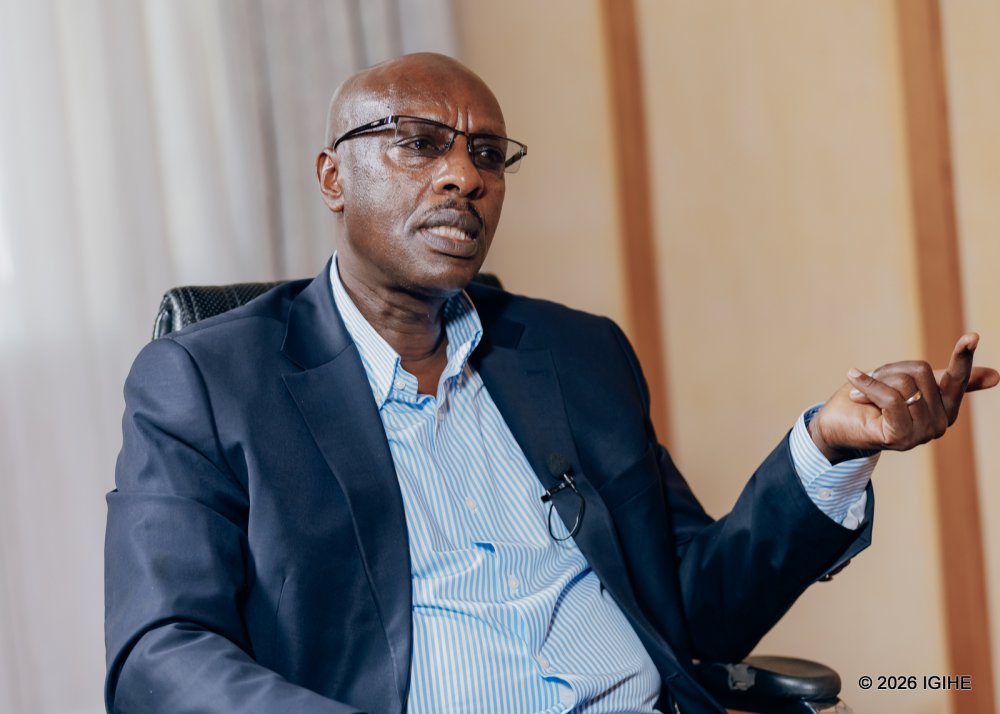
Speaking in IGIHE’s Ingingo Nkuru programme as Rwanda commemorates the 32nd anniversary of the country’s liberation and the end of the 1994 Genocide against the Tutsi, Col (Rtd) Mugisha reflected on some of the defining moments of the liberation war.
Capturing Gatuna
Col (Rtd) Mugisha served in the battalion commanded by Col (Rtd) Dodo Twahirwa, the unit that captured Gatuna.
After securing Gatuna, the battalion remained in the hills of Byumba, where it was reinforced by two additional battalions.
“We stayed in the Byumba hills until two other battalions joined us, making three battalions in total. From there we continued fighting in Byumba, Kivuye, Bungwe and all the way to Butaro,” he recalled.
He described the battles at Kaniga and Kivuye as some of the most difficult during the early stages of the war.
“We fought at Kivuye and Kaniga II, particularly in Kivuye Commune. On the first day, we defeated the enemy and captured their positions. But on the second day, they received reinforcements from Byumba, Butaro and Ruhengeri. They launched a strong counterattack, forcing us to retreat.”
The fighting continued at Gatuna.
He said, “From there we moved to Gatuna II. We fought there as well, but the enemy had superior strength. We would capture part of the area, only for them to drive us out again. We adopted guerrilla tactics because if we stayed in one position for too long, we suffered heavy casualties. We would attack, hold the area for a day, then move on the next day.”

One of the things he admires most, he said, is President Kagame’s leadership during the liberation struggle and his ability to plan military operations that defeated the enemy in ways many people still find remarkable today.
“The Commander-in-Chief planned our operations exceptionally well. After the battles at Kivuye and Kaniga II, he devised another strategy. I wasn’t involved in the planning because I was still a junior soldier, but he organized an operation to attack Ruhengeri again. We marched on foot through the Virunga Mountains, attacked Ruhengeri and freed prisoners. That operation shocked the enemy and convinced them that we had far greater strength than they had imagined.”
He continued: “After we left the Virunga Mountains, he quickly organized two battalions and ordered them to return to the park. Since almost all the enemy’s forces had been deployed in Ruhengeri, he knew only a small number of troops remained elsewhere. He instructed them to move through the park and advance as far as Rusumo.”
“As we moved, the enemy detected us when we reached the Kayange area, just beyond Namuhemura. They pursued us through Nyarupfubire toward Rwimiyaga. We engaged them effectively. They had underestimated us, thinking we were only a small force, but after the battle, their morale was badly shaken.”
Another decisive battle took place at Gikoba, where RPA troops refused to surrender ground.
“Our soldiers stayed in trenches. Whenever they attacked, we’d repel them. They would return a week later, and we would push them back again.”
Trenches dramatically reduced casualties
According to Col (Rtd) Mugisha, one of President Kagame’s most important military directives required every soldier to dig a trench for protection.
“He taught us that every soldier had to fight from a trench. Inspection teams were even established to verify that every battalion had properly dug them. I clearly remember senior officers coming to inspect.”
The trenches significantly reduced casualties.
“The enemy would bombard our positions thinking they had killed us all. When they advanced to finish us off, they found us alive and ready to fight back. That completely changed the nature of the war. Eventually they became afraid of attacking us, and it greatly boosted our soldiers’ morale.”
Arriving in Kigali after the Genocide began
Col (Rtd) Mugisha arrived in Kigali on April 10, 1994, after his battalion was ordered south from the Mulindi area to rescue civilians as the Genocide against the Tutsi unfolded.
“We left on April 8 and reached Kigali on April 10, entering through Kagugu.”
The journey exposed them to scenes that remain unforgettable.
“From Mugambazi through Rutongo, there were bodies everywhere.”
He explained that displaced people from Byumba who had settled around Nyacyonga had already begun killing Tutsi civilians, leaving bodies scattered along the roads.
“It was heartbreaking. Those who did not witness the Genocide cannot fully understand its cruelty. Even soldiers were deeply affected by what we saw. When I think about what happened to the Tutsi, it still pains me.”
The horrifying discovery at Musha Parish
After several days fighting in Kigali, Mugisha’s battalion received new orders under the command of Maj Gen Caesar Kayizari to rescue Tutsi civilians in eastern Rwanda.
At Musha in present-day Rwamagana District, he encountered the largest number of victims he had ever seen.
“At Musha Parish, around the priest’s residence near the cathedral, there were more than 5,000 bodies. There were many more inside the parish. They had been killed in horrific ways.”
He recalled seeing victims who had been beaten to death and stripped naked. One memory has never left him.
“A fellow soldier came from Musha. When we arrived, he said, ‘This is my home.’ We told him to check whether any of his relatives had survived. As soon as he entered the compound, he collapsed over the bodies of his family members. He cried uncontrollably until we had to carry him away.”
As they advanced further, they discovered that the killings were still ongoing. “We even found a truck transporting bodies from the church to dumping sites. The entire church was covered in blood.”
The liberation of Kigali brought mixed emotions
By July 4, 1994, Col (Rtd) Mugisha was stationed in Kimihurura when Kigali was finally liberated.
Despite the military victory, he says there was little celebration among the soldiers.
“The capture of Kigali did not bring us the joy many people imagine. You celebrate when the people you came to save are alive. Instead, we found bodies everywhere.”
Months of continuous fighting had also taken a heavy physical toll.
“We had been fighting nonstop from April to July. The troops were exhausted.”
He added that civilians, who would normally celebrate alongside liberating forces, were either dead or had fled.
“It was a mixture of emotions that is difficult to explain. We were happy to have achieved victory, but overwhelmed by the tragedy we witnessed.”
Confident in Rwanda’s youth
Col (Rtd) Mugisha expressed strong confidence in today’s young generation, saying they are fully capable of serving Rwanda in different fields.
“People often criticise today’s youth, but every generation has heard older people say, ‘Children these days.’”
He said it is unfair to judge an entire generation because of the mistakes of a few individuals.
“If one young person uses drugs or another gets drunk, people assume they are all the same. I don’t believe that. Our children will achieve even more than we did because they have opportunities we never had. They are educated, they understand technology, and today’s battles are battles of development.”
He added that Rwanda’s young people have already demonstrated responsibility.
“I’ve been away from home for three years and nothing has happened. Our young people are capable. Heroes produce heroes. A lion gives birth to another lion, not a dog.”
A message to detractors
Reflecting on his years in the Rwanda Defence Force, Col (Rtd) Mugisha described it as a family built on solidarity, mutual respect and shared values.
“I’ve lived well because you never go hungry in the army, and you’re never abandoned when you’re sick. The RDF is a family that supports its members, and I love it.”
He also had a message for those who continue to seek to destabilise Rwanda.
“Those who failed in 1994, 1995, 1996, 2000 and all the years since should give up. They should return home and help build the country because they will never achieve their objective.”
He said Rwanda’s unity makes attempts to destabilise the country futile.
“Rwanda is stable because its people are united. Where would anyone even find a way to divide it? They should abandon the idea of capturing Rwanda. The country has moved far beyond that.”
Leave a Reply