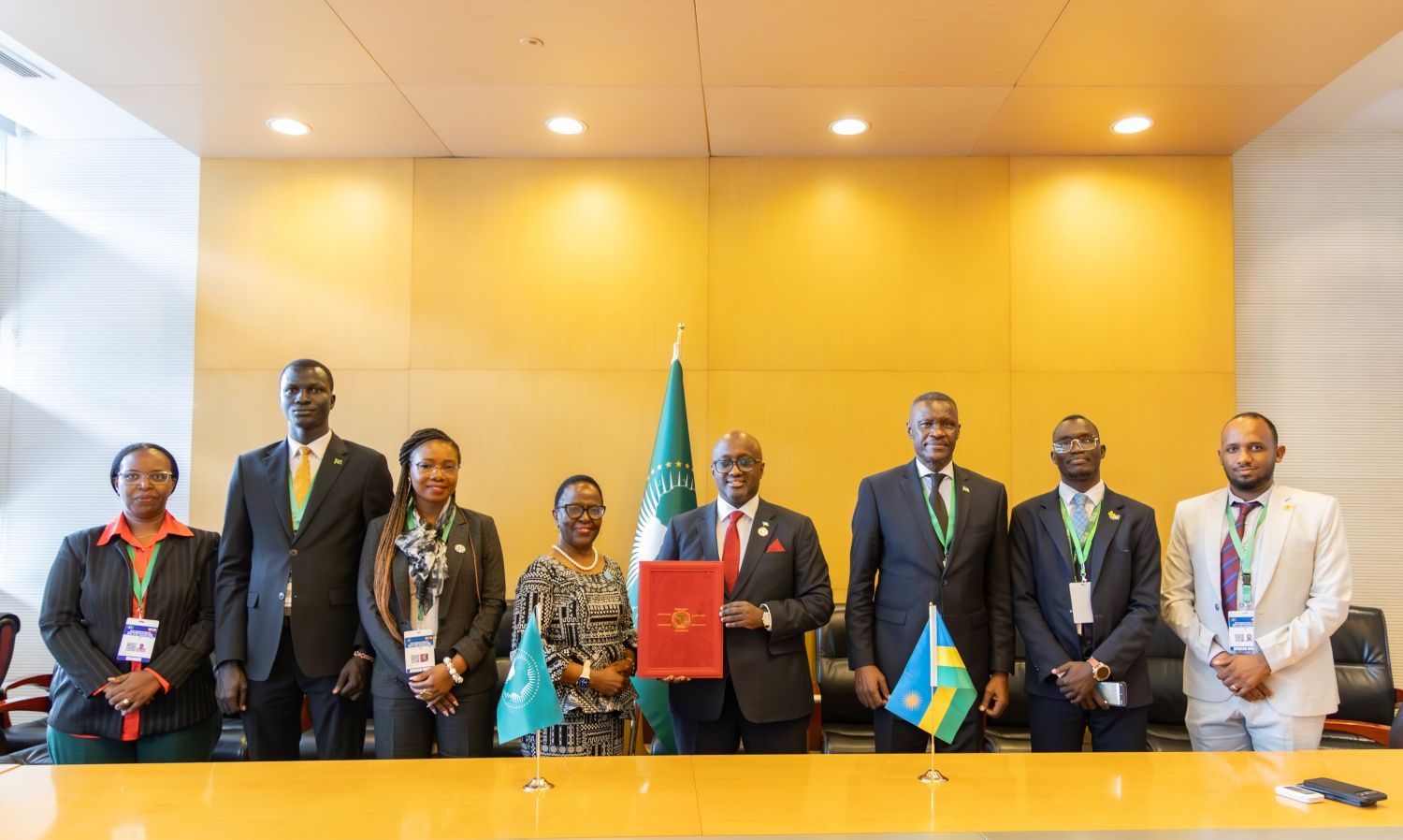
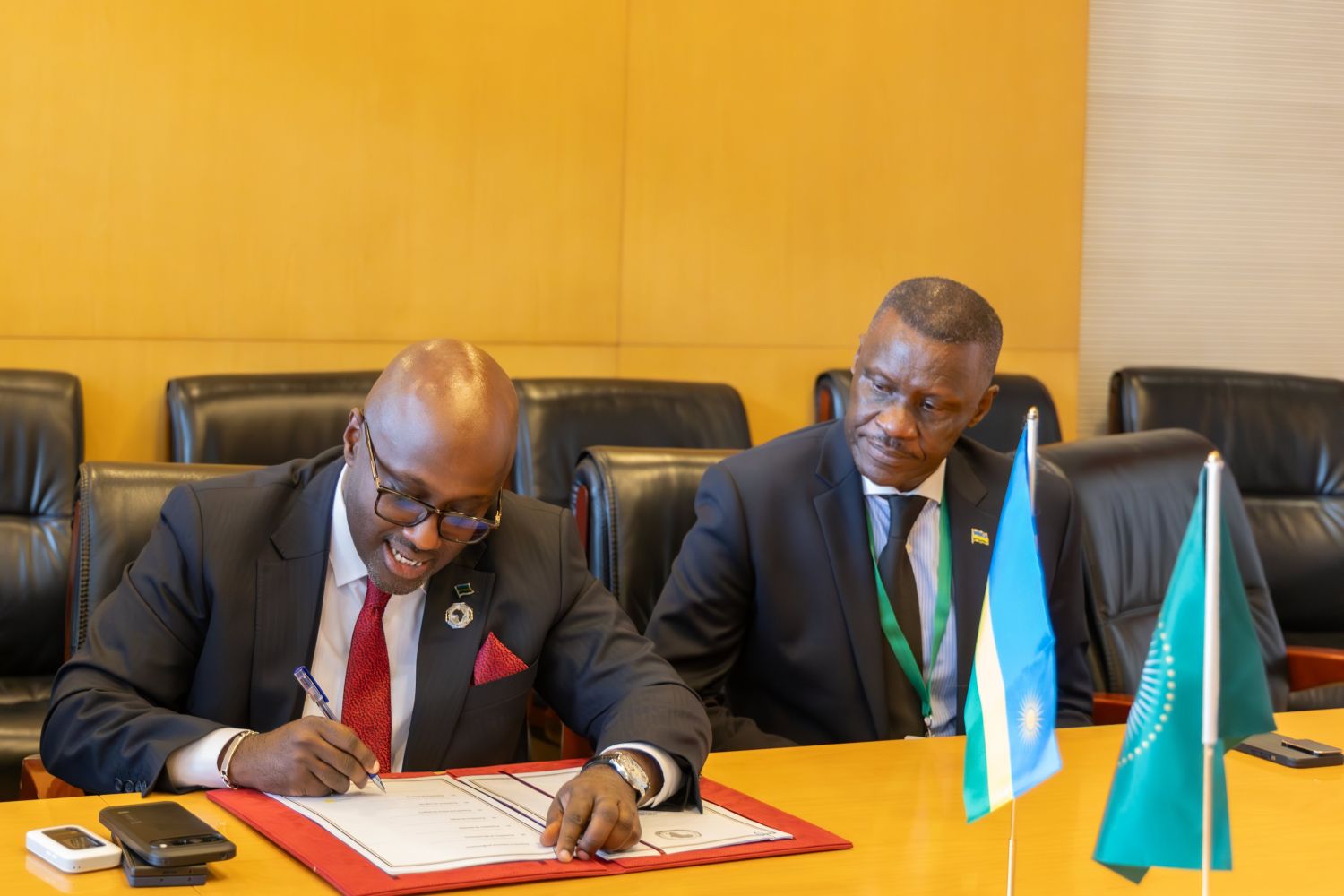
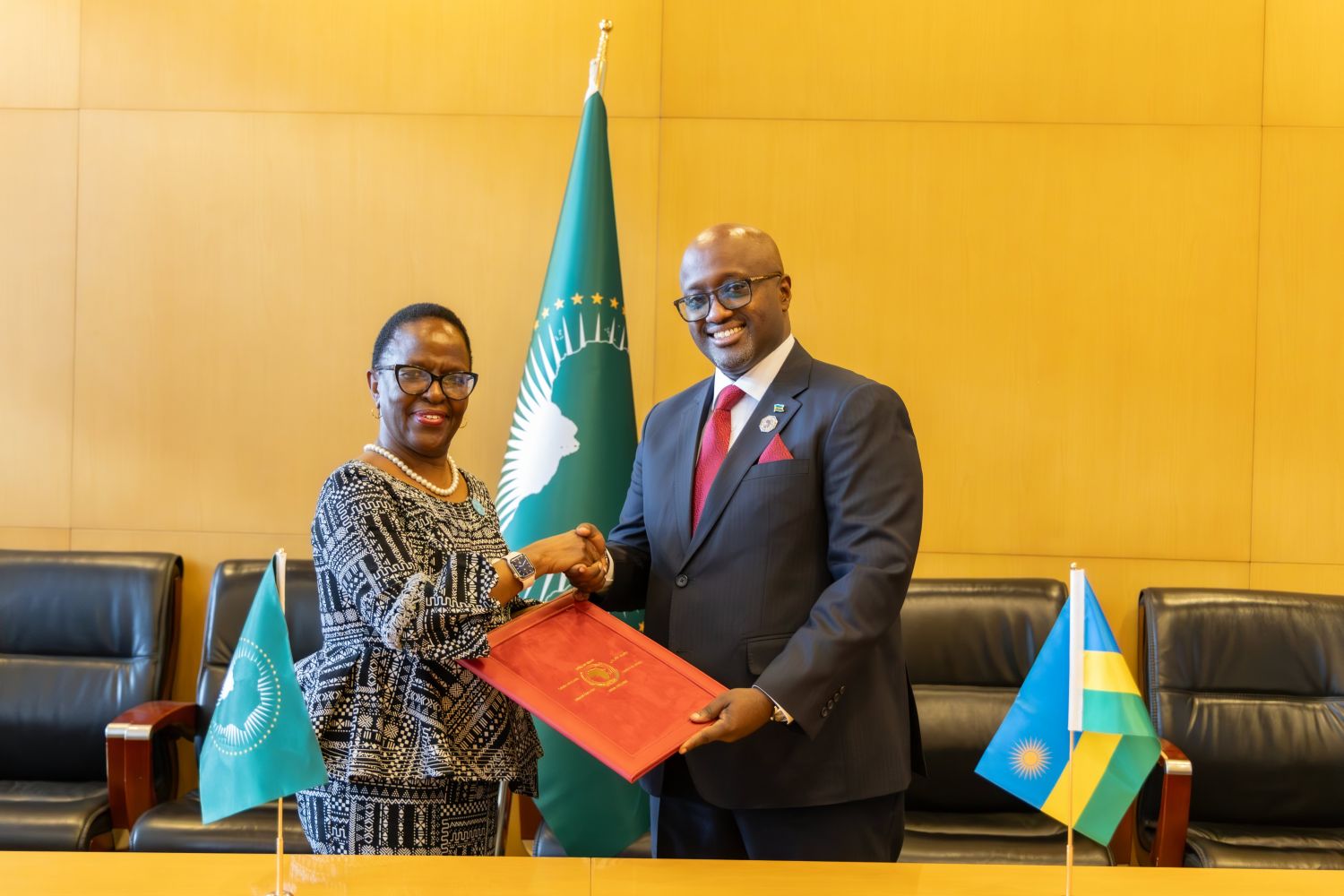
Rwanda has signed the African Union Convention on Ending Violence Against Women and Girls, becoming the ninth nation to back the continental treaty.
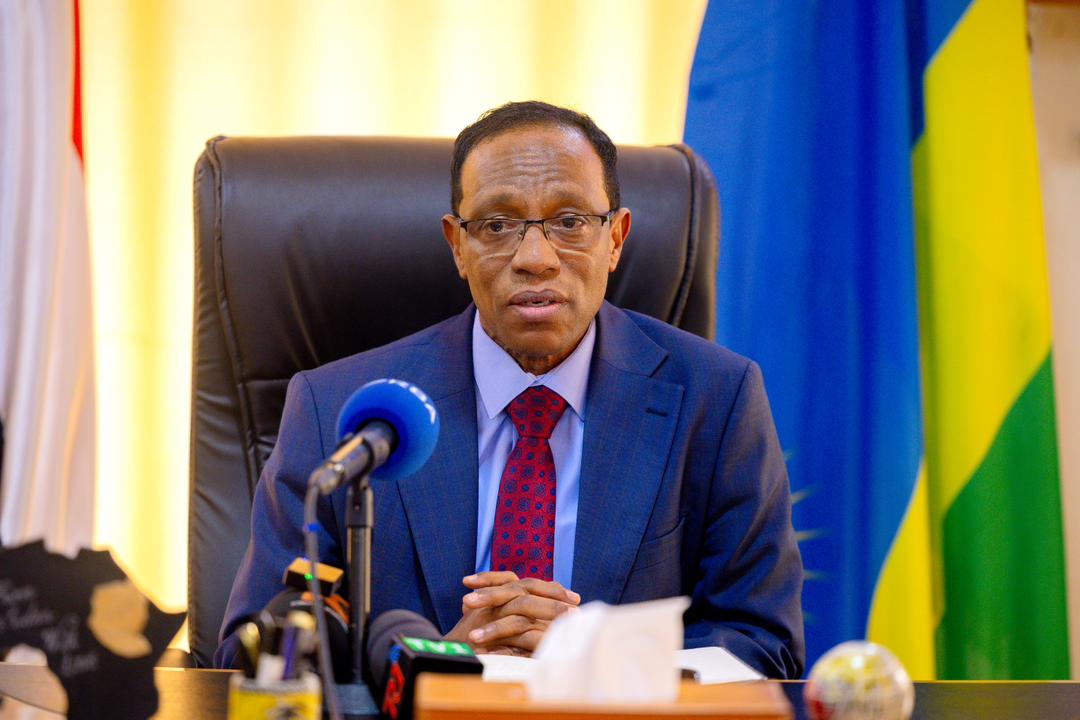
The convention was signed on Tuesday, July 28, by the Minister of Foreign Affairs and International Cooperation, Olivier Nduhungirehe, during the 49th Ordinary Session of the AU Executive Council in Addis Ababa, Ethiopia.
Announcing the development, the Ministry of Foreign Affairs and International Cooperation said Rwanda backed the convention because it aligns with the country’s vision and national gender policy.
“The convention provides a comprehensive continental legal framework to prevent and respond to all forms of violence against women and girls. Rwanda supports the convention as it aligns with Rwanda’s vision and National Gender Policy,” the ministry said.
Rwanda becomes the ninth nation to back the continental treaty.
The African Union Convention on Ending Violence Against Women and Girls is the first legally binding AU treaty dedicated exclusively to addressing violence against women and girls across the continent.
It establishes common standards for member states to prevent violence, protect survivors, prosecute perpetrators and strengthen national systems for responding to gender-based violence.
Under the convention, signatory countries commit to adopting or strengthening legislation that criminalises all forms of violence against women and girls, including physical, sexual, psychological and economic abuse, whether committed in public or private settings.
The treaty also requires member states to improve survivors’ access to justice and essential support services, including healthcare, psychosocial care, legal assistance and safe shelters, while enhancing investigations and prosecution of offenders.
In addition, the convention calls on governments to strengthen data collection and research to inform evidence-based policies, invest in public education and awareness campaigns, tackle harmful social and cultural practices that perpetuate violence, and allocate adequate resources to prevention and response programmes.
The AU Convention on Ending Violence Against Women and Girls is the first legally binding AU treaty dedicated exclusively to addressing violence against women and girls across the continent.
For Rwanda, the convention will enter into force after it is ratified through the country’s national legal procedures.
Nduhungirehe signed the treaty while attending the 49th Ordinary Session of the AU Executive Council in Addis Ababa, which brought together foreign ministers from AU member states to discuss key continental priorities and prepare decisions for consideration by the Assembly of Heads of State and Government.
The two-day session also focused on sustainable water availability and safe sanitation systems as part of the implementation of the African Union’s Agenda 2063 development framework.
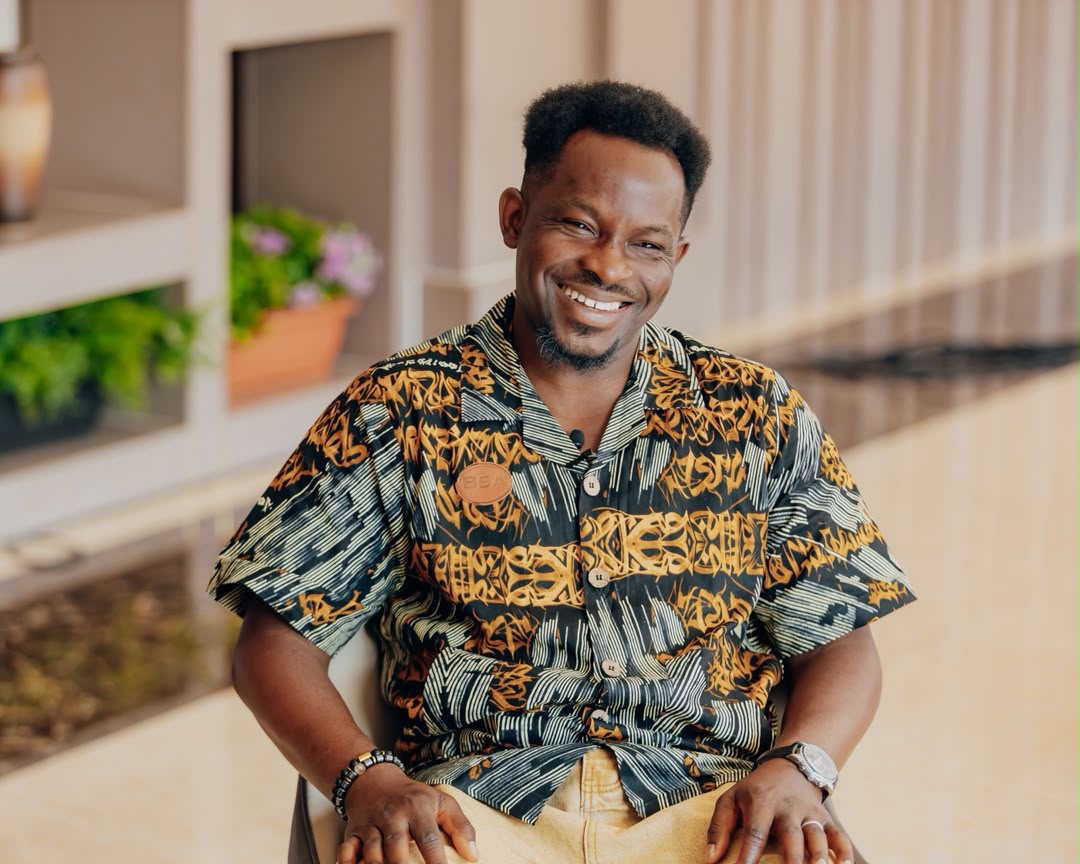
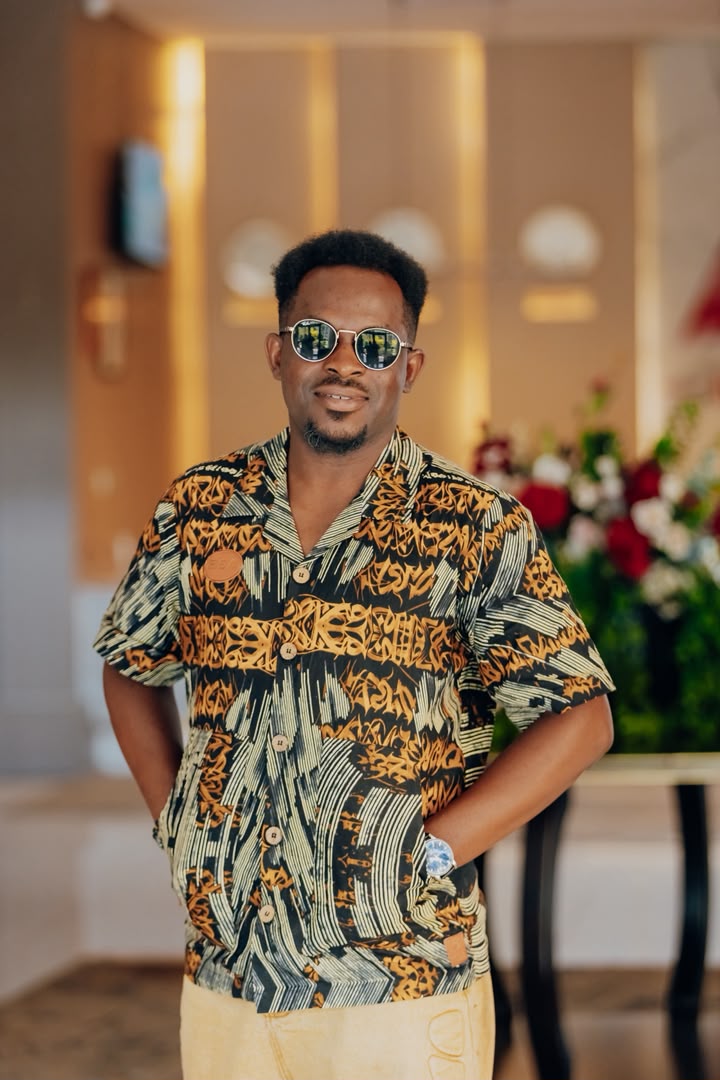
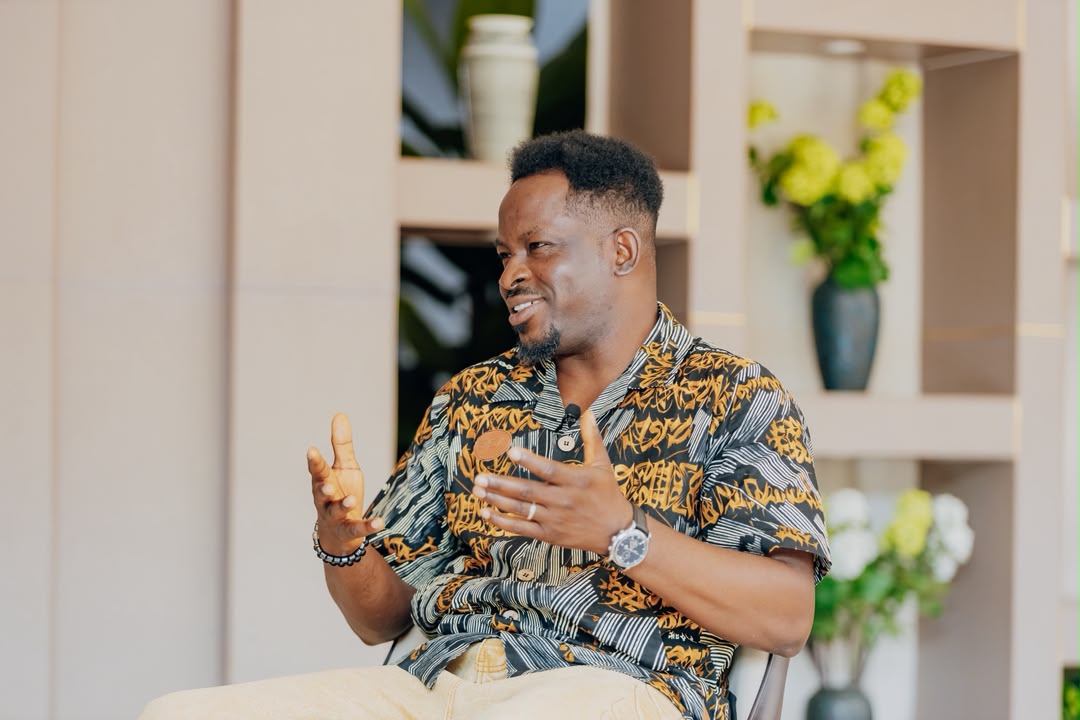
The comedian, actor, writer and entertainment consultant is in Rwanda to headline Friday’s Thank God It’s Funny Showcase at Kigali Universe alongside host Babu Joe.
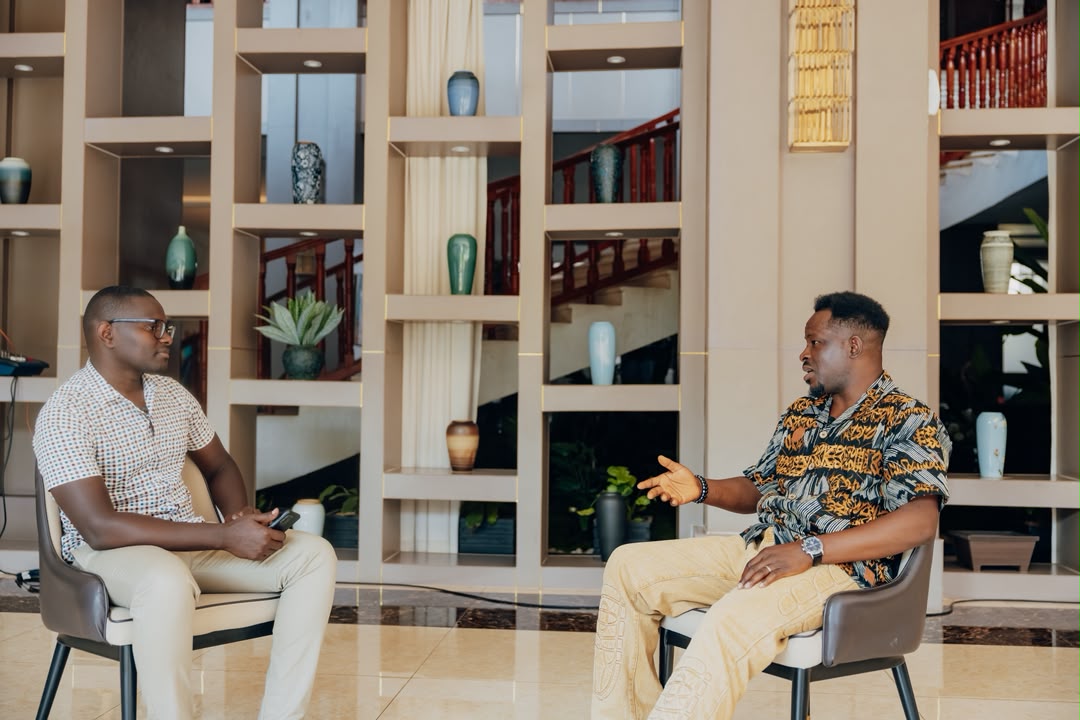
Speaking in an exclusive interview with IGIHE, Forever reflected on the unconventional career path that has taken him from engineering classrooms in Nigeria to comedy stages across 20 countries.
Despite graduating as a mechanical engineer and ranking among the best students in his class, Forever said he realised before completing university that his future lay elsewhere.
“I’ve always written funny stories and plays since I was a kid,” he said.
The comedian, actor, writer and entertainment consultant is in Rwanda to headline Friday’s Thank God It’s Funny Showcase at Kigali Universe alongside host Babu Joe.
He recalled watching Night of a Thousand Laughs in 2005 and discovering that stand-up comedians were essentially doing what he had always loved: telling funny stories.
“I tried it, it worked, and I kept going. By my final year, I already knew I wasn’t going to practise engineering. I was happier making people laugh.”
For Forever, the satisfaction of hearing from people whose lives had been brightened by his jokes outweighed the appeal of pursuing a conventional engineering career.
“People would call me randomly, saying they remembered a joke and were laughing at home. That joy kept me going,” he said.
Family initially resisted
Like many African parents who view professions such as engineering, medicine and law as the safest paths to success, Forever’s family initially struggled to accept his decision.
“It wasn’t easy, especially with my mum. It took about three to four years for her to accept it,” he revealed.
“Parents invest so much, and they expect you to follow the doctor-engineer-lawyer path. But when they saw I was making progress and getting results, they became supportive.”
Today, he says, his family fully embraces his career.
Like many African parents who view professions such as engineering, medicine and law as the safest paths to success, Forever’s family initially struggled to accept his decision.
Why Kigali stood out
While in Rwanda primarily for Friday’s performance, Forever said Kigali exceeded every expectation he had before arriving.
He described stepping out of the airport and immediately noticing the calm atmosphere.
“It was a shock. I came out of the airport, and it was so quiet. In Lagos, the moment you land, there’s chaos and activity everywhere. Here it was calm,” he said.
“The city is easygoing, smooth sailing. It actually reminds me of Abuja — quiet, calm, cool and collected.”
The comedian also praised Kigali’s organisation, cleanliness and sense of security, saying experiencing them firsthand was very different from simply reading about them.
“I read that Rwanda is Africa’s cleanest city with top-notch security, but seeing it is different,” he said.
“The city is very neat. People are walking freely at 11 p.m. or midnight. Boda bodas are still moving at one or two in the morning. That level of order, cleanliness and security in Africa is impressive.”
Forever believes Nigerians could learn from Rwanda’s coordination and orderliness.
“Nigerians can learn to mind their business,” he joked.
“In Rwanda, people mind their business. In Nigeria, minding your business is everybody’s business.”
He added that combining Rwanda’s coordination with Nigeria’s entrepreneurial spirit would be a powerful combination.
“What Rwanda can learn from us is our spirit — that always-on-the-move, always-pushing energy.”
Nigerian comedian Forever during an exclusive interview with IGIHE.
Lessons from comedy
Having shared stages with some of Africa’s biggest comedians, including Basketmouth, Forever said the greatest lesson he has learned is never to lose the drive to improve.
“Hunger. The hunger must never die,” he said.
“Basketmouth has been at the top for almost three decades, and he’s still writing new material, still touring, still hungry. That’s what keeps you at the top.”
Although he once joked that “nobody gets into comedy by passion,” Forever explained that passion developed after discovering his natural talent.
“I got in because of talent. I was already good at it, and the more I did it, the better I became. Then passion grew.”
He added that seeing audiences light up when they recognise him remains the biggest reward.
“When someone sees me on the street, and their face just lights up — that’s priceless. I don’t want to trade that.”
Looking beyond Friday’s show
Forever said he is looking forward to meeting more of Rwanda’s comedy community and expects Friday’s audience to bring as much energy as he plans to deliver.
“The comedian brings energy but also feeds off the audience. I can’t wait,” he said.
He also revealed that he hopes this will not be his last performance in Rwanda.
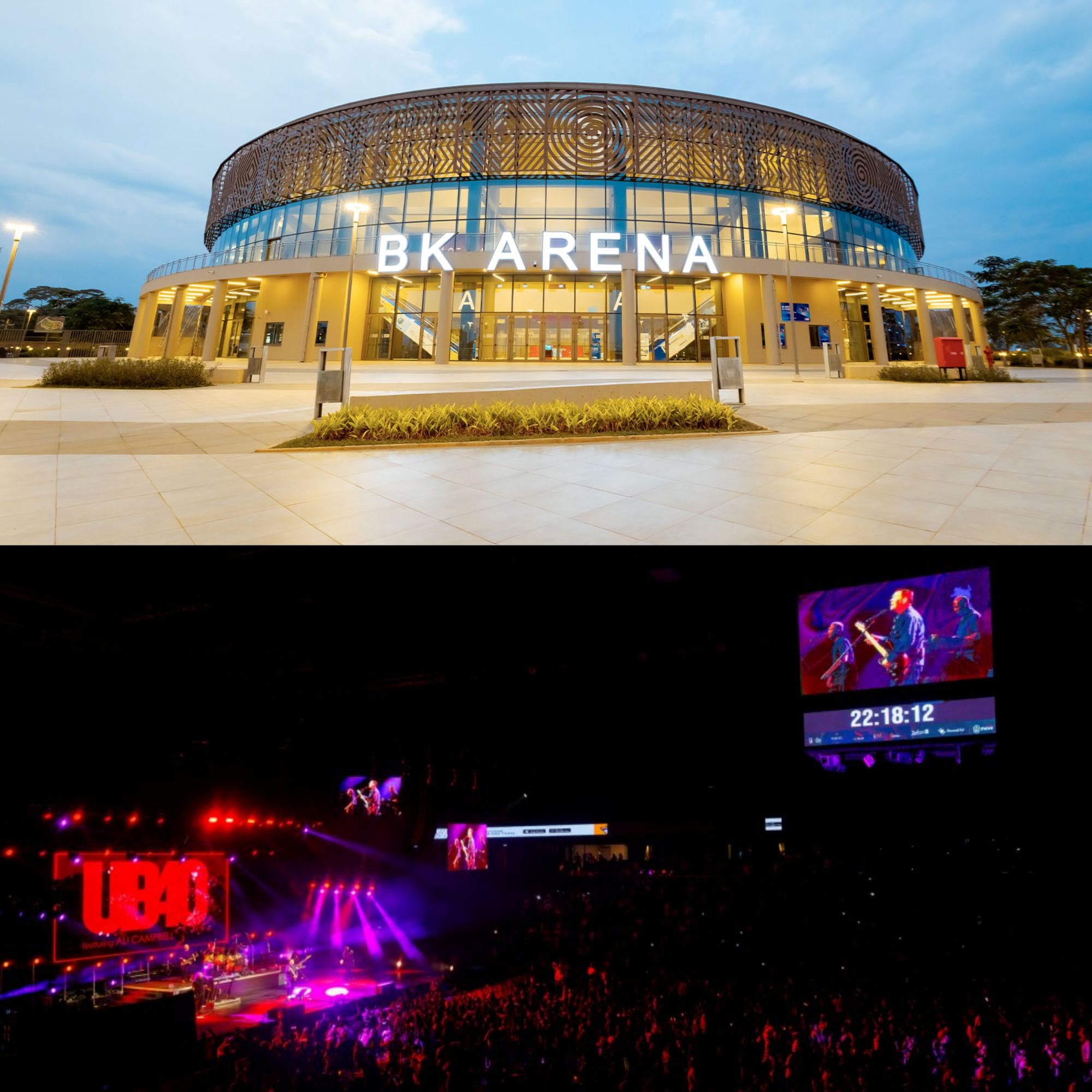
Forever dreams of one day filling the 10,000-seat BK Arena.
Calling Kigali “like my second home,” Forever said he plans to return as part of his African tour and dreams of one day filling the 10,000-seat BK Arena.
“First impressions matter, and I love it here,” he said.
“One day Forever will fill BK Arena. I’ll be back next year with my African tour. Kigali is like my second home now.”
Watch the full interview below as Forever reflects on choosing comedy over engineering, his admiration for Kigali, and his plans to return to Rwanda.
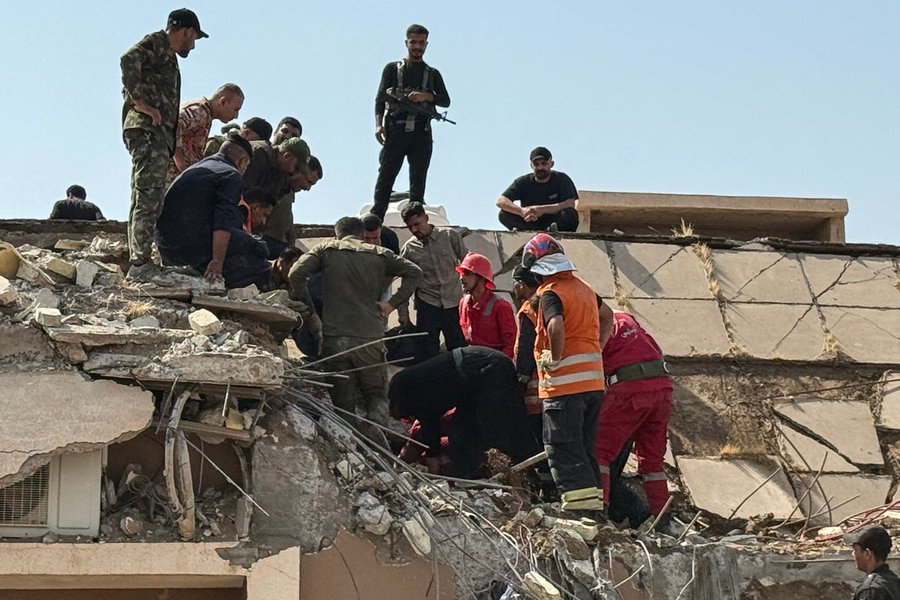
The U.S. Central Command (CENTCOM) said on social media that its forces completed “a heavy wave of strikes” at 10 p.m. Eastern Time on Wednesday (0200 GMT Thursday) in response to Iran’s attempted missile attacks a day earlier.
According to CENTCOM, U.S. forces struck dozens of targets belonging to Iran’s Islamic Revolution Guard Corps, including military command centers, missile and drone facilities, coastal surveillance and defense sites, and maritime capabilities.
More than 50,000 U.S. service members are currently deployed to the Middle East and remain “highly vigilant, focused, lethal, and ready,” CENTCOM said.
Earlier on Wednesday, U.S. President Donald Trump vowed twice that Washington would retaliate forcefully against Iran. He also said he had been briefed that an American-owned liquefied natural gas carrier at an Egyptian port was set on fire in an apparent drone attack earlier in the day.
Iranian media earlier reported explosions in the country’s southern regions. Iran’s semi-official Tasnim news agency said that Qeshm Island in the Strait of Hormuz and locations in Bushehr province had come under attack.
The Wall Street Journal reported that the latest U.S. operation was expected to be broader in scope than previous exchanges between the two sides in recent weeks, targeting more sites across a wider geographic area, citing a U.S. official.
Trump also met with Saudi Defense Minister Prince Khalid bin Salman at the White House on Wednesday, Axios reported, citing a U.S. official and another source familiar with the meeting.
According to the report, the Saudi defense minister told U.S. Vice President JD Vance that the kingdom was capable of handling the situation with the Houthis and did not need U.S. military involvement at this stage.
The Saudis are negotiating with the Houthis, which have threatened to impose a naval blockade on Saudi ports and even conducted several attacks on Saudi ships in the Red Sea, said the report, citing anonymous sources.
The latest developments came after the United States said it had intercepted an attempted Iranian missile attack targeting U.S. forces on Tuesday and later carried out joint strikes with Saudi Arabia against Iran-backed militias in neighboring Iraq.
Iranian media earlier reported explosions in the country’s southern regions. Iran’s semi-official Tasnim news agency said that Qeshm Island in the Strait of Hormuz and locations in Bushehr province had come under attack.
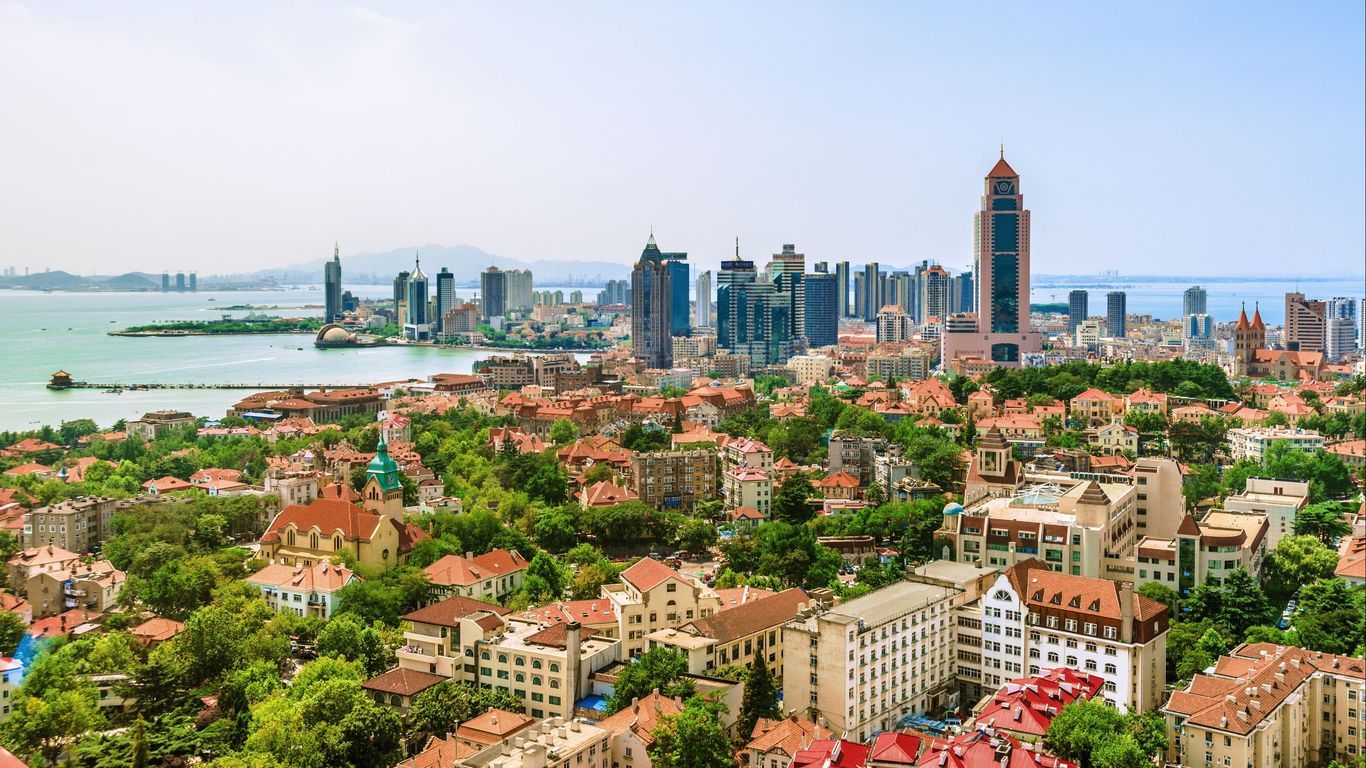
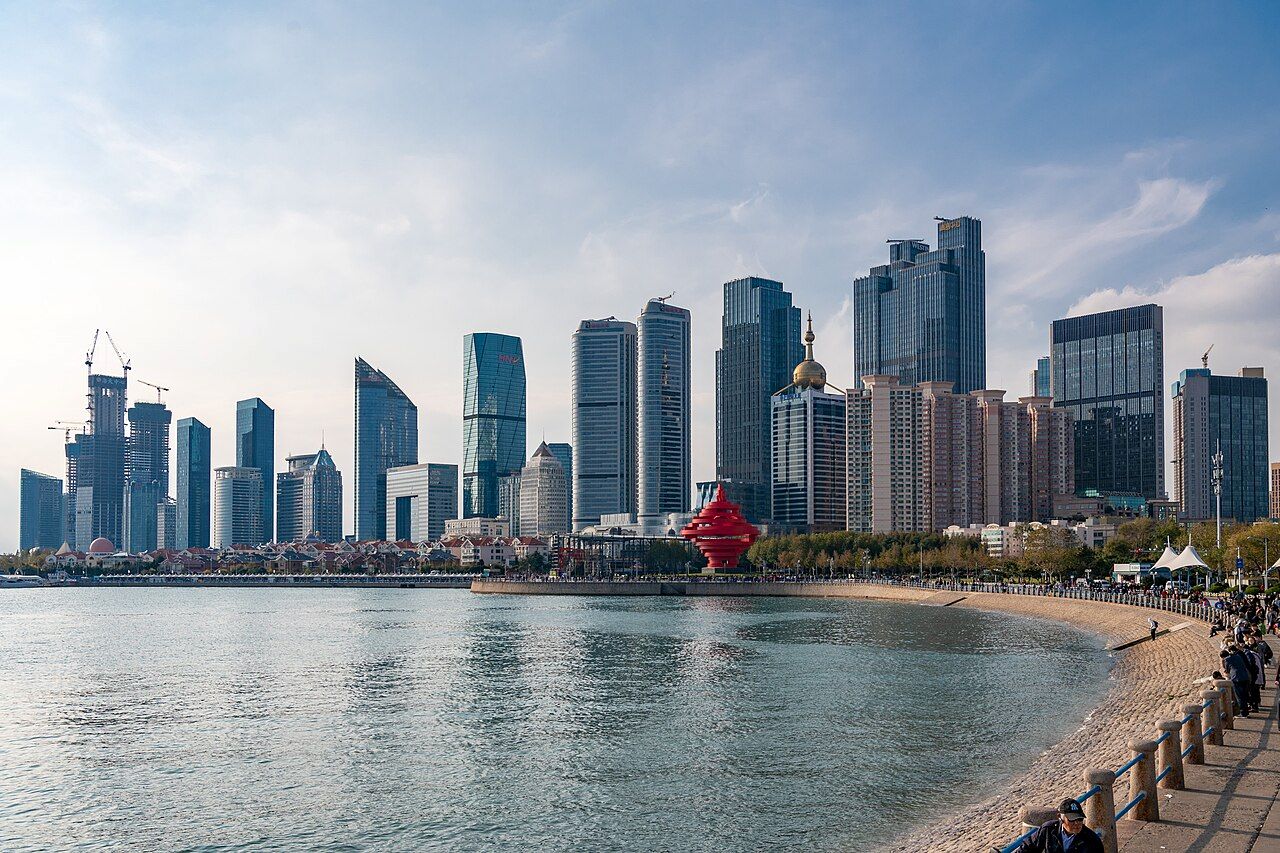
Instead, it greets you with the crisp, briny breath of the Yellow Sea, an omnipresent maritime horizon, and an urban landscape that feels simultaneously ancient, avant-garde, and deeply international. Walking through its streets, one is immediately struck by its unique, multi-layered identity.
It is a vibrant, fun, and extraordinary city, serving as a clean and green coastal destination that has systematically integrated ecological preservation with aggressive urban development.
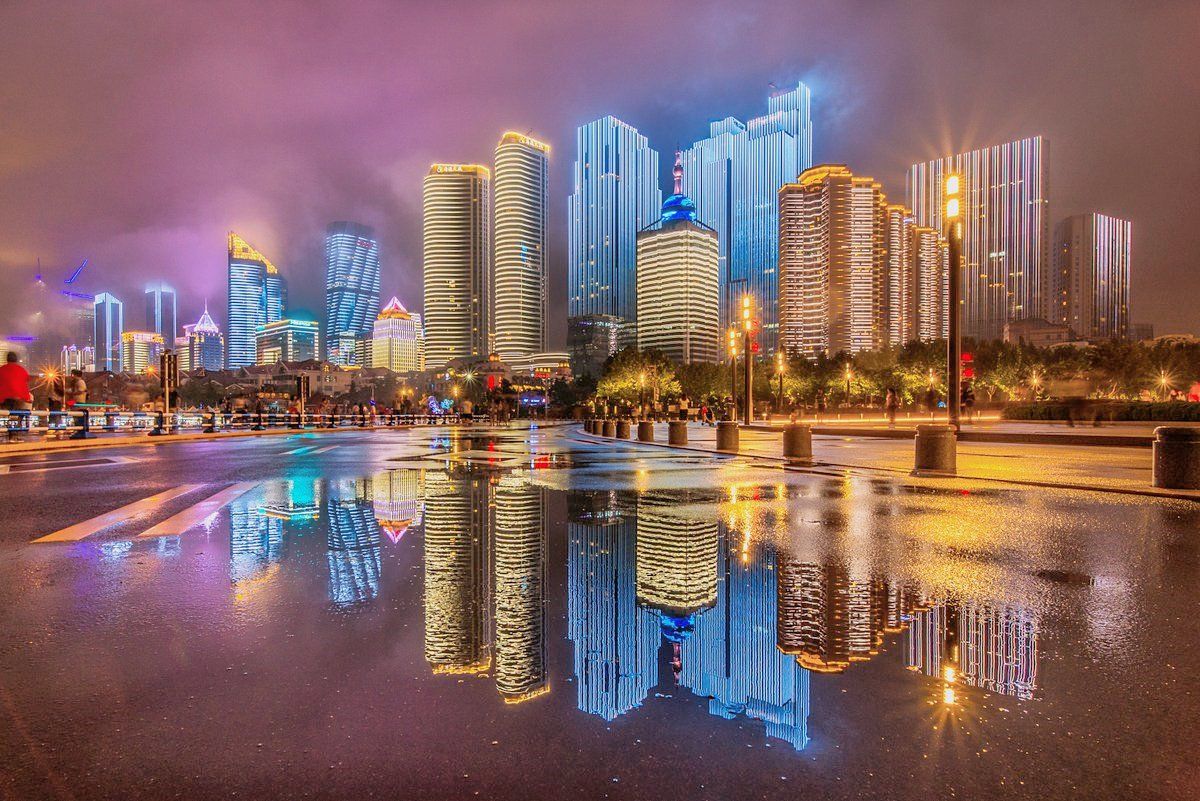
As evening falls, the vibrant streetscapes come alive with a distinct maritime energy, echoing the dynamic rhythm of a city that has spent decades keeping its doors open to the world.
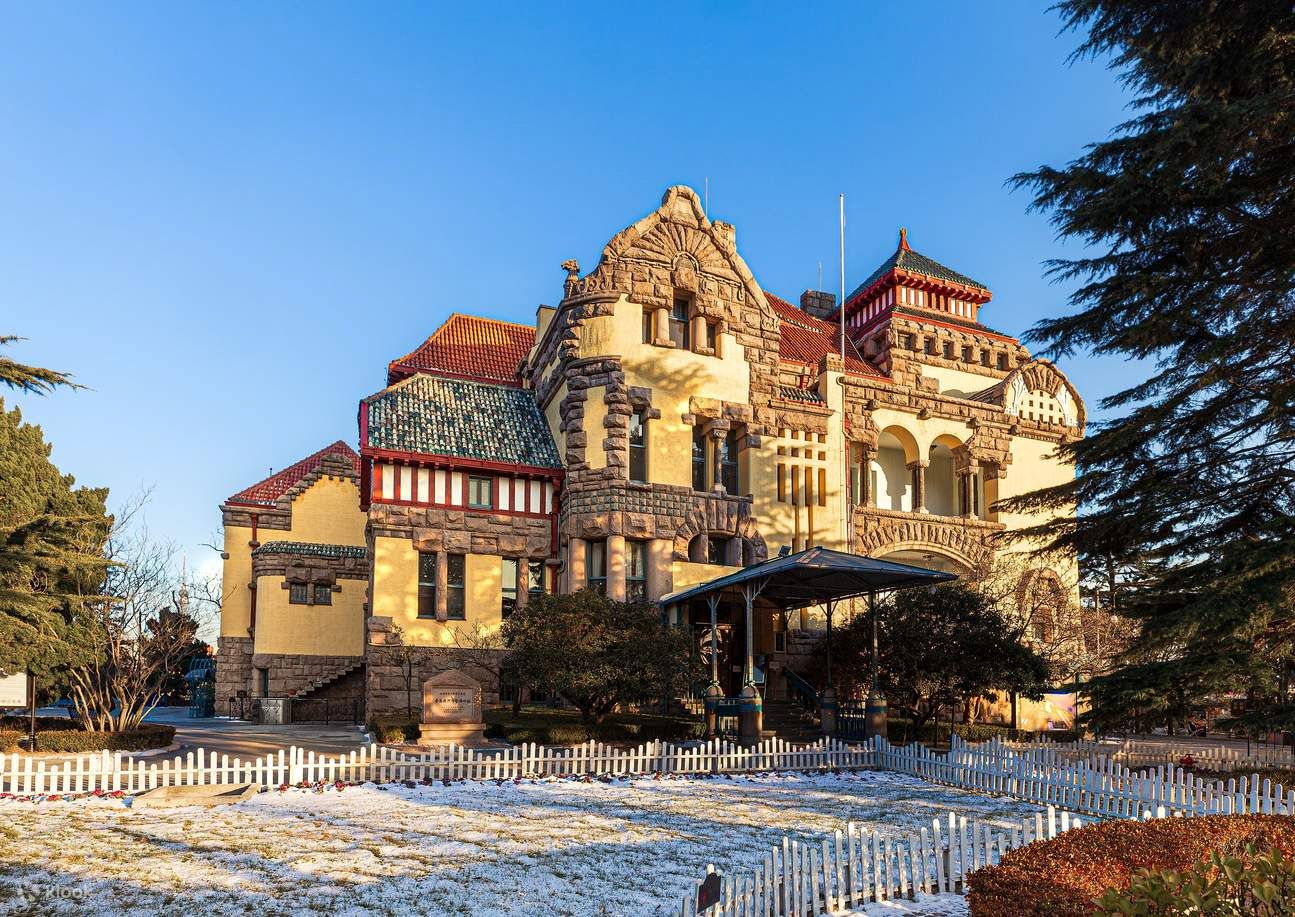
Returning this summer for the 2026 Qingdao International Beer Festival, my journey began in the historic core of the Old Town, standing before the red-roofed, granite-walled structures of the former German Governor’s Residence. The architectural relic stands as a quiet witness to a complex past.
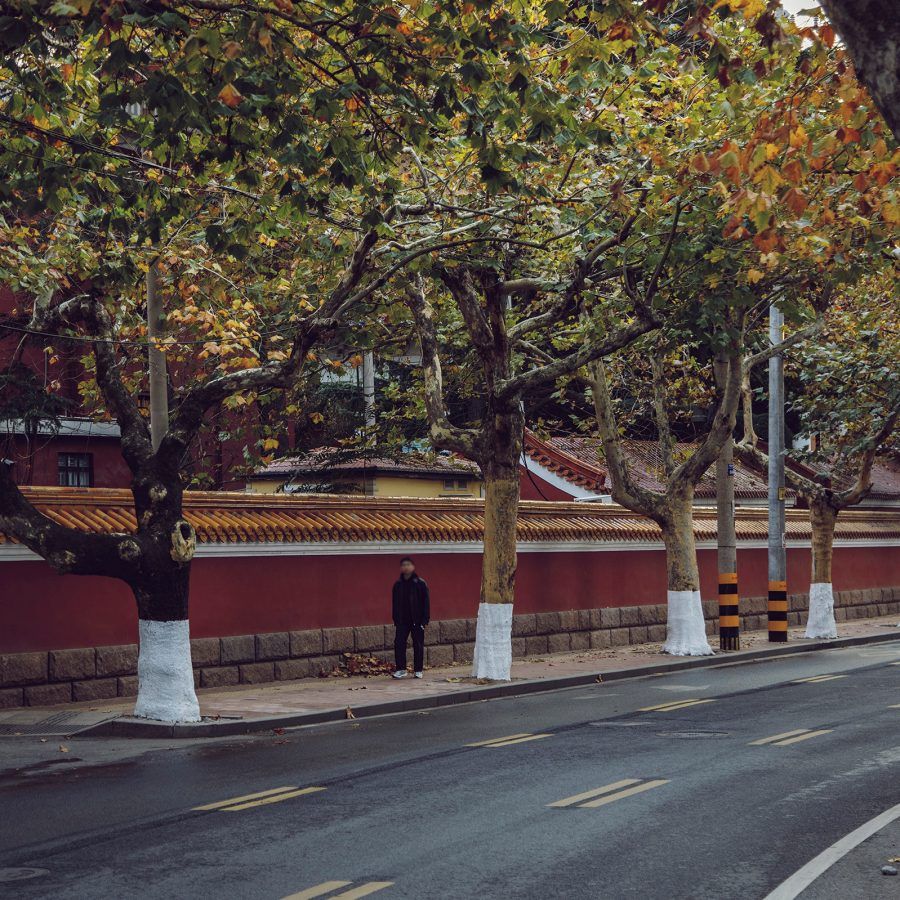
A short walk away lies Daxue Road, where the iconic red walls of the old university campus are flanked by towering plane trees and an eclectic array of independent coffee shops. Transitioning to the contemporary, I found myself at the Qingdao Sailing Olympic Center. Built for the 2008 Olympics, the marina remains a bustling hub of international yachting events.
Yet, the city’s international openness is not confined to its coastline. Venturing into the suburban valleys nestled beneath the sacred peaks of Mount Lao, I explored Qingdao’s burgeoning boutique wineries. It was during these visits that the true mechanism of Qingdao’s global identity became crystal clear.
The red-roofed, granite-walled facade of the former German Governor’s Residence in Qingdao’s Old Town stands as a quiet witness to the city’s complex historical past.
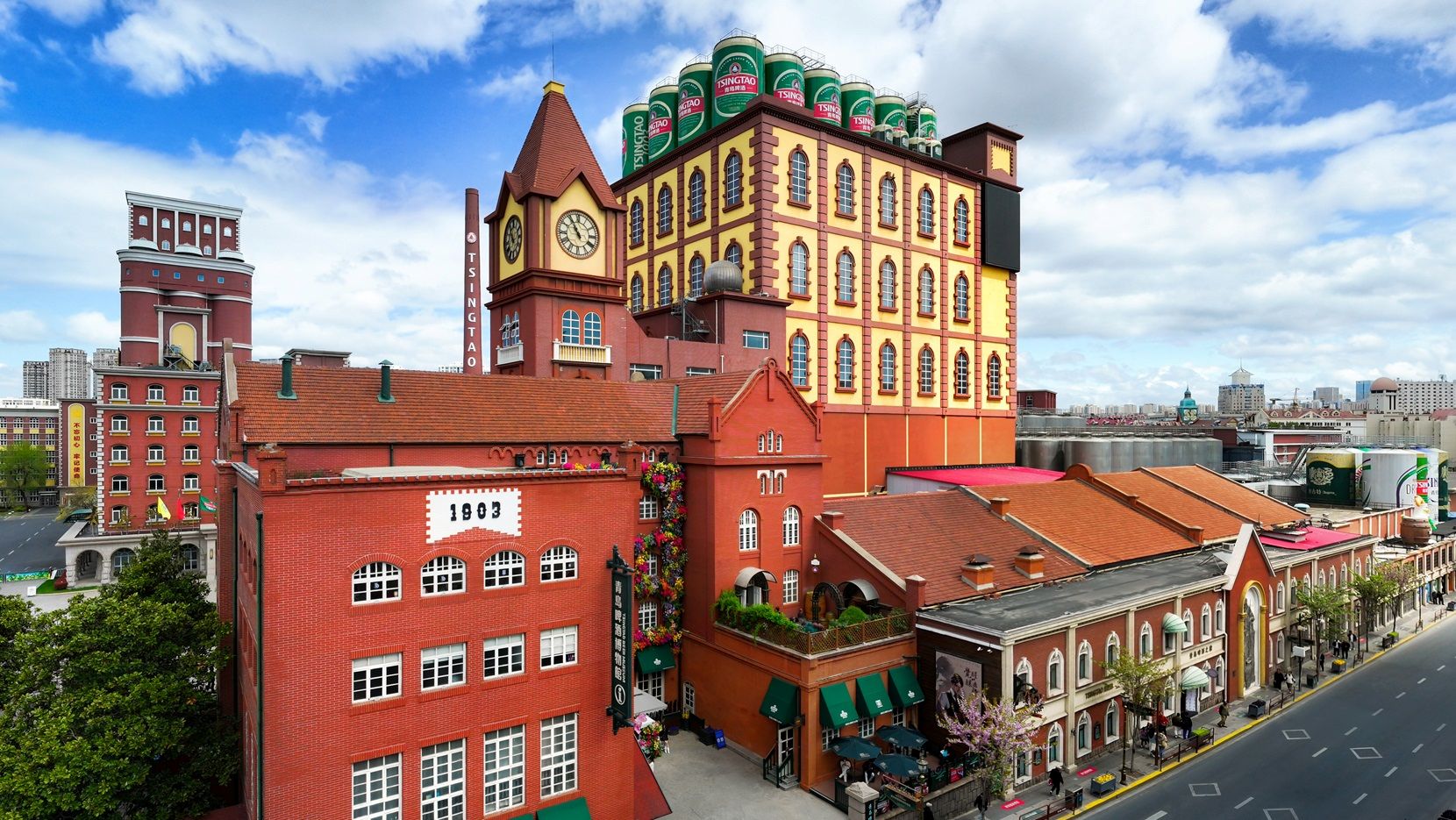
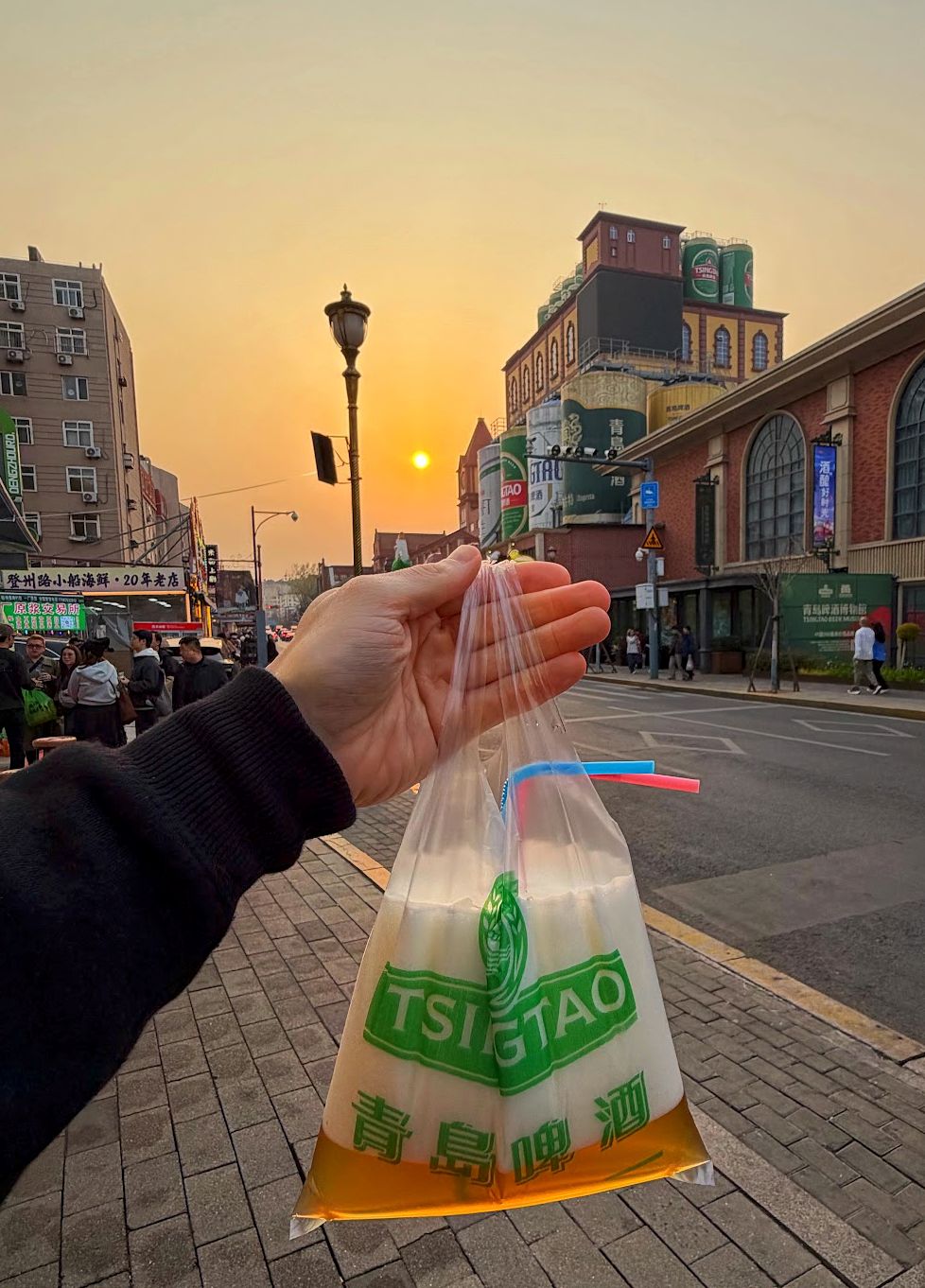
Among all of Qingdao’s diverse symbols, the iconic green bottle of Tsingtao Beer has become the strongest vehicle carrying the city’s image to the world. The festival is not merely a celebration of beer; it is a strategic cultural and economic platform through which Qingdao has expanded its openness, strengthened its international identity, and created opportunities for global engagement, including emerging connections with Africa.
The timeless green bottle of Tsingtao Beer remains one of the world’s most recognizable cultural symbols, acting as a direct link between the coastal city and international consumers.
To understand the scale of the festival today, one must travel back to the late 1980s and early 1990s. China was deep in the throes of its transformative Reform and Opening-Up period. Across the country, local municipal governments were fiercely competing to attract foreign direct investment and boost tourism.
Qingdao found its signature urban celebration hiding in plain sight within the amber depths of Tsingtao Beer. On January 17, 1991, the Qingdao Municipal Government officially issued the notice to hold the event, and on June 23, 1991, the inaugural festival opened its gates at Zhongshan Park.
The decision-makers of the era explicitly laid out a two-pronged founding vision, stating that the goals were to further enhance the global reputation of Tsingtao Beer and to use the beverage as a medium to rapidly expand Qingdao’s openness to the outside world. Internationalization was deliberately embedded into the festival’s genetic code from day one.
Over the course of more than thirty-five years, the festival has evolved into a national-level mega-event. From an economic perspective, the growth trajectory is staggering. In its inaugural 1991 edition, the festival welcomed 300,000 visitors.
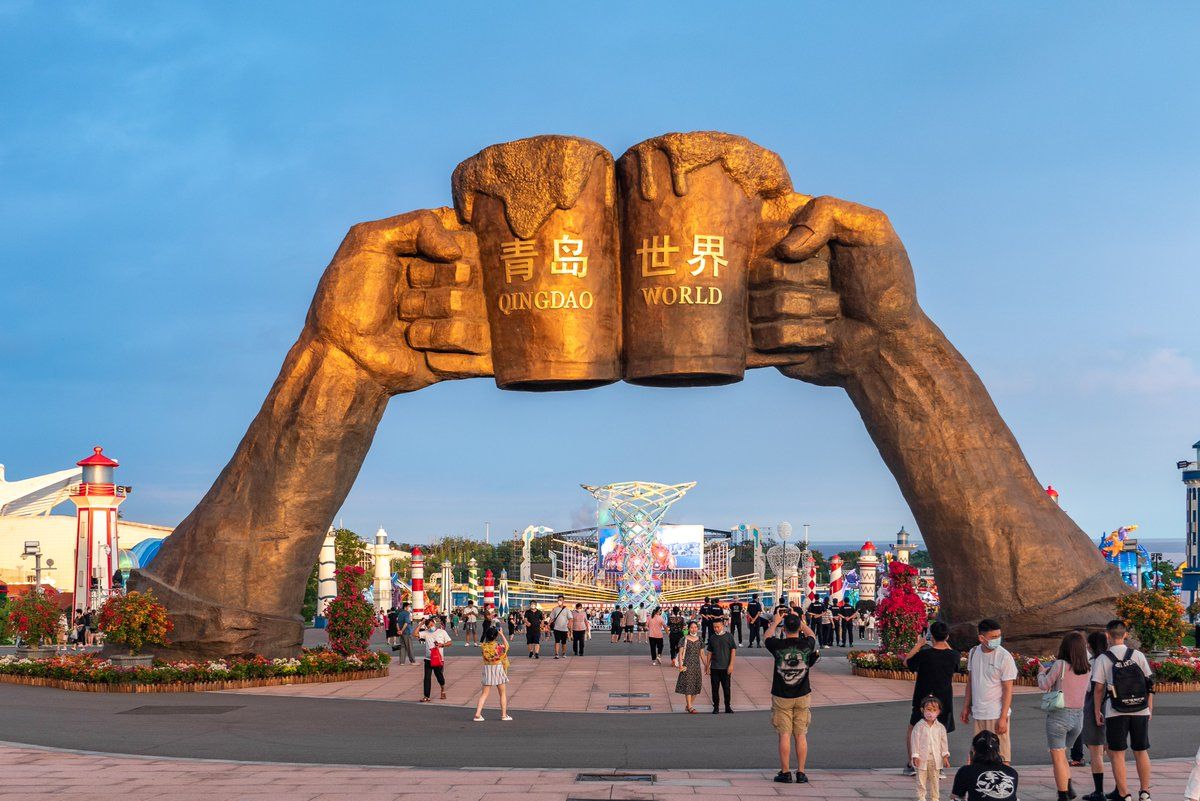
The sprawling West Coast venue of the 2026 Qingdao International Beer Festival, a mega-event drawing millions of visitors to celebrate global openness.
By the 35th edition held in 2025, the city received 22.48 million tourists over the course of the festival, generating 18.03 billion RMB in direct urban consumer spending. This economic engine drives the entire region, boosting hospitality, transit, restaurants, retail, and local industrial supply chains.
Beyond hard currency, the festival has fundamentally reshaped Qingdao’s international reputation. In 2005, the International Festivals and Events Association ranked the event first among China’s Top Ten Most Internationally Influential Festivals.
In 2021, Qingdao was formally awarded the prestigious title of China’s Beer Capital, standing shoulder-to-shoulder with world-renowned celebrations like Munich’s Oktoberfest as a tool for city diplomacy. At the same time, the festival has maintained a democratic, people-first ethos.
From the 11th to the 28th editions, ticket prices did not increase for 18 consecutive years, and since the 29th edition, admission has been completely free, ensuring the celebration belongs to ordinary citizens and visitors alike.
The summer of 2026 marks the historic 36th edition of the Qingdao International Beer Festival. The festival opened on July 17, 2026, and will run for 30 days until August 15, 2026, under the theme “Qingdao Cheers with the World.” To accommodate millions of visitors, this year’s edition is adopting a city-wide synergy model, featuring three main venues across the West Coast, Laoshan District, and Qingdao Old Town.
The scale is historic, bringing together over 2,300 domestic and international beer brands alongside more than 2,000 special events. The West Coast venue alone expects 7 million visitors, 3,000 tons of beer consumption, and an estimated 7.8 billion RMB in regional tourism revenue.
Guiding visitors through this massive footprint is the official zodiac mascot, Maxia, a playful horse design representing energy and the swift expansion of international friendship.
Built for the 2008 Summer Games, the Qingdao Sailing Olympic Center remains a premier marina and a physical manifestation of the city’s modern global ambitions.
Why does Qingdao continue to pursue the world, and why should the world pay attention? The festival creates a global cultural agora, an international space for brand participation, foreign tourists, and cross-cultural exchange. As early as the 5th edition in 1995, beer brands from every single continent except Africa were participating.
In 2019, Qingdao elevated its institutional diplomacy by establishing the International Beer Festival Alliance Cooperation Mechanism with representatives from the Munich, Denver, and Toronto beer festivals, turning the event into a global conversation.
In 2026, this openness has translated into highly practical, friction-free services. The festival executed a targeted campaign to bring 10,000 Korean tourists to the event, integrated 7 international e-wallet payment systems for foreign visitors, and provided comprehensive multilingual signage and tax refund services for departing international guests.
The most compelling dimension of the festival’s contemporary trajectory is its expanding connection with the African continent. In December 2019, the Tsingtao Beer Group launched the first stop of its Tsingtao Beer Festival Along the Silk Road initiative in Monrovia, Liberia.
The event attracted thousands of local participants, fostering people-to-people connectivity. Liberian officials expressed high hopes that it would serve as a permanent platform for future cultural and commercial cooperation between Liberia and China.
Conversely, the domestic festival grounds have long welcomed African participation. As early as the 20th edition in 2010, African Golden Antelope Beer was exhibited, and the festival has previously set up dedicated African zones to highlight continental brands.
In the current 2026 festival, international guests include an Ethiopian traveler named El, who joined visitors from Russia, Germany, and New Zealand on the festival floor. Looking ahead, Africa represents an emerging opportunity and growing connection for Qingdao.
Future cooperation can be strategically expanded through agricultural trade, food and beverage industries, tourism, youth exchange, and business partnerships within the Belt and Road framework.
The festival represents how a city can use culture, business, and shared experiences to expand its openness and build stronger connections with the world. Ultimately, the Qingdao International Beer Festival is not about beer alone. It is about openness, friendship, cooperation, and the profound belief that a city can communicate beautifully with the global community through culture.
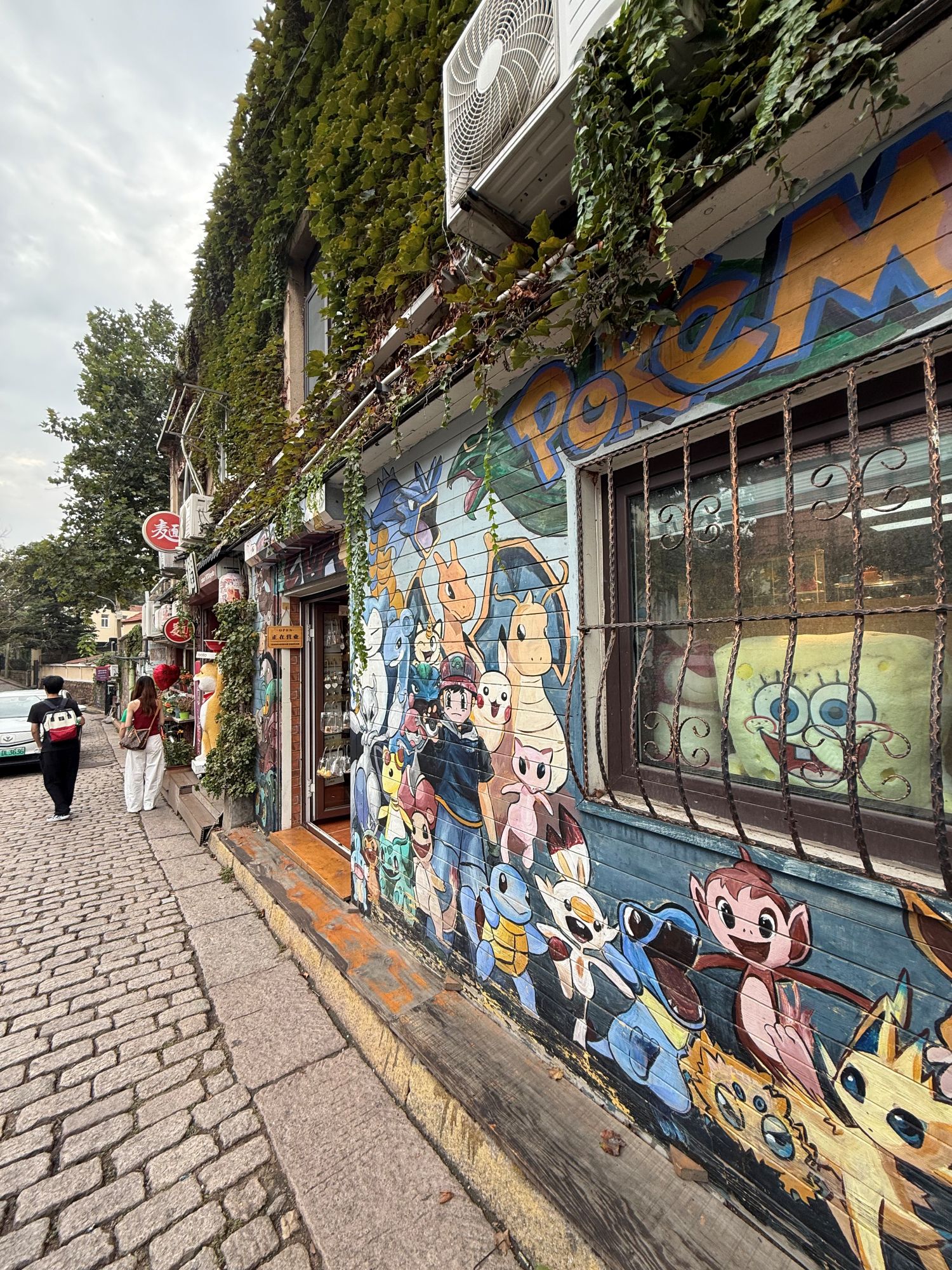
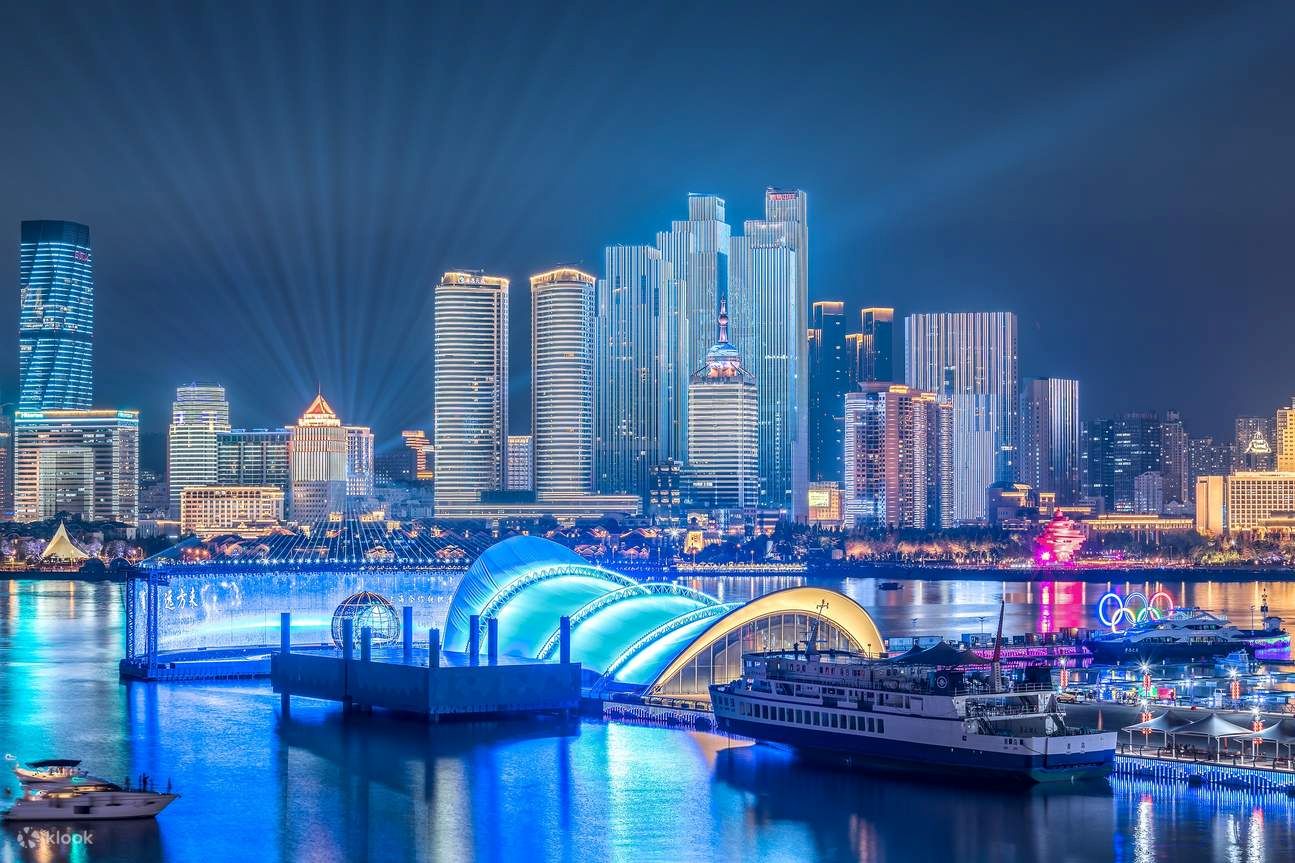
Beyond its bustling international port, the city is celebrated as a clean, green coastal destination that balances rapid urban development with dedicated ecological preservation.Sleek boardwalks and luxury catamarans at the Olympic Sailing Center anchor Qingdao as a vibrant hub for international maritime events and contemporary trade.The crisp, briny breeze of the Yellow Sea sweeps across Qingdao’s coastline, offering a daily reminder of the city’s deep maritime roots and open horizons.Towering plane trees cast shade over the iconic red walls of Daxue Road, a bustling hub for Qingdao’s intellectual and creative youth.
His remarks come amid heightened public attention over misconduct involving students from the larger Sudanese community. While the majority of the recent cases have involved South Sudanese students, including criminal prosecutions and deportations, Sudanese students have also been implicated in some incidents, prompting the Sudanese Embassy to step up engagement with its community.
Speaking to IGIHE on the sidelines of Umuganda in Jabana Sector, Gasabo District, where more than 150 members of the Sudanese community joined local residents for Rwanda’s monthly community service, the ambassador said the embassy was taking the reported incidents seriously and had intensified outreach to students across the country.
“We are aware, and we are following the matter,” the ambassador said when asked about recent reports of violence involving Sudanese students.
“When you have 4,000 students, and there are five or six cases, the proportion is not alarming. But we are concerned about any kind of violence. We encourage and teach our community to abide by the law, respect local law enforcement, and respect the rules.”
The ambassador said the Sudanese community in Rwanda comprises about 5,000 people, around 4,000 of whom are students enrolled in six universities across the country.
He emphasised that the “isolated” incidents should not be viewed as representative of the wider Sudanese community, noting that most Sudanese nationals in Rwanda are contributing to the country’s development through business and investment. The envoy said the community has invested more than $25 million in sectors including real estate, education, agriculture, and oil and gas, underscoring its positive contribution to the country’s economy.
“We are visiting our students on campuses, meeting with vice chancellors of the universities, and working with our student association to provide guidance, instruction, education, and training on respecting the law and cooperating with local law enforcement,” he remarked.
“These are absolutely isolated cases. They do not reflect the true values and ethics of the Sudanese community. We are taking care of it and are confident it will not be repeated.”
The ambassador also appealed directly to Sudanese nationals living in Rwanda to show their appreciation for the opportunities they have been given by respecting the country’s laws, particularly at a time when the war in Sudan has displaced many people and forced them to seek refuge abroad.
“Rwanda, under the leadership of His Excellency President Paul Kagame, opened its doors for all Africans, including Sudanese. We are here to learn through education and from the community,” he said.
“My message to my fellow citizens and students is that we should pay back to the community by respecting the law, abiding by the law, cooperating with law enforcement agencies, and reflecting the best values of Sudanese culture while here.”
He encouraged students to take the positive lessons they acquire in Rwanda back to Sudan after completing their studies.
Among the recent cases attracting public attention is that of a South Sudanese student accused of assaulting a university lecturer following a dispute over examination marks. Prosecutors are seeking a three-year prison sentence, while the court is expected to deliver its verdict on July 31. Rwanda also deported eight South Sudanese students from INES Ruhengeri after they were accused of offences including theft, assaulting motorcycle taxi operators, intimidating residents and carrying bladed weapons.
Ahmed Soufiane Abdalla, a second-year data science student at Kigali Independent University, apologised to Rwandans over the recent incidents involving members of the Sudanese community.
“We sincerely apologise to the Rwandan people and the Rwandan government for what has been happening recently,” he said.
He attributed some of the challenges facing Sudanese students to the psychological effects of the ongoing war in Sudan and inadequate awareness of Rwandan laws among newly arrived students. He suggested that universities, student associations and the embassy provide legal orientation to students during their first days in Rwanda to help prevent future incidents.
During the Umuganda event, the ambassador said participation by the Sudanese community was intended to strengthen ties with Rwandans, learn from the country’s homegrown development initiatives and reaffirm that Sudanese nationals are committed to making a positive contribution to their host country.
“We are not aliens. We are African brothers and sisters. We are here to participate, to contribute positively, and to learn from Rwanda’s good practices,” he stated.
The Ambassador of Sudan to Rwanda, Khalid Musa Dafalla Musa, has spoken out on recent incidents involving Sudanese students in Rwanda, stressing the importance of lawful conduct and calling on all Sudanese nationals to respect Rwandan laws and maintain positive relations with their host communities.
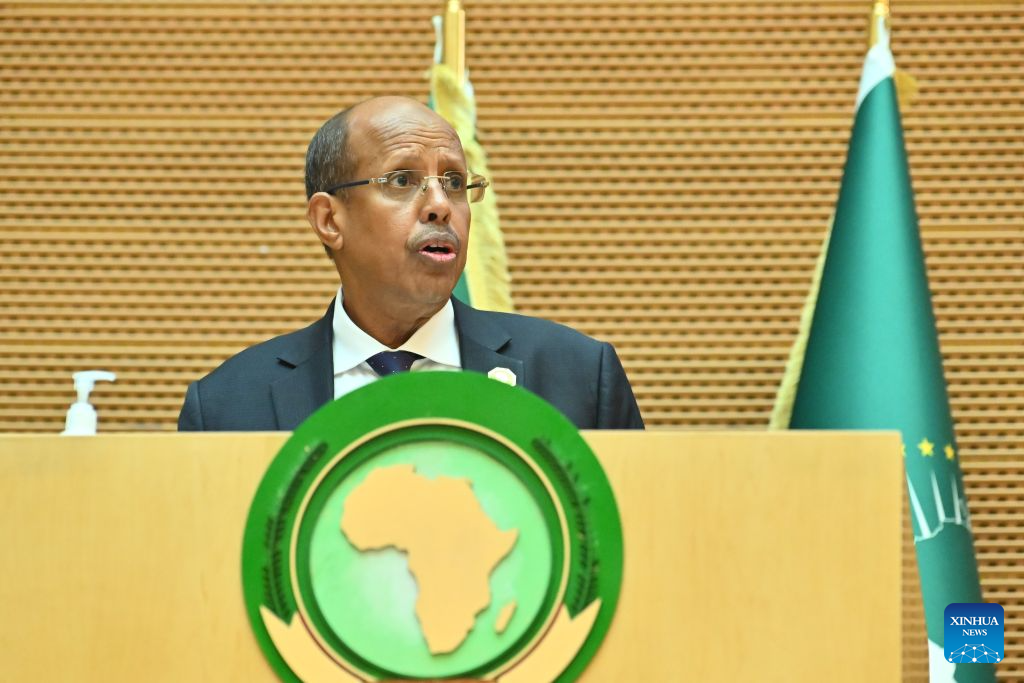
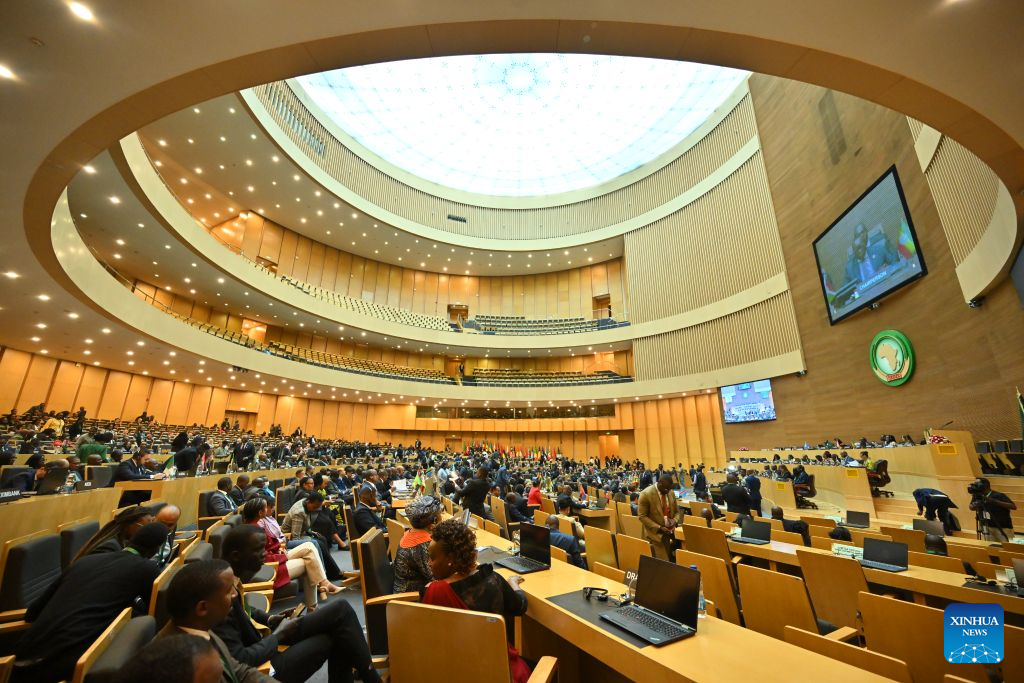
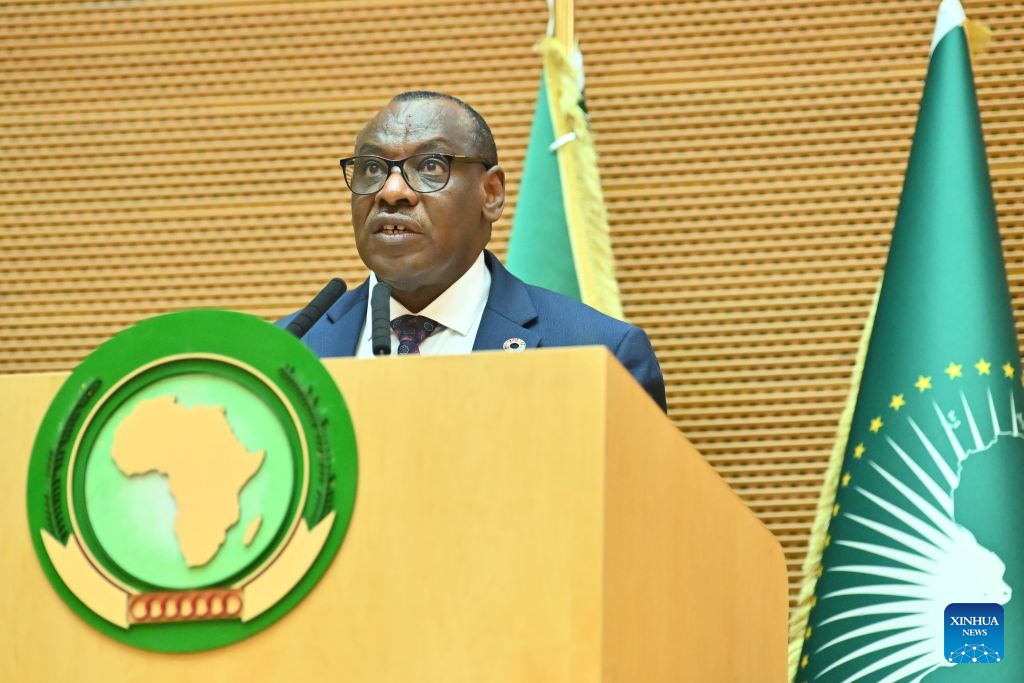
The remark was made during the 49th Ordinary Session of the Executive Council of the African Union (AU) on Tuesday in Addis Ababa, the capital of Ethiopia.
Speaking at the event, Mahmoud Ali Youssouf, chairperson of the AU Commission, said Africa is bearing the brunt of the crisis in the Middle East, with multiple countries on the continent facing a high cost of living driven by soaring energy prices.
“The resumption of the conflict between Iran and the United States is causing runaway inflation. The supply chain is disrupted due to the closure of the Strait of Hormuz. The Bab el-Mandeb Strait is also threatened. Energy, grain and fertilizer prices are soaring,” Youssouf told the session.
He said the fallout is likely to last for months based on assessments made by the United Nations Economic Commission for Africa (UNECA) and the United Nations Development Program.
Claver Gatete, executive secretary of UNECA, said the global environment has become increasingly uncertain amid spikes in energy, food, and fertilizer prices due to the ongoing conflict in the Middle East.
“Trade tensions, geopolitical fragmentation, conflicts including the conflict in the Middle East, climate shocks, declining development finance and high debt-servicing costs continue to impact investment and development prospects in Africa,” Gatete said.
Given the present realities, Africa cannot rely indefinitely on external financing to transform its economy, he said, adding that the continent must finance more of its development from domestic resources.
Foreign Minister of Ethiopia Gedion Timothewos said the foundations of the global order are undergoing profound transformation, while Africa is bearing the brunt of geopolitical tensions, including the conflict in the Middle East, technological disruption, climate pressures and growing competition over strategic resources.
“We need to seize the moment to actively shape the contours of the new reality. We must become a strategic actor capable of providing African solutions to global challenges,” said Timothewos, adding that despite the challenges, Africa is destined to be the engine of global growth in the second half of the 21st century.
Held under the AU’s 2026 theme, “Assuring Sustainable Water Availability and Safe Sanitation Systems to Achieve the Goals of Agenda 2063,” the two-day session, which brought African foreign ministers together, is expected to come up with new strategies to address Africa’s pressing challenges, including ensuring universal access to safe hygiene, water and sanitation across Africa.
This photo taken on July 28, 2026 shows the 49th Ordinary Session of the Executive Council of the African Union (AU) held in Addis Ababa, the capital of Ethiopia. African leaders have raised alarm over the resumption of the Middle East conflict, which they said is driving a severe economic and security crisis in Africa through energy shocks, supply disruptions, and soaring prices.Claver Gatete, executive secretary of the United Nations Economic Commission for Africa (UNECA), addresses the 49th Ordinary Session of the Executive Council of the African Union (AU) in Addis Ababa, the capital of Ethiopia, July 28, 2026.
The Rwanda-based mining company said the initiative will focus on evaluating between 2.5 million and 3 million tonnes of historically mined stockpiled material, with the goal of unlocking additional tungsten resources while advancing more sustainable mineral recovery.
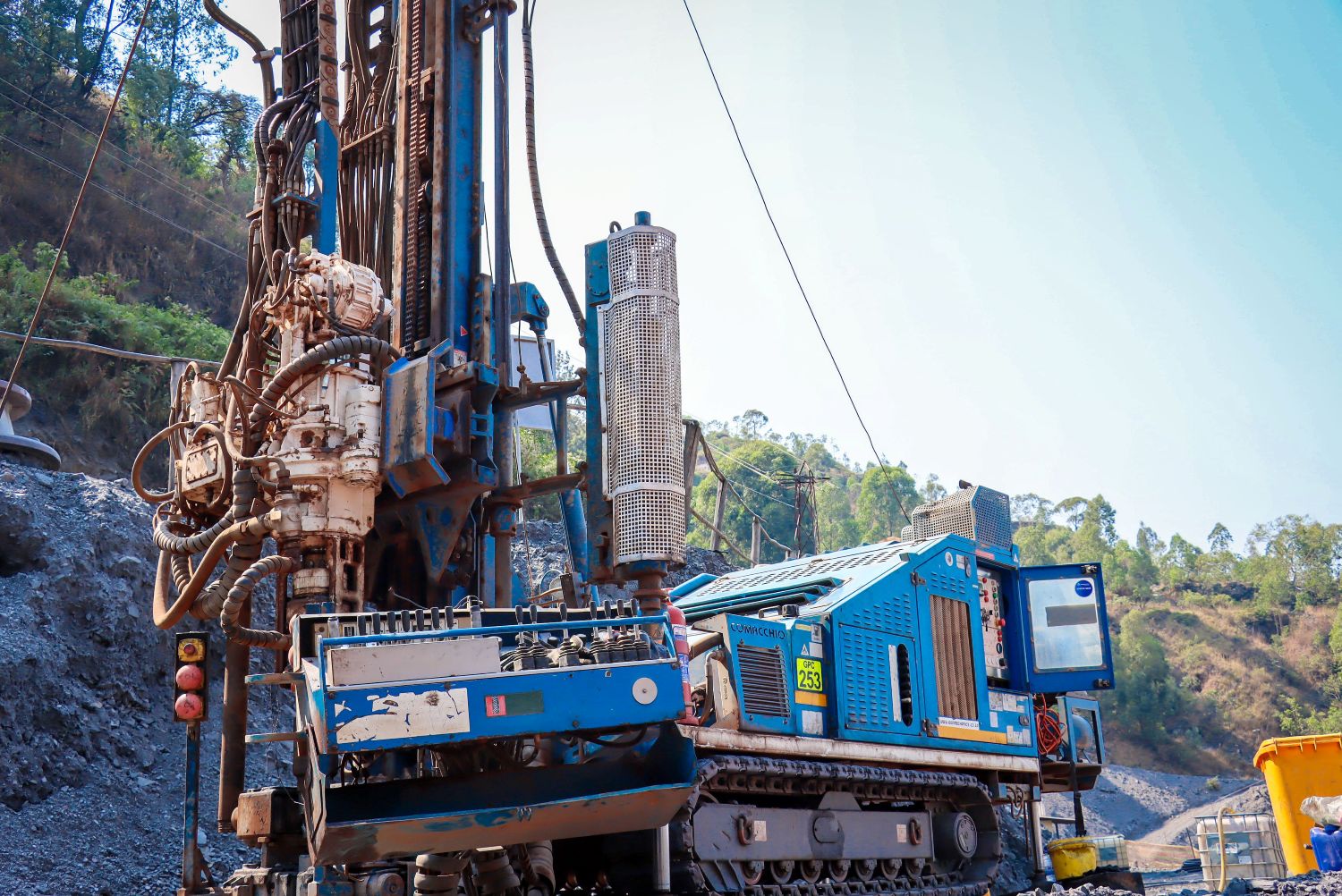
Sonic drilling is a modern exploration technique that uses high-frequency vibrations to advance a drill through the ground while producing continuous, high-quality core samples. Compared with conventional drilling methods, it causes less disturbance to the material being sampled, making it particularly effective for evaluating loose or unconsolidated stockpiles such as those at Nyakabingo.
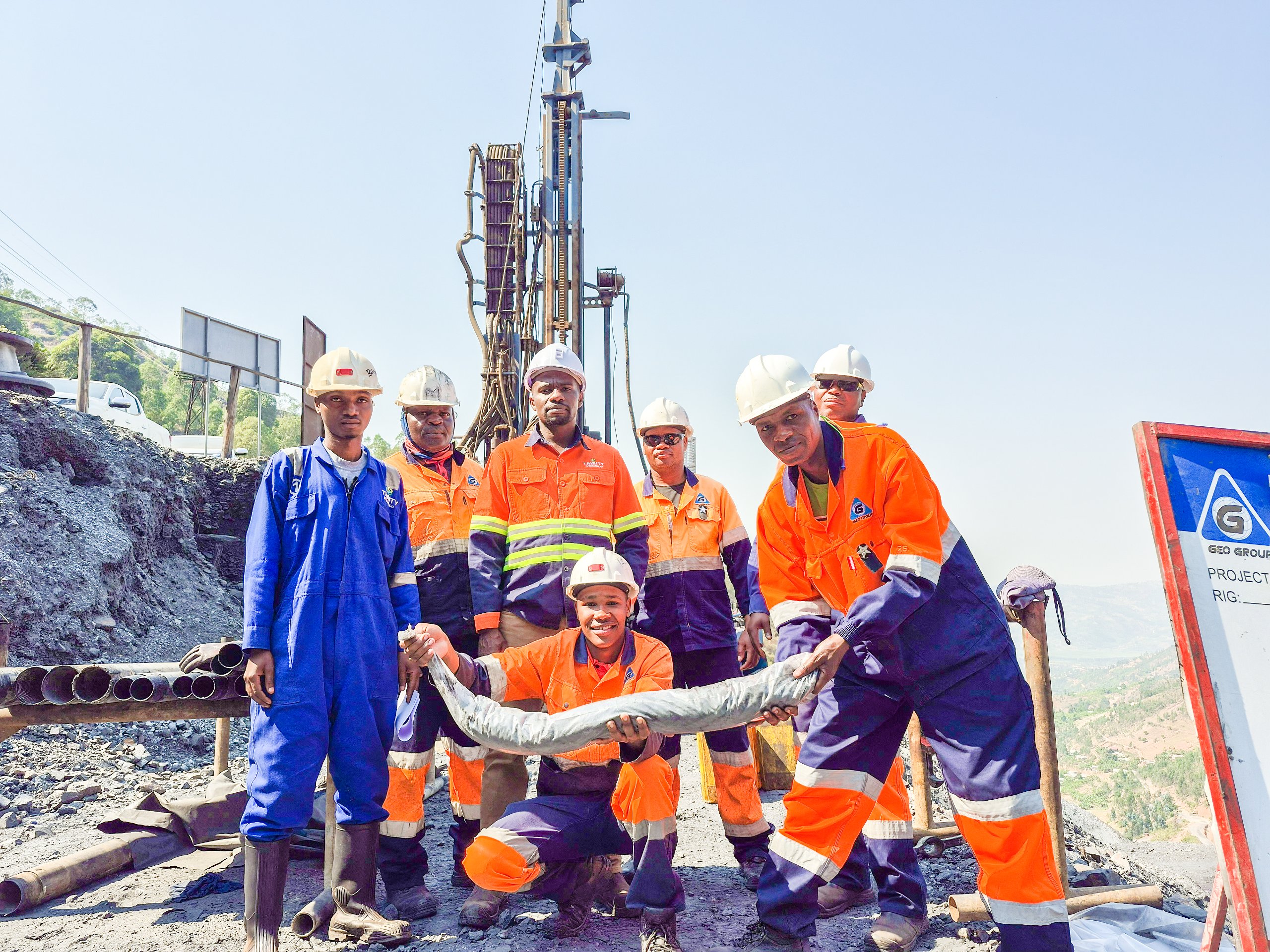
The campaign will involve up to 106 drill holes reaching depths of between 12 and 20 metres. Around 210 samples will be collected for metallurgical testing and particle size distribution analysis, while approximately 1,600 additional samples will undergo laboratory-grade analysis to support an updated Mineral Resource Statement.
The sonic drilling campaign will involve up to 106 drill holes reaching depths of between 12 and 20 metres.
According to the company, the results are expected to substantially increase Nyakabingo’s mineral resource estimates, providing greater confidence for future investment decisions and supporting planned expansion of mining and mineral processing operations.
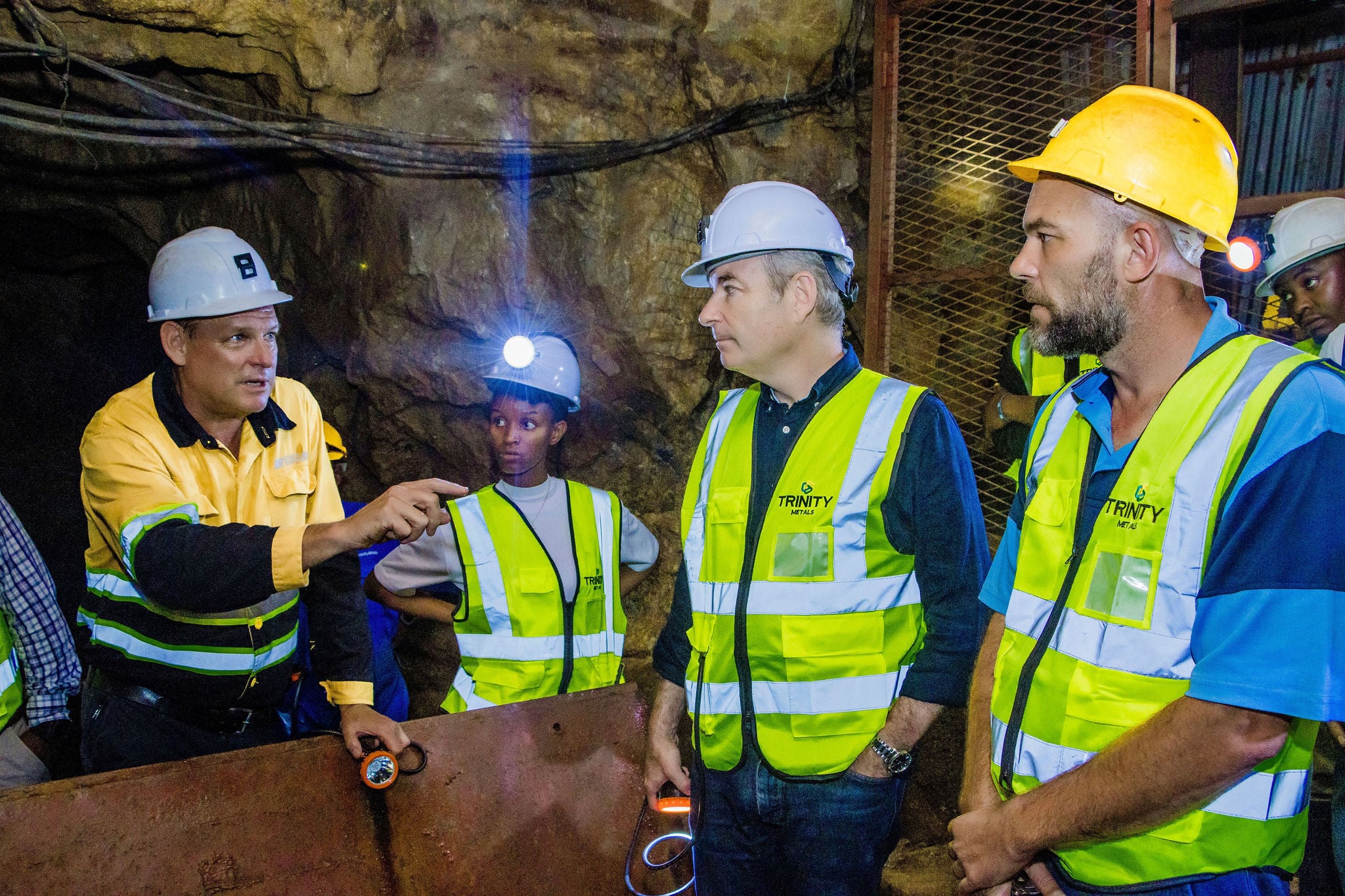
Peter Geleta, Chief Executive Officer of Trinity Metals, said recovering additional value from the mine’s historical stockpiles would strengthen both the company’s growth prospects and Rwanda’s position in the global tungsten market.
“By unlocking additional value from the Nyakabingo mine stockpiles, we will significantly increase our mineral resource base, creating new opportunities to increase production, and entrenching Trinity Metals and Rwanda as a leading global supplier of tungsten,” Geleta said.
Trinity Metals Group CEO Peter Geleta (left) said recovering additional value from the mine’s historical stockpiles would strengthen both the company’s growth prospects.
He added that the company would publish an updated mineral reserve and resource statement after completing the drilling programme to guide long-term mine planning and optimise mineral recovery.
Trinity Metals estimates that re-evaluating the stockpiled material could add approximately 2.5 million tonnes to Nyakabingo’s resource base at an estimated grade of 0.3% tungsten trioxide (WO₃). The findings will also inform the design of a modern processing plant intended to improve recovery from both newly mined ore and legacy stockpiles.
The company said the project forms part of its broader sustainability strategy by recovering valuable minerals from historical stockpiles while reducing the environmental footprint associated with new resource extraction. It noted that only environmentally approved drilling fluids will be used and that all water generated during drilling will be safely managed through the mine’s existing water management infrastructure.
Following the Nyakabingo campaign, Trinity Metals plans to undertake similar resource assessments at its Musha and Rutongo mines as part of a group-wide strategy to maximise resource recovery and improve operational efficiency.
Formed in 2022 through the merger of the Nyakabingo Tungsten Mine, Rutongo Tin Mine and Musha Tin and Tantalum Mine, Trinity Metals is Rwanda’s largest producer of conflict-free critical minerals, employing more than 6,500 people. The company also owns the prospective Ntunga lithium project on its Musha concession.
The latest drilling initiative builds on Trinity Metals’ recent expansion efforts. In June, the company announced that Nyakabingo had grown its exports to supply up to 20 percent of monthly primary tungsten demand in the United States and outlined plans to triple production, pursue a New York Stock Exchange listing and invest $150 million in modern mineral processing facilities in Rwanda.
Trinity Metals has launched its first-ever sonic drilling campaign at Nyakabingo Mine in a move aimed at significantly expanding tungsten resources at Africa’s largest tungsten producer and supporting future increases in production.
The landmark step follows years of mass screening, free treatment, and aggressive vaccination campaigns that have drastically reduced infections across the country.
Data from RBC shows that nearly 11 million Rwandans have been screened for Hepatitis C over the past eight years, with roughly 63,000 infected individuals receiving curative treatment. Over the same period, 6.5 million people were tested for Hepatitis B, with over 5,000 diagnosed and placed on life-saving antiretroviral therapy.
The announcement was made on Tuesday, July 28, during World Hepatitis Day national commemorations held at Hôpital La Croix du Sud in Kigali.
Dr. Charles Berabose, Director of Sexually Transmitted Infections and Other Blood-Borne Infections at RBC, confirmed that Rwanda has fulfilled the requirements to submit its official validation dossier to the WHO.
“To earn WHO validation, a country must screen at least 80 percent of its target population, treat over 70 percent of confirmed cases, guarantee 100 percent blood safety through mandatory donor screening, and equip health facilities nationwide with reliable testing tools. Rwanda has met all these standards,” Dr. Berabose said.
Rwanda launched its National Hepatitis C Elimination Plan in December 2018, bringing diagnostic testing and direct-acting antiviral treatments down to local health centres nationwide.
As a result, Hepatitis C prevalence in the general population dropped from 4 percent in 2017 to 0.17 percent in 2026. Over the same period, Hepatitis B prevalence declined from 3 percent to 0.26 percent.
To stop mother-to-child transmission, Rwanda has also strengthened its routine childhood immunization drive. Building on earlier adult vaccination campaigns, the government introduced a universal birth-dose Hepatitis B vaccine in January 2026, ensuring newborns receive their first shot within 24 hours of birth.
Rotary partnership
As Rwanda shifts focus toward targeted screening for high-risk groups, civil society organizations are stepping in to support the final phase of the campaign.
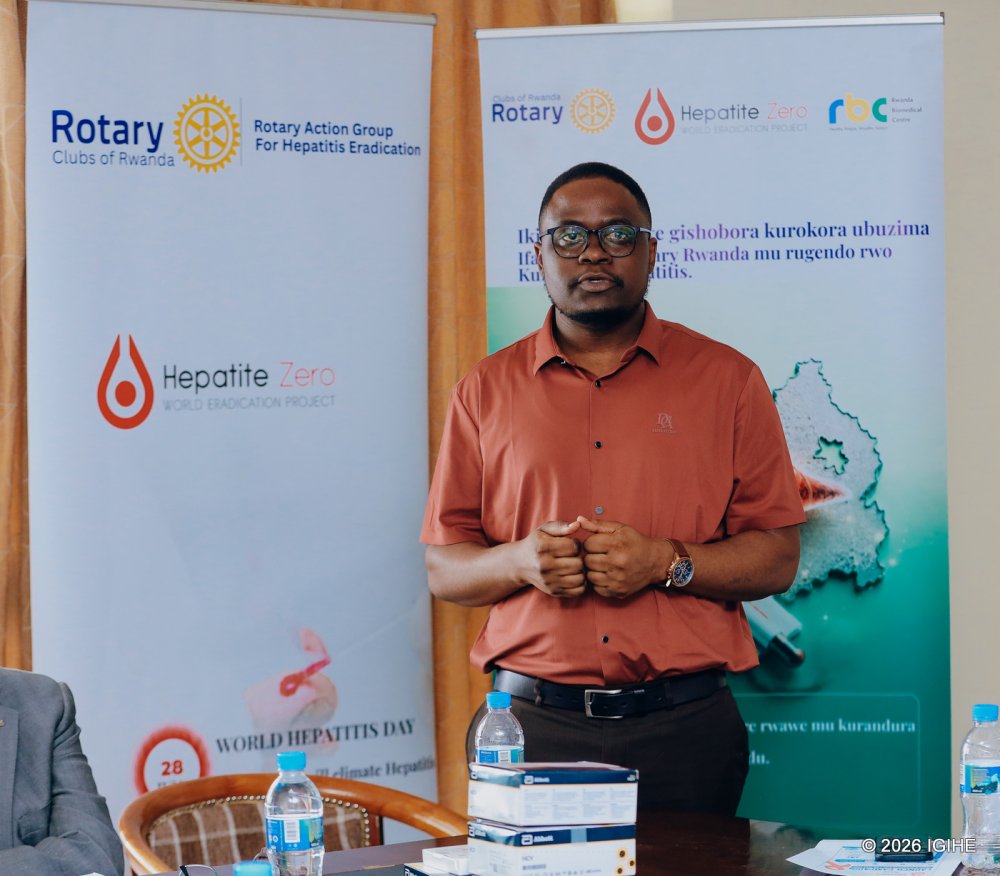
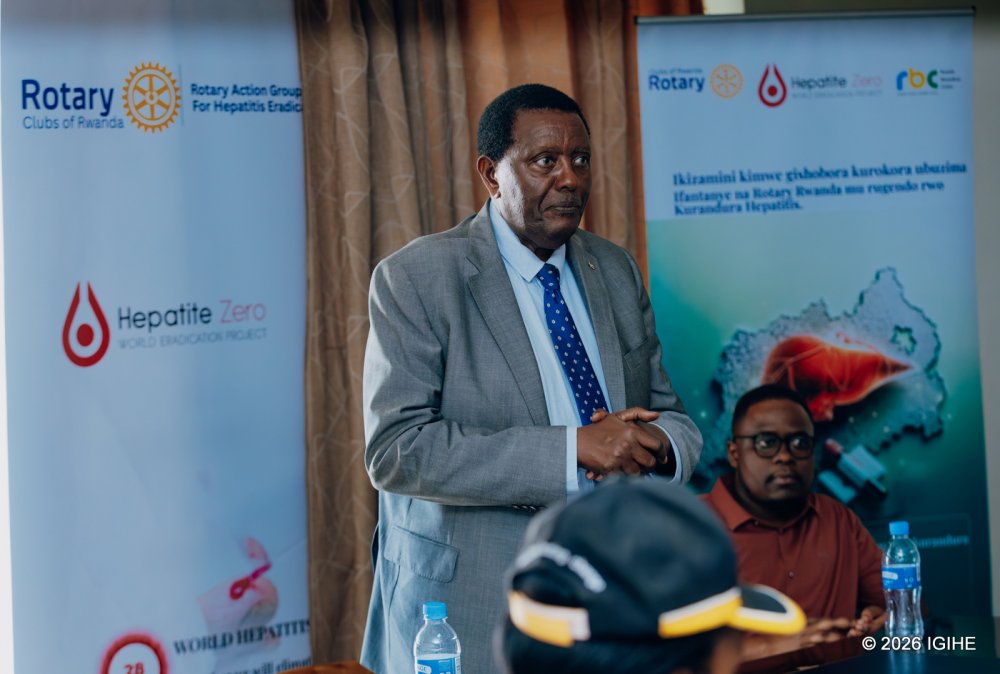
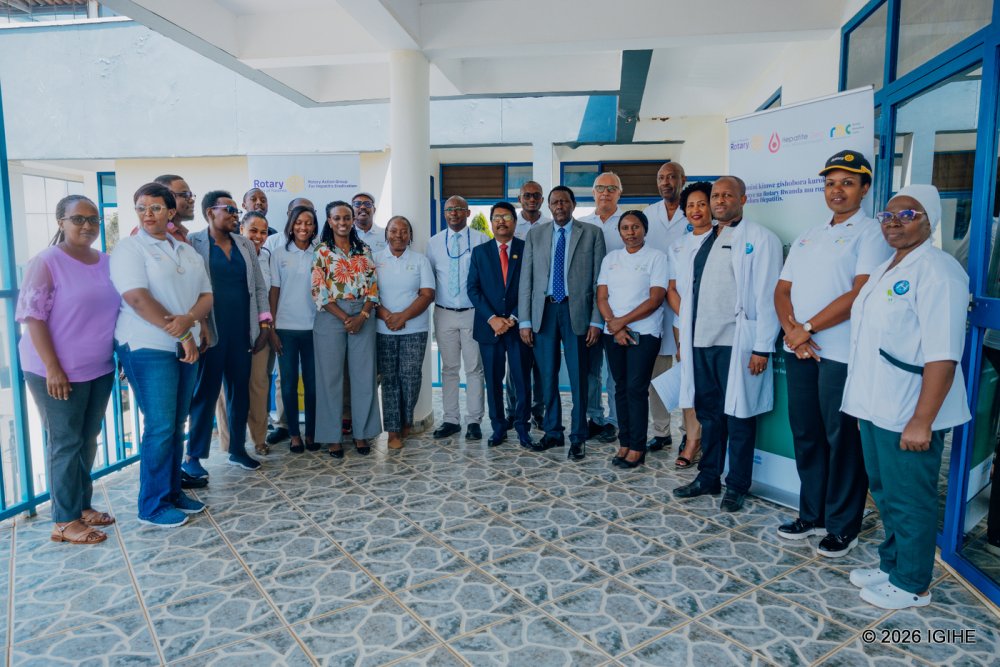
Rotary Club Rwanda has partnered with RBC to back screening efforts among vulnerable cohorts, including healthcare workers, prison inmates, refugees, and people living with HIV. The organization will also donate testing kits and support public education campaigns.
Dr. Alexis Muderevu, Rotary Action Group National Commission Chair for Rwanda Hepatitis B and C Zero campaign, commended the country’s progress, noting that Rwanda is well ahead of international benchmarks.
“Rotary International is supporting African countries in the fight against viral hepatitis. Rwanda is already far ahead of many others because of its commitment. Rather than watching from the sidelines, we want to join Rwanda in this final stretch so that together we can eliminate hepatitis completely,” Dr. Muderevu said.
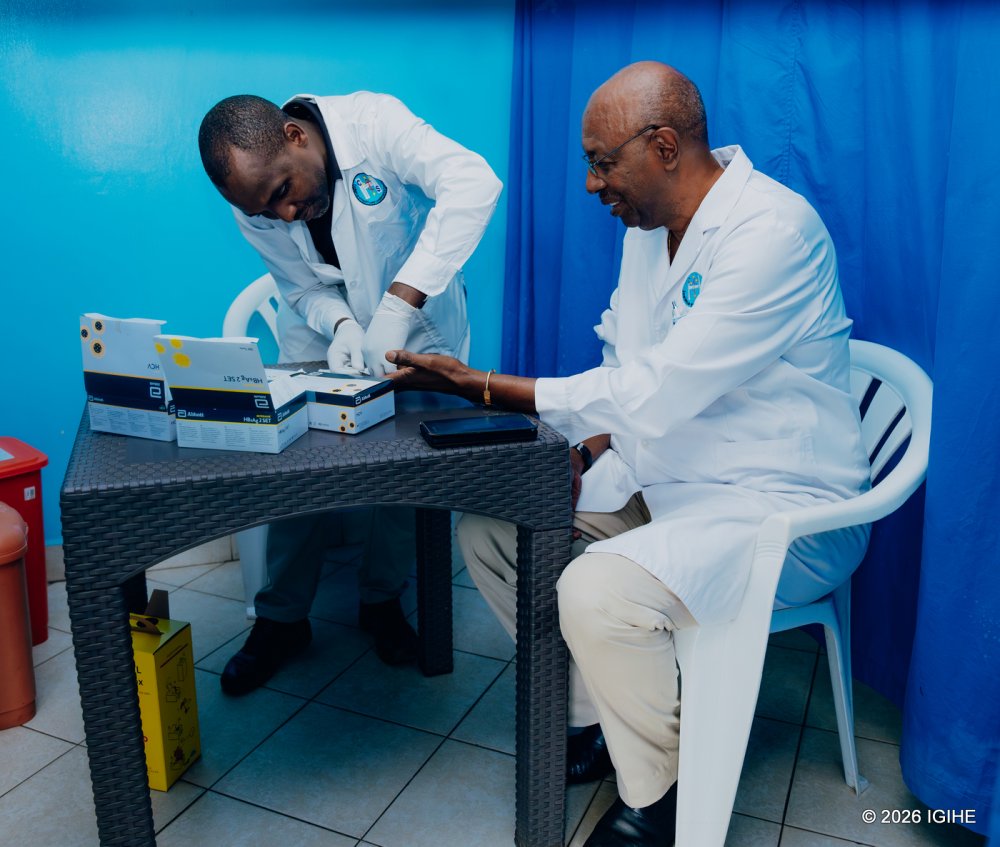
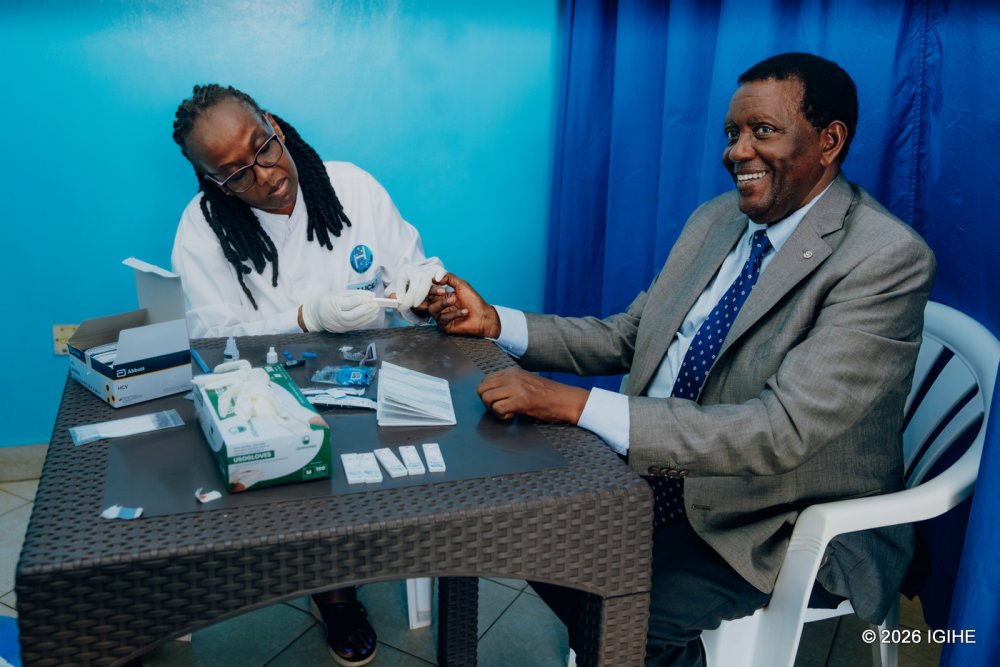
The partnership kicked off with screening for medical personnel at Hôpital La Croix du Sud to ensure health workers know their status before leading community outreach programs.
Marc Kwizera, a healthcare worker at the hospital, stressed the importance of medical staff setting an example.
“It is crucial that health workers are screened first. Knowing our status gives us peace of mind and allows us to safely care for our patients while encouraging the public to get tested,” he said.
Rwanda remains well on track to achieve the WHO target of eliminating viral hepatitis as a major public health threat ahead of the global 2030 deadline.
Rotary Club Rwanda members were also screened.Dr Jean-Chrysostome Nyirinkwaya, Director of La Croix du Sud Hospital in Remera, being tested.Dr. Charles Berabose, Director of Sexually Transmitted Infections and Other Blood-Borne Infections at RBC, confirmed that Rwanda has fulfilled the requirements to submit its official validation dossier to the WHO.Dr. Alexis Muderevu, Rotary Action Group National Commission Chair for Rwanda Hepatitis B and C Zero campaign, commended the country’s progress, noting that Rwanda is well ahead of international benchmarks.Rotary Club Rwanda pledged support for Rwanda’s hepatitis elimination campaign.
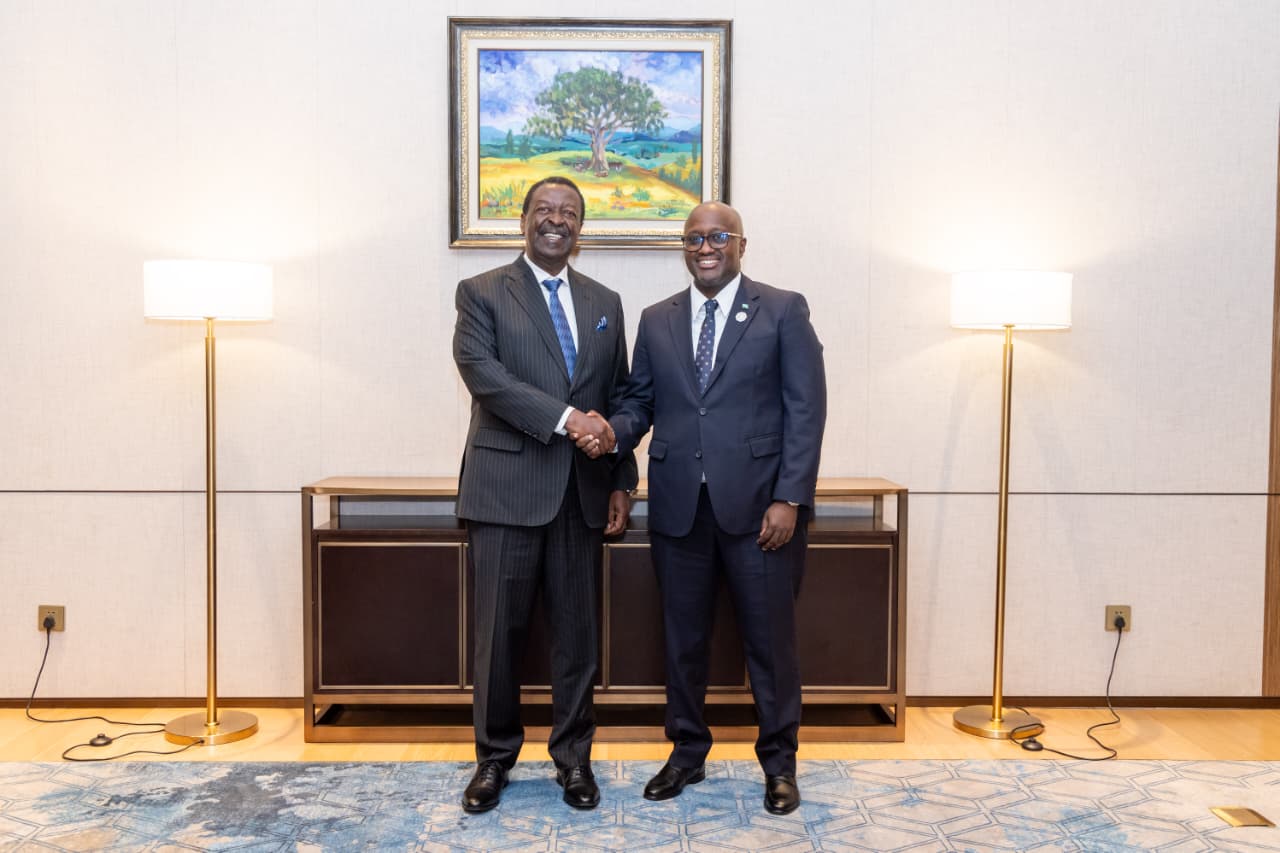
Kenya’s Prime Cabinet Secretary and Cabinet Secretary for Foreign and Diaspora Affairs, Musalia Mudavadi, announced the approval during bilateral talks with Rwanda’s Minister of Foreign Affairs and International Cooperation, Olivier Nduhungirehe, in Addis Ababa.
“The Kenyan Cabinet approves the movement of about 40,000 metric tonnes to Rwanda through our pipeline from Mombasa. We are committed to ensuring a deeper relationship with our neighbours,” Mudavadi said.
The agreement will allow Rwanda to use Kenya’s petroleum infrastructure, including the pipeline network connecting the Port of Mombasa, to facilitate the movement of fuel imports.
Nduhungirehe said the arrangement will help stabilise Rwanda’s fuel supply and support smooth operations across the economy.
“That will be about 52 million litres, which is about our consumption in a month. It will serve us well,” he said.
Rwanda, a landlocked country, relies on neighbouring countries for access to international fuel markets. The country has been working to diversify petroleum import routes through agreements with Kenya and Tanzania to improve supply reliability and strengthen energy security.
In June 2026, Rwanda signed a cooperation agreement with Kenya to facilitate petroleum imports through the Port of Mombasa, granting access to storage facilities, transportation services and distribution infrastructure.
Rwanda later signed a similar agreement with Tanzania in July to import petrol and diesel through the Port of Tanga.
The agreements are part of efforts to expand Rwanda’s petroleum supply network amid global fuel market uncertainties while also positioning the country to participate more actively in regional petroleum trade.
Earlier this month, Minister of Trade and Industry Antoine Marie Kajangwe said the agreements with Kenya and Tanzania could create opportunities for Rwanda to become a regional fuel distribution hub.
“We believe this can strengthen regional trade, allowing Rwanda, given its geographical position, to supply petroleum products to neighbouring countries. Our goal is to have sufficient petroleum products that can meet demand in Rwanda and also serve markets in the region,” Kajangwe said.
Mudavadi said Kenya’s decision to facilitate fuel transit to Rwanda demonstrates the two countries’ commitment to regional integration and shared prosperity.
He added that Kenya remains focused on strengthening regional partnerships and advancing Africa’s role in international institutions. During the talks, Mudavadi also sought Rwanda’s support for Kenyan candidates seeking positions at the International Court of Justice (ICJ) and the International Criminal Court (ICC).
Kenya’s Prime Cabinet Secretary and Cabinet Secretary for Foreign and Diaspora Affairs, Musalia Mudavadi, announced the approval during bilateral talks with Rwanda’s Minister of Foreign Affairs and International Cooperation, Olivier Nduhungirehe, in Addis Ababa.
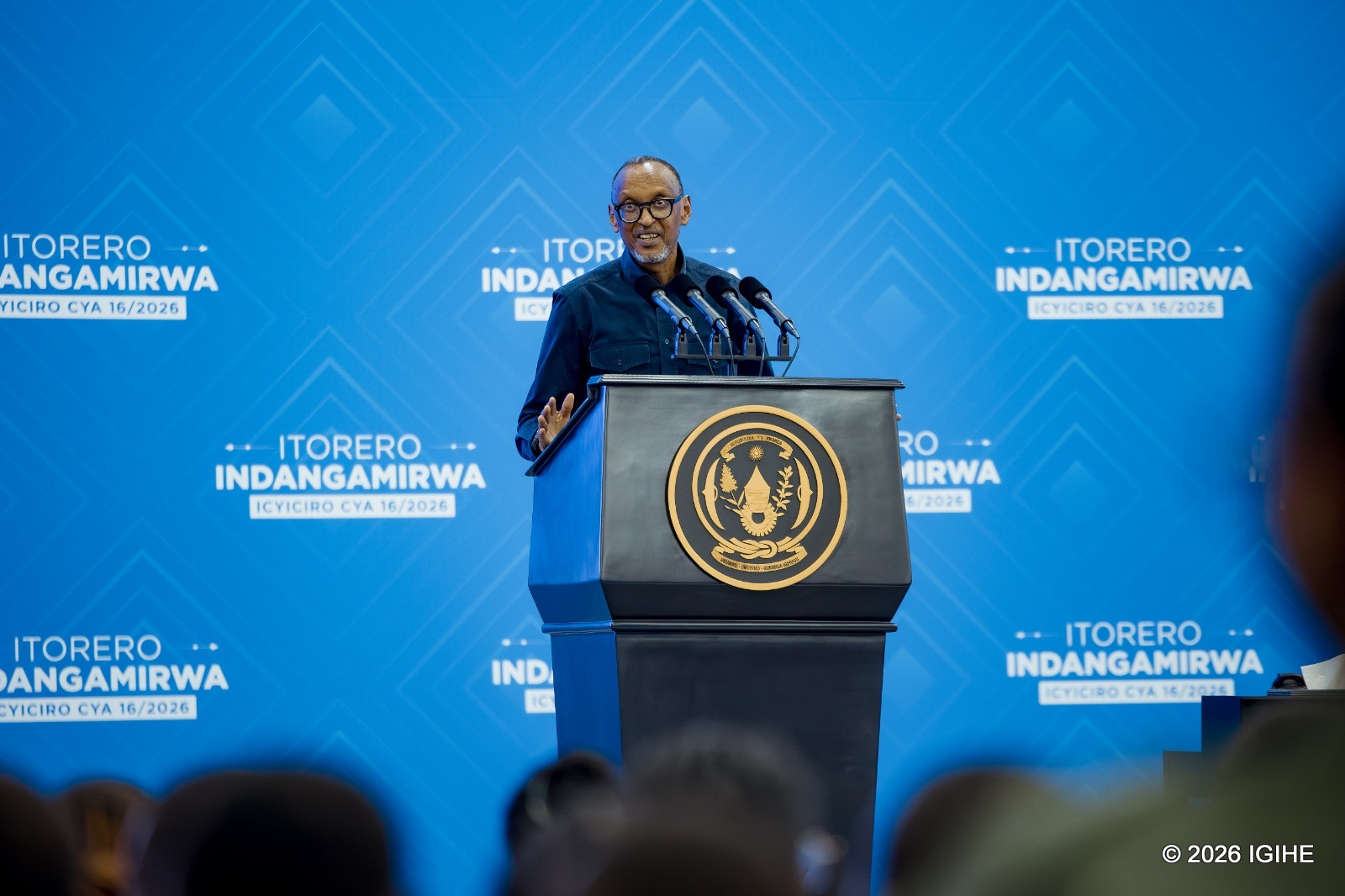
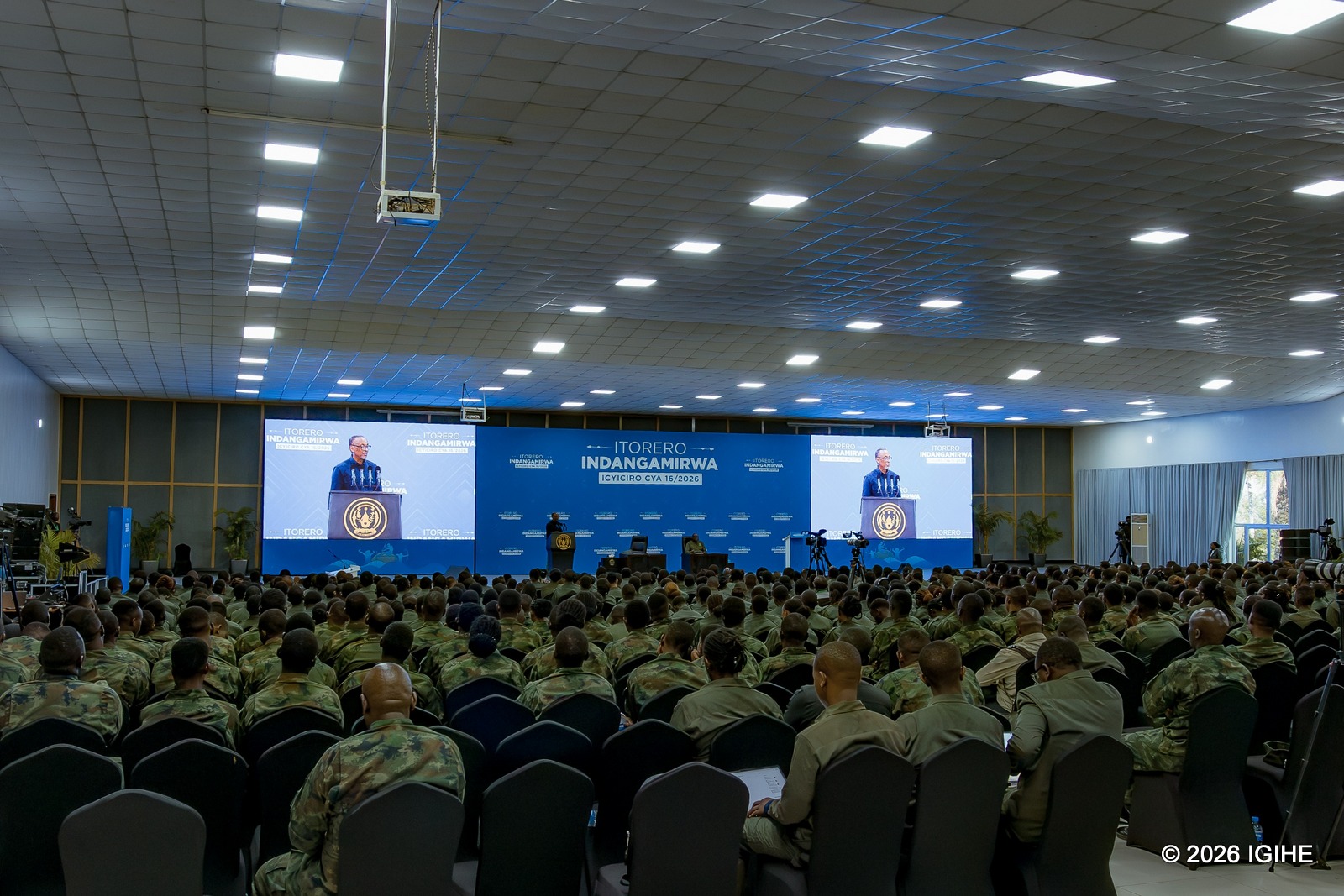
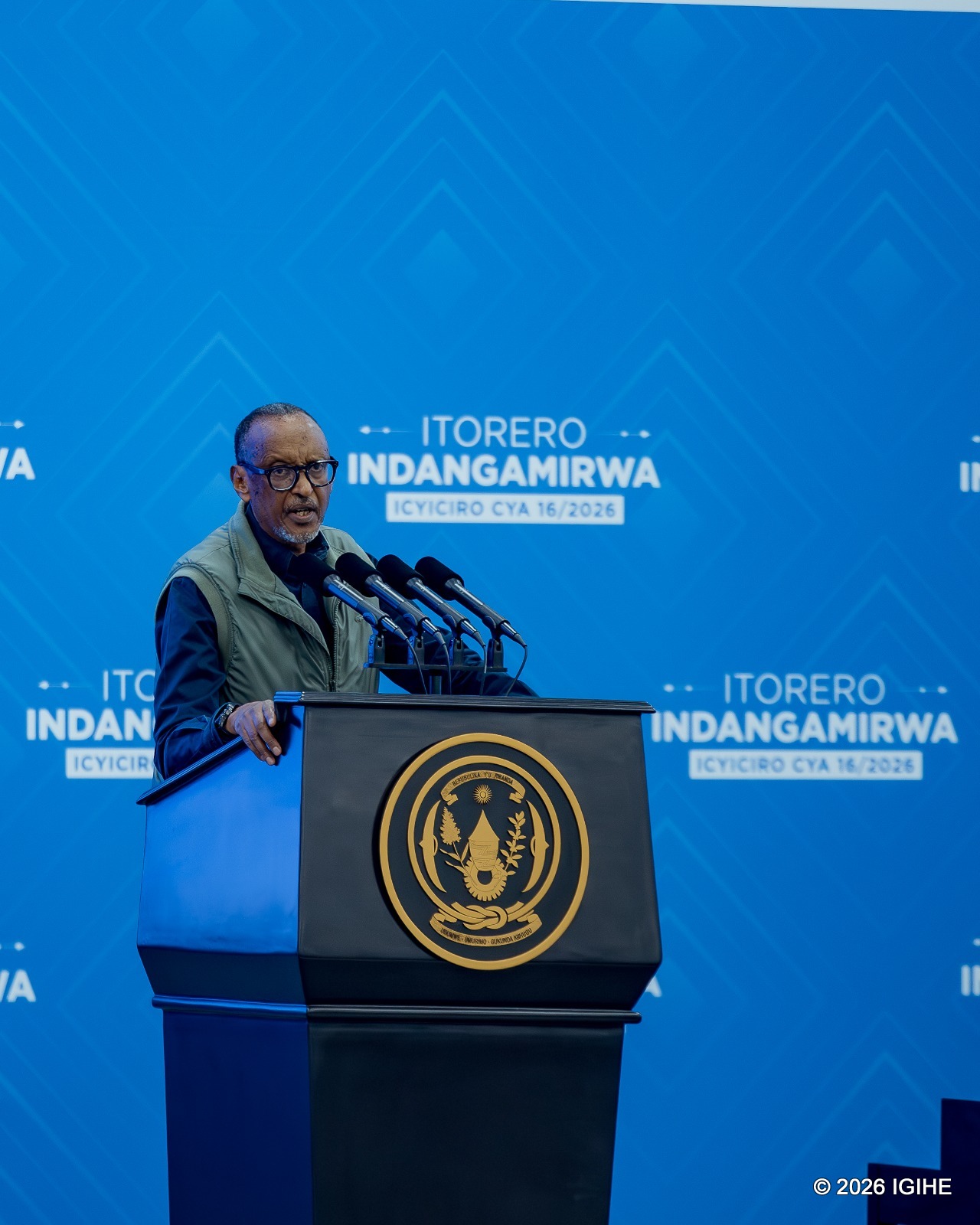
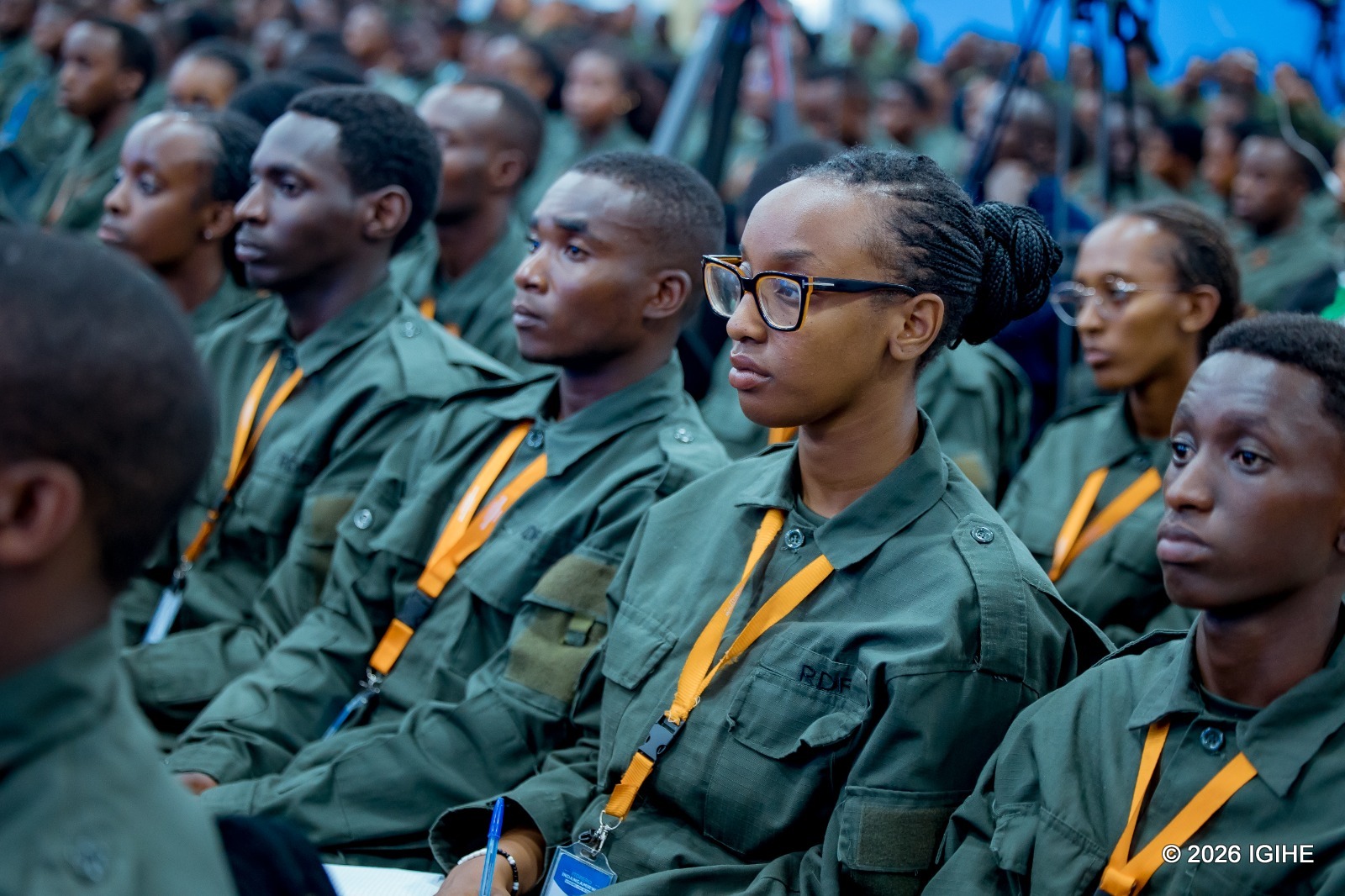
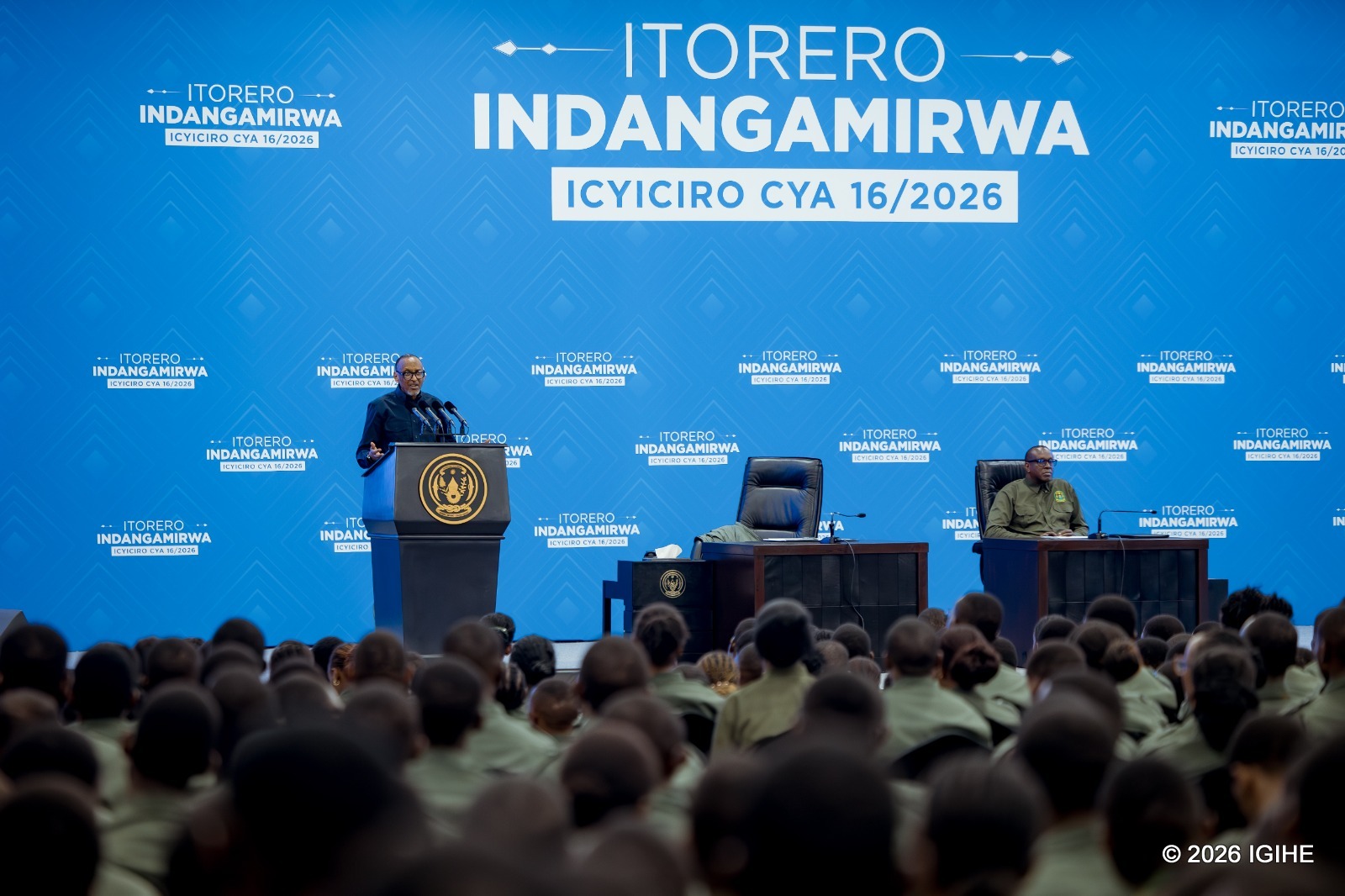
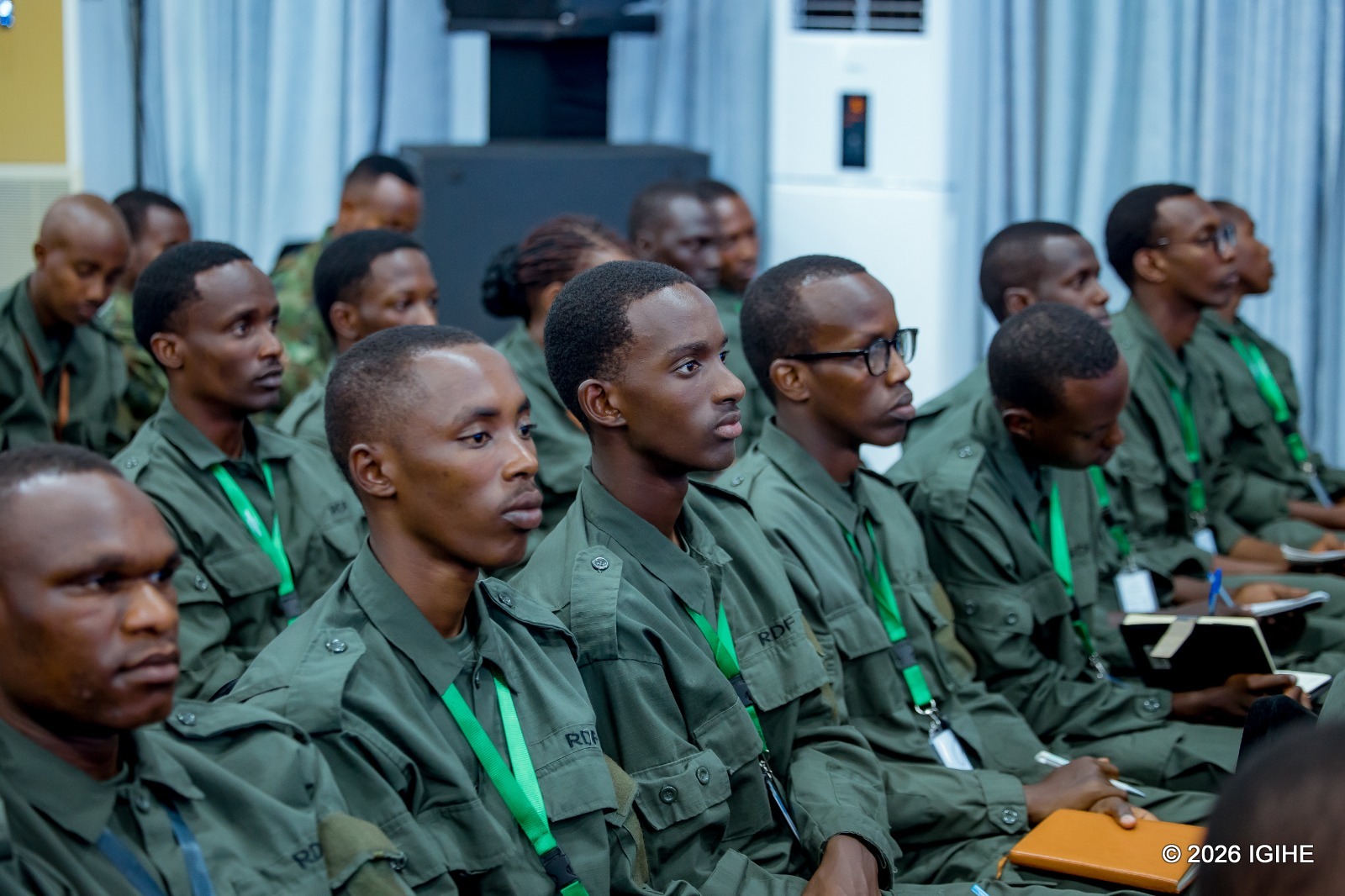
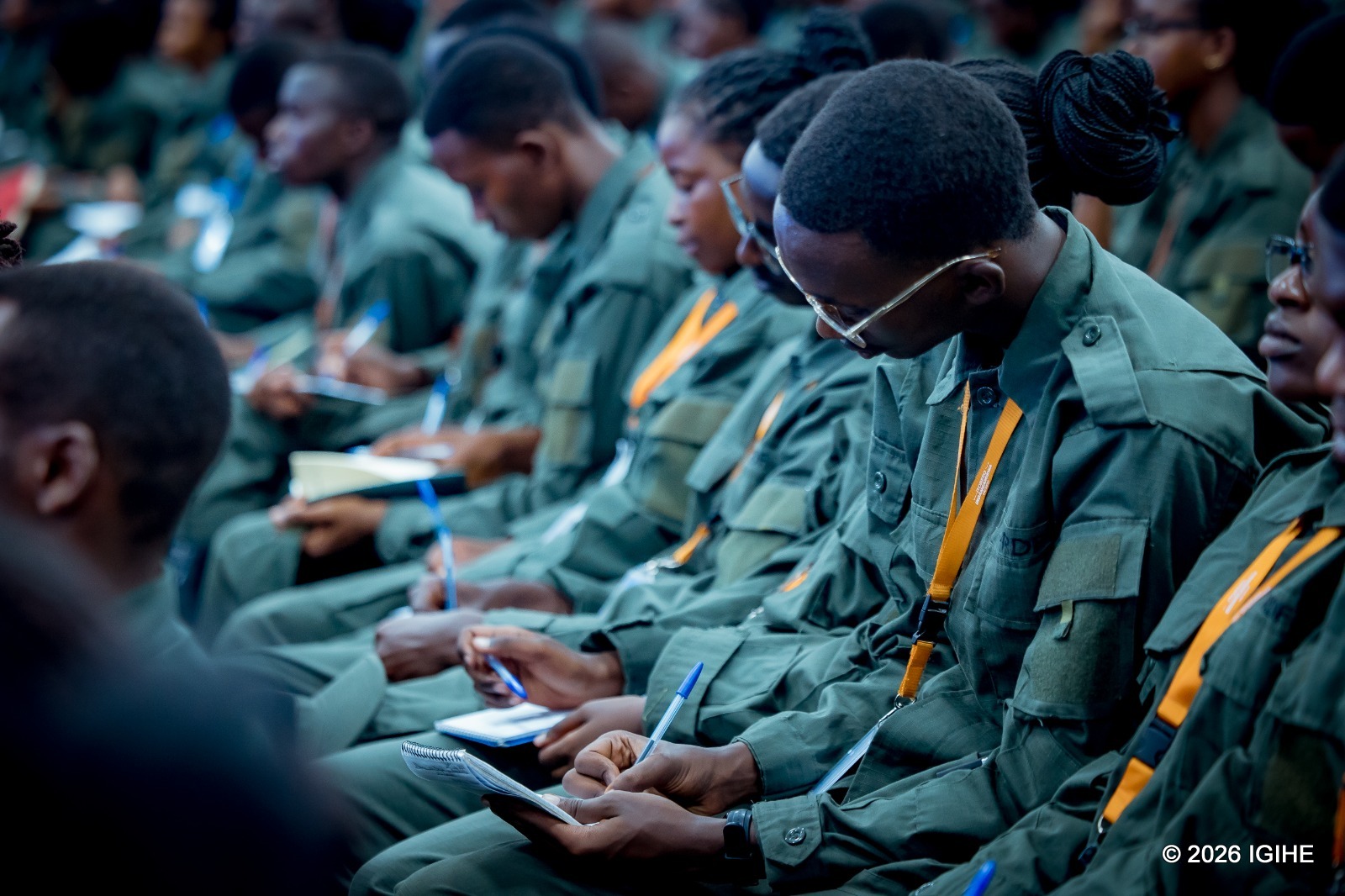
He made the remarks during an interactive #MeetThePresident session with participants of the 16th cohort of Itorero Indangamirwa at the Gabiro Combat Training Center on Tuesday.
Itorero Indangamirwa is a national civic education and values-formation programme established in 2008. It is designed to promote Rwandan cultural values, national history, and principles of socio-economic transformation, while also introducing participants to basic military skills and leadership training.
President Kagame told the young participants that they should approach challenges with confidence, believing they have the ability to find solutions or become part of the solution instead of expecting others to solve their problems.
“You must be confident that you have the ability to find a solution or to be part of the solution,” he said. “Be part of government. Be part of the private sector. Be part of any institution; being part of it is your right.”
President Kagame engages participants of the 16th cohort of Itorero Indangamirwa during an interactive session at the Gabiro Combat Training Center on Tuesday.
He cautioned against what he described as a culture of entitlement, saying people should not sit back expecting others to provide what they need.
“Why do you feel entitled that somebody will provide what you need? Why are you not making an effort to give yourself what you need?” Kagame asked.
Addressing young people interested in business and entrepreneurship, the President encouraged them to develop ideas, collaborate with friends and colleagues, and take the first step before seeking external support.
He advised innovators to seek support from relevant government institutions or other stakeholders when they encounter obstacles they cannot overcome on their own, rather than assume that no help is available.
“But if you sit back and say, ‘This government, even people who have ideas, they can’t help’, you haven’t even reached out to the government to say, ‘We have an idea,’” he said.
Kagame acknowledged that not every idea would succeed but urged young people to persevere.
“Maybe ten out of ten ideas or approaches you try may not work favourably for you, but six out of ten will work. Why not? So it’s worth giving it a try,” he said.
President Kagame cautioned against what he described as a culture of entitlement, saying people should not sit back expecting others to provide what they need.
The President urged participants to channel their energy into creating solutions, describing them as builders, innovators and problem solvers with a responsibility to contribute to Rwanda’s continued development.
“You are now builders of something. You are problem solvers. You are innovators,” he remarked, adding that contributing to the nation’s development ultimately benefits those who make the effort.
Reflecting on Rwanda’s liberation struggle, Kagame recalled that those who fought to liberate the country had little external support and therefore had no option but to rely on their own determination and resilience.
“During the liberation, actually, we had nobody to go to,” he said. “Who would we have complained to? Tell me, where would you have gone to complain? Nowhere.”
He stressed that meaningful support usually comes after people demonstrate commitment and effort.
“If you want to be helped, you must know how to do it. You can’t wait for somebody to feed you. You must strive to feed yourself. There are no two ways about it,” he stressed.
President Kagame told the young participants that they should approach challenges with confidence,
Warning against overreliance on others, Kagame argued that expecting governments, foreign countries or other people to provide everything undermines personal responsibility.
“But if you think we shall sit back and expect to be given resources from other countries or other citizens, first of all, it is a foolish thing. It’s absolutely foolish. Many people who sit back and expect that somebody will look after them; people call it dependence. Dependence is another word for stupidity.”
He urged young Rwandans to reject such a mindset and instead build on the achievements of previous generations.
“Some others have played their part… It is up to you to come and fill the gap, and then continue beyond that to another level higher than where we have reached this country,” Kagame urged.
He concluded by encouraging the participants to remain disciplined, take care of themselves, and avoid destructive habits such as alcohol abuse, warning that they could derail their ambitions before they are realised.
Itorero Indangamirwa is a national civic education and values-formation programme established in 2008. The programme is designed to promote Rwandan cultural values, national history, and principles of socio-economic transformation, while also introducing participants to basic military skills and leadership training.