This figure covers cases reported from September 3, 2025, to January 20, 2026, highlighting a sustained public health challenge in several provinces.
Official bulletins from the National Directorate of Public Health show that the outbreak has continued to spread in areas including Nampula, Tete, and Cabo Delgado provinces.
Nampula has recorded the highest number of infections with 1,314 cases and 17 deaths, while Tete reported 932 cases and 13 deaths, and Cabo Delgado saw 404 cases with two deaths. In the five days covered by the latest update, four additional deaths and about 300 new cases were recorded, underscoring ongoing transmission.
Health officials say the case fatality rate in the most recent reporting period remained around 1.2%, slightly higher than in December 2025, when it was about 0.5%, according to the data. This suggests not only persistent transmission of the disease but also challenges in controlling severe cases.
Cholera, a highly contagious waterborne disease caused by contaminated water and poor sanitation, has been an ongoing concern in Mozambique, particularly in regions affected by flooding and limited access to safe drinking water. The Ministry of Health has issued repeated warnings to communities, urging adherence to hygiene practices and prompt treatment for symptoms such as severe diarrhea and dehydration.
Last month, Mozambique’s Health Minister highlighted that at least 169 people died from cholera in 2025 out of around 40,000 total cases recorded that year, a broader measure of the disease’s impact beyond the latest four‑month period. He attributed many deaths to gaps in community awareness and communication about prevention and treatment, noting that about 70% of cholera deaths occurred in community settings rather than health facilities.
To combat the outbreak, the government has secured approximately 3.5 million doses of cholera vaccine and launched public health campaigns to promote hygiene and sanitation. Officials are also implementing plans aimed at eliminating cholera as a public health problem by 2030, with strategies focused on improving access to clean water, sanitation, and quality healthcare through coordinated, evidence‑based actions.
Despite these efforts, health workers and international partners continue to express concern about the ongoing threat, especially in flood‑affected areas where access to safe water remains limited and conditions favor the spread of waterborne diseases.
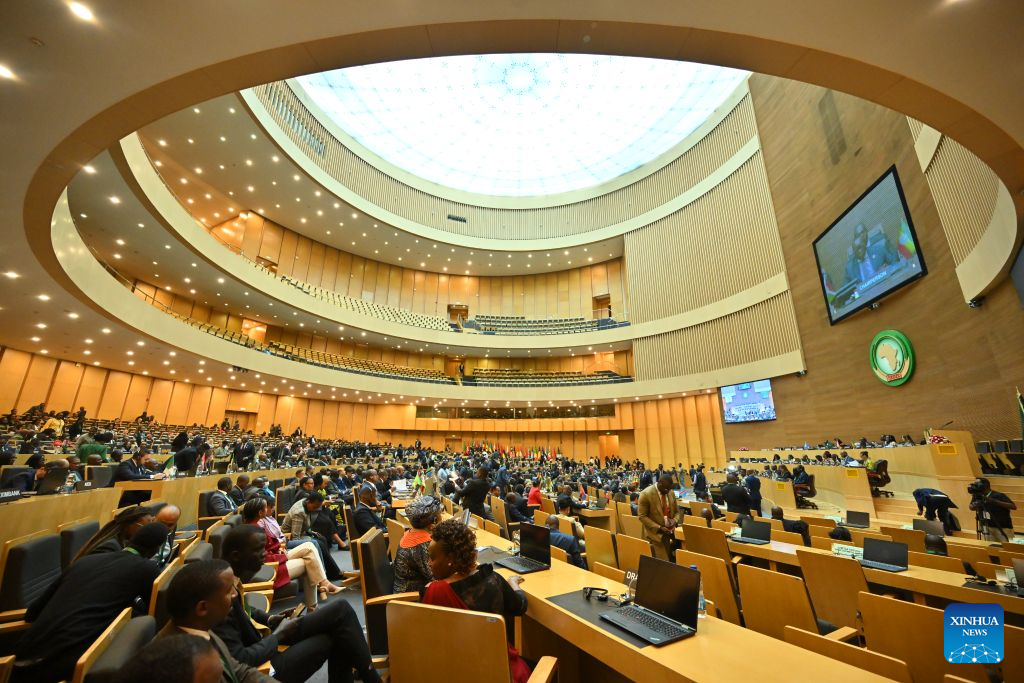
The delegation, led by Prof. Dong-Sup Yoon, President of Yonsei University, and Dr. Won-Yong Lee, Executive Vice President for Research Affairs, held talks at Urugwiro Village focusing on academic exchange, research partnerships, and capacity building in education.
The meeting builds on a growing relationship between Rwanda and Yonsei University. In September 2025, the University of Rwanda (UR) and Yonsei University signed a Memorandum of Understanding (MoU) to strengthen academic exchange, advance research, and foster innovation.
The agreement, signed on the sidelines of Yonsei University’s 140th Anniversary Conference by UR Vice Chancellor Prof. Kayihura Muganga Didas and Prof. Dong-Sup Yoon, initially focuses on medical sciences, technology, artificial intelligence (AI), and the Internet of Things (IoT).
“The MoU is a major milestone for the University of Rwanda,” said Prof. Kayihura, noting that it aligns with Rwanda’s commitment to invest in education, skills development, and research infrastructure.
“By collaborating with one of the top three universities in South Korea, we are giving our students and faculty an opportunity to interact with world-class researchers and academics.”
The partnership is expected to open doors for joint research projects, faculty exchanges, and shared innovation initiatives, further strengthening Rwanda’s knowledge economy. Prof. Kayihura emphasized that the collaboration also aligns with UR’s focus on ethical and responsible research, reflecting Yonsei University’s reputation for values-driven technological advancement.
The two institutions have previously collaborated, including a 2024 general cooperation agreement with Rwanda’s Ministry of Education and the honorary doctorate awarded to President Kagame by Yonsei University in recognition of his leadership in transforming Rwanda.
Founded in 1885, Yonsei University is one of South Korea’s top private universities, with 158 research centres across multiple campuses, including the main Sinchon campus in Seoul and the International Campus in Songdo. The university continues to engage with Rwandan students and researchers, strengthening ties between the two countries through education, research, and innovation.
Appearing before the Committee on Governance and Gender Affairs on Tuesday, Minister of State in the Ministry of Health Dr. Yvan Butera said that the prevalence had dropped from 20.5% in 2018 to 18.6% in 2025.
“The preliminary figures show a decrease, which we attribute to the increasing efforts and resources dedicated to mental health services,” Dr. Butera said.
According to the ministry, mental health problems linked to depression fell from 11.9% in 2018 to 9.1% last year, while cases associated with stress decreased from 8% to 3%. However, conditions related to alcohol and drug use rose from 1.6% to 2.4%.
Other mental health conditions include schizophrenia (3%), bipolar disorder (0.4%), suicidal thoughts (0.9%), and substance use disorders (0.8%).
Dr. Butera noted that support programs for survivors of the 1994 Genocide against the Tutsi, their descendants, and school-based mental health initiatives have contributed to the overall decline, even as challenges remain.
He identified three major factors driving mental health issues in Rwanda: depression linked to the country’s historical trauma, stress, and substance abuse.
“Depression has decreased from 11.9% in 2018 to 9.1%, stress from 8% to 3%, while alcohol and drug use has increased slightly from 1.6% to 2.4%,” he explained.
The ministry’s data also highlights age-related trends. Adults aged 46–55 represent the largest group affected (25%), followed by those aged 36–45 (24%) and 56–65 (23.6%). Among younger people, 26–35-year-olds account for 18.2%, 19–25-year-olds for 13.7%, and 14–18-year-olds for 8.7%.
Rwanda’s mental health services are anchored at the community level, with approximately 60,000 health advisors across the country. Specialised hospitals provide more advanced care, and 80% of health centres now offer at least some mental health services.
Access to medication has also improved, with 14 types of drugs available at health centers and 20 at hospitals. The country has also launched a specialized clinic for severe depression and suicidal tendencies, known as the “Ketamine Clinic,” at King Faisal Hospital.
In response to concerns from Deputy Mukayiranga Muyango Sylvie about potential risks of using ketamine, Dr. Gishoma Darius, manager of the Mental Health Division at the Rwanda Biomedical Centre, explained that although ketamine was initially used in veterinary medicine, it has been safely used in mental health treatment for the past 20 years.
He noted that research shows it can be effective for patients who have attempted suicide multiple times and do not respond to conventional medication, and that its use is closely monitored.
According to the weekly agri-exports outlook released by the National Agricultural Export Development Board (NAEB), the country exported a total of 10,204 metric tons of agricultural products over the five-day period. Traditional export commodities, led by coffee and tea, remained the main drivers of export earnings, while diversified and non-traditional products also played a significant role.
Coffee was Rwanda’s top export earner for the week, generating $5.95 million from 897 metric tons exported, while tea followed with earnings of $2.55 million from 882 metric tons.
The report also shows steady growth in diversified agricultural products, which collectively brought in $4.14 million from exports totalling 7,635 metric tons. These products were mainly destined for markets in the United States, Oman, and cross-border African countries, reflecting Rwanda’s efforts to broaden its export base.
Horticultural exports also contributed to the overall performance. Fruits, including products like avocados, generated $526,172 from 313 metric tons, while vegetables earned $319,895 from 241 metric tons, with key destinations including the United Kingdom, the Netherlands, the United Arab Emirates, Germany, France, and regional markets. Flower exports, though smaller in volume, earned $81,563, mainly from sales to the Netherlands and the United Kingdom.
In addition, animal products generated $381,773 from 222 metric tons, largely through cross-border trade within the region.
The strong weekly performance underscores Rwanda’s ongoing efforts to strengthen agricultural productivity, expand market access, and diversify export products. With continued investment in value addition and market expansion, the agriculture sector remains a key pillar in supporting Rwanda’s export-led growth strategy.
In an interview with the New York Post published Saturday, Trump described the device as a key factor in neutralising Venezuelan defences.
“The Discombobulator. I’m not allowed to talk about it,” he said. “They never got their rockets off. They had Russian and Chinese rockets, and they never got one off. We came in, they pressed buttons, and nothing worked. They were all set for us.”
The operation, carried out on January 3, resulted in the arrest of Maduro and his wife, Cilia Flores, at their Caracas compound. Trump has previously described how U.S. personnel used cyber tools to knock out power across the capital, leaving Venezuelan forces largely incapacitated.
While the U.S. military possesses a directed-energy weapon known as the Active Denial System, which emits an invisible radio frequency beam causing a burning sensation, it is unclear whether this was the technology Trump referenced.
Beyond Venezuela, Trump reiterated that the U.S. could extend military strikes against drug cartels to North America. “We know their routes. We know everything about them. We know their homes. We know everything about them. We’re going to hit the cartels,” he said. Asked whether these strikes could occur in Central America or Mexico, Trump responded: “Could be anywhere.”
On Friday, the U.S. conducted a strike on an alleged drug-trafficking boat in the eastern Pacific Ocean, marking at least 36 known strikes in the Caribbean and eastern Pacific since early September that have killed at least 117 people.
Trump also said that the U.S. has seized oil aboard seven Venezuelan tankers, though he did not disclose the ships’ current locations. “I’m not allowed to tell you,” he said. “But let’s put it this way, they don’t have any oil. We take the oil.”
The 22-year-old co-founder and chief executive of Strettch Cloud says the company’s rise, from a modest personal investment of about 2 million Rwandan francs to a fast-growing infrastructure business, has been driven less by capital and more by early exposure to practical technology, disciplined execution, and a clear understanding of Africa’s digital constraints.
{{Early curiosity and the path to technology
}}
Sauvé’s journey into technology began long before Strettch existed. Growing up, he was drawn to science and mathematics, fascinated by how things worked and why systems behaved the way they did. That curiosity eventually narrowed into computer science, which he saw as the most practical application of physics and mathematics in the modern economy.
“Mathematics is the mother language of all sciences,” Sauvé explains. “But I was seeking the most practical way to use that knowledge in the real world, and computer science became the answer.”
While still in lower secondary school, he was already reading computer science books and following emerging technologies such as virtual reality, laying the intellectual groundwork for what would later become a business career.
A defining moment came in 2019, when Sauvé joined the inaugural cohort of Rwanda Coding Academy, a government-backed institution designed to produce industry-ready technologists through project-based learning.
Unlike traditional academic pathways, the school immersed students in software development, cybersecurity, robotics and artificial intelligence, exposing them to real-world problems early. By senior five, Sauvé had secured his first internship, and by senior six he was already employed, an experience that placed him years ahead of many of his contemporaries.
That early professional exposure shaped his view of entrepreneurship. While still at Rwanda Coding Academy, Sauvé attempted to launch two startups, both of which failed. He does not describe them as failures, but as formative experiences that taught him how difficult it is to build software that works in production, manage teams, and navigate uncertainty.
“I’ve already tried two startups when I was still at school that failed, but I don’t take it as a failure because I had to learn a lot through the process,” Sauvé says.
Strettch began taking shape after Sauvé and four fellow Rwanda Coding Academy graduates enrolled at African Leadership University. All five were already employed in different organizations, but they shared a concern that working separately would dilute their collective potential.
They agreed to pool their skills and effort into a single company, even though they had no clear product in mind at the time. Their first strategy was deliberately conservative: start as a software development agency, build solutions for clients, learn how to work as a team, and use the proceeds to finance future products.
That approach paid off sooner than expected. Less than a year after registering the business, the team won a public procurement tender worth $100,000 to develop a national research and innovation system for Rwanda Polytechnic in 2024. The contract was a major financial and psychological breakthrough, but Sauvé says it also introduced a new level of responsibility.
“I had to think about it twice,” Sauvé says. “It felt too good to be true, and at the same time it was a huge responsibility.”
{{How Strettch Cloud was born
}}
From the agency work, several internal product ideas emerged. One stood out: cloud computing. As businesses across Africa digitise, they increasingly rely on cloud infrastructure to run software and store data. Yet data sovereignty laws in more than 35 African countries restrict sensitive data from being hosted outside national borders, limiting the use of global cloud providers for many organisations. That regulatory reality created a gap that Strettch Cloud set out to fill.
Strettch Cloud offers on-demand computing infrastructure hosted locally, allowing businesses to deploy virtual servers within seconds through a self-service platform. According to Sauvé, it is currently the only cloud provider in Rwanda offering such functionality without requiring manual intervention, contracts or lengthy onboarding processes. The broader ambition is to replicate that model across multiple African countries, enabling companies to scale regionally while remaining compliant with local data regulations.
Building the platform required sacrifices. Sauvé resigned from a well-paid international job to work on Strettch full-time, a decision he describes as the hardest of his life. At the time, he had already achieved a lifestyle he once imagined would take decades to reach. Still, he says the potential impact of building a scalable African technology company outweighed personal comfort.
“Business is one of the most powerful ways to serve society,” he says. “It creates jobs, pays taxes and solves problems at scale.”
{{The humble financial beginnings of Strettch
}}
Financially, Strettch’s beginnings were modest. The founders initially invested about 2 million Rwandan francs of their own money, largely to experiment and learn. Later, they committed roughly $30,000, earned from client work, to build the minimum viable version of Strettch Cloud. Before launching publicly, the company tested demand through a waitlist that attracted more than 300 organisations, including large Rwandan companies, validating the market.
That traction helped Strettch reach a valuation of $2.5 million and raise external funding. Today, the platform serves dozens of paying customers, with usage growing month by month.
“The first paying customer is always the most significant achievement,” Sauvé remarks. “It is the moment when someone entrusts you with their business, and that trust validates all the effort, risk, and sacrifice.”
Sauvé says the company’s competitive advantage lies in its cost structure and technology ownership. Unlike many regional providers who license expensive third-party platforms, Strettch built its infrastructure software in-house, allowing it to offer lower prices while maintaining control over performance and security.
The company’s ambitions extend beyond Rwanda. Sauvé points to Africa’s cloud computing market, estimated at $45 billion, much of which flows to providers outside the continent. His vision is explicitly Pan-African: keep data, capital and technical expertise within Africa.
Strettch plans to enter Kenya by 2027 and expand into at least six or seven African markets within five years, building physical infrastructure in each to comply with national regulations.
Looking ahead, Sauvé sees artificial intelligence as both an opportunity and a strategic imperative. Many AI systems used in Africa rely on infrastructure hosted abroad, raising data sovereignty concerns. Strettch Cloud is exploring ways to provide AI-ready infrastructure locally, including access to specialised hardware, so that organisations can deploy advanced technologies without exporting sensitive data.
For Sauvé, the story of Strettch Cloud is still in its early chapters. Yet its trajectory already challenges assumptions about where high-growth technology companies can emerge and how much capital is required to start.
His advice to young Rwandans is pragmatic rather than romantic. The work, he says, is difficult and uncertain, but solvable problems reward those who approach them with discipline and optimism.
“When there is a problem, and you think there is an answer, you become a victor. If you think you can’t find an answer, you become a victim,” Sauvé, who also serves as Vice President of Toastmasters, a nonprofit organisation that develops public speaking, leadership, and networking skills, advises.
South African President Cyril Ramaphosa said the government is considering deploying the army to gang violence hotspots to tackle persistent gang-related crime.
The president’s remarks came amid a surge in gang-related fatal incidents in several parts of the country.
“A call has been made to deploy the army,” Ramaphosa told journalists on Saturday morning outside the African National Congress National Executive Committee Lekgotla, a local term referring a key political or government meeting.
However, he cautioned that soldiers are trained to neutralize threats rather than conduct investigations, so any decision to deploy them requires careful consideration. Ramaphosa stressed the need for a balanced approach in addressing the crisis.
“The gang violence is one of those challenges that we’re facing. That is very prominent in our minds,” Ramaphosa said.
Last weekend, at least 26 people were killed in a spate of gang-related violence in the Cape Flats, Cape Town, Western Cape Province. The violence included a mass shooting in Marikana, Philippi East Township, which left eight people dead.
The region has long been plagued by gang-related violence. Police statistics show 2,104 murders were reported in Cape Flats in the first nine months of 2025.
Between December 29, 2025, and January 11, 2026, the area recorded 58 gang-related murders and 60 attempted murders, according to Ian Cameron, chairperson of parliament’s portfolio committee on police.
The ceremony also marked a historic milestone for UGHE as it graduated its first cohort of medical doctors, celebrating its 10th anniversary.
The graduation, held at UGHE’s Butaro campus, saw 30 medical doctors and 48 Master of Science in Global Health Delivery (MGHD) graduates receive their degrees. The event was presided over by Prime Minister Dr. Justin Nsengiyumva and attended by senior government officials, development partners, faculty, students, and alumni.
UGHE Chancellor Dr. Jim Yong Kim conferred the honorary degree to First Lady Kagame, describing her as “an accomplished leader whose work spans education, health, and social transformation.”
He praised her contributions through initiatives such as the Imbuto Foundation, which champions girls’ education, reproductive health, and HIV/AIDS prevention, as well as her leadership in the Organization of African First Ladies for Development and the Unity Club promoting national reconciliation.
“Her moral guidance, presence, and advocacy have strengthened UGHE’s growth, credibility, and visibility across Africa and the world,” Dr. Kim said. “It is my distinct honor and privilege to confer upon Her Excellency Mrs. Jeannette Kagame the degree of Doctor of Humane Letters, honoris causa, in recognition of her exceptional leadership and distinguished public service.”
Receiving the honour, First Lady Kagame expressed her deep gratitude and reflected on the legacy of the late Dr. Paul Farmer, UGHE’s founding chancellor.
“To be honoured in this way is a gift for which I can only find a few words, yet to be watched from heaven by a dear friend as we celebrate those who have sought to honour his legacy through their own excellence means that I must try. What a milestone,” she said.
She reflected on how, for many years, solutions to health challenges were often perceived as something that had to come from outside the continent. “Today we affirm a different truth,” she said. “Pain, disease, and avoidable death are not our destiny, and neither are we bound to wait for answers to arrive from afar.”
Addressing the graduates directly, the First Lady challenged them to see themselves as agents of transformation.
“Your greatness is a revolution in the making,” she said. “Congratulations for choosing to lay your brick in the resilience of our systems. May your contribution to global health and to the lives you will save and improve bear witness to every worth of late night of study, every moment of doubt, and every final push of determination.”
In his address, Prime Minister Nsengiyumva highlighted the critical role the graduates will play amid mounting pressures on health systems both in Rwanda and globally.
“Emerging diseases, workforce shortages, and financing constraints are no longer abstract challenges,” he said. “Responding effectively requires more than clinical expertise; it demands an understanding of policy, management, data, and implementation, as well as the ability to translate plans into results.”
The Prime Minister further emphasised that UGHE graduates are expected to serve not only as practitioners but also as leaders capable of strengthening institutions, improving service delivery, and supporting sound decision-making across the health sector.
UGHE Chancellor Dr. Kim highlighted the uniqueness of the university’s journey, describing it as the product of an extraordinary partnership between the Government of Rwanda and global partners.
“This could not have happened in the vast majority of countries that I have been in,” he said, underscoring Rwanda’s leadership and long-term vision in building sustainable health systems.
Founded in 2015 with support from Partners In Health (PIH), UGHE inaugurated its permanent Butaro campus in 2019. The university offers six programs in partnership with Harvard University and has graduated 330 master’s degree holders, with 444 students currently enrolled.
Recognised for its growing academic reputation, Times Higher Education in 2024 ranked UGHE fourth among 129 leading universities in Sub-Saharan Africa.

With its graduates and initiatives, UGHE continues to play a critical role in Rwanda’s plans to expand its healthcare workforce and strengthen health systems, a vision strongly supported by First Lady Jeannette Kagame and President Paul Kagame’s administration throughout the university’s journey.
In a statement, the ministry said the Russian army targeted an energy facility supporting Ukraine’s military-industrial complex, a production workshop, and storage and launch sites for long-range drones. It also struck temporary deployment points for Ukrainian armed formations and foreign mercenaries in 159 areas.
The statement also said that Russian air defense systems intercepted two guided bombs, 31 rockets from the U.S.-made HIMARS multiple launch rocket system, and 68 fixed-wing drones.
The conflict between Russia and Ukraine is rooted in a deep-seated struggle over sovereignty, security, and national identity that escalated into full-scale war in 2022. At its core, Russia seeks to reassert influence over its neighbor, viewing Ukraine’s aspirations to join Western institutions like NATO and the European Union as an existential threat to its own security and “sphere of influence.”
Conversely, Ukraine views the war as a fight for survival and independence from Russian imperialism, asserting its right to determine its own future as a sovereign nation. These tensions are compounded by historical disputes over the Donbas region and Crimea, which Russia annexed in 2014, as well as a fundamental disagreement over whether Ukraine exists as a distinct culture and state or as an integral part of a “Greater Russia.”
In a press release issued on January 24, the group warned of what it described as an imminent and dangerous military escalation in the high plateaus of Fizi, Itombwe, and Uvira, with Minembwe identified as the main objective of the alleged offensive.
According to MRDP-Twiranweno, Burundian troops have been actively redeployed inside Congolese territory and are operating jointly with FARDC units in preparation for attacks on Banyamulenge villages.
The group said it possesses credible information indicating that FDNB units have been heavily deployed in the Mutambala area, particularly in the villages of Kichula, Itota, and Kananda. From these locations, the forces are allegedly planning coordinated ground operations toward Minembwe.


MRDP-Twiranweno says the military build-up poses a serious and immediate threat to civilians and forms part of what it characterises as a deliberate plan to forcibly uproot the Banyamulenge population from the high plateaus.
The reported escalation follows the recent withdrawal of AFC/M23 forces from the city of Uvira, a pullout that was, according to MRDP-Twiranweno, conditioned on the deployment of a neutral force to secure the area.
The group alleges that this condition was not respected, creating a security vacuum that was subsequently filled by FARDC and Wazalendo fighters. It further accuses Burundian forces of entering through the Gatumba border post and operating in Congolese military uniforms to conceal their involvement.
MRDP-Twiranweno reports that by Friday, January 23, joint forces had carried out ground attacks against the villages of Rugezi and Mukoko.
The group also accuses the FARDC of conducting drone bombardments on civilian areas. According to the statement, drone strikes on Friday afternoon injured four civilians in Gakenke, further worsening what the group describes as an already severe humanitarian situation.
“These attacks on populated areas constitute serious violations of international humanitarian law,” said Colonel Kamasa Ndakize Welcome, the group’s coordinator, warning of escalating civilian harm and displacement.
The movement strongly condemned what it termed a “joint aggression” and said it holds the governments of Burundi and the Democratic Republic of Congo fully responsible for any attack against Minembwe and for any further civilian casualties.
The group also criticised what it described as the silence and inaction of regional and international peace actors, accusing them of enabling violence against civilians and failing to prevent the destruction and looting of Banyamulenge homes, churches, and NGO infrastructure, particularly in Uvira.
In the statement, MRDP-Twiranweno reaffirmed its determination to defend the Banyamulenge population and their property in the face of what it called an existential threat.