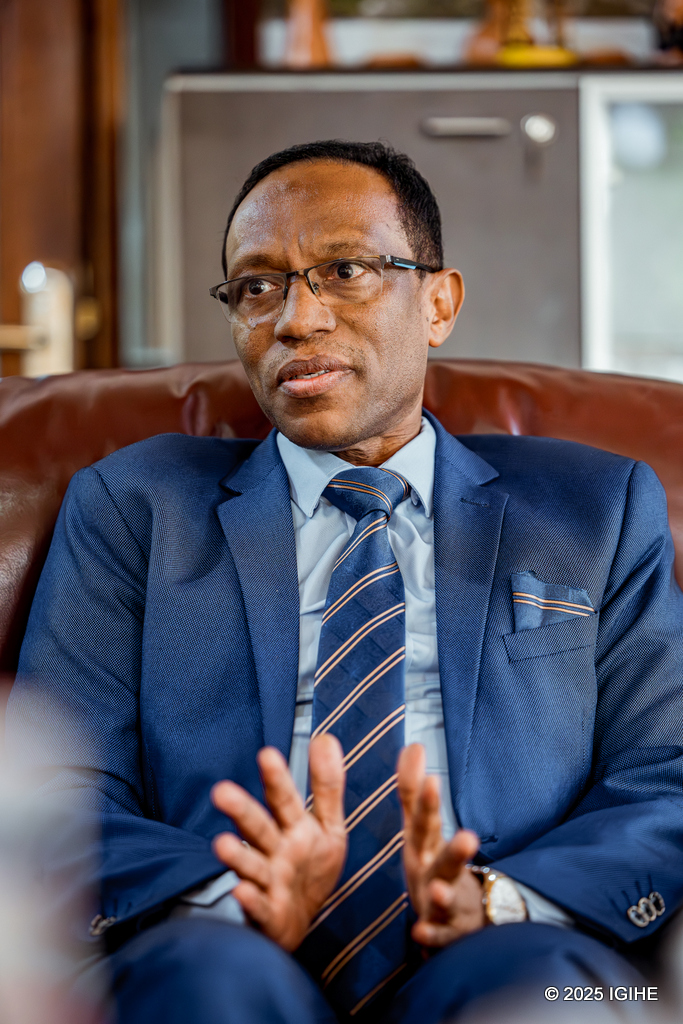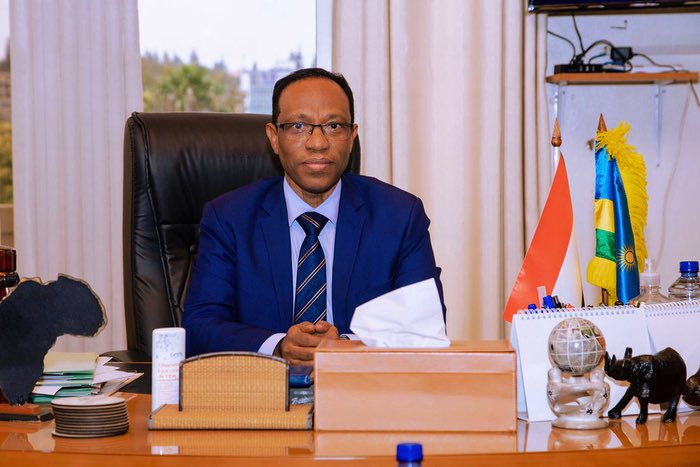
In a statement, Parliament said Icyitegetse formally notified the Speaker of the Chamber of Deputies of his decision through a resignation letter.
Before his resignation, Icyitegetse served on the parliamentary Committee on National Budget and Patrimony, which oversees the preparation and execution of the national budget and the management of state assets.
He was elected to Parliament in 2024 on the ruling RPF-Inkotanyi ticket as a youth representative.
Efforts to reach Icyitegetse for comment on his resignation were unsuccessful, as his phone was unavailable at the time of publication.
Venuste Icyitegetse was elected to Parliament in 2024 on the ruling RPF-Inkotanyi ticket as a youth representative.
The ministry made the remarks in a statement, strongly condemning Thursday’s U.S. strikes on several areas in Iran and stressing that the U.S. government bears responsibility for the “very dangerous” consequences of the renewed attacks.
The U.S. “crimes and widespread attacks” on Iran were in “flagrant violation” of the UN Charter and the fundamental international law principles, it said, calling for respect for national sovereignty and territorial integrity.
It warned that the U.S. army’s use of the territories and facilities of certain countries in West Asia to prepare for and carry out “aggressive attacks” against Iran has placed those states “on the aggressors’ side.”
The ministry reaffirmed Iran’s determination to take action against the origin and source of the “aggressive attacks” in exercising its inherent right to legitimate self-defense, while reminding regional countries of their legal and moral responsibility to prevent the U.S. army’s use of their territories, facilities and resources for committing the “crime of aggression.”
It also called on UN member states to oppose violations of the UN Charter by the United States and Israel.
The U.S. Central Command said early Thursday its forces had made strikes on multiple Iranian targets in retaliation for Iran’s “unwarranted and continued aggression.”
Following the U.S. attacks, Iran announced the closure of the Strait of Hormuz to all vessels, citing security concerns.
Iran’s Islamic Revolution Guard Corps and the Iranian army said they had launched retaliatory strikes against U.S. bases in Jordan, Kuwait and Bahrain.
Iran, the United States and Israel reached a ceasefire on April 8 after 40 days of fighting. In recent weeks, Tehran and Washington have reportedly exchanged proposals through Pakistan’s mediation and have been working on a memorandum of understanding to end the conflict.
The Iranian foreign ministry said Thursday that fresh U.S. strikes on Iran have effectively rendered an April ceasefire between the two countries “meaningless.”
Initial reports indicated that U.S. ships near the Strait of Hormuz were targeted by missiles and drones launched by Iranian armed forces.
Blasts were also heard in the counties of Sirik and Minab and the port city of Bandar Abbas, all in Hormozgan province, as well as on Qeshm and Hengam islands, while air defense systems were activated west of the capital Tehran and in the southern province of Fars, the semi-official Mehr news agency said.
Following the incidents, Khatam al-Anbiya Central Headquarters said the Strait of Hormuz has been closed to all kinds of vessels, including oil tankers and commercial ships, owing to security threats in the waterway.
The headquarters cited the continuation of the U.S. “malicious acts” and attacks earlier in the day in Iran’s southern Hormozgan province, saying any vessel trying to pass through the strait will be targeted.
The developments followed an announcement by the U.S. Central Command on social media platform X, stating its forces had begun launching “additional self-defense strikes” against multiple targets in Iran in response to what it called Iran’s “unwarranted and continued aggression.”
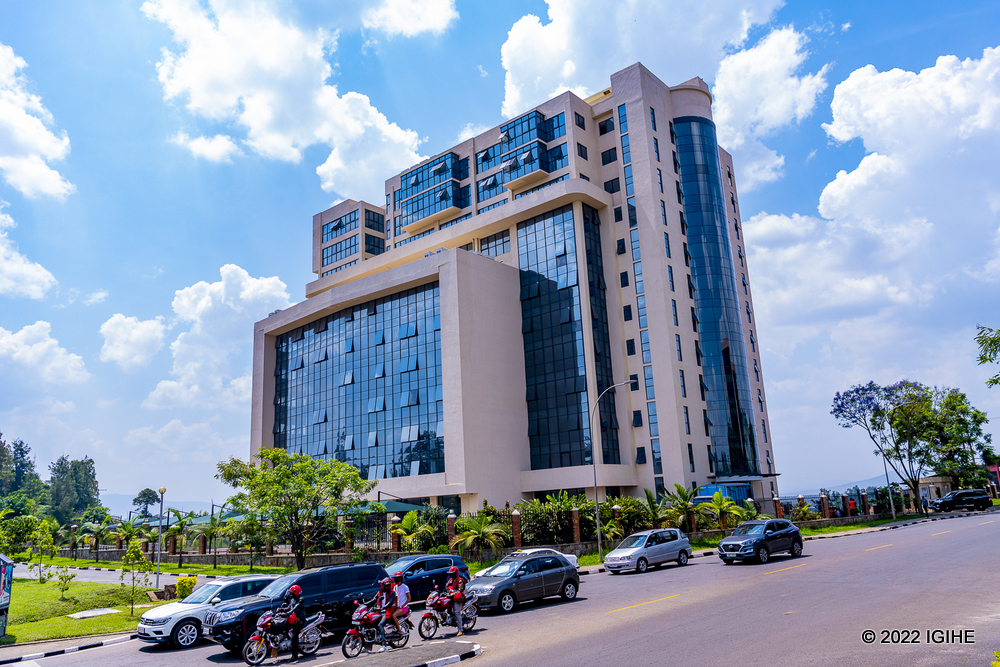
This photo taken with a mobile phone shows merchant vessels stranded in the waters of the Strait of Hormuz, near Khasab, a small town in northern Oman, May 29, 2026. Clashes erupted early Thursday between Iranian and U.S. forces in the waters of the Gulf and the Gulf of Oman, as Khatam al-Anbiya Central Headquarters, Iran’s main military command, announced the full closure of the Strait of Hormuz.
The appointments were announced in a communiqué issued by Prime Minister Dr. Justin Nsengiyumva on June 10, pursuant to Articles 111, 112 and 116 of the Constitution of the Republic of Rwanda.
In the Ministry of Infrastructure, Damien Murwanashyaka was appointed Minister, replacing Dr. Jimmy Gasore, who had served in the position since September 2023.
Damien Murwanashyaka is set to take over as the Minister of Infrastructure.
Murwanashyaka joins the government from the private sector, where he brings more than 15 years of experience in the construction industry. A Professional Civil Engineer and Associate Member of the Chartered Institute of Arbitrators, Murwanashyaka most recently served as the Managing Director of Preferred Contractors.
Before that, his senior leadership career included roles as the CEO of UDL, Chief Quantity Surveyor at Real Contractors Ltd, and Projects Manager at ROKO Construction Ltd. He also held consultant leadership roles at Century Engineering and Contractors Ltd and Gasabo 3D Design Ltd.
He graduated with a First Class Honors Degree in Civil Engineering and later earned an MBA from Oklahoma Christian University.
He will be assisted by two Ministers of State, Armand Zingiro and Col. Claudien Bizimungu. Zingiro moves from the Rwanda Energy Group (REG), where he served as Chief Executive Officer, while Bizimungu previously held senior command responsibilities within the Rwanda Defence Force’s engineering structures.
The new structure also reflects a shift in the ministry’s leadership arrangement, as Jean de Dieu Uwihanganye, who previously served as State Minister in charge of Infrastructure, is no longer in the lineup.
Judith Uwizeye has been appointed as the Minister of Public Service and Labour.
In the Ministry of Public Service and Labour, Judith Uwizeye returns to Cabinet as Minister, replacing Christine Nkulikiyinka, who has been nominated as Rwanda’s Ambassador to Spain. Uwizeye previously served as Minister in the Office of the President.
In the Ministry of Trade and Industry, Antoine-Marie Kajangwe has been promoted from Permanent Secretary to Minister, replacing Prudence Sebahizi, who had held the portfolio since August 2024. Kajangwe previously served in senior roles within the same ministry, including overseeing trade and investment functions.
Antoine-Marie Kajangwe has been appointed as the Minister of Trade and Industry, replacing Prudence Sebahizi.
The President also made a series of diplomatic appointments, nominating retired Lt Gen Karenzi Karake as Rwanda’s ambassador to China, Maj Gen Emmanuel Bayingana as ambassador to Israel, and retired Col Jeannot Ruhunga as ambassador to Poland, while Chantal Tuyishimire was appointed Permanent Secretary in the Ministry of Trade and Industry.
In state-owned institutions, Louise Kanyonga, who has been serving as Deputy Chief Executive Officer of the Rwanda Social Security Board (RSSB), was appointed Chief Executive Officer of Zigama CSS. Kanyonga previously held several senior positions at the Rwanda Development Board (RDB), including Chief Strategy and Compliance Officer and Registrar General.
Maximilien Byilingiro was appointed Chief Executive Officer of Rwanda Energy Group (REG), while Michelle Umurungi, who currently serves as Chief Investment Officer at the Rwanda Development Board, was named Deputy Chief Executive Officer in charge of Investments at RSSB.
The latest appointments come as the government continues efforts to strengthen leadership across strategic sectors including infrastructure, trade, energy, public service, and diplomacy.
The appointments were announced in a communiqué issued by Prime Minister Dr. Justin Nsengiyumva on June 10, pursuant to Articles 111, 112 and 116 of the Constitution of the Republic of Rwanda.
Speaking in an interview with B&B Kigali on June 10, 2026, Nduhungirehe said Rwanda remains willing to restore normal relations, but accused Burundi of repeatedly undermining efforts to stabilise bilateral ties.
Relations between the two neighbouring countries deteriorated significantly in 2015 following an attempted coup against then-President Pierre Nkurunziza. Several individuals involved in the attempt fled to Rwanda, after which Burundi closed its borders with Rwanda.
In 2022, both countries moved to normalise relations and reopened their borders. However, tensions resurfaced in late 2023 following an attack in the Gatumba area of Bujumbura Province by the armed group RED Tabara. Burundi subsequently closed its borders again in January 2024.
At the time, Burundi accused Rwanda of supporting RED Tabara, an allegation Kigali denied, insisting it does not cooperate with groups intent on destabilising neighbouring states.
Renewed tensions and diplomatic engagement
According to Nduhungirehe, further strain followed statements and developments in the region, including remarks made by regional leaders and renewed accusations exchanged between Kigali and Bujumbura.
He cited comments made in January 2024 in Kinshasa by Burundi’s President Évariste Ndayishimiye, who, during a visit to the Democratic Republic of the Congo, expressed support for efforts to mobilise Rwandan youth against the government.
The minister also referred to earlier remarks by the President of the Democratic Republic of the Congo, Félix Tshisekedi, who in late 2023 said his country’s forces would act against Rwanda, describing this as part of a broader regional climate of hostility.
He argued that such statements contributed to worsening relations, particularly given the regional context and ongoing insecurity in eastern DR Congo.
Nduhungirehe further noted that Burundian troops deployed to eastern DR Congo were cooperating with the FDLR militia group, alongside Congolese forces.
He stated that while the Burundian deployment was officially framed as part of operations against armed groups, including RED Tabara, their activities instead indicated coordination with the FDLR.
“They were not deployed against RED Tabara. They were deployed to assist the Congolese army and the FDLR in the plan that President Tshisekedi mentioned during his campaign, and the same plan President Ndayishimiye spoke about in Kinshasa in January 2024,” he said.
He added that Burundian forces had operated in areas closer to the Rwandan border in North Kivu, despite RED Tabara being mainly active in South Kivu, suggesting, in his view, a different operational focus.
Attempts at dialogue
The minister noted that following the capture of Goma and Bukavu by the AFC/M23 coalition in early 2025, Burundi requested dialogue with Rwanda in an effort to ease tensions.
He said intelligence and security officials from both countries met at the border on three separate occasions and reached a number of understandings aimed at de-escalation.
However, he revealed that progress was later undermined by renewed public accusations from the Burundian leadership.
“What happened after that? After that, President Ndayishimiye went on BBC and France 24… accusing Rwanda of planning to attack Burundi. We then asked our Burundian counterparts what had changed, given that we had reached agreements,” he said.
He added that further meetings were facilitated by the United States after AFC/M23 captured Uvira in early December 2025, during which security officials from both countries again met twice at the border and reached additional understandings.
Nduhungirehe said that despite these engagements, Burundian forces remain present in eastern DR Congo and continue, in Rwanda’s view, to cooperate with elements of the FDLR.
He reiterated Rwanda’s position that it seeks peaceful relations with Burundi through dialogue, but argued that Bujumbura has not demonstrated sufficient commitment to sustaining diplomatic progress.
“Rwanda wants good relations with Burundi, dialogue, and resolution of outstanding issues, but Burundi does not show the willingness,” he said, calling on Burundi to end any cooperation with the FDLR militia group, which was formed by the perpetrators of the 1994 Genocide against the Tutsi.
Rwandan and Burundian diplomats agreed to ease tensions, but President Ndayishimiye later worsened the situation.
Speaking in an interview with B&B Kigali on June 10, 2026, Nduhungirehe said Rwanda remains willing to restore normal relations, but accused Burundi of repeatedly undermining efforts to stabilise bilateral ties.
“Iran is all talk and no action,” Trump said on Truth Social. “They’ve taken too long to negotiate a deal that would have been great for them, now they will have to pay the price.”
Trump also suggested he may order new strikes on Iran’s power plants and bridges, Fox News reported on Wednesday, citing a phone interview.
“I may keep going,” Trump said during the interview. “They had a chance to sign a deal and survive.”
The president claimed Tehran has been “tapping the U.S. along” in peace talks that have ultimately made little progress.
The U.S. military reportedly hit about 20 targets in its strikes on Iran on Tuesday in response to the downing of a U.S. Army helicopter near the Strait of Hormuz.
The targets included Iranian air defenses, radar sites and ground control stations, U.S. Central Command said in a statement on Tuesday.
U.S. President Donald Trump said on Wednesday that Iran has “taken too long to negotiate a deal” over the Mideast conflict and will now “have to pay the price.”
The new brand was officially launched in Rabat, Morocco, during the bank’s 45th Annual Meetings, marking a major milestone in the institution’s evolution and long-term strategic repositioning within Africa’s development finance landscape.
Speaking at the unveiling, Thierno-Habib Hann, Managing Director and Chief Executive Officer of Shelter Afrique Development Bank, said the rebranding represents far more than a cosmetic change.
“Rebranding means more than a name change. It is not only changing the institution’s framework of operations. The transition is expanding the role of the institution into a development bank, making it more nimble and impactful across the housing value chain while creating jobs,” he said.
The bank has in recent years pursued a deliberate strategy to expand its financing capacity in response to rising demand for affordable housing and urban infrastructure across the continent. With a membership of 44 African states and institutional shareholders including the African Development Bank and the African Reinsurance Corporation, Shelter Afrique says it is increasingly aligning its operations with Africa’s broader development priorities.
Board Chairman Lionel Zinsou said the institution’s success will be measured by its tangible impact rather than policy declarations or strategic plans.
“Our success will not ultimately be measured by strategies adopted, policies approved or meetings held. It will be measured by homes financed, cities improved, jobs created and lives transformed. The reform phase of the institution must now become the delivery phase,” he said.
The transition to a Multilateral Development Bank is expected to place Shelter Afrique in the same category as other pan-African lenders, strengthening its ability to mobilise capital for large-scale housing and urban development projects.
The institution is now targeting Africa’s estimated 53 million housing deficit, which requires approximately $1.3 trillion in investment to address, according to the bank.
Hann said the next phase of the bank’s strategy will focus on scaling impact across the housing ecosystem.
“Our vision for the next five years and beyond is to lead the transformation of the African housing sector to address urban infrastructure challenges and create jobs,” he said.
The rebranding also comes amid increased collaboration among African multilateral development banks aimed at unlocking greater pools of capital for infrastructure and housing.
This year’s Annual General Meeting was held under the theme: “The Future of Cities: Financing Inclusive, Green, and Resilient Urban Development,” reflecting the growing urgency around sustainable urbanisation across Africa.
Established in 1981 in Lusaka, Zambia and headquartered in Nairobi, Kenya, Shelter Afrique Development Bank is a Pan-African MDB dedicated to financing sustainable housing, urban development, and related infrastructure. It is owned by 44 African governments alongside institutional shareholders including the African Development Bank and Africa-Re.
The institution, of which Rwanda is a member, operates through four business lines: the Financial Institutions Group (FIG), the Project Finance Group (PFG), the Sovereign and Public-Private Partnerships (PPP) Group, and the Fund Management Group (FMG).
Speaking at the unveiling, Thierno-Habib Hann, Managing Director and Chief Executive Officer of Shelter Afrique Development Bank, said the rebranding represents far more than a cosmetic change.The new brand was officially launched in Rabat, Morocco, during the bank’s 45th Annual Meetings, marking a major milestone in the institution’s evolution and long-term strategic repositioning within Africa’s development finance landscape.The rebranding also comes amid increased collaboration among African multilateral development banks aimed at unlocking greater pools of capital for infrastructure and housing.
The Urban Consumer Price Index (CPI), which serves as the headline measure for monetary policy purposes, increased by 12.9 percent compared to May 2025 and by 0.5 percent compared to April 2026. The annual average inflation rate between May 2025 and May 2026 stood at 8.7 percent.
The report also showed that overall inflation across Rwanda reached 12.3 percent on an annual basis, while rural inflation stood at 11.8 percent.
The latest figures indicate that inflationary pressures remain elevated after a sharp acceleration in recent months. Urban inflation rose from 8.9 percent in January to 9.2 percent in February and March before surging to 13.0 percent in April and remaining high at 12.9 percent in May.
Transport, housing and health costs were among the biggest drivers of the increase in consumer prices.
Urban transport prices rose by 24.5 percent compared to May last year and increased by 1.1 percent on a monthly basis. Housing, water, electricity, gas and other fuels increased by 19.4 percent annually, although the category declined by 0.9 percent compared to April.
Health services recorded the steepest increase among major expenditure categories, rising by 71.6 percent over the past 12 months. Restaurants and hotels also registered a significant increase of 16.6 percent, while prices for alcoholic beverages, tobacco and narcotics rose by 16.1 percent.
Food and non-alcoholic beverages, which account for 27 percent of the urban consumer basket, increased by 6.2 percent annually and 0.9 percent monthly. Within the category, vegetable prices rose by 9.0 percent, meat prices increased by 12.9 percent and non-alcoholic beverages climbed by 11.0 percent compared to May 2025.
The report shows that transport and housing costs made the largest contributions to annual urban inflation, adding 3.2 and 3.1 percentage points respectively to the overall 12.9 percent inflation rate. Food and non-alcoholic beverages contributed a further 2.3 percentage points.
NISR also reported strong inflationary pressures in energy-related products. The urban energy index increased by 44.4 percent compared to May 2025, making it one of the fastest-rising components of household expenditure. However, the energy index declined by 0.5 percent compared to April 2026.
Meanwhile, the local goods index increased by 13.7 percent on an annual basis,
outpacing the imported goods index, which rose by 10.5 percent.
Underlying inflation, which excludes fresh food and energy prices and is considered a key indicator of broader price trends in the economy, rose by 12.0 percent year-on-year and 0.7 percent on a monthly basis. The annual average underlying inflation rate reached 9.2 percent.
The CPI is compiled using a basket of approximately 1,622 goods and services monitored across urban and rural areas of Rwanda. Each month, NISR collects more than 40,000 prices from markets, shops, schools, hospitals and other outlets to track changes in the cost of living.
Rwanda’s inflation rose to 12.9 percent in May 2026, driven by sharp increases in transport, housing, energy and health-related costs, according to the latest Consumer Price Index (CPI) report released by the National Institute of Statistics of Rwanda (NISR).
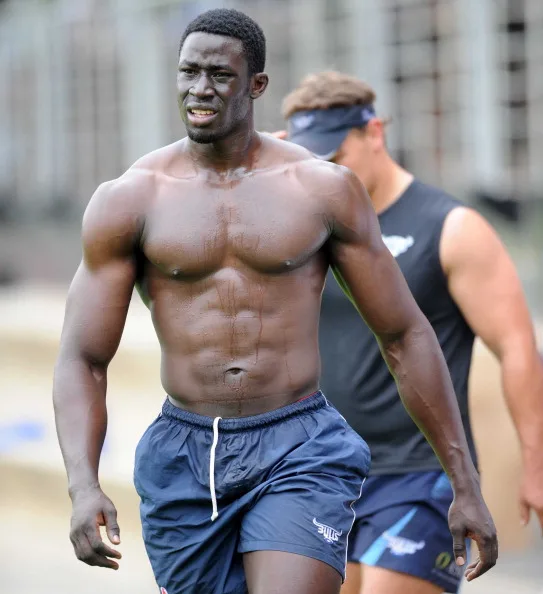
Hundreds of supporters, government officials and members of Somalia’s football community gathered from early morning at Aden Adde International Airport, waving Somali flags and chanting as they waited for Artan’s arrival.
When he finally landed at about 8:30 a.m. local time, the crowd surged forward, draping him in the national flag and escorting him through the airport amid cheers.
Artan had been set to become the first referee from Somalia to officiate at a World Cup after earning a place on FIFA’s final list for the tournament. Widely regarded as one of Africa’s top referees, he was named the continent’s best male referee in 2025, marking a rapid rise in his international career.
His journey to the United States was cut short on Saturday when he was denied entry at Miami International Airport over what U.S. Customs and Border Protection described as “vetting concerns,” without providing further details.
FIFA subsequently removed him from its list of referees for the tournament. The decision came despite Artan having been issued a visa last week, according to the Somalia Embassy in Kenya, which processed the travel documents. He had been expected to join other selected referees at a training base in Miami ahead of the tournament, which is being co-hosted by the United States, Mexico and Canada.
Back home, his arrival transformed into a public show of support and national pride. After being escorted by police to the VIP terminal, Artan was welcomed by Somalia’s Minister of Youth and Sports, officials from the Somalia Football Federation and other dignitaries before addressing the media.
“It is up to all of us to defend the Somali name,” he said. “Somalia belongs to us, whether it is in a bad state or a good state. That flag belongs to us, and that passport belongs to us.”
He also struck an optimistic tone despite the setback, telling supporters: “I promise you, God willing, that I will attend the next one. I want the Somali public to take comfort in this and remain confident.”
The incident has drawn international attention, with questions raised about the circumstances surrounding his denial of entry. Somalia is among nearly 40 countries affected by recent travel restrictions under the Trump administration’s immigration policy overhaul.
The controversy also sparked wider reactions in the football world. World Health Organization Director-General Tedros Adhanom Ghebreyesus praised Artan’s achievement, saying his World Cup selection “stands no matter what” and that being kept off the pitch did not erase the milestone he had already reached.
Omar Artan is draped in a Somali flag upon his arrival in the capital, Mogadishu.Hundreds of supporters, government officials and members of Somalia’s football community gathered from early morning at Aden Adde International Airport, waving Somali flags and chanting as they waited for Artan’s arrival.
The initiative, titled “Soil & Water: Kigali Crossings,” is being launched by the NIROX Foundation, an independent non-profit organisation dedicated to environmental and contemporary art, in partnership with QA Venue Solutions Rwanda, the company that manages the park alongside BK Arena and Amahoro Stadium.
Scheduled to run from August 2026 to March 2027, the long-term programme will merge art, ecology, and public engagement within the park’s boundaries.
The event will feature public exhibitions, artist residency programmes, performances, concerts, and research-driven creative installations. Participating creators will develop works responding directly to environmental challenges, utilizing both technology and sustainable materials.
According to Benji Liebmann, founder and director of the NIROX Foundation, the project builds on more than two decades of using art to connect people with nature and conservation. He believes that art speaks to people differently, emotionally and intuitively, creating a deeper connection with the earth that inspires humanity to fall in love with nature again so they can protect it.
This marks the first time the programme will be hosted in Rwanda. Having previously been held in Europe and South Africa, Rwanda becomes only the second African country to host the initiative.
Liebmann noted that discussions to bring the project to Kigali emerged through a connection with Nyandungu Eco-Park Manager Ildephonse Kambogo, who visited the NIROX Sculpture Park in South Africa, a landscape famous for integrating open-air sculptures made of natural and recycled materials into the environment.
Liebmann recalled visiting about four years ago to assess its feasibility and realizing that the concept was more than feasible, describing it as both necessary and desirable.
“It has taken this long to reach the first stage, which is a pilot exhibition project,” he said, adding, “Art speaks to people differently, emotionally and intuitively, and we believe that creates a deeper connection with the earth. Humanity needs to fall in love with nature again.”
The programme is expected to feature some of Africa’s leading contemporary artists, including Ibrahim Mahama and Serge Attukwei Clottey from Ghana, alongside Willem Boshoff from South Africa. They will be joined by additional participants from France, Spain, and Austria, while local Rwandan artists, including creators from the Inema Arts Center, will also take part in the initiative.
Nyandungu Eco-Park Manager Ildephonse Kambogo welcomed the partnership, stating that it will expand the park’s role by integrating cultural and artistic engagement into its core conservation mission.
He explained that the wetland’s primary role is to filter polluted water and improve its quality, and through art, they hope to find creative ways of showcasing this water purification process.
This will make the process easier for people to understand while supporting the wetland’s conservation mission.
Kambogo added that the residency will allow local Rwandan artists to collaborate with international practitioners, helping to further scale local creative talent.
“Visitors usually come to enjoy the natural beauty, but there has been something missing, art that connects them to the park, culture, and creativity. These artists will create works displayed across the park so that every visitor can enjoy them,” he said.
Nyandungu Eco-Park officially opened in 2022 following a massive ecological restoration of the local wetland. Since its opening, visitor attendance has experienced sharp exponential growth, rising from 48,813 in its inaugural year to 67,222 in 2023. This steady upward trajectory solidified in 2024 when the park recorded 76,754 visitors.
By late 2025, attendance experienced its strongest growth spike yet, surging past 100,000 visitors to register a growth rate of over 30% compared to the previous year. The incoming art installations will be distributed throughout the park’s 121 hectares, establishing a permanent creative layer for future visitors to experience.
Nyandungu Eco-Park officially opened in 2022 following a massive ecological restoration of the local wetland. Organisers of the upcoming event at Nyandungu Eco-Park.Nyandungu Eco-Park Manager Ildephonse Kambogo welcomed the partnership, stating that it will expand the park’s role by integrating cultural and artistic engagement into its core conservation mission.Benji Liebmann (left), founder and director of the NIROX Foundation visiting Nyandungu.