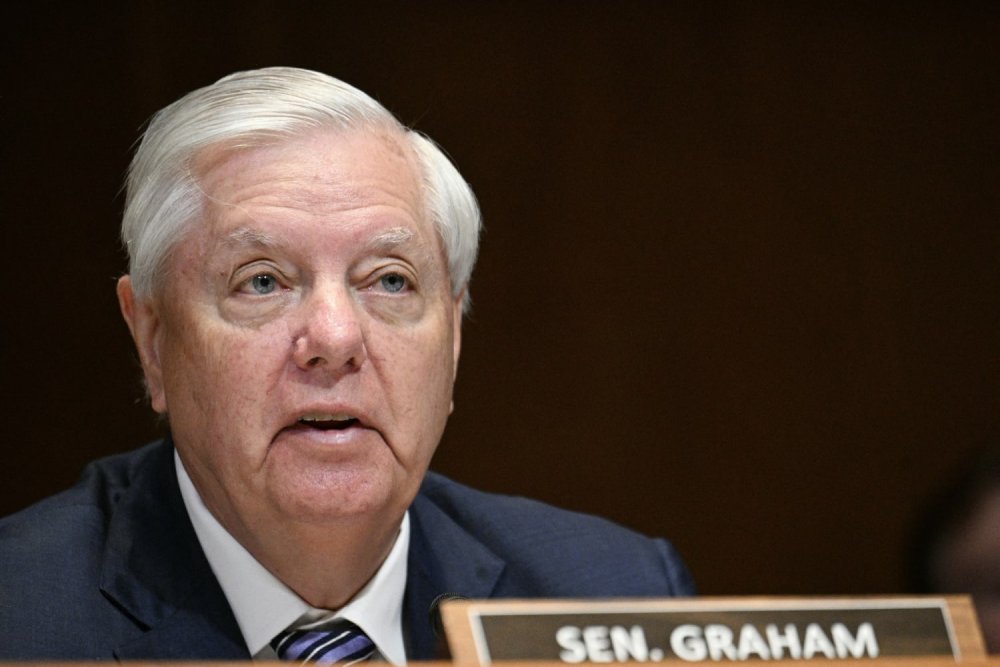
Graham’s office confirmed his death on Sunday, saying he passed away following a “brief and sudden illness.”
In the region, Graham was among U.S. politicians who argued that lasting peace in eastern DRC required political dialogue and addressing the underlying causes of the conflict, rather than relying solely on punitive measures.
He drew attention in Rwanda for opposing proposals for U.S. sanctions targeting the country over the conflict in eastern DRC.
A report by The Wall Street Journal said that as Washington considered sanctions against Rwanda, Graham played a role in efforts to block the measures. According to the report, Graham told U.S. officials that Rwanda was an important security partner and warned that sanctions could undermine diplomatic efforts aimed at resolving the conflict.
He argued that punishing Rwanda would not provide a solution and could complicate efforts to bring parties involved in the conflict to the negotiating table. The proposed sanctions were later shelved.
Graham’s role in Great Lakes diplomacy
Graham’s engagement with Great Lakes issues stretched back more than a decade.
In 2013, he was part of a bipartisan delegation of six U.S. senators that visited the region to assess the conflict and humanitarian crisis linked to the M23 rebellion in eastern DRC.
During the visit, Graham said the region’s challenges could not be solved through military intervention or the deployment of international forces alone. He argued that a political solution involving the Congolese government, neighbouring countries and communities in the region was necessary.
During the visit, Graham said that lasting peace in eastern DRC would require addressing the underlying causes of the conflict and the concerns of affected communities.
Graham said the United Nations could play an important role in supporting stability, but that a lasting solution had to come through dialogue among regional stakeholders.
In his later years, Graham continued following developments in eastern DRC, particularly the conflict between government forces and the AFC/M23 coalition.
In December 2025, he welcomed AFC/M23’s decision to withdraw from Uvira, a strategic town in South Kivu, describing the move as a confidence-building step under the Doha peace process.
However, he expressed concern over reports that AFC/M23 forces were being attacked during the withdrawal.
“I am pleased to see reports of M23 troops withdrawing from Uvira in the Democratic Republic of the Congo. However, I am disheartened to hear these withdrawing troops are being attacked,” Graham said in a post on X at the time.
He called for continued diplomatic efforts to bring the opposing sides back to negotiations, arguing that dialogue was essential for achieving lasting peace and economic development in the Great Lakes region.
Graham also welcomed the Rwanda-DRC peace agreement signed in Washington last year, describing it as a significant achievement after years of conflict.
“What an amazing day and experience at the White House, with President Trump, Vice President JD Vance, U.S. Secretary of State Marco Rubio and President Trump’s Africa adviser Massad Boulos, along with the presidents of Rwanda and the Democratic Republic of Congo, solidifying what has been an elusive peace deal between the two countries,” he wrote on December 4, 2025.
He added that reaching the agreement with President Paul Kagame and President Félix Tshisekedi was something he would remember given the region’s long history of conflict.
“Watching President Trump close this deal with President Kagame and President Tshisekedi was an experience I’ll remember for the rest of my life. For those who have been following this region and conflict, today seemed almost impossible to dream of but now it is a reality,” he added.
Rwanda-U.S. relations
Beyond his comments on the DRC conflict, Graham maintained engagement with Rwanda, which he described as an important partner for the United States in East Africa.
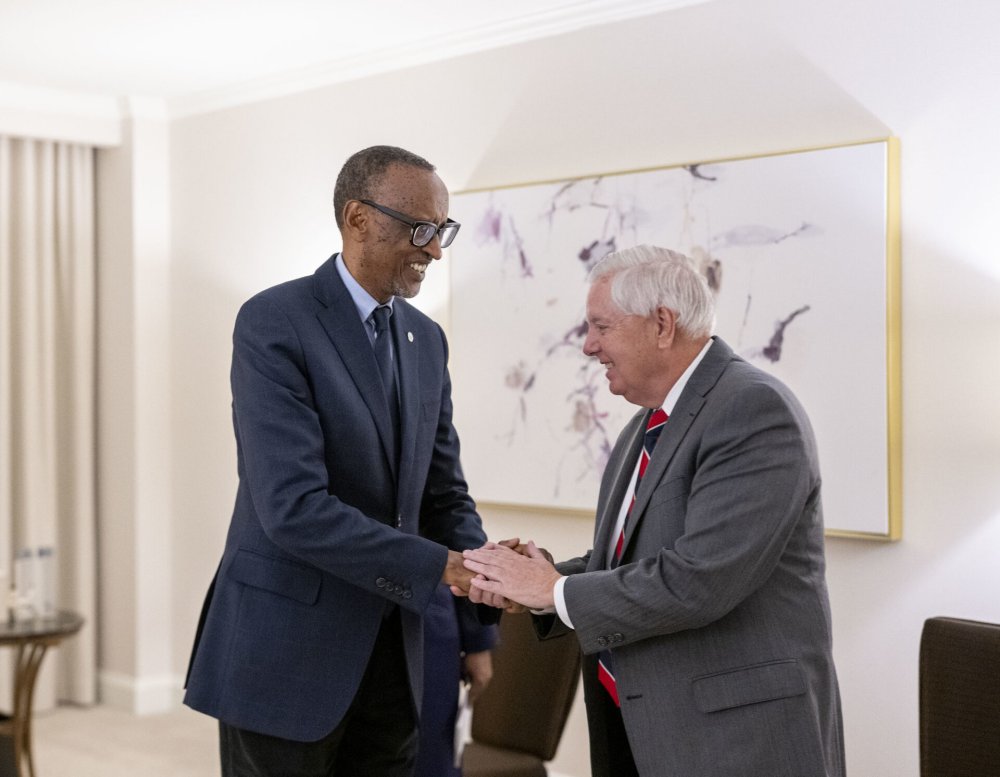
In December 2025, during Kagame’s visit to Washington for activities related to the Rwanda-DRC peace agreement, Graham and Kagame discussed strengthening Rwanda-U.S. cooperation in strategic areas, including conservation, security and economic partnerships.
In April 2019, Graham was part of a high-level U.S. congressional delegation hosted by President Kagame and First Lady Jeannette Kagame. The discussions focused on issues of mutual interest between Rwanda and the United States.
A veteran U.S. politician
Graham’s political career spanned more than three decades. Before joining the Senate, he served in the U.S. House of Representatives from 1995 to 2003 and previously served in the U.S. Air Force, Air Force Reserve and South Carolina Air National Guard, retiring as a colonel in 2015.
Over more than three decades in Congress, he became one of America’s most influential voices on defense, national security and foreign policy. He chaired key Senate committees, including the Senate Judiciary Committee and the Senate Budget Committee, and was a major figure in Republican foreign policy debates.
Graham was also a close political ally of President Donald Trump. Although he initially criticized Trump during the 2016 Republican presidential primary, the two later developed a close working relationship, with Graham becoming one of Trump’s most prominent supporters in Congress.
Shortly before his death, Graham traveled to Kyiv, Ukraine, where he met President Volodymyr Zelenskyy amid the ongoing war between Ukraine and Russia.
His death marks the loss of a major figure in U.S. politics and a politician who had become a familiar voice in discussions around global security, defense strategy, and international alliances.
Leave a Reply