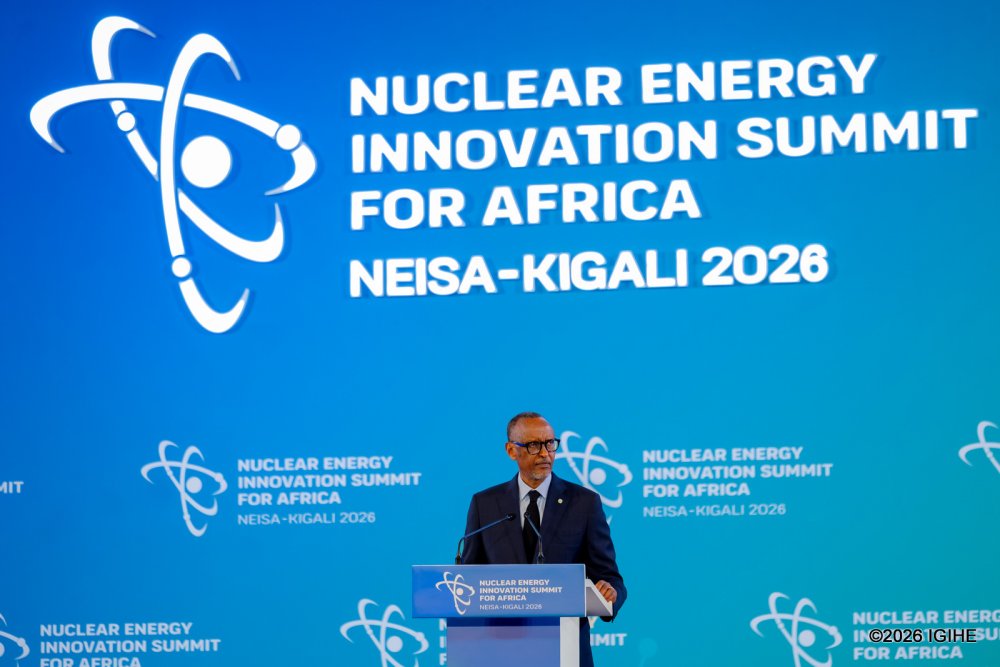
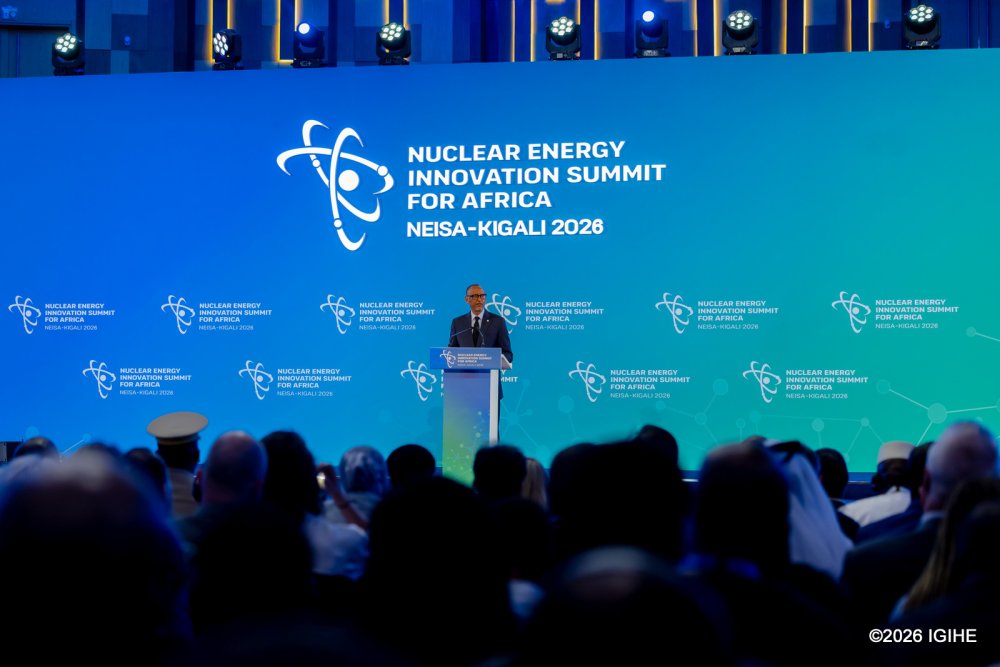
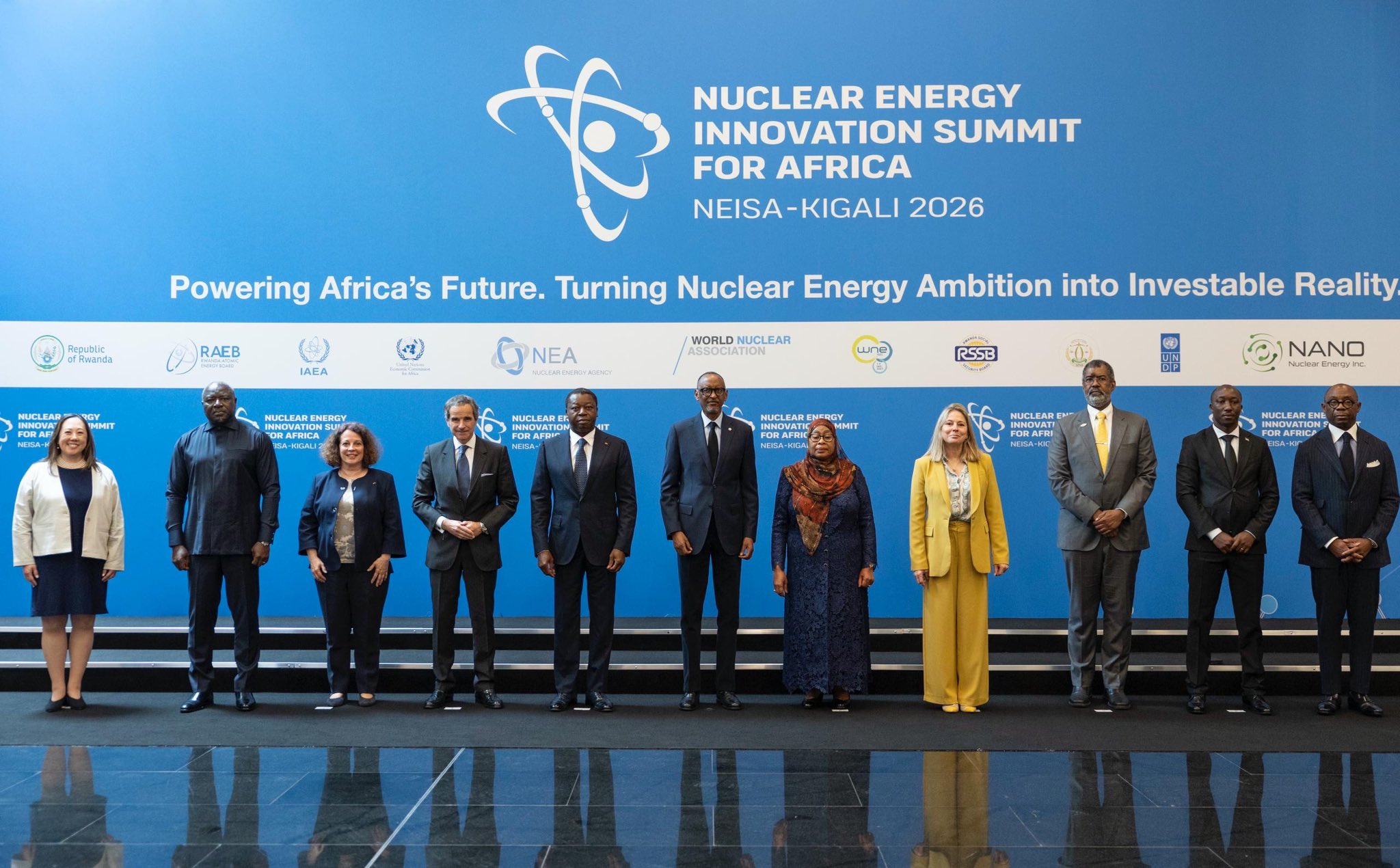
Speaking at the Nuclear Energy Innovation Summit for Africa 2026 at the Kigali Convention Centre on Tuesday, Kagame said Rwanda’s successful completion of the International Atomic Energy Agency’s (IAEA) Phase I Integrated Nuclear Infrastructure Review marked a key milestone in its nuclear energy roadmap.
President Kagame received the report from Rafael Mariano Grossi, Director General of the International Atomic Energy Agency (IAEA), following an assessment process with experts that advances Rwanda’s nuclear ambitions to the next stage.
Rwanda aims to generate up to 1.5 gigawatts of electricity from nuclear power by 2050.
“We intend to have nuclear energy operational by the early 2030s. This assessment confirms that we are on track,” Kagame said.
The summit, held under the theme “Powering Africa’s Future: Turning Nuclear Energy Ambition into Investable Reality,” brought together heads of state, international organisations, investors and technical experts to discuss how Africa can scale up reliable energy systems to support long-term economic transformation.
Kagame said Africa’s development prospects depend heavily on solving persistent energy shortages, noting that modern manufacturing, mineral processing, digital infrastructure, artificial intelligence and advanced healthcare all require stable and reliable electricity.
“For Africa, energy is not simply a development issue. It is the foundation of industrial growth and competitiveness,” he said. “Countries that cannot meet this demand will struggle to compete.”
He emphasised that Rwanda views nuclear energy as a critical component of its long-term energy strategy, with particular focus on small modular reactors (SMRs), which he described as more suitable for African contexts due to their scalability, lower cost and adaptability to smaller power grids.
While reaffirming the importance of renewable energy sources such as solar and hydropower, Kagame cautioned that intermittent supply alone would not be sufficient to meet Africa’s rapidly growing energy needs.
“Renewable energy will remain indispensable, particularly solar and hydro, where Africa has enormous potential. But our economies cannot function efficiently on intermittent supply alone,” he said.
The President also stressed the importance of investment and regulatory certainty in attracting long-term capital into nuclear projects, urging African countries to strengthen governance frameworks and avoid fragmented approaches.
“What Africa cannot afford is fragmentation,” he said. “If countries work in isolation, progress will be slow and far more costly.”
He added that cooperation, regulatory harmonisation, financing mechanisms and regional power integration would be essential to ensure successful deployment across the continent.
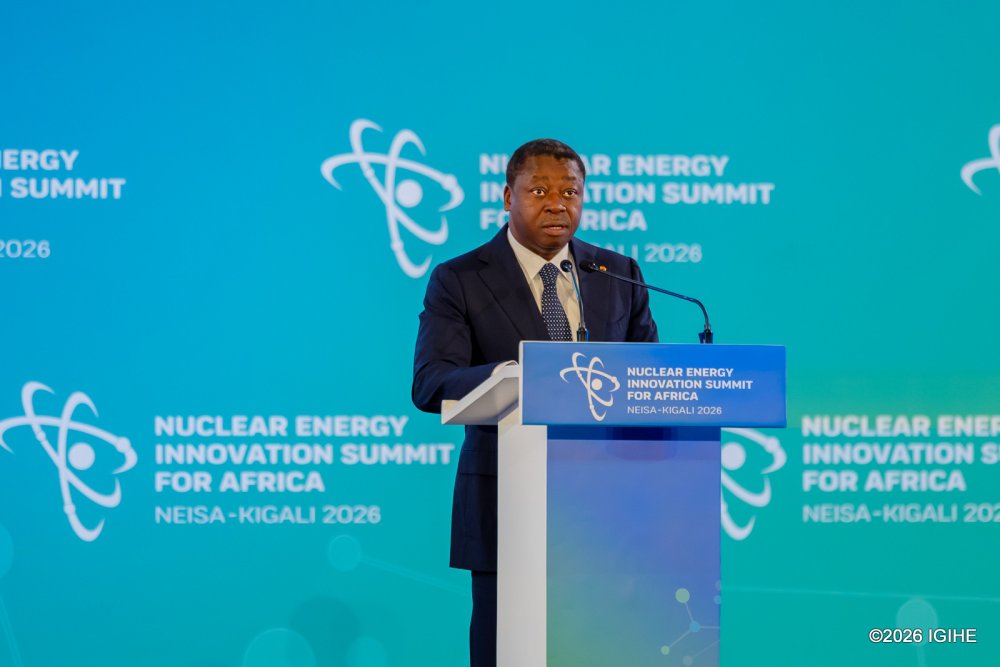
Faure Gnassingbé, President of the Council of Ministers of Togo, called for Africa to move beyond discussion and take concrete steps toward implementation, describing the summit as a defining moment for the continent’s energy future.
“There are moments in the life of a continent when it is no longer enough to merely observe reality; we must shape the future,” Gnassingbé said.
He argued that while renewable energy remains important, it cannot alone support Africa’s industrialisation, digital expansion and growing demand for baseload power.
“Manufacturing industries, data centres, artificial intelligence, and Africa’s digital future require continuous, decarbonised, and competitive baseload electricity,” he said.
Gnassingbé highlighted Togo’s own progress, including the adoption of nuclear energy legislation, the establishment of an atomic energy commission and ongoing exploration of small modular reactors for off-grid regions. He also stressed the importance of African-led development.
“African nuclear energy will not be imported. It will be designed, operated, and governed by Africans, for Africans,” he said.
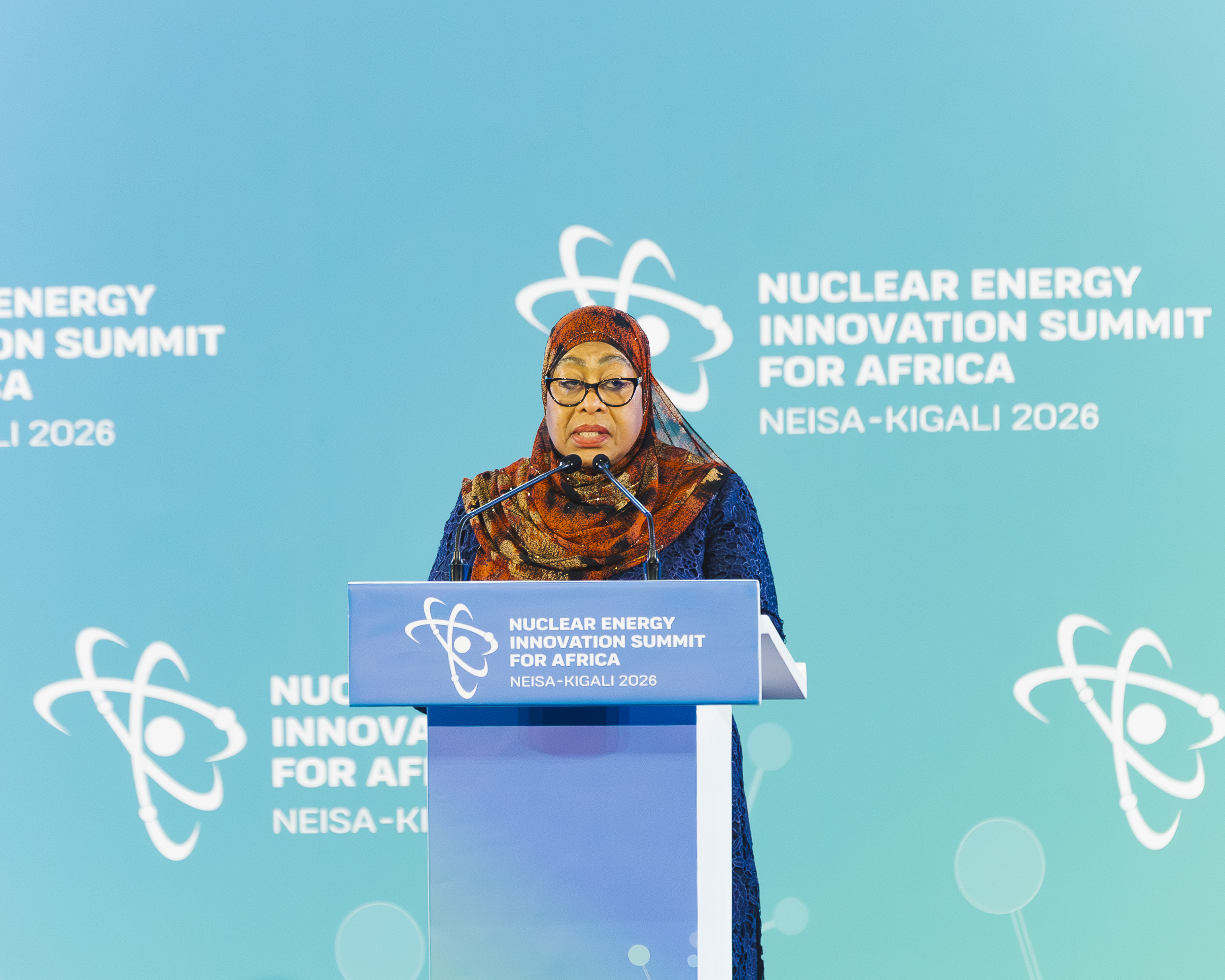
Tanzanian President Samia Suluhu Hassan also emphasised regional cooperation, saying nuclear energy should complement rather than replace renewable sources in Africa’s energy mix.
She noted that Tanzania plans to develop 1,200 megawatts of nuclear capacity within the next decade and has already established a national implementation body aligned with International Atomic Energy Agency standards.
“Nuclear energy should not be viewed as competing with renewable energy, but rather as a complementary part of a broader effort to build resilient, sustainable and reliable energy systems,” Hassan said.
Rafael Mariano Grossi, Director General of the International Atomic Energy Agency (IAEA), said Africa’s energy challenges are central to global development priorities, noting that nearly half a billion people on the continent still lack access to electricity.
He said recent international agreements with development banks, including the World Bank and regional institutions, are helping remove long-standing financing barriers to nuclear energy projects.
“For many years, finance was the red line separating Africa from the benefits of nuclear energy. But this has changed,” Grossi said.
He praised Rwanda’s regulatory progress, including institutions such as the Rwanda Atomic Energy Board and the Rwanda Nuclear Authority, calling them essential for ensuring safety and investor confidence.
Dr. Lassina Zerbo, Chairman of the Rwanda Atomic Energy Board (RAEB), said the summit reflects a shift from ambition to implementation, urging Africa to focus on building investable and bankable nuclear projects.
“Africa should not simply aspire to have a seat at the table. Africa must help shape the table itself,” Zerbo said.
He highlighted the potential of small and micro modular reactors as transformative technologies for Africa’s future energy systems and announced the creation of a Global Coalition for Nuclear Philanthropy aimed at mobilising financing for nuclear development.
As the summit continues over the next two days, Kagame said Rwanda will continue to support continental efforts, emphasising that Africa’s rapidly growing population could become a major economic advantage if matched with sufficient energy infrastructure.
“By 2050, Africa will have the largest workforce in the world,” he said. “The demographic shift can become one of the greatest economic advantages of this century if we prepare for it.”
Leave a Reply