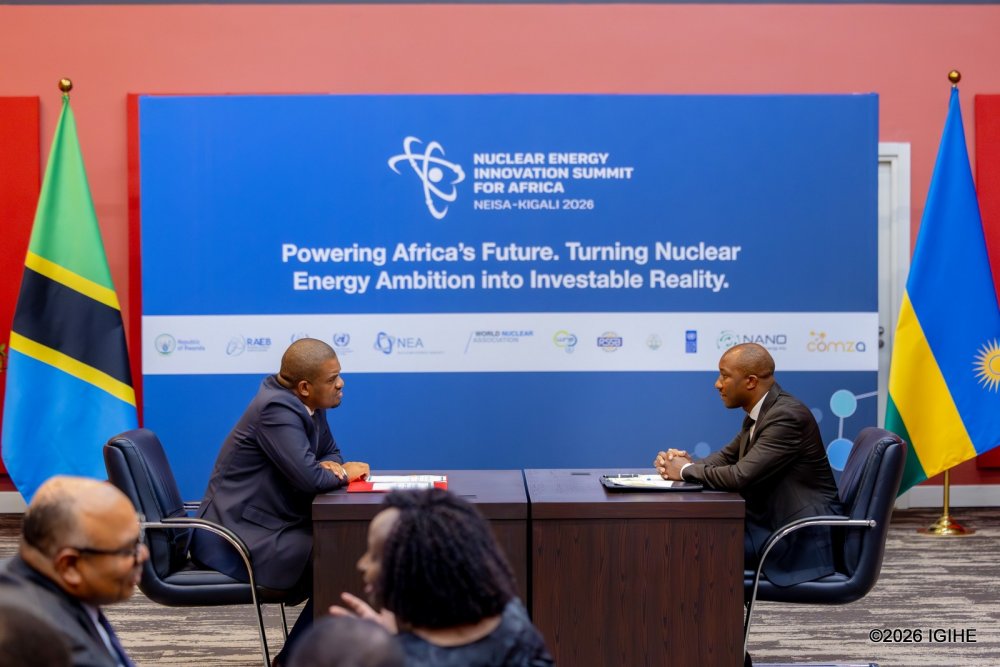
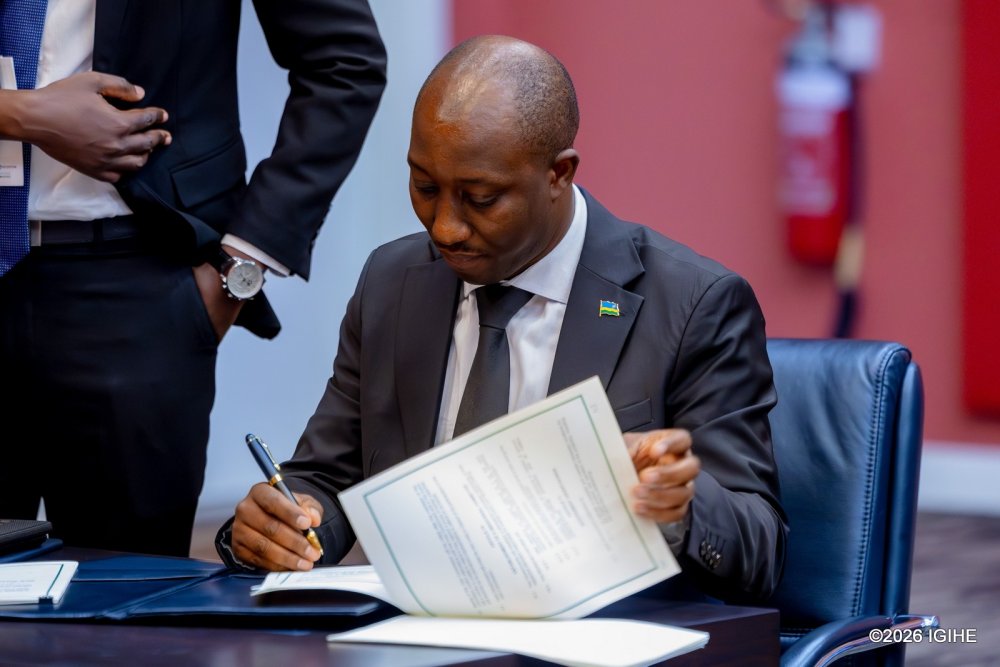
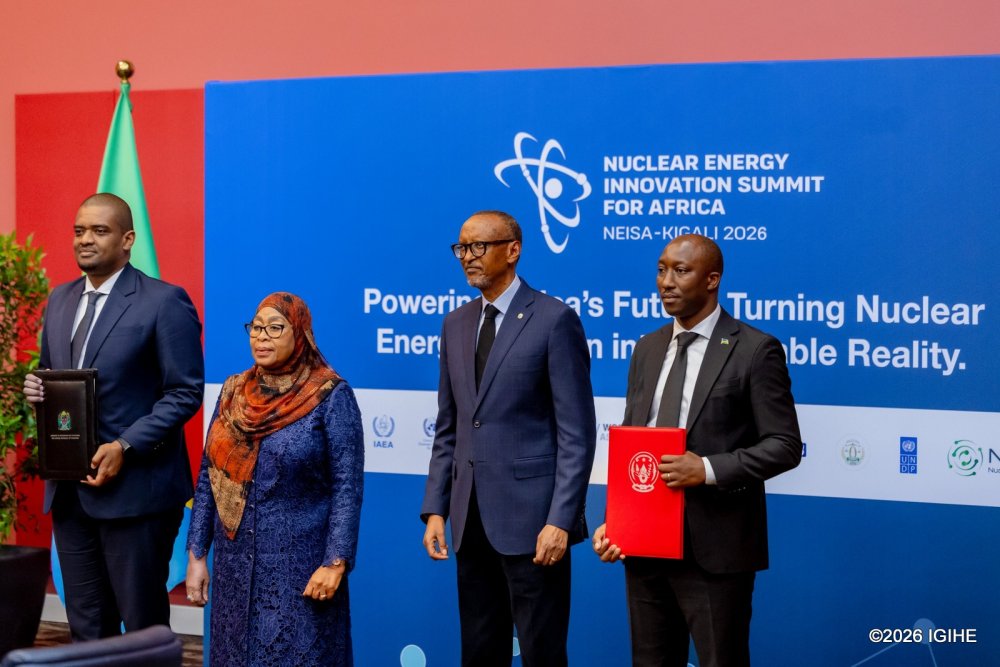
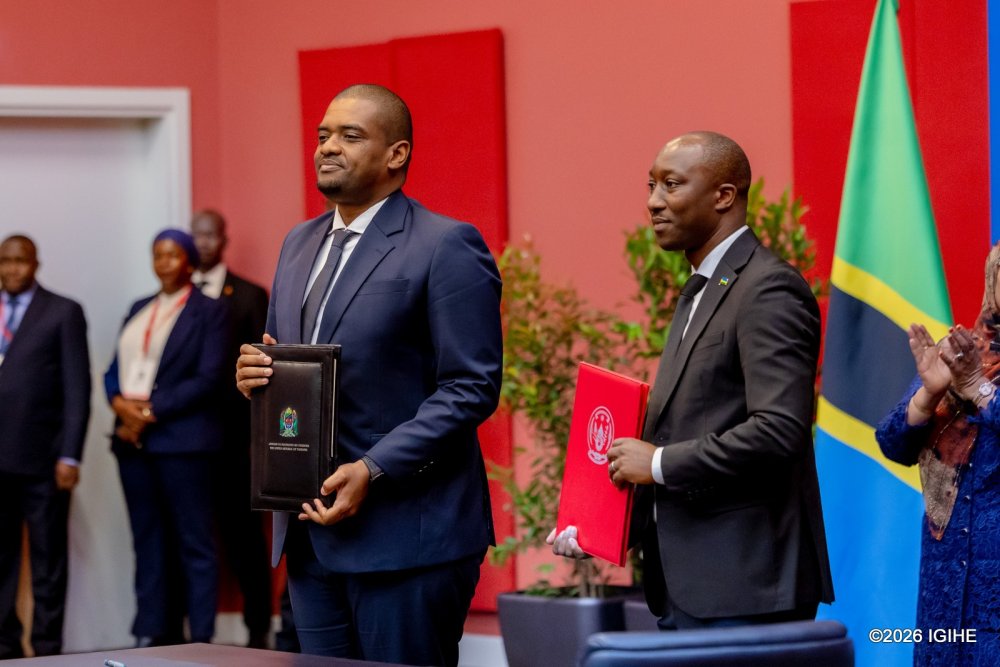
The agreement was signed on Tuesday, May 19, 2026, by Rwanda’s Minister of Infrastructure, Dr. Jimmy Gasore, and Tanzania’s Minister of Energy, Deogratius John Ndejembi.
It was witnessed by Rwandan President Paul Kagame and his Tanzanian counterpart, Samia Suluhu Hassan.
It focuses on expanding cooperation in key areas such as power infrastructure development, renewable energy, institutional capacity building, and cross-border energy collaboration.
Dr. Gasore praised the long-standing relationship between Rwanda and Tanzania, saying the agreement reflects both countries’ commitment to strengthening existing ties and promoting regional cooperation, particularly in the energy sector.
He added that the agreement will help the two countries work together in mutually beneficial areas such as energy trade, infrastructure development, technical cooperation, and other initiatives aimed at accelerating regional integration within East Africa.
The signing took place during high-level engagements held in Kigali, where Rwanda is hosting the second edition of the Nuclear Energy Innovation Summit on Africa (NEISA 2026) at the Kigali Convention Centre.
The summit has brought together senior leaders, including President Paul Kagame and visiting heads of state from Tanzania and Togo, international organisations, investors and technical experts to discuss how Africa can scale up reliable energy systems to support long-term economic transformation.
The MoU comes at a time when Rwanda is advancing long-term plans to diversify its energy sources, including the introduction of nuclear power.
The country aims to generate up to 1.5 gigawatts of electricity from nuclear energy by 2050, as part of efforts to meet rising national demand, which is projected to exceed 5,000 megawatts in the coming decades.
Speaking at the summit, Kagame said Rwanda’s successful completion of the International Atomic Energy Agency’s (IAEA) Phase I Integrated Nuclear Infrastructure Review marked a key milestone in its nuclear energy roadmap.
“We intend to have nuclear energy operational by the early 2030s. This assessment confirms that we are on track,” Kagame said.
Kagame said Africa’s development prospects depend heavily on solving persistent energy shortages, noting that modern manufacturing, mineral processing, digital infrastructure, artificial intelligence and advanced healthcare all require stable and reliable electricity.
Among the options under consideration is Small Modular Reactor (SMR) technology, which Rwanda views as more suitable than traditional large nuclear plants.
According to the Rwanda Atomic Energy Board (RAEB) Chief Executive Officer, Dr. Fidele Ndahayo, Rwanda could begin construction of its first nuclear power plant within the next two years, with preparatory work already underway.
Speaking at a recent stakeholder consultative meeting , he noted that several potential sites have been identified, while detailed technical and environmental studies are ongoing.
Tanzania produces about 4,500 megawatts of electricity. However, the country expects its electricity demand to rise to nearly 8,000 megawatts by 2030 and 70,000 megawatts by 2050.
Meanwhile, Rwanda’s electricity capacity stands at about 406 megawatts, creating a significant gap that authorities say must be addressed through new and scalable energy solutions.
Rwanda and Tanzania are already cooperating on several energy projects, including the Rusumo hydropower project, which has the capacity to generate 80 megawatts of electricity.
The project, jointly developed by Rwanda, Tanzania, and Burundi, is expected to provide each country with 26.6 megawatts of electricity. The power generated is expected to benefit about 1.146 million people, including around 520,000 Burundians, 467,000 Rwandans, and 159,000 Tanzanians.
Leave a Reply