Rwanda’s mountainous terrain presents unique driving challenges, and, according to Obi, hybrid vehicles are an excellent match for these conditions.
“Hybrid cars take advantage of the surroundings to give you efficiency, fuel economy, and that comfort you would get and that power you would get in a diesel engine,” he explains.
Hybrids utilise both a gasoline engine and electric motors. The electric motors provide instant torque, assisting with hill climbs, much like a turbocharger in a diesel engine, but in a cleaner, more efficient way.
Obi points out that a major challenge with hybrid vehicles in Rwanda is a lack of understanding about their systems. One common misconception is that hybrid cars can automatically switch to electric power when they run out of gasoline.
“This is not the case for hybrid vehicles. It needs the engine to work, and if there’s no fuel in the car, the engine will not operate,” he warns.
This misunderstanding often leads to damage to the battery, which can be costly to replace.
Using the popular Toyota Prius as an example, Obi explains that the battery pack consists of 28 pieces of batteries, each costing Rwf 90,000. Without preventive maintenance, which costs about Rwf 150,000, Rwandan owners risk spending over Rwf 2 million on replacement batteries.
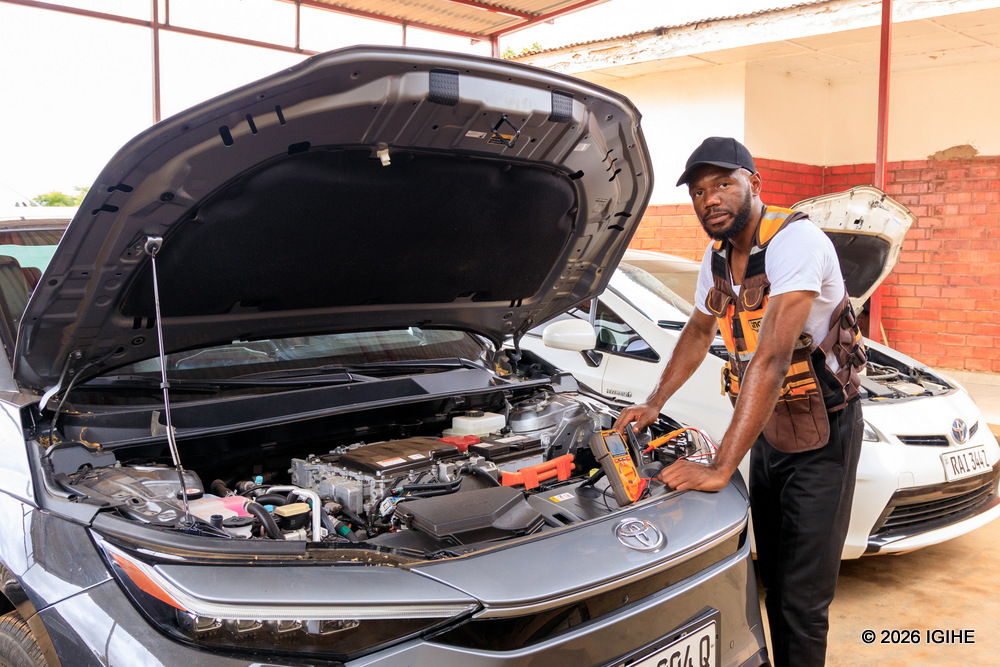
When comparing hybrid vehicles to electric ones, Obi is clear about which technology he prefers for the Rwandan context: “If you want to put it in comparison… I would still pick hybrid cars.”
He points out several advantages that hybrid cars offer over EVs in Rwanda:
- Minimal infrastructure requirements: Rwanda’s improving road network is already sufficient for hybrid vehicles.
- Excellent fuel efficiency: Many hybrid drivers report impressive mileage when the car is driven properly.
- No range anxiety: Hybrid cars provide the convenience of long-distance travel without worrying about finding charging stations in remote areas.
- Immediate environmental benefits: With lower emissions, hybrid cars contribute to cleaner air.
While electric vehicles show great promise, Obi acknowledges that the sector still faces logistical hurdles.
“Electric cars have few public charging stations for now… range anxiety is an issue,” he says.
However, the landscape is shifting rapidly. As of early 2026, Kigali has established itself as the country’s e-mobility hub with approximately 200 charging points, comprising roughly 35 dedicated car stations and 165 battery-swapping points for electric motorcycles.
While urban access is growing, rural areas and remote provinces still see limited density, with only about 24 public car-charging stations currently operating outside the capital.
To bridge this gap, the government’s National E-Mobility Plan has used geospatial mapping to identify 226 potential sites across the country, aiming to ensure that no driver is ever more than 50 kilometers from a charger.
Despite these challenges, Obi remains hopeful about future developments. He notes that Rwanda’s aggressive efforts in power generation, including diversifying the energy mix with solar and hydro projects, will significantly improve the outlook for sustainable transport in the coming years.
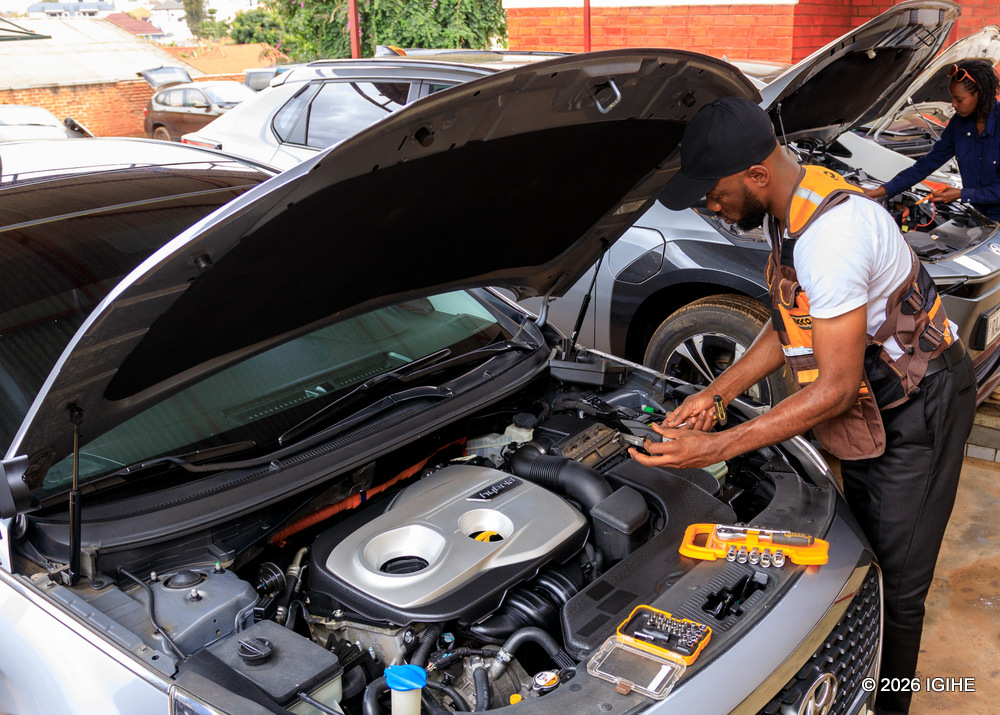
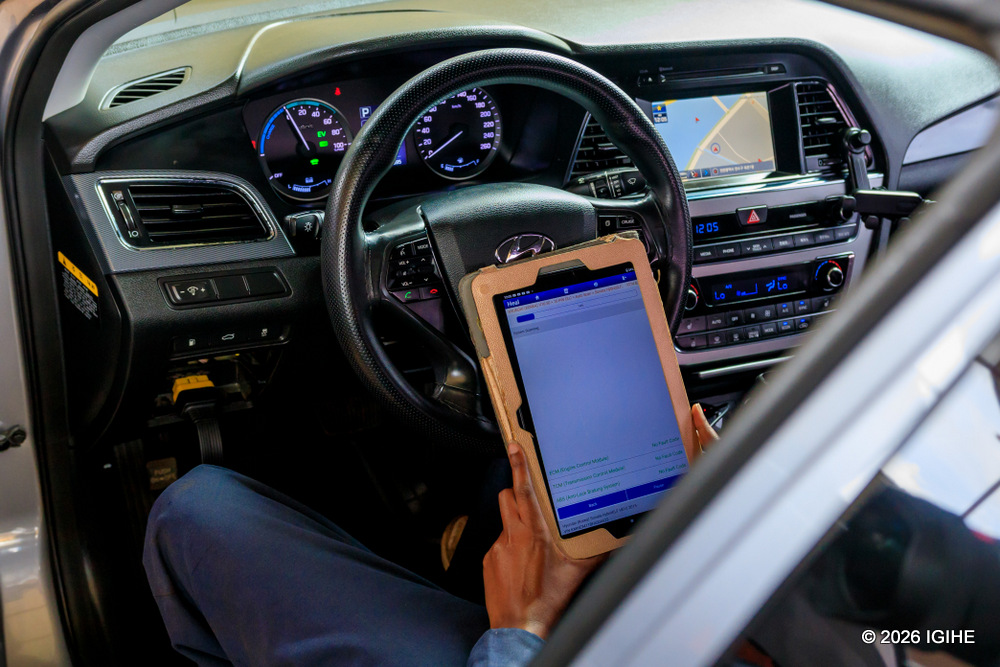
For hybrid vehicles, one of the main barriers to adoption in Rwanda is the availability of spare parts and the quality of repairs. Obi stresses that many mechanics rely on online tutorials for repairs, which can be risky and ineffective.
“Every car has a different genesis on how the issue came to be,” Obi explains, highlighting the importance of professional diagnostics for proper repairs.
As for electric vehicles, the priority lies in expanding Rwanda’s power grid and building a reliable charging network. Obi is optimistic about Rwanda’s future, stating, “Rwanda is far ahead… the country is already there when it comes to infrastructural development.”

Obi encourages Rwandans to embrace greener mobility, stating, “Embrace green earth. Assist the government in playing your role in promoting a green earth.”
He also advises hybrid vehicle owners to maintain their vehicles properly. “Hybrid vehicles do not require high maintenance costs if you commit to preventative care.”
Watch the full conversation below:


Leave a Reply