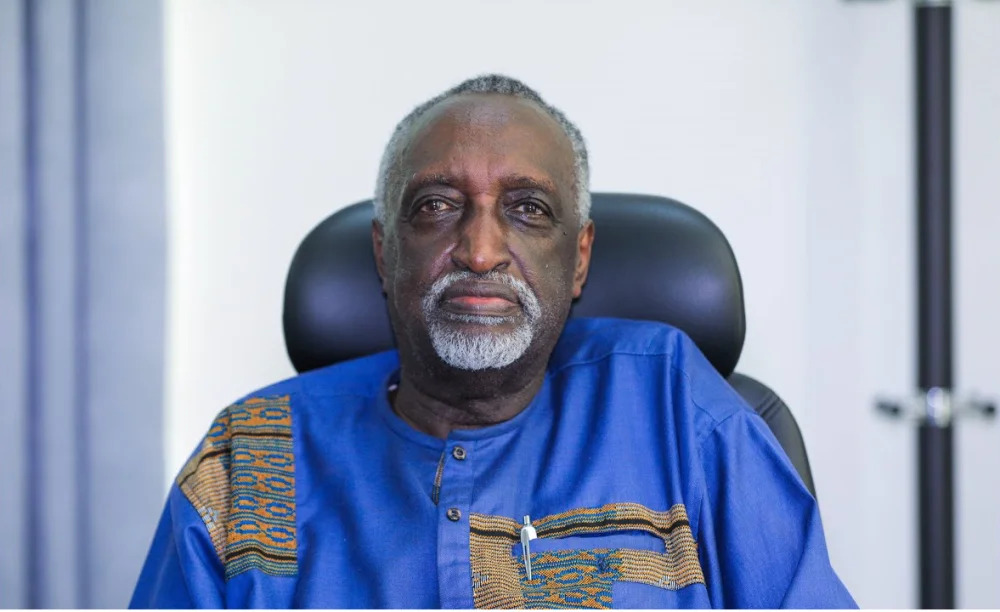
Rutaremara, now Chairperson of Rwanda Elders Advisory Forum (REAF), shared the account in an interview with One Nation Radio, offering fresh details about his first encounter with Dijoud, one of the key architects of France’s Rwanda policy in the early 1990s.
The remarks build on an account President Paul Kagame shared last month about his own tense meeting with Dijoud in Paris in September 1991, when the French official warned that even if the RPF captured Kigali, it would not find the people it sought to rescue because they would have already been killed.
A meeting that quickly turned confrontational
Rutaremara said he travelled to Paris ahead of Kagame to prepare for talks that France had requested with the RPF.
When he arrived at Dijoud’s office, he was received by the diplomat’s secretary while Dijoud met ministers from Djibouti, the Central African Republic and Chad.
According to Rutaremara, the secretary deliberately opened the office doors and windows, allowing him to overhear Dijoud reprimanding the ministers.
“We heard him saying they came asking for their countries’ money, squandered it and then returned asking for more,” Rutaremara recalled.
He believes the secretary intentionally allowed the RPF delegation to hear the exchange.
When Rutaremara and his colleagues were finally invited into Dijoud’s office, he said the French official did not greet them. Instead, he immediately asked whether they were from the RPF, speaking in what Rutaremara described as a dismissive tone.
Dijoud then urged the RPF to end the war, saying France wanted the movement to halt its military campaign and that he had advised President Juvénal Habyarimana to allocate government positions to the RPF.
Rutaremara objected to the tone of the meeting, telling Dijoud there was no reason to treat them disrespectfully.
“He asked me what I meant,” Rutaremara recalled. “I told him, ‘Those ministers you were scolding had come asking for money. We have not come here asking you for money, so why are you treating us this way?’”
‘We did not ask for your permission’
Rutaremara said Dijoud again insisted that the RPF should stop fighting.
His response, he said, was unequivocal.
“I told him, ‘When we started the war, we did not ask for your permission. You came to help fight against us, but you will not be the ones to stop this war. We will stop it ourselves when we decide the time is right.’”
According to Rutaremara, the exchange infuriated Dijoud, who ordered the delegation out of his office and requested that future discussions be held with other senior RPF leaders.
He said the French side specifically asked that Kagame, then the RPF’s vice chairman, attend the next meeting instead of the movement’s chairman, Col. Alexis Kanyarengwe.
Confined to a hotel in Paris
Rutaremara said that when Kagame later travelled to Paris for the talks, he was instructed to remain at the hotel where he was staying and was not allowed to accompany him to the negotiations.
He believes the decision was linked to his earlier confrontation with Dijoud.
“It felt like being imprisoned,” he said. “I believed they kept me away because of my argument with Dijoud.”
Rutaremara added that Rwandan contacts later helped him leave the hotel through an alternative exit.
A lesson for young people
Reflecting on the RPF’s eventual military victory over the then Rwandan government forces and the French troops supporting them, Rutaremara said the outcome should inspire younger generations.
He argued that despite France’s global influence, the RPF prevailed because it remained committed to what it believed was a just cause.
“Do not be intimidated by those who appear powerful. If you are fighting for a just cause, remain committed to it, and you can achieve your goal,” he said.
At the RPF Political Bureau meeting on July 17, 2026, President Kagame also recalled his own encounter with Dijoud, saying the French official warned him in September 1991 that if the RPF continued fighting, it would eventually capture Kigali only to find that the people it sought to save had already been killed.
“He said, ‘You must stop fighting, because even if you take Kigali, you will not find your people,’” Kagame recalled.
“At first, I couldn’t understand what it meant. But it actually meant they would be killed,” he added, noting that the warning foreshadowed the 1994 Genocide against the Tutsi.
As the meeting ended, Kagame said Dijoud made a sarcastic remark in the corridor, telling him he hoped to meet him again “when you are the commander of the new army of Rwanda.” Kagame said he replied that if that happened, he would do a good job of it.
President Kagame also recounted how, after the meetings, he and two colleagues, Dr. Emmanuel Ndahiro and Tom Byabagamba, were arrested in the middle of the night by armed plainclothes officers while staying at a hotel in Paris.
He said they were taken to a detention facility, where they were questioned about the people they had met during the visit.
Kagame recalled refusing to undergo a polygraph test and rejecting food offered to him while in custody. The three were released later that day before Kagame left France via Brussels.
Leave a Reply