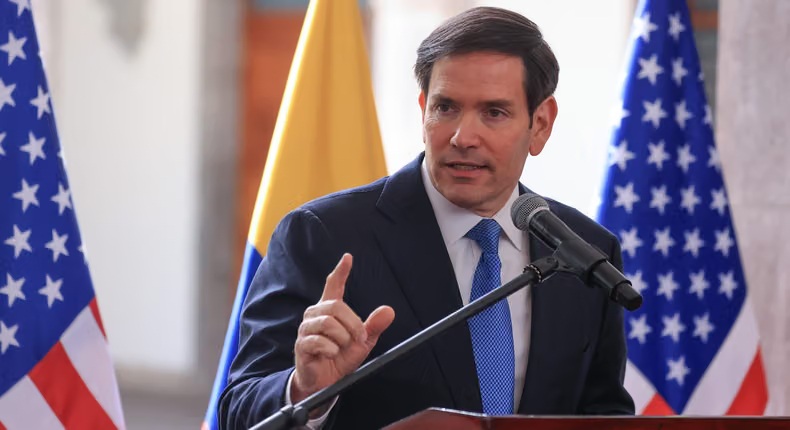
US Secretary of State Marco Rubio announced the policy on Tuesday, saying Washington had determined that the South African government had not adequately addressed concerns previously raised by the Trump administration.
The restrictions will target people whom the US says are responsible for or complicit in the enactment or implementation of laws or policies that enable uncompensated land seizures, race-based discrimination or the incitement of imminent violence against minority ethnic or racial groups in South Africa.
The US did not immediately identify any individuals affected by the restrictions.
Rubio said the policy was being imposed under Section 212(a)(3)(C) of the US Immigration and Nationality Act, which allows the secretary of state to declare a foreign national inadmissible where their entry could have potentially serious adverse consequences for US foreign policy.
“These actions directly undermine peace, economic stability, and the rule of law,” Rubio said in the statement.
The move is the latest escalation in relations between Washington and Pretoria, which have deteriorated since President Donald Trump returned to office in January 2025.
The Trump administration has repeatedly accused South Africa of discriminating against Afrikaners, the predominantly white descendants of European settlers, through its racial-equity policies and land reform programme. South Africa has rejected those allegations.
At the centre of the dispute is South Africa’s land reform policy. President Cyril Ramaphosa signed legislation allowing the state to expropriate property in the public interest, including in limited circumstances where compensation may be set at zero.
The law requires authorities, in most cases, to first seek agreement with property owners, while disputes can be challenged in court. The South African government has argued that the legislation is intended to address land inequalities created during apartheid and does not permit arbitrary seizure of property.
Land ownership remains a politically sensitive issue in South Africa, where the black majority was dispossessed of land and denied many rights under apartheid.
Trump has previously accused South Africa of failing to protect white farmers and offered refugee status to Afrikaners seeking to leave the country. South African authorities have rejected claims of a campaign of persecution against white people and have said allegations of a “white genocide” lack credible evidence.
The latest US measures come after Washington imposed a 30% tariff on South African exports in August, adding to tensions between the two countries.
The US embassy in Pretoria said the new visa restrictions were the first in a series of measures intended to demonstrate Washington’s position on the issue.
“The South African government has not adequately addressed the previously laid out concerns,” Rubio said.
Leave a Reply