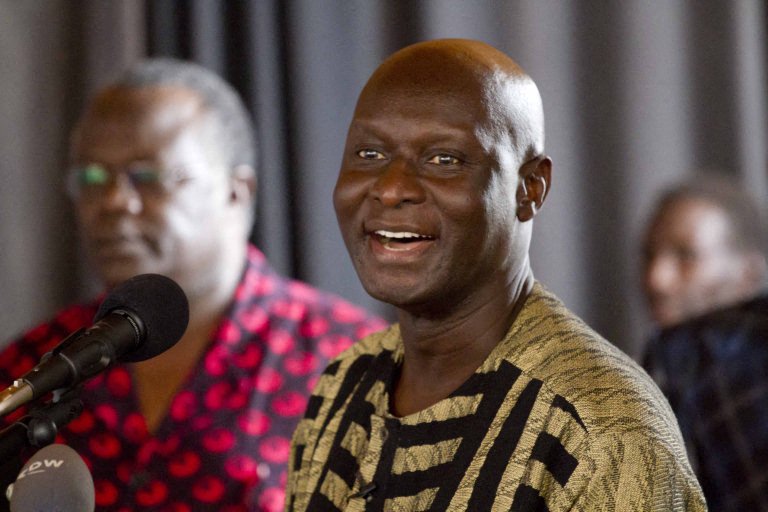
The Ugandan government formally submitted Otunnu’s candidature to the United Nations on Saturday, presenting him as a veteran diplomat and international civil servant with more than four decades of experience in global affairs.
Otunnu, 75, previously served as the UN Under-Secretary-General and Special Representative of the Secretary-General for Children and Armed Conflict from 1997 to 2005 under former Secretary-General Kofi Annan.
During his tenure, he helped elevate the protection of children affected by armed conflicts on the UN agenda and contributed to the creation of mechanisms aimed at monitoring violations against children in war zones.
Before joining the UN leadership, Otunnu served as Uganda’s Permanent Representative to the United Nations from 1980 to 1985 and briefly held the position of Foreign Affairs Minister between 1985 and 1986.
Otunnu served as Uganda’s Permanent Representative to the United Nations from 1980 to 1985 and became President of the UN Security Council in December 1981. During that period, he played a key role in resolving a deadlock over the selection of the UN Secretary-General by introducing a straw-balloting procedure that helped identify Javier Pérez de Cuéllar as a consensus candidate.
At the national political level, Otunnu led the opposition Uganda People’s Congress (UPC) and contested Uganda’s 2011 presidential election, where he lost to President Yoweri Museveni, who has been in power since 1986.
Beyond government and UN roles, Otunnu served as President of the International Peace Academy, now known as the International Peace Institute, from 1990 to 1998. He has also held academic positions at institutions including Albany Law School and the American University in Paris.
His nomination adds him to a field that includes Chile’s Michelle Bachelet, Ecuador’s Maria Fernanda Espinosa, Argentina’s Rafael Grossi, Costa Rica’s Rebeca Grynspan, Guyana’s Carolyn Rodrigues-Birkett and Senegal’s Macky Sall.
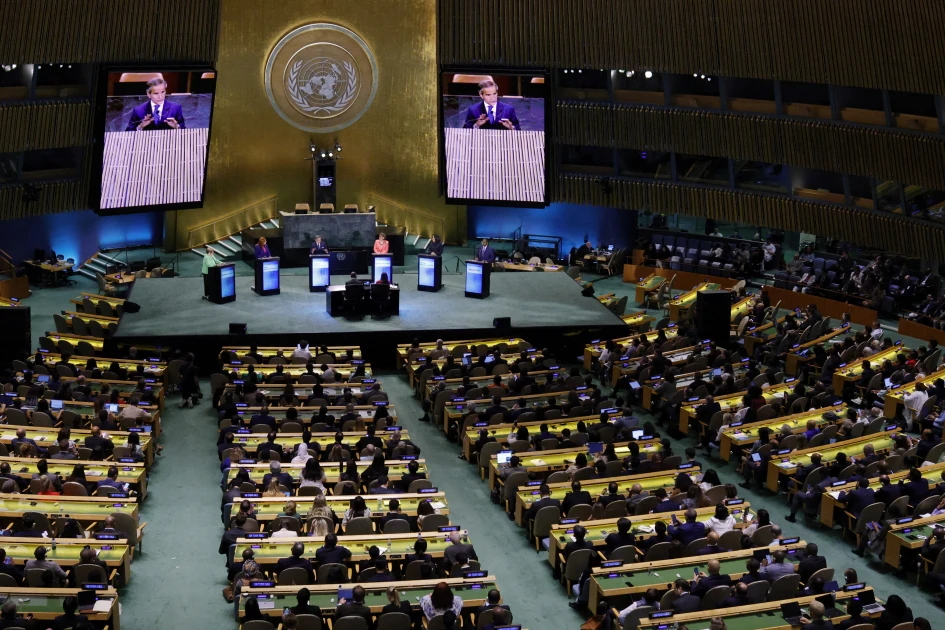
The candidates took part in a televised debate on Thursday as they presented their visions for leading the United Nations.
The UN Security Council is expected to hold its first closed-door, anonymous vote on the candidates on July 30. The process will continue through additional rounds of voting until a candidate secures the required nine votes from the 15-member council without opposition from any of the five permanent members: the United States, United Kingdom, China, France and Russia.
The selected candidate will then be presented to the UN General Assembly for formal appointment and will assume office on January 1, 2027.
Leave a Reply