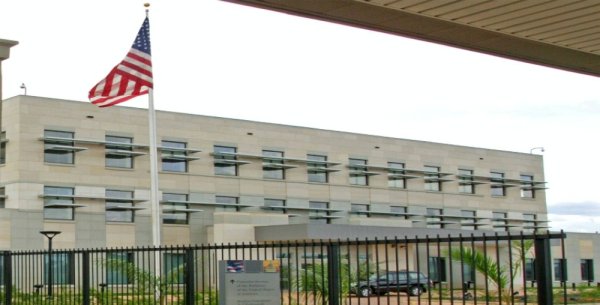
In a health alert issued on May 18, 2026, the embassy said the World Health Organization (WHO) had declared the Ebola outbreak in the DRC and Uganda a Public Health Emergency of International Concern (PHEIC) on May 17.
The advisory follows a Level 2 Travel Health Notice issued by the U.S. Centers for Disease Control and Prevention (CDC) for the DRC, urging travelers to practice enhanced precautions, while Uganda remains under a Level 1 notice advising usual precautions.
The embassy warned Americans against traveling to Ituri Province in eastern DRC, which is currently under a Level 4 “Do Not Travel” advisory due to the heightened Ebola risk.
“The U.S. government is extremely limited in its ability to provide emergency assistance. Do not travel to this area for any reason,” the alert stated.
According to the CDC, Ebola is a rare but severe and often fatal hemorrhagic disease transmitted through direct contact with infected individuals, bodily fluids, contaminated objects, or infected corpses.
The embassy advised people at risk of exposure to seek medical guidance immediately if they develop Ebola-like symptoms. It also encouraged travelers to continue taking malaria prophylaxis, noting that malaria symptoms can resemble those of Ebola and may lead to unnecessary panic.
Travelers returning from affected regions were urged to monitor their health for 21 days after travel.
The advisory comes as Rwanda intensifies surveillance and prevention measures along its borders with the DRC following the worsening outbreak, which has already killed at least 87 people in eastern Congo.
In a statement issued on May 17, Rwanda’s Ministry of Health said there were currently no Ebola cases in Rwanda but confirmed that authorities had heightened preparedness measures.
Health screening and surveillance have been reinforced at border entry points, with rapid response teams placed on alert to ensure early detection and containment of any suspected cases.
According to the Africa Centres for Disease Control and Prevention (Africa CDC), the outbreak has so far recorded 336 suspected and confirmed cases in Ituri Province and is linked to the Bundibugyo strain of the Ebola virus, which currently has no approved strain-specific vaccine.
Regional concerns deepened after Uganda confirmed an imported Ebola case linked to the DRC outbreak involving a 59-year-old Congolese man who later died in Kampala.
Authorities in Rwanda have also temporarily closed several border crossings with the DRC as a preventive measure. The Petite Barrière, Grande Barrière, and Kabuhanga border posts linking Rubavu District and Goma were shut down on May 17.
On May 18, authorities in Rusizi District also announced the temporary closure of the Rusizi I and Rusizi II border posts connecting Rwanda to Bukavu in eastern DRC.
Rusizi District Mayor Phanuel Sindayiheba said limited movement would still be allowed for students, humanitarian workers, transporters of essential goods, and returning residents under strict monitoring procedures.
The Ministry of Health said Rwanda would continue working with regional and international partners to strengthen preparedness and safeguard public health as the outbreak evolves.
Leave a Reply