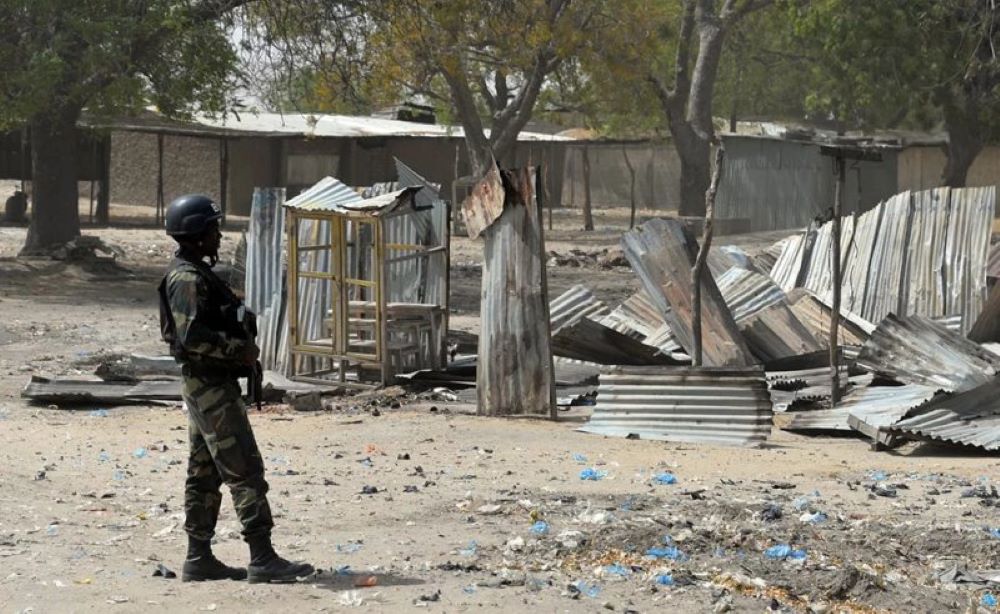
The attack occurred at Tourou village in the Mokolo subdivision of the Mayo-Tsanaga department on Monday night.
An infant was also shot and seriously injured during the raid, a security source told Xinhua.
The attackers reportedly seized military equipment before withdrawing. The wounded soldiers and the infant were rushed to a regional hospital for treatment.
The attack came just hours after government troops repelled another Boko Haram assault in the same area, killing two militants and injuring several others.
The Boko Haram terror group has been carrying out attacks in Cameroon’s Far North region since 2014, inflicting heavy human and material losses across the region.
Reports indicate that 1 civilian has been killed while 4 soldiers were injured in Boko Haram attack in Cameroon’s Far North
Both sides now accuse the other of violating the agreement first. While neither has formally declared the MoU void, the latest escalation has cast doubt over whether diplomacy can survive another round of fighting.
Has the MoU collapsed?
The clearest signal yet came from U.S. President Donald Trump, who formally notified Congress in a letter dated Friday that military operations against Iran had resumed under his direction.
In a letter to lawmakers, Trump described the strikes on Iran that began on July 7 as “military action consistent with my responsibility to protect Americans and United States’ interests both at home and abroad.” This notification starts a new 60-day period during which the Trump administration can conduct military operations in the region without congressional approval.
On Monday, Trump said on Truth Social that the United States was “reinstating the Iranian blockade, so named because it is only stopping Iran’s ships or customers from entering or leaving,” and proposed charging a 20 percent fee on cargo transiting the Strait of Hormuz.
However, Tehran insists it is not the side that abandoned the agreement.
Iranian Foreign Ministry spokesman Esmaeil Baghaei said on Monday that the MoU had entered a “crisis phase” because Washington had continuously violated its obligations. He said Iran would follow a principle of “commitment for commitment” and warned that if the United States continues breaching the deal, Iran would no longer see any reason to fulfill its own obligations.
Can diplomacy revive?
Before the latest escalation, the two sides had been using regional mediators to preserve the fragile agreement.
According to Axios, Washington demanded that Iran publicly reaffirm that the Strait of Hormuz remained open and “stop firing on commercial ships,” arguing that Tehran had violated the MoU.
Trump also said last week that the United States had agreed to continue talks with Iran, although he simultaneously declared that the ceasefire was “over.”
Iran denied requesting new negotiations but indicated it remained willing to engage through regional intermediaries, including Qatar, according to Qatar’s Al Jazeera television.
The fighting has nevertheless intensified. The U.S. Central Command (CENTCOM) said its latest wave of strikes against Iran concluded late Monday after strikes on military targets across Iran, including Bushehr, Chah Bahar, Jask, Konarak, Abu Musa, and Bandar Abbas, to “further degrade Iran’s ability to attack commercial shipping.”
Iran has continued missile and drone attacks on U.S. positions and regional targets, including Oman, Bahrain, Jordan and Kuwait.
The Islamic Revolution Guard Corps (IRGC) said Tuesday that it has launched missile and drone attacks on the U.S. Fifth Fleet based in Bahrain. “The retaliatory operation continues,” the statement said.
Who controls Hormuz?
The Strait of Hormuz has once again become the main flashpoint.
Early Sunday, Iran’s IRGC announced that the Strait of Hormuz would remain closed “until further notice” and until “the end of U.S. interference in this region.”
The U.S.-led Joint Maritime Information Center and the U.S. Naval Forces Central Command said Sunday that the southern route remains operational despite Iranian claims, adding that “U.S. forces are prepared to maintain freedom of navigation and safeguard lawful commerce.”
On Monday, CENTCOM announced that it would resume blockading maritime traffic entering and leaving Iranian ports beginning at 4 p.m. ET (2000 GMT) Tuesday.
Baghaei said Sunday that arrangements for the future administration of maritime traffic in the Strait of Hormuz must be made through consultations with Oman.
Those competing visions directly contradict one of the MoU’s central provisions, which envisioned the lifting of the U.S. naval blockade while Iran ensured safe passage for international shipping.
For now, the memorandum has not been formally abandoned. But with military operations expanding, the agreement appears to be surviving more on paper than in practice.
Fresh U.S. airstrikes and Iranian retaliation have plunged Washington and Tehran back into open conflict less than a month after they signed a 14-point memorandum of understanding (MoU) aimed at ending the war and paving the way for broader negotiations.
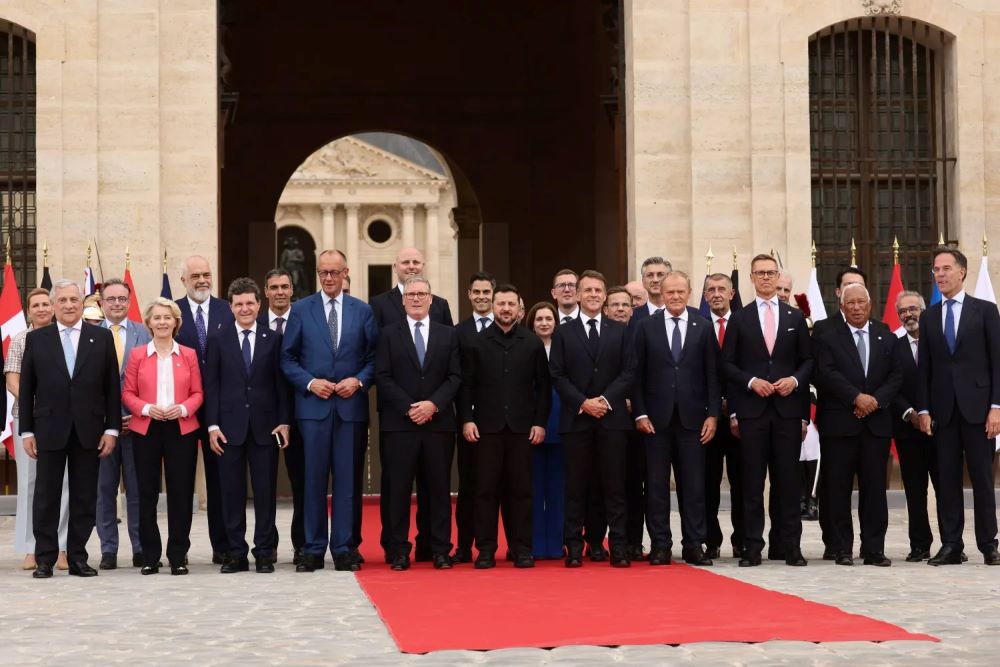
Announced on Monday at a Paris summit hosted by French President Emmanuel Macron, the landmark alliance, which includes defence heavyweights Britain, France, Germany, Italy, and Spain, aims to build an integrated, sovereign missile defence architecture to deter escalating Russian aerial threats.
A new role for Ukraine and the “Freyja” initiative
Significantly, this agreement marks a paradigm shift in how the West interacts with Kyiv. Rather than treating Ukraine as a passive recipient of military aid, the coalition positions Ukraine as a founding co-developer. The alliance’s immediate flagship initiative is the Freyja project, designed to break Europe’s reliance on prohibitively expensive U.S. Patriot interceptors, which cost upwards of $4 million per shot.
Instead, the coalition will focus on manufacturing a low-cost, mass-producible European alternative. By leveraging Ukraine’s active combat experience and cutting-edge domestic defence firms, such as Fire Point, which recently prototyped a $700,000 interceptor, the coalition plans to fuse Western aerospace engineering with Ukrainian wartime innovation.
The reality check: No cash, no timeline
Yet, behind the grand rhetoric of the joint declaration lies a stark industrial reality: the initiative currently exists only on paper. The charter commits member states merely to “exploring appropriate opportunities for funding,” leaving the project without a designated budget, a lead nation, or a centralised administrative secretariat.
Developing, testing, and integrating a brand-new anti-ballistic missile system from scratch is an incredibly complex engineering feat. Defence analysts warn that delivering an operational Freyja system will take several years, meaning it will offer zero protection for Ukraine’s vulnerable power grid during the immediate, impending winter bombardment campaign.
Furthermore, the coalition must navigate deep-seated European rivalries. While Macron used the Paris summit to urge European states to abandon “go-it-alone” national procurement, getting European capitals to collaborate remains notoriously difficult, a reality recently highlighted by the near-collapse of joint Franco-German defence programs.
Predictably, the initiative drew immediate fire from the Kremlin. Moscow spokesman Dmitry Peskov swiftly dismissed the alliance, branding it a “coalition of the deluded” and warning that such steps would only further destabilise the region.
Ultimately, the Paris declaration is a major political victory for Ukraine’s long-term integration into European defence infrastructure. However, until member nations back their signatures with hard currency, the Freyja project remains a promising blueprint rather than an active shield. For now, Europe’s skies will continue to rely on dwindling legacy stockpiles while this new coalition attempts to turn political promises into physical defences.
French President Emmanuel Macron (C-L) and Ukrainian President Volodymyr Zelensky (C) pose for a group photo with heads of states and governments ahead of the Coalition of the Willing summit on security guarantees for Ukraine at the Hotel des Invalides in Paris, France, 13 July 2026. (EPA)
OPEC made the forecast in its latest monthly oil market report. Of the total 800,000 bpd demand growth, the oil demand in the non-OECD (Organization for Economic Cooperation and Development) countries is expected to take up the biggest share and grow by about 740,000 bpd year-on-year in 2026.
In its June report, OPEC had forecast global oil demand growth of 1 million bpd year-on-year for 2026.
In 2027, global oil demand is estimated to rise by about 1.9 million bpd year-on-year, representing an upward revision of about 200,000 bpd from OPEC’s June forecast.
On the supply side, the report said that in June, crude oil production by OPEC+ countries increased by about 3 million bpd month-on-month to average at 36.28 million bpd. However, major producer Saudi Arabia reported lower oil production in June compared with a month ago.
In 2027, global oil demand is estimated to rise by about 1.9 million bpd year-on-year
Xi said China and Namibia enjoy profound traditional friendship and share common aspirations for development, adding that since the establishment of diplomatic ties, the two countries have always treated each other as equals and supported each other.
Noting that bilateral friendly cooperation has continued to deepen, delivering tangible benefits to the two peoples, Xi said China stands ready to work with Namibia to enhance exchanges of development philosophies and synergize development strategies, and partner with each other on their paths to modernization.
Xi put forward three proposals for building a China-Namibia community with a shared future for the new era.
China and Namibia should maintain close high-level exchanges, deepen experience sharing on governance, stay in regular communication on issues of overall and strategic importance in bilateral relations, and continue to support each other on issues concerning their respective core interests and major concerns, Xi said.
Xi also urged the two sides to tap the potential of cooperation and take it to higher levels, encouraging Namibia to make full use of the zero-tariff access, the upgraded fast track for Namibian exports to reach China, and other favorable policies.
China is ready to deepen cooperation with Namibia in such areas as infrastructure, energy, mining, agriculture, education, youth, science and technology, he noted.
Xi added that the two countries should uphold solidarity and coordination to safeguard multilateralism. China is willing to work with African countries, including Namibia, to enhance the strength and voice of the Global South, and make new contributions to building a community with a shared future for humanity, Xi said.
Noting that helping Africa develop its abundant mineral resources and effectively translate its resource advantage into development momentum is an important way to accelerate Africa’s modernization, Xi said China stands ready to continue strengthening mining cooperation with African countries, including Namibia, based on three principles.
The first is pursuing mutual benefit and win-win cooperation, Xi said, adding that the two sides should fully leverage their complementary strengths and deepen the convergence of interests.
Xi said the second is conducting friendly consultation, calling for proceeding from the big picture of China-Africa friendship, and properly resolving issues in cooperation through communication and consultation.
He noted the third is breaking new ground, adding that China stands ready to work with Africa to explore new approaches to cooperation in accordance with market-oriented and commercial principles, with a view to upgrading the quality of China-Africa cooperation in the mining sector.
For her part, Nandi-Ndaitwah extended warm congratulations on the 105th anniversary of the founding of the Communist Party of China. Namibia attaches great importance to its relations with China and firmly adheres to the one-China principle, she added.
Namibia welcomes more Chinese enterprises to invest and operate in the country, and hopes to strengthen cooperation in areas such as industry, mining, infrastructure, aviation and space, science and technology, agriculture and water resources, said Nandi-Ndaitwah.
China has long provided selfless support and assistance to African countries, including Namibia, and has always upheld a just position in international and regional affairs, said the president. She added that Namibia will enhance communication and coordination with China to safeguard the common interests of developing countries and jointly build a community with a shared future for humanity.
Following the talks, the two presidents witnessed the signing of multiple cooperation documents in areas such as economy and trade, healthcare, education and human resources.
The two sides also issued a joint statement on building a China-Namibia community with a shared future for the new era.
Prior to the talks, Xi and his wife Peng Liyuan held a welcome ceremony for Nandi-Ndaitwah and her spouse Epaphras Denga Ndaitwah. Xi and Peng also held a welcome banquet for them in the evening.
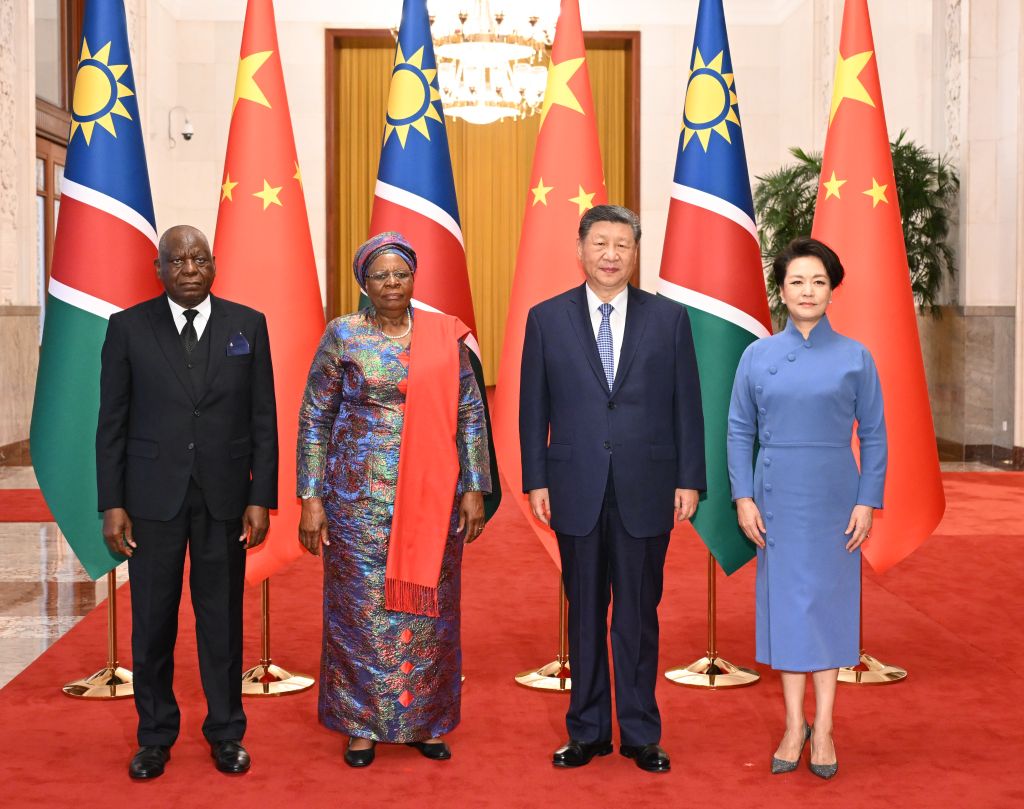
Chinese President Xi Jinping and his wife Peng Liyuan pose for a group photo with Namibian President Netumbo Nandi-Ndaitwah and her spouse Epaphras Denga Ndaitwah prior to the talks between Xi and Netumbo Nandi-Ndaitwah in Beijing, capital of China, July 10, 2026. Xi held talks with Netumbo Nandi-Ndaitwah, who is on a state visit to China, at the Great Hall of the People in Beijing on Friday. (Xinhua/Li Xiang)
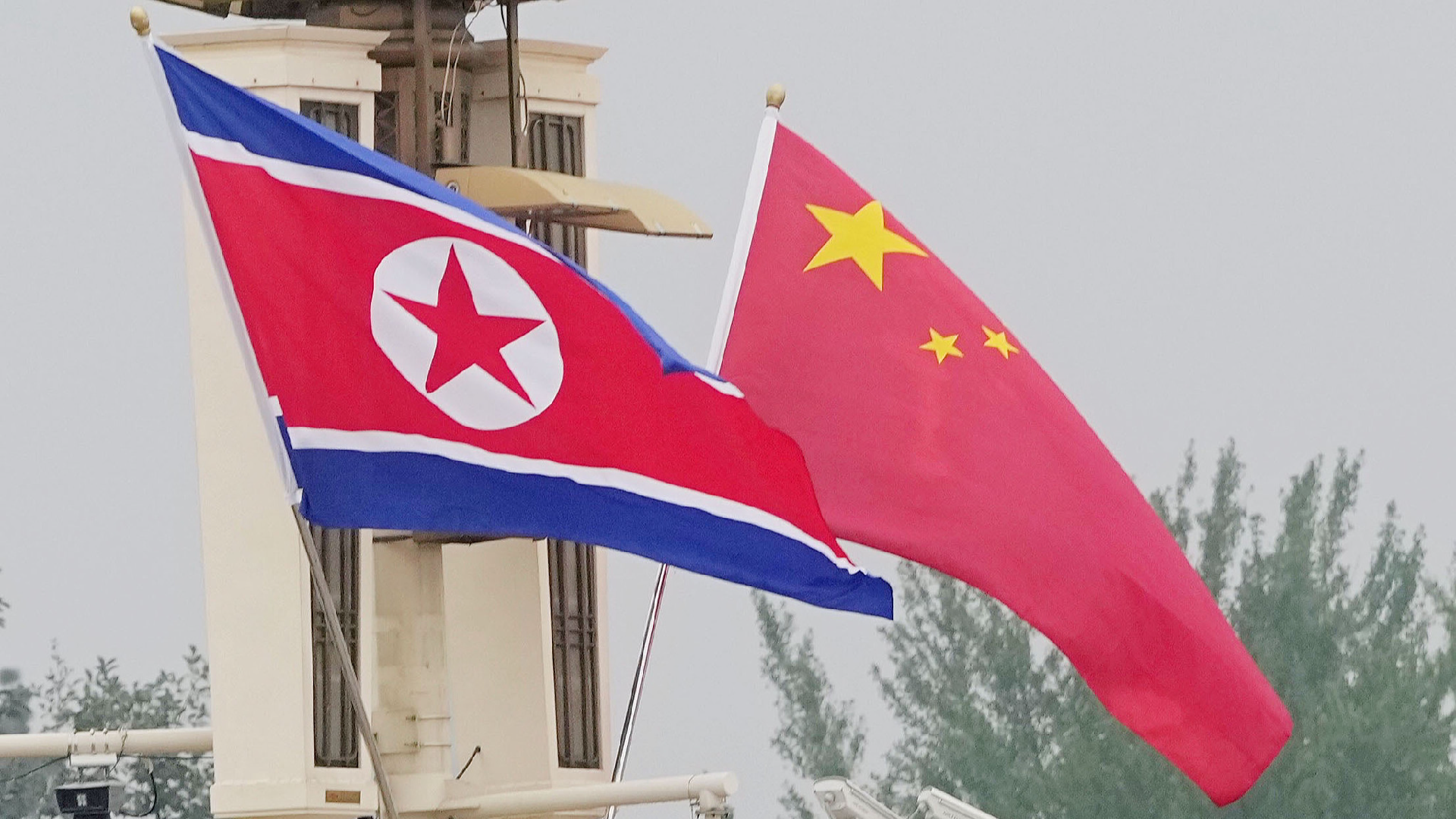
In his message, Xi said that in 1961, the older generations of leaders of China and the DPRK signed the China-DPRK Treaty of Friendship, Cooperation and Mutual Assistance, laying an important political and legal foundation for consolidating the friendship forged in blood between the two peoples.
The treaty has played an important role in carrying forward China-DPRK friendship and safeguarding peace and stability in the region and beyond, he said.
Over the past 65 years, the two sides have upheld the spirit of the treaty, supported each other, stood united, cooperated closely and worked together, vividly demonstrating the defining features of China-DPRK relations — friendship passed down from generation to generation, a shared future and mutual support, he said.
Xi pointed to a successful state visit to the DPRK in June, when he reached important consensus with Kim on consolidating and carrying forward the traditional friendship between China and the DPRK and enriching it with new dimensions, providing strategic guidance and a new blueprint for the development of China-DPRK relations in the new era.
Facing a rapidly evolving world undergoing profound changes unseen in a century, Xi voiced willingness to work with Kim to further strengthen strategic communication, keep China-DPRK relations on the right track and guide bilateral friendly cooperation to deliver greater benefits to the two peoples, so as to make positive contributions to promoting regional peace and development.
No matter how the international landscape evolves, the firm position of China’s Party and government to attach great importance to the traditional friendship between China and the DPRK will remain unchanged; the firm support for Kim in leading the DPRK’s socialist cause will remain unchanged; and the determination to safeguard the common interests of both sides and maintain a favorable strategic environment will remain unchanged, he said.
Xi expressed confidence that, under the leadership of the WPK headed by Kim, the DPRK people will fully implement the decisions and arrangements of the Ninth Congress of the WPK and continue to achieve new and greater successes in their socialist cause.
In a post on X, Bayo Onanuga, spokesperson for Nigerian President Bola Tinubu, confirmed that all the abducted pupils and teachers from the Oriire community had regained their freedom in a rescue operation carried out by multiple security agencies.
The mass abduction occurred on May 15, when a group of gunmen attacked three schools in the Esiele and Yawota communities of Oriire Local Government Area in Oyo state.
Local media reported that 46 people — 39 pupils and seven teachers — were abducted. One of the abducted teachers was later killed in captivity. Nigerian authorities identified the attackers as displaced members of the Boko Haram terrorist group.
On Thursday, Nigerian Defense Minister Christopher Musa said the terrorists had demanded the release of several detained commanders in exchange for the hostages, a demand the Nigerian government publicly rejected.
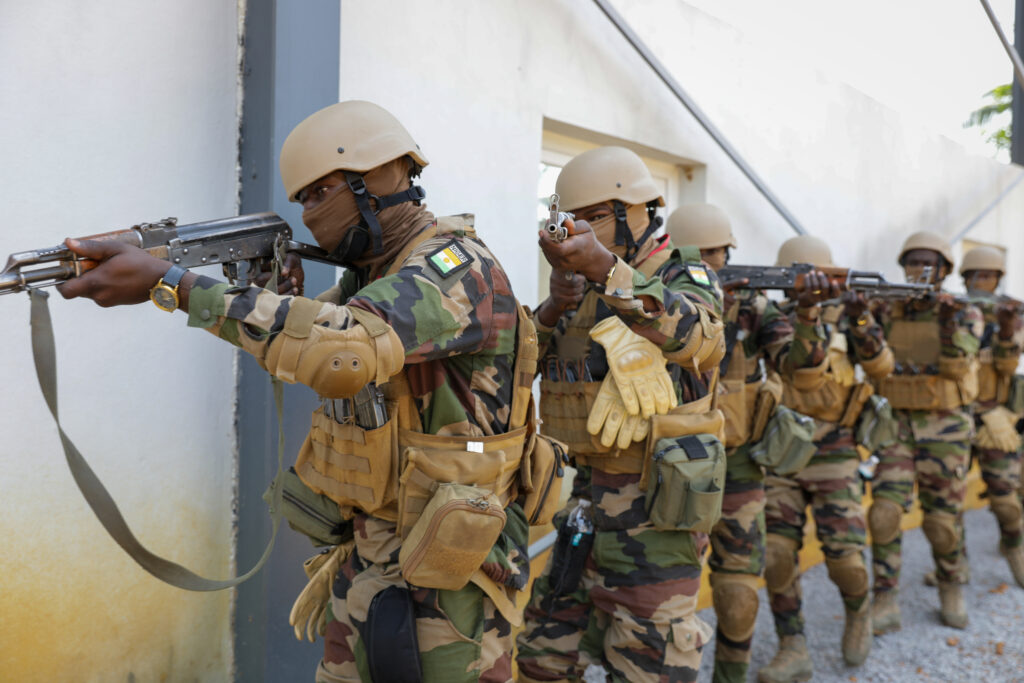
Nigerian Armed Forces Soldiers enter a building during close quarter battle (CQB) training at Flintlock, in Côte d’Ivoire. Photo: Sgt. Kacie Benak/US Army
The number of injured remained at 16,740, according to figures released in an update by Venezuelan National Assembly President Jorge Rodriguez. A total of 6,462 people have been rescued.
The update said 86,794 families had received assistance, while 17,266 people were staying in 89 temporary camps across the country. Another 17,907 people were left homeless after their homes were damaged or destroyed.
Response operations are continuing with 30,076 personnel, 29,843 volunteers and 3,454 international rescuers deployed across the country.
Venezuela has recorded 1,171 aftershocks since the twin earthquakes, the update said.
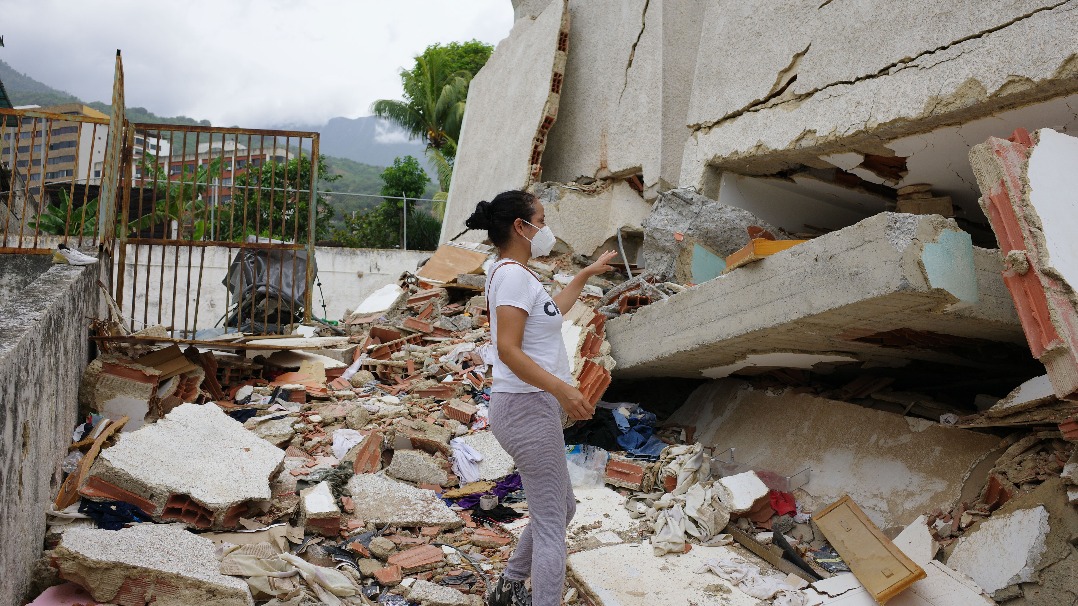
The death toll from the June 24 earthquakes in Venezuela has risen to 4,118 as crews continue to clear rubble in the hardest-hit areas
“Orders have already been given, and the U.S. Military is ready, willing, and able, for a one year period of time, subject to extension, to completely decimate and destroy all areas of Iran,” he wrote in a post on Truth Social.
Earlier Friday, Trump said that Washington has agreed to continue negotiations with Iran, although it has informed Tehran that the ceasefire is over.
“The Islamic Republic of Iran has asked us to continue ‘talks.’ We have agreed to do so, but the United States has stated to them, in no uncertain terms, that the Cease Fire is OVER!” Trump wrote on Truth Social.
U.S. forces carried out repeated strikes against Iran earlier this week in response to several attacks on commercial vessels transiting the Strait of Hormuz. In retaliation, Iran struck U.S. military bases and facilities in Kuwait, Bahrain, Qatar, and Jordan with missiles and drones.
In a fresh phone call, Saudi Crown Prince and Prime Minister Mohammed bin Salman Al Saud discussed the U.S.-Iran talks with Trump.
The Saudi Press Agency reported that the two sides discussed Saudi-U.S. cooperation and ways to enhance it in various fields. They also stressed the importance of ensuring maritime navigation security, protecting sea lanes, and supporting efforts that contribute to regional security and stability.
Iranian Foreign Minister Seyed Abbas Araghchi is scheduled to visit Oman on Saturday for consultations on the Strait of Hormuz, as part of efforts to facilitate safe maritime traffic in the strategic waterway, Iranian Foreign Ministry spokesman Esmaeil Baghaei said.
The spokesman rejected U.S. claims that Iran had requested negotiations with Washington, saying no such request had been made. Yet he noted that Iran did not turn down the request of Qatar, a regional mediator, to visit Iran on Friday for discussions.
U.S. forces carried out repeated strikes against Iran earlier this week in response to several attacks on commercial vessels transiting the Strait of Hormuz.
Khamenei’s eldest son Mostafa Khamenei led and performed the ritual prayers over the bodies before the late leader and his family members killed in the same attack were buried, the report said.
The funeral procession began at 15:00 local time (1130 GMT) on Thursday as huge crowds accompanied the coffins along the route to the holy shrine while gathering around the vehicle that was carrying them.
The several-day mourning ceremonies for Khamenei began on July 3 in Tehran, where many high-ranking Iranian and foreign officials paid their respects to the late leader at a ceremony at Imam Khomeini’s Mosalla prayer hall.
It was followed by a two-day farewell ceremony at the same venue on the weekend, and on Monday, a funeral procession was held in Tehran attended by huge crowds from across the country.
On Tuesday, a funeral ceremony was held in Iran’s central city of Qom, followed by mourning ceremonies in the Iraqi cities of Najaf and Karbala the next day.
Ali Khamenei served as Iran’s supreme leader for nearly 37 years. He was killed in a U.S.-Israeli attack on Feb. 28. His son, Mojtaba Khamenei, was selected as Iran’s new supreme leader in March.
Huge crowds gather for the burial of Iran’s late Supreme Leader Ali Khamenei at the Imam Reza Shrine in Mashhad, Iran, July 9, 2026. /VCG