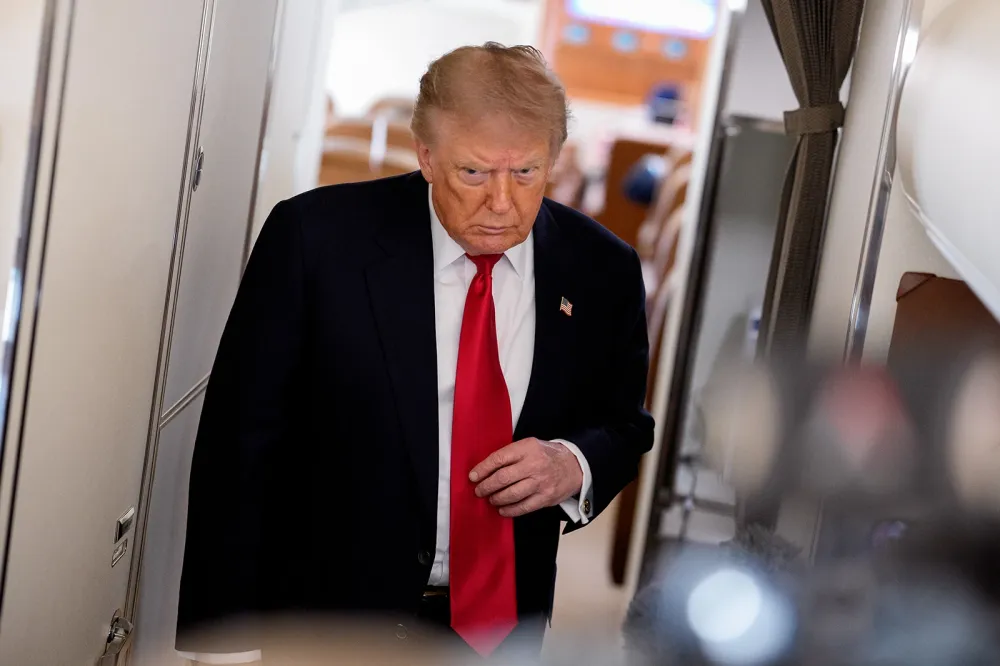
“We are in very deep talks with Iran. If they don’t work out, we will go back to very strong military action,” Trump said in an interview with U.S. online news outlet Axios.
Asked how long he was willing to give diplomacy, he said, “Not much time. Either it goes fast or not at all.”
Trump said he decided to pause strikes on Friday because the countries that are mediating as well as other countries in the region had asked him to give talks with Iran another chance.
Later, the president told reporters that Iran sought talks only after its military was battered by the U.S. military.
“I think there’s a good chance that something could happen,” Trump said aboard Air Force One en route to an event in Michigan. “And if it does, good, if it doesn’t, we go back to doing what we were doing two days ago.”
Trump said that his administration and the Israeli government are “pretty close” to being on the same page regarding Iran.
“We have a little difference, but pretty close,” he said of Israeli Prime Minister Benjamin Netanyahu, who is expected to visit the White House on Tuesday.
Trump also reiterated that Iranian assets controlled by the United States will be used to cover damage to ships attacked when transiting the Strait of Hormuz. “We’re going to use Iran’s money to pay for the damage they did,” he said.
Negotiations between Oman and Iran have made progress, though no deal has been reached, according to reports citing regional sources.
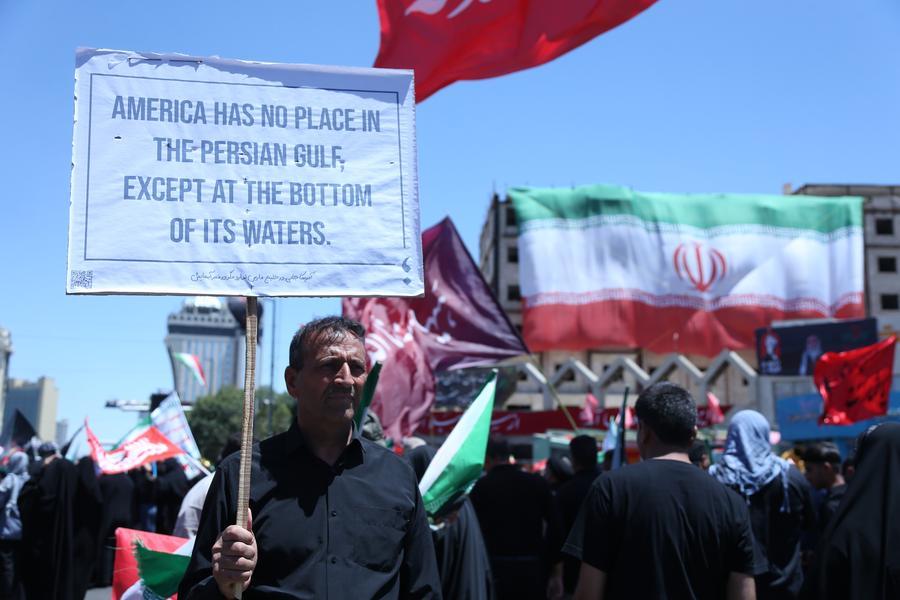
People attend the funeral procession of Iran’s late Supreme Leader Ali Khamenei in Mashhad, Iran, July 9, 2026. (Xinhua/Shadati)
The U.S. Justice Department filed an emergency application with the Supreme Court on Monday, asking it to suspend lower court rulings that blocked the order. The Trump administration said the request was needed to ensure that the new policies could be implemented before the midterm elections.
Signed by Trump in March, the order directs federal agencies to compile lists of eligible U.S. citizens, requires the U.S. Postal Service to send mail-voting documents only to registered voters, and calls for stricter voter registration requirements.
The order was challenged by mostly Democratic-led states and the District of Columbia, which argued that Trump had exceeded his authority. A federal court in the U.S. state of Massachusetts blocked the order, and the decision was later upheld by the 1st U.S. Circuit Court of Appeals.
Trump said the measures were intended to protect election integrity and prevent noncitizens from voting. He has for years questioned the integrity of the 2020 presidential election that he lost. Critics argue that improper voting by noncitizens is rare and that stricter requirements could make it harder for some eligible voters to cast ballots.
According to a research paper by the States United Democracy Center, a nonpartisan organization, nearly one in three Americans voted by mail in the 2024 general election, accounting for more than 48 million votes.
The paper also said that it was a voting option used by about one in four Democrats, one in five Republicans, and one in five voters registered with other parties or with no party.
The Trump administration said the request was needed to ensure that the new policies could be implemented before the midterm elections.
Baghaei stressed in the interview that for any dialogue to be formed, the “proper ground” must be prepared, noting that the United States has destroyed such a ground, Iranian media reported on Sunday.
He accused Washington of violating “all its provisions” in practice under the memorandum of understanding (MoU) between Iran and the United States.
The spokesman said Iran’s current priority “is to defend its sovereignty and territorial integrity and protect its people against the war crimes that are being perpetrated by the United States.”
Under the MoU signed on June 18, the United States and Iran were scheduled to hold talks within a period of 60 days to reach a final agreement, but the talks’ fate is hanging in the balance following renewed clashes between the two over the past two weeks.
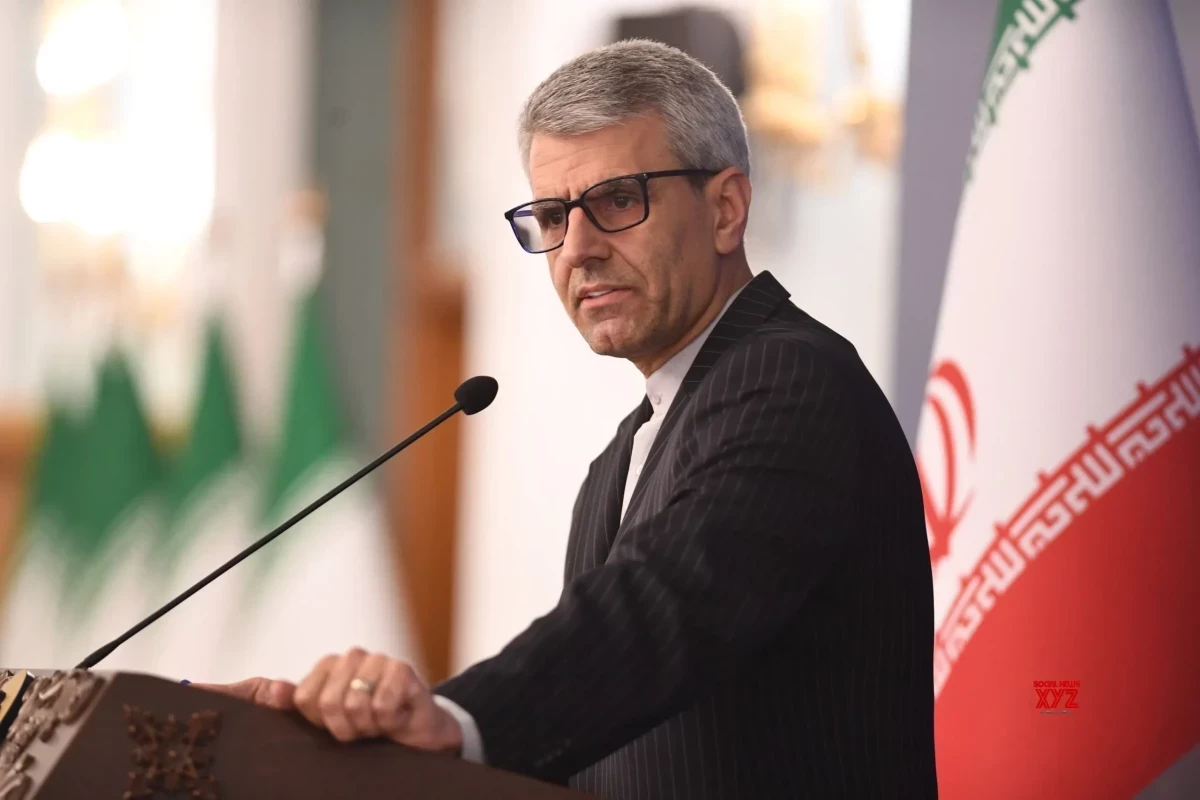
Esmail Baghaei, spokesperson of the Iranian Ministry of Foreign Affairs
Mmamoloko Kubayi, chairperson of the Inter-Ministerial Committee on Migration, made the remarks at a media briefing in Pretoria on the government’s latest progress in dealing with the migration challenges in the country.
The repatriations come amid a recent rise in attacks targeting foreign nationals in South Africa, which has prompted some migrants to opt for voluntary return. Kubayi said the government has been working with representatives of countries of origin to facilitate the repatriation process.
“Regarding deportations and repatriations, we can confirm that since Malawian nationals assembled at Sherwood in KwaZulu-Natal from June 14 to July 24, a total of 68,138 foreign nationals have been processed, the majority repatriated following processing at the Musina Temporary Repatriation Processing Centre,” said Kubayi, who is also minister of justice and constitutional development.
According to Kubayi, the Border Management Authority processed 72,906 repatriations involving various nationalities at ports of entry between June 7 and July 14, including those handled at the temporary repatriation center.
She said dedicated immigration courts finalized 28,736 immigration-related cases, mainly involving deportations, between April 1 and the end of June. Kubayi also warned against unauthorized identity checks targeting foreign nationals, saying migration management remains the responsibility of state authorities and must be conducted in accordance with the law.
“To date, law enforcement authorities have registered 354 cases of arrests and prosecutions against individuals who are in contravention of the law related to the issue of migration. An additional 69 people were arrested in Eastern Cape last weekend, and appeared in court on Monday. Government is making it clear that migration management is fundamentally a rule-of-law matter. Criminality will not be tolerated, regardless of who is involved,” she said.
Since April, a total of 93 joint border operations have been conducted to crack down on the illegal movement of illicit goods, human trafficking and drug syndicates, according to Kubayi.
She said the government has also intensified engagement with neighboring countries and countries of origin to strengthen cooperation on migration management, documentation, repatriation and information sharing.
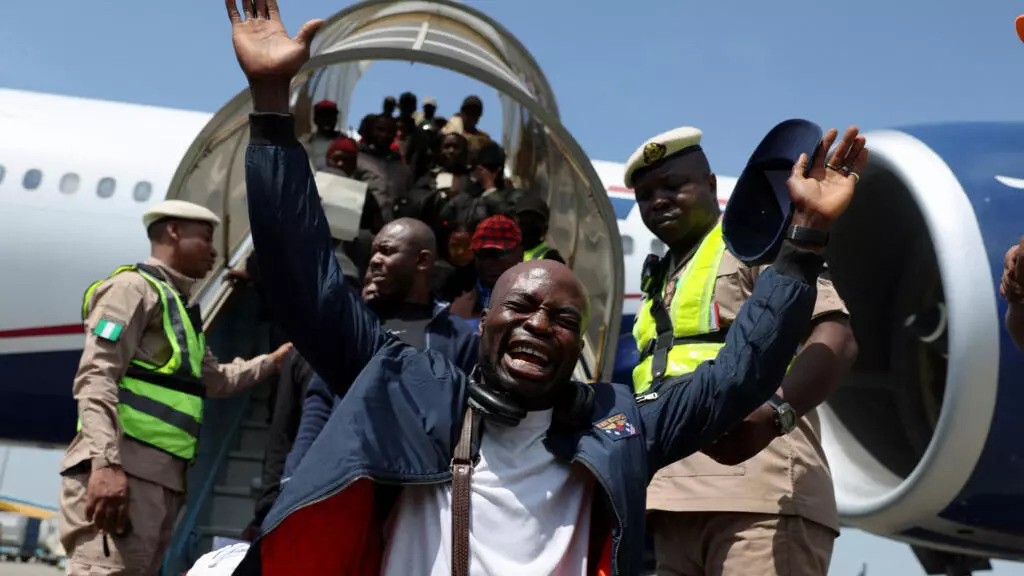
A man disembarks from a government-chartered flight repatriating Nigerian citizens fleeing xenophobic attacks in South Africa, in Lagos on 11 June 2026. The South African government has been accused of failing to crack down on anti-immigrant violence
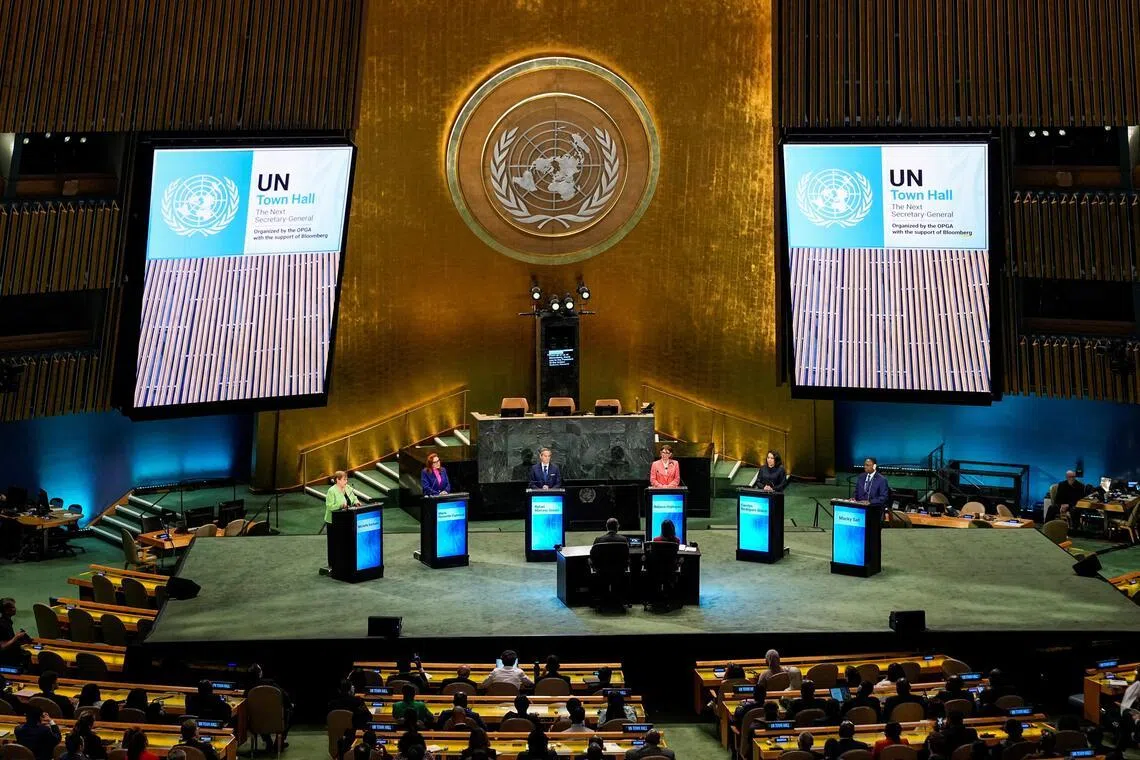
The meeting, organized by UN General Assembly President Annalena Baerbock, with the support of media company Bloomberg, was streamed live on UN Web TV and Bloomberg platforms.
“Today marks a critical step in the selection of the next secretary-general of the United Nations, probably one of the most challenging but also most honorable jobs in the world,” said Baerbock in her opening remarks.
“The person we choose will not only be the face of this house of humanity but also its custodian. She or he will stand up for the United Nations Charter and all three pillars — peace and security, sustainable development and human rights — in a time of unprecedented challenges yet also new opportunities,” she said.
The six candidates — Michelle Bachelet, former Chilean president and former UN high commissioner for human rights; Maria Fernanda Espinosa, former UN General Assembly president and former foreign minister and defense minister of Ecuador; Rafael Mariano Grossi of Argentina, current director general of the International Atomic Energy Agency; Rebeca Grynspan, former vice president of Costa Rica; Carolyn Rodrigues Birkett, Guyana’s permanent representative to the United Nations; Macky Sall, former president of Senegal — attended the meeting and answered questions from both Bloomberg mediators and audience members.
At the end of the meeting, the six candidates were asked to outline their priorities for their first 100 days as UN secretary-general if elected.
The term of the current UN secretary-general, Antonio Guterres, expires at the end of this year. The next secretary-general will take over on Jan. 1, 2027.
Six candidates are competing to succeed current UN Secretary-General Antonio Guterres, whose term ends in 2026.
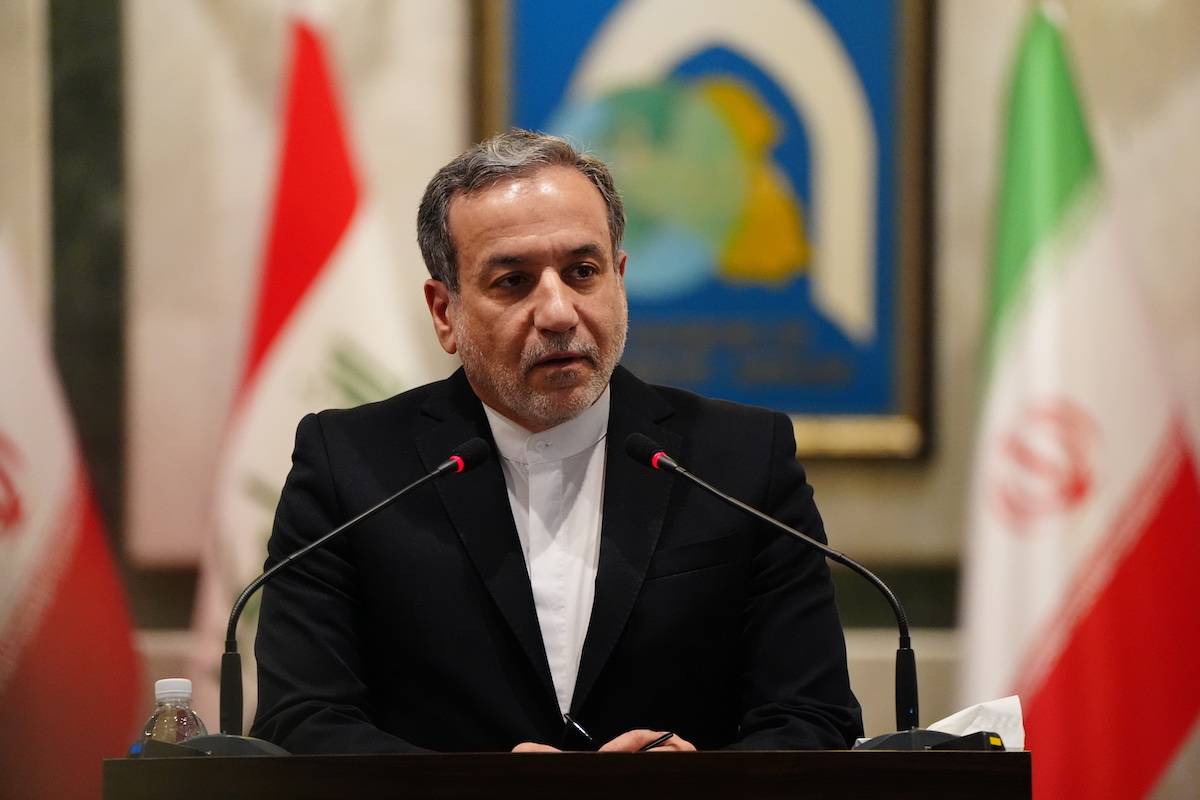
“Seizing another nation’s assets to pay for unrelated future claims is an incendiary precedent,” he said on X. “Those who celebrate or profit from such funds should remember: once governments normalize confiscation, no one’s assets are safe. Ensuing chaos will not be pretty or peaceful.”
Araghchi’s remarks came as U.S. President Donald Trump said Thursday that “any and all damages done to Ships, Cargo, or anything related thereto, will be paid for by Iranian Money that the United States has in its possession, and controls.”
“These damages may be very substantial but, nevertheless, this is the fair and equitable thing to do,” Trump wrote on Truth Social.
Iranian Foreign Minister Seyed Abbas Araghchi in Baghdad, Iraq on October 13, 2024. [Murtadha Al-Sudani – Anadolu Agency]
Burnham said his government will devolve more power to cities and regions, revive industry, strengthen public control over essential services and work with businesses to promote regional growth. The agenda draws heavily on the model he developed as mayor of Greater Manchester.
However, analysts said his decision to appoint experienced and relatively cautious figures to key economic and security posts indicates an effort to reassure financial markets, contain divisions within the ruling Labour Party and avoid an abrupt break with the previous government.
British scholar Martin Jacques told Xinhua that Burnham was probably “the best choice available,” citing his record as mayor of Greater Manchester.
Jacques said Burnham appeared determined to move away from the economic approach associated with former prime ministers Margaret Thatcher and Tony Blair and break with neoliberalism. However, Burnham has said little about foreign policy, making his positions on major international issues difficult to assess, Jacques said.
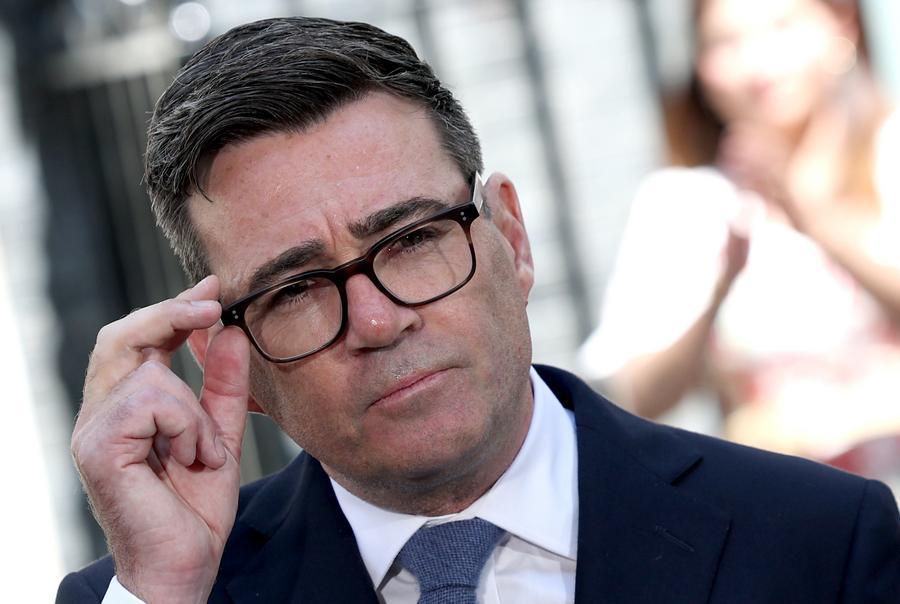
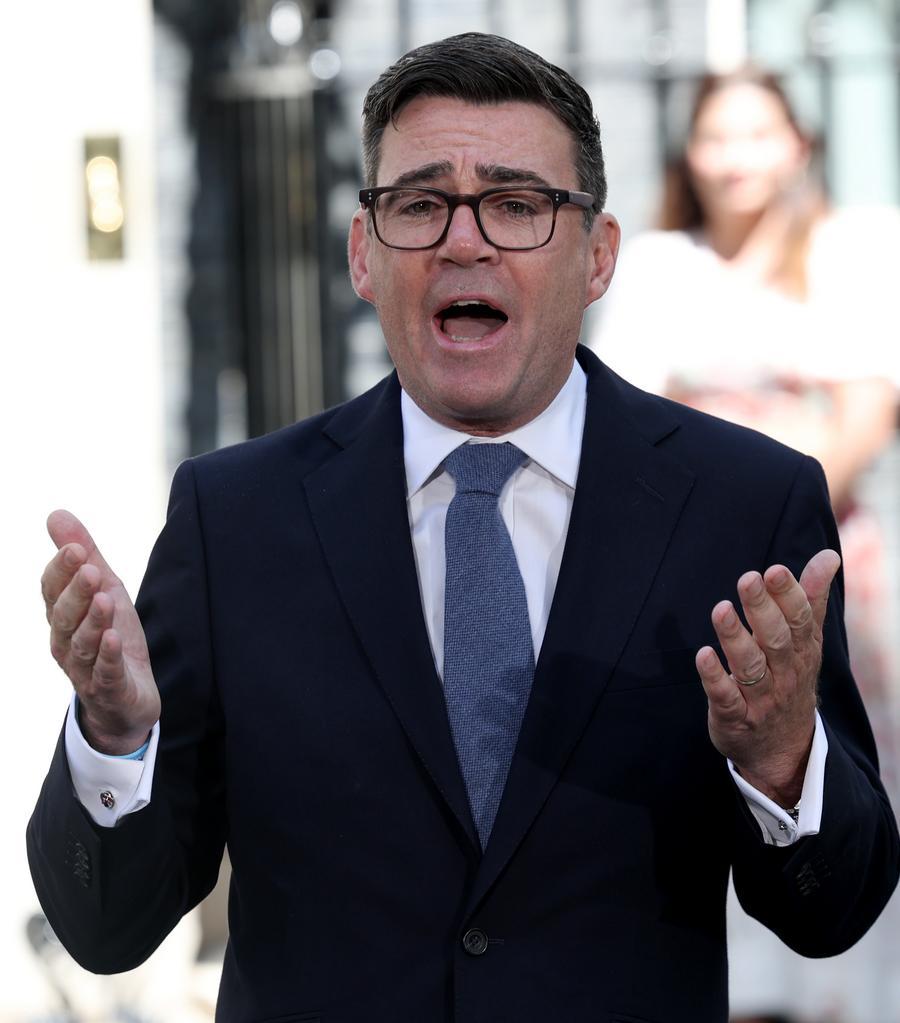
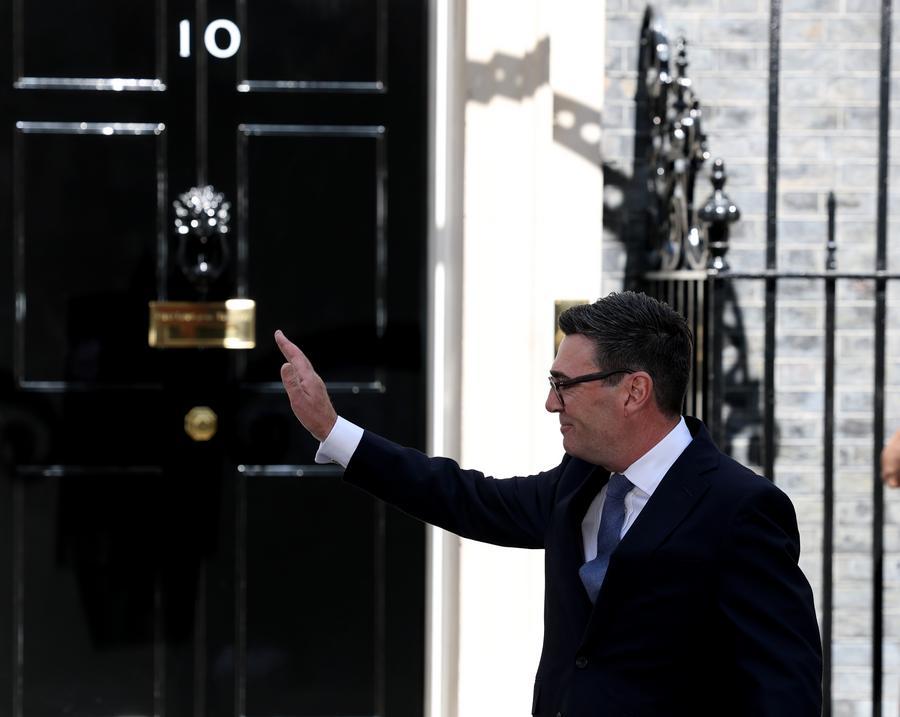
Andy Burnham delivers his first speech as British prime minister outside 10 Downing Street in London, Britain, July 20, 2026.
From Manchester to Downing Street
In his first speech outside 10 Downing Street, Burnham noted that he was Britain’s seventh prime minister since 2016 and acknowledged that politicians had “not been good enough.”
He pledged to make his premiership a “circuit breaker for Britain” and deliver “the biggest changes in the last 40 years” through “a new political model and a new economic model.”
Burnham said policies pursued since the 1980s had concentrated political power in London, weakened industrial regions and left many communities unable to reverse long-term decline.
He said his government would transfer more authority to local areas, strengthen public control over essential services and use public procurement to support British industry. A 10-year national plan is expected later this year.
The program draws heavily on Burnham’s experience in Greater Manchester, where local authorities have gained greater influence over transport, housing and economic development.
Before taking office, Burnham proposed establishing a “No. 10 North” office in Manchester to help coordinate the transfer of power from Whitehall to cities and regions.
His first instruction as prime minister was to launch a national drive to end long-term rough sleeping. He also said the government would introduce measures to ease living costs, with bus fares, energy bills, housing and youth employment among the priorities.
Rain Newton-Smith, chief executive of the Confederation of British Industry, said Burnham had demonstrated in Greater Manchester that he could work with businesses to strengthen communities and support growth.
“It’s a way of working he will now need to replicate nationwide, while maintaining fiscal credibility, investor confidence and delivery discipline,” she said.
Newton-Smith added that measures to ease household living costs should be accompanied by policies to reduce business costs and encourage investment.
Andy Burnham waves to the crowd outside 10 Downing Street in London, Britain, July 20, 2026.
Change under pressure
Burnham appointed former Defense Secretary John Healey as chancellor of the exchequer, an unexpected choice for a government promising higher public investment and stronger public services.
Ed Miliband became foreign secretary, Wes Streeting was appointed defense secretary, and Louise Haigh, a close Burnham ally, took a senior role in the Cabinet Office. Several figures closely associated with former Prime Minister Keir Starmer left the government, while other experienced ministers remained.
The Financial Times described Healey as a steady figure with ties to both business and trade unions. A former junior Treasury minister, Healey faces the challenge of funding Burnham’s domestic agenda while addressing a multibillion-pound shortfall in the defense budget.
The appointments point to a more social democratic direction, tempered by Burnham’s commitment to retain existing fiscal rules and avoid unsettling financial markets.
Jonathan Reynolds was appointed to oversee business, trade, science and innovation. Kanishka Narayan became minister for artificial intelligence and will attend Cabinet meetings, giving the issue a more prominent role in economic and industrial policy.
Whether the government can translate those changes into tangible results remains the key test.
Jonathan Tonge, a professor of politics at the University of Liverpool, said Burnham entered Downing Street with considerable goodwill, but “the economic facts have not changed.”
High spending on welfare and pensions, together with public debt and interest payments, would limit Burnham’s room for maneuver and could shorten the government’s political honeymoon, Tonge said.
Steven Lynch, director of international trade at the British Chambers of Commerce, said Burnham’s emphasis on devolution and reindustrialization would raise expectations that government policies deliver more investment, exports and jobs across Britain.
Neil Carberry, chief executive of the Recruitment and Employment Confederation, warned that business support would fade without concrete action. He said recent policies had increased costs and discouraged hiring, and urged the government to reduce barriers to employment and private investment.
“The government cannot solve all the problems we face, but it can create an environment that enables the private sector to play a much bigger role,” Carberry said.
He succeeded Keir Starmer, who earlier tendered his resignation to the king.
Burnham later delivered his first speech as prime minister outside 10 Downing Street. Noting that he was the seventh British prime minister since 2016, he acknowledged that politicians had “not been good enough” and pledged to do better, while promising “a new political model and a new economic model.”
“We will take power out of here and carry it into every postcode in the land,” he said, pledging to reindustrialize Britain and bring essential services under stronger public control.
Burnham previously served as culture secretary, health secretary and mayor of Greater Manchester. After unsuccessful bids for the Labour leadership in 2010 and 2015, he returned to the House of Commons by winning the Macclesfield by-election on June 19 and was elected Labour leader on July 17.
Labour suffered heavy losses in local elections in May, prompting growing calls within the party for Starmer to step down. On June 22, Starmer announced that he would resign as Labour leader and step down as prime minister once a successor had been chosen.
British media said Burnham faces major challenges, including weak economic growth, strained public services, a high cost of living and an increasingly fragmented political landscape.
King Charles welcomes Andy Burnham, left, during an audience at Buckingham Palace in London on Monday, where he invited the leader of the Labour Party to become prime minister and form a new government.
Chinese President Xi Jinping said the establishment of the World Artificial Intelligence Cooperation Organization (WAICO) is a major move by China to answer the call of the Global South and unite the international community in advancing AI development and governance.
“It will be an important milestone in the history of AI development,” Xi said at the opening ceremony of the 2026 World AI Conference and High-Level Meeting on Global AI Governance.
WAICO’s establishment comes as AI has emerged as a key driver of global economic growth, while humanity grapples with AI-related security and ethical challenges and seeks to bridge widening gaps in AI development, according to speakers at the event.
The organization, headquartered in Shanghai, aims to ensure that AI is beneficial, safe and fair, and serves the benefit of all humanity, according to the organization’s founding agreement.
Representatives from 29 countries signed the agreement on Thursday, making their countries founding members of WAICO. Chinese Foreign Minister Wang Yi signed the agreement on behalf of the Chinese government. The other countries included Kazakhstan, Laos, Pakistan, Russia and Indonesia.
WAICO’s establishment is widely considered a concrete step China takes to work with all parties to build a fair and equitable AI governance framework and make AI an international public good that benefits all.
Addressing Friday’s event, United Nations Secretary-General Antonio Guterres noted that WAICO is a “natural development” of the Global AI Governance Initiative proposed by Xi in 2023.
“Technology that will shape the future of humanity must be shaped by all humanity,” said Guterres. “It cannot be governed by a handful of countries or a handful of companies. Every nation needs a seat at the table.”
China is a global leader in AI development. In 2025, its core AI industries were worth over 1.2 trillion yuan (about 175 billion U.S. dollars), while the number of AI enterprises nationwide exceeded 6,200.
Kazakh President Kassym-Jomart Tokayev, also attending the event, said he appreciates China’s leadership in establishing WAICO, adding that he believes the organization has the potential to become a leading international institution shaping the future of global AI.
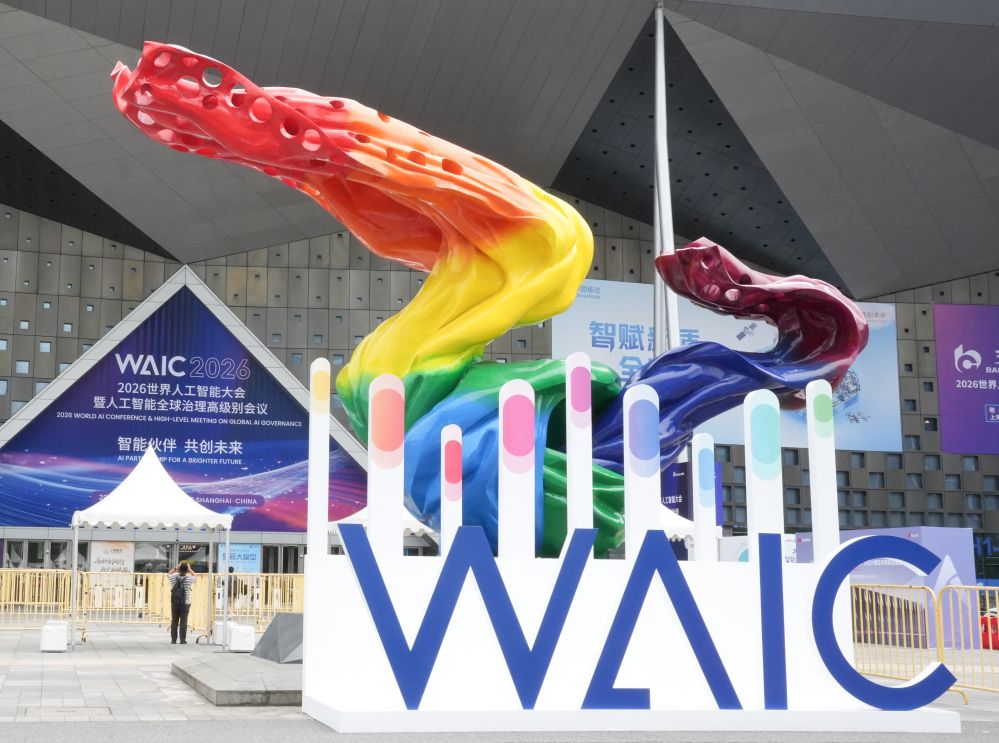
This photo taken on July 16, 2026 shows the exterior view of the Shanghai World Expo Exhibition and Convention Center in Shanghai, east China. Shanghai is ushering in its major AI moment of the year with the forthcoming 2026 World AI Conference (WAIC) and High-Level Meeting on Global AI Governance, scheduled from Friday to Monday. (Xinhua/Ding Ting)
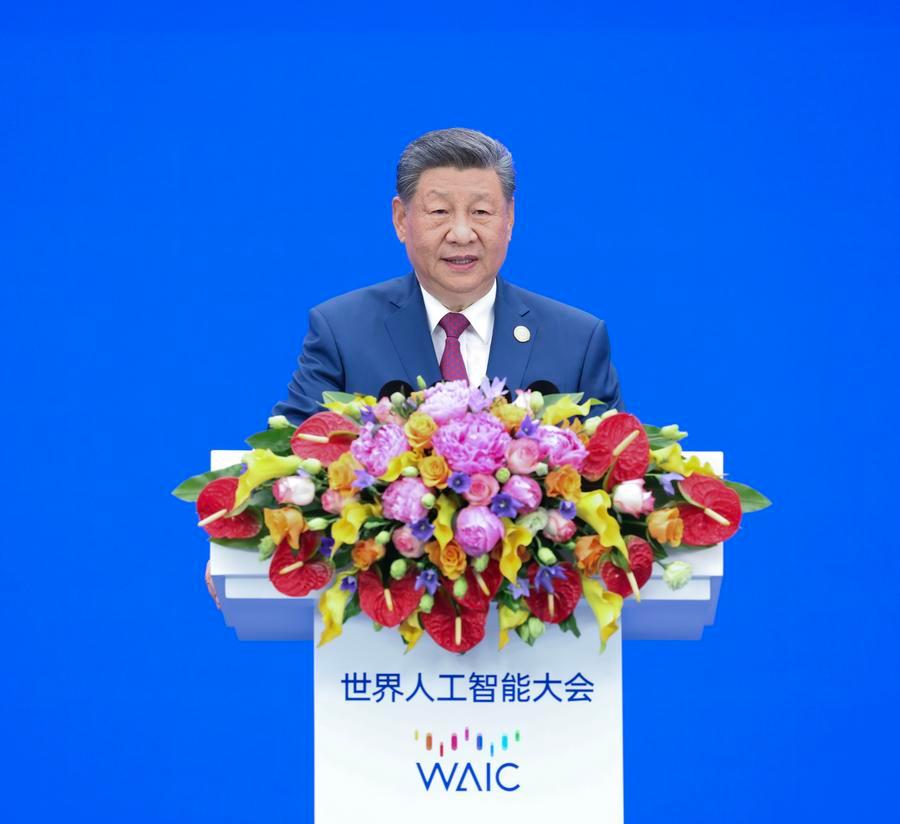
“All countries should take a people-centered approach and develop AI for the positive and for good. We should ensure that AI is an important driver for shared prosperity and common security,” Xi said while addressing the opening ceremony of the 2026 World AI Conference (WAIC) and High-Level Meeting on Global AI Governance in Shanghai.
China is a global leader in AI development. In 2025, its core AI industries were worth over 1.2 trillion yuan (about 176.6 billion U.S. dollars), while the number of AI enterprises nationwide exceeded 6,200.
The country’s open-source large AI models have been downloaded more than 10 billion times in total, continuing to create new and broader opportunities for global cooperation in AI innovation.
The world has entered an unprecedented period of active innovation on AI technologies, Xi said in his keynote address. He raised questions about how humans can get along with thinking machines, how security can be ensured when algorithm is part of decision-making, how ethical challenges by technologies can be tackled through adaptive governance, and how AI for all can be realized when the divide keeps widening.
“These questions demand serious consideration and real answers from the whole international community,” he said.
Xi stressed the need for adhering to the principles of openness and win-win and boosting innovation-driven development, strengthening risk-awareness and ensuring that AI is secure and controllable, encouraging inclusiveness and promoting mutual learning between civilizations, and advocating solidarity and improving global governance.
“We should jointly oppose overstretching the national security concept in the field of AI and placing one country’s security over that of others,” he said.
The important role of the United Nations should be recognized in global AI governance, Xi noted, calling for enhancing alignment and coordination on AI development strategies, governance rules and technical standards.
“We must carry out extensive international cooperation and help Global South countries with capacity building to bridge the AI and digital divides, promote sustainable development, and prevent creating new historical injustice in AI,” he said.
As a responsible major country, China is always committed to providing international public goods relating to AI, said Xi, who proposed the Global AI Governance Initiative in 2023.
The country has also provided Chinese solutions for global AI governance through various efforts, including the launch of the AI Capacity-Building Action Plan for Good and for All and the AI Plus International Cooperation Initiative.
“AI development should not be a solo performance by a single country, but a symphony of international cooperation,” said the Chinese president.
The establishment of the WAICO, Xi said, is a major move by China to answer the call of the Global South and unite the international community together to promote vigorously AI development and governance. “It will be an important milestone in the history of AI development,” he said. Twenty-nine countries have signed the agreement on the organization’s creation as its founding members.
To further advance global AI capacity building, China will provide developing countries with 5,000 opportunities in AI training and seminar programs in the next five years, Xi pledged.
China will develop international AI application cooperation centers with the Association of Southeast Asian Nations, the League of Arab States, the African Union, the Community of Latin American and Caribbean States, the Shanghai Cooperation Organization and BRICS. It will also enable 30 countries to use the AI-powered meteorological warning system, known as MAZU, to safeguard homes around the world, Xi said.
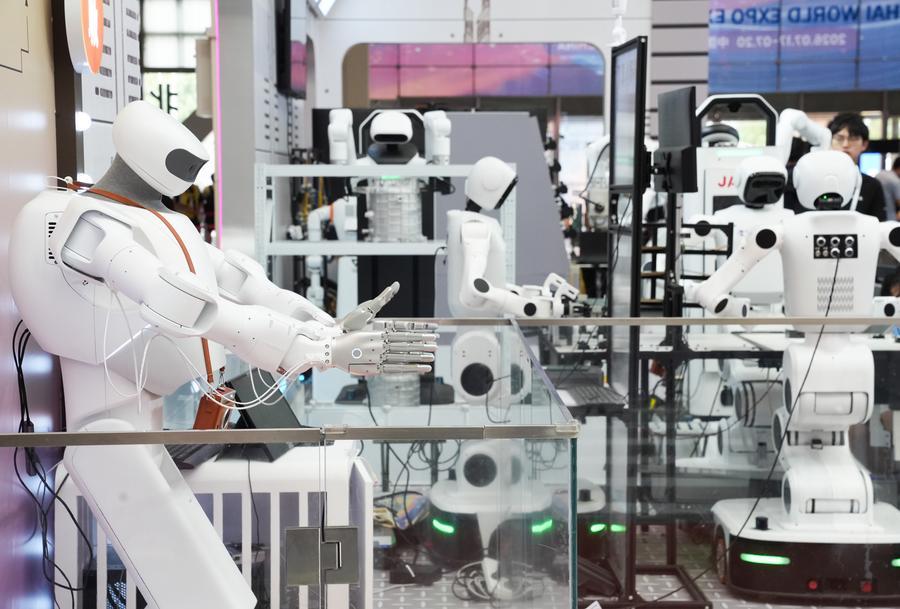
China has hosted the WAIC annually since 2018 as a key platform to forge global AI partnerships to unlock AI’s benefits for all. Themed “AI Partnership for a Brighter Future,” this year’s event includes more than 140 forums, bringing together 1,400 guests from home and abroad.
Kazakh President Kassym-Jomart Tokayev, Cambodian Prime Minister Hun Manet, Thai Prime Minister Anutin Charnvirakul and Secretary-General of the United Nations Antonio Guterres delivered speeches at the opening ceremony.
Speaking highly of China’s contribution to advancing global AI governance, they said the opportunities and challenges brought by AI know no borders and should be seized and addressed by all parties.
They expressed confidence that the WAICO will play an important role to this end.
Chinese President Xi Jinping delivers a keynote speech at the opening ceremony of the 2026 World AI Conference and High-Level Meeting on Global AI Governance in Shanghai, east China, July 17, 2026. (Xinhua/Huang Jingwen)