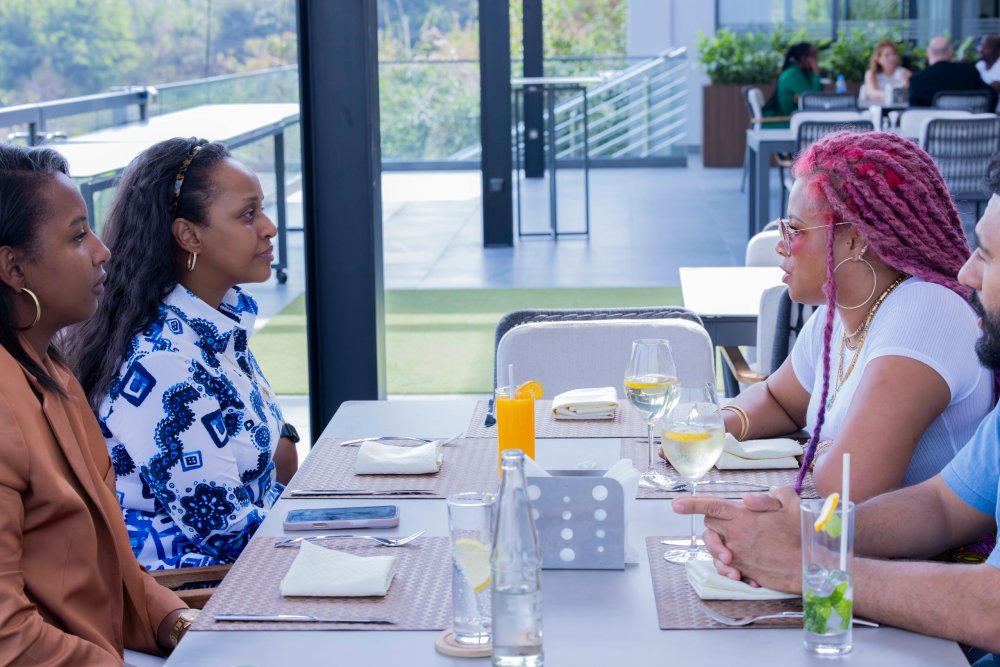
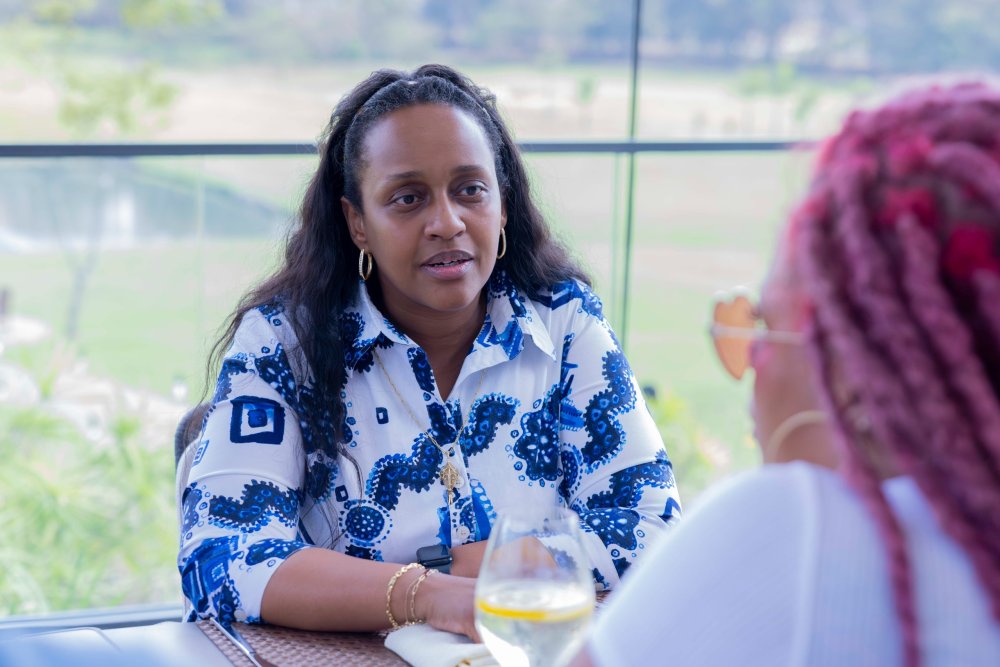
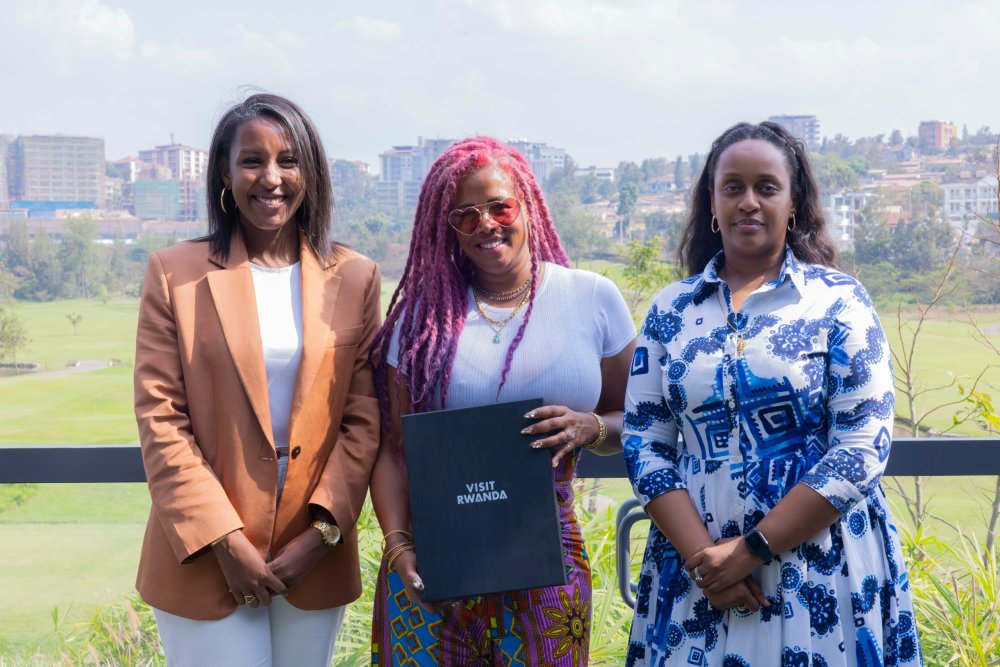
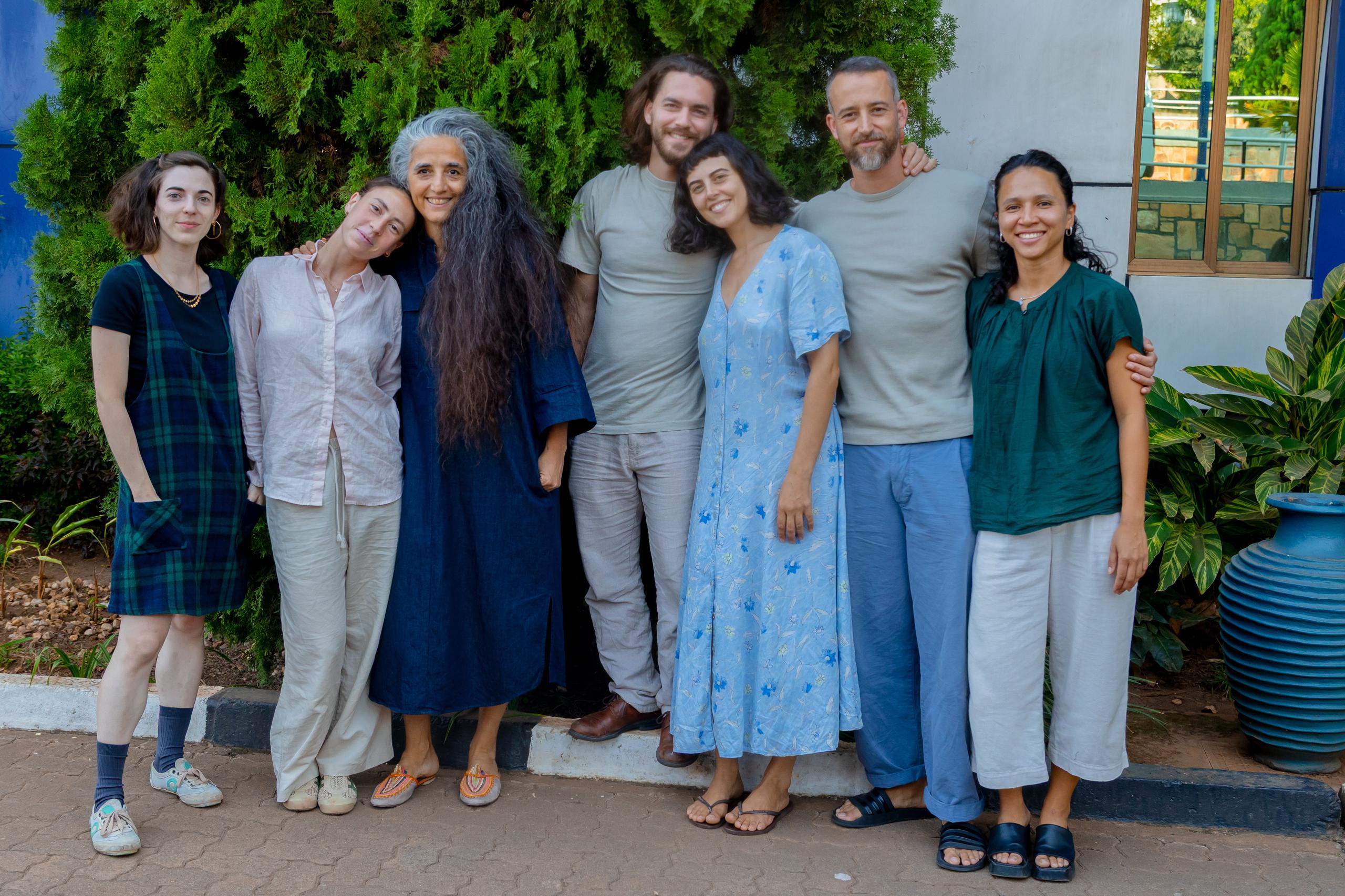
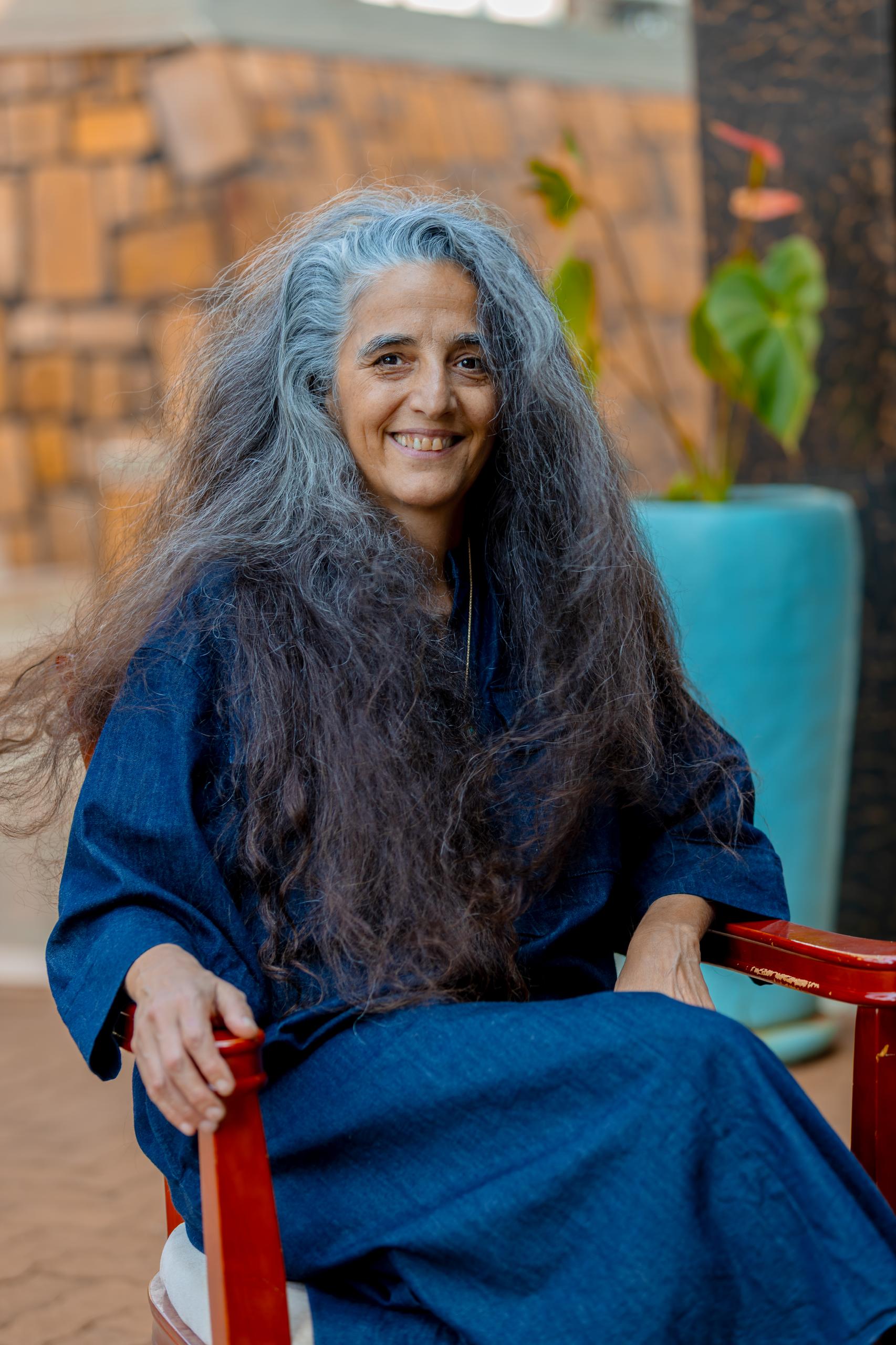
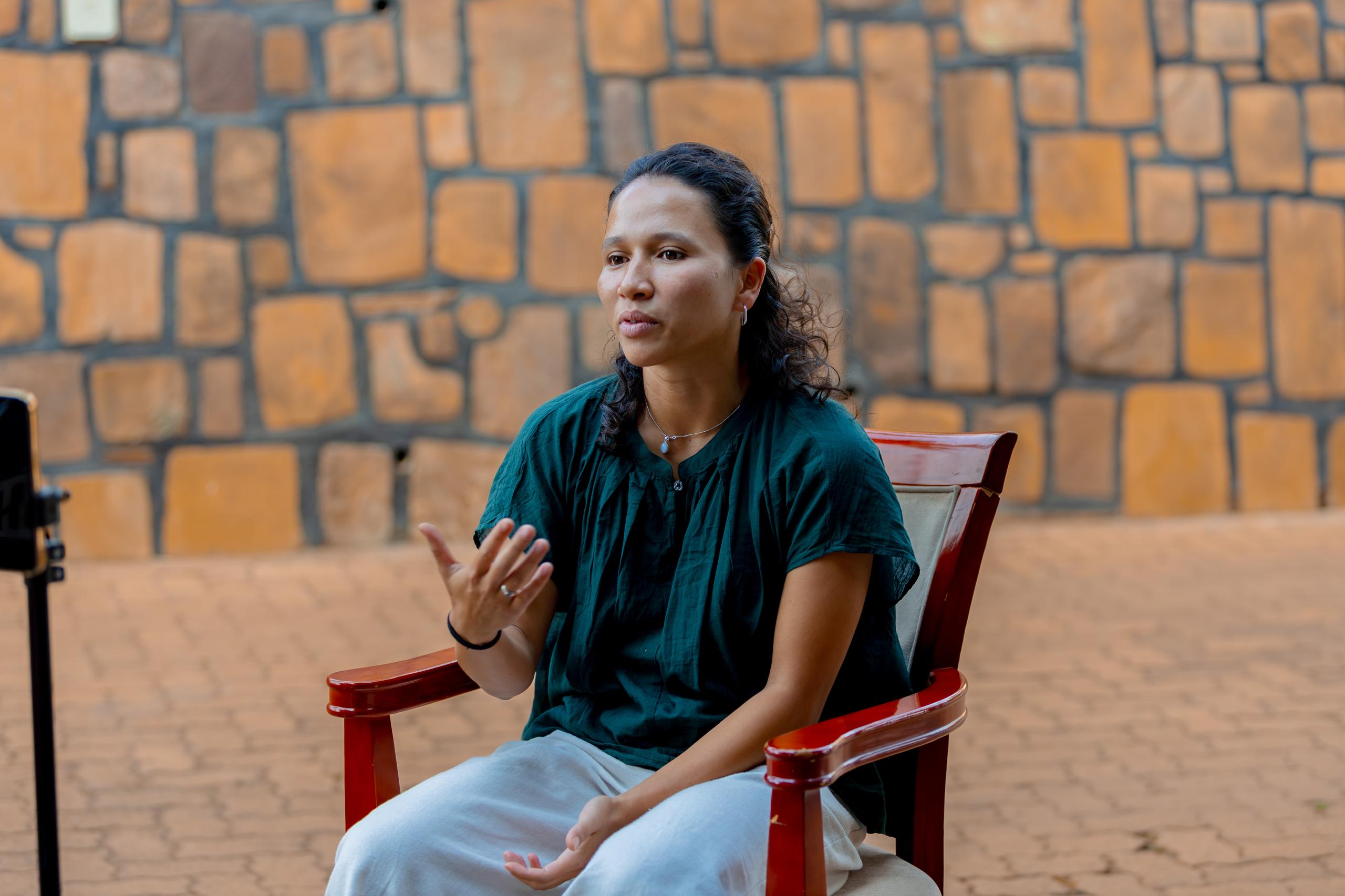
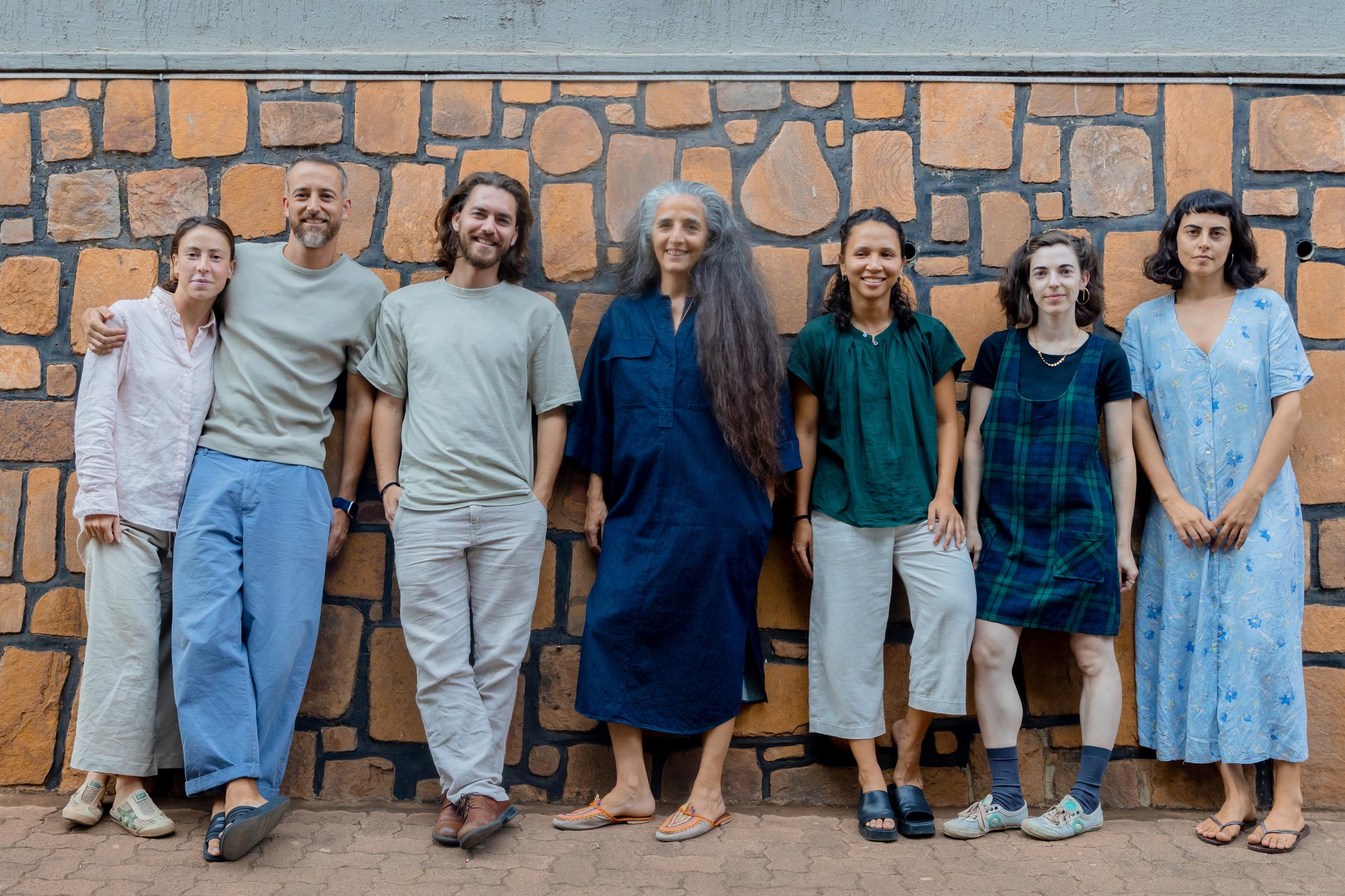
On July 22, 2026, RDB’s Chief Tourism Officer, Irène Murerwa, and the Deputy Chief Executive Officer of the Rwanda Convention Bureau (RCB), Maëva Haguma, held talks with Kelis to discuss possible areas of collaboration.
According to RDB, the discussions focused on ways to position Rwanda as an attractive destination for tourism and investment, particularly among American travelers and investors interested in visiting the country or pursuing business opportunities there.
Although no specific projects or timeline have yet been announced, a partnership with Kelis could significantly expand Rwanda’s international visibility by reaching her large audience in the United States and other parts of the world.
With a career spanning music, fashion, business and culinary arts, Kelis could help showcase Rwanda’s tourism attractions, investment opportunities and vibrant business environment through a variety of platforms.
Rwanda has increasingly partnered with internationally recognized personalities to promote the country’s natural attractions and strengthen its tourism sector, particularly through the Visit Rwanda campaign. Such collaborations are intended to attract new groups of visitors and investors from key international markets, including the United States.
Who is Kelis Rogers?
Kelis Rogers is an American singer, songwriter, entrepreneur and professionally trained chef. Born on August 21, 1979, in Harlem, New York, she rose to fame with the release of her debut album, Kaleidoscope, in 1999.
She achieved global recognition with her 2003 hit single “Milkshake,” which became one of her signature songs and established her as an international music star. Throughout her career, Kelis has sold millions of records worldwide and earned Grammy Award nominations.
Beyond music, Kelis trained at the prestigious Le Cordon Bleu culinary school. She is also the author of the cookbook My Life on a Plate and founded Bounty & Full, a lifestyle brand specializing in skincare, haircare and food products. Her success across multiple industries has made her one of the most recognizable American entertainers turned entrepreneurs.
RDB Chief Tourism Officer Irène Murerwa and the Deputy Chief Executive Officer of the Rwanda Convention Bureau (RCB), Maëva Haguma, met with American singer and entrepreneur Kelis Rogers for discussions on potential areas of collaboration.RDB Chief Tourism Officer Irène Murerwa and Rwanda Convention Bureau (RCB) Deputy Chief Executive Officer Maëva Haguma welcomed Kelis Rogers.Irène Murerwa, RDB’s Chief Tourism Officer.American artist Kelis Rogers explores partnership opportunities with Rwanda.
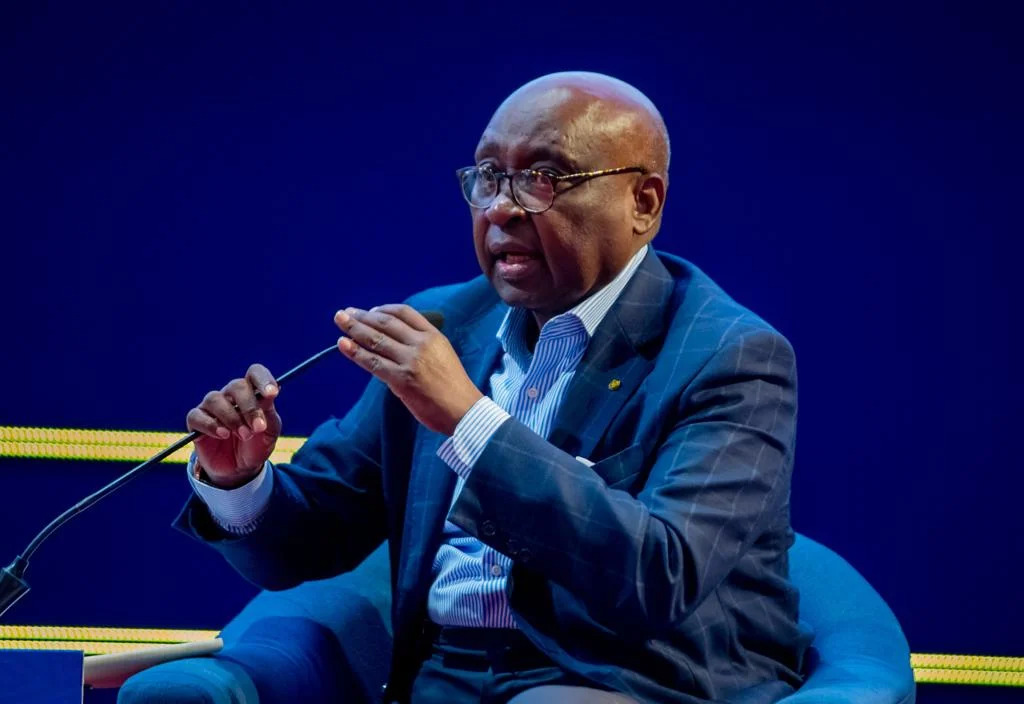
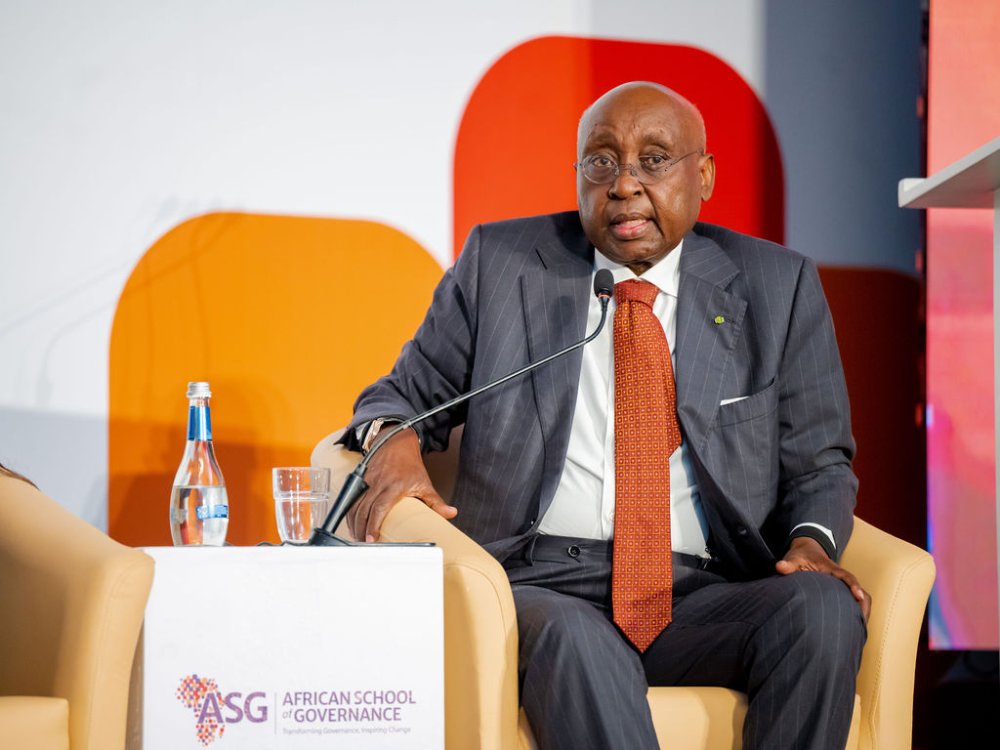
Born on October 5, 1951, in Byumba, Rwanda, Kaberuka grew up during a difficult period in the country’s history. The persecution of 1959 forced many Rwandans, including his family, into exile. Decades later, he would become one of the key figures involved in rebuilding Rwanda’s economy after the 1994 Genocide against the Tutsi and would go on to lead one of Africa’s most important financial institutions.
Kaberuka studied economics and development, beginning his higher education at the University of Dar es Salaam. He later obtained a Master of Philosophy in Development Studies from the University of East Anglia in 1979 before earning a PhD in Economics from the University of Glasgow.
His economic thinking was shaped by his experiences studying in the United Kingdom during the economic turmoil of the 1970s. In an interview with Jeune Afrique, Kaberuka recalled how Britain’s economic crisis, marked by high inflation and a request for support from the International Monetary Fund in 1976, influenced his views.
“The economic and industrial crisis had a profound impact on me,” Kaberuka recalled. “Imagine the United Kingdom with 25 percent inflation having to seek assistance from the International Monetary Fund in 1976. It taught me to be skeptical of theories. Since then, my approach has been simple: What works?“
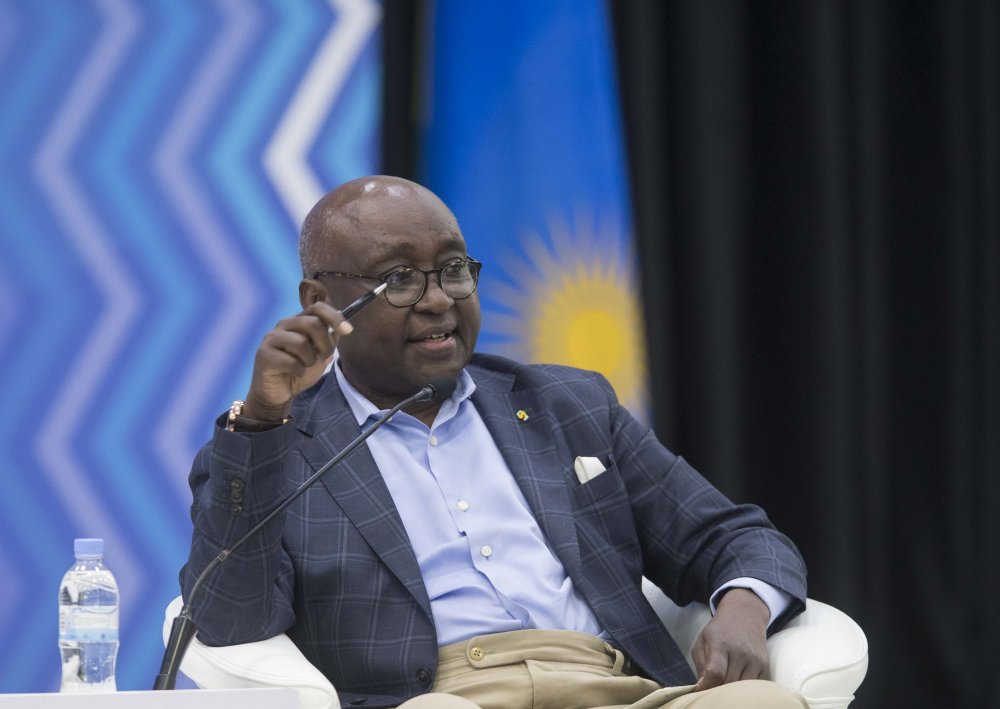
Kaberuka’s economic thinking was shaped by his experiences studying in the United Kingdom during the economic turmoil of the 1970s.
Rebuilding Rwanda’s economy
After the 1994 Genocide against the Tutsi, Kaberuka returned to Rwanda and became part of the team that helped rebuild the country’s economy.
As Minister of Finance and Economic Planning from 1997 to 2005, he introduced reforms that focused on liberalising the economy, strengthening domestic revenue collection, granting greater independence to the central bank and maintaining strict fiscal discipline.
His leadership during this period contributed to Rwanda’s economic recovery, with development institutions such as the French Development Agency describing the country’s approach as an effective development model in sub-Saharan Africa.
In 2005, Kaberuka was elected President of the African Development Bank (AfDB), a position he held until 2015.
During his decade at the helm of the institution, he oversaw a major expansion of the bank’s financial capacity, with its capital increasing from $30 billion to $100 billion and annual commitments doubling.
Leading through the 2008 financial crisis
Kaberuka’s leadership was tested during the global financial crisis of 2008, when concerns grew that Africa could face severe economic consequences.
He recalled receiving calls from worried officials asking whether Africa would become the continent most affected by the crisis.
To assess the situation, he brought together finance ministers and central bank governors in Tunis, where the AfDB was then headquartered, to discuss the impact and agree on a response.
The assessment was that African banking systems would remain relatively resilient because they were less connected to Western financial markets. However, the continent would face challenges from declining global demand and reduced trade volumes.
Rather than applying a single economic prescription across countries, Kaberuka promoted solutions adapted to local circumstances, including budget support, balance-of-payments assistance and infrastructure investments.
Economist Modibo Makalou Mao noted that during the crisis, Kaberuka avoided standard solutions and instead favoured approaches adapted to the size, level of development and needs of individual economies.
In Togo, AfDB financing supported strategic projects such as the Lomé-Cotonou corridor, which was viewed as a stronger driver of growth than traditional fiscal adjustment measures.
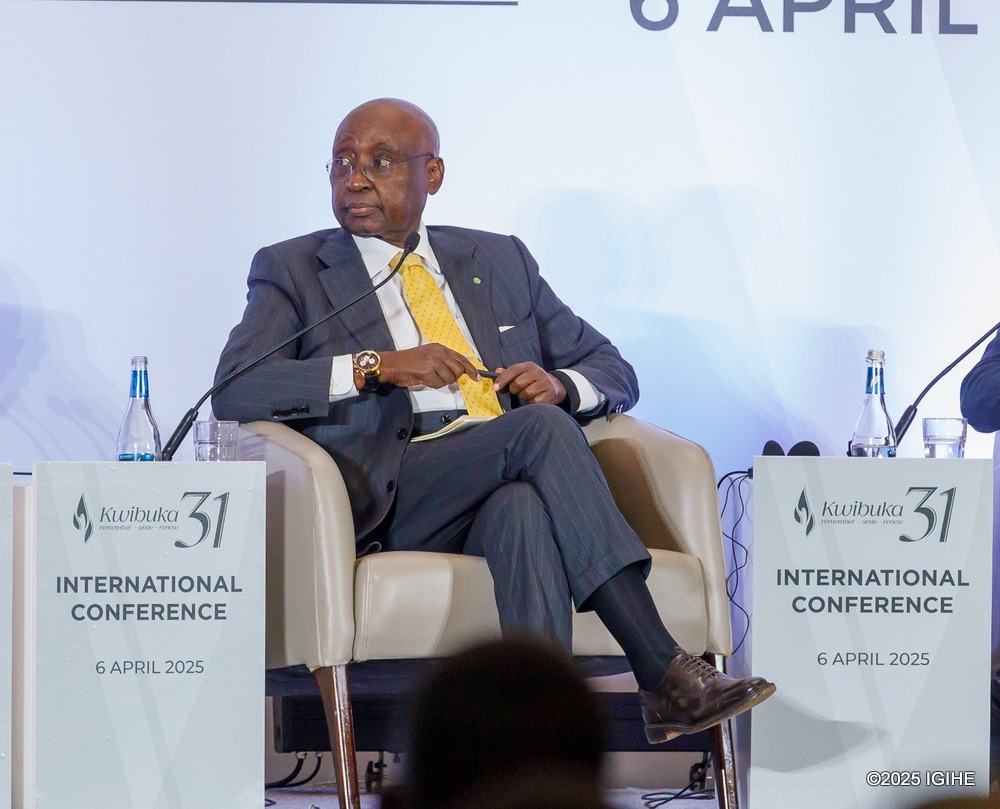
Kaberuka was elected President of the African Development Bank (AfDB) in 2005, a position he held until 2015.
Supporting African industrial growth
During his leadership at the AfDB, Kaberuka also focused on supporting industrial small and medium-sized enterprises (SMEs), inspired by Germany’s Mittelstand model.
He argued that SMEs were central to economic transformation because they played a major role in job creation.
“The foundation of its success is SMEs. They are the ones that impact the unemployment curve,” he said, referring to Germany’s experience.
A champion of financial self-reliance
After leaving the AfDB, Kaberuka continued working on global and continental development issues.
He served as Chair of the Board of the Global Fund and later as the African Union’s Special Envoy for COVID-19, where he advocated for Africa to gradually reduce its dependence on external assistance.
While recognising the importance of international solidarity, particularly in the fight against HIV/AIDS, he argued that such support should not replace long-term financial independence.
“The pandemic and the recent withdrawal of USAID have confirmed the need for autonomy,” he said.
Frannie Leautier, an executive at SouthBridge Investments, the investment firm co-founded by Kaberuka, said his view of finance goes beyond mobilising resources.
“Donald Kaberuka has always seen in finance much more than a mechanism for mobilising resources. For him, it is a lever of dignity, sovereignty and transformation,” she said.
A lasting influence on Africa’s development agenda
Even after leaving public office, Kaberuka has remained active in discussions on Africa’s economic future, advocating for stronger institutions, industrial growth and greater financial independence.
His career reflects a rare combination of policymaking, financial leadership and development expertise, from helping rebuild Rwanda’s economy to transforming the African Development Bank into a stronger continental institution.
At 74, Kaberuka remains a prominent voice in Africa’s development debate, with a legacy built on his belief that financial systems should serve development and ultimately improve people’s lives.
At 74, Kaberuka remains a prominent voice in Africa’s development debate.
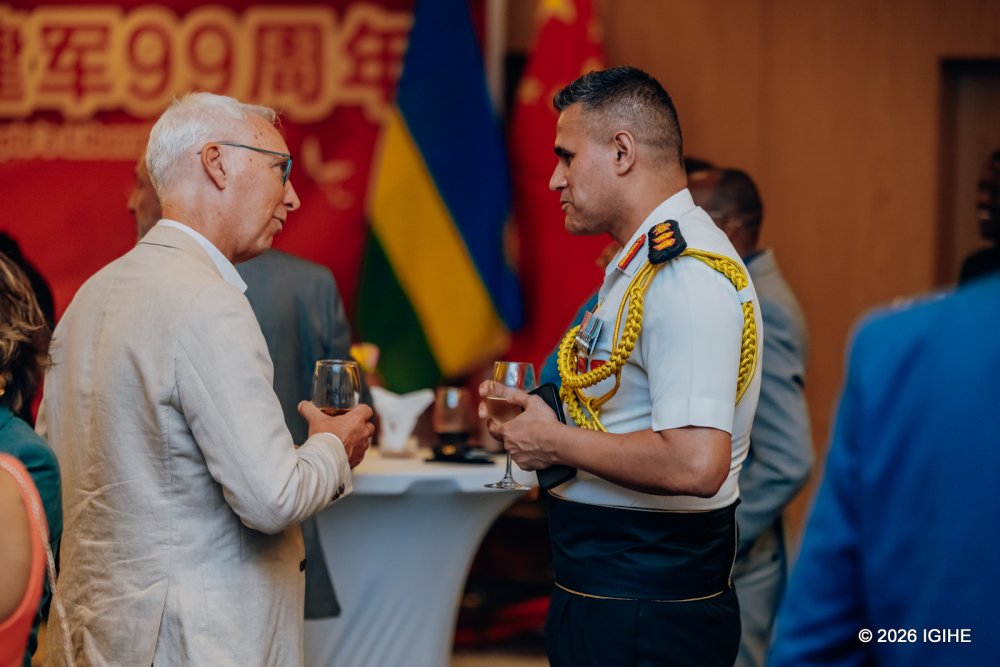
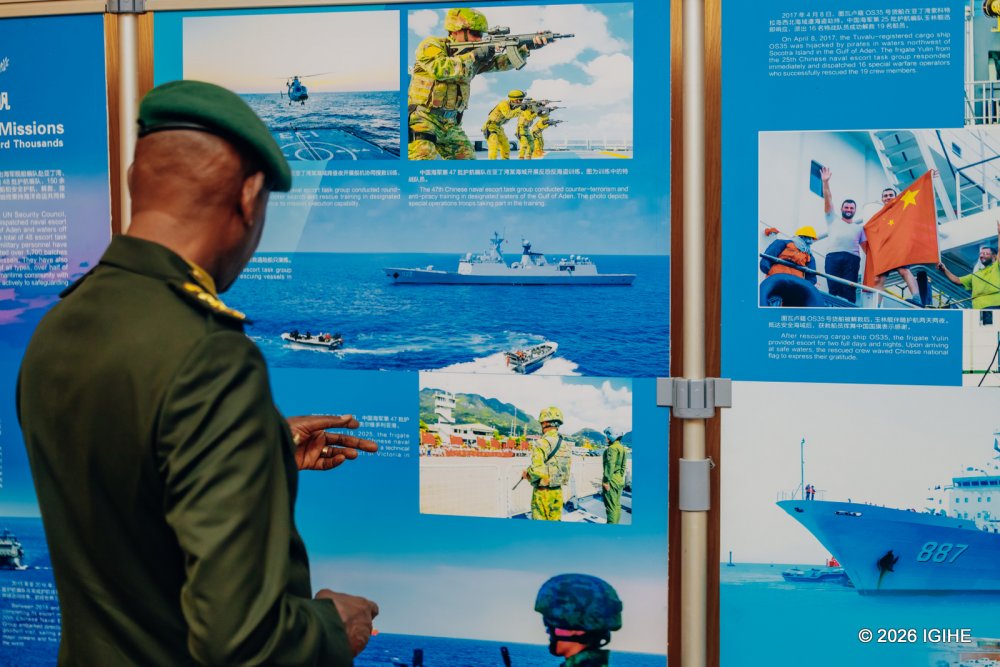
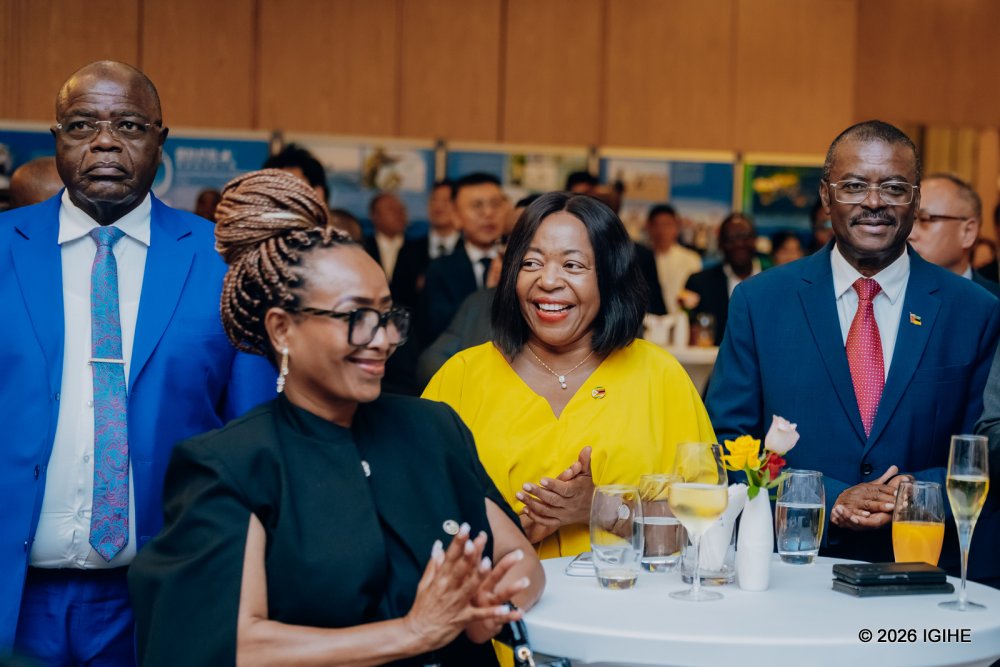
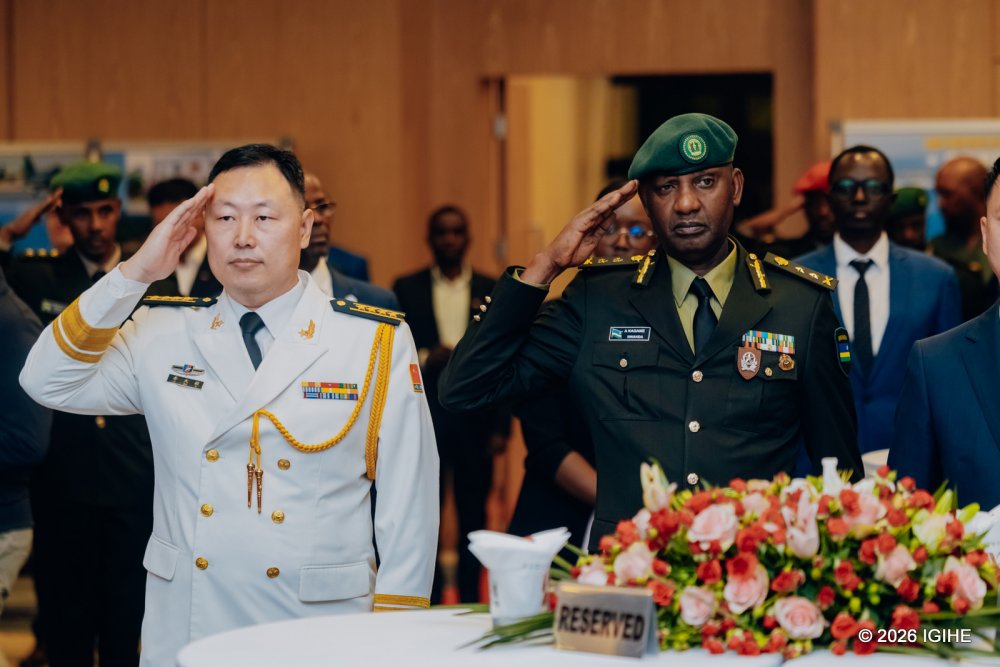
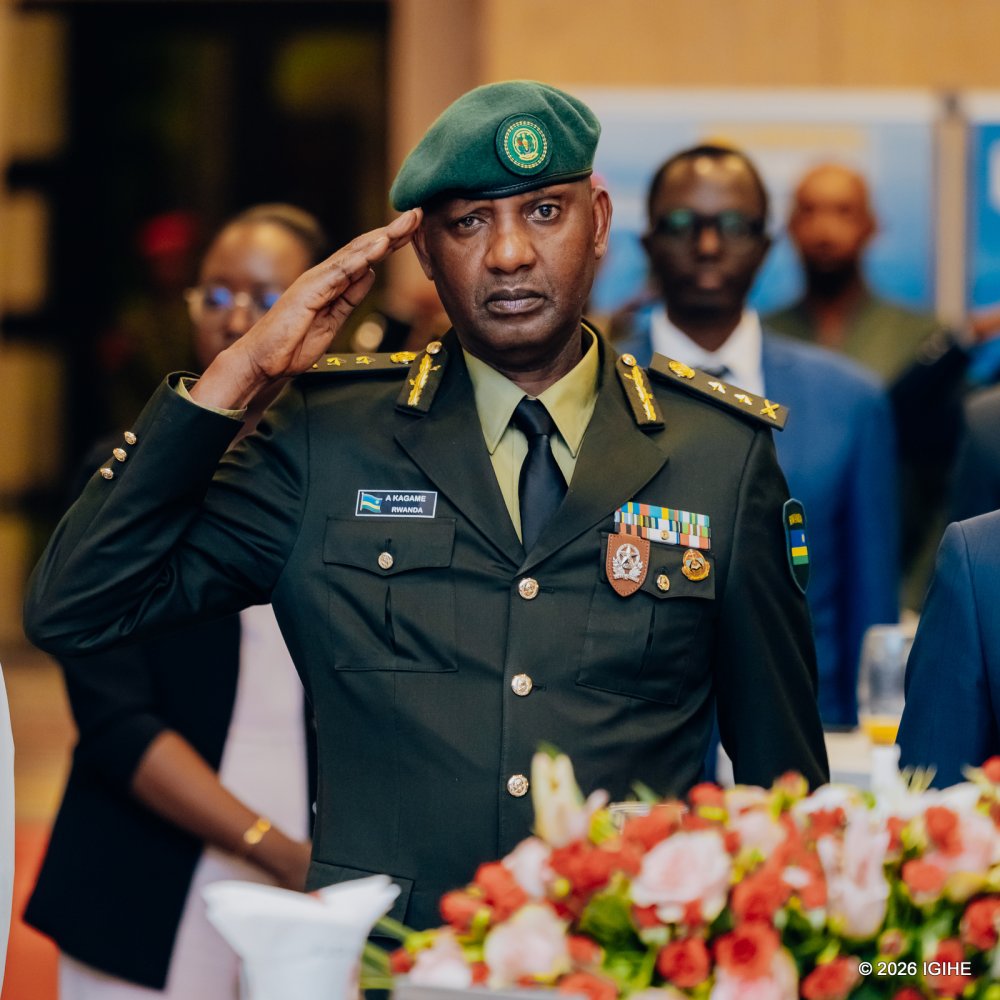
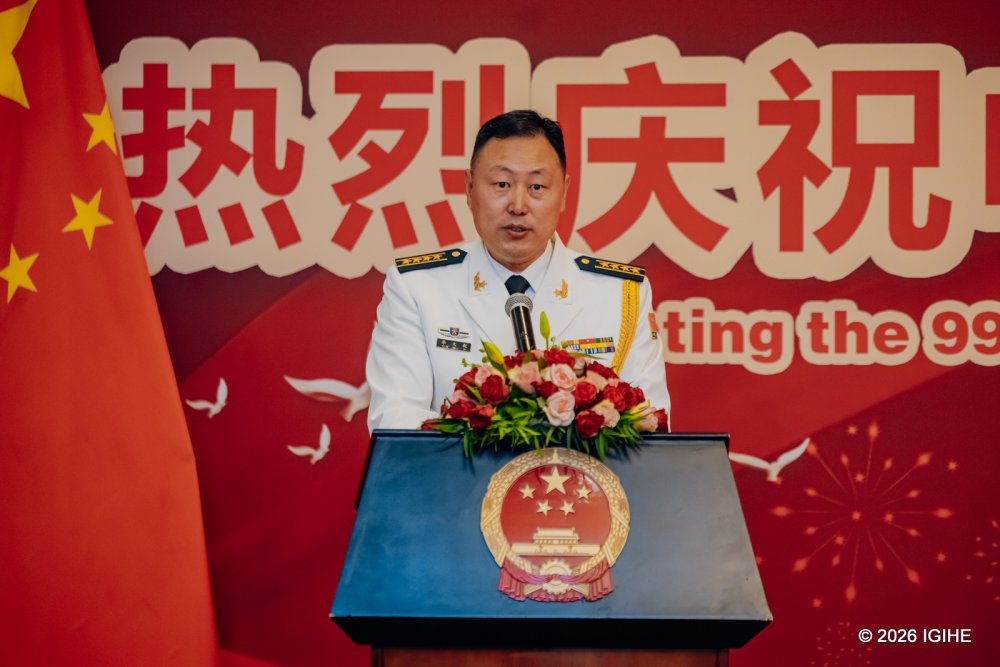
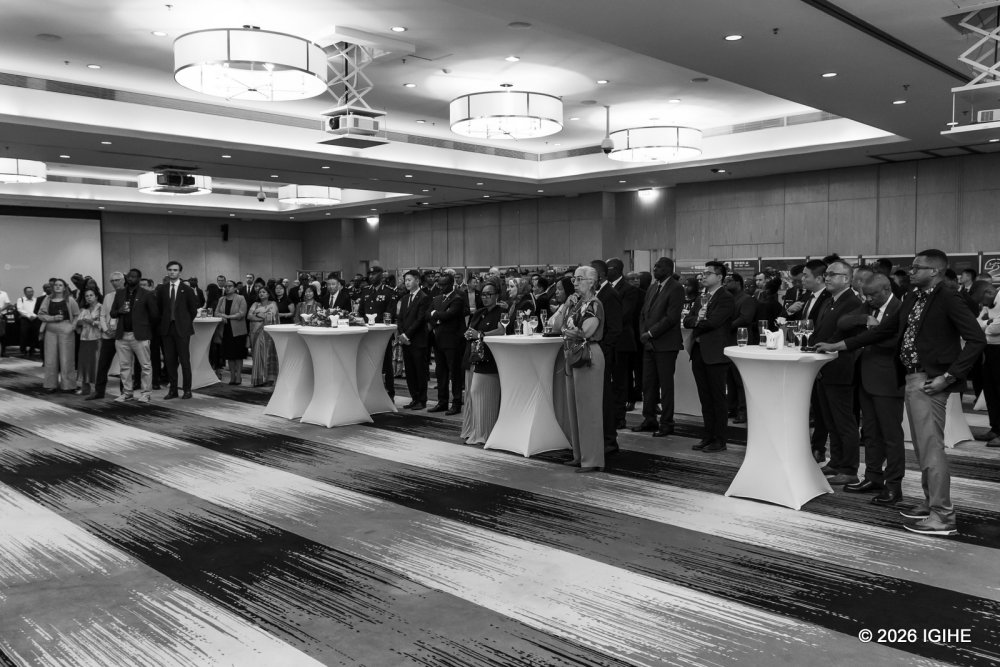
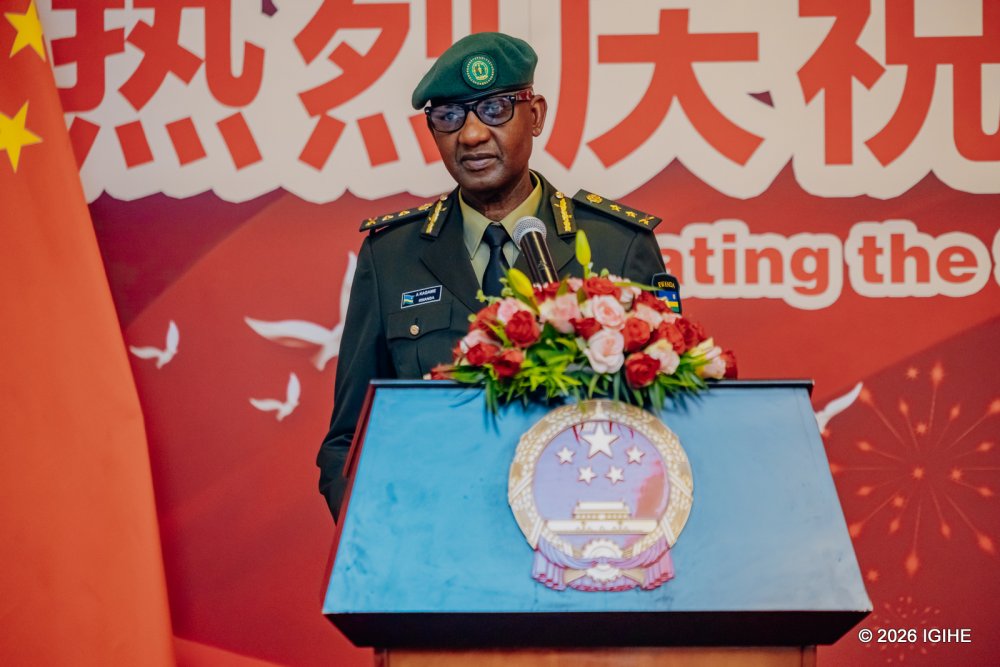
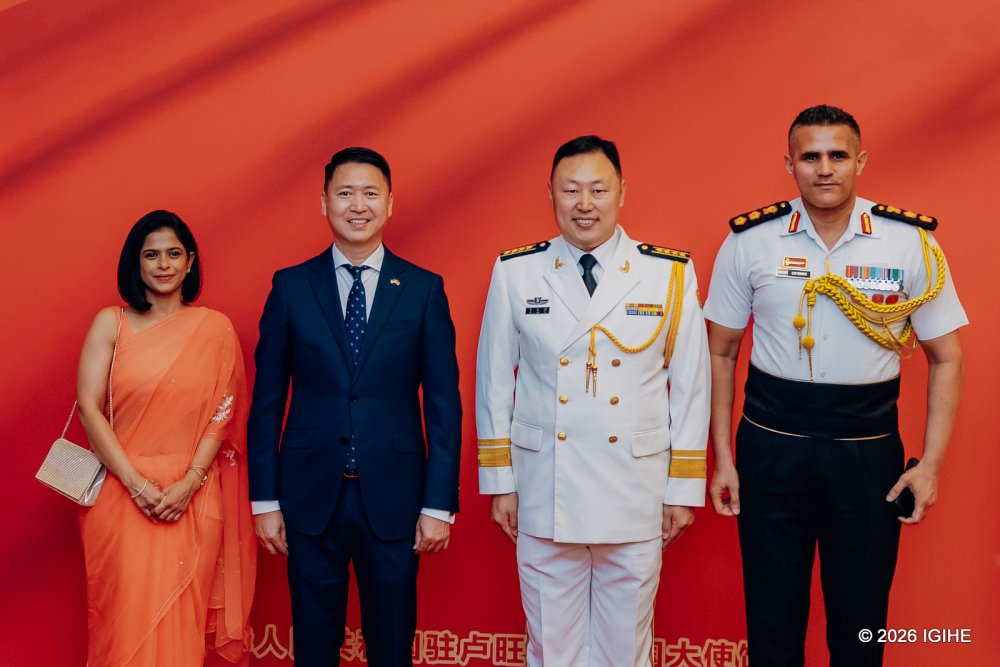
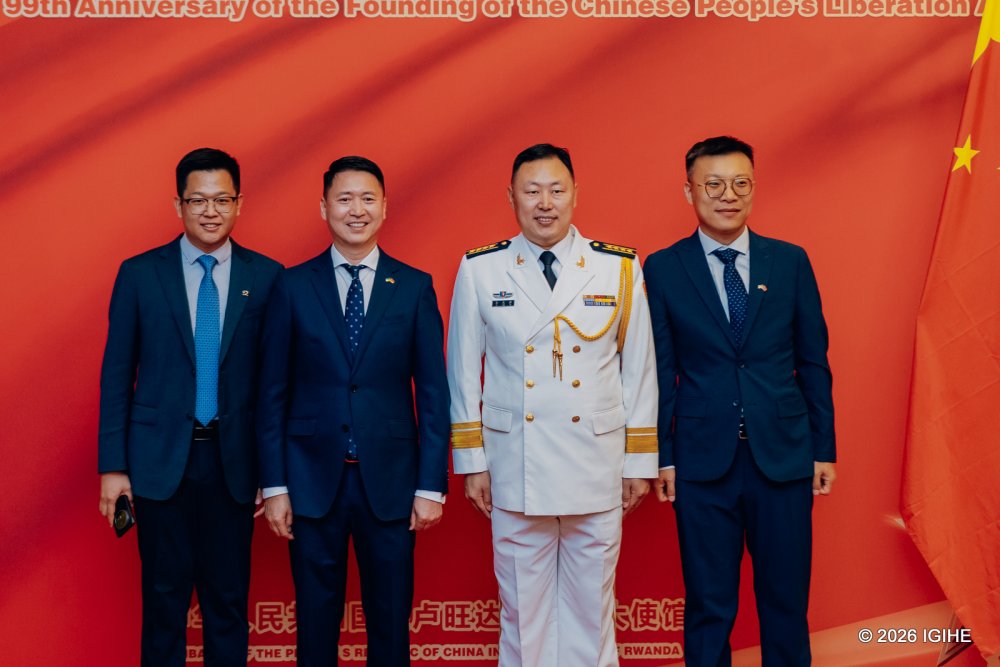
Speaking at the celebration in Kigali, Major General Alex Kagame, Chief of Staff of the Rwanda Defence Force (RDF) Reserve Force, congratulated the Chinese government and the PLA, describing the army as a modern force that has contributed to international peace and security.
Maj Gen Kagame said Rwanda values its longstanding friendship with China, noting that defence cooperation between the two countries has grown over the years.
“China’s consistent support in professional military education and specialized training has made meaningful contributions to the continued development of RDF capabilities,” he said.
He added that Rwanda remains committed to strengthening cooperation with China, highlighting the importance of collaboration between the two armed forces in responding to complex and interconnected challenges amid an evolving international security environment.
“This reality underscored the importance of trusted partnerships that promote capacity building, professional excellence and collective efforts towards working with regional and international peace stability.
“Rwanda remains committed to working closely with China in pursuit of these shared objectives,” he noted.
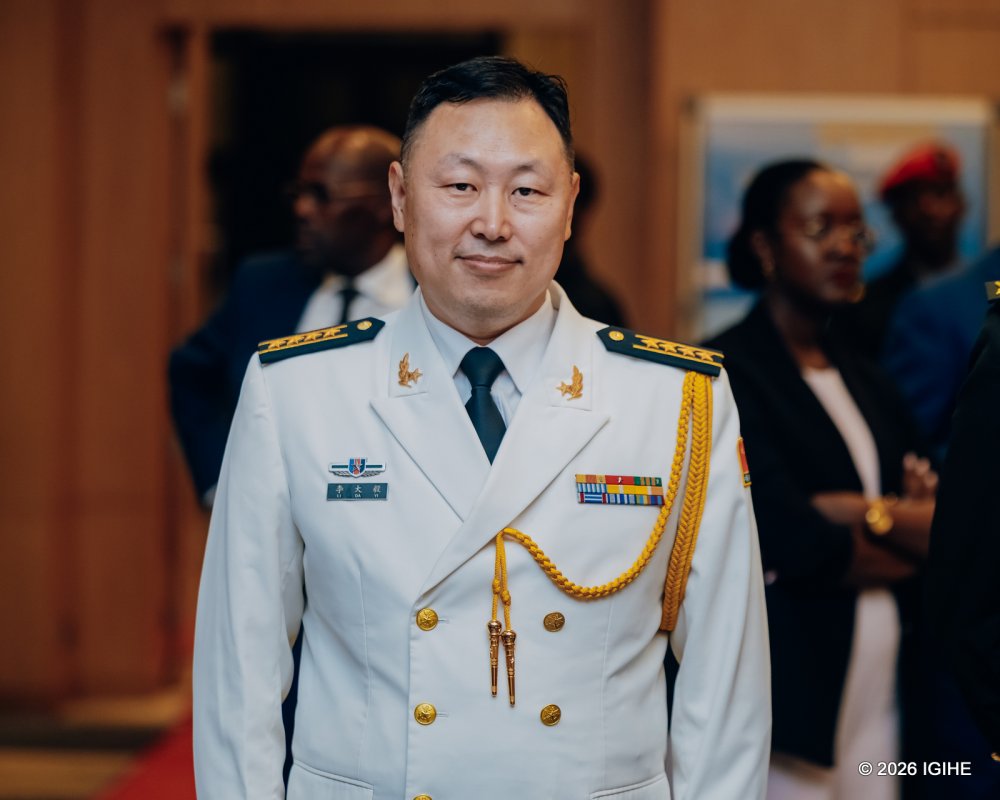
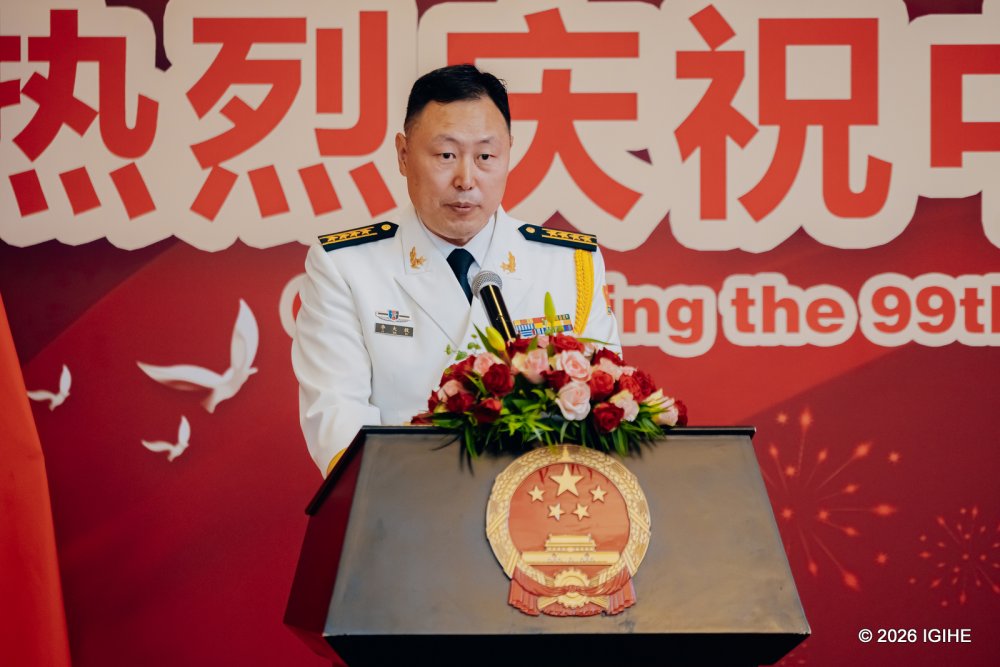
The Chinese Defence Attaché to Rwanda, Senior Captain Li Dayi, said the PLA’s development has been guided by China’s commitment to peaceful development and its belief that peace and harmony among nations are essential.
He highlighted China’s contribution to global peacekeeping, noting that since joining UN peacekeeping operations in 1990, the Chinese military has deployed more than 50,000 peacekeepers to missions across more than 20 countries and regions.
Capt Li said China-Rwanda military cooperation has continued to grow through defence exchanges and expressed China’s commitment to further deepening the partnership.
“China is willing to work with Rwanda, guided by the important consensus reached by the two heads of state, to elevate the military-to-military relationship to a new level on the basis of mutual respect, equality and mutual benefit,” he said.
He added that such cooperation would contribute to regional peace, stability and shared development.
The PLA was founded on August 1, 1927, and has since developed into one of the world’s largest military forces.
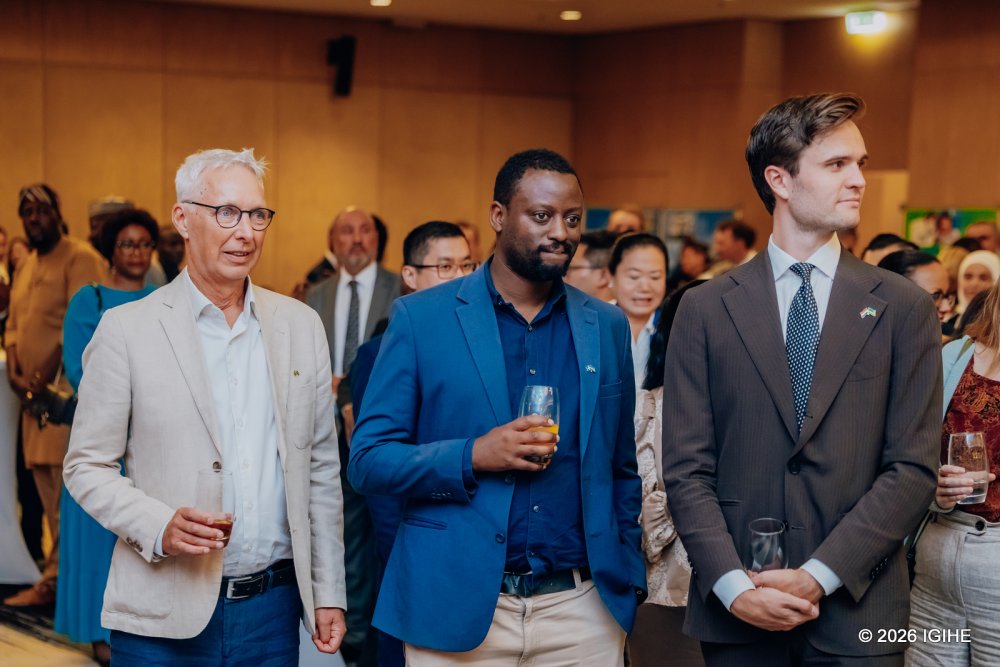
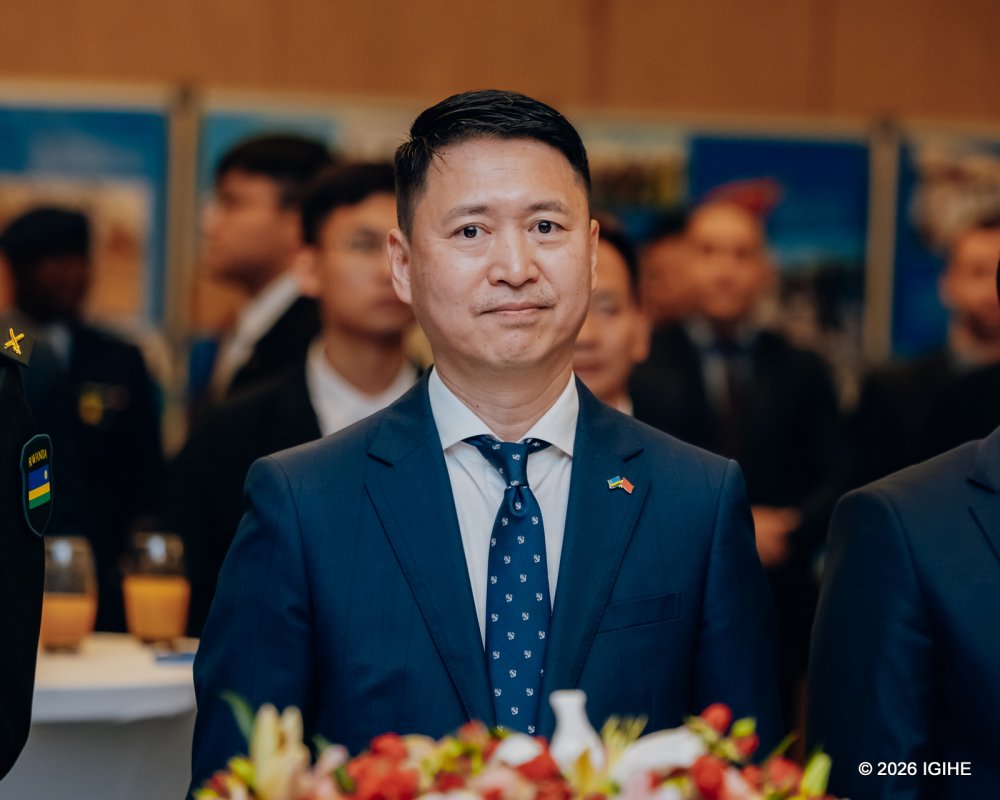
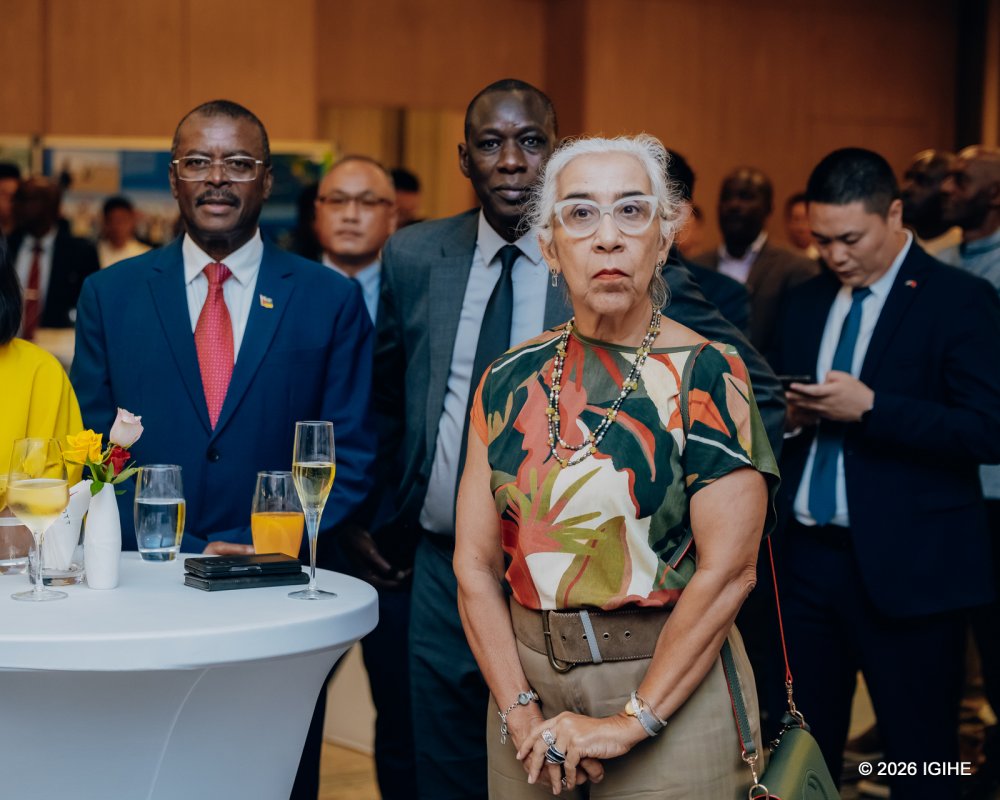
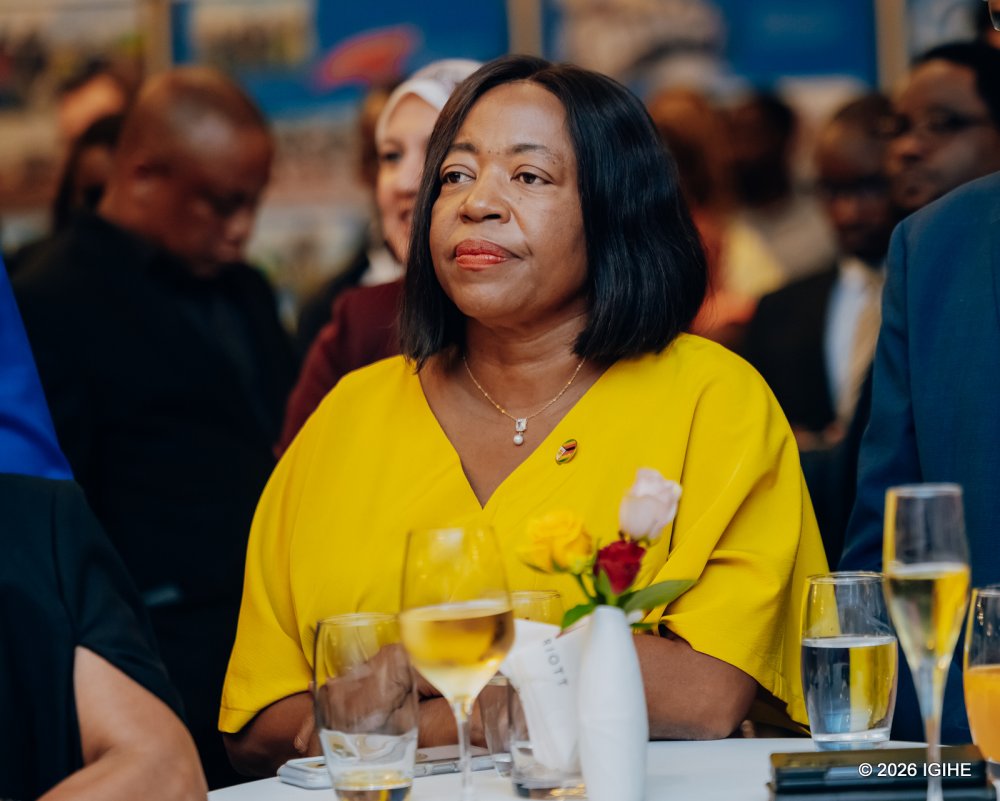
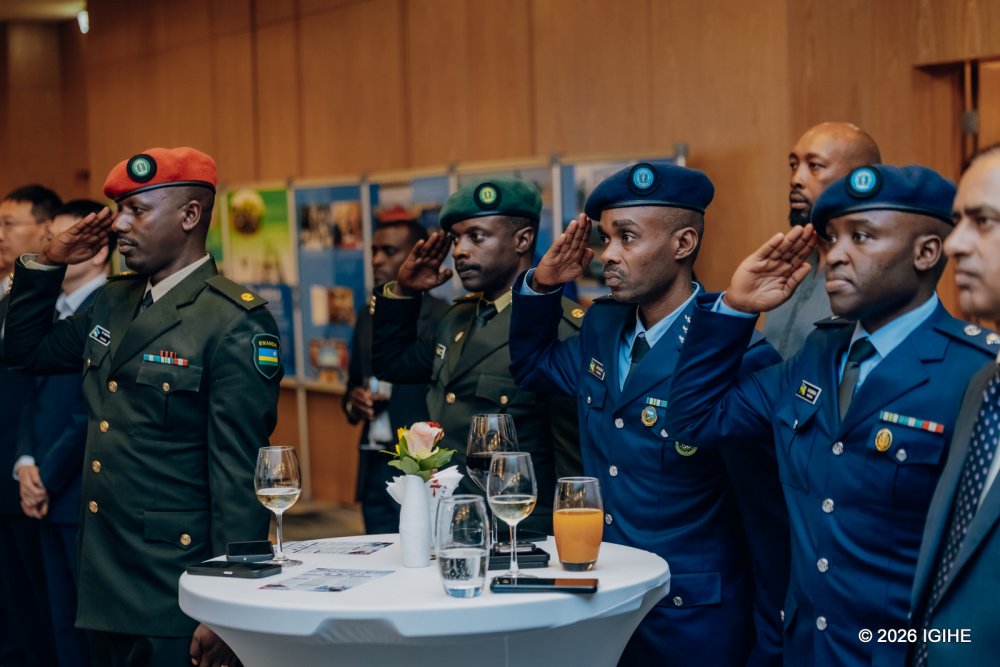
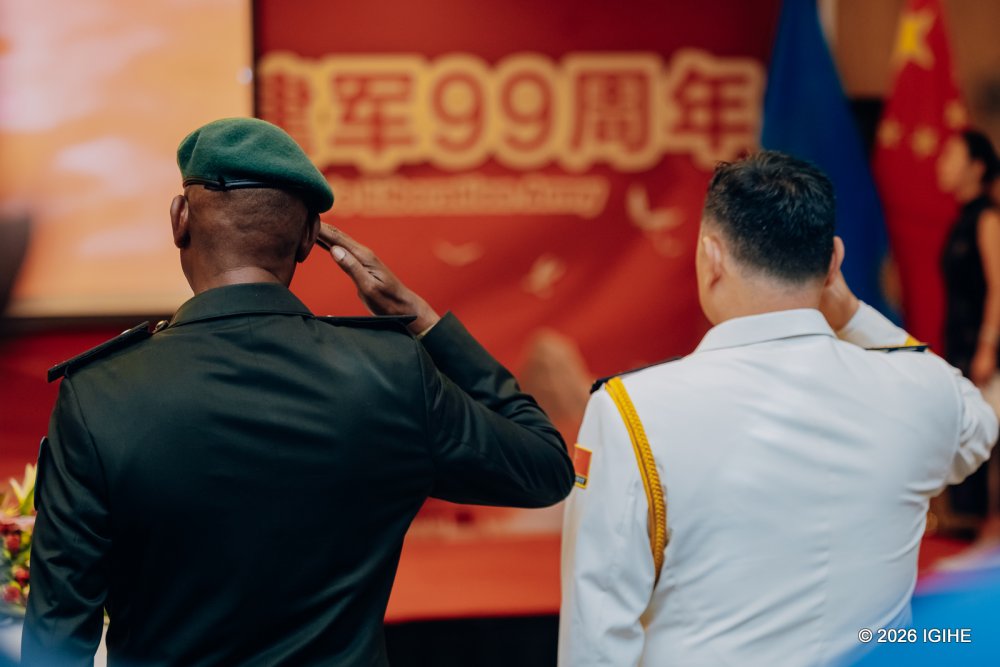
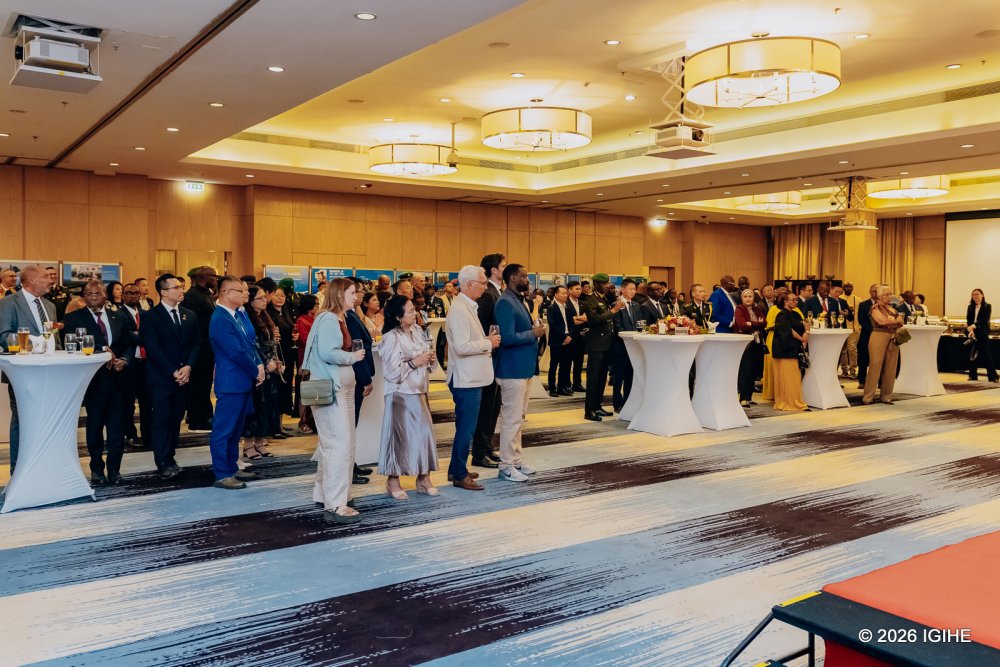
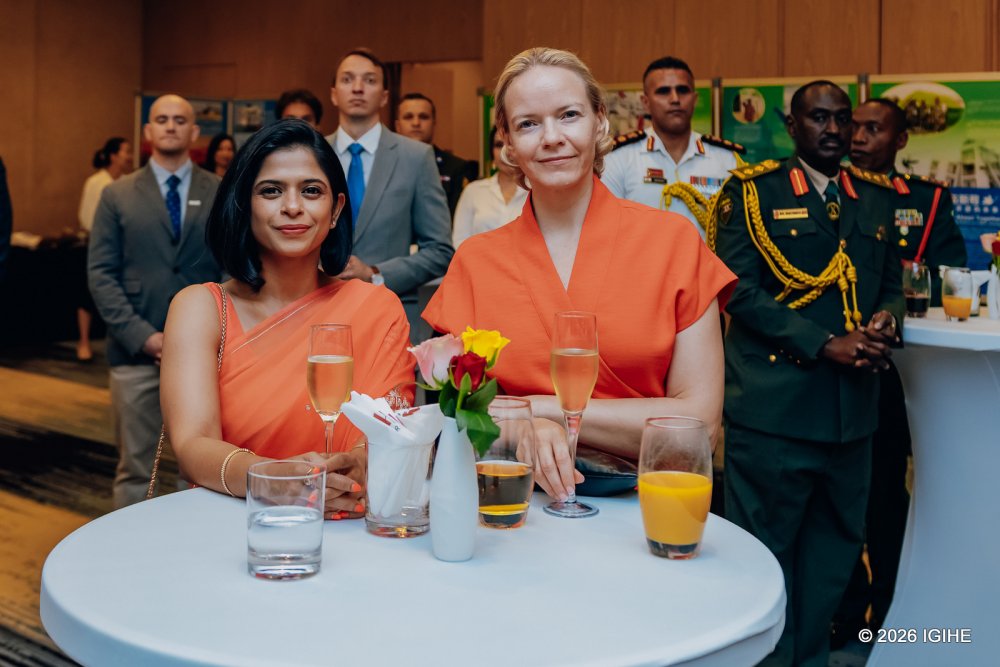
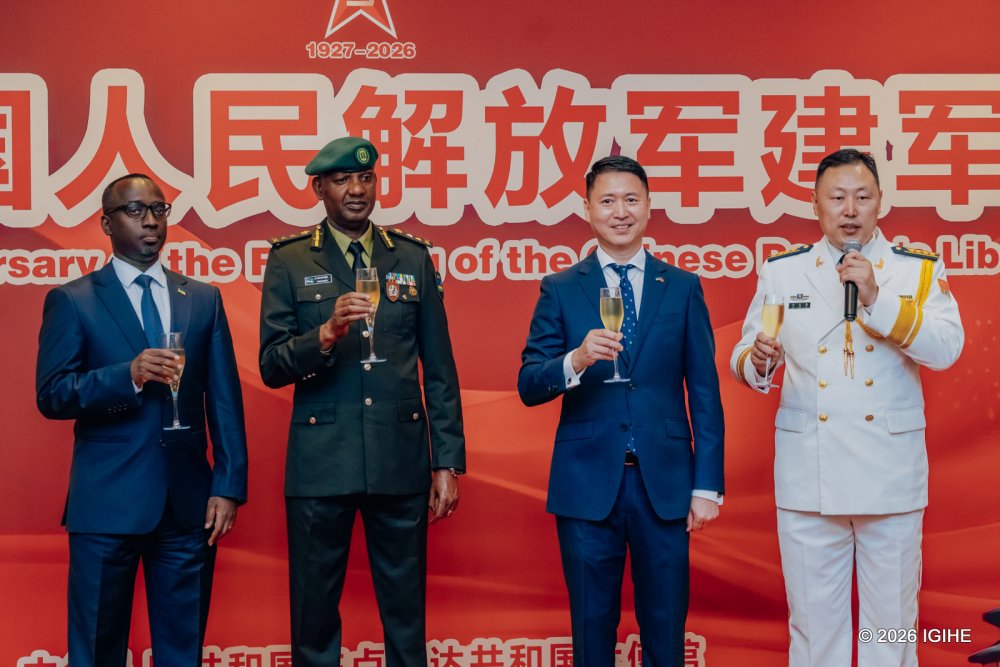
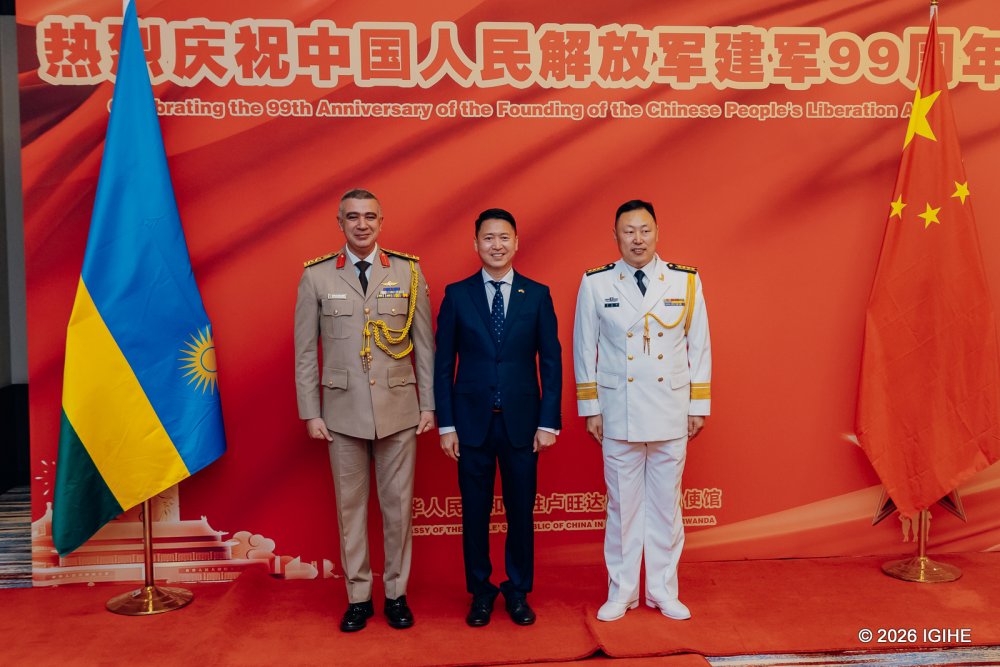
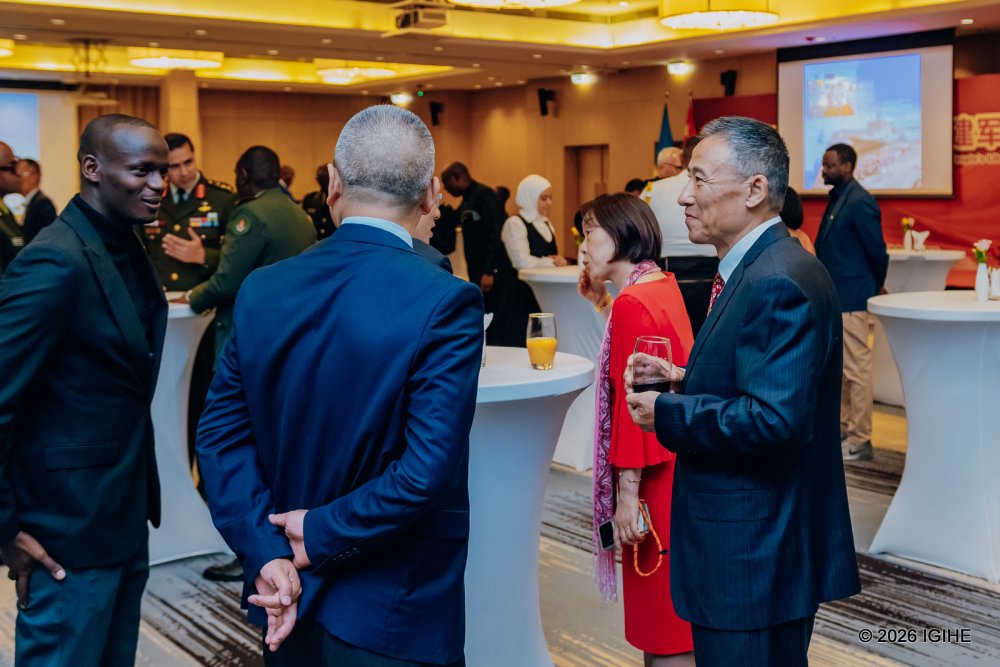
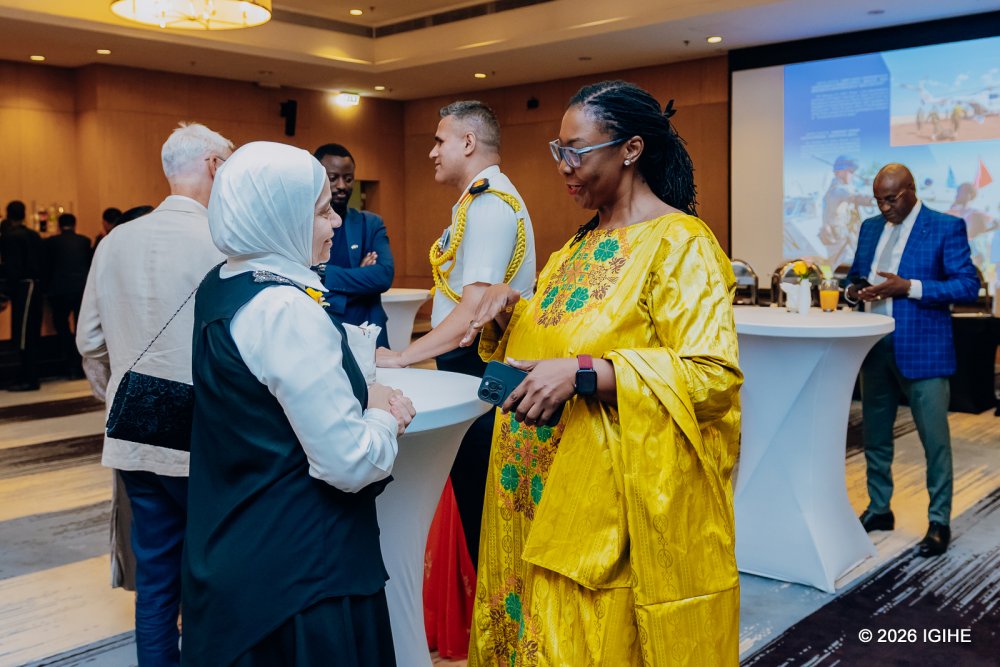
The anniversary celebration brought together government officials, diplomats, defence attachés, members of the Chinese community and friends to commemorate its history and achievements.
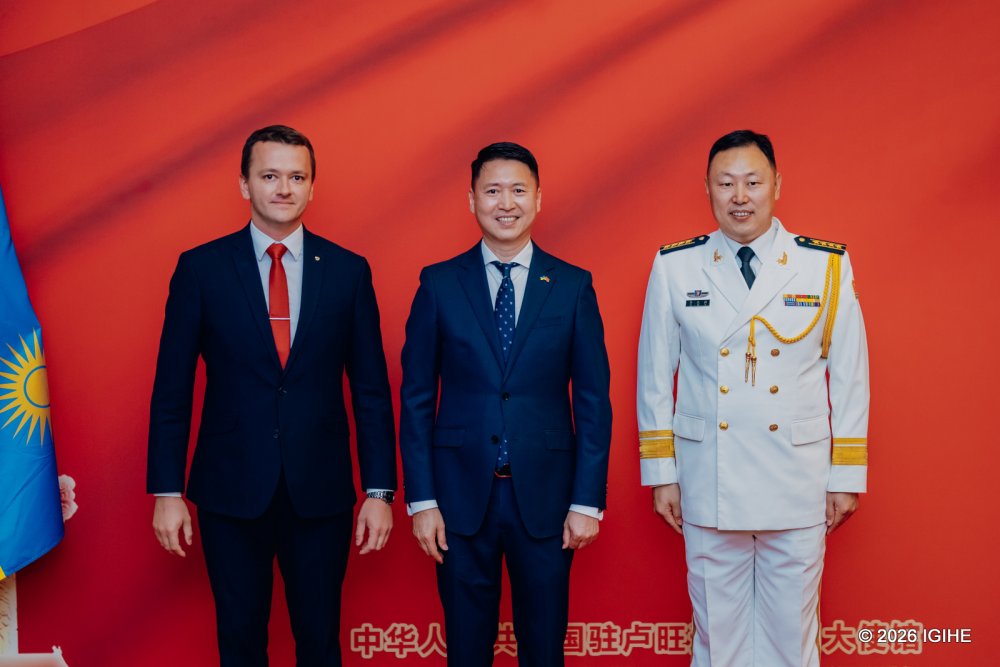
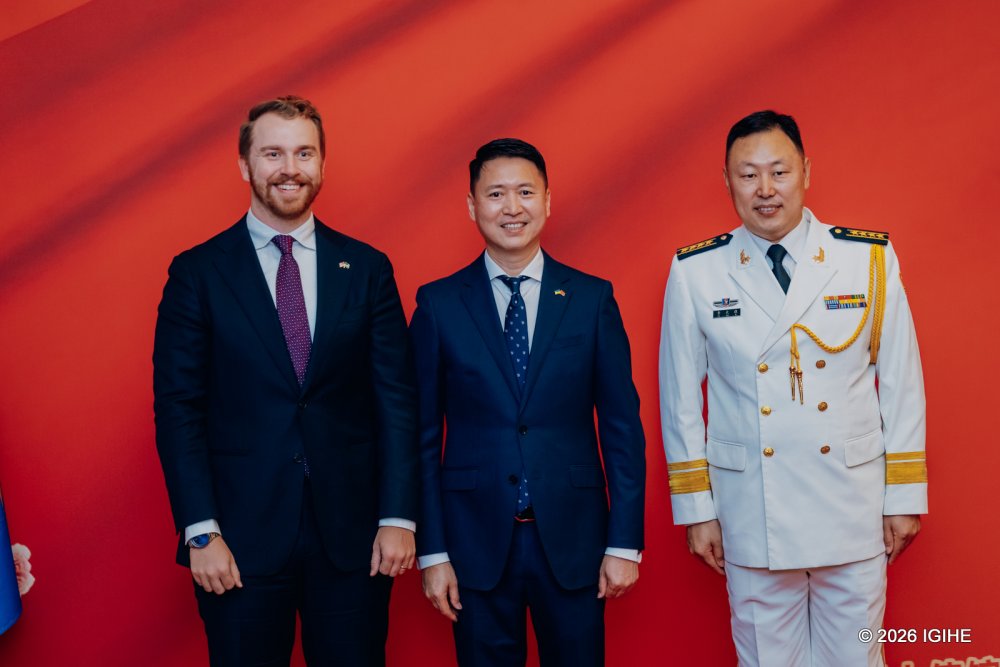
Photos from the celebration of the 99th anniversary of the Chinese People’s Liberation Army (PLA) in Kigali
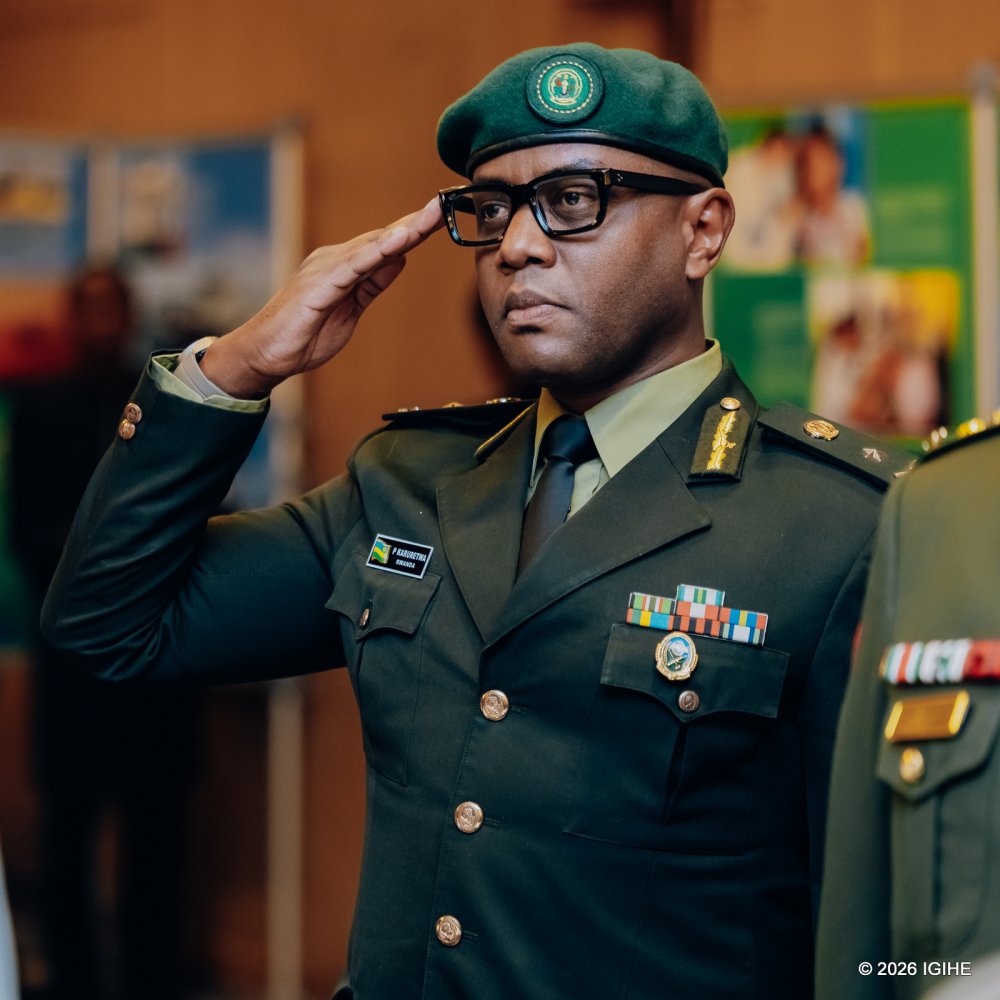
Maj Gen Alex Kagame congratulates the Chinese government and the People’s Liberation Army during the PLA anniversary celebration in Kigali.Chinese Defence Attaché Senior Capt Li Dayi highlighted China’s contribution to global peacekeeping during the PLA anniversary event in Kigali.Guests follow remarks during a ceremony marking the 99th anniversary of the founding of the Chinese People’s Liberation Army in Kigali.RDF representatives and Chinese officials attended the celebration of the 99th anniversary of the Chinese People’s Liberation Army in Kigali.Rwanda and China officials gather in Kigali to mark the 99th anniversary of the founding of the Chinese People’s Liberation Army.Senior Capt Li Dayi, Chinese Defence Attaché to Rwanda, addresses guests during the PLA’s 99th anniversary celebration held in Kigali.The celebration brought together government officials, diplomats, defence attachés and members of the Chinese community in Kigali.Maj Gen Alex Kagame, Chief of Staff of the RDF Reserve Force, delivers remarks during the celebration of the 99th anniversary of the founding of the Chinese People’s Liberation Army in Kigali.
The case accuses Rwanda of deploying troops on Congolese territory over the past 30 years and violating several international conventions, including the 1948 Genocide Convention, conventions against torture and racial discrimination, and those protecting women’s rights.
Through its Minister of Justice and Attorney General, Guillaume Ngefa, the DRC government asked the ICJ to formally declare that Rwanda was responsible for these alleged violations.
These are serious allegations that deserve careful judicial examination. However, the political motivations behind the lawsuit also warrant scrutiny.
By taking Rwanda to The Hague, analysts say, Kinshasa is not only pursuing legal action but also advancing a broader political strategy aimed at portraying Rwanda as the principal culprit while diverting attention from the DRC government’s own role in the conflict, particularly its collaboration with armed groups operating in eastern DRC.
The proceedings are therefore likely to be more than a legal dispute. They also represent a contest over international perception, responsibility, and accountability under international law.
The issue is not that the DRC has chosen to seek justice through international courts, every sovereign state has that right. Rather, the concern lies in what Kinshasa chooses to emphasize and what it chooses to ignore.
The ICJ case and the battle over responsibility
While asking the international community to examine its accusations against Rwanda, the Congolese government has largely overlooked allegations concerning its own cooperation with the Democratic Forces for the Liberation of Rwanda (FDLR), an armed group founded by individuals responsible for the 1994 Genocide against the Tutsi, as well as its collaboration with the Wazalendo coalition of militias and the use of foreign mercenaries.
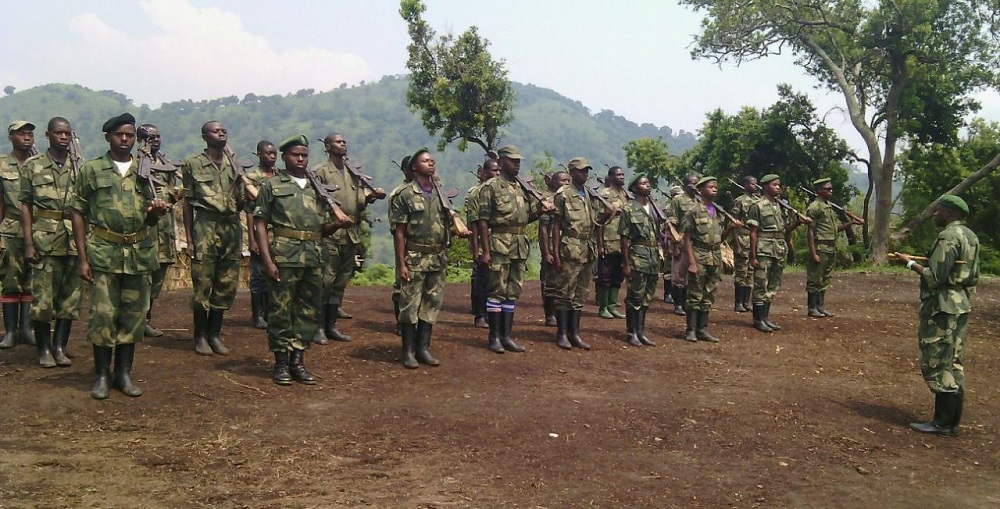
The FDLR is not an ordinary armed group. It was established by former members of the Rwandan Armed Forces and Interahamwe militia who fled to the DRC after participating in the 1994 Genocide against the Tutsi.
FDLR ties raise questions over Kinshasa’s accusations
For years, the group has been accused of ethnic killings, rape, child recruitment, and numerous other serious human rights violations. It is also under sanctions imposed by both the United Nations and the United States.
A UN Group of Experts report published in late June 2026 concluded that the FDLR continues to pose a major threat to peace and security in eastern DRC and the wider region, while rebuilding its capabilities with support from the Kinshasa government.
The FDLR itself claims to have more than 10,000 fighters, with nearly half actively engaged in military operations. The group’s special force unit (CRAP) claims to have more than 20,000 combatants.
However, UN experts and intelligence assessments estimate that the FDLR has between 3,500 and 4,500 fighters, while the Washington Peace Agreement estimated the group’s strength at between 3,000 and 3,500.
In June 2025, the Rwanda Defence Force stated that the FDLR had between 7,000 and 10,000 fighters at the time and noted that the group routinely blends into civilian populations when anticipating military operations.
Despite these assessments, the Kinshasa government has continued to regard the FDLR not as a terrorist organization to be dismantled but as a key military partner in its campaign against AFC/M23.
The June 2026 UN Group of Experts report on the DRC found that the Congolese government continued to use Wazalendo militias as auxiliary forces while maintaining cooperation with the FDLR despite previous commitments to dismantle the group.
According to the report, FDLR fighters and Wazalendo militias operated alongside the Armed Forces of the DRC (FARDC) on several front lines.
UN investigators also documented continued financial and logistical support for these groups, including substantial monthly payments channelled through provincial authorities.
Congolese military aircraft reportedly transported uniforms, weapons, ammunition, and food supplies to FDLR positions on multiple occasions, while the FARDC provided air support during joint operations.
The report further cited government and military officials who allegedly assured FDLR leaders that their cooperation would continue because the group remained strategically important in the fight against AFC/M23.
The DRC continues to maintain ties with the FDLR and strengthen military cooperation with the armed group.
Retired Colonel Augustin Nshimiyimana, commonly known as “Bora” and a former senior FDLR commander, recently claimed that cooperation between the DRC government and the FDLR remains active, noting that several senior FDLR figures now occupy positions within the FARDC command structure in Kinshasa.
A government that claims to be committed to combating genocide-related crimes struggles to maintain credibility while working alongside an armed group established by individuals implicated in genocide.
Similarly, the DRC faces questions about presenting itself before an international court as a defender of Congolese civilians while supporting armed groups that have been accused of targeting the same civilians.
For Rwanda, the continued presence of the FDLR near its borders represents a serious national security concern rooted in the legacy of the 1994 Genocide against the Tutsi and the genocidal ideology the group continues to promote.
This explains why Kigali views continued cooperation with the FDLR as a significant regional security threat.
Hate speech and ethnic tensions deepen the regional crisis
The consequences of that alliance have been particularly severe for Congolese Tutsi communities, who have increasingly been portrayed as foreigners, spies, or proxies for Rwanda.
Political rhetoric has frequently conflated Rwanda, AFC/M23, Congolese Tutsi communities, and Kinyarwanda-speaking Congolese into a single perceived enemy.
In 2023, former minister and Member of Parliament Justin Bitakwira appeared on television portraying Tutsi and Banyamulenge communities as foreigners and enemies. His remarks were followed by violence and the displacement of civilians.
UN experts warned that his statements risked inciting discrimination, hatred, and violence. The 2026 UN report also linked him to efforts to coordinate recruitment into Wazalendo militias.
UN reports have documented the displacement of thousands of Congolese Tutsi fleeing attacks by Wazalendo militias and the FDLR.
In one incident, the armed groups burned the village of Nturo in Masisi Territory, North Kivu Province. Videos circulated online celebrating the destruction of Tutsi homes.
Although Rwanda is frequently associated with the AFC/M23 conflict, the country maintains that it is not behind the crisis.
Instead, the country voiced concerns over the continuing threat posed by the FDLR, whose stated objective remains to destabilize Rwanda.
Minister Nduhungirehe recently dismissed the DRC’s case against Rwanda at ICJ as ‘a political manoeuvre’.
Human Rights Watch has also documented killings, beatings, looting, and other abuses committed by Wazalendo militias backed by Kinshasa, targeting civilians on the basis of their ethnicity.
Amnesty International has similarly reported that the Congolese government’s failure to address hate speech directed at Banyamulenge and other Congolese Tutsi has fostered a climate of impunity.
Such rhetoric has also reached the country’s highest security institutions. In December 2025, then FARDC spokesperson Maj. Gen. Sylvain Ekenge appeared on national television making derogatory remarks about Tutsi women, urging Congolese men not to marry them and suggesting such marriages could provide a pathway for enemies to infiltrate the country.
For a senior military official to make such statements on state television illustrated how deeply ethnic hostility had penetrated state institutions.
During armed conflict, hate speech is far from trivial. When political or military leaders repeatedly associate a particular ethnic community with treason or disloyalty, they create conditions that can facilitate discrimination, arbitrary detention, forced displacement, and violence against that population.
From a political perspective, the DRC’s case before the ICJ also serves a domestic purpose.
It reframes the country’s complex security crisis as the result of foreign aggression, directing both domestic and international attention toward Rwanda rather than toward longstanding challenges within the DRC itself, including corruption, weaknesses within the national army, poor governance, support for armed groups, and the promotion of ethnic divisions.
If Kinshasa truly wants justice, it should first end its cooperation with the FDLR, dismantle networks supporting armed groups, prosecute officials spreading ethnic hatred, and protect Congolese Tutsi who are treated as foreigners.
The government should also allow independent investigations into alleged crimes committed by FARDC forces and their Wazalendo allies.
Otherwise, the DRC’s case before the International Court of Justice could be seen as a way of diverting attention rather than a genuine pursuit of justice.
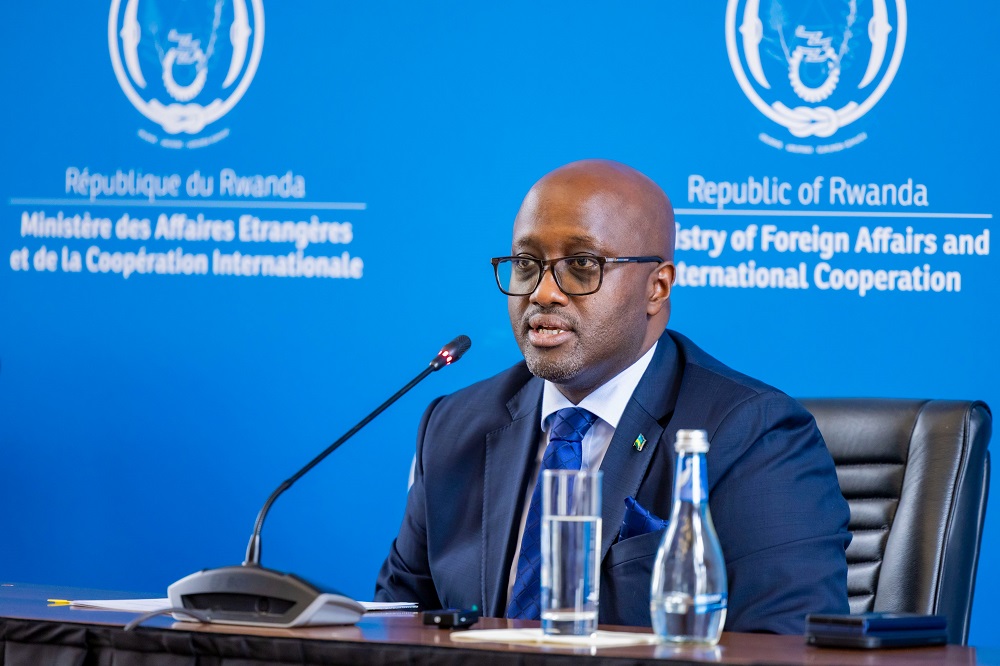
Rwanda’s Minister of Foreign Affairs and International Cooperation, Ambassador Olivier Nduhungirehe, has criticised the case filed by the DRC government before the ICJ.
Speaking to France 24 journalist Marc Perelman in a recent interview, Minister Nduhungirehe dismissed the move as “a political manoeuvre” by the Government of DRC which is collaborating with the FDLR genocidal group.
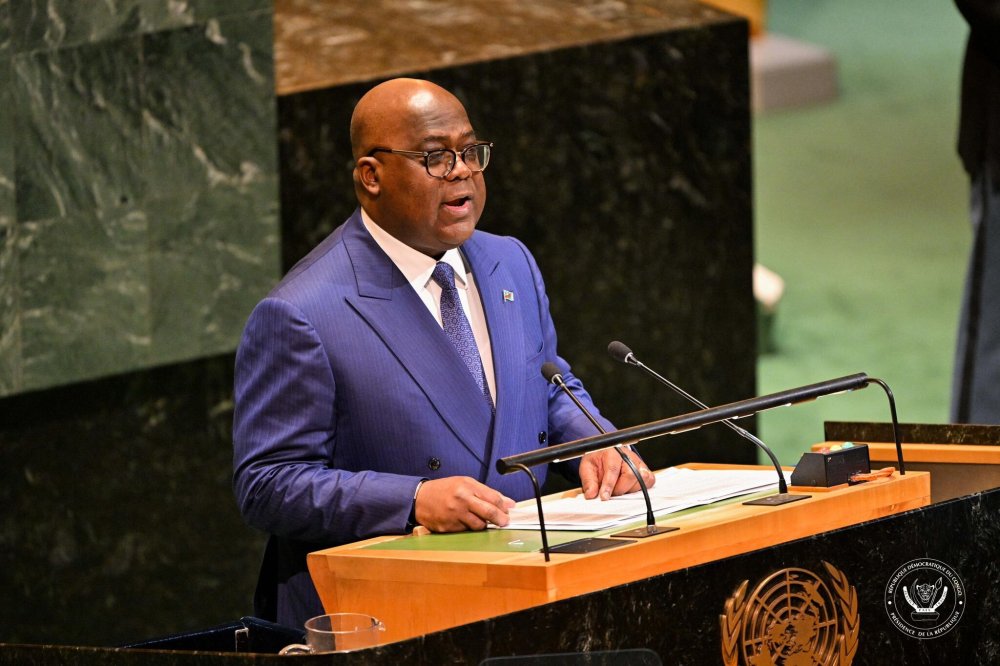
“First, who collaborates with the genocidal force? It is the Congolese government. Second, who is shelling the civilian population? It is the government of Tshisekedi. who is fueling hate speech against the Congolese Tutsi? There are people linked to Tshisekedi including former spokesperson of the army Maj. Gen. Sylvain Ekenge”
The Tshisekedi administration is accused of seeking to tarnish Rwanda’s image while ignoring violations of international law.
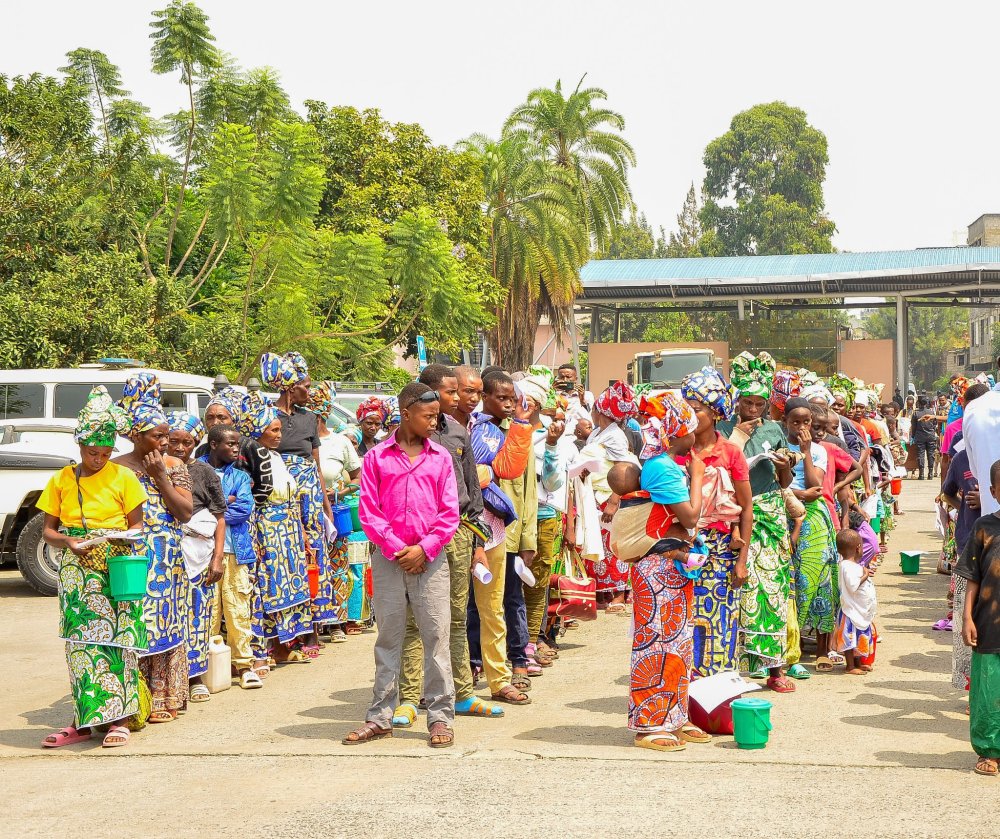
The returnees were received on on July 22, 2026, at the Grande Barrière border post in Rubavu District. They include 43 men, 115 women and 263 children from 136 families.
Among them was Mwemezi Dusabe, who returned from Kanyabayonga. She recounted that her husband and five of her children were killed, while she managed to return to Rwanda with her four surviving children.
Another returnee, Ndayambaje Sebutozi, who had been living in Rutongo in Rutshuru Territory, said he fled Rwanda in 1998. He explained that returning home was nearly impossible because anyone the FDLR suspected of planning to repatriate was killed.
Sebutozi said the security situation improved after the AFC/M23 captured Rutshuru, enabling him to finally decide to return to Rwanda.
He added that upon arriving in Rwanda, he found peace and was warmly welcomed. He used the opportunity to urge fellow Rwandans still living in the forests of eastern DRC to return home.
The Mayor of Rubavu District, Prosper Mulindwa, said the returnees will receive all necessary support to rebuild their lives and access opportunities they had previously been denied.
“We are grateful that they were able to learn the truth and free themselves from the captivity that prevented them from returning home,” he said.
“They will continue to receive support like all other Rwandans, in line with Rwanda’s policy of improving citizens’ livelihoods. They will benefit from programmes aimed at lifting people out of poverty, including Girinka and other development initiatives.”
The government assistance package includes initial financial support to help them restart their lives. Each returnee aged 18 and above will receive US$188, while those under 18 will receive US$113. In addition, every returnee will receive essential food supplies worth Rwf45,000.
Children made up the majority of the 421 Rwandans who returned home.The 421 Rwandans who had been held captive by the FDLR were received at the La Corniche border crossing upon their return to Rwanda.Rubavu District Mayor Prosper Mulindwa said the Rwandans who had been held captive by the FDLR will receive all the support and essential services needed to rebuild their lives.
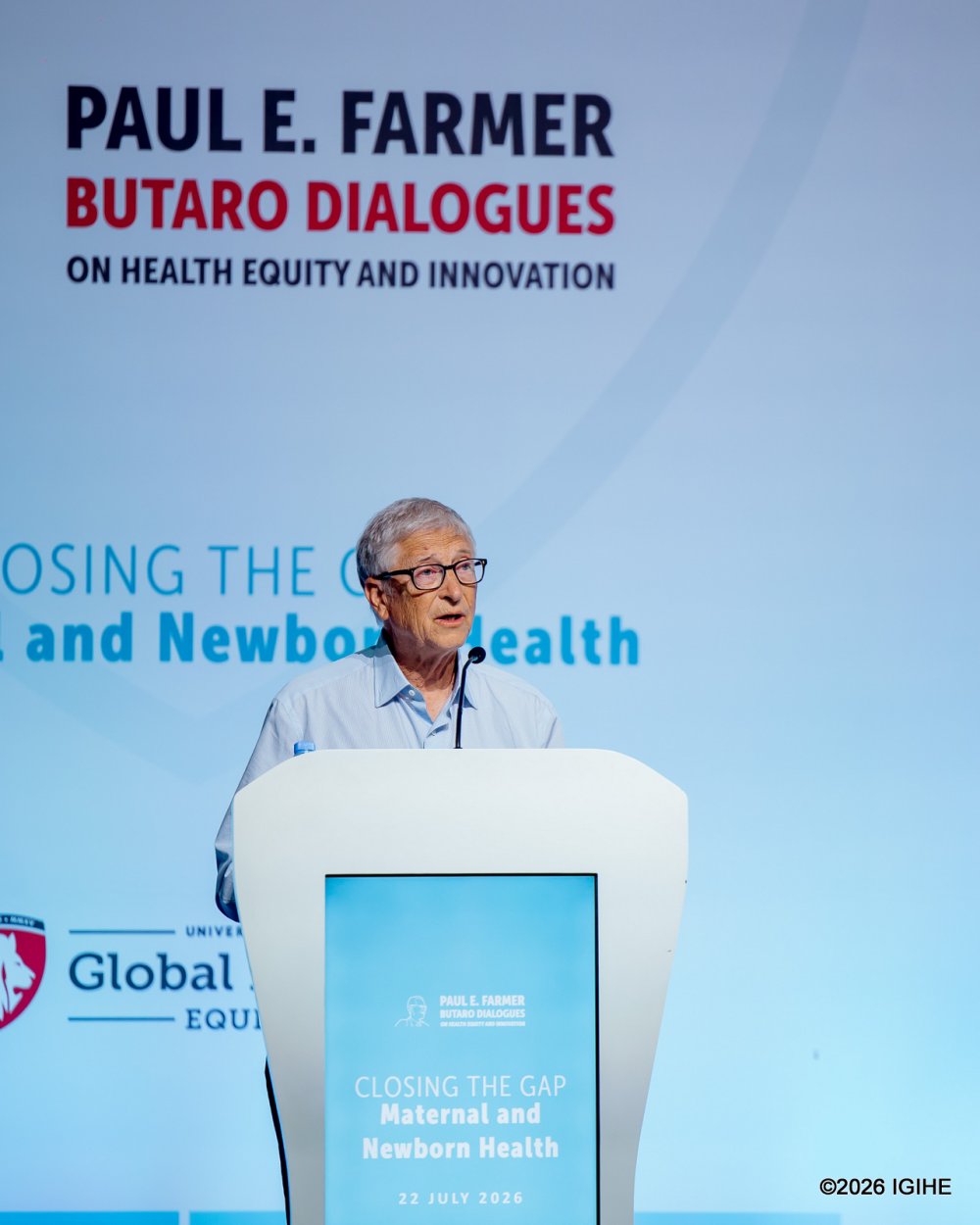
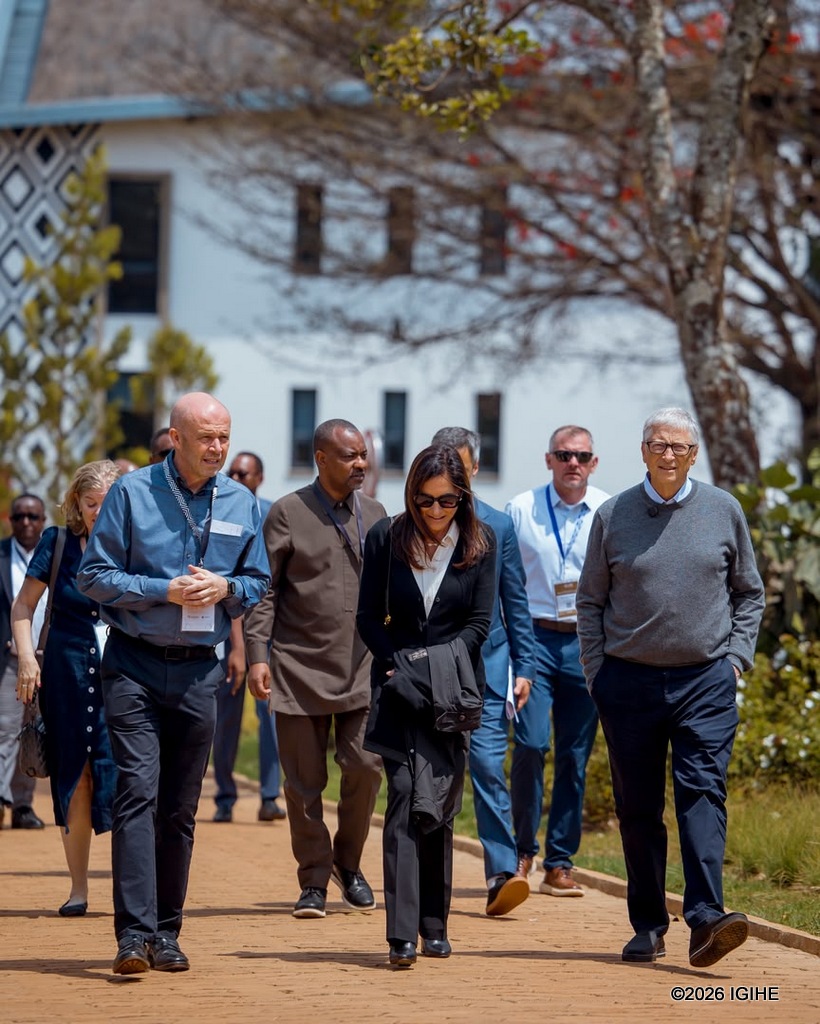
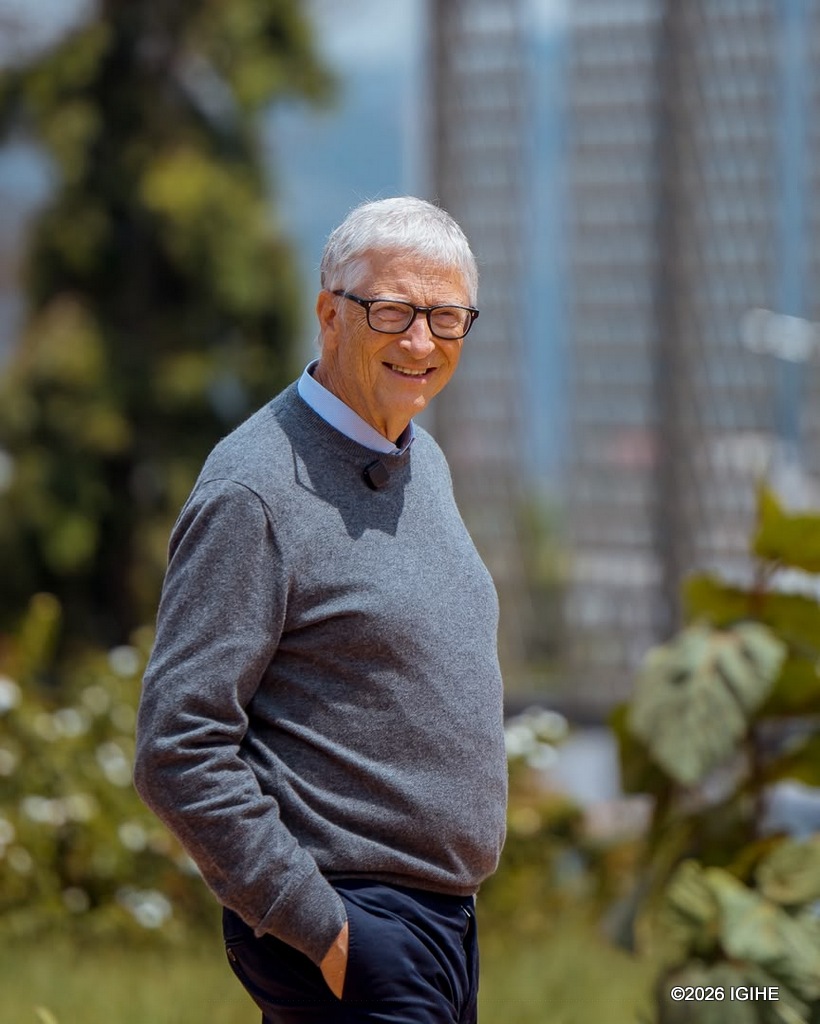
Microsoft co-founder and philanthropist Bill Gates has praised Rwanda’s progress in improving healthcare outcomes, while warning that artificial intelligence (AI) must be made accessible to African health systems rather than becoming a tool that benefits only wealthy countries.
Gates made the remarks on Wednesday while delivering the inaugural lecture at the Paul E. Farmer Butaro Dialogues on Health Equity and Innovation, hosted by the University of Global Health Equity (UGHE) in Butaro, Northern Province.
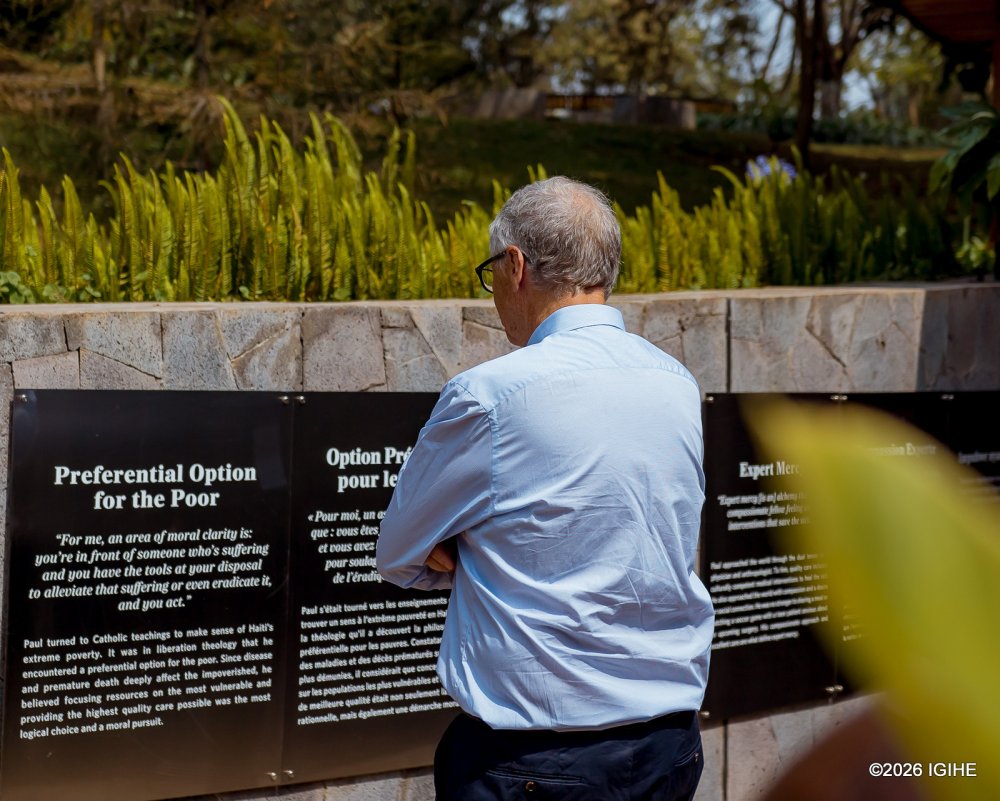
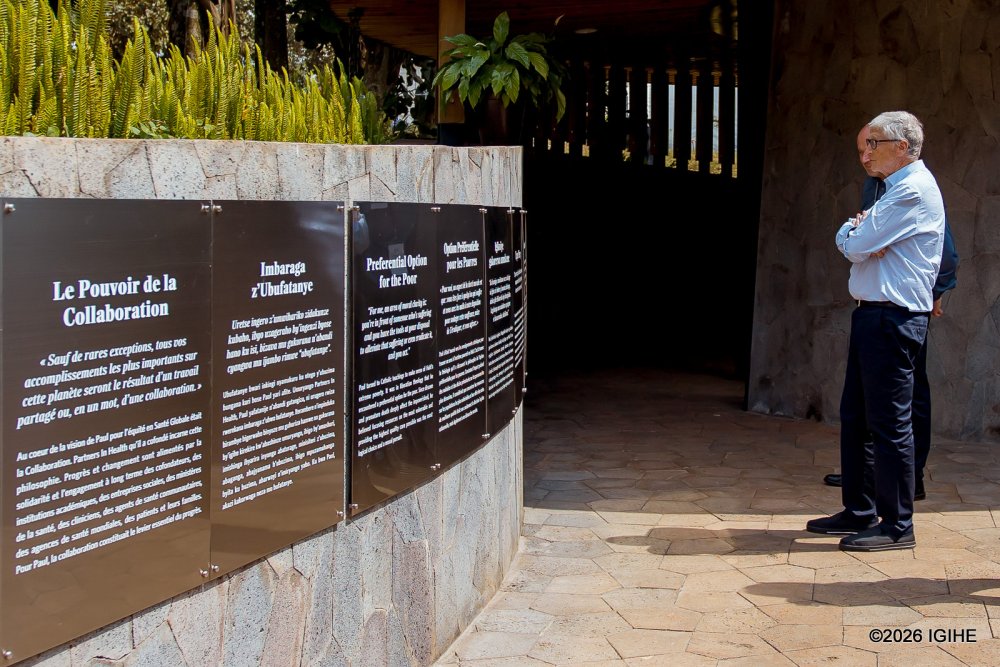
The dialogue, named after the late physician and global health pioneer Paul Farmer, brought together global health leaders to discuss how medical innovations can reach communities that need them most.
Gates highlighted Rwanda’s progress in building a strong healthcare system, using technology and community-based approaches to improve health outcomes, particularly in reducing child and maternal deaths.
“Rwanda as a whole has set a very good example. Its public health system, there’s a lot that others could learn from,” he said.
“Since the turn of the century, child deaths have fallen by 80%. Maternal deaths are down over 80%, and those are really incredible numbers.”
He also praised Rwanda’s use of digital technology in healthcare, citing his visit to the National Health Intelligence Center (NHIC), where he observed how digital systems are being used to monitor and improve health services.
“Those digital systems will be the foundation for the next generation, which will be powered by artificial intelligence,” Gates noted, adding that Rwanda is “at the forefront” of exploring how AI can benefit the health system.
However, Gates warned that global health progress is facing growing pressure, partly due to declining financial support from donor countries.
“Today we face greater challenges than ever. Progress in Africa as a whole is definitely in jeopardy. It’s a tough time for global health,” he cautioned.
He pointed out that donor countries are reducing their aid budgets, leaving African leaders under pressure to achieve more with fewer resources.
“Around the world, donor countries are shrinking their aid budgets, and so the leaders here are being forced to do more with less,” Gates explained.
He noted that the consequences of those decisions were already becoming visible, highlighting that last year marked the first time since the turn of the century that global childhood deaths increased.
“Not here in Rwanda, but a lot of those additional deaths were in Africa,” he added.
Gates argued that the situation makes it even more important to ensure new technologies, particularly AI, are used to strengthen healthcare delivery in countries with limited resources.
He warned that AI could deepen existing inequalities if it follows the same path as many previous technologies, where benefits are concentrated in wealthier nations.
“If we let things take their normal course, AI, like all advanced tools, will be in the rich countries,” he stated.
“The profit motive, the amount customers can pay, the data centres, it will benefit a narrow part of the world. That would be a great injustice.”
He stressed that Africa should be among the first places to benefit from AI, given the continent’s overstretched healthcare workforce.
“Right at the beginning, if anything, we should bring AI to those in need because the most overloaded healthcare workforce in the world, of course, is here in Africa,” Gates emphasized.
He explained that AI tools could help healthcare workers make better decisions, streamline services and identify where additional support is needed.
“The things that help them make decisions and streamline things and show them where we should do more, those will save many, many lives,” he added.
Gates noted that institutions such as UGHE would play an important role in ensuring AI solutions are adapted to local realities, including language needs and health challenges specific to African communities.
The remarks echoed the message of the dialogue, which UGHE Deputy Vice Chancellor Prof. Abebe Bekele described as an effort to bridge the gap between medical innovation and implementation.
Prof. Bekele observed that advances in artificial intelligence, digital health, genomics, diagnostics and clinical care were expanding the boundaries of medicine, but millions of people were still unable to benefit from these breakthroughs.
“The challenge before us is not one of discovery alone. It’s one of translation,” he noted.
He stressed that innovations only save lives when they are successfully implemented through policies, education, research and healthcare systems that ensure they reach every woman and child regardless of where they live.
Prof. Bekele explained that the Butaro Dialogues, organised by UGHE and the Consortium of Medical Schools in Africa (COMSA), aim to identify critical maternal and neonatal health innovations and support their adoption across African health systems.
Gates also reflected on the legacy of Paul Farmer, who helped establish UGHE and dedicated his career to expanding access to quality healthcare for underserved communities.
He described Farmer’s greatest lesson as the belief that medical breakthroughs only matter when they reach the people who need them most.
“For him, he saw everyone as worthy of having great health,” Gates said. “What mattered to him were the lives he saved.”
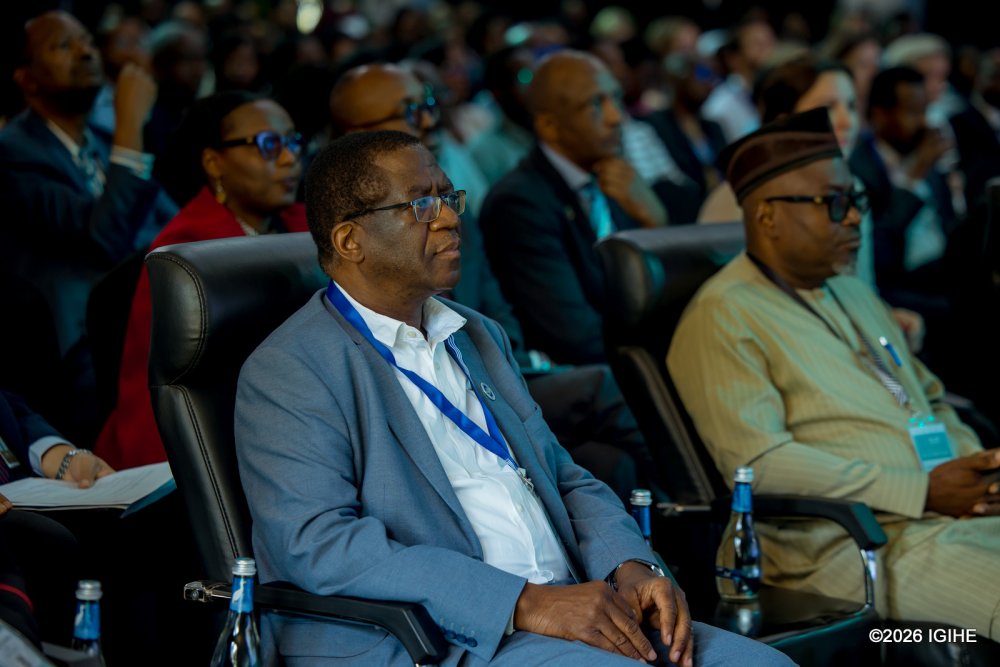
The inaugural Paul E. Farmer Butaro Dialogues brought together government officials, health experts, academics and students to explore how innovation, technology and stronger health systems can advance health equity across Africa.
Gates started his engagements in Rwanda on Monday, July 20, as part of a visit focused on learning more about the country’s progress in health, agriculture, and digital public infrastructure.
Since arriving in Rwanda, Gates has toured the TKMD syringe manufacturing plant in Rwamagana District, visited Mwulire Health Centre, and met community health workers to gain deeper insight into Rwanda’s primary healthcare system.
The Gates Foundation has worked with Rwanda for more than two decades, supporting programmes in healthcare, agriculture, nutrition, and innovation. Earlier this year, Rwanda became the first beneficiary of the Horizon1000 initiative, a $50 million artificial intelligence programme launched by the Gates Foundation in partnership with OpenAI to help African countries use AI to strengthen healthcare delivery.
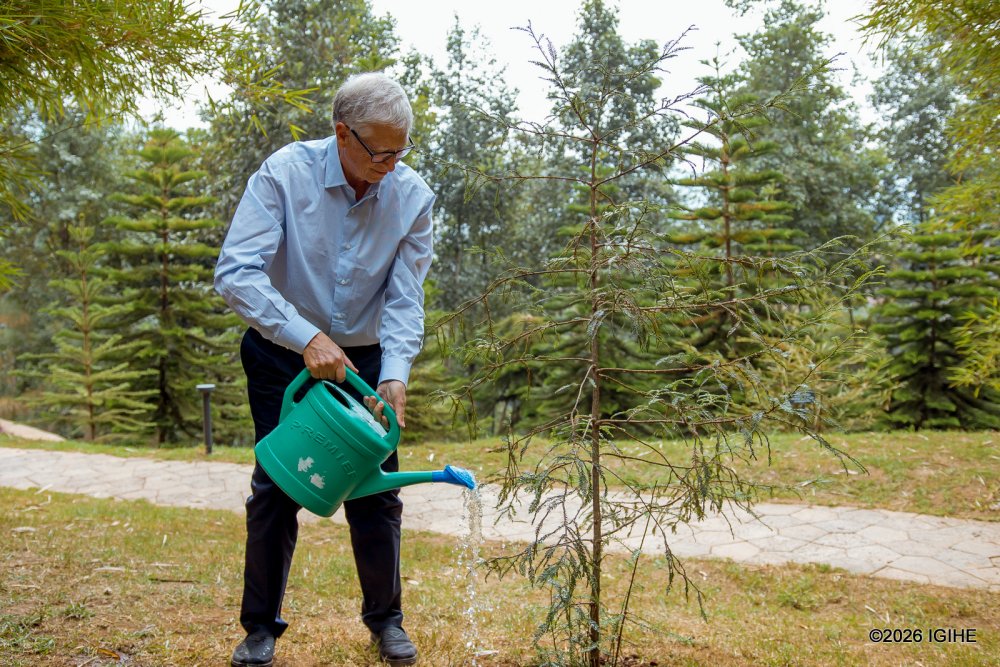
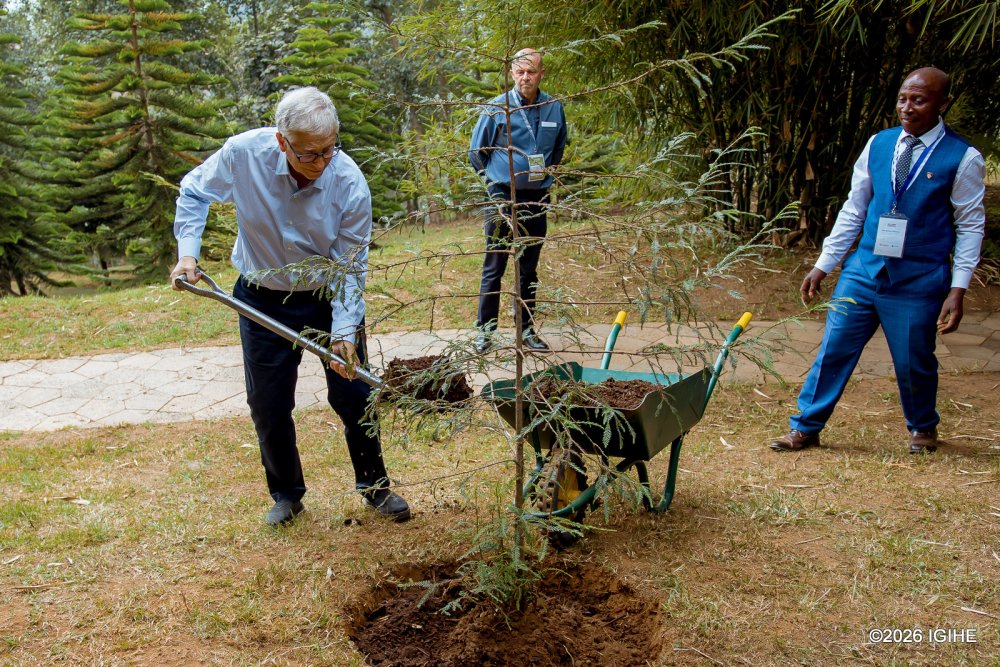
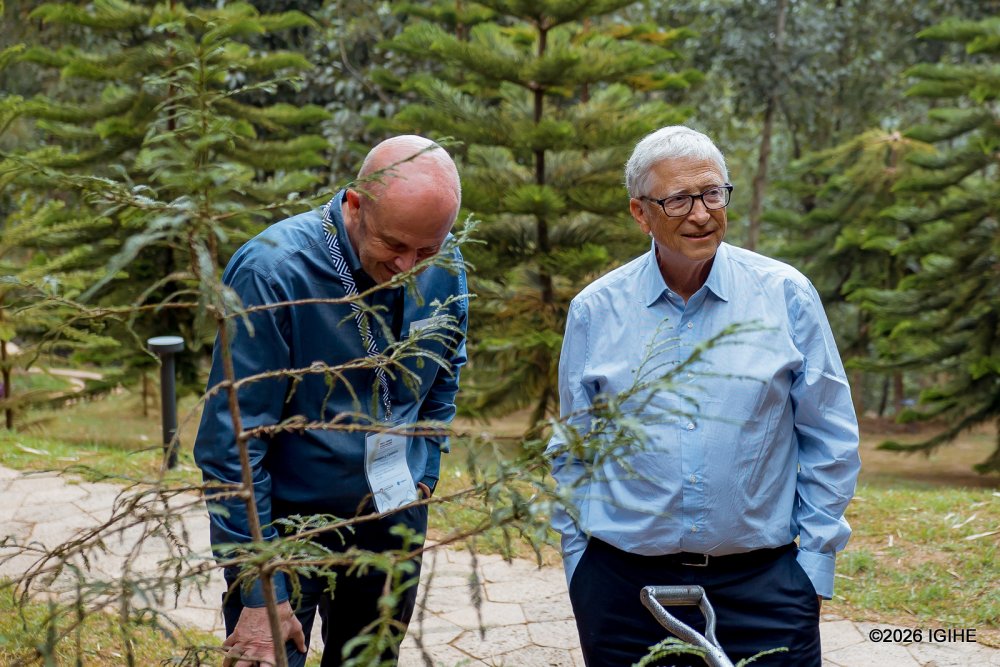
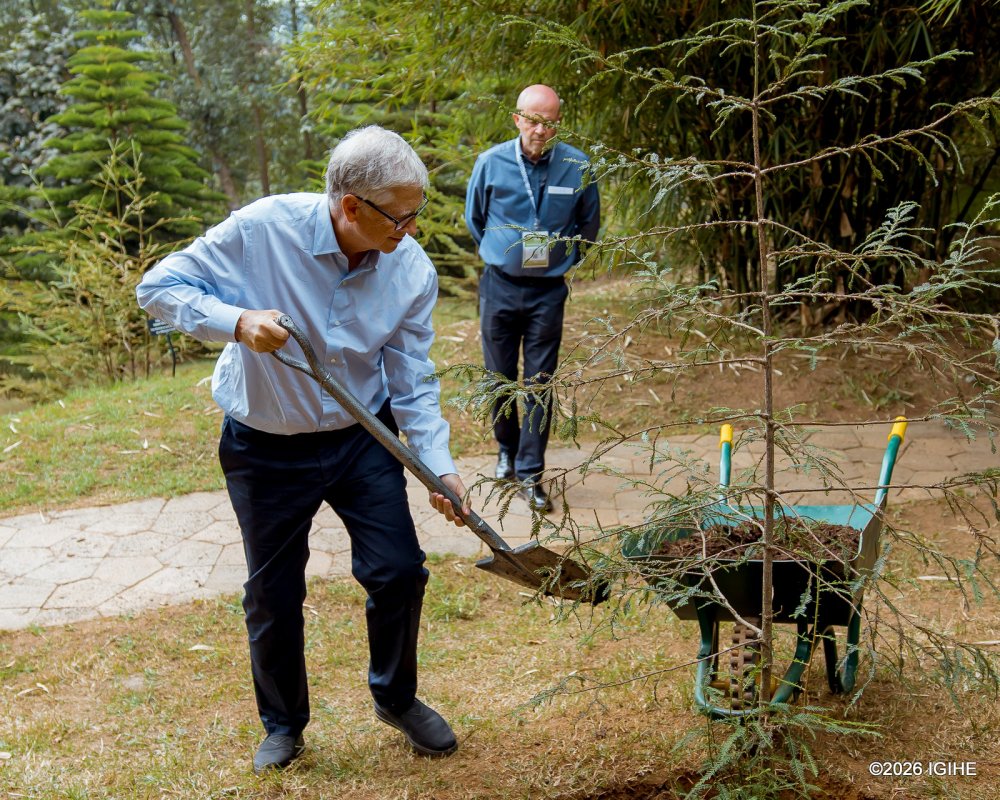
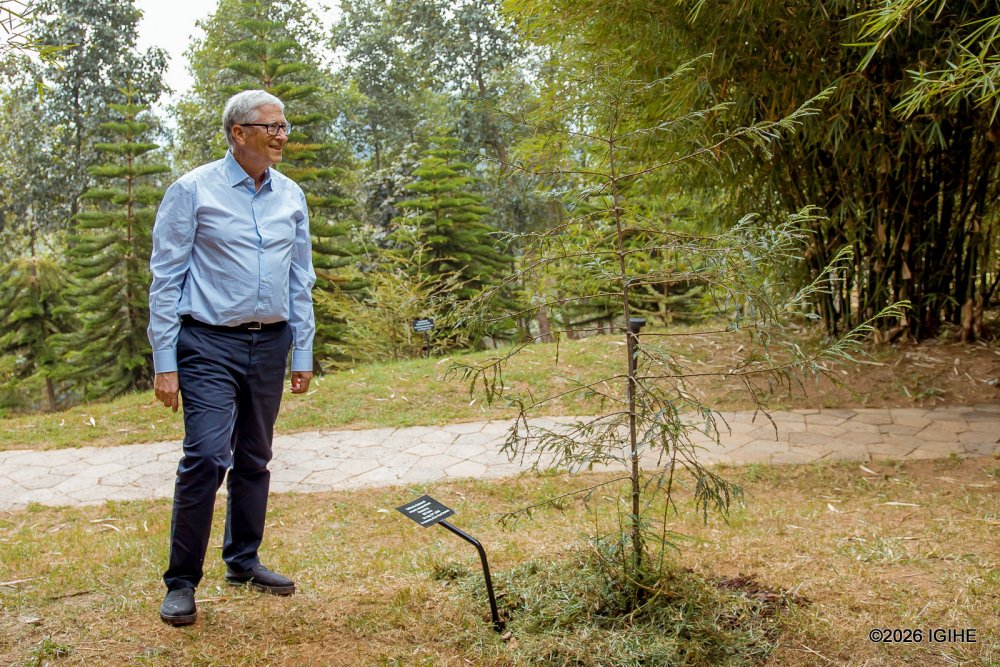
Bill Gates made the remarks on Wednesday while delivering the inaugural lecture at the Paul E. Farmer Butaro Dialogues on Health Equity and Innovation, hosted by the University of Global Health Equity (UGHE) in Butaro, Northern Province.The inaugural Paul E. Farmer Butaro Dialogues brought together government officials, health experts, academics and students to explore how innovation, technology and stronger health systems can advance health equity across Africa.Bill Gates pays tribute to Paul Farmer, who died in 2022 Bill Gates waters tree he planted during previous visit.
The report, covering calendar year 2025, provides the company’s first comprehensive account of its environmental, social and economic footprint and establishes a baseline against which future progress will be measured. As it expands across the continent, Spiro projects that its electric mobility ecosystem will help avoid approximately 700,000 tonnes of CO₂ emissions annually by 2030.
The report comes as African countries, including Rwanda, continue to accelerate the transition to electric mobility in a bid to cut emissions, reduce fuel costs and build cleaner transport systems.
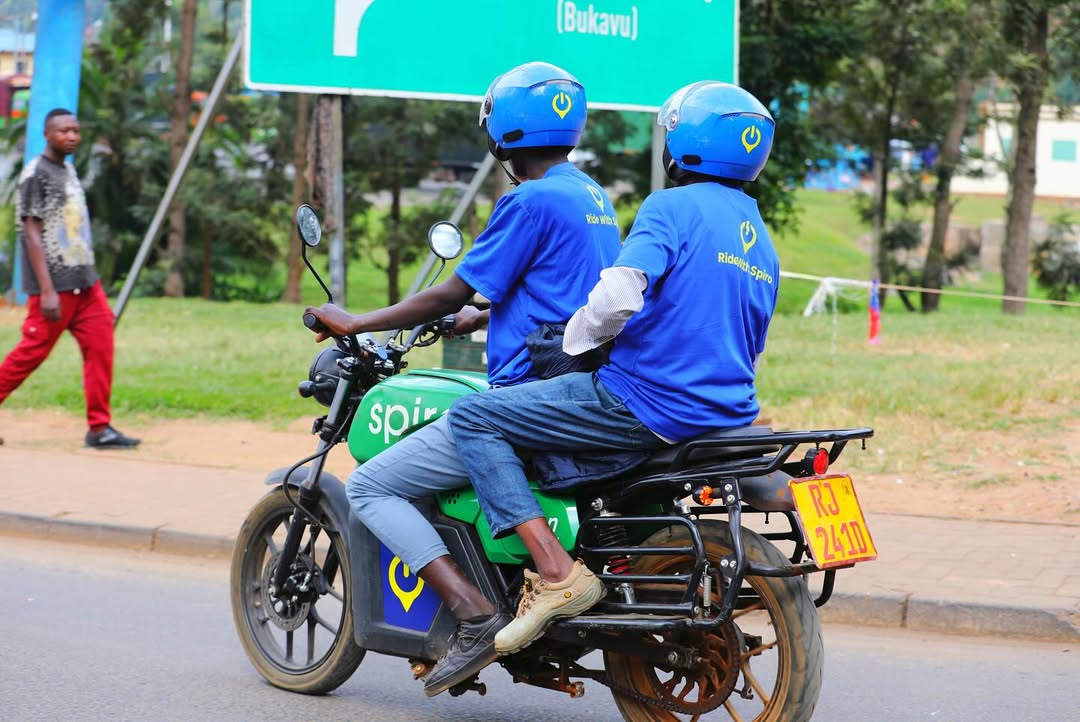
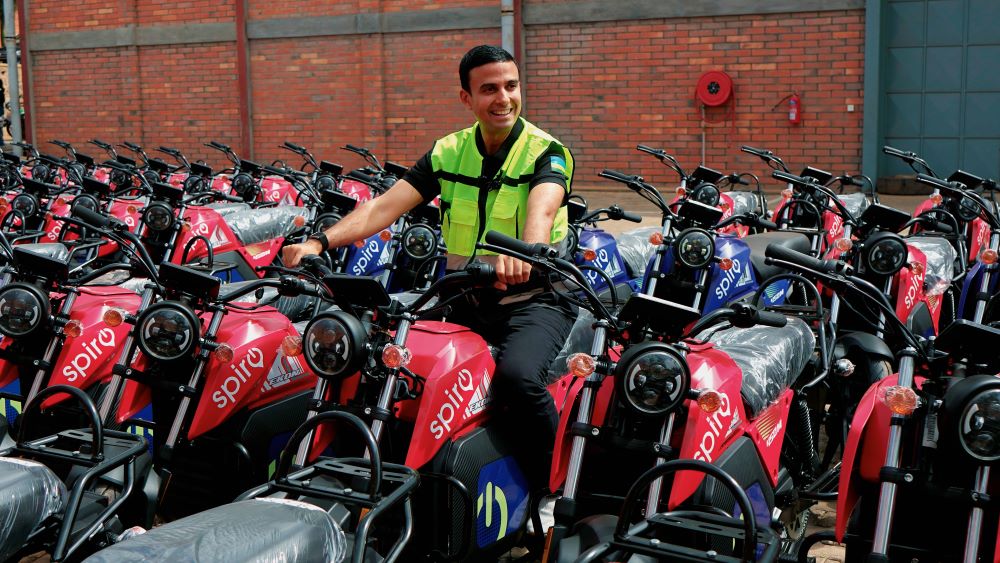
Spiro now operates more than 100,000 electric motorcycles across Africa, supported by more than 2,500 battery-swapping stations and over 30 million battery swaps completed to date, making it the continent’s largest electric two-wheeler and battery-swapping network.
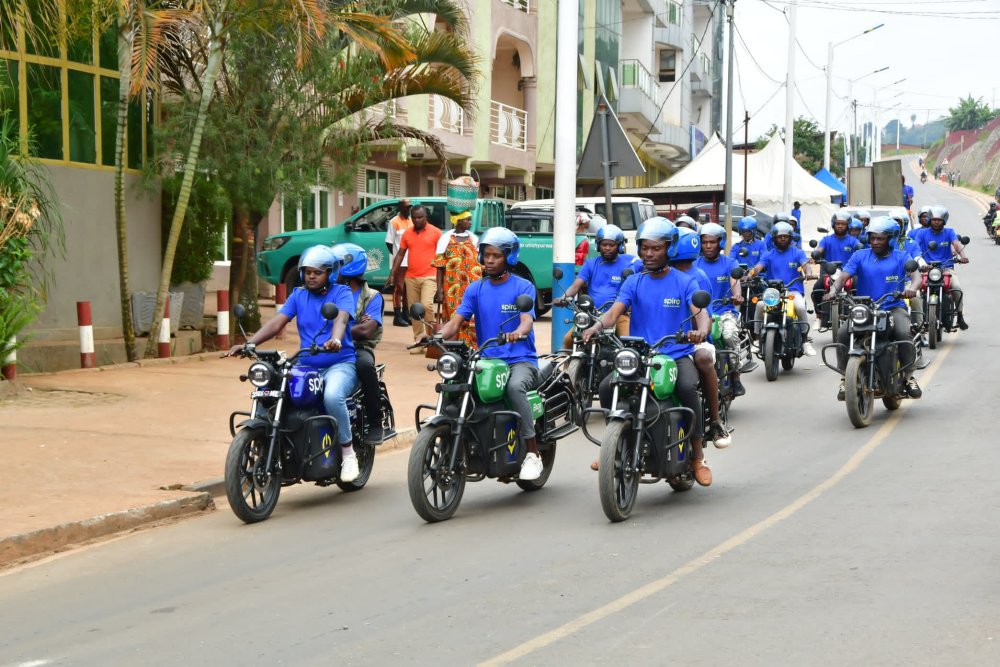
Rwanda remains Spiro’s largest market among its six African operations, with 22,000 electric motorcycles on the road and more than 600 battery-swapping stations, ahead of Uganda, which has 16,000 motorcycles and more than 300 stations, and Kenya, with 14,000 motorcycles and over 300 stations. The company also operates one of its four vehicle assembly facilities in Rwanda, alongside plants in Uganda, Kenya and Nigeria.
Spiro operates more than 600 battery-swapping stations in Rwanda.
Highlighting the significance of the report, Imtinen Hamlaoui, Head of ESG and Sustainability at Spiro, said the company has completed its first end-to-end greenhouse gas inventory covering Scope 1, Scope 2 and Scope 3 emissions across its operations and value chain.
“By establishing our first comprehensive ESG baseline, including Scope 1, 2 and 3 emissions, we are creating the foundations needed to track progress, set measurable targets and strengthen transparency as Spiro continues to scale across Africa,” she said.
“Sustainability is not a standalone initiative. It is integrated into how we operate, innovate and create long-term value.”
To further reduce its environmental footprint, Spiro is evaluating the deployment of 80-125 kVA on-site solar installations at selected battery-swapping stations to reduce dependence on national grids. The company also reported that smart energy management initiatives at its assembly facilities have already delivered an estimated 15-25% reduction in energy consumption.
Beyond climate goals, the report highlights Spiro’s investment in skills
development. Through the Spiro Academy, the company trained more than 4,000 people across Africa in 2025 in areas including electric vehicle maintenance, battery management and technical operations. The company also cited Africa’s first women electric motorcycle assembly line as part of its efforts to promote workforce inclusion and local industrial growth.
According to Spiro’s management, their motorcycles reduce riders’ operating costs by 70-80% compared with petrol-powered alternatives.
On the economic front, Spiro affirmed that commercial riders using Spiro motorcycles reduce their operating costs by 70-80% compared with petrol-powered alternatives, while benefiting from lower maintenance costs and reduced exposure to fuel price volatility.
Group Chief Executive Officer Anant Badjatya said sustainability will continue to shape the company’s expansion strategy across the continent.
“This report reflects how far Spiro has come, not only in terms of growth, but in our ability to measure and improve our impact. As we expand across Africa, sustainability will remain a core business driver, shaping how we invest, manufacture, innovate and partner for the long term,” he said.
Rwanda’s operations employed 51 permanent staff and supported a further 1,147 workers during 2025, contributing to Spiro’s group-wide workforce of 6,298 employees. The company said it continues to work closely with the Government of Rwanda in supporting the country’s shift from petrol-powered motorcycles to electric mobility.
During the year, Spiro also received several industry recognitions, including the E-Mobility Award from Brands & Beyond, AA Kenya’s EV Champion of the Year award, and recognition in Uganda for innovation in electric mobility. The company was also named a finalist for the Milken-Motsepe Prize in AI & Manufacturing for its work in localising and automating vehicle assembly across Uganda, Kenya, Rwanda and Nigeria.
Reflecting on the company’s long-term vision, founder Gagan Gupta said sustainability has been embedded in Spiro’s mission from the outset.
“Having grown up in India, I have witnessed firsthand the impact of vehicle emissions on public health and urban environments. At Spiro, our responsibility as founders is not only to scale innovation, but to ensure that the systems we build endure economically, socially and environmentally for generations to come,” he said.
Reflecting on Spiro’s long-term vision, founder Gagan Gupta said sustainability has been embedded in Spiro’s mission from the outset.
The sustainability report was developed with reference to the Global Reporting Initiative’s sustainability standards and will serve as the foundation for Spiro’s annual sustainability disclosures. The company is also registered on the Science Based Targets initiative platform as it works to align its emissions reduction pathway with internationally recognised climate benchmarks.
The report marks Spiro’s first comprehensive public assessment of its environmental, social and economic performance and establishes the benchmark against which the company says it will measure its progress as it continues expanding electric mobility across Africa.
The ruling upheld the verdict delivered on October 30, 2024, following an appeal trial that lasted for more than a month, from June 8 to July 18, 2026.
For the appeal proceedings, Rwamucyo was represented by a new team of seven lawyers. Among them was Jean-Baptiste Harelimana, a Rwandan lawyer who told the court that he had attended the Petit Séminaire de Butare during his secondary education.
The crimes for which Rwamucyo was convicted were committed in four communes of the former Butare Prefecture: Ngoma, Gishamvu, Ndora and Huye. At the time, he was Director of the Centre Universitaire de Santé Publique (CUSP) at the former National University of Rwanda (UNR) and was also serving as acting head of the Butare Health Region(Région sanitaire).
Unprecedented incidents during the trial
In an interview with IGIHE, André Martin Karongozi, one of the lawyers representing the civil parties, said the trial was marked by a number of unusual incidents targeting survivors of the 1994 Genocide against the Tutsi, as well as the RPF-Inkotanyi.
According to him, the first major incident occurred on the day the first genocide survivors, who had travelled from Rwanda specifically to testify before the court, took the stand.
As the first witness—a survivor represented by lawyer Karongozi—had just recounted her experience during the three months of the 1994 Genocide against the Tutsi and was awaiting questioning by the court and the parties, two people seated among Rwamucyo’s relatives and supporters suddenly stood up. Waving flags, one of them wearing a black face mask, they shouted slogans targeting President Paul Kagame.
French gendarmes immediately intervened and removed the protesters from the courtroom. The presiding judge ordered a suspension of the hearing to restore calm, allow security officers to assess the situation, and ensure the witness could continue testifying under appropriate conditions. The individuals involved were identified, and photos were taken for further investigation.
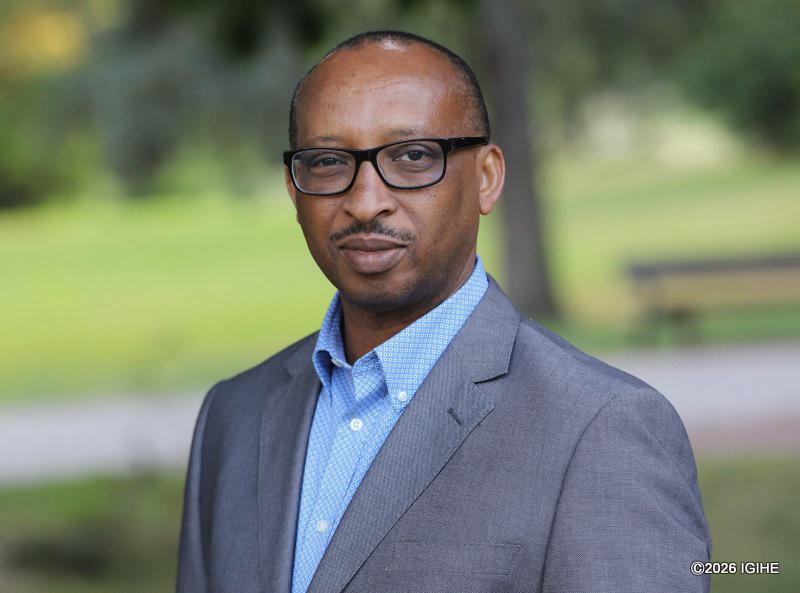
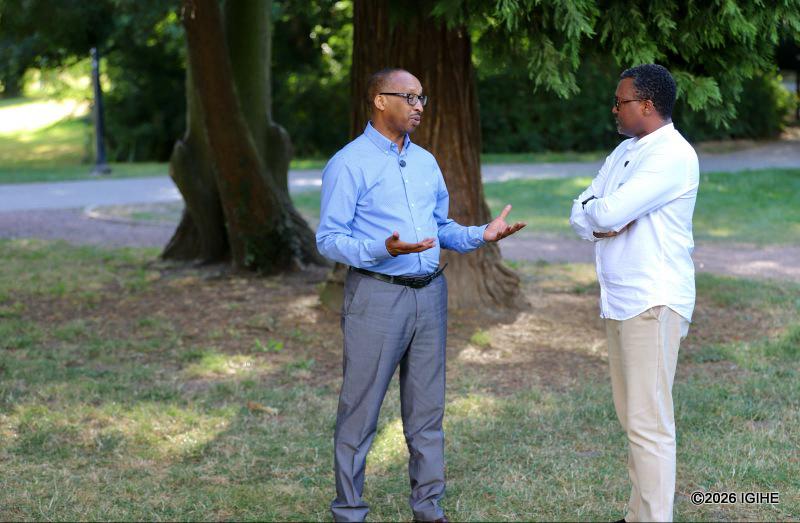
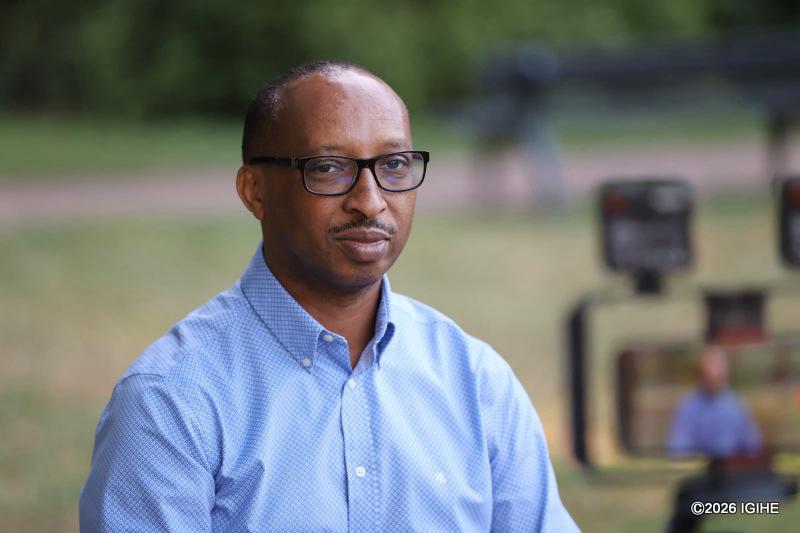
Lawyer André-Martin Karongozi during an interview with IGIHE’s Karirima A. Ngarambe. He said Rwamucyo ‘s trial was marked by unusual incidents targeting survivors of the 1994 Genocide against the Tutsi, as well as the RPF-Inkotanyi.
A traumatic experience for survivors
The lawyer said the disruption deeply traumatized the witness as well as several genocide survivors present in the courtroom.
The witness was unable to sleep throughout the night following the testimony. The next morning, his condition deteriorated to the point that an ambulance had to be called. After receiving medical attention, she was later able to go back to Rwanda.
According to Lawyer Karongozi, the fact that such an incident occurred on the very first day survivors testified suggests that it had been planned in advance.
A social media disinformation campaign
The lawyer also alleged that Rwamucyo’s supporters published very often distorted accounts of the court proceedings on social media in an effort to discredit the lawyers representing the civil parties as well as the Advocate General( prosecutor).
Toward the end of the trial, false claims began circulating that the lawyer had secretly met with Eugène Rwamucyo and had, moreover, distanced himself from the RPF-Inkotanyi.
According to him, these allegations were entirely fabricated.
Other lawyers were also targeted, including Richard Gisagara, lawyer Michel Laval, representative of the Collectif des Parties Civiles pour le Rwanda (CPCR), and the Advocate General.
Karongozi told IGIHE that Rwamucyo’s supporters published distorted daily accounts of the court proceedings on social media in an effort to discredit the lawyers representing the civil parties as well as the Advocate General.
Large-scale mobilization of Rwamucyo’s supporters
The lawyer said information circulating during the proceedings indicated that Rwamucyo’s supporters had planned to bring nearly 200 sympathizers to the courthouse in an attempt to exert pressure on the court. As a result, from July 16, judicial authorities significantly reinforced security measures around the courthouse.
Unprecedented support for a genocide convict
According to Karongozi, a lawyer who has represented civil parties before the assize courts since 2005, Eugène Rwamucyo is the first Rwandan prosecuted over the 1994 Genocide against the Tutsi to receive such a large show of support inside French or Belgian courtrooms.
He was told that some of those supporters may themselves have participated in the genocide.
He also noted that Rwamucyo called several witnesses known for denying or distorting the Genocide against the Tutsi including:
Patrick Mbeko, author of some writings about Rwanda whose statements were rejected during the hearing by one of Rwamucyo’s lawyers;
The former Commander of the Rwandan Gendarmerie, General Augustin Ndindiliyimana, who dared to say that the speech of April 19, 1994 in Butare by Théodore Sindikubwabo was positive;
Hervé Deguine, whose views align with those expressed by Pierre Péan in his book Noires fureurs, blancs menteurs): Tutsi are born liars, and the Hutu who hang out with them are tainted by it.
The Paris Court of Assizes recently upheld the conviction of Dr. Eugène Rwamucyo for complicity in genocide and crimes against humanity, confirming his 27-year prison sentence.
A different defense strategy on appeal
Finally, Lawyer Karongozi observed that Rwamucyo adopted a different approach during the appeal from the one he had taken during his first trial.
Having remained in custody since his 2024 conviction despite appealing the verdict, Rwamucyo spoke before the court about the hardships of prison life, even explaining that he once had to clean his prison cell soiled by the previous inmate.
According to the lawyer, this was part of a strategy aimed at gaining the court’s sympathy. On several occasions, Rwamucyo said he bowed in memory of the victims of the genocide and acknowledged the suffering of survivors, hoping to be cleared of all charges or to get a reduced sentence.
However, the lawyer argued that these statements failed to convince the court. In his view, despite expressing sympathy for the victims, Rwamucyo never changed his fundamental position. Instead, he continued to endorse the ideology of Parmehutu and the Coalition pour la Défense de la République (CDR), claiming that Tutsi victims had been killed by fellow Tutsi under the direction of the RPF-Inkotanyi and that the RPF was responsible for the massacres.
For Karongozi, these statements demonstrated that the accused had never abandoned a genocide denial narrative, which helps explain why the Paris Court of Assizes upheld both his conviction and his 27-year prison sentence.
Among the international works showcased was Al-Atlal, a dance production presented on July 18 that explored the impact of conflict while highlighting themes of peace, unity and cultural diversity.
Created by acclaimed choreographer Orly Portal, the production combined movement, music and storytelling to reflect on conflict, reconciliation and hope. Inspired by the legendary Egyptian singer Umm Kulthum’s iconic song Al-Atlal (“The Ruins”), the work transforms a story of lost love into a broader reflection on the human search for peace.
Turning a story of conflict into a call for peace
In an exclusive interview with IGIHE, Portal explained that the production gained additional significance as violence unfolded in Israel during its creation.
She said that rather than allowing conflict to define the narrative, she chose to use dance as a language of peace.
“The biggest message is to stop the war and spread love,” Portal said. “We gave a voice to both Arabs and Jews because we want people to listen to their hearts and remember that we are all one, no matter where we come from or what culture we belong to.”
She noted that the performance deliberately blends Arabic and Hebrew, reflecting both the shared history of the two peoples and her own Moroccan Jewish heritage.
Through music and movement, Al-Atlal encourages audiences to see differences not as barriers but as opportunities for understanding.
Artists praise Rwanda’s culture
Portal said bringing the production to Rwanda was a memorable experience. Invited by the Ubumuntu Arts Festival after festival founder Hope Azeda watched the performance in Israel, she described Kigali as a place where she immediately felt welcomed.
“It is my first time in Rwanda, and I feel at home,” she said. “The people are joyful, generous and beautiful. I also see beauty within the people, and the artists and dancers here are truly amazing.”
Besides performing, Portal led a dance workshop for local artists, which she described as one of the most rewarding workshops she has ever conducted.
She was particularly impressed by Rwanda’s rich dance traditions and encouraged young African performers to embrace and preserve their cultural heritage.
“What you have is a treasure,” she said. “Explore new styles, but never forget your roots. Keep your groove because it is something the rest of the world can learn from.”
Israeli choreographer Orly Portal says Al-Atlal uses dance as a powerful call for peace, unity and cultural understanding.
For Lalel Pillora, one of the dancers in the production, the visit to Rwanda left a lasting impression. She said the warmth of the people and the country’s vibrant dance culture made the experience unforgettable.
“Our smiles never disappeared during our first night here,” Pillora said. “The traditions, the groove and the cultural dances are something very special that you don’t often see in the modern world.”
She hopes audiences who watch Al-Atlal leave with a greater appreciation of humanity’s shared experiences.
“We all live in the same world,” she said. “Even though we come from different countries and cultures, we share many of the same emotions and challenges. I hope people leave believing in peace and love.”
One of the most emotional moments for Pillora comes during a scene where the performers sing together while opening their jackets.
“In that moment, I feel like I’m shouting for peace and love,” she said. “I feel completely connected with the audience.”
She also encouraged aspiring dancers to trust their natural abilities rather than constantly doubting themselves.
“You already have it inside you,” she said. “Keep learning, but also believe in your roots because they are enough.”
Lalel Pillora says performing in Rwanda was an unforgettable experience that celebrated culture, connection and peace.
Fellow performer Daniel Costa described participating in the Ubumuntu Arts Festival as one of the most meaningful experiences of his career.
Originally from Portugal and now based in Israel, Costa said every day in Rwanda brought new encounters that made the visit deeply fulfilling.
“It’s a lifetime experience,” he said. “Everything we experienced here was rich, profound and full of heart.”
Asked to describe Al-Atlal in a single sentence, Costa called it “the sweatiest, most profound prayer and protest for a better world.”
He explained that every performance demands intense physical and emotional commitment, but the dancers are sustained by the purpose behind the work rather than by endurance alone.
Costa believes artists have a responsibility to challenge society and encourage reflection, especially during times of conflict.
“Art is often seen only as entertainment,” he said. “But art also exists to raise questions. We may not have the power to change governments, but we do have the responsibility to make people think and ask whether we can do better.”
He also praised the Ubumuntu Arts Festival for making its performances freely accessible to the public, saying it demonstrates the importance of ensuring art remains available to everyone.
As the festival came to an end, all three artists shared a common message with young dancers across Africa: remain curious, stay humble, work hard and never lose touch with your cultural identity.
For Portal, preserving tradition is essential to artistic growth. For Pillora, confidence begins with believing in oneself. For Costa, perseverance is what keeps creativity alive despite the challenges artists face around the world.
“It’s difficult everywhere to be an artist,” Costa said. “But if this is your passion, keep creating, stay humble and find ways to continue. The world always needs art.”
Through Al-Atlal, the performers reminded audiences that while dance may not end conflict on its own, it has the power to inspire dialogue, build empathy and bring people together across cultures.
Daniel Costa believes dance is more than entertainment, describing Al-Atlal as a powerful prayer and protest for peace.The Al-Atlal performers during their visit to Kigali for the Ubumuntu Arts Festival, where they shared a powerful message of peace through contemporary dance.The performers of Al-Atlal believe dance can bring people together across cultures and inspire conversations about peace and humanity.The Al-Atlal performers say art has the power to transcend borders and unite people through shared human experiences.
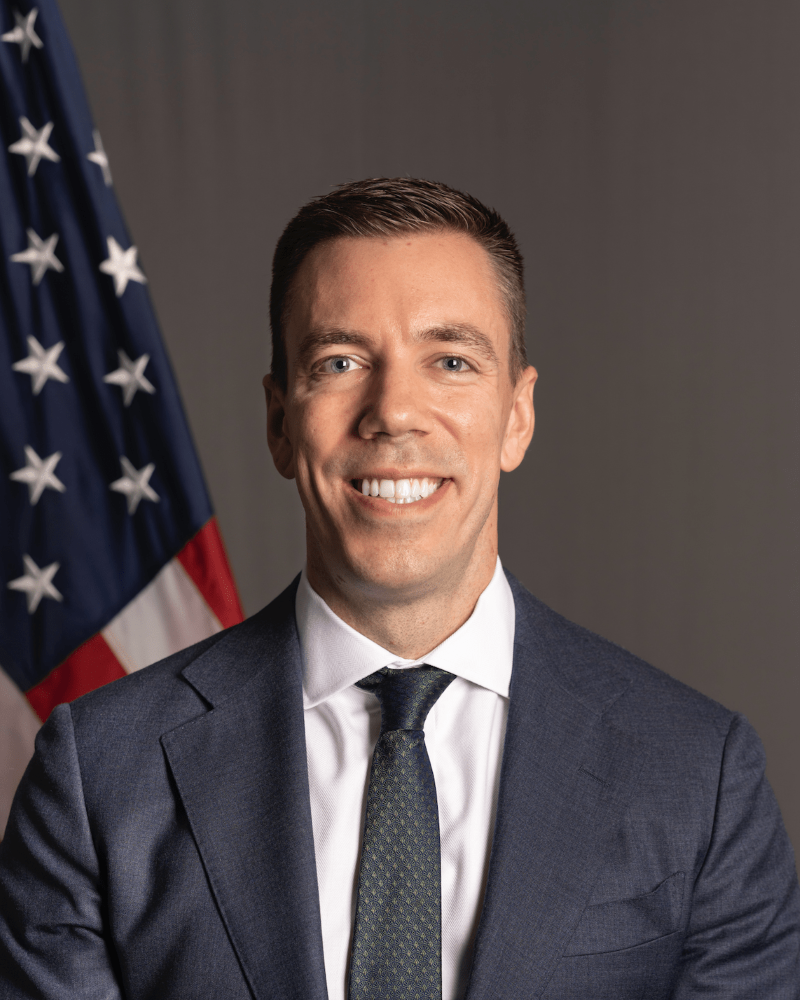
According to a statement dated July 21, 2026, released by the White House, Checker was among several nominees whose names were submitted to the Senate for confirmation.
The nominee brings experience in US foreign policy, national security and Africa affairs.
He recently served as Deputy Assistant Secretary for Southern Africa and Foreign Assistance at the US Department of State’s Bureau of African Affairs from June 1 to July 18, 2026.
Before that, he served as the Senior Bureau Official leading the Bureau of African Affairs from January to June 2026.
Prior to joining the State Department, Checker served as Deputy Executive Secretary for the National Security Council under President Donald Trump.
Between 2014 and 2025, he worked at the Central Intelligence Agency (CIA), where he covered conflicts in the greater Middle East and the Horn of Africa, as well as assignments in the Office of Congressional Affairs.
In 2023, he served as a national security fellow in the office of US Senator Bill Hagerty of Tennessee.
Checker holds a bachelor’s degree in history and political science from the University of Wisconsin and a master’s degree in Security Studies from Georgetown University.
If confirmed by the US Senate, Checker will succeed Eric Kneedler, who concluded his tour of duty as US Ambassador to Rwanda early 2026.
Kneedler formally assumed the ambassadorial role on October 18, 2023, after presenting his letters of credence to President Paul Kagame at Urugwiro Village.
He had succeeded Peter H. Vrooman, who served as US Ambassador to Rwanda before him.
During his time in Kigali, Kneedler engaged with Rwandan authorities on strengthening bilateral relations between Rwanda and the United States, including cooperation in areas such as health, development, security and economic partnerships.
Checker’s nomination comes as Rwanda and the United States continue diplomatic engagement spanning more than six decades, with cooperation covering trade and investment, public health, development initiatives and regional security.
Nicholas Checker has been nominated by President Donald Trump as the next US Ambassador to Rwanda, pending confirmation by the US Senate.