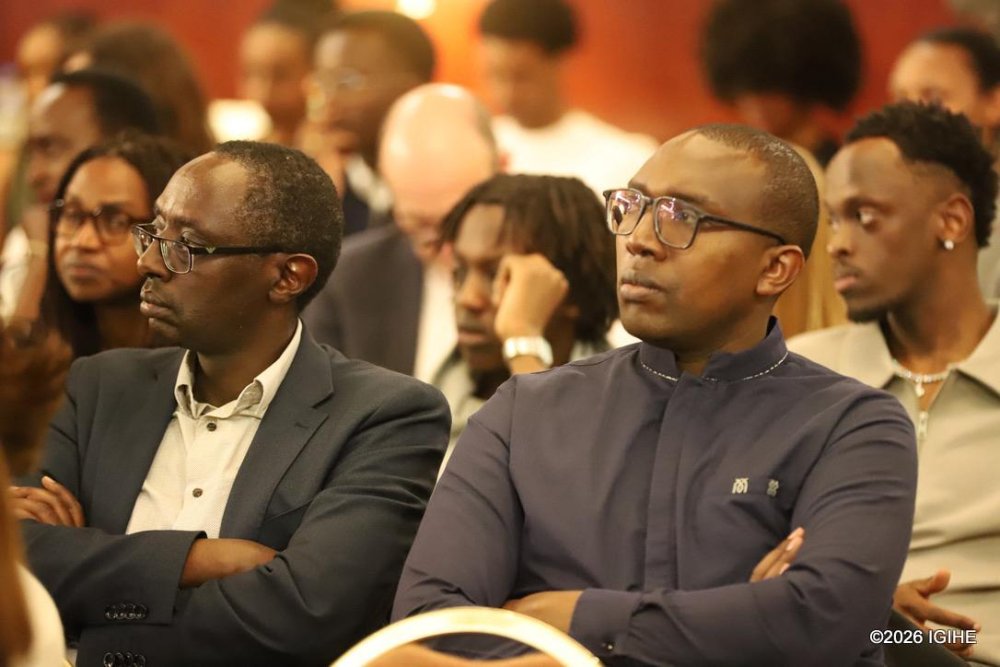
President Kagame was speaking at the Rwanda-Japan Business Forum organized by the Japan External Trade Organization (JETRO), on the second day of his official visit in Japan.
“Africa’s middle class is increasing year in, year out; there is increasing urbanization in Africa moving faster than probably other continents. Africa has different kinds of resources starting with our own people and the natural resources that we have,” President Kagame said.
He noted that between the natural resources and the people, the innovation and technology, there was no problem that was not going to be addressed to provide the continent with the solutions it wants. “Africa and Rwanda have simply no other choice but to keep adding value to what we are doing.”
President Kagame also welcomed and encouraged Japans to do more business in and with Rwanda.
“We are trying to catch up, and we are being helped to by these developed countries and people with whom we work. Doing business, the kind of different investments that we have to make together are very critical,” Kagame noted
Last Year, Rwanda Development Board chief executive Clare Akamanzi said the number of Japanese investments in Rwanda has gone up from three to 19 in the last five years, with the portfolio expected to grow further.
“However this doesn’t mean that everything is where we want it to be. We have to do more every time and that’s why when people kept saying that we have to listen, to pay attention to businesses from Japan, I completely agree with them,” he added.
President Kagame said Rwanda cannot be complacent that has done enough despite the glowing results from studies, experience and data show that tremendous progress is being made.
“That’s a good story but it always tells us that we have to do more.”
“I want to assure you that the Government of Rwanda will continue to do our best, to provide a conducive and supportive environment for successful ventures.” President Kagame guaranteed.
In an interview with Boursorama, a leading source of financial and economic information in France, Mushikiwabo re-iterated her future goals for La Francophonie, where she said that she would like to see French as the language of the Internet.
{{Extracts of the Interview
}}
{{Q:}} Your election as Secretary General marks the coming of an African leader, after Canada’s Michaëlle Jean, at the head of the La Francophonie (OIF). Is it unavoidable when we know that Africa holds 80% of the growth in the number of Francophones in the world?
{{A:}} Africa is a driving force of La Francophonie. It is a natural even normal that Africa is at the head of La Francophonie. That said, I am also aware that La Francophonie goes far beyond Africa. As the Secretary-General, I will do my best to make everyone feels at home in our organization.
{{Q: }} Your candidacy was strongly supported by France while you are very close to Rwandan President Paul Kagame. At the head of La Francophonie, how will you guarantee your independence?
{{A:}} I am also a professional. I work for La Francophonie. I represent La Francophonie. I will put all my energy into this organization. From now on, I am no longer the Rwandan Minister of Foreign Affairs. Any action, any decision, any activity of La Francophonie, I will execute as the secretary general of La Francophonie.
{{Q: }} Rwanda has replaced French with English as a compulsory language at school. Is this compatible with the direction of La Francophonie?
{{A: }} Rwanda is a French-speaking country. It is also an English speaking country. It is also a Swahili-speaking country and first and foremost, we speak Kinyarwanda, our national language. We are a multilingual country and I think that the fact that the Rwandan president does not really speak French – he begins to speak French, very happily – is confused with the importance of the French language in the country. French is the foreign language most spoken by Rwandans and the importance of the French language will grow. In Rwanda, we believe very much that this coexistence of languages does not necessarily cause problems.
{{Q:}} This is what French President Emmanuel Macron defends: the defense of French in a Plurilingualism framework. Is this the future of La Francophonie?
{{A:}} The French language has no complex compared to English. But the world today is such that it is beneficial for the French to speak other languages. We go much further with several languages. We are more fortunate in employment and training with more languages. I really do not mind.
{{Q:}} What are your goals as the head of La Francophonie?
{{A:}} I would very much like to see the French language as the language of the internet. With the proportions of young people in the French-speaking world, it’s very feasible. But there is still work to be done, I do not delude myself. Digitalism can be used as an asset for employment issues. When we go through the francophone area, we hear, “La Francophonie, what is it for me?” These are legitimate questions. All that is digital concerns the youth, so I think we can combine very well the digital aspect and the interest of the youth.
{{Q: }} Critics point to a “dispersal” of OIF… Is a refocus necessary?
{{A: }} There is indeed a debate that’s needed. Criticism is legitimate: we do a lot of small things and we should refocus, bring several activities together under clear themes, well defined: the economy, the influence of language.
{{Q: }} The OIF now has 88 members, including some countries that have a distant relationship with French. Should the membership criteria be reviewed?
{{A:}} Why not? I find that the fact that many countries which have very little to do with the French language wanting to become members of La Francophonie, a sign of attractiveness, which is a very good thing. Only, I think we must also be observant of our space, our activities, and our values. We can create a system of members who have a status more or less different from the full members. But it is up to the member states to decide.
Of the total investments registered in 2018, an estimated 26% represents export oriented projects. Across sectors, manufacturing, mining, agriculture and agro-processing accounted for 57% of investments registered. Other sectors that attracted significant investments were tourism, healthcare, business services and ICT.
The largest share of the 2018 investment registrations or 49%, was posted by domestic investors, while Foreign Direct Investment registrations represented 47% of the total. Joint ventures (local and foreign investors) represented the balance of approximately 4% of all investments registered during the year. In comparison, in 2017, domestic investment registrations accounted for 28% of the total, while foreign investment registrations represented 62% and joint ventures the remaining 10%.
Some of the largest investors during 2018, who registered expected investments over US$ 70 million, included: Emerald Park ltd; Millennial Construction Ltd; Rwanda Innovation Fund; Jali Transport; and Mara Phones.
Other notable investment projects registered during the year included: Andela Software Development’s Rwanda based Pan African Hub; a first Coltan/Tantalum refinery by PRG from Macedonia; new local production of a global beer brand – Heineken in Rwanda by Bralirwa; a large scale fertilizer blending plant in Rwanda by OCP from Morocco; a steel rolling mill by MasterSteel from Rwanda; a mosquito bed nets production plant by Vision Garments from Rwanda; a steel manufacturing plant by AARSAL STEEL from India; a mineral smelting company by Luna Smelter of Rwanda; hospitality development around Lake Kivu by GEMS of Rubavu; and mobility solutions development by Volkswagen.
Project registration values reflect each investor’s projected five (5) year estimation of operating and capital investments to be made, regardless of whether financed by equity or debt. Historically, registered projects typically take 3 years on average to become fully operational.
Commenting on the investments registered in 2018, RDB Chief Investment Officer, Guy Baron said that “In the last 8 years, registered investments in Rwanda jumped from US$ 398 million in 2010 to slightly over US$ 2 billion in 2018. Last year, we passed the US$ 2 billion milestone, for the first time in the country’s history. This is evidence that Rwanda is being seen increasingly as a great place to do business, innovate and establish a hub from which to access the continent’s tremendous opportunities. The increased investments registered are a direct result of the initiatives that the Government of Rwanda, through RDB, has put in place to continuously make Rwanda an attractive destination for investment. In fact, this year, Rwanda was proudly ranked the 29th easiest place to do business in the world and the 2nd easiest place to do business in Africa.”
In terms of investor facilitation, RDB operates a One Stop Centre for investors. The Centre provides information and services to guide investors through the key steps of starting a business such as registration, licenses, immigration, land, utilities, environmental clearances as well as tax and mortgage registration services.
In addition, RDB offers all investors Aftercare Services, which provide assistance in ensuring that business projects are implemented free of avoidable impediments. Via these services, RDB helps investors to resolve simple and complex challenges they may encounter along the way and provides any guidance required. RDB has also introduced investor engagement platforms such as the quarterly ‘CEO Forum’ where RDB senior management meets and engages with business leaders. Another important platform, ‘Investor Open Day’, aimed at resolving issues faced by investors, is offered every Friday and open to walk-ins. During 2018, 163 of 209 or 78% of investor issues recorded by Aftercare Services were expediently resolved.
On the first day of their visit, President Kagame and First Lady paid a courtesy call to their Majesties Emperor Akihito and Empress Michiko of Japan at Imperial Palace, the First Lady was later hosted to a working lunch by Mrs Akie Abe, wife to Japanese Prime Minister, Shinzo Abe.
President Kagame later had bilateral talks with Prime Minister, Shinzo Abe.
“We are pleased to be here, to honour the excellent relationship that exists between Rwanda and Japan, and to deepen our friendship and cooperation,” Kagame said adding that “Rwanda very much appreciates the ongoing development cooperation with Japan. We have productive partnerships in many areas, including in agriculture, ICT, and infrastructure.”
“I wish to thank you for Japan’s support to the Kigali Urban Transport Improvement Plan. As Rwanda’s population grows and becomes more urbanized, we are keen to learn from Japan’s longstanding expertise and experience in city planning and urban transport,” he said.
The President of Rwanda commended Japan for its contribution to Rwanda’s human capacity development, through the Africa Business Education Initiative, “which is benefiting young Rwandans.”
“As you may know, the African Union has been undergoing institutional reforms for the last two years. We have achieved good progress in making AU more fit for purpose, and enhancing the continent’s engagement with the rest of the world, including with Japan,” Kagame who is the current Chairperson of the African Union said.
He added that “The African Union will continue to work with Japan and other global partners, in the reforms of the UN Security Council, to make it more relevant to today’s realities.”
Kagame invited Japan’s Prime Minister to Rwanda at any time of his inconvenience as “Rwanda remains committed to strengthening cooperation with Japan, in the bilateral as well as international arena, for the benefit of both our countries.”
Following their bilateral discussions, President Kagame and Prime Minister Shinzo Abe of Japan witnessed the signing of a bilateral agreement on Nzove-Ntora Water Transmission.
“Our visit is an opportunity to learn more from each other, and further strengthen our strong bilateral ties, development cooperation as well. We also want to increase trade and investment between Rwanda and Japan,” Kagame said adding: “We look forward to the business forum taking place tomorrow, and the roadshow to introduce Kigali Innovation City, one of Rwanda’s flagship projects.”
Before meeting Japan’s Prime Minister Abe, Kagame had also met with the President of Japan International Cooperation Agency (JICA), Shinichi Kitaoka and Kobe City Mayor, Kizō Hisamoto.
According to RDB figures as of July last year , the number of Japanese investments in Rwanda totaled to $21.458 million – creating 178 jobs in agro-processing, horticulture, mining, ICT and service sectors.
LaForge Fils Bazeye who was the Spokesperson of FDLR and Lt Col Theophile Abega, who was FDLR Head of Intelligence, were arrested by the Army of the Democratic Republic of Congo at the end of last year.
They were arrested at Bunagana Border on their way from Kampala on 15th December, 2018 from where they had been for talks aimed at destabilizing Rwanda’s security.
At their arrest, the Government of Rwanda revealed it wanted them to be repatriated to Rwanda, their mother nation.
Speaking to IGIHE, the Minister of State for Foreign Affairs, Cooperation and East African Community said that discussions over the two rebels extradition to Rwanda had started.
“They are in Kinshasa now. Discussions [on their extradition back to Rwanda] have already started,” Amb. Olivier Nduhungire said.
However, the talks have been going slowly as the Democratic Republic of Congo is in Presidential elections.
Last year, reports circulated that DRC might request Rwanda to hand over Laurent Nkunda, former Chief of CNDP rebels and other fighters of M23 rebel group as exchange for Bazeye and Abega.
One high army ranking officer in the DRC told Jeune Afrique that DRC Government was not ready to easily send the two FDLR officials back to Rwanda.
The delegation has been in the country for the past week, meeting different government and private sector officials.
The discussions centered on supporting Rwandan entrepreneurs to export more agro-products to China such as beef, crayfish, avocados, chili pepper, french beans, tree tomatoes, and other fruits and vegetables.
This, they said would be done by streamlining the intergovernmental policies and regulations, being part of the agricultural supply chain process, providing the necessary infrastructure to boost agro-processing, lowering the cost of air-freight transport and providing more trainings to Rwandan entrepreneurs to enable them to trade more product volumes on the platform.
RDB CEO, Claire Akamanzi said: “China presents a huge market for us, with its big population and their increased spending power. There are unique and big opportunities we are exploring and implore Rwandan SMEs to package their products in a way that suits the Chinese market and sell as much as possible through the Alibaba platform.”
Mr. Yi said: “We found many of Rwanda’s agricultural products are of high quality hence why we want to increase their volumes and standards, invest in agro-processing industries and the supply chain. We also want to raise more crayfish here because Rwanda has many freshwater lakes and a favorable climate. The crayfish market is a US$ 20 billion one in China and Chinese consume between 1 and 1.2 tons of crayfish every four months.
Therefore, as soon as we have the right policies and regulations in place and infrastructure and affordable air-freight, we can start exporting more Rwandan products.”
The elderly gentleman had a special message from President Museveni for the two terrorist outfits. On December 15, the FDLR delegation led by its spokesperson and deputy chief of intelligence, Ignace Nkaka (aka LaForge Bazeye Fils), was arrested by DR Congo authorities at the Uganda-Congo border post of Bunagana. They transported him first to Goma, then on to Kinshasa for questioning.
Ugandan authorities expected the apprehended official would “sing” under interrogation. Their fears would turn out to be right.
We can reveal that Colonel Nkaka’s team included Lt Col Nsekenabo Jean Pierre alias Abega Kamala (FDLR intelligence officer).
According to information from impeccable sources, upon arrival in Uganda on 14 December they were received by the FDLR liaison officer, Lt Col Nkuriyingoma Pierre Celestin. The latter took them to Hotel Mubano in Kisoro, which is owned by nine other than Philemon Mateke.
The officers then travelled overnight to Kampala arriving there the next morning. After they had refreshed themselves at the home of their liaison officer in Nakulabye, Mateke picked them up and took them for breakfast at his wife’s restaurant in Lugogo, before proceeding with them to his offices at Sir Apollo Kagwa Road.
There, the old man briefed them in preparation for their meeting with the RNC representatives.
Our sources reveal that the captured FDLR officers told interrogators that Mateke then proceeded with them to the Kampala Serena, where they found the RNC delegation led by Frank Ntwari – Kayumba Nyamwasa’s brother in law and the RNC’s so-called commissioner for refugees and human rights.
The questioning of these FDLR officers has also corroborated information this website previously reported that the meeting between the two groups was chaired by Mateke.
They however disclosed key details regarding President Museveni’s “special message”, which Mateke had delivered to the group.
This underscored their shared general interest. The special message also included Museveni’s emphasis that the two anti-Rwanda government groups needed to continue to work together, especially in maintaining the perception that they are a force that includes both Hutus and Tutsis.
The objective, continued Museveni’s message, would be to gain support, including his own commitment to avail on their behalf a battalion that would be based in the Virunga area. Its primary mission would be to destabilize Mountain Gorilla tourism in that area, which in turn would popularize the rebellion in the international media and bring attention to their shared cause.
“Museveni is prepared to take the risk provided that they furnish him diplomatic cover that suggests that this is a broad-based rebel outfit with legitimate grievances,” according to an analyst familiar with politics of the region who happens to be aware of this goings-on.
Mateke sought to bring his credentials to the table by reassuring the FDLR delegation that his support for their cause goes far back to the time of Habyarimana with whom they had worked closely, particularly in efforts geared at discrediting the RPF struggle in the late 1980s and the early 1990s.
Most importantly, Museveni’s commitment for a “lasting solution” to their shared problem seemed to delight the representatives of the two outfits, who reassured the “messenger” that they were ready to close ranks in line with his guidance.
{{[Read the whole story on VirungaPost->http://virungapost.com/2019/01/06/musevenis-support-for-rwanda-dissidents-continues-as-fdlr-captives-spill-details-of-kampala-meeting/]}}
According to new appointments, Emmanuel Hategeka will serve as RDB’s Deputy CEO doubling as Chief Operations Officer.
In the Board of Directors, Mr. Itzhak Fisher is the Chairperson while Mrs. Evelyn Kamagaju is the Vice Chairperson.
Ms. Diane Karusisi, Mrs. Alice Nkulikiyinka, Dr. Patrick Hitayezu, Mr. Brian Kirungi and Ms. Faith Keza were appointed as Board Members at Rwanda Development Board.
Eight senior officials appointed include Ms. Elodie Rusera appointed as Chief Skills Officer, Ms. Diane Sayinzoga named as Head of Special Economic Zone and Export Facilitation Department with Mr. Emmanuel Nsabimana being appointed as Head of Tourism Regulation Department.
Mr. Desire Rusatira was appointed as Head of Reinvestment and Investor Aftercare Department while Mr. Francois Ngoboka was named Head of Targeted Labour Market Interventions Department whereas Mr. Pacific Tuyishime was appointed as RDB’s Head of Deal Acceleration and Transactions Department.
Mr. Viateur Nzabanita was appointed as Head of Strategic Capacity Development Department.
Founded in 2009, Rwanda Development Board (RDB), is a government department that integrates all government agencies responsible for the attraction, retention and facilitation of investments in the national economy.
RDB is, among other duties, charged with facilitating private sector led development through increased investments and exports.
Clare Akamanzi is the Chief Executive Officer of RDB since February 4th 2017.
Kagame wil join other guests including the president of Senegal, Macky Sall and former soccer player and now president of Liberia, George Weah.
Once again, Egyptian Mohamed Salah who plays for Liverpool, and his teammate Sadio Mane, the Senegalese and Gabonese Pierre-Emerick Aubameyang who plays for Arsenal will compete to be named Best African Player of the Year.
Last edition of the CAF Best African Player of the Year Award was scooped by Egyptian Mohammed Salah who in case he wins it this year will become the second player to win it for two consecutive times after the Senegalese El Hadj Diouf, Cameroonian Samuel Eto’O and Ivorian Yaya Toure.
The CAF African Best Player of the Year is known after votes held by Coaches and captains of 56 national football teams of country members of CAF.
“The only requirement for industrial customers wishing to benefit from this opportunity is just to complete the online new connection application available on REG website,” REG’s announcement reads in part.
Usually, fees charged from investors setting up new industries varied with the distance between the industry being set up and the electricity feeder nearby.
For instance, the new industry located in one kilometer from the feeder was charged Rwf40 million including the power transformer.
The World Bank’s Doing Business Report 2018 indicated that Rwanda’s energy sector improved from 119th place in 2017 to 68th in 2018, an indicator that enabled Rwanda to improve from position 41 to 29th as the easiest country for doing business globally.
The report also indicated that Rwanda was a country that had done most reforms in Sub-Sahara in the course of the latest 15 years in easing business doing.
The Chief Executive Officer of the Rwanda Energy Group (REG), Ron Weiss, said: “We want to continue to improve and we are doing several reforms to be able to offer the big clients with better services in order to bring more industries and increase development.”
Ron Weiss said that one of the main issues new businesses face is that they have so many costs as ” they need to build the factory, to have employees and to do so many things. If we help them with electricity, I think it can support them a lot.”