The crisis severely impacted international transport routes, particularly flights to and from the Middle East. As security concerns escalated following U.S. military strikes on Iran late February 2026, airlines suspended numerous routes to destinations such as Qatar and the United Arab Emirates (UAE).
Early March, more than 21,000 flights to and from the Middle East were reportedly canceled. Major hubs, including Dubai International Airport, reduced operations significantly, while Rwanda’s national carrier, RwandAir, also suspended flights to the region.
The disruptions hit Rwanda’s horticulture sector hard. According to the Horticultural Exporters Association of Rwanda (HEAR), around 80 percent of exporters temporarily halted their activities as access to major markets such as Dubai and Abu Dhabi became difficult.
Association president Robert Rukundo said the suspension of flights created major challenges for exporters who depend on air transport, particularly RwandAir, to move fresh produce.
“The situation became very difficult. Air travel was suspended, maritime trade was also affected because the Strait of Hormuz was closed. Trade became complicated, and transportation costs increased as businesses searched for alternatives,” he explained.
Rukundo noted that some exporters attempted to redirect produce to neighboring countries or local processing industries, but many were unable to find viable alternatives.
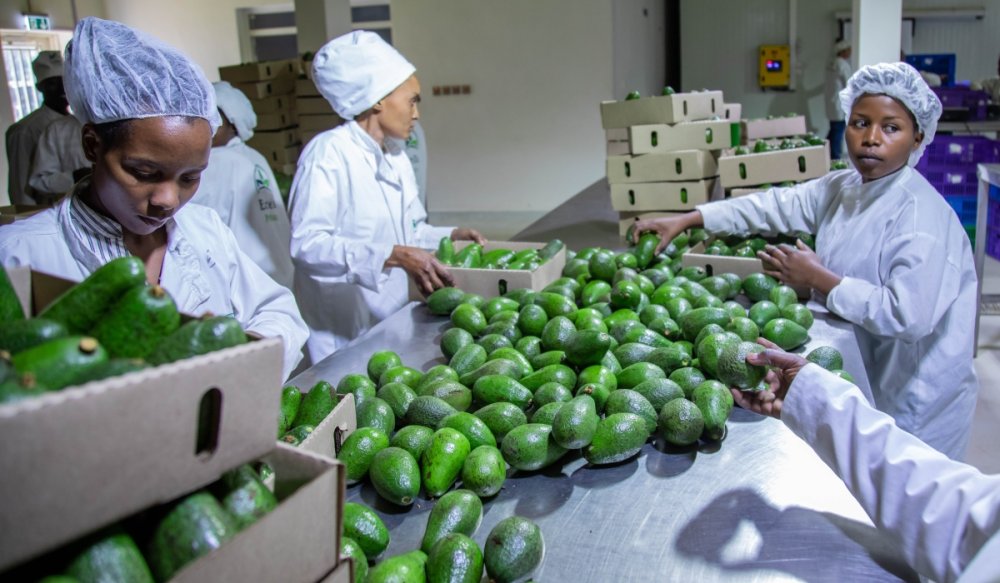
The impact extended throughout the value chain, from exporters to farmers. Products such as avocados, one of Rwanda’s most important agricultural exports, were particularly affected.
Data from the sector shows that before the conflict, Rwanda regularly exported between 20 and 25 tonnes of fresh produce per flight, with exports taking place several times a week. However, volumes declined sharply once transport links were disrupted.
Between March 24 and 28, 2026, Rwanda exported 173 tonnes of fruits worth Rwf 235 million and 290 tonnes of vegetables worth Rwf 853 million. Some of these exports were destined for the UAE.
By comparison, during the week of February 16–20, before the conflict began, Rwanda exported 376 tonnes of fruits worth Rwf 471.7 million and 437 tonnes of vegetables valued at Rwf 569 million.
Rukundo said the crisis highlighted the country’s limited capacity to process and preserve agricultural products when export markets become inaccessible.
“When produce cannot reach the market, it becomes a major problem. We still lack sufficient facilities to add value, process products, and store them until market conditions improve,” he said.
Although Rwanda has some processing facilities capable of producing avocado oil, guacamole, soap, and other products, Rukundo said their capacity remains limited.
He added that, just as the COVID-19 pandemic exposed vulnerabilities in supply chains, the Iran conflict has shown the need for greater investment in value-addition industries.
RwandAir flights resume
In a positive development for exporters, RwandAir announced on May 29, 2026, that it would resume flights to Qatar and the UAE from June 1.
Rukundo welcomed the decision, saying it would help restore trade links, even though the peak avocado harvest season is nearing its end.
“We are very happy that the flights have resumed. This will help reconnect us with our markets and bring back customers. We hope it will also contribute to better prices,” he said.
However, he cautioned that higher fuel prices and increased transport costs could continue to affect profitability.
Avocados: Rwanda’s “green gold”
Avocados have emerged as one of Rwanda’s most promising export crops, driven by growing demand in the Middle East, Europe, and other international markets.
Rukundo described avocados as “green gold,” saying the crop creates opportunities across the entire value chain—from farmers and transporters to cold-storage operators, processors, and exporters.
“It is a crop that can transform livelihoods and create jobs at every stage of production and distribution,” he said.
The crop’s export potential continues to grow. Rwanda exported fewer than 1,000 tonnes of avocados in the 2018/19 season, earning just over $400,000. By 2024, exports had risen to 4,200 tonnes, generating more than $8 million in revenue.
Rwanda currently sells around 80 percent of its avocado exports to Arab countries, while also supplying European and regional markets.
The country recently signed agreements that will allow avocado exports to enter the Chinese market as well.
Figures released in November 2025 showed that Rwanda had more than 550,000 avocado trees.
Since most of these trees are still relatively young, production is expected to increase significantly in the coming years, strengthening the crop’s role in the country’s export sector.
Leave a Reply