The reforms were officially launched on November 22, 2026, during the monthly Car Free Day activities in Kigali.
The Ministry of Health says the programme is designed to address longstanding challenges in emergency medical care, including delays in reaching patients, an insufficient number of ambulances and a shortage of specialised personnel trained to handle medical emergencies.
The reforms seek to ensure that people involved in accidents, patients experiencing heart attacks or strokes, women facing complications during childbirth and others requiring urgent medical attention receive timely assistance and basic treatment before reaching hospital.
One of the key targets is to significantly reduce the time people wait for emergency medical services.
According to figures from the Ministry of Health, ambulance response times previously averaged 45 minutes in Kigali and up to two and a half hours in areas outside the capital.
However, improvements have already reduced the average response time to 15 minutes in Kigali and 45 minutes in other parts of the country.
Under the new programme, Rwanda aims to bring these figures down to 10 minutes in Kigali and 20 minutes elsewhere.
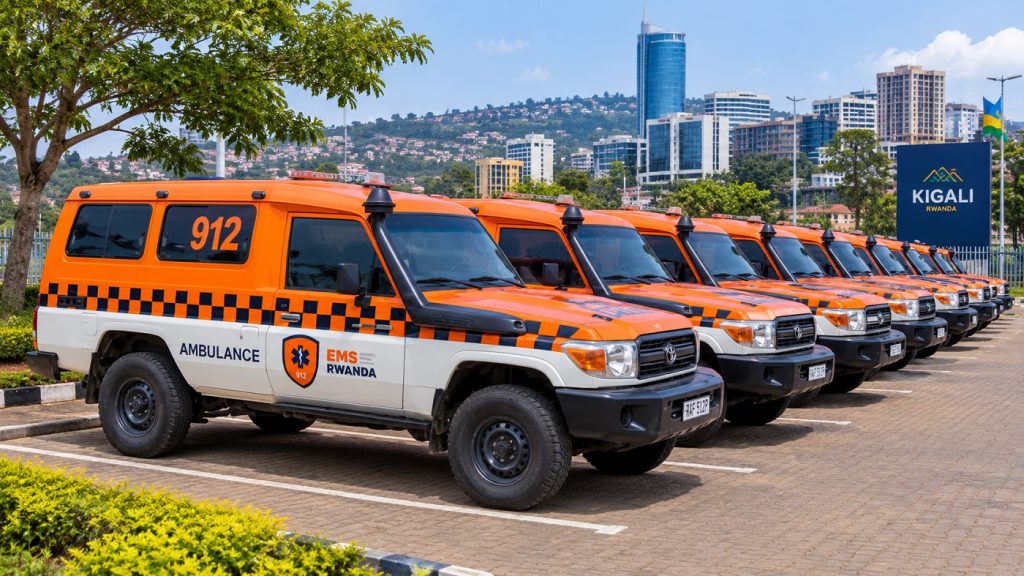
Another priority is expanding the country’s ambulance fleet. Rwanda had 263 ambulances in 2023, a figure that increased to approximately 530 in 2026.
The new reforms seek to increase the fleet further, with a target of at least one ambulance for every 20,000 people.
The programme also provides for specialised emergency vehicles designed to respond to different medical needs. These will include ambulances equipped to handle newborn emergencies, vehicles dedicated to transporting patients with infectious diseases and larger units capable of assisting several people at once, particularly during major accidents and disasters.
In addition to conventional ambulances, emergency response services will increasingly rely on motorcycles, boats and aircraft, depending on the location and nature of an emergency.
Emergency care to begin before patients reach hospital
A central principle of the reforms is that emergency medical care should begin at the scene of an incident rather than waiting until patients arrive at health facilities.
The programme therefore places greater emphasis on strengthening the capacity to assess, stabilise and treat patients at the scene and while they are being transported to hospital.
To support this approach, Rwanda plans to establish its first institution offering accredited training in emergency medical care for specialised personnel known as paramedics.
The institution is expected to enrol 100 students annually.
By 2030, the government intends to increase the number of trained emergency medical personnel to ensure that ambulances are adequately staffed by professionals with the necessary skills and equipment to handle different medical situations.
Motorcyclists, traders to join emergency response efforts
The reforms will not be limited to medical professionals and ambulance crews. Ordinary citizens will also be trained to provide basic emergency assistance before specialised teams arrive.
The Ministry of Health plans to train 2,000 people across different districts, including police officers, motorcyclists, market traders and other community members.
The training will equip participants with basic skills to assist people who have lost consciousness, are experiencing breathing difficulties or have been involved in accidents, within the scope of their training.
The initiative is expected to strengthen community involvement in emergency response and ensure that assistance can begin immediately, even in places where ambulances may take time to reach.
Ambulances to get new colours and uniforms
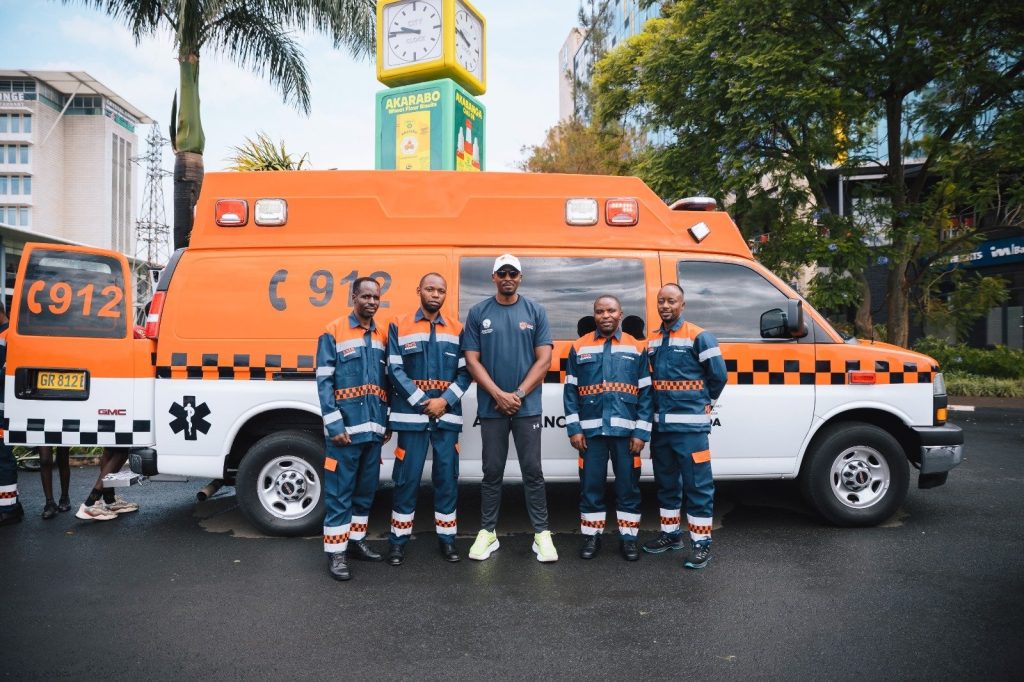
The reforms will also introduce new ambulance colours in line with international standards to make emergency vehicles more visible to other road users, according to Health Minister Dr Sabin Nsanzimana.
He explained that the new colour scheme would make ambulances easier to identify during both daytime and nighttime, including from a distance or through a vehicle’s rear-view mirror.
“International standards prescribe specific colours that make ambulances visible whether during the day or at night. Whether their lights are flashing from a distance or you see them through your rear-view mirror while driving, you should be able to identify them quickly,” he said.
The Minister noted that research had shown that some people struggled to distinguish ambulances under the previous colour scheme.
The changes will also extend to the uniforms worn by emergency medical personnel, with different attire introduced to help the public identify staff members and their respective responsibilities.
“You will also see changes in the uniforms worn by ambulance personnel, depending on their roles, whether they are drivers, medical staff or trainers. Even those who are off duty but may be called upon to assist in an emergency will have identifiable uniforms so that people can recognise them and ask for help,” Nsanzimana said.
The emergency response reforms are expected to extend life-saving assistance beyond hospitals, making it a shared responsibility that begins in homes, communities, on roads and wherever people may face medical emergencies.
Leave a Reply